
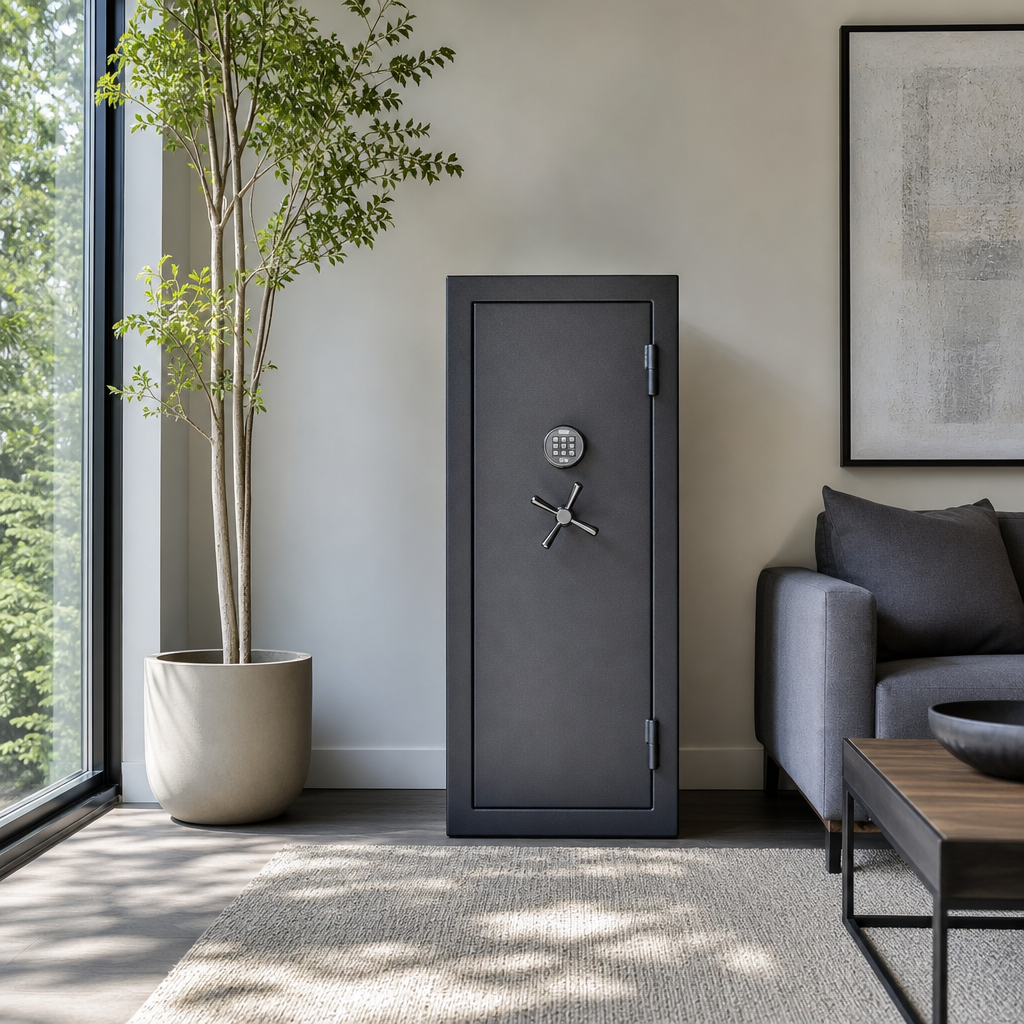
Minimalist homes demand discipline: every object must earn its place, every surface should feel calm, and storage needs to disappear into the background without compromising function. That challenge becomes sharper when firearms are involved, because secure storage is not optional. The best gun safes for people who prefer minimalist living spaces are models that protect against unauthorized access, fit cleanly into small footprints, reduce visual clutter, and support daily routines without turning a room into a bunker.
In this context, a gun safe is more than a steel box with a lock. It is a storage system designed to prevent theft, restrict child access, organize firearms and valuables, and in many cases provide a degree of fire protection. Minimalist living spaces, meanwhile, are not simply empty rooms with white walls. They usually prioritize limited square footage, concealed storage, restrained materials, and furniture that serves multiple purposes. When I help buyers match safes to apartments, townhomes, and pared-down single-family interiors, the same issue appears again and again: people want serious security, but they do not want a giant matte-black cabinet dominating the room.
That is why buyer personas matter. A first-time handgun owner in a studio apartment needs a different solution than a design-conscious couple with children, a collector trying to hide long-gun storage in a renovated loft, or a retired homeowner downsizing from a traditional 40-gun safe. This hub article covers those gun safe buyer personas in depth so readers can identify the right category before comparing individual models. It also explains the tradeoffs that minimalist buyers must weigh, including capacity versus footprint, concealment versus access speed, and aesthetic discretion versus maximum fire and burglary resistance.
Standards and terminology shape good decisions. Underwriters Laboratories lock ratings, California Department of Justice firearm safety device approvals, steel thickness, pry resistance, anchor points, and fire endurance claims all matter more than marketing language. Safe type matters too: quick-access handgun safes, under-bed safes, modular gun cabinets, furniture safes, in-wall units, and full-size residential security containers all solve different problems. Minimalist buyers usually succeed when they define their real storage need, map available space, and choose the smallest safe that still meets access, compliance, and growth requirements.
What minimalist gun safe buyers actually need
Minimalist gun safe shopping starts with constraints, not product catalogs. In practical terms, buyers usually need four things at once: secure storage, a compact footprint, visual integration, and usable access. Most failures happen because one of those gets ignored. Someone buys a handsome furniture-style safe that blends into a bedroom but lacks the interior dimensions for optics-equipped rifles. Another buyer picks a large, heavily advertised safe with broad fire claims, then discovers it overwhelms a condo office and can only be delivered with expensive stair service.
For minimalist homes, dimensions and placement should be measured before looking at brands. I advise clients to record wall width, door swing, clearance for handles, floor load considerations in upper-story units, and whether the safe must disappear in a closet, under a bed, or inside cabinetry. Ventilation, dehumidification, and power access matter if electronic locks, lighting, or humidity control are involved. This early planning prevents expensive returns and avoids the common mistake of buying based on listed gun count, which is almost always optimistic once accessories are installed.
Minimalist buyers should also evaluate visual noise. Exposed hinges, oversized logos, glossy paint, and tactical styling can conflict with restrained interiors. Brands such as Vaultek, V-Line, Fort Knox, Hornady, SecureIt, and some modular cabinet manufacturers increasingly offer lower-profile designs, quieter finishes, and shapes suited to closets or furniture integration. The best option is often not the one with the biggest numbers on a spec sheet, but the one that quietly fits how the owner lives.
The core buyer personas in this subtopic
Gun safe buyer personas help narrow the field quickly because they connect lifestyle, risk level, and space limitations. The minimalist sub-pillar usually breaks into recognizable groups, each with different priorities, budgets, and room layouts. Use the table below as a starting point before drilling into more specific model reviews and supporting articles.
| Buyer persona | Primary need | Best safe category | Key tradeoff |
|---|---|---|---|
| Studio or apartment owner | Very small footprint and fast access | Quick-access handgun safe or under-bed safe | Limited long-gun capacity |
| Design-focused minimalist couple | Concealed appearance and clean lines | Furniture safe or closet-integrated modular safe | May sacrifice heavy fire protection |
| Parent with children | Tamper resistance and reliable locking | UL-rated handgun safe or anchored long-gun safe | Higher cost for proven security |
| Collector in a compact home | Efficient vertical organization | Modular gun cabinet or slim full-height safe | Can outgrow capacity quickly |
| Downsizer | Smaller exterior with retained protection | Mid-size residential security container | Still heavy and hard to move |
The studio or apartment owner usually needs a safe that disappears into existing space. That often means a bedside quick-access safe for one or two defensive handguns, or an under-bed safe for a compact rifle and supporting gear. Vaultek’s biometric and keypad units, V-Line mechanical simplex boxes, and Hornady RAPiD safes are common fits here. The most important question is whether access speed or mechanical simplicity matters more. Electronic access is faster for many users, but mechanical simplex locks avoid batteries and electronics.
The design-focused minimalist couple is often less constrained by urgency and more concerned with visual integration. They may choose a safe hidden in millwork, a bench safe, or a closet-installed modular cabinet with a subdued finish. This persona should focus on concealment, anchoring, and interior flexibility. A discreet safe that can hold documents, jewelry, a handgun, and perhaps one short firearm often works better than a traditional gun safe silhouette.
Parents with children should treat reliability and access control as nonnegotiable. Here, I strongly prefer safes with proven lock systems, anti-pry construction, and secure anchoring. California-approved devices and UL-verified lock standards provide better confidence than generic “childproof” claims. If the firearm is intended for defensive use, practice opening the safe under stress and in low light. A safe that looks elegant but fails during hurried access is the wrong safe.
Collectors in compact homes have the hardest balancing act. They need capacity, but they cannot surrender an entire room to storage. Modular systems from SecureIt and similar brands are often smarter than large welded boxes because they fit through narrow stairwells, assemble in place, and organize modern sporting rifles more efficiently. Downsizers, by contrast, usually want to keep a higher level of burglary and fire protection while reducing the visual and physical burden of an oversized legacy safe. A slim residential security container with better shelving can outperform a much larger old unit for actual daily use.
Choosing among safe categories for a minimalist home
Quick-access handgun safes work best for bedside, desk, or closet shelf use. Their advantages are speed, small size, and easy concealment in furniture. They are ideal for one to four handguns, passports, medication, and compact valuables. Their weakness is limited storage and, in lower-end units, lower resistance to attack. Buyers should prioritize welded steel bodies, internal hinges or protected hinge sides, and bolting capability. A portable safe that is never anchored is easier to steal whole.
Under-bed safes are one of the strongest options for minimalist living spaces because they exploit dead space. A quality under-bed drawer safe can hold a shotgun, folding carbine, documents, and accessories while staying almost invisible. The practical concerns are bed frame clearance, drawer extension, and floor anchoring. Some models slide smoothly on rails; others are simply large lockboxes. The better ones include foam support, interior organization, and tamper-resistant lock placement.
Modular gun cabinets deserve special attention in this hub because they solve problems conventional safes do not. They are easier to move through hallways and upper floors, often use lighter but still respectable steel, and can be configured inside closets where they vanish when doors close. For minimalist homes, that concealment is a major benefit. Their limitation is that many modular cabinets emphasize security and organization over long fire ratings. If fire protection is a top requirement, compare gypsum-based fire liners, door seals, and independently supported claims carefully.
Furniture safes and hidden safes appeal strongly to buyers who dislike visible security equipment. Used well, they keep a room visually calm. Used poorly, they create a false sense of security. A decorative concealment cabinet may hide a firearm from casual view, but concealment alone is not equivalent to burglary resistance. These products are best when paired with robust internal locking hardware and discreet anchoring to studs or flooring.
Features that matter more than marketing claims
Steel thickness is one of the fastest ways to separate serious products from cosmetic ones. Lower gauge numbers indicate thicker steel, so 12-gauge steel is thicker than 14-gauge. Many bargain cabinets rely on thinner sheet metal that can be defeated more quickly with pry tools. For minimalist buyers who cannot accommodate extremely heavy plate-steel safes, the goal is not perfection but sensible resistance for the threat level. Reinforced doors, pry-resistant lips, and solid anchor installation often matter as much as marginal differences in body thickness.
Lock type affects both usability and failure risk. Biometric locks are convenient, especially for nightstand use, but fingerprint readers vary in consistency depending on skin condition, angle, and sensor quality. I tell buyers to treat biometric access as a convenience layer, not the only layer of confidence, unless they have tested it repeatedly. Keypads are straightforward and common, while mechanical simplex locks remain a standout option for reliability because they require no power and can be opened by feel.
Fire ratings are among the most misunderstood specifications. Many manufacturers advertise times such as 30, 45, or 60 minutes, but the testing methodology is not always directly comparable. Some ratings are based on internal testing rather than independent third-party protocols. Fireboard thickness, door seals, seam design, and the temperature threshold used for pass or fail all affect real performance. If a buyer stores irreplaceable documents or wants stronger fire assurance, a dedicated fire document safe or off-site backup may still be wise.
Interior layout is crucial for minimalist ownership because the safe often has to replace several storage solutions at once. Adjustable shelves, handgun racks, door organizers, and magazine bins can turn a compact unit into a tidy, multipurpose storage center. Poor layout wastes expensive cubic inches. A minimalist home benefits from a safe that consolidates important items instead of scattering them through drawers and closets.
Placement, installation, and long-term satisfaction
The best gun safe for a minimalist living space is usually the one no guest notices. Closet corners, under-bed zones, integrated cabinetry, and utility room placements all work if the safe remains accessible and can be anchored properly. Anchoring is essential. Even a well-built safe loses much of its practical security if thieves can carry it out and attack it elsewhere. Concrete anchors are ideal; lag bolts into substantial framing can also be effective depending on the design and manufacturer instructions.
Humidity control matters more than many apartment and condo owners expect. Interior closets on exterior walls, basement rooms, and coastal environments can rust firearms surprisingly quickly. Desiccant packs, rechargeable silica units, and low-watt dehumidifier rods are inexpensive compared with refinishing a firearm. If the safe is placed inside furniture or cabinetry, airflow should still be considered so moisture does not accumulate unseen.
Finally, buy for the collection you will realistically own in three to five years, not only for what you own today. Minimalists often resist upsizing, but safe capacity shrinks fast when optics, slings, lights, and document storage enter the picture. The smartest purchase is usually a compact safe with disciplined extra room, not a perfectly packed one that forces another visible storage solution within a year.
How this hub guides your next step
This hub exists to help buyers move from broad identity to narrow fit. If you are a renter, focus next on compact handgun safes, under-bed storage, and landlord-friendly anchoring options. If you are furnishing a design-led home, the logical follow-up is concealed and furniture-integrated safes. If your top concern is family safety, compare child-resistant access systems, lock reliability, and independent safety certifications. Collectors and downsizers should move into modular systems, slim long-gun safes, and capacity planning.
The main benefit of understanding gun safe buyer personas is clarity. Instead of comparing every safe on the market, you compare only the safes built for your room size, firearm type, access pattern, and tolerance for visual impact. That approach saves money, avoids oversized purchases, and leads to better daily security habits. Minimalist living does not require compromising on responsible firearm storage. It requires choosing gear with intention, measuring honestly, and prioritizing verified protection over flashy claims. Use this hub as your starting point, then continue into the supporting guides that match your persona and your space.
Frequently Asked Questions
What should minimalist homeowners look for in a gun safe?
Minimalist homeowners should focus on a gun safe that balances security, size, and visual simplicity. In a minimalist space, the best safe is rarely the biggest or most visually dominant option. Instead, it should have a compact footprint, clean lines, and a design that blends into the room rather than demanding attention. Many people prefer safes that fit inside closets, cabinets, under desks, or in low-visibility corners, because that helps preserve the calm and uncluttered look of the home while still keeping firearms properly secured.
Beyond appearance, access control matters just as much. Look for reliable locking systems such as biometric scanners, electronic keypads, or dependable mechanical locks, depending on your preference for speed and simplicity. Interior layout is also important. Adjustable shelving, handgun racks, door organizers, and modular compartments allow you to store firearms and related essentials without wasting space. For minimalist living, every inch should work efficiently. A well-designed safe should support a tidy routine, reduce loose accessories around the house, and keep protective storage integrated into daily life rather than feeling like an awkward add-on.
Are small gun safes secure enough for a minimalist home?
Small gun safes can absolutely be secure enough for a minimalist home, provided they are chosen carefully and used correctly. Size alone does not determine security. A compact safe made from solid steel, fitted with a quality lock, and properly anchored can offer strong protection against unauthorized access, especially in homes where floor space is limited and discreet storage is a priority. For many minimalist households, a smaller safe is actually the more practical choice because it encourages intentional ownership and avoids dedicating an oversized area to storage that may not be needed.
That said, the level of security should match the firearms being stored, the layout of the home, and the household’s access concerns. If you need to store multiple long guns, ammunition, documents, and accessories, a very small safe may become crowded and inefficient. Overstuffing creates frustration and can undermine the organized, low-clutter environment minimalists want. The better approach is to choose a compact model with enough internal room for your actual needs, plus a little flexibility for safe access. Anchor it to the floor or wall whenever possible, place it in a low-profile location, and verify that it meets relevant legal and practical storage requirements. In a minimalist setting, secure does not have to mean bulky, but it does need to be intentional.
How can a gun safe fit into a minimalist room without ruining the aesthetic?
A gun safe can fit into a minimalist room very well when placement, finish, and scale are considered from the beginning. The goal is to make the safe feel integrated rather than intrusive. Many modern safes come in neutral colors such as black, white, gray, or matte finishes that are easier to blend with contemporary interiors. Choosing a safe with a simple exterior and minimal branding helps maintain a clean visual field. In minimalist spaces, even useful objects should avoid adding unnecessary visual noise.
Placement is often the biggest factor. A safe stored inside a closet, built into cabinetry, positioned beneath hanging garments, or tucked into a furniture alcove can remain accessible while staying largely out of sight. For handgun owners, smaller bedside or drawer-compatible safes can preserve the clean look of a bedroom without sacrificing quick access. If the safe must remain visible, treat it as part of the room’s architecture: align it with other furniture, avoid awkward gaps around it, and keep surrounding surfaces clear. Minimalism is not about pretending storage needs do not exist; it is about choosing storage that is deliberate, quiet, and efficient. A thoughtfully selected safe supports that goal by providing secure containment without turning the room into a visual compromise.
Is biometric access a good option for people who want a simple, streamlined routine?
Biometric access can be an excellent option for people who value a simple, streamlined routine, especially in minimalist homes where convenience and efficiency are major priorities. A quality biometric safe allows fast entry with a fingerprint, which can reduce friction during daily use and eliminate the need to manage physical keys. For many owners, that supports the minimalist mindset: fewer loose items, fewer repetitive steps, and less visible clutter tied to storage systems. In settings where quick access matters, biometric systems can be especially appealing because they combine speed with controlled access.
However, the best approach is to look for biometric models that also include backup entry methods, such as a keypad or override key. No access method is perfect in every situation, and reliability should always come before convenience. Fingerprint readers vary in quality, and performance can be affected by placement, maintenance, or user error. A well-built biometric safe from a reputable manufacturer can fit beautifully into a minimalist lifestyle, but it should be tested regularly and set up thoughtfully. If your priority is a calm, low-friction daily routine, biometrics can be a strong choice, as long as you treat them as part of a complete security system rather than a design feature alone.
What size gun safe is best for someone trying to keep their living space uncluttered?
The best size gun safe for a clutter-free living space is one that fits your current storage needs with a modest amount of room to stay organized, but not so much excess capacity that it dominates the room. Minimalist living works best when storage is proportional. If you own one or two handguns, a compact quick-access safe may be all you need. If you own several firearms, including long guns, a slim upright safe or narrow cabinet-style model may be a better fit than a traditional oversized safe. The key is choosing a safe that supports orderly storage while respecting the physical and visual limits of your home.
It helps to think in terms of both footprint and usability. A safe that is technically small but poorly organized can create more frustration and visual spillover, because accessories, documents, or ammunition may end up stored elsewhere. A slightly larger safe with smarter internal organization may actually better support a minimalist environment by consolidating everything in one secure place. Before buying, measure the intended location carefully, consider door swing and clearance, and account for future use without overbuying. In minimalist homes, the right size is not the biggest safe you can fit. It is the one that quietly does its job, keeps essentials contained, and lets the rest of the room remain calm and intentional.