
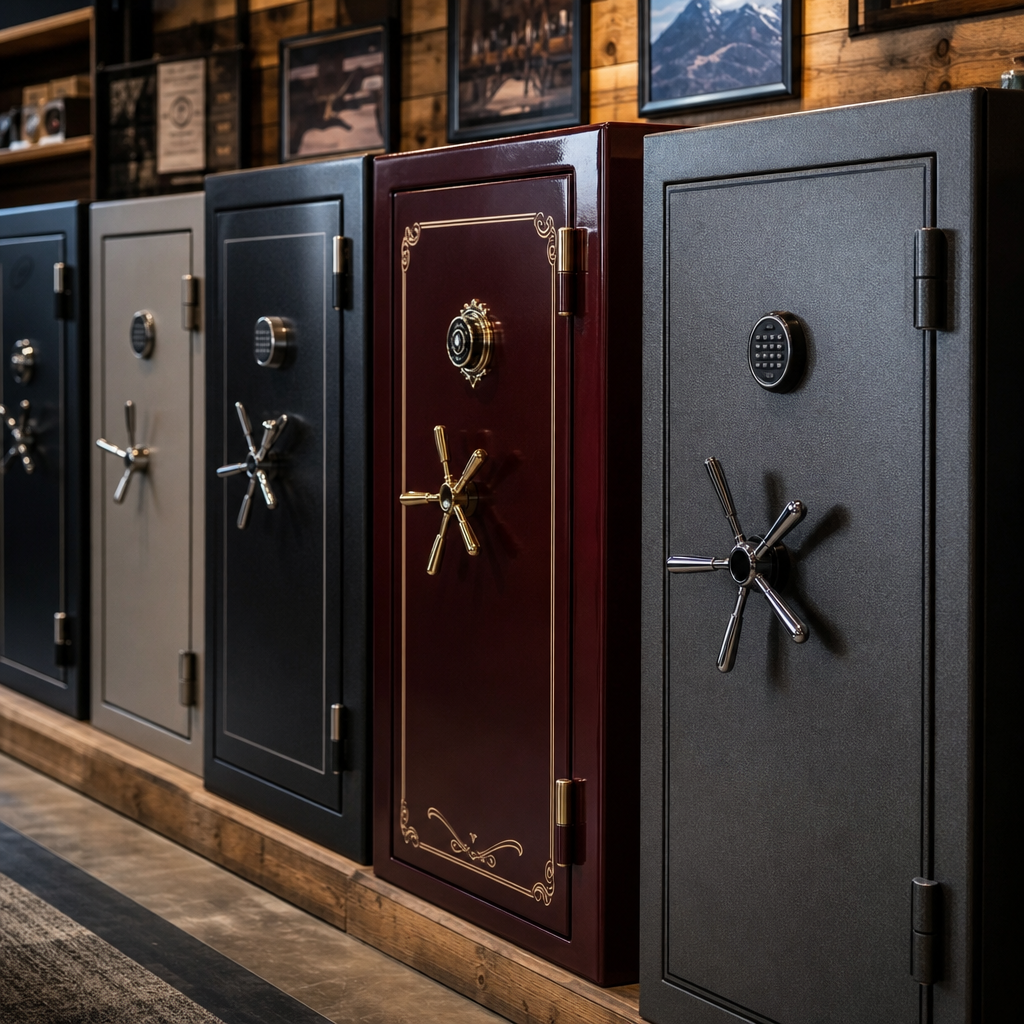
Choosing a gun safe by brand alone is a mistake; the better approach is comparing gun safe brands based on locking mechanism quality, because the lock is the component you interact with every day and the first system that must work under stress. In practical terms, locking mechanism quality means how reliably a safe opens for an authorized user, how well it resists manipulation or forced entry, how long it lasts under repeated cycles, and how effectively it integrates with the safe’s boltwork and relockers. For buyers building out a complete gun storage plan, this topic sits at the center of gun safe comparisons and brand spotlights, since steel thickness, fire ratings, interior layout, and price all matter less if the lock is inconsistent or poorly supported. After evaluating safes for homeowners, collectors, and small dealers, I have found that the best brands separate themselves not with flashy features but with disciplined lock sourcing, tighter tolerances, better quality control, and stronger service networks. Understanding how mechanical, electronic, biometric, and redundant systems differ gives you a framework for comparing major names such as Liberty, Fort Knox, Browning, AMSEC, Rhino Metals, Winchester, Vaultek, and Hornady on something more meaningful than marketing claims. This hub article explains what to look for, how top brands usually approach lock design, and where each type of locking mechanism fits.
What locking mechanism quality actually includes
When people ask which gun safe brand has the best lock, they usually mean one of four things: reliability, security, speed, or convenience. A complete comparison includes all four. Reliability covers cycle life, battery dependency, keypad durability, tolerance to dust or humidity, and whether the lock continues functioning after years of use. Security includes resistance to manipulation, punching, drilling, bypass attacks, and crude physical abuse. Speed means how quickly the authorized owner can open the safe in the dark, under stress, or with one hand. Convenience includes user code management, silent entry, temporary codes, app connectivity, and maintenance requirements. The strongest brands publish lock options from established commercial lock makers instead of relying entirely on anonymous private-label components.
Build quality around the lock matters as much as the lock body itself. A high-grade keypad on a weak door plate can still be compromised. Better gun safe brands reinforce the lock mounting area, protect lock linkages with hard plates, include spring-loaded relockers, and maintain precise bolt alignment so the user does not need to “jiggle” the handle to open the safe. In side-by-side showroom evaluations, this is often where premium lines justify their price. The handle throw feels smoother, code entry is more consistent, and the internal boltwork engages with less slop. Those details indicate stronger engineering discipline.
Certification helps, but buyers should know what it does and does not prove. Underwriters Laboratories standards are the most widely recognized reference point for lock security, especially UL Type 1 electronic locks and UL Group 2 or Group 2M mechanical locks. A UL listing does not make every safe equal, yet it does establish a baseline that separates tested lock designs from generic, unverified alternatives. Serious brand comparisons should begin by asking whether the lock itself is independently rated, who manufactures it, and whether replacement parts and trained technicians are widely available.
Mechanical dial locks: proven durability with slower access
Mechanical dial locks remain the benchmark for long-term durability. They do not depend on batteries, software, or electronic components, and a properly installed dial lock can deliver decades of service with minimal intervention. Brands that target traditional buyers, rural households, and long-term storage users often continue to offer mechanical options for exactly this reason. AMSEC, Fort Knox, and Liberty have historically been strong here, frequently pairing their safes with recognized lock platforms from Sargent and Greenleaf or La Gard. When a buyer prioritizes predictable operation over speed, these brands usually deserve a close look.
The tradeoff is access time and user error. Mechanical locks require deliberate dialing, accurate stopping points, and periodic practice. In real homes, many complaints about dial locks are not true failures but opening mistakes caused by rushed operation, skipped rotations, or numbers overshot in low light. For a defensive firearm that may need rapid access, a dial lock can be too slow. For a collection safe, document storage, or lower-frequency use, it remains a defensible choice because its failure modes are generally gradual and diagnosable rather than sudden. Over years of field use, I have seen mechanical locks tolerate neglect better than cheap electronic keypads.
Brand differences with dial locks usually appear in installation quality. A premium safe with a standard mechanical lock can outperform a budget safe using the same lock model if the spindle is properly cut, the dial ring is aligned, and the boltwork is tuned correctly. That is why comparing brands requires looking beyond the lock label and into assembly consistency, warranty support, and dealer setup standards.
Electronic keypad locks: the mainstream standard for modern gun safes
Electronic keypad locks dominate the current market because they balance speed and usability. Most owners can open them in seconds, change codes without a locksmith, and operate them in darkness by touch after minimal repetition. Brands including Liberty, Browning, Winchester, and Rhino Metals have leaned heavily into electronic options because they suit the expectations of mainstream residential buyers. A good electronic lock should have responsive buttons, clear feedback, stable programming, low battery warnings, and a lockout feature after repeated wrong entries. Better units also protect internal circuits from voltage irregularities and poor battery contact.
The biggest issue is variance in component quality. Not all electronic locks are equal, and some gun safe brands have used lower-cost imported keypad systems that feel acceptable at purchase but age poorly. Common failure points include membrane button wear, broken battery terminals, keypad delamination, and inconsistent solenoid actuation. Brands with stronger reputations either source from established lock makers or maintain tighter control over the electronics they private-label. Liberty and AMSEC have generally earned stronger buyer confidence than entry-level big-box offerings because their lock options and service ecosystems are more mature.
Electronic locks are also easier to evaluate in person than many buyers realize. Press each button multiple times. Listen for uneven clicks. Watch whether the keypad flexes. Test the handle after entry for smooth bolt retraction. Ask how the lock behaves during a dead battery event and whether the battery is external or requires partial disassembly to reach. In one of the most common service scenarios, the problem is not a catastrophic attack but an owner locked out by a corroded 9-volt contact or a keypad that stopped registering one digit consistently. Better brands design against those routine failures.
Biometric and app-connected locks: fastest access, widest quality gap
Biometric gun safe locks and app-connected systems get the most attention because they promise instant access. In the handgun safe segment, Vaultek and Hornady are among the most visible brands using fingerprint readers, Bluetooth, and mobile alerts as primary selling points. At their best, these features are useful. A high-quality biometric reader can open a bedside safe faster than a keypad, and app logs can confirm whether the safe was accessed while you were away. For quick-access use cases, especially in single-hand retrieval situations, convenience matters.
However, biometric quality varies more than any other category. Fingerprint readers are sensitive to skin condition, partial placement, dirt, cuts, and enrollment quality. Capacitive sensors generally outperform cheaper swipe-style designs, but even strong sensors need multiple enrolled prints from each authorized user. App-connected safes introduce another layer of complexity: firmware reliability, wireless security, permissions management, and phone dependency. The safest buying assumption is that smart features should supplement core access, not replace it. If a biometric reader is excellent but the keypad backup is weak, the overall system is still weak.
Vaultek has helped push the category forward by making app functionality, audit trails, and modular access methods more refined than the average smart safe. Hornady has also built respectable quick-access products, particularly where RFID or multiple-entry methods are useful. Still, buyers comparing these brands should ask direct questions about false rejection rates, backup entry options, firmware update methods, and whether the lock remains fully functional if the app is removed from the equation. Fast access is only an advantage if it is repeatable.
How major gun safe brands compare on lock quality priorities
Brand comparison becomes clearer when you look at each company’s design priorities rather than trying to name one universal winner. Premium brands usually offer several lock options because they know use case matters. Mid-market brands often standardize around one or two electronic platforms to control cost. Quick-access brands focus on multi-entry convenience and electronics integration.
| Brand | Common lock emphasis | Best fit | Watch point |
|---|---|---|---|
| AMSEC | Commercial-grade mechanical and electronic options | Long-term reliability and higher security expectations | Premium pricing on stronger lines |
| Fort Knox | Customizable lock choices with strong build integration | Buyers wanting tailored configurations | Lead times and cost |
| Liberty | Mainstream electronic locks with broad dealer support | Residential buyers wanting service access | Model-to-model variation |
| Browning | User-friendly electronic access on feature-rich interiors | Households balancing storage and convenience | Confirm exact lock source by model |
| Rhino Metals | Electronic locks with lifestyle-focused styling | Homeowners wanting presentation and functionality | Evaluate value against steel and lock specs |
| Winchester | Price-driven electronic locking in retail channels | Budget-conscious buyers | More variability in fit, finish, and components |
| Vaultek | Biometric, keypad, and app-connected quick access | Modern handgun safe use | Electronics complexity and battery management |
| Hornady | Rapid-access RFID and keypad systems | Bedside and defensive storage | Prioritize redundancy over novelty |
AMSEC and Fort Knox typically stand out when locking mechanism quality is judged through a traditional safe lens: robust lock options, better door construction, and stronger integration between lock, relocker, and boltwork. Liberty often leads in practical ownership because dealer networks, parts availability, and consumer familiarity reduce friction after purchase. Browning and Rhino Metals can be excellent fits when the exact lock package is strong, but shoppers should verify specifications instead of assuming consistency across every line. Winchester remains relevant because affordability matters, though lower price tiers usually bring more variation in lock feel and longevity. Vaultek and Hornady are leaders in the fast-access category, where the evaluation criteria shift toward sensor performance, user interface quality, and redundancy.
How to judge a lock before buying and what this hub connects to
The best way to compare gun safe brands based on locking mechanism quality is to test the safe as if you will own it for ten years. Open it repeatedly. Change the code if allowed. Check whether the keypad is external and easy to service. Ask who made the lock, whether it is UL listed, and what relocker system is behind it. Confirm how warranty work is handled and whether a local locksmith is authorized for that brand. If you are buying online, read owner reports for issues like battery drain, missed keystrokes, drifting biometric enrollment, or handles that bind unless pressure is relieved from the door. Those patterns reveal more than brochure language.
As the hub for gun safe comparisons and brand spotlights, this page should guide your next questions. From here, buyers typically drill down into brand-by-brand reviews, mechanical versus electronic lock comparisons, biometric handgun safe testing, warranty and service comparisons, and value analyses by price tier. The core takeaway is simple: the best gun safe lock is the one that matches your access needs, comes from a reputable source, and is installed by a brand with disciplined quality control. Start your shortlist with locking mechanism quality, then compare steel, fire protection, capacity, and price around that foundation. If you are narrowing options now, build a three-brand shortlist and test each lock in person before you buy.
Frequently Asked Questions
Why is locking mechanism quality more important than judging a gun safe by brand name alone?
Brand reputation can be useful, but it should never be the main deciding factor when buying a gun safe. The reason is simple: the locking mechanism is the part you depend on every time you access the safe, and it is also the first system that must perform correctly when speed, stress, and security matter most. A well-known brand can still offer multiple lock options that vary significantly in quality, reliability, and long-term durability. In other words, two safes from the same manufacturer may not deliver the same ownership experience if one uses a stronger, better-built lock and the other uses a lower-grade unit.
When comparing gun safe brands based on locking mechanism quality, you are focusing on the part that directly affects day-to-day use. That includes how consistently the safe opens for authorized users, how resistant the lock is to tampering or manipulation, how well it holds up after years of repeated cycles, and how effectively it works with the safe’s internal boltwork. A safe with a thick door and attractive branding means very little if the lock is unreliable, overly sensitive, easy to defeat, or poorly connected to the locking bolts. Looking past the logo and evaluating the actual lock system gives you a much more practical and security-focused way to compare brands.
What should I look for when comparing electronic, mechanical, and biometric gun safe locks?
Each lock type has strengths and tradeoffs, so the right comparison starts with understanding how each performs in real-world use rather than in marketing language. Mechanical dial locks are often valued for durability and simplicity. They do not depend on batteries or electronics, and many owners appreciate their long service life when properly made and properly installed. Their downside is speed and convenience. Under stress, dialing a combination can be slower than entering a code, and some users find them less practical for frequent access.
Electronic keypad locks are popular because they balance security and convenience. A quality electronic lock can provide fast access, easy code changes, and straightforward daily operation. However, build quality matters enormously. Better electronic locks offer more consistent keypad response, stronger internal components, better resistance to wear, and more dependable performance over time. Lower-quality versions may suffer from button failure, battery contact issues, lockouts, or inconsistent opening behavior. If you are comparing brands, ask not just whether the safe has an electronic lock, but what specific lock is used and how it performs after repeated use.
Biometric locks appeal to buyers who want the fastest possible access, but they should be judged very carefully. A biometric system is only as good as its scanner quality, programming, and consistency under varying conditions. Finger placement, dirty sensors, dry skin, moisture, or rushed use can affect performance. A strong biometric lock should store prints reliably, read quickly, and include a dependable backup access method such as a keypad or key override where appropriate. In a quality comparison, reliability is more important than novelty. The best lock is not the one with the most features; it is the one that opens when it should, stays locked when it must, and continues doing both over time.
How can I tell whether a gun safe lock is truly reliable and durable?
Reliability and durability are best judged by looking at design, construction, track record, and long-term usability together. Start by paying attention to consistency. A reliable lock should operate the same way every time, without missed inputs, delayed engagement, or uncertain unlocking behavior. If the keypad sometimes responds slowly, if the dial feels rough or inconsistent, or if the biometric reader only works after repeated attempts, that is a warning sign. The lock should feel deliberate, solid, and repeatable in operation.
Durability comes down to how well the lock handles repeated cycles and how well it is supported by the safe’s overall design. High-quality locking mechanisms use better internal parts, stronger mounting, and tighter manufacturing tolerances. They are also integrated properly with the boltwork so the lock is not doing all the work alone. A lock that triggers robust locking bolts through a well-designed linkage is generally a better indicator of quality than a lock that feels like an isolated add-on. It is also wise to look for evidence of service history, warranty support, and replacement availability. If a lock fails years later, can it be serviced by a qualified technician, and does the manufacturer support the product?
Another smart step is to review independent feedback from long-term owners, locksmiths, and safe technicians rather than relying only on retail descriptions. Experts who regularly open, repair, or replace gun safe locks often notice patterns that buyers miss. They can identify which brands consistently use dependable lock suppliers and which ones tend to have more issues over time. In short, true reliability is not about a lock seeming advanced on day one. It is about consistent authorized access, resistance to failure, and durable performance through years of real use.
How does locking mechanism quality affect security against tampering and forced entry?
Locking mechanism quality plays a major role in how well a safe resists unauthorized access. Many buyers focus on steel thickness, door design, or fire ratings, and those are important, but the lock is still a critical part of the security system. A poor-quality lock can undermine an otherwise solid safe if it is vulnerable to manipulation, impact attacks, electronic failure, weak mounting, or flawed engagement with the boltwork. By contrast, a well-made lock adds meaningful resistance by controlling access consistently and preventing easy bypass.
This is where it helps to think beyond the visible keypad or dial. The real question is how the lock functions internally and how it interacts with relockers, hard plates, and locking bolts. A quality setup may include features designed to frustrate tampering attempts, absorb abuse, and keep the boltwork secured if someone attacks the lock area. Even if two brands advertise similar lock types, the underlying construction and protective components can be very different. One brand may pair its lock with stronger anti-drill protection and better boltwork engagement, while another may use a more basic implementation.
Security also includes resisting accidental compromise. A lock that malfunctions, loses programming, or becomes erratic can create its own risk. Under practical conditions, the best lock is one that is difficult for an intruder to defeat but simple and dependable for an authorized owner to use. That balance is what separates a merely advertised lock from a truly high-quality locking mechanism. When comparing brands, always ask how the lock is protected, how it is integrated into the safe’s locking system, and whether it has a reputation for resisting both attack and failure.
What questions should I ask before choosing one gun safe brand over another based on lock quality?
A smart buyer should ask specific, practical questions that reveal what is behind the product listing. First, ask what type of lock is installed and who makes it. That helps you determine whether the safe brand is using a proven lock system or simply attaching a generic option. Next, ask how the lock performs in everyday use: how fast it opens, how consistently it recognizes input, how often batteries need to be replaced if applicable, and what backup access options are available. These details matter more than broad claims like “advanced security” or “premium protection.”
You should also ask how the lock is integrated with the safe’s boltwork and whether protective features are built around it. For example, is the lock supported by anti-drill components, relocking devices, or reinforced mounting points? Does the safe feel solid when locking and unlocking, or does it seem loose and overly dependent on the keypad or dial alone? Another valuable question is how the brand handles lock failures. Is there a clear service process, good warranty support, and access to repair parts or trained technicians? A quality lock is not just one that works now, but one that remains supportable later.
Finally, ask about long-term owner experience. How does the lock hold up after years of regular access? Do technicians see recurring issues with that model? Are there known complaints about keypad wear, biometric inconsistency, dial problems, or battery-related failures? The best comparison between gun safe brands comes from combining technical features with real-world performance. If a brand can clearly explain the lock system, demonstrate dependable operation, and show a history of consistent results, that is far more valuable than a recognizable name alone.