
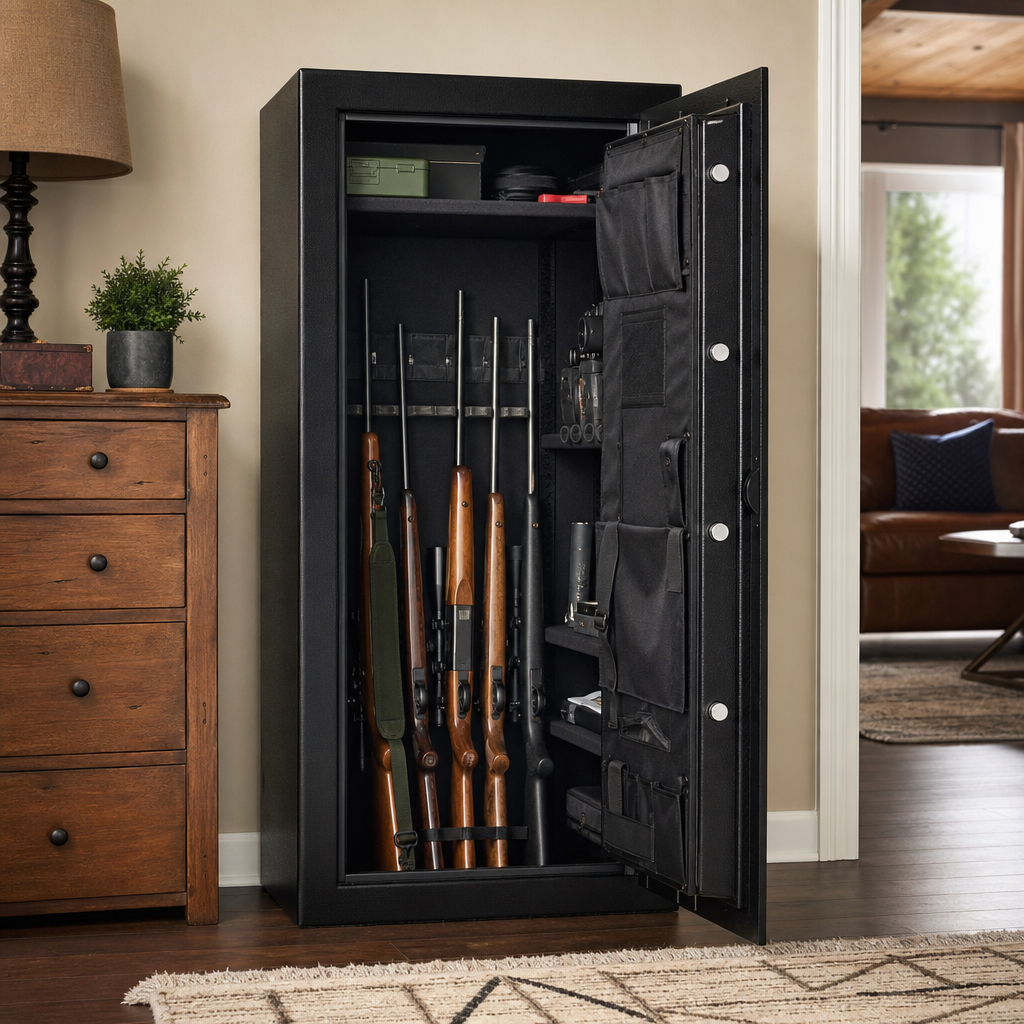
Buying a budget gun safe used to mean accepting thin steel, weak locks, and almost no fire protection. That is no longer true. The most affordable gun safes with advanced features now include upgraded locking systems, pry-resistant doors, modular interiors, app-connected monitoring, and fire ratings that were once limited to premium models. For anyone building a practical home defense setup, storing hunting rifles responsibly, or meeting household safety expectations, comparing affordable gun safes carefully matters more than chasing the lowest price tag.
In this guide, I am treating affordable gun safe comparisons as a full category, not a quick product roundup. After reviewing entry-level cabinets, big-box-store safes, and feature-rich value models over the years, I have found that price alone tells you almost nothing about real security. A $499 safe can outperform a $799 model if it has better door construction, stronger boltwork, and a more useful interior. Conversely, a safe loaded with marketing claims can still fail the basic test of slowing unauthorized access. The goal is to identify which advanced features actually matter, which brands consistently deliver value, and how to compare options without getting distracted by glossy branding.
Key terms are worth defining upfront. An affordable gun safe usually sits in the entry to lower-mid price range, often from roughly $300 to $1,200 depending on size. Advanced features include electronic or redundant locks, fire insulation, anti-pry reinforcements, adjustable shelving, lighting, dehumidification support, and smart alerts. Gun safe comparisons look beyond dimensions and count ratings to evaluate construction quality, security design, and long-term usability. Brand spotlights help because companies often follow recognizable patterns: some prioritize value storage, others emphasize fire protection, and a few offer strong feature sets for the price.
This page serves as a hub for gun safe comparisons and brand spotlights within the broader gun safes and safety category. If you are deciding between a compact biometric handgun safe, a budget long-gun safe, or a larger fire-rated cabinet for mixed firearms and documents, the same framework applies. Start with theft resistance, verify lock quality, examine fire claims, and only then weigh convenience upgrades. That approach leads to smarter purchases and fewer regrets, especially when the safe is expected to protect firearms, keep children out, and support responsible ownership for years.
What makes an affordable gun safe worth buying
The best affordable gun safes balance deterrence, delay, and daily usability. In plain terms, they should be difficult enough to attack that a smash-and-grab burglar gives up or loses valuable time, while still being convenient enough that you actually use the safe every day. In my experience, the biggest mistake shoppers make is focusing on storage capacity first. A “24-gun” label often reflects unrealistic manufacturer math based on unscoped rifles packed tightly together. In practice, many so-called 24-gun safes hold 10 to 14 long guns comfortably once optics, slings, and shelves are involved.
Door design is usually more important than advertised steel gauge on the body. Many affordable safes use formed steel bodies paired with reinforced door edges, live locking bolts, and internal hinges or protected external hinges. That combination can provide better real-world resistance than a flimsy body with a flashy lock panel. Pay attention to bolt diameter, number of active bolts, and whether the lock secures the top, side, and bottom of the door. Continuous welds, hard plates protecting the lock, and relockers are also meaningful value indicators in this price class.
Fire protection requires careful reading. Some affordable brands cite thirty to sixty minutes at temperatures ranging from 1,200 to 1,400 degrees Fahrenheit, but test methods vary widely. Independent certification is stronger than self-reported numbers, though it is still less common in lower-priced gun safes than in document safes. Fireboard thickness, expanding door seals, and overall mass all influence performance. A light safe with a high fire claim deserves skepticism. For most buyers, modest verified fire resistance plus strong theft deterrence is a better combination than inflated fire marketing and weak construction.
Advanced features are only valuable when the core safe is sound. Interior lighting helps in low light. A power outlet supports dehumidifiers and charging accessory batteries. Biometric entry can speed access for a defensive handgun. Wi-Fi alerts can notify you when a door opens. But none of those upgrades compensate for poor anchoring, bad lock reliability, or a door frame that flexes under pry pressure. Always evaluate the structure first, then the technology layered on top of it.
Core comparison criteria for gun safe comparisons and brand spotlights
When comparing affordable gun safes across brands, I use a repeatable checklist. It keeps the process grounded in objective features instead of marketing language. The table below shows the criteria that matter most for a sub-pillar hub on gun safe comparisons and brand spotlights.
| Criterion | What to check | Why it matters |
|---|---|---|
| Steel and body construction | Body gauge, door thickness, weld quality, reinforced frame | Determines resistance to bending, cutting, and prying |
| Lock type | UL-listed electronic, mechanical dial, biometric, redundant access | Affects reliability, access speed, and serviceability |
| Boltwork | Number of live bolts, dead bars, top and bottom engagement | Improves pry resistance and door security |
| Fire protection | Minutes, temperature, seal type, testing method | Helps protect firearms, optics, and documents during a fire |
| Interior flexibility | Adjustable shelving, door organizers, scope clearance | Makes real storage capacity far more useful |
| Mounting options | Pre-drilled anchor holes, hardware, floor compatibility | Anchoring is essential to prevent removal of the safe |
| Smart and convenience features | Lighting, outlets, humidity control, app alerts | Adds daily usability without replacing core security |
| Warranty and support | Lock warranty, fire replacement, customer service reputation | Reduces long-term ownership risk |
This framework helps answer the questions most buyers actually have. Is the safe secure enough for a home? Will it fit modern rifles with optics? Can it keep out children? Is the electronic keypad dependable? Is the fire rating believable? A proper gun safe comparison answers those questions directly. It also creates cleaner pathways to related articles on biometric models, fire-rated safes, rifle storage solutions, and detailed brand reviews.
Brand spotlights: where the value leaders usually stand out
Several brands consistently appear in affordable gun safe comparisons because they target the same broad market with different strengths. Stack-On and similar cabinet-focused makers often win on entry price and simple organization, but their lighter construction means they work best as locked storage rather than true burglary-resistant safes. They are useful in low-risk settings, apartments, or as secondary storage, yet buyers should be realistic about the level of forced-entry protection they provide.
Winchester-branded safes sold through major retailers are common comparison points because they offer recognizable branding, decent interiors, and frequent seasonal discounts. Depending on the exact line, these models can be a strong value when the sale price aligns with solid door construction and usable shelving. The challenge is inconsistency across retailer-exclusive versions. One Winchester model may be a bargain, while another trades too much steel quality for a polished finish and higher capacity label.
Cannon often earns attention for approachable pricing and family-oriented feature sets such as wide interiors, electronic locks, and respectable fire claims. In side-by-side evaluations, Cannon models can appeal to first-time safe buyers who want a traditional safe appearance and better amenities than a bare-bones cabinet. Still, construction details vary by series, so buyers should compare actual specifications rather than assuming all Cannon safes perform alike.
Sports Afield has become a notable value player by bundling features that matter to practical owners: programmable electronic locks, decent organization, and competitive fire ratings at big-box prices. I have seen Sports Afield models deliver better day-to-day usability than some more expensive rivals because the interiors are laid out sensibly for scoped rifles and mixed storage. That matters in real homes, where ammunition, documents, and handguns often share space with long guns.
SecureIt stands apart because its design philosophy prioritizes fast access, modular organization, and realistic storage for modern sporting rifles. These products do not always compete on traditional fire-lined-safe expectations, but they are excellent examples of advanced features solving actual user problems. For certain buyers, especially those focused on access speed and organized readiness, SecureIt can be a better fit than a heavier but less functional box.
Hornady, Vaultek, and Fort Knox also deserve attention in the broader brand spotlight conversation, especially for handgun safes, modular accessories, and premium construction benchmarks. Even when those brands exceed strict budget territory, they help define what advanced features should look like when executed well. That perspective makes lower-cost comparisons sharper and more useful.
Which advanced features truly matter in low-cost models
Electronic locks are often the first upgrade worth paying for, provided the lock comes from a reputable source and has a key backup or external battery override. A good keypad improves compliance because owners are more likely to secure firearms consistently when access is quick. Mechanical dial locks remain durable and familiar, but many households prefer electronic speed for everyday use. Biometrics can be excellent on handgun safes, though fingerprint readers in cheap units are less reliable than better keypad systems.
Adjustable interiors are another high-value feature. Affordable safes that include barrel rests, movable shelves, and door organizers often feel significantly larger in practice than fixed-layout competitors. This is especially important for AR-style rifles, hunting rifles with large scopes, and shared storage for passports, cash, or backup drives. A flexible interior extends the useful life of the safe because your storage needs almost always change.
Integrated power is more than a luxury. A built-in outlet allows you to run a GoldenRod-style dehumidifier, charge accessory batteries, or add motion lighting without awkward cable routing. In humid regions, this matters because rust prevention is part of gun safety. A cheap safe with no humidity management can create maintenance problems that offset any upfront savings. Likewise, door seals and internal carpeting should be evaluated for function, not just appearance.
Smart monitoring features are emerging even in lower-priced categories. Door-open alerts, tamper notifications, and access logs can add accountability in homes with multiple authorized users. These tools are useful, but they should be viewed as supplementary. App connectivity does not strengthen steel or replace physical anchoring. If you want one advanced feature that consistently improves outcomes, prioritize a better lock and stronger interior layout before chasing wireless extras.
How to match the right affordable safe to your use case
A homeowner storing several hunting rifles in a low-crime suburb needs a different safe than an apartment dweller who prioritizes discreet installation and quick handgun access. For long-gun storage on a budget, look for a model that can be bolted to concrete, has a reinforced door frame, and offers enough interior depth for scoped rifles. For bedside or closet handgun storage, compact biometric or keypad safes from established makers can be smarter than overspending on a large unit that delays access.
If child access prevention is the primary goal, reliable locking behavior matters more than premium cosmetics. A modestly priced safe that is bolted down and used consistently is better than an expensive safe left open because it is inconvenient. For collectors or owners in high-theft areas, affordable models may be best used as layered security within a broader plan that includes alarm systems, cameras, concealed placement, and insurance documentation.
Think in terms of total ownership cost, not shelf price. Delivery, installation, anchoring hardware, dehumidifiers, and replacement shelving can change the value equation quickly. I have seen buyers save $150 on a sale model only to spend more later correcting a bad interior or replacing an unreliable keypad. The right purchase is the safe that meets your risk profile, fits your firearms honestly, and remains practical enough to use every day.
Final takeaways for comparing affordable gun safes
Comparing the most affordable gun safes with advanced features comes down to disciplined evaluation. Start with structure, lock quality, boltwork, anchoring, and realistic capacity. Then assess fire protection and convenience features. Brand spotlights are useful because manufacturers tend to repeat strengths and weaknesses across product lines, but every model still deserves individual review. A low price is only a bargain when it buys meaningful protection, not just steel-colored furniture.
As a hub for gun safe comparisons and brand spotlights, this topic should guide readers toward deeper pages on biometric safes, fire-rated models, handgun safes, modular rifle storage, and brand-specific reviews. The central lesson remains simple: affordable does not have to mean basic, but advanced features only matter when the foundation is secure. Choose a safe that fits your real firearms, your home, and your daily habits, then anchor it properly and maintain it well.
If you are shopping now, use the comparison criteria in this guide to narrow your shortlist before looking at sales language. That one step will help you buy a gun safe that delivers better security, better usability, and better long-term value.
Frequently Asked Questions
1. What advanced features should you realistically expect in the most affordable gun safes today?
Affordable gun safes have improved dramatically, so buyers no longer need to assume that a lower price automatically means bare-minimum protection. In today’s market, many budget-friendly models include upgraded locking systems such as electronic keypads, anti-tamper relockers, and backup key access. It is also common to find pry-resistant door designs with reinforced edges, multiple locking bolts, and concealed or more protected hinges that help resist forced entry. These are features that used to be associated mostly with higher-end safes, but they are now appearing in more accessible price ranges.
Beyond security, many affordable gun safes now offer practical interior upgrades. Modular shelving, adjustable barrel rests, door organizers, and convertible storage layouts make it easier to store rifles, shotguns, handguns, ammunition, and important documents in one compact footprint. Some models also include factory-installed power outlets or USB ports for dehumidifiers, lighting, or accessory charging. App-connected monitoring, vibration alerts, and tamper notifications are becoming more common as well, especially in safes designed for homeowners who want a basic layer of smart oversight without paying premium pricing.
Fire protection has also improved in the value segment. While you should not expect the same insulation or test standards found in expensive vaults, many affordable safes now carry useful fire ratings that offer meaningful protection for a limited period. In practical terms, the best low-cost options combine solid entry-level security, flexible storage, and enough fire resistance to meet the needs of many households. The key is to compare actual construction details rather than marketing language alone.
2. Are affordable gun safes actually secure enough for home defense, hunting rifles, and family safety?
For many buyers, the answer is yes, provided expectations are realistic and the safe is matched to the job. A well-chosen affordable gun safe can provide a strong layer of protection against unauthorized access, especially in homes with children, visitors, or roommates. It can also help organize defensive firearms and hunting rifles in a way that balances readiness with responsible storage. For most households, the goal is not to create an impenetrable commercial vault, but to create enough delay, control, and accountability to prevent casual theft, misuse, or unsafe access.
That said, not all budget safes perform equally. Security depends heavily on steel thickness, door reinforcement, bolt design, lock quality, and whether the safe is anchored properly. A less expensive model with decent construction and solid installation can outperform a larger but poorly built safe that relies mostly on appearance. If you are storing a few long guns for home defense or seasonal hunting use, many affordable safes will be sufficient if they include a reliable lock, reinforced door frame, and anchoring hardware. If you own a large collection, valuable optics, or heirloom firearms, moving into a heavier and more robust safe may be the better long-term choice.
Family safety is often where these safes provide the most value. Quick-access features, interior organization, and access-code management can make it easier to secure firearms consistently rather than leaving them out due to inconvenience. In that sense, an affordable safe with useful modern features can be a very smart solution. The best choice is the one you will use every day, install correctly, and maintain responsibly.
3. How important are fire ratings when comparing budget gun safes with advanced features?
Fire ratings matter, but they should be interpreted carefully. A fire rating gives you a general idea of how long the safe may protect its contents under certain heat conditions, but not all ratings are created equally. Some are based on internal manufacturer testing, while others may rely on more standardized methods. When comparing affordable gun safes, it is important to look beyond the headline number and understand what that rating actually represents. A safe labeled for 30 or 60 minutes can offer valuable protection in many house-fire scenarios, but the construction quality, door seals, and insulation materials often tell a more complete story than the sticker alone.
In the budget category, fire protection is often one of the clearest signs of how manufacturers are trying to add advanced value. Better entry-level safes may include expanding heat seals, layered drywall-style insulation, and tighter door gaps that help block smoke and heat. These features can be useful not just for firearms, but also for documents, passports, and small valuables stored inside. However, buyers should understand that affordable fire-rated safes are still generally built with compromises. The rating may be adequate for many residential situations, but it should not be treated as equal to the heavier insulation systems found in premium safes.
The practical approach is to weigh fire protection alongside burglary resistance, size, and installation location. If wildfire risk, detached garage storage, or document protection is a major concern, fire rating should move higher on your priority list. If your main concern is keeping defensive firearms secured from children or unauthorized users, lock reliability and access speed may matter more. In most cases, the best affordable gun safe is the one that offers balanced performance rather than chasing one impressive specification.
4. Do smart features like app monitoring and electronic locks make a budget gun safe better or less reliable?
Smart features can absolutely make an affordable gun safe more useful, but only if they are implemented well and supported by good core construction. Electronic locks are now common on budget-friendly safes because they offer quick access, customizable codes, and easier day-to-day use than many traditional dial locks. For homeowners who want fast entry in a home defense situation or simply prefer convenience, a quality electronic keypad can be a major advantage. App-connected features such as open-door alerts, tamper notifications, and activity logs can also add peace of mind, especially if you travel often or want better awareness of how and when the safe is accessed.
At the same time, smart features should be viewed as enhancements, not substitutes for physical security. A safe with thin steel and weak boltwork does not become truly secure just because it has Bluetooth or a mobile app. Reliability also matters. Electronic systems depend on battery condition, component quality, and sensible backup options. When comparing safes, look for clear battery access, low-battery warnings, backup keys or external power options, and a lock brand or system with a solid reputation. The simplest test is to ask whether the safe would still be a good buy if the smart feature were removed. If the answer is no, it may be relying too much on technology as a selling point.
For many buyers, the ideal setup is a budget safe with a dependable electronic lock, basic tamper resistance, and limited but useful smart monitoring. That combination gives you better daily usability without overcomplicating ownership. In other words, smart features are beneficial when they support fast access, consistent security habits, and visibility into safe activity, but they should never distract from the fundamentals of steel, locking strength, and proper installation.
5. What is the best way to compare affordable gun safes so you get real value instead of marketing hype?
The smartest way to compare affordable gun safes is to focus on measurable construction details first and promotional claims second. Start with the body and door steel, because thickness and reinforcement directly affect resistance to prying and attack. Then compare the lock type, number and size of locking bolts, hinge protection, and whether the safe includes relockers or anti-drill features. Fire rating should be reviewed next, along with the type of insulation and whether the manufacturer explains its testing method. If two safes are close in price, the one with clearer construction specifications is often the better choice than the one relying on broad advertising language such as “military style” or “maximum security.”
Interior functionality is another area where real value shows up quickly. Affordable safes with adjustable shelves, handgun pockets, door organizers, and configurable long-gun storage are usually easier to live with over time. This matters because a safe that fits your actual firearms and accessories is more likely to stay organized and be used properly. Pay attention to external dimensions, internal capacity, and realistic gun-count claims, since manufacturers often rate capacity very optimistically. A “24-gun” safe may hold far fewer rifles once optics, slings, and modern stock designs are factored in.
Finally, consider installation, warranty support, and long-term ownership costs. A safe that can be securely anchored in a closet, corner, or dedicated room often delivers better real-world protection than a larger model that is harder to place and leaves no room for proper mounting. Check whether the company offers replacement key support, lock service, fire or break-in warranty terms, and responsive customer service. Real value comes from a safe that combines solid construction, useful advanced features, realistic capacity, and dependable support at a price you can justify. That is the difference between buying a low-cost product and making a smart budget-conscious investment.