
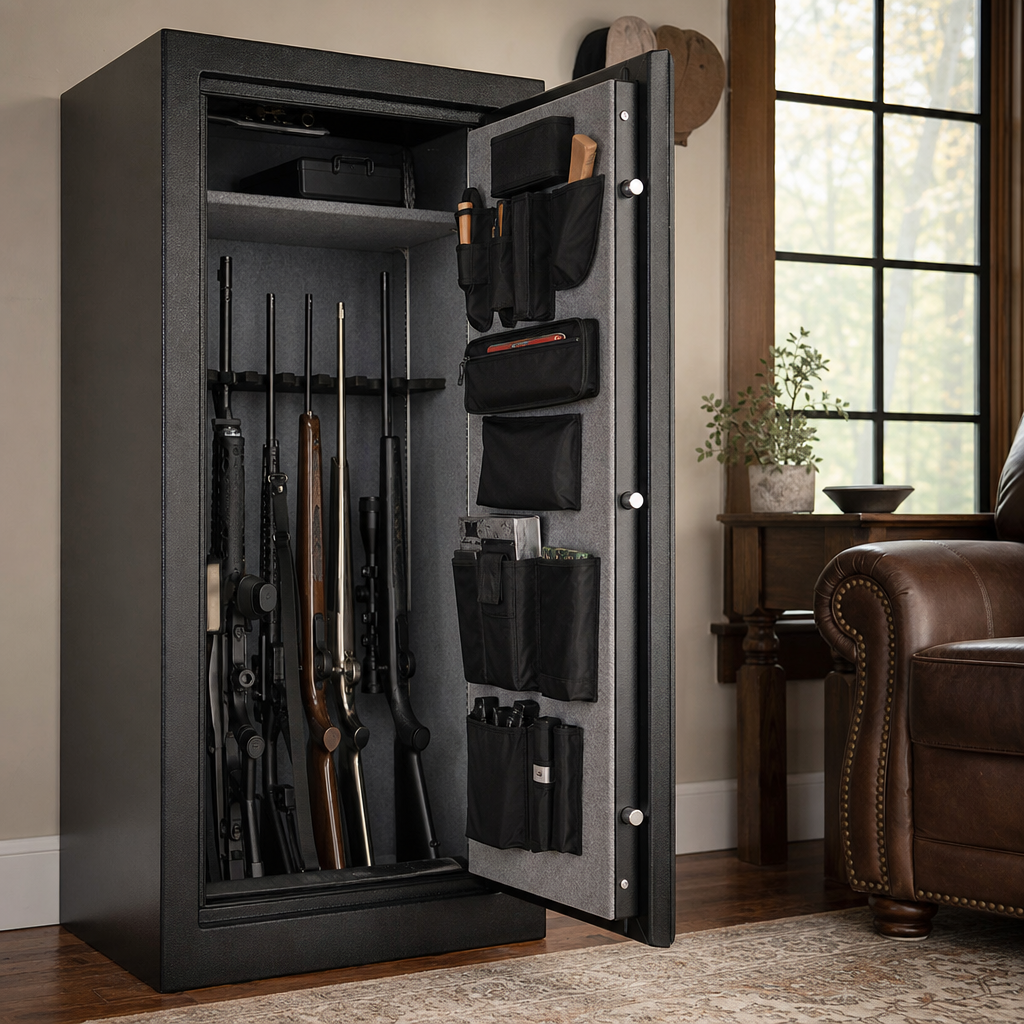
Quick-access gun safes solve a specific problem: they keep a defensive firearm secured from children, guests, and theft while still allowing authorized access in seconds. For homeowners balancing readiness with responsible storage, the best gun safe brands for quick-access storage solutions are the ones that combine reliable lock technology, durable construction, sensible interior layout, and proven customer support. I have installed and tested bedside vaults, pistol boxes, vertical rifle safes, and closet-ready units across apartments, suburban homes, and rural properties, and the pattern is consistent: speed matters, but speed without consistency is a liability. This hub article covers gun safe comparisons and brand spotlights for the quick-access category, explaining what separates premium brands from budget imitators, which features actually matter in daily use, and how to evaluate bedside, vehicle, drawer, and long-gun options. If you are researching Vaultek, Fort Knox, V-Line, Hornady, SecureIt, Liberty, SnapSafe, or GunVault, this guide will help you compare them in plain terms and identify which style of safe fits your storage goals, firearm type, and risk tolerance.
Quick-access storage generally refers to safes or lockboxes designed to open in roughly one to five seconds through a biometric scanner, electronic keypad, RFID reader, mechanical simplex lock, or key override. The category includes compact handgun safes for nightstands, under-bed long-gun safes, vehicle lockboxes, and vertical rifle cabinets intended for fast retrieval. The most important distinction is that these products prioritize immediate authorized entry, unlike heavy traditional gun safes optimized mainly for burglary resistance and fire protection. That difference affects lock choice, steel thickness, mounting method, battery dependence, and internal configuration. Because this page serves as a hub for gun safe comparisons and brand spotlights, it focuses on decision criteria you can use across the entire market rather than treating every model as interchangeable.
This topic matters because storage mistakes usually happen in the gap between convenience and discipline. Owners skip full-size safes when they believe access will be too slow, then leave a handgun unsecured in a drawer or on a shelf. A well-chosen quick-access safe closes that gap. It reduces unauthorized handling, supports safer home-defense readiness, and helps meet storage expectations that may be imposed by state law, insurance carriers, landlords, or family circumstances. It also prevents common buying errors, such as assuming biometric locks are automatically superior, assuming heavier always means better, or overlooking mounting. A twelve-gauge steel lockbox with a good keypad but poor anchor points can be carried out by a thief in seconds. A mechanical simplex lock may be slower on paper than fingerprint access, yet more dependable under cold hands, low batteries, and repeated use. The best brands understand those tradeoffs and design around real conditions, not marketing claims.
What makes a quick-access gun safe brand worth buying
The best quick-access gun safe brands consistently get five fundamentals right: access reliability, physical security, mounting flexibility, interior practicality, and quality control. Access reliability means the lock opens when it should and resists false reads, lag, and programming glitches. In my testing, this is where established brands separate themselves from low-cost imports. A biometric scanner that works nine out of ten times is not acceptable for defensive storage. Physical security includes steel gauge, pry resistance, hinge protection, lock bolt engagement, and whether the safe can withstand basic attack tools long enough to matter. Mounting flexibility matters because a small safe that is not bolted down offers little theft resistance. Interior practicality covers fit for full-size pistols, optics, spare magazines, lights, and suppressor-height sights. Quality control includes lid alignment, gas strut durability, electronics consistency, and support when something fails.
Shoppers should also understand ratings and terminology. Many quick-access products are not true burglary safes in the same sense as UL-rated residential security containers or TL-rated commercial safes. That does not make them useless; it simply means they serve a narrower purpose. A bedside handgun vault is designed to delay tampering, restrict unauthorized access, and enable fast retrieval. It is not intended to replace a dedicated long-term storage safe for a collection. Good brands are honest about that role. They specify steel thickness, lock type, battery behavior, and approved mounting surfaces rather than hiding behind vague terms like military grade or heavy duty.
Best gun safe brands for bedside and drawer handgun access
For compact handgun storage, Vaultek, Fort Knox, V-Line, Hornady, and GunVault are the names most buyers encounter, but they occupy different positions. Vaultek has become a leading brand for tech-forward quick-access storage because its products often combine biometric entry, keypad backup, app-based controls on select models, interior lighting, and refined fit and finish. Models such as the VT and MX series are popular for nightstand use because they accommodate optics-ready pistols and usually open quickly with a spring-assisted lid. Vaultek’s strengths are usability and feature integration. Its tradeoff is dependence on electronics and a higher price relative to simpler lockbox designs.
Fort Knox and V-Line are the strongest recommendations for buyers who want mechanical reliability over digital convenience. Both are known for simplex-style pushbutton locks that do not require batteries and can be opened by touch in the dark after practice. Fort Knox pistol boxes are built from thick steel with strong weld quality and a reputation for durability. They feel more industrial than sleek, but that is part of their appeal. V-Line products provide a similar philosophy at several sizes, including in-drawer and closet-friendly formats. In real homes, these brands work especially well for owners who train regularly and prefer a consistent combination they can dial in under stress without depending on fingerprint recognition.
Hornady competes effectively in the RFID segment. Its RAPiD line allows opening with a wristband, key fob, sticker tag, keypad, or key, depending on model. This approach can be genuinely useful when a safe is mounted under a desk, inside a closet, or behind furniture where a conventional lid would be awkward to reach quickly. The caution is that RFID adds another item to manage. If the tag is misplaced or left accessible, convenience becomes a vulnerability. GunVault helped popularize the category years ago and still appears widely in retail channels. Some models remain practical entry-level choices, but consistency has varied by generation, so buyers should compare current build quality and lock responsiveness carefully rather than buying on brand recognition alone.
| Brand | Best use | Main lock options | Key strength | Primary tradeoff |
|---|---|---|---|---|
| Vaultek | Nightstand and modern pistol storage | Biometric, keypad, app-enabled on select models | Fast access and polished user experience | Higher cost and battery dependence |
| Fort Knox | Bedside defensive handgun storage | Mechanical simplex | Excellent reliability and heavy steel construction | Fewer convenience features |
| V-Line | Drawer, closet, and compact home placement | Mechanical simplex | No batteries and straightforward operation | Plainer interior and industrial styling |
| Hornady | RFID-enabled hidden access setups | RFID, keypad, key | Flexible opening methods and varied form factors | RFID management requires discipline |
| GunVault | Budget-conscious bedside buyers | Biometric or keypad depending on model | Broad availability and easy setup | Model-to-model consistency can vary |
Best brands for quick-access long-gun and staged home-defense storage
Quick-access long-gun storage is a narrower category, but it matters for owners staging a defensive rifle or shotgun securely. SecureIt is one of the most recognizable brands here because its Agile and Fast Box style products emphasize rapid access, modular organization, and practical deployment inside closets, bedrooms, mudrooms, or safe rooms. Instead of treating a long gun as a loose item inside a traditional safe, SecureIt focuses on ready positioning, accessory accommodation, and fast retrieval. For AR-platform rifles with lights, optics, slings, and spare magazines, that layout matters. A narrow cabinet that forces owners to remove accessories or awkwardly angle the rifle will not support true quick access.
Liberty also deserves attention, particularly where buyers want a bridge between a full residential safe and a faster-access compartment. Some Liberty products and accessories address handgun and long-gun access within larger security plans, and the brand’s overall reputation for dealer support and broad product range gives it weight in comparison shopping. SnapSafe enters the conversation through modular and specialty storage solutions that can fit spaces where welded safes are hard to move. For apartment dwellers or owners using second-floor rooms, modularity can be a practical advantage. The limitation is that modular systems differ from welded bodies in seam design and assembly demands, so they should be evaluated on their intended role rather than compared casually with premium plate-steel boxes.
For vertical fast-access rifle safes, the best brands provide secure muzzle and stock positioning, enough depth for optics, and anchor points that let the owner mount directly into wall studs or floor structures. Slim profiles are useful, but not if they force compromised staging. I have seen buyers choose the thinnest cabinet available, only to discover that a rifle with a red dot magnifier combo or side-mounted light catches on the door frame during retrieval. The better brands account for realistic rifle setups. They also provide internal retention options that reduce shifting when the door swings open quickly.
How to compare biometric, keypad, RFID, and mechanical locks
The fastest answer to the lock question is this: the best lock type is the one you can operate consistently, under stress, in darkness, and half awake. Biometric safes appeal to many buyers because fingerprint access appears instantaneous. On good units from reputable brands, biometric entry can be very fast, especially after enrolling the same finger multiple times and maintaining a clean scanner. But fingerprints are variable. Dry skin, moisture, cuts, and angle changes can reduce success rates. That is why a biometric safe should always have a fast secondary method, usually a keypad. Buyers who will not practice with that backup should not choose biometric first.
Electronic keypads are often the most balanced option. They support quick code entry, work in darkness with familiar button patterns, and avoid some fingerprint limitations. Their weakness is battery dependence and possible failure in low-quality electronics. Good brands mitigate this with low-battery warnings, external power options, and reliable membrane or tactile buttons. RFID systems are useful in specific setups, especially hidden or awkwardly mounted safes, but they add a credential that must remain secure. Mechanical simplex locks remain the gold standard for many experienced owners because they are durable, battery-free, and predictable. Their only real downside is the need to learn the sequence thoroughly and accept slightly slower novice use.
Installation, placement, and mistakes that weaken any brand
A great quick-access safe can perform badly if it is installed poorly. Mounting is not optional. Small handgun safes should be bolted to solid wood, steel framing, concrete, or a manufacturer-approved surface. Cable attachments are better than nothing for temporary situations, such as hotel travel or vehicle storage, but they are not equivalent to hard mounting. Placement should balance concealment, reachability, and household traffic. In most homes, the best spot is not necessarily on top of the nightstand. Inside a drawer, on a lower shelf anchored from below, or on the interior wall of a closet can reduce visibility without sacrificing access.
Common mistakes include buying too small, ignoring lid clearance, and failing to test the safe with the actual firearm setup. A pistol safe that barely fits a handgun without a weapon light becomes frustrating and eventually gets misused. Another error is relying on factory defaults. Users should change master codes, enroll multiple fingers if using biometric access, and test with both dominant and support hand. Battery replacement should be scheduled, not postponed until a warning chirp. For households with children, responsible storage also includes controlling backup keys and access tags with the same seriousness as the firearm itself.
Which brands fit different buyers and how this hub supports deeper comparisons
The best brand depends on your use case. If you want a premium bedside handgun safe with advanced features and strong aesthetics, Vaultek is often the first brand to compare. If you value battery-free reliability above everything else, Fort Knox and V-Line are the benchmarks. If hidden placement and alternate opening methods matter, Hornady deserves a close look. If you need staged long-gun access, SecureIt is a leading reference point. If you are balancing modularity, broader safe planning, or dealer-supported ecosystems, Liberty and SnapSafe enter the shortlist. Budget buyers can still consider GunVault, but should review current models carefully and prioritize mounting and lock consistency over marketing promises.
As a hub for gun safe comparisons and brand spotlights, this page is meant to guide your next step. Use it to narrow the field by firearm type, lock preference, installation environment, and tolerance for electronics. Then compare individual models within each brand, focusing on steel thickness, dimensions, opening orientation, anchor options, and backup access. The main benefit of doing the work upfront is simple: you end up with storage you will actually use every day, and daily use is what makes firearm security effective. Choose two or three brands that match your priorities, verify fit with your exact firearm setup, and move forward with a mounted quick-access safe that supports both readiness and responsible ownership.
Frequently Asked Questions
What should I look for when comparing the best gun safe brands for quick-access storage solutions?
Start with the features that directly affect speed, security, and long-term reliability. A quick-access gun safe should open fast under stress, but it also has to prevent unauthorized access from children, guests, and opportunistic theft. That means the lock system deserves the closest attention. Reputable brands typically offer biometric scanners, electronic keypads, RFID entry, mechanical simplex-style push-button locks, or backup keys. The best option is usually the one that balances speed with consistency. A fast biometric reader is convenient, but it should also have a proven track record for reading different fingers in less-than-perfect conditions. A mechanical or high-quality electronic lock can be slower by a second or two, but often offers excellent dependability.
Construction quality is the next major factor. Better brands use thicker steel, reinforced doors, stronger hinge systems, and anti-pry designs that resist quick smash-and-grab attacks. For compact handgun vaults, you want solid lock engagement and a housing that does not flex easily. For vertical rifle safes, look for a stable footprint, tamper-resistant access points, and internal layouts that actually accommodate optics, lights, and slings instead of just a bare firearm. Interior design matters more than many buyers realize. Foam-lined cradles, adjustable shelves, interior lighting, and well-placed access angles can make a big difference when retrieving a firearm quickly in low light.
Finally, pay attention to brand reputation and support after the sale. The best gun safe brands for quick-access storage solutions usually stand out because they have consistent quality control, clear installation guidance, warranty coverage, replacement part availability, and customer service that responds when something goes wrong. A safe is not just a box with a lock; it is a long-term security product. If a brand has a pattern of failed electronics, weak biometric performance, or unhelpful support, those issues matter just as much as the feature list. In practical terms, the best brand for you is the one that combines reliable opening speed, durable build quality, realistic storage design, and confidence that the safe will perform when needed.
Are biometric quick-access gun safes reliable enough for home defense use?
They can be, but reliability depends heavily on the brand, sensor quality, and how the safe is set up and maintained. A well-made biometric quick-access safe from a reputable manufacturer can provide very fast access and work extremely well for bedside or closet storage. That said, biometrics are not all equal. Some low-end sensors struggle with dry skin, dirty fingers, partial finger placement, or inconsistent enrollment. In real-world use, that can turn a fast entry method into a frustrating one. Better brands address this with higher-quality scanners, improved software, and the ability to store multiple fingerprint angles for the same user.
For defensive use, it is smart to think of biometrics as part of a layered access system rather than the only access method you trust blindly. Many of the strongest quick-access models include a biometric reader along with a keypad, RFID, or backup key. That redundancy matters. If your finger is wet, injured, or not placed properly during a high-stress moment, a secondary method gives you another immediate way in. This is one of the clearest signs of a well-designed product from a serious brand: it anticipates failure points and gives the owner practical options.
Biometric reliability also improves with proper setup. Enroll the same finger multiple times from slightly different positions, store several fingers from your dominant and support hand, and test the safe regularly in realistic conditions, including darkness and awkward body positioning. Replace batteries on schedule and keep the sensor clean. When buyers do those things and choose a trusted brand, biometric safes can be highly effective for quick-access storage. If you want the simplest possible reliability with fewer electronic variables, a mechanical push-button design may still be preferable. The key point is that biometric safes are not automatically good or bad; the quality of the implementation is what determines whether they are truly dependable for defensive access.
Which is better for quick-access storage: a bedside pistol safe or a vertical rifle safe?
The better choice depends on what firearm you intend to access quickly and where you plan to use it. A bedside pistol safe is often the most practical solution for many homeowners because it offers fast access to a defensive handgun in the room where they are most likely to need it at night. These safes are compact, easy to mount discreetly, and designed for one-handed or near-instant opening. Good brands focus on fast lid action, intuitive controls, and interior shapes that let you establish a secure firing grip during retrieval. For people prioritizing simplicity and speed in a bedroom setting, a handgun vault is often the most efficient quick-access option.
A vertical rifle safe serves a different role. It is useful for owners who prefer a long gun for home defense and want secure but rapid access in a closet, corner, or safe room environment. These units are usually taller and narrower, with internal supports that keep an AR-style rifle, shotgun, or scoped carbine upright and ready. The challenge is that quick-access long-gun storage has to manage more variables: optics clearance, magazine length, sling placement, and the overall footprint of the safe itself. The better brands solve this with smart interior geometry, strong mounting systems, and lock designs that open smoothly without requiring awkward manipulation.
In many homes, the best answer is not either-or but role-based storage. A bedside pistol safe provides the fastest immediate access at night, while a vertical rifle safe secures a larger defensive platform nearby without leaving it exposed. When comparing brands, focus on whether they build the specific type of quick-access safe you need well. Some manufacturers excel in compact handgun vaults but offer only average long-gun options, while others are much stronger in vertical rifle storage. Choosing the right format first, then the right brand within that format, usually leads to the best result.
How important is installation and mounting for a quick-access gun safe?
It is extremely important. Even the best quick-access gun safe can be compromised if it is not mounted properly. Compact handgun safes are especially vulnerable to being carried away if they are simply left loose in a drawer, on a shelf, or under a bed. A thief may not open the safe on the spot, but removing the whole unit defeats much of the purpose of secure storage. Mounting the safe to a solid structure, whether that is a bed frame, wall stud, floor, nightstand reinforcement, or closet base, dramatically improves real-world security.
Installation also affects access speed and usability. A safe should be mounted where you can reach it naturally, open it fully, and retrieve the firearm without awkward hand positioning or obstruction. This is one of the biggest differences between a safe that feels good in a showroom and one that actually works under stress. Door swing direction, lid clearance, lighting conditions, and body position all matter. Better brands usually provide thoughtful mounting patterns, hardware options, and instructions that make it easier to install the safe securely without sacrificing accessibility. Some models are designed for horizontal drawer use, others for bedside side-mounting, and others for upright closet placement. Matching the safe’s design to the installation location is just as important as choosing the lock type.
For vertical rifle safes, secure anchoring is even more critical because the units are taller, heavier, and more likely to tip or shift if not installed correctly. A well-mounted rifle safe should remain stable during opening, resist pull-over force, and allow the firearm to be withdrawn cleanly. If you are investing in one of the best gun safe brands for quick-access storage solutions, do not treat installation as an afterthought. Proper mounting turns a good safe into a genuinely effective security tool by improving theft resistance, safety, and dependable access when it counts.
Do premium gun safe brands really justify the higher price for quick-access models?
In many cases, yes, because the differences are often more meaningful than they appear on a spec sheet. Premium brands tend to charge more not just for the name, but for better engineering, tighter manufacturing tolerances, more durable components, and stronger quality control. In a quick-access safe, those advantages show up in the details that matter most: lock consistency, lid or door operation, steel rigidity, interior fit, battery performance, and long-term dependability. A cheaper safe may look similar online, but if the keypad becomes unreliable, the biometric reader is inconsistent, or the door sticks slightly under pressure, that lower upfront cost stops looking like a bargain very quickly.
Higher-end brands also tend to offer better user experience over time. The controls are usually more intuitive, the access sequence is smoother, and the internal layout is more practical for real firearms with accessories attached. That matters if you are storing a pistol with a light, a red dot, or a spare magazine, or if you need a vertical rifle safe that actually accommodates an optic-equipped carbine without forcing awkward placement. Better customer support is another major part of the value equation. If a battery tray breaks, a lock needs service, or a programming issue comes up, established brands are generally more capable of helping you resolve the problem quickly.
That said, the most expensive option is not automatically the best one for every buyer. The goal is to pay for meaningful performance, not luxury for its own sake. Some mid-range brands deliver excellent value if