
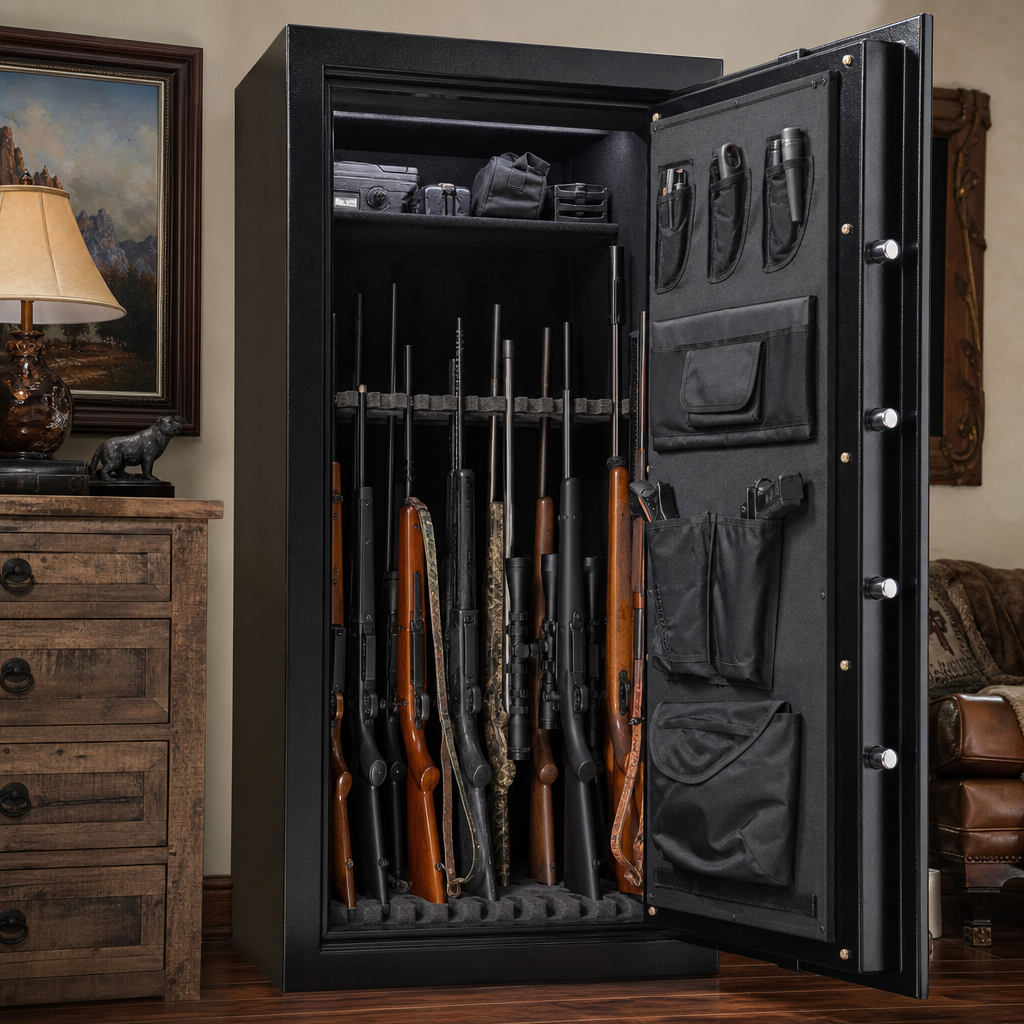
Choosing the best gun safe brands for storing multiple firearms is not just a shopping decision; it is a security, safety, and long-term storage strategy. In this category, “multiple firearms” usually means owners who need organized capacity for several long guns, handguns, magazines, documents, and accessories without compromising access or protection. A quality multi-gun safe should balance burglary resistance, fire protection, interior flexibility, lock reliability, and realistic capacity claims. That combination matters because the difference between a well-built safe and an oversized metal cabinet becomes obvious the first time you outgrow the interior, deal with humidity, or compare steel thickness and boltwork side by side.
I have evaluated safes in homes, retail showrooms, and installation settings, and the same pattern repeats: buyers often focus first on the published gun count, even though construction details determine real value. A “36-gun” label may fit far fewer scoped rifles once shelves, barrel rests, and door organizers are in use. Brand reputation helps narrow the field because established manufacturers tend to be more consistent about body steel, door reinforcement, lock options, service support, and replacement parts. For readers building out a broader gun safes and safety plan, this hub also connects naturally to topics like safe sizing, humidity control, anchor installation, fire ratings, and quick-access handgun storage.
The best gun safe brands for storing multiple firearms include Liberty Safe, Fort Knox, Browning, American Security, Winchester Safes, Rhino Metals, Vaultek, and Steelwater, with some buyers also considering Cannon, Hollon, and Sports Afield depending on budget and use case. Each brand occupies a slightly different position in the market. Some lead on customization and American-made construction, others on value and broad retail availability, and others on modern lock technology or modular interiors. Understanding those differences is the fastest way to choose a safe that fits both your collection and your risk profile.
This guide is designed as a brand-comparison hub for gun safe comparisons and brand spotlights. It explains what separates premium from midrange brands, where entry-level models still make sense, and which names consistently perform well for collectors storing multiple firearms. If you are asking which gun safe brand is best for long-term ownership, which safe gives the best interior organization, or which manufacturers deserve a closer look before you buy, the sections below answer those questions directly and practically.
What matters most when comparing gun safe brands
Before looking at individual manufacturers, it helps to define the features that matter most in a multi-firearm safe. Steel thickness is foundational. Many big-box store safes use thinner body steel than buyers expect, while stronger models move into heavier-gauge bodies and thicker door plates. In practical terms, more steel generally means better resistance to pry attacks and less flex under force. Door design also matters. A safe with active locking bolts on multiple sides, internal hard plates, relockers, and reinforced hinges is usually a stronger choice than one relying on appearance-heavy trim and branding.
Fire ratings require careful reading because manufacturers use different test methods. Some provide independent verification from organizations such as Intertek or ETL, while others publish factory ratings based on internal protocols. That does not automatically make one worthless, but it does mean comparisons must be cautious. For most households, fire protection should be treated as a meaningful secondary layer, not a guarantee that paper, optics, wood stocks, and electronics will emerge untouched from a severe structure fire. Interior configuration is another make-or-break factor. For multiple firearms, adjustable shelving, door-panel storage, barrel racks, and space for scoped rifles often matter more than headline capacity.
Lock choice affects both convenience and maintenance. Mechanical dial locks remain durable and proven. Electronic keypad locks offer speed and are easier for many users to manage daily, provided the safe uses a reputable lock from brands such as Sargent and Greenleaf or SecuRam. Finally, consider delivery, installation, anchoring, and service. A large safe that is not anchored is easier to tip or move. A good brand usually has clear warranty language, dealer support, and a parts pipeline that extends beyond the initial sale.
Best premium gun safe brands for larger collections
Liberty Safe remains one of the strongest mainstream choices for buyers who want broad dealer availability, recognizable product lines, and a good spread from upper-midrange to premium models. In real installations, Liberty often stands out for polished interiors, practical door storage, and a lineup that scales well from modest collections to serious long-gun storage. Models in the Franklin and Presidential lines are popular because they combine upgraded fire protection, stronger locking systems, and interiors that are easier to live with than cramped entry-level safes. Buyers should still compare steel specifications by series, but Liberty has earned its market position through consistency and service reach.
Fort Knox is the brand I point to when a buyer wants deep customization and is willing to pay for it. The company’s reputation comes from heavy construction, extensive finish and interior options, and high-end build quality. Fort Knox safes are especially attractive for owners with mixed collections that include long guns, pistols, suppressors, optics, and documents because the interiors can be configured more intentionally than many mass-market products. They are not budget buys, but for households prioritizing burglary resistance and long-term ownership, Fort Knox frequently justifies the premium.
American Security, commonly called AMSEC, deserves serious attention because its lineup includes both residential security containers and true high-security options. AMSEC products are common in professional security discussions for a reason: the company has experience beyond sporting-goods retail and builds safes that often feel more purpose-driven than decorative. For multi-firearm owners, BF series models are regularly cited because they combine substantial construction with useful interior volume. AMSEC is also a strong name for buyers who want to compare gun safes against broader security standards rather than marketing language alone.
Browning occupies an important premium-to-upper-midrange position thanks to one of the better interior systems in the category. The company’s Axis adjustable shelving and practical door organization can make a noticeable difference if you are storing different firearm lengths, scoped rifles, handguns, and accessory bins together. Browning’s published capacities, like those of most brands, should be discounted in real use, but the interior flexibility is genuinely useful. For collectors who value organization as much as shell strength, Browning is often easier to set up efficiently than more basic rectangular layouts.
Best value gun safe brands for most households
Winchester Safes has become a familiar name because the brand is widely distributed and often positioned in the sweet spot between affordability and recognizable features. For many households storing six to twenty firearms, Winchester provides enough capacity, electronic lock convenience, and respectable fire ratings to satisfy practical needs without moving into luxury pricing. The key is to buy by model specification, not by logo alone. Some Winchester safes are excellent values for the money, while others are best understood as solid entry-level residential security containers rather than high-security safes.
Rhino Metals, including products marketed through the Kodiak and Rhino lines, has built a strong following by offering useful features and eye-catching finishes at competitive prices. In the field, Rhino often appeals to buyers who want a step up in fit and interior presentation without paying Fort Knox-level pricing. Their safes frequently include effective door organizers, decent shelving flexibility, and practical sizing for suburban homes. The brand is especially relevant for owners who need to store multiple firearms while also using the safe as a central place for passports, cash, and family records.
Steelwater is another brand that performs well in value-focused comparisons. It tends to attract buyers who scrutinize specification sheets and want strong feature density for the price, including thicker steel on some models, upgraded boltwork, and respectable interior appointments. I have seen Steelwater chosen by owners who researched extensively online and were less swayed by showroom polish than by comparative construction details. That makes it a smart brand to shortlist when balancing budget against meaningful protection.
| Brand | Best For | Typical Strength | Watch Point |
|---|---|---|---|
| Liberty Safe | Mainstream premium buyers | Dealer network, balanced features | Specs vary by series |
| Fort Knox | High-end collectors | Customization, heavy build | Higher cost |
| AMSEC | Security-focused shoppers | Strong construction options | Need model-by-model comparison |
| Browning | Organization-heavy storage | Flexible interior systems | Capacity claims still optimistic |
| Winchester | Budget-conscious households | Good value, wide availability | Not all models are equal |
| Rhino Metals | Feature seekers | Useful interiors, attractive finish | Compare steel and fire details carefully |
| Steelwater | Spec-driven buyers | Feature density for price | Brand reach is smaller than major retail names |
Specialty brands and niche buying situations
Vaultek is best known for modern handgun safes, biometric access, and app-connected features, but the brand deserves mention in a hub on gun safe comparisons because many multi-firearm households pair a full-size long-gun safe with one or more Vaultek units for staged defensive access. That is an important distinction: Vaultek is usually not the primary answer for storing a large rifle collection, but it is highly relevant in a complete safe strategy. If your broader storage plan includes keeping carry pistols secure yet quickly available, Vaultek fills that role better than most traditional full-size manufacturers.
Hollon is another brand worth knowing, particularly for buyers interested in heavier construction, commercial-security crossover, or fire-resistant products beyond the typical sporting-goods aisle. Some Hollon models appeal to owners who are less concerned with glossy interiors and more interested in stout, security-centered design. Cannon and Sports Afield can also make sense in budget or club-member retail channels, especially when a buyer wants a basic safe with enough room for a moderate collection and intends to anchor it properly in a controlled indoor environment. These brands are often strongest when purchased with realistic expectations about protection level.
The niche decision usually comes down to priorities. If appearance and customization are central, Fort Knox and some Rhino offerings move up the list. If retailer convenience and frequent promotions matter, Winchester and Cannon become more competitive. If layered storage is the goal, combining a larger Liberty, Browning, or AMSEC safe with a dedicated quick-access pistol safe is often better than forcing one product to handle every role.
How to choose the right brand for your firearm collection
The best gun safe brand for storing multiple firearms depends first on collection type, not marketing tier. A hunter with shotguns and a few scoped rifles needs different shelving than a collector with AR-platform rifles, optics, suppressors, and boxed accessories. Measure your longest firearms, account for optics height, and assume the advertised capacity will shrink by 25 to 50 percent in real use. That single adjustment prevents many bad purchases. Next, match the safe to your threat model. In a low-risk home where the goal is child safety, organized storage, and moderate theft deterrence, a solid value brand may be enough. In a home with a larger collection or greater burglary exposure, moving up to Liberty, AMSEC, or Fort Knox is usually the wiser investment.
Room placement also affects brand choice. A garage installation may require better corrosion control and careful humidity management. An upstairs closet may limit weight. A basement may offer concealment but complicate delivery. I always recommend budgeting for a dehumidifier rod, anchoring hardware, and professional installation if the safe weighs several hundred pounds or more. Those line items materially affect performance and should be considered part of the purchase.
Finally, buy from a dealer or retailer that can explain lock options, warranty terms, and service procedures clearly. Good brands become better purchases when supported by competent delivery teams and responsive after-sale help. As you continue exploring gun safe comparisons and brand spotlights, use this hub as your starting point: shortlist by budget, verify steel and fire details, and prioritize real interior usability over advertised gun count. That approach leads to a safer, more efficient setup that protects firearms properly for years.
The best gun safe brands for storing multiple firearms are the ones that align construction quality, interior usability, and service support with the size and value of your collection. Liberty Safe, Fort Knox, Browning, AMSEC, Winchester, Rhino Metals, Steelwater, and selected niche brands each have valid places in the market, but they are not interchangeable. Premium brands usually justify their cost through stronger materials, better customization, and more confidence-inspiring security design. Value brands can still be smart purchases when expectations are realistic and the safe is anchored, climate-controlled, and sized correctly from the start.
If there is one lesson experienced buyers learn quickly, it is that published capacity and promotional fire numbers do not tell the whole story. The better way to compare gun safe brands is to examine steel thickness, door construction, lock pedigree, interior adjustability, warranty support, and real-world fit for scoped firearms. Once those factors are clear, the right choice becomes much easier. A well-chosen safe reduces risk, keeps firearms organized, protects important documents, and supports responsible ownership in a tangible daily way.
Use this hub as the foundation for deeper research across gun safe comparisons and brand spotlights. From here, compare individual model lines, learn how to size a safe for future growth, review fire-rating methodology, and plan installation carefully. Start with your collection, your home layout, and your security priorities, then choose the brand that solves those needs most convincingly.
Frequently Asked Questions
1. What should I look for in the best gun safe brands for storing multiple firearms?
When comparing the best gun safe brands for storing multiple firearms, the most important factors are security, fire protection, interior layout, lock quality, and realistic storage capacity. A good brand should offer steel construction that is substantial enough to resist pry attacks, reinforced doors, strong locking bolts, and a reliable lock system, whether that is an electronic keypad, mechanical dial, or biometric option. For multi-gun owners, security is not just about keeping unauthorized users out; it is also about making sure the safe can stand up to forced entry long enough to discourage theft or allow time for intervention.
Fire protection is another major consideration. Reputable brands typically provide tested fire ratings, but it is important to understand what those ratings actually mean. A safe rated for 30, 45, or 60 minutes at a given temperature may offer very different real-world performance depending on the testing standard used. If you plan to store documents, optics, or other sensitive gear inside the safe along with firearms, a stronger fire rating can be especially valuable.
Interior flexibility matters more than many buyers expect. Brands that design safes with adjustable shelving, configurable barrel rests, door organizers, and dedicated handgun or accessory storage are often better suited for households with several firearms. This helps maximize usable space and keeps long guns, pistols, magazines, ammunition, and paperwork better organized. Finally, pay close attention to claimed capacity. A safe marketed as holding 24 or 36 guns may fit that number only under ideal conditions with slim, unscoped rifles placed very tightly together. The best brands are usually the ones that combine honest construction, practical interiors, dependable warranty support, and realistic sizing for how people actually store firearms.
2. How much capacity do I really need if I own several rifles and handguns?
In most cases, you should buy more capacity than your current collection requires. Manufacturers often advertise maximum firearm counts based on tightly packed, basic long guns without optics, slings, bipods, or extended accessories. In real use, those features take up more room, and the actual functional capacity can be significantly lower. If you own multiple scoped rifles, tactical firearms, shotguns, and handguns, a safe advertised for 24 guns may feel crowded much sooner than expected.
A practical approach is to think beyond just firearm count. Consider how many long guns you want stored upright, how many handguns you want quickly accessible, and whether you also need room for magazines, suppressors where legally permitted, important documents, jewelry, cash, or other valuables. Many owners quickly discover that a safe becomes a central storage hub, not just a rack for rifles. That is why interior organization features can matter as much as raw size.
For long-term satisfaction, many experienced buyers recommend choosing a safe rated at least 25 to 50 percent larger than your immediate needs. That extra room allows for collection growth, avoids crowding that can scratch finishes or damage optics, and makes routine access much easier. The best gun safe brands usually offer a range of sizes with similar security features, so it often makes sense to step up one model size if your space and budget allow. A slightly larger safe can save you from outgrowing it within a few years and can make storage safer, more organized, and more convenient from day one.
3. Are more expensive gun safe brands actually better for burglary and fire protection?
Higher-priced gun safes are often better, but only when the added cost goes toward meaningful improvements in construction and certification rather than cosmetic features alone. Premium brands typically invest in thicker steel bodies, stronger door construction, better weld quality, more substantial locking mechanisms, hard plates to protect the lock, anti-pry designs, and improved boltwork. These upgrades can make a real difference in resisting break-ins, especially compared with entry-level cabinet-style storage or lightly built safes that rely more on appearance than robust protection.
The same idea applies to fire resistance. Better brands often use more advanced insulation methods, tighter door seals, and more credible testing standards. However, buyers should not assume that every expensive safe automatically has superior fire protection. It is important to compare the actual fire rating, how long the safe is rated for, the temperature involved, and whether the brand provides clear information about testing. A well-built safe from a respected manufacturer with transparent specifications is usually a safer bet than one with vague marketing claims.
That said, the best value is not always the most expensive model. A mid-range safe from a trusted brand can be an excellent choice if it offers solid steel construction, a reliable lock, reasonable fire protection, and an interior that fits your needs. Also remember that installation plays a major role in performance. Even a strong safe can be compromised if it is left unsecured in an easy-to-access location. Bolting the safe down, placing it in a strategic area, and controlling humidity inside all contribute to how well it protects your firearms. In short, price can reflect better protection, but the smartest buyers look at build quality, engineering, independent reputation, and installation together.
4. Which lock type is best for a multi-gun safe: electronic, mechanical, or biometric?
The best lock type depends on your priorities, but for most multi-gun safe owners, reliability and consistency should come first. Electronic keypad locks are popular because they offer quick access and easy code changes. They are especially convenient for households that want faster entry than a traditional dial. Quality electronic locks from reputable manufacturers are generally dependable, but they do require battery maintenance and should come from established lock makers rather than unknown or low-cost components.
Mechanical dial locks remain a favorite for buyers who prioritize long-term durability and simplicity. They do not rely on batteries or electronics, and many owners trust them for years of steady performance. The tradeoff is speed and convenience. They are usually slower to open, especially under stress or in low light, which may matter if rapid access is part of your storage plan. For many people focused primarily on secure long-term storage, that slower access is an acceptable compromise.
Biometric locks appeal to buyers who want very fast access, but quality varies significantly. On a full-size multi-gun safe, biometrics should be viewed carefully and ideally as part of a system from a respected manufacturer rather than as a gimmicky add-on. Fingerprint readers can be convenient, but they may be less predictable if fingers are dirty, wet, or positioned poorly. For that reason, many knowledgeable buyers prefer a safe that combines biometric access with a keypad backup or choose a high-quality electronic keypad as the primary solution. Ultimately, the best gun safe brands tend to offer lock options from proven lock manufacturers and make it easier to choose the balance of speed, maintenance, and reliability that suits your household.
5. How important are installation, placement, and interior organization when storing multiple firearms?
They are extremely important, and they are often underestimated. Even one of the best gun safe brands can underperform if the safe is poorly placed or not properly installed. A multi-gun safe should ideally be bolted to the floor and, when possible, positioned in a location that limits pry access around the sides and rear. Ground-floor placement is often preferred because these safes can be very heavy, especially larger models designed for multiple firearms. You also want to think about environmental conditions. A dry, climate-controlled area is generally better than a damp garage or basement unless humidity is carefully managed.
Interior organization has a direct impact on both protection and usability. Storing several rifles and handguns in a cramped, poorly configured safe can lead to dings, tangled slings, awkward access, and inefficient use of space. The best setups include adjustable shelves, handgun hangers or racks, door-panel storage for pistols and magazines, and enough clearance for scoped rifles or tactical firearms. This not only helps preserve the condition of your collection but also makes it easier to inventory and retrieve what you need without shifting everything around.
Humidity control is another key part of proper installation. Firearms stored in a sealed environment can still be vulnerable to rust if moisture is not managed. Many owners add a dehumidifier rod, desiccant packs, or both. For long-term storage, it also helps to use protective sleeves or cases only when they do not trap moisture. In practical terms, the safest and most effective firearm storage strategy is not just choosing a well-known brand; it is pairing that brand with correct anchoring, thoughtful placement, organized interior use, and regular maintenance. That full approach is what turns a good safe into a genuinely dependable long-term solution for storing multiple firearms.