
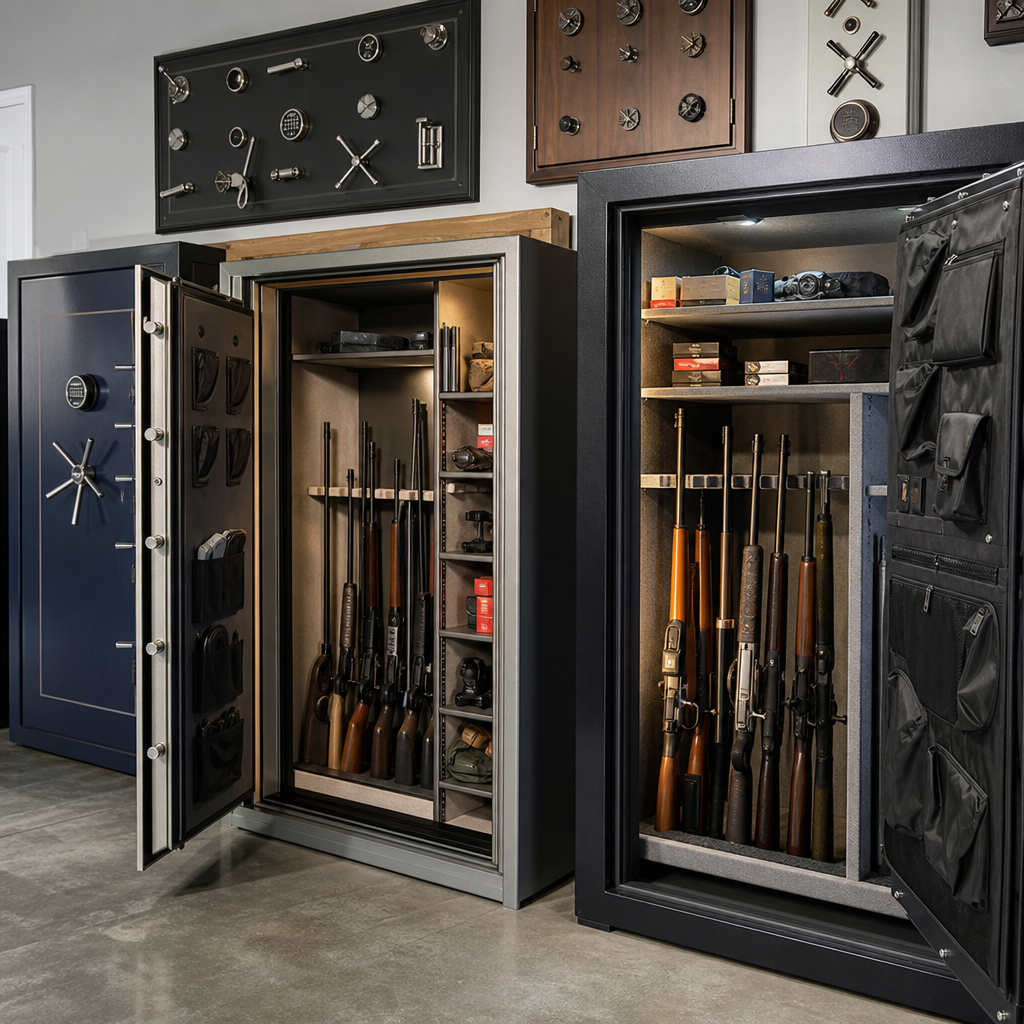
Choosing a gun safe is no longer just about steel thickness and fire ratings. For many buyers, the real differentiator is customization: the ability to tailor storage, access, interior layout, finish, and installation details to the collection you own and the space you live in. In the gun safes and safety category, customization matters because firearms collections vary widely. A hunter storing six scoped rifles, a competitive shooter with handguns and optics, and a collector protecting heirloom pieces do not need the same cabinet. The best gun safe brands recognize that reality and offer configurable interiors, modular shelving, door organizers, lock choices, power ports, dehumidifier support, color options, and in some cases fully bespoke dimensions.
When I compare gun safe brands for buyers, I separate true customization from simple trim packages. A custom gun safe lets you change function, not just appearance. That means adjustable racks, convertible shelving, upgraded lighting, multiple lock platforms, anchor provisions, and accessory integration that improves how the safe works day to day. It also means understanding tradeoffs. More options usually raise cost, extend lead times, and can complicate warranty service if parts come from several suppliers. Still, for owners who want a safe to fit their firearms, room layout, and long-term security plan, customization is often worth paying for.
This hub article covers the gun safe comparisons and brand spotlights that matter most when evaluating customization. It explains which brands offer the broadest options, how those options differ, where semi-custom ends and full custom begins, and what features are actually useful rather than just marketable. If you are deciding between Liberty, Fort Knox, Rhino Metals, Browning, Champion, Hollon, American Security, Vaultek, and higher-end builders such as Graffunder, this guide gives you a practical framework. It is designed to answer the core question directly: which gun safe brands offer the most customization options, and which type of buyer each brand serves best.
What customization means in a gun safe
Customization in gun safes falls into five main categories. First is storage configuration: adjustable shelves, rifle racks, handgun holders, door panels, and compartments for ammunition, documents, optics, and suppressors. Second is access and security hardware: mechanical dial, electronic keypad, redundant lock, biometric entry, relocker systems, hard plates, and bolt pattern design. Third is environmental control: electrical outlets, USB ports, lighting kits, dehumidifiers, and sealed pass-throughs. Fourth is physical specification: exterior dimensions, door swing direction on some models, color, hardware finish, and interior fabric. Fifth is installation customization, including anchoring strategy, closet fitting, and room-specific placement.
Not every buyer needs all five. In my experience, interior flexibility delivers the most daily value because collections change. A safe that begins as rifle storage often ends up holding handguns, magazines, passports, family documents, and jewelry. Brands that support modular interiors age better than fixed-layout designs. Lock choice is the next most important customization because it affects reliability and user behavior. Mechanical dials are slower but proven; modern keypads are faster and popular in household use; biometric systems can be convenient on quick-access safes but vary in quality. Finish and trim matter least unless the safe will sit in a visible room.
Brands that lead in customization
Fort Knox is widely regarded as one of the strongest customization leaders in the gun safe market. The company allows buyers to select body and door steel upgrades, lock type, interior layouts, door organizers, lighting, electrical packages, exterior colors, graphic treatments, and numerous hardware details. Its modular interiors are especially useful for owners with mixed long-gun and handgun collections. Fort Knox also offers upgrade paths in security layers, which matters because customization should not force a buyer to choose between convenience and protection. If you want a semi-custom safe with many factory-backed options, Fort Knox is usually near the top of the list.
Liberty Safe offers broad but more standardized customization. Buyers can choose from multiple series with different interiors, lock styles, power outlets, dehumidifier compatibility, and accessory packages. Liberty’s strength is not fully bespoke construction; it is the breadth of practical options available through a large dealer network. That makes it easier to compare configurations in person. For many households, Liberty hits the sweet spot between customization, availability, and service support. If your priority is to configure a safe efficiently without entering full custom pricing, Liberty remains a strong contender.
Rhino Metals, including Rhino and Kodiak lines, also performs well in customization, particularly for buyers who care about aesthetics and interior usability. Many Rhino models offer distinctive finishes, antiqued hardware, swing-out racks on select products, LED lighting, shelving flexibility, and door storage systems. Browning is another important brand because of its interior innovation. Browning’s Axis Adjustable Shelving and DPX door panel systems are practical examples of customization that improves capacity and organization. Those features are especially effective for owners with scopes, accessories, and varied firearm lengths.
American Security, often called AMSEC, deserves attention for buyers who prioritize security customization as much as storage customization. AMSEC is known for UL-listed products across categories and for offering stronger burglary protection in some lines than many big-box competitors. While AMSEC may appear less flashy than some brands, its options in lock hardware, interiors, and security class make it highly configurable for serious users. At the top end, Graffunder provides true premium customization with heavy steel construction, bespoke sizing, finish choices, and interior planning. That level of build is expensive, but for collectors protecting high-value firearms, it represents a different class of safe ownership.
How major brands compare on specific options
| Brand | Interior flexibility | Lock options | Finish choices | Power and lighting | Best fit |
|---|---|---|---|---|---|
| Fort Knox | Extensive modular layouts | Mechanical, electronic, upgrades | Very broad | Strong accessory support | Buyers wanting semi-custom depth |
| Liberty | Good across many series | Common keypad and dial choices | Moderate | Widely available packages | Mainstream households |
| Browning | Excellent shelving and door storage | Solid standard options | Moderate | Good accessory ecosystem | Collectors maximizing capacity |
| Rhino Metals | Good with strong aesthetics | Multiple common choices | Broad decorative options | Well supported | Visible-room placement |
| AMSEC | Good, security-focused | Strong hardware selection | More restrained | Available by model | Security-first buyers |
| Graffunder | High-end bespoke | Premium options | Custom capable | Custom capable | Collectors and luxury installs |
If the question is which gun safe brands offer the most customization options overall, Fort Knox and Graffunder stand out most clearly, with Fort Knox serving the broad semi-custom market and Graffunder serving the premium custom market. Liberty, Browning, Rhino Metals, and AMSEC follow closely but for different reasons. Liberty wins on accessible option packages and dealer support. Browning wins on practical interior adaptability. Rhino wins on aesthetic personalization combined with useful storage changes. AMSEC wins when customization must support higher security expectations, not just convenience.
Interior customization: the feature buyers use most
Interior configuration is where customization becomes tangible. A safe may advertise a thirty-gun capacity, but real capacity drops quickly once rifles have large scopes, bipods, slings, or chassis stocks. Brands that use adjustable shelves, half-width racks, and door-mounted handgun systems create more honest usable space. Browning has built a strong reputation here because its rack and shelving systems make it easier to store a mixed collection. Fort Knox and Liberty also perform well, especially when buyers add door organizers, pistol racks, and accessory shelves.
One lesson from field comparisons is that fixed interiors age poorly. A new owner may start with deer rifles and one handgun, then add AR-platform rifles, optics, suppressors, and document storage. In that scenario, the best customizable gun safe is the one that can shift from vertical long-gun density to compartmentalized storage without wasted space. I generally advise buyers to test whether shelves can be moved without tools, whether door pockets interfere with rifle stocks, and whether the safe can handle longer barrels or muzzle devices. Small design details determine whether an interior feels adaptable or cramped.
Locks, access control, and security upgrades
Customization is not only about storage. Lock selection changes the daily experience of owning a safe. The classic choice is the mechanical dial, valued for long service life and independence from batteries. Electronic keypads offer faster access and simpler code management, making them popular in family homes where authorized users need convenience. Some brands add redundant entry systems or biometric features, though biometric performance is far more consistent in dedicated handgun vaults such as Vaultek than in full-size gun safes.
Security upgrades also vary by brand. Fort Knox and AMSEC provide meaningful upgrade paths in steel thickness, hard plate protection, relockers, and bolt work. That matters because appearance-based customization can distract buyers from the fundamentals of burglary resistance. A glossy finish and plush interior do not compensate for a weak body. I routinely tell buyers to decide on their required security level first, then customize around it. For example, if the safe will be in a garage with more attack time and tool exposure, stronger body construction should take priority over cosmetic options.
Appearance, room placement, and installation planning
Exterior customization matters more than many experts admit because safes increasingly live in studies, bedrooms, and finished basements rather than utility rooms. Rhino Metals and Fort Knox both offer broad color selections and decorative hardware, which helps buyers integrate a large safe into visible living spaces. That is not superficial. A safe that fits the room is less likely to be relegated to a poor location with humidity problems, slab limitations, or difficult access. Better placement can improve both security and day-to-day use.
Installation is another overlooked customization category. A buyer may need a safe that clears a narrow hallway, fits a closet depth, or opens without striking adjacent walls. Some dealers help map swing clearance, stair loads, and anchoring points before delivery. That service is a form of practical customization because it determines whether the chosen model works in the real home. For apartments, historic homes, or upper-floor offices, dimensions and weight distribution can matter as much as storage features.
When a higher-end custom safe makes sense
Most gun owners do not need fully bespoke construction. Semi-custom brands cover the majority of needs at more approachable prices and with shorter lead times. A higher-end custom safe becomes justified when the collection is unusually valuable, the installation environment is unusual, or the owner wants exact dimensions and finishes that production models cannot match. That is where Graffunder and similar premium makers enter the conversation. They serve buyers who want heavy plate construction, furniture-grade finish choices, and layout planning around a specific collection.
There are tradeoffs. Full custom and premium semi-custom safes cost substantially more, often require longer waits, and may limit immediate local availability. But they can solve problems mass-market safes cannot. If you own high-grade shotguns, engraved revolvers, transferable machine guns, or a collection documented for insurance scheduling, paying for exact fit, stronger construction, and better environmental control can be rational rather than indulgent.
How to choose the right customizable gun safe brand
Start by listing your collection as it actually exists, not as a catalog capacity number suggests. Count scoped long guns, handguns, magazines, documents, valuables, and future additions. Next, define your nonnegotiables: burglary resistance, fire protection, quick access, visible-room aesthetics, or modular storage. Then compare brands by the options that support those priorities. If you want the broadest practical menu, begin with Fort Knox. If you want balanced mainstream choice and dealer support, look at Liberty. If interior adaptability is the main goal, Browning deserves a close review. If decorative finish and room integration matter, Rhino Metals is compelling. If stronger security credentials drive the decision, AMSEC should be on the shortlist.
The most important takeaway is simple: the best customizable gun safe brand is the one that lets you improve function without sacrificing core protection. Buy the strongest safe that fits your budget, your collection, and your space, then add options that solve real storage and access problems. Use this hub as your starting point for deeper brand spotlights and comparisons across the gun safes and safety category. Evaluate interiors in person when possible, ask about lock and steel upgrades, and plan installation before you order. A well-chosen customizable safe protects firearms better, organizes them more intelligently, and serves your household for decades.
Frequently Asked Questions
Which gun safe brands are generally considered the most customizable?
Brands that are usually viewed as leaders in customization include Browning, Liberty, Fort Knox, Rhino Metals, and American Security (AMSEC). Each approaches customization a little differently. Browning is well known for flexible interior configurations, especially for owners who need to store a mix of long guns, handguns, shelves, and door-mounted accessories. Liberty offers a broad catalog with upgrade paths that let buyers choose different sizes, lock types, interior packages, and exterior finishes depending on the series. Fort Knox is often mentioned at the top of the list for highly personalized builds because it allows buyers to configure a safe in more detail than many mass-market brands, including steel upgrades, lock options, interior layouts, and cosmetic details. Rhino Metals stands out for combining appearance upgrades with practical storage customization, while AMSEC is respected for offering multiple product lines that range from residential gun safes to higher-security models with configurable interiors and lock systems.
That said, the “most customizable” brand depends on what kind of customization matters most to you. If your priority is interior organization for a changing firearms collection, Browning and Liberty may be especially appealing. If you want a more built-to-order experience with broader control over steel thickness, size, finish, and premium options, Fort Knox is often one of the strongest candidates. If your focus is blending a safe into home décor or choosing specialty finishes while still getting practical upgrades, Rhino can be a great fit. The best way to compare brands is to separate customization into categories: interior layout, access and locking technology, exterior appearance, security upgrades, and delivery or installation options. A brand may excel in one category while being more limited in another.
What kinds of customization options should buyers look for in a gun safe?
The most useful customization options usually fall into five major areas: interior layout, locking and access features, exterior finish, security and fire upgrades, and installation flexibility. Interior layout is often the first thing buyers notice because it directly affects how efficiently the safe stores firearms and accessories. Adjustable shelving, modular racks, barrel supports, handgun holders, door organizers, jewelry drawers, document storage, and compartment dividers all make a major difference. For example, a hunter with a small rifle lineup may need wide spacing for scoped long guns, while a competitive shooter might want more shelving for pistols, magazines, hearing protection, optics, and ammo-related gear stored separately according to best practices.
Locking and access customization is another major category. Many brands now offer a choice between traditional mechanical dial locks and electronic keypad locks, and some offer upgraded electronic systems, redundant access methods, or EMP-resistant features. Exterior customization can include color, gloss level, textured finishes, hardware style, graphic treatments, and trim details, which matters to buyers who want the safe to fit a room rather than look purely industrial. Security and fire upgrades may include thicker steel, upgraded boltwork, reinforced doors, relockers, better insulation packages, and higher fire endurance ratings. Finally, installation flexibility matters more than many buyers expect. Door swing direction, safe dimensions, interior lighting, dehumidifier compatibility, anchor kits, and the ability to fit a tight closet, office, or garage space can be just as important as the safe’s headline security specs. The best customization is not about adding every available feature; it is about matching the safe to your collection, your home, and how you actually plan to use it.
Is interior customization more important than exterior appearance when choosing a gun safe?
For most buyers, interior customization is usually more important than exterior appearance because it has a bigger impact on daily usability. A safe may look impressive on the outside, but if the interior does not support your actual firearms collection, you can quickly run into wasted space, poor organization, and difficult access. Many factory capacity numbers assume tightly packed long guns without optics, slings, or other accessories, so buyers who own scoped rifles, AR-style platforms, handguns, suppressor-ready setups, or collectible firearms often benefit far more from adjustable shelving and modular storage than from decorative exterior upgrades. A well-designed interior helps protect firearms from contact damage, keeps valuables easier to inventory, and makes the safe adaptable as your collection changes over time.
That does not mean exterior customization is unimportant. In many homes, the safe will be placed in a visible room, office, or finished space rather than a hidden utility area. In those cases, color, hardware, textured finishes, and overall styling may matter quite a bit. Exterior choices can also affect practical use if they include handle styles, footprint dimensions, or door swing considerations. Still, if a buyer has to prioritize, the smarter long-term decision is usually to focus first on an interior layout that fits current and future storage needs. A safe that is organized well will almost always feel like a better investment than one that simply looks premium. Ideally, buyers should seek a brand that offers both: a modular interior for real-world function and an exterior finish that suits the home environment.
Are custom gun safes worth the extra cost compared to standard models?
In many cases, yes, especially for buyers with specialized storage needs, growing collections, or a long-term view of ownership. A more customizable safe can be worth the higher price because it reduces the compromises that often come with entry-level or fixed-layout models. If you own scoped rifles, handguns, heirloom firearms, important documents, optics, and other valuables, a standard interior may not protect or organize them efficiently. Customization can also help prevent the common problem of outgrowing a safe too quickly. Buyers often discover that a safe advertised for a certain number of guns holds far fewer once shelves, optics, and accessories are taken into account. Adjustable interiors, upgraded shelving systems, and purpose-built accessory storage can extend the useful life of the safe and improve the overall experience every time you open it.
The value becomes even clearer when customization includes structural or security-related upgrades rather than cosmetic features alone. Spending more for thicker steel, a better lock, improved fire protection, and a more practical interior usually provides a stronger return than simply choosing a decorative finish. On the other hand, not every buyer needs a heavily customized build. Someone with a small, straightforward collection and a limited budget may be better served by a well-made standard model from a reputable brand. The key is to compare the added cost to the problems it solves. If customization helps the safe fit your space better, secures your firearms more effectively, and supports how your collection may evolve, it is often money well spent rather than an unnecessary luxury.
How can buyers compare gun safe brands if they all advertise flexible options?
The best way to compare customizable gun safe brands is to move beyond marketing language and evaluate exactly what can be changed, how those changes affect performance, and whether the options are available across the product line or only on select premium models. Start by looking at interior flexibility in detail. Are shelves truly adjustable? Can the layout be reconfigured later without special parts? Is there useful door storage for handguns, magazines, and documents? Can the safe accommodate long guns with optics without wasting capacity? These are practical questions that often reveal more than broad claims about modular design.
Next, compare lock choices, steel construction, fire ratings, and upgrade paths side by side. Some brands offer many cosmetic options but limited real security customization, while others allow substantial upgrades to the body, door, boltwork, and fire package. Also pay attention to dimensions and installation details. A safe that offers excellent customization on paper may not work well if it cannot fit through your hallway, into a closet, or in the location where you plan to anchor it. Review warranty coverage, dealer support, and post-purchase accessory availability as well, since a customizable safe is more valuable when you can continue adapting it later. Finally, consider how transparent the brand is. The strongest brands tend to provide clear specs, meaningful dealer guidance, and realistic explanations of capacity and feature differences. When comparing brands like Fort Knox, Liberty, Browning, Rhino, and AMSEC, buyers should think less about who offers the most options in absolute terms and more about which brand offers the right options for their collection, space, and security priorities.