
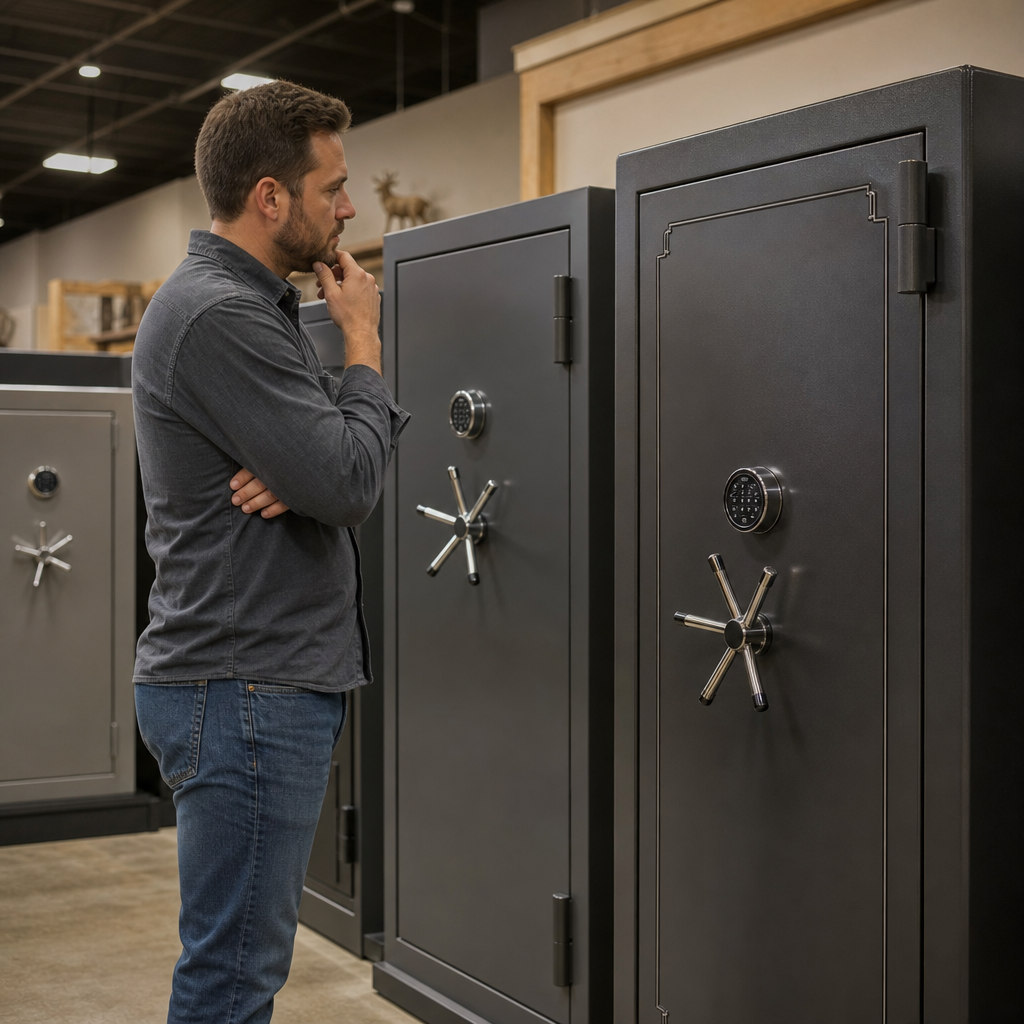
Gun safe prices vary widely, and the gap between a budget cabinet and a premium safe is not just branding. When buyers compare gun safe brands, they are really comparing construction methods, fire protection, locking systems, theft resistance, warranty support, and long-term reliability. In my experience evaluating safes for homeowners, collectors, and small retailers, the most expensive models usually cost more because they include thicker steel, stronger bolt work, verified fire ratings, better fit and finish, and service networks that remain useful years after delivery. The central question is not whether an expensive gun safe is automatically better, but whether the added protection matches your risks, inventory value, and storage goals.
A gun safe is a secure storage container designed to restrict unauthorized access to firearms while also protecting contents from burglary, fire, and sometimes moisture damage. Not every product sold as a gun safe offers the same level of security. Some low-cost units are closer to locking cabinets, built from thin sheet steel with minimal pry resistance. Higher-end brands often use plate steel doors, reinforced door frames, hard plates over locks, relockers, and continuous welds. Those differences affect how long a safe can resist common attacks using pry bars, grinders, and hammers. They also influence weight, installation complexity, and price.
This matters because the consequences of underbuying are serious. Stolen firearms can be used in crimes, family members may gain access if storage is weak, and valuable optics, documents, and heirlooms can be lost in a house fire. At the same time, overspending on features you do not need is not smart either. A buyer storing two hunting rifles in a low-crime area has different needs from a collector protecting twenty firearms, suppressors, and paperwork. A useful gun safe comparison starts with intended use, then works backward to brand, model tier, and verified specifications rather than marketing slogans.
As a hub for gun safe comparisons and brand spotlights, this guide explains why some gun safe brands cost more, what features actually justify the premium, where marketing inflates pricing, and how to compare Liberty, Fort Knox, AMSEC, Browning, Winchester, Rhino, Vaultek, and similar names on equal terms. If you understand steel gauge, fire testing, lock quality, interior layout, and installation costs, you can decide whether the higher price is worth it for your situation.
What Actually Drives Gun Safe Prices
The biggest price driver is steel. Steel thickness directly affects burglary resistance, and it also affects shipping weight and manufacturing cost. Many entry-level gun safes use 14-gauge or 12-gauge steel bodies. Premium models often move to 10-gauge, 7-gauge, or thicker plate construction, especially in the door. That jump is meaningful. A 10-gauge body has substantially more material than 14-gauge steel, and a heavier door frame is harder to flex with pry tools. When I inspect lower-cost safes, the weak point is often not the lock itself but the ability of the cabinet body or door edge to deform under leverage.
Locking systems also separate low-cost and premium brands. Basic safes may use imported electronic keypads with limited serviceability. Better brands typically offer UL-listed Type 1 electronic locks or mechanical dial locks from recognized makers such as Sargent and Greenleaf or SecuRam. More expensive safes often add hard plates to protect the lock from drilling, spring-loaded relockers that trigger during attack, and more robust cam and linkage systems. These upgrades increase parts cost and assembly time, but they reduce the chance that a lock failure or simple attack compromises the safe.
Fire protection is another major factor. Many brands advertise broad fire claims, but the details matter. Some use layers of gypsum board and heat-expanding door seals; others use proprietary insulation mixes or poured composite materials. Fire ratings vary by temperature, duration, and test method. A label promising thirty or sixty minutes sounds clear, yet the rating may come from internal factory testing rather than an independent laboratory. Better brands tend to explain the test conditions, wall construction, and seal design more transparently, which is one reason they cost more. Premium fire linings also consume interior space, so larger external dimensions may be needed to keep useful storage capacity.
Fit and finish add cost too. Higher-end brands usually offer tighter door gaps, smoother bolt travel, better shelving systems, cleaner welds, upgraded paint or powder coat, interior lighting, door organizers, and dehumidifier pass-throughs. These may sound cosmetic, but usability matters. A safe that is easier to organize encourages consistent secure storage. Stronger hinges, adjustable shelving, and better door panel storage also improve real-world capacity, which is why a so-called thirty-gun safe often stores far fewer scoped rifles comfortably.
How to Compare Brands Without Falling for Marketing
The smartest way to compare gun safe brands is to normalize the specifications. Ignore the glossy lifestyle photos and compare body steel thickness, door construction, total weight, lock certification, bolt diameter and count, fire rating method, anchor provisions, and warranty terms. Weight is a useful proxy, though not a perfect one. Two safes with similar dimensions can differ by hundreds of pounds because one uses thicker steel or denser fire insulation. If a brand charges much more while offering little additional weight, security certification, or steel thickness, the premium may be mostly aesthetic.
Published gun counts should be treated skeptically. Manufacturers often calculate capacity using unscoped long guns placed tightly together. In practice, modern sporting rifles, rifles with large optics, pistol grips, bipods, and slings reduce capacity fast. I usually tell buyers to divide the advertised number by roughly half if they want convenient daily access. Premium brands sometimes cost more because they offer modular interiors, wider bodies, and better door storage that make the space actually usable, not just technically compliant with a marketing claim.
Pay attention to certifications and language. A burglary rating from Underwriters Laboratories, such as Residential Security Container, gives you a baseline that many gun safes do not exceed. It does not make a safe invulnerable, but it is more meaningful than vague phrases like “military-style locking bars” or “drill resistant design” with no supporting detail. The same caution applies to fire claims. Ask whether the rating is independently tested, what peak temperature was used, and whether the interior temperature stayed below thresholds that damage paper, wood stocks, adhesives, and optics.
| Comparison Point | Budget Tier | Midrange Tier | Premium Tier |
|---|---|---|---|
| Body steel | 14-12 gauge | 12-10 gauge | 10 gauge to plate steel |
| Lock type | Basic electronic | UL-listed electronic or dial | UL-listed lock with hard plate and relocker |
| Fire protection | Factory-rated entry level | Thicker insulation and better seals | More robust insulation, clearer testing details |
| Interior | Fixed shelves, tight capacity | Adjustable shelves, door storage | Modular layouts, lighting, premium finish |
| Warranty and service | Limited, dealer dependent | Broader parts and lock support | Stronger lifetime support and in-home service options |
Why Premium Brands Charge More
Premium gun safe brands generally spend money where buyers cannot always see it in a showroom. Fort Knox, AMSEC, Graffunder, and certain Rhino or Liberty higher-tier lines often price above mass-market models because they use heavier steel, more weld material, reinforced door structures, and higher-grade lock components. Some offer customization, including thicker body upgrades, stainless liners, hinge options, interior packages, and bolt pattern changes. Custom production slows manufacturing and increases labor cost, but it allows buyers to match the safe to a collection rather than forcing the collection into a one-size-fits-all box.
Domestic manufacturing and dealer support also affect price. A safe assembled in the United States with more manual welding, finishing, inspection, and customization often costs more than a container-imported unit produced at scale overseas. That does not mean every imported safe is poor or every domestic safe is superior, but labor standards, freight, and quality control influence final price. Premium brands also tend to maintain larger dealer networks, replacement parts inventory, and warranty response systems. When a keypad fails after seven years or a relocation requires door removal, support becomes part of the value equation.
Brand reputation has a real, not imaginary, component. Established names that have spent decades serving collectors, gun shops, and law enforcement buyers tend to price in line with expected performance and service. They know a product recall, lock issue, or failed fire claim can damage trust quickly. That pressure often results in more conservative ratings and better support. You are not just paying for a logo when a top brand backs forced-entry repair, lock replacement, or post-fire replacement under a lifetime warranty. You are paying for the likelihood that the company will still answer the phone later.
When the Extra Cost Is Worth It
A more expensive gun safe is worth it when the firearms and accessories inside would be costly or impossible to replace. If you own a collection of precision rifles, vintage shotguns, suppressors, tax documents, rare optics, or inherited firearms, the safe should be sized and built around the value at risk. Spending an extra $1,500 on thicker steel and stronger locking protection makes sense if the contents are worth $15,000 to $50,000 or more. The same logic applies if your home is in a burglary-prone area or if the safe will sit in a garage where attack privacy is higher and response time is lower.
Higher prices are also justified when fire exposure is a credible concern. Homes in wildfire regions, rural properties with longer fire department response times, and houses with attached garages all face elevated risk. In those settings, a safe with better insulation design, tighter door seals, and documented fire performance can be a rational upgrade. Moisture control matters too. Premium interiors, electrical pass-throughs, and tighter construction work better with dehumidifier rods or desiccant systems, helping prevent rust on blued steel and optics damage over time.
Daily use changes the value calculation as well. Someone opening the safe multiple times a day benefits from a smoother lock, stronger shelves, better lighting, organized door panels, and interior flexibility. Buyers often underestimate this. A safe is not only a theft barrier; it is a storage system. If frustration leads you to leave firearms unsecured because the interior is cramped or the lock is unreliable, a cheaper purchase becomes expensive in the worst way.
When a Cheaper Brand Is Good Enough
Not every buyer needs a premium safe. If you own a few common hunting rifles, live in a lower-risk area, and mainly need to prevent child access or casual theft, a well-anchored midrange safe from a reputable brand can be fully adequate. Models from Winchester, Stack-On’s heavier lines, Sports Afield, Cannon, or entry Liberty and Browning tiers may meet the need if you choose carefully and anchor them to concrete. In these cases, installation quality matters almost as much as the safe itself. An average safe bolted correctly in a discreet location is far better than an expensive safe left freestanding and visible.
Budget limits are real, and the right decision is often to buy a smaller but better-made safe rather than a huge, lightly built one. I have seen buyers spend on oversized interiors and regret it when they realize the steel is thin and the door flexes under pressure. If your budget is fixed, prioritize body thickness, a quality lock, anchor capability, and a realistic capacity over luxury interiors or glossy paint. You can add lighting, dehumidification, and organizers later.
Best Buying Framework for This Brand Comparison Hub
Use this hub as a starting point for deeper brand spotlights and model comparisons. First, define your threat profile: unauthorized access, burglary, fire, humidity, or all four. Second, inventory what will go inside now and in five years. Third, compare brands by steel thickness, weight, lock certification, fire methodology, and warranty before looking at appearance. Fourth, budget for delivery, stair carries, bolting, humidity control, and possible door removal during installation. Those costs can add hundreds of dollars and should be part of any honest comparison.
For most buyers, the sweet spot sits in the better midrange: strong enough steel, a proven lock, decent fire protection, and a usable interior from a brand with established service. Premium gun safe brands earn their higher prices when they deliver measurable gains in burglary resistance, fire performance, reliability, and support. They are worth it for high-value collections, higher-risk environments, and owners who plan to keep one safe for decades. If you are comparing gun safe brands now, use the specifications behind the marketing, then choose the safe that matches your risks rather than the one with the loudest claims.
The main benefit of understanding why some gun safe brands are more expensive is simple: you buy protection, not just storage. A careful comparison helps you avoid paying extra for cosmetic features while identifying the upgrades that truly reduce theft, fire, and access risks. Review the brand spotlights in this hub, shortlist models based on steel, lock, fire rating, and warranty, and then buy once with confidence.
Frequently Asked Questions
1. Why are some gun safe brands so much more expensive than others?
The biggest reason is that higher-priced gun safe brands usually build their products to a much higher standard, and that affects nearly every part of the safe. What looks similar from the outside can be very different once you examine steel thickness, door construction, internal frame design, bolt work, lock quality, fire insulation, and how the safe performs under forced-entry attempts. A budget cabinet may store firearms and keep them out of casual reach, but a premium safe is often engineered to resist serious theft attempts, heat exposure, repeated daily use, and long-term wear.
In practical terms, expensive brands often use thicker steel bodies and doors, more robust locking mechanisms, reinforced hinges, better welds, and more precise manufacturing tolerances. They also tend to invest more in testing and certification, especially for fire protection and lock reliability. On top of that, premium manufacturers usually provide stronger warranty coverage, better customer support, and replacement parts availability years down the line. So while branding can influence price at the margins, the larger cost difference usually comes from better materials, stronger construction, verified performance, and a longer expected service life.
2. What features actually make a premium gun safe worth paying more for?
The most valuable upgrades are the ones that improve real-world security and durability, not just cosmetic appeal. Thicker steel is one of the first things to look for because it plays a major role in resisting pry attacks, drilling, and brute-force entry. A stronger door with solid bolt engagement on multiple sides also matters, especially when paired with a reinforced door frame that resists twisting under pressure. Premium safes often include better hard plates, relockers, and internal anti-tamper features that slow down or defeat common attack methods.
Fire protection is another area where paying more can make sense. Higher-end brands are more likely to use better insulation materials and to provide fire ratings that are independently tested or at least more clearly documented. That does not mean every expensive safe is automatically superior, but it does mean reputable premium brands are often more transparent about performance. Beyond that, quality locks, smoother internal mechanisms, better door seals, more adjustable interiors, and stronger fit-and-finish all contribute to long-term value. If you are protecting expensive firearms, optics, important documents, or family heirlooms, those upgrades can be worth the additional cost because they reduce risk in ways that are hard to appreciate until something goes wrong.
3. Is a more expensive gun safe always more secure against theft?
No, not always. Price alone is not a guarantee of better theft resistance. Some safes cost more because of size, finish options, branding, or premium interior features rather than a major jump in security. That is why it is important to look beyond marketing and compare the actual specifications. A safe with thicker steel, a stronger locking system, a reinforced frame, and tested anti-pry features may offer better security than a more expensive model that focuses heavily on appearance or convenience features.
That said, in many cases the more expensive brands do provide stronger theft protection because they invest in structural improvements that are expensive to manufacture. Heavier doors, more substantial bolt work, higher-quality welds, drill-resistant features, and more rigid body construction all cost money. Reputable brands also tend to be more consistent in quality control, which matters because a safe is only as strong as its weakest point. The best way to judge value is to match the safe to the threat level. If you need basic storage for a few firearms in a low-risk environment, a mid-range option may be sufficient. If you own a valuable collection or want meaningful resistance against determined thieves, paying more for a genuinely stronger safe is often justified.
4. How important are fire ratings when comparing gun safe brands?
Fire ratings are very important, but they need to be interpreted carefully. Many buyers assume all fire ratings are equal, when in reality they can vary a lot depending on how the manufacturer tested the safe, what internal temperature threshold was used, how long the test lasted, and whether the rating was independently verified. A premium gun safe brand may charge more because it uses better insulation, tighter door seals, and more rigorous testing standards. That added cost can matter if the safe will store not only firearms, but also paperwork, passports, cash, electronics, or sentimental items that are vulnerable to heat and smoke damage.
It is also worth remembering that fire protection is not just about the number of minutes listed in the brochure. Construction quality, seal performance, and the way the safe is assembled all affect how it performs in a real house fire. In my experience, better brands are often more trustworthy because they provide clearer details about their testing methods and build their safes more consistently. If fire protection is a priority, it is smart to look for a brand with a solid reputation, realistic fire claims, and a design intended to maintain structural integrity under heat. That is one area where paying more can provide real peace of mind rather than just a nicer label.
5. When is it worth buying a premium gun safe instead of a budget model?
A premium gun safe is usually worth it when the value of what you are protecting justifies a higher level of security, fire protection, and long-term reliability. If you own multiple firearms, collectible rifles, customized handguns, expensive optics, suppressors, or important personal documents, the cost of the safe becomes easier to justify. The same is true if you live in an area with elevated burglary risk, want better child safety, or expect the safe to serve you for decades. In those situations, buying once and buying well often makes more financial sense than replacing an inadequate cabinet or entry-level safe later.
On the other hand, a budget-friendly option may be perfectly reasonable for basic storage needs, especially for first-time owners with a limited number of firearms and a modest budget. The key is being honest about your goals. If you mainly need organized storage and a barrier against unauthorized access, you may not need top-tier construction. But if you are expecting real resistance to theft, dependable fire performance, and fewer worries about lock failures or structural weakness over time, a premium safe can absolutely be worth the higher upfront cost. In many cases, the extra money buys not just features, but a meaningful increase in protection, reliability, and confidence.