
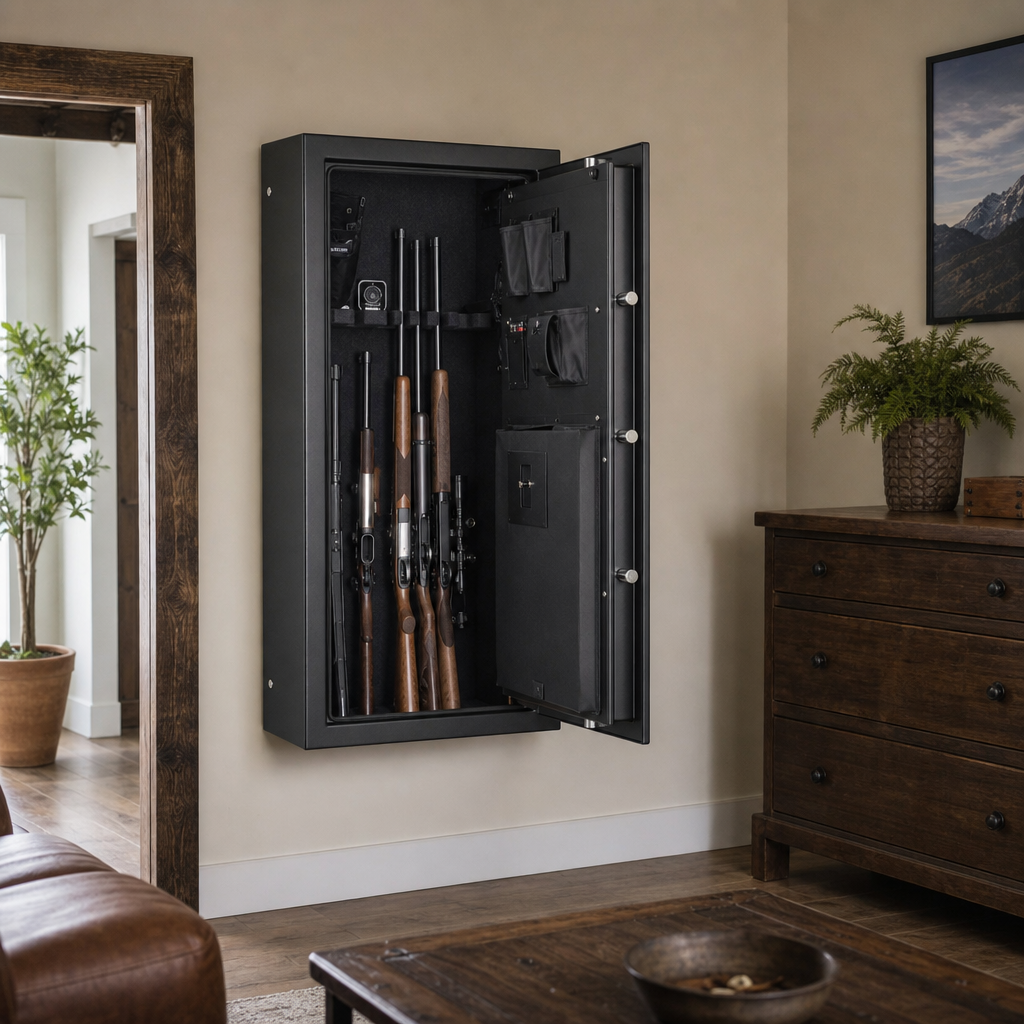
Wall-mounted gun safes can be secure, but they are not automatically as secure as floor models, and the real answer depends on steel thickness, locking design, anchoring method, placement, and what threat you are trying to stop. In the gun safe industry, people often compare a compact wall safe with a full-size floor safe as if they serve the same purpose. They usually do not. A wall-mounted gun safe is typically a recessed or surface-mounted security container attached to wall framing, often intended for quick access, discreet storage, or space savings. A floor model is usually a freestanding safe anchored into concrete or wood subfloor, built with a larger body, heavier door, and more mass. Those physical differences matter because mass, leverage resistance, and mounting options directly affect burglary resistance.
I have worked with homeowners who assumed any safe with a keypad and steel door offered equal protection. After inspecting break-in attempts and installation failures, I can say that assumption creates risk. The phrase gun safe itself can hide major differences in design. Some products are true burglary-rated safes, but many residential gun safes are better described as residential security containers. Under standards published by Underwriters Laboratories, a UL Residential Security Container rating means the unit resists limited attacks using common hand tools for a short test period. That is useful, but it is not the same as a high-security burglary safe. Understanding that distinction helps separate marketing from performance.
This matters because buyers are often balancing three goals at once: unauthorized access prevention, theft resistance, and fast retrieval in an emergency. A parent storing a defensive handgun has a different problem than a collector securing a dozen long guns. A renter in a small apartment has different constraints than a homeowner with a slab foundation. The best choice is the safe that fits the threat model, not the one that looks toughest in a catalog. This hub article on gun safe myths and misconceptions explains where wall-mounted gun safes perform well, where floor models clearly outperform them, and how to evaluate both without falling for common sales claims or internet folklore.
What Security Really Means in Gun Safe Selection
When people ask whether wall-mounted gun safes are as secure as floor models, they often mean one of several different things. Can a child open it? Can a burglar pry it open quickly? Can thieves remove the whole safe and attack it later? Will it survive a house fire? Those are separate questions, and the answers can vary widely by product. A compact wall safe with a high-quality electronic lock may be excellent for access control but mediocre against removal. A heavy floor safe may resist removal and prying better, yet still be vulnerable if it uses thin steel and weak boltwork. Security is never one feature. It is a system.
In practice, I evaluate gun safes by looking at body steel gauge, door construction, continuous welds versus stitch welds, hard plates protecting the lock, relockers, hinge exposure, internal hinges, anchor pattern, and the structure the safe is attached to. I also look at whether the location gives a burglar room to use pry bars or power tools. A closet installation surrounded by framing and drywall can actually reduce attack angles. By contrast, a freestanding floor model in an open garage may offer better mass but also easier tool access. That is why the same safe can perform differently depending on where and how it is installed.
One persistent myth is that bigger always means safer. Size can help because it usually brings more steel, more weight, and better anchoring options. But some oversized budget gun cabinets are made from light sheet metal that can be peeled open faster than a smaller, better-built wall unit. Another myth is that hidden placement alone equals security. Concealment helps, especially with wall-mounted units installed behind artwork or inside closets, but concealment only delays discovery. If found, a lightly mounted safe between studs is still limited by the strength of the wall system around it.
Where Wall-Mounted Gun Safes Have Real Advantages
Wall-mounted gun safes exist for good reasons, and dismissing them as toys is another misconception. For many users, they solve problems that floor models cannot. Quick-access handgun storage in a bedroom, office, hallway, or closet is where a wall-mounted design can shine. A recessed unit can sit flush between studs, reducing visibility and preserving floor space. In homes where children are present, elevating the safe can improve safety by placing firearms outside casual reach while still keeping them accessible to adults. For apartment dwellers or people who do not want a large visible safe, a wall-mounted gun safe offers a discreet storage option that can still use a reliable mechanical simplex lock or a quality electronic lock.
I have seen well-installed wall safes outperform cheap bedside lockboxes because they are tied directly into framing and cannot simply be carried off. That matters. Smash-and-grab theft is common. If a burglar can take the whole container in thirty seconds, lock quality becomes less important. A wall safe that is recessed, lag-bolted into multiple studs, hidden behind a door or panel, and sized for a handgun and spare magazines can be a meaningful upgrade over unsecured storage or a loose portable box. For users focused primarily on unauthorized access prevention and immediate defensive access, that can be the right answer.
Wall-mounted safes also encourage better daily habits. Owners are more likely to lock up a defensive handgun if the safe is positioned at convenient height near where they dress or sleep. In real homes, convenience drives compliance. The most secure safe in the basement does little good if the owner leaves the pistol on a dresser because the storage routine is inconvenient. Secure storage is effective only when used consistently, and wall-mounted units often increase that consistency.
Why Floor Models Usually Win on Burglary Resistance
Floor models generally offer stronger burglary resistance because they can be heavier, use thicker steel, and anchor into stronger structures. Weight is not marketing fluff here. Mass makes removal harder, slows repositioning, and reduces the leverage attackers can generate. A 500-pound or 800-pound floor model anchored into concrete is fundamentally different from a wall safe attached to studs and drywall. Even when both use similar locks, the larger safe usually has more robust boltwork, thicker door edges, and a body less likely to deform under prying force. This is basic mechanics.
The wall itself imposes limits. Standard residential wood framing commonly uses 16-inch-on-center studs with drywall over the face. That cavity restricts safe width and depth. As a result, many wall-mounted gun safes are narrow and relatively shallow. Limited depth means less internal reinforcement and less room for layered door construction. Stud anchoring can be strong when done correctly, but the attachment strength is still constrained by the framing members, lag screw embedment, and the possibility of tearing out surrounding material. In a forced attack, burglars may not bother opening the door. They may cut drywall, expose the rough opening, and remove the unit with sections of wall attached.
By contrast, a properly installed floor safe or freestanding floor model anchored with expansion anchors or wedge anchors into cured concrete gains strength from the slab itself. In wood-frame homes, bolting through subfloor into joists can still be solid, though concrete remains better for resisting pullout and rocking. The point is not that every floor model is superior. It is that floor models have a structural advantage when the goal is resisting removal and prolonged forced entry.
Common Gun Safe Myths and the Facts Behind Them
This subtopic is full of myths, and buyers need clean answers. The first myth is that a biometric lock makes a safe more secure. It may make access faster, but security depends on false acceptance rate, sensor quality, backup entry method, battery management, and overall lock construction. The second myth is that fire rating labels are standardized across all brands. They are not. Some are based on internal testing with different heat curves, durations, and pass criteria. Independent verification matters. The third myth is that hidden wall safes are impossible to find. Experienced burglars routinely search master bedrooms, closets, offices, and obvious concealment areas.
Another myth is that a safe only needs to stop casual thieves. In reality, stolen firearms fuel downstream crime, so storage decisions should assume motivated theft attempts. One more misconception is that any steel box is better than a purpose-built safe. Steel thickness, lock shielding, anti-pry design, and secure anchoring determine whether the container merely delays access or truly resists it. I have opened bargain safes after break-ins where the lock worked perfectly but the sidewall had been peeled back with a pry bar because the steel was too thin.
| Myth | Reality | Why It Matters |
|---|---|---|
| Wall-mounted means hidden, therefore secure | Concealment delays discovery but does not replace steel strength or good anchoring | Found safes still face pry, cut, and removal attacks |
| Floor models are always safer | Many cheap floor units use thin metal and weak bolts | Build quality matters as much as size |
| Biometric locks are the best option for everyone | They trade speed for dependency on sensor quality and maintenance | Quick access should not come at the cost of reliability |
| Any fire rating is comparable | Manufacturers use different test methods unless independently certified | Buyers need to compare verified standards, not just minutes claimed |
| Anchoring is optional if the safe is heavy | Unanchored safes can be tipped, walked, or loaded onto dollies | Anchoring is one of the highest-value security upgrades |
How to Choose Between a Wall-Mounted Safe and a Floor Model
The right choice starts with the firearm type, access speed requirement, home layout, and threat level. If your primary need is securing one handgun from children while keeping it available for home defense, a high-quality wall-mounted gun safe can be an excellent fit. Look for solid steel construction, a reputable lock, concealed installation, and multi-stud anchoring. If your goal is storing several firearms, ammunition, documents, and accessories while resisting theft, a floor model is usually the better tool. It provides more space, better organization, greater mass, and stronger anchoring options.
Budget should be handled carefully. In my experience, the best value is often not the cheapest safe in a larger size, but the best-built safe you can afford in the size you actually need. Buyers frequently overspend on interior lights, glossy finishes, and door organizers while ignoring steel thickness and lock pedigree. Better priorities are body construction, lock certification, anchor hardware, and installation quality. Brands and models change over time, so verify current specifications rather than relying on old reviews. Ask specific questions: What is the body gauge? Is the lock UL listed? Are there relockers? How many anchor points are factory provided? Has the fire claim been independently tested?
Placement matters as much as purchase. A floor model hidden in a closet corner and boxed in by walls may be harder to attack than the same safe standing free in a garage. A wall-mounted safe installed low in a stud bay with poor screw embedment may fail under leverage. If you cannot anchor a floor model properly because of rental restrictions or structural limits, a wall-mounted unit may be the more realistic secure storage option. The best safe is the one that matches both your security needs and your installation realities.
Installation, Maintenance, and Layered Security Best Practices
Installation quality separates good outcomes from expensive mistakes. For wall-mounted gun safes, locate studs precisely, verify utilities, use manufacturer-approved fasteners, and maximize attachment into structural members rather than relying on drywall or trim. Recessed units should fit the opening without excessive slop, and finish carpentry should not compromise anchor access or ventilation where required. For floor models, anchor into concrete whenever possible, use the correct diameter and embedment depth for the chosen anchors, and torque hardware to specification. If the safe is going upstairs or onto framed flooring, confirm load capacity. Weight concentration can matter.
Maintenance is straightforward but often neglected. Replace lock batteries on a schedule rather than after failure. Test backup keys or override procedures. Inspect anchor bolts annually for movement. Check dehumidifiers or desiccants, especially in humid climates, because rust protection is part of responsible firearm storage. Dry fire seals and door gaskets can deteriorate over time. Hinges and boltwork should operate smoothly without forcing. A safe that binds can cause users to leave it unlocked out of frustration, defeating the entire point.
Layered security strengthens any safe. Alarm systems, reinforced doors, motion lighting, cameras, and discreet placement all reduce risk. Serial number records, insurance documentation, and separate ammunition management add resilience after a theft or disaster. If you own firearms for defense, train for safe access under stress and ensure authorized adults understand the storage plan. Good gun safety is not a single product. It is a set of decisions that work together.
Wall-mounted gun safes can be secure, but they are rarely equal to a well-built, well-anchored floor model for resisting theft, prying, and removal. That is the central takeaway. Wall safes are strongest when used for quick-access handgun storage, discreet placement, and homes where space or lifestyle makes a larger unit impractical. Floor models are strongest when you need higher burglary resistance, larger capacity, and the benefits of mass and concrete anchoring. Neither category is automatically safe or unsafe. Construction quality, lock reliability, installation method, and realistic threat assessment decide the outcome.
The broader lesson across gun safe myths and misconceptions is that labels and marketing claims do not protect firearms. Details do. Ask how the safe is built, how it is mounted, what standards apply, and what attack it is supposed to stop. Match the safe to the job instead of expecting one product to solve every problem. That approach leads to safer homes, better theft prevention, and more consistent daily storage habits.
If you are choosing between a wall-mounted gun safe and a floor model, start by defining your use case, then compare construction and installation requirements before you buy. Review the related articles in this gun safes and safety hub, and use them to build a storage plan that is secure, practical, and based on facts rather than myths.
Frequently Asked Questions
Are wall-mounted gun safes as secure as floor models?
Sometimes, but not by default. A wall-mounted gun safe can be very secure for the right job, yet it is not automatically equal to a floor model simply because both are called “gun safes.” The real comparison comes down to construction details and intended use. Steel thickness, door design, lock quality, pry resistance, anchoring method, and overall size all matter. A compact wall safe installed between studs will usually have less internal volume, less steel mass, and fewer locking points than a large floor safe built to resist extended attacks. That does not make the wall unit ineffective. It just means it is solving a different problem.
In practice, wall-mounted safes are often chosen for quick access, concealment, and space savings. They can work very well for keeping firearms away from children, guests, or opportunistic thieves who are unlikely to spend much time attacking the safe. Floor models, especially heavier ones, tend to provide better resistance against brute-force theft because they are harder to pry, harder to carry away, and often built with thicker steel and more substantial locking systems. If your goal is basic home security, discreet storage, and accessibility, a quality wall-mounted unit may be a smart choice. If your goal is maximum burglary resistance against determined intruders using tools, a properly anchored floor safe usually has the advantage.
What factors determine how secure a wall-mounted gun safe really is?
The biggest factors are steel thickness, lock design, door construction, hinge protection, bolt work, and installation quality. Many buyers focus on the idea of “wall-mounted” versus “floor model,” but the category matters less than the actual build. A wall safe made from thin steel with a weak electronic lock and shallow mounting points may be easy to defeat. On the other hand, a well-made wall-mounted safe with heavier steel, anti-pry features, reinforced door edges, and solid anchoring into wall framing can perform quite well against common residential threats.
Anchoring is especially important. A wall-mounted safe is only as secure as the structure holding it. If it is installed into flimsy framing, poor fasteners, or just drywall, the safe itself may be decent while the installation is the weak link. Placement also matters. A hidden wall safe located behind furniture or inside a closet is less likely to be discovered quickly, which can dramatically improve real-world security because most residential burglars work fast. Finally, think about the threat model. Are you trying to prevent unauthorized access by children, secure a defensive handgun, or stop a determined thief with pry bars and power tools? The answer changes what “secure enough” means. Good safe buying starts with matching the product to the specific risk.
Why are floor safes or full-size gun safes often considered more secure than wall-mounted models?
Floor models are often considered more secure because they typically have structural advantages that wall-mounted units cannot easily match. A full-size floor safe usually has more steel, more weight, a deeper body, and a larger frame to support stronger locking bolts and thicker doors. That extra mass makes a major difference. A heavy safe that is bolted into concrete or into a solid subfloor is much harder to pry open, tip over, or remove from the house. Even if a thief finds it, moving it can be difficult and time-consuming.
Wall-mounted safes face natural design limits because they must fit within or against wall framing. That usually restricts depth, size, and sometimes steel thickness. The wall cavity itself can limit how much safe you can install without major construction changes. As a result, many wall safes prioritize concealment and accessibility over raw burglary resistance. That tradeoff is not necessarily bad, but it is important to understand. When people compare a compact recessed wall safe to a large residential security container in the corner of a room, they are often comparing two products built for different priorities. Floor models are generally better when the main concern is resisting forced entry for longer periods, especially if the thief has tools and enough privacy to work on the safe.
Can a wall-mounted gun safe be secure enough for home defense firearms and child safety?
Yes, absolutely, if you choose the right model and install it correctly. For many households, a wall-mounted gun safe is a practical and effective option for securing a defensive firearm while still keeping it accessible. This is one of the areas where wall-mounted safes often shine. They can be placed in a bedroom, closet, hallway, or office where the firearm is available to the owner but not easily seen or reached by children, visitors, or unauthorized adults. When the main goal is controlled access rather than maximum anti-theft performance, a quality wall unit can be a very good fit.
That said, “secure enough” depends on responsible planning. The lock should be reliable and appropriate for how quickly you may need access. The safe should be mounted to strong framing members using proper hardware, and it should be positioned so that children cannot observe the access code or tamper with the unit. It also helps to choose a design with interior retention features so the firearm stays in a safe orientation when the door opens. If child safety is a primary concern, the safe should not merely be hidden; it should be truly locked and resistant to casual tampering. A wall-mounted safe can meet that standard very well, but it should be viewed as part of a broader firearm safety plan that includes training, code discipline, and regular testing of the lock.
How can you make a wall-mounted gun safe more secure?
Start by buying a better-built safe, because no installation trick can fully compensate for weak materials or poor design. Look for solid steel construction, a reinforced door, anti-pry features, and a reputable lock. Then focus heavily on installation. The safe should be anchored directly into structural wall framing with manufacturer-approved hardware, not simply attached to drywall or decorative surfaces. If possible, place it where wall studs, backing material, and surrounding structure help reduce flex and make prying more difficult. Professional installation can be worthwhile if you want to be confident the safe is mounted correctly.
Concealment also adds real security. A wall-mounted safe hidden behind artwork, inside a closet, or integrated into cabinetry is less likely to be found during a fast burglary. Reducing visibility can be just as important as increasing steel thickness, because many thieves will not attack what they do not discover. You can further improve security by using alarm systems, cameras, motion lighting, and reinforced room entry points to reduce the amount of uninterrupted time an intruder has. Another smart strategy is role separation: use the wall-mounted safe for quick-access defensive storage, and use a heavier floor safe for long guns, backup firearms, ammunition, important documents, or items that require more substantial burglary protection. In other words, the best way to improve wall-safe security is to treat it as one layer in a complete security plan rather than expecting it to do everything by itself.