
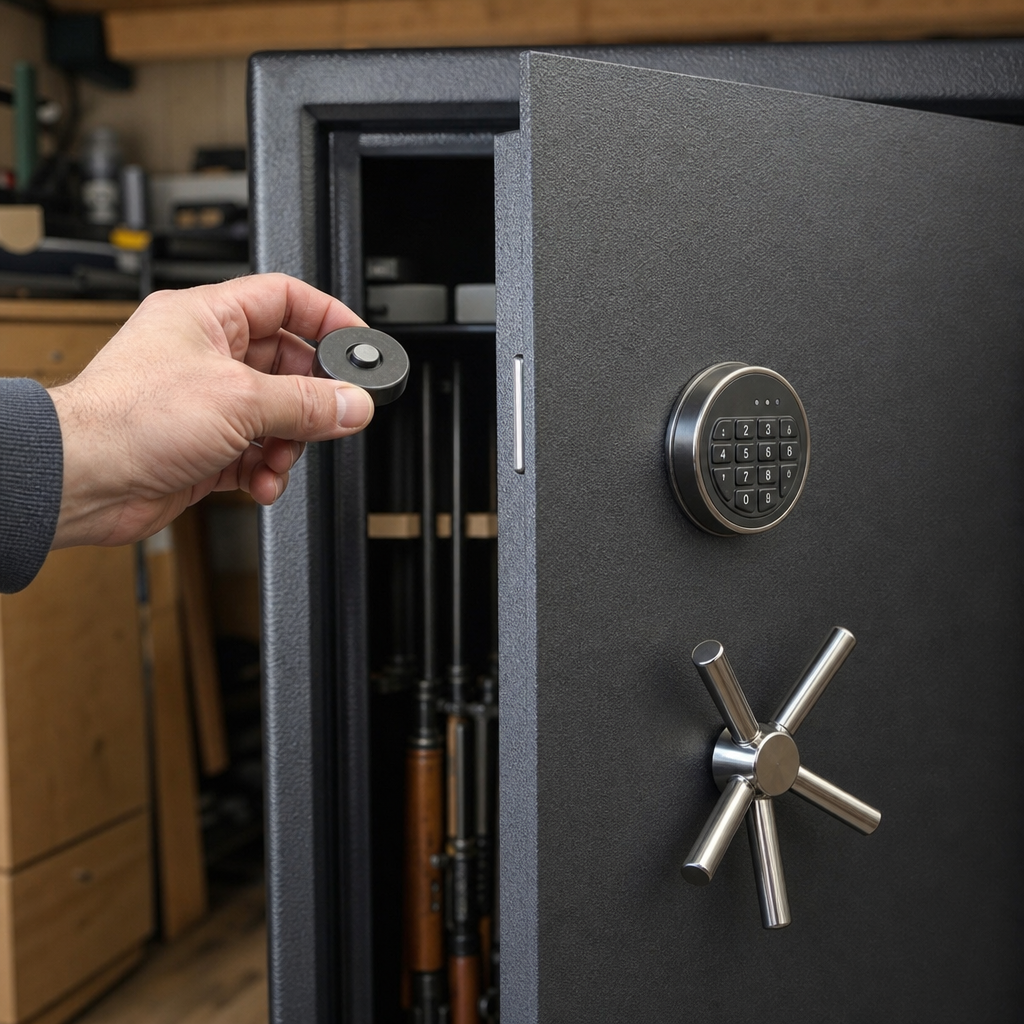
Videos claiming a gun safe can be opened with a magnet spread quickly because they compress a complicated lock design into a dramatic stunt, but the truth is narrower, more technical, and far less universal. In gun safe conversations, “opened with a magnet” usually refers to manipulating an electronic lock’s solenoid or internal relocker component from outside the door, not bypassing heavy steel with some magical force. That distinction matters because most modern gun safes use very different lock bodies, hardplates, door liners, and boltwork layouts, and a method that affected one poorly designed lock on one safe does not automatically apply to another. I have inspected residential security containers, replaced failed electronic locks, and seen customers arrive convinced a refrigerator magnet could defeat any keypad safe. In practice, successful magnetic attacks are rare, model-specific, and heavily dependent on weak engineering. Understanding the science helps owners separate internet myth from real risk, choose better products, and focus on security measures that meaningfully reduce unauthorized access to firearms.
This article serves as a hub for gun safe myths and misconceptions because the magnet question connects to broader confusion about lock types, fire ratings, steel thickness, and the difference between a true safe and a residential security container. A gun safe is a broad retail label, not a precise performance standard. Many consumer models are tested under Underwriters Laboratories Residential Security Container criteria, while some premium units use UL-listed mechanical or electronic locks and heavier construction. Magnets interact with ferromagnetic materials and can influence some electromechanical components, but they do not universally “unlock” safes. What matters is where the lock is mounted, whether there is direct magnetic coupling, what shielding exists, and whether the design includes anti-tamper features. By examining how electronic locks work, why certain older vulnerabilities existed, and which myths deserve attention instead, you can make better purchasing and storage decisions and avoid wasting effort on sensational but misleading threats.
How the magnet myth started and why it persists
The magnet myth grew from a mix of legitimate lock research, viral demonstrations, and the public’s limited familiarity with safe hardware. Years ago, security researchers and locksmiths showed that some inexpensive electronic safe locks used solenoids that could be manipulated with a strong rare-earth magnet placed near a vulnerable point on the safe door. In a few cases, design flaws allowed the magnetic field to pull or shift a component so the lock released without a valid code. Demonstrations were real, but they were often repeated without context. Viewers saw “safe opened with magnet” and assumed every keypad safe, including every gun safe, shared the same weakness.
That assumption ignores how much variation exists between products. A bargain lockbox sold for documents, a big-box-store gun safe, and a commercial burglary-rated safe can all have electronic keypads, yet their internal lock architecture may be completely different. Viral clips also flatten the timeline. A vulnerability documented in an older lock generation may have been addressed years ago through revised lock cases, shield plates, changed component orientation, or door redesign. I have opened entry-level safes for service calls where the lock body was plainly exposed behind thin sheet metal, and I have also worked on better-built units where the lock sat behind hardplate, insulation, a steel inner door panel, and offset boltwork that made external magnetic influence implausible. The myth persists because it is simple, memorable, and dramatic, while the real answer is conditional and technical.
The science: can a magnet actually open a gun safe?
Yes, a magnet can open some safes, but only if the lock design allows magnetic force to act on a critical internal part strongly enough to change its position. That is the scientific core. Magnets do not “crack the code,” erase a keypad, or disable steel bolts by brute force. They create a magnetic field. If a lock contains ferromagnetic components arranged in a vulnerable way, and if the attacker can place a strong enough magnet close enough to those parts through the door skin, the field may move a solenoid plunger, actuator, or relocking part.
Distance is the biggest limiter. Magnetic force drops quickly as separation increases. A lock mounted directly behind a thin outer panel is far more exposed than a lock buried behind layers of steel, composite material, insulation, and an inner door plate. Orientation also matters. If the component that must move is perpendicular to the field or physically constrained, a magnet may have little effect. Material choice matters too. Designers can reduce susceptibility by using non-ferrous parts where practical, adding shielding, and changing geometry so no external field can produce a useful movement path. In other words, a magnet attack is not a general property of gun safes; it is a design-specific exploit against certain electromechanical layouts.
Which safes were most vulnerable
The products most associated with magnetic bypass were typically low-cost electronic safes and lockboxes with thin steel, minimal barriers, and inexpensive lock assemblies. Some hotel-style safes, home document boxes, and budget import units drew attention because the lock body sat close to the surface and lacked meaningful shielding. A few consumer gun safes also used electronic lock packages similar in concept, especially in lower price tiers, which is why the myth spread into the gun safe category. But the weakness was never evenly distributed across the market.
Higher-quality gun safes generally reduce risk through layered construction. That can include thicker door steel, hardplate in front of the lock, isolated lock mounting, relockers, and inner door liners that increase stand-off distance between the exterior and the lock body. Lock choice matters as much as the safe cabinet. A reputable UL-listed electronic lock from established brands such as Sargent and Greenleaf, SecuRam, La Gard, or AMSEC’s lock partners is not equivalent to an anonymous no-name keypad assembly. Even then, lock quality alone is not enough; the way the safe manufacturer integrates the lock into the door determines whether any theoretical vulnerability becomes a practical attack path.
| Safe Type | Typical Lock Exposure | Magnet Attack Risk | Why |
|---|---|---|---|
| Budget lockbox | Very close to outer panel | Higher | Thin steel and simple solenoid layouts can leave components reachable by strong external fields |
| Entry-level gun safe | Moderate, varies by brand | Low to moderate | Some use basic electronic locks, but door liners and boltwork often add distance and obstruction |
| Mid-range gun safe | Shielded and offset | Low | Better lock placement, hardplate, and reinforced doors reduce practical magnetic influence |
| Premium burglary-rated safe | Deeply protected | Very low | Heavy barriers, relockers, and listed lock systems make direct magnetic manipulation highly unlikely |
Electronic locks versus mechanical dial locks
Many buyers hear the magnet myth and conclude that mechanical dial locks are always safer than electronic locks. That is too broad. Mechanical combination locks avoid battery failure and are not susceptible to the specific magnetic bypass that can affect certain electronic mechanisms. They also have a long track record and are available in UL-listed Group 2 and Group 1 variants for higher security applications. However, mechanical locks have tradeoffs: slower opening, more user error with dialing, and more tolerance sensitivity if the lock is poorly serviced or damaged. For quick-access defensive storage, many users prefer electronic locks because they open faster and are easier to use under stress.
A good electronic lock is not inherently weak. In daily service work, the most common problems I see are dead batteries, neglected bolt pressure issues, and owner confusion with programming—not dramatic external bypasses. Quality electronic locks use robust internal design, lockout features after repeated wrong codes, and integration with relockers that trigger if the lock is attacked. The right comparison is not electronic versus mechanical in the abstract. It is well-designed, properly installed lock systems versus cheaply engineered ones. For many households, a reputable electronic lock on a well-built gun safe is a sound choice, especially when regular battery replacement and function checks are part of the maintenance routine.
Other gun safe myths owners should understand
The magnet question sits inside a wider set of gun safe myths. One common misconception is that “fireproof” means contents survive any house fire. In reality, fire ratings depend on time, temperature, test protocol, seal performance, and where the safe sits in the structure. Another myth is that heavier automatically means more secure. Weight helps, especially against theft and tipping, but steel thickness, door design, and anchor installation matter more than raw mass. I have seen heavy safes with thin bodies and flashy interiors that delivered less real security than plainer units with better steel and lock protection.
Another persistent myth is that any safe with a digital keypad is vulnerable to hacking. Most residential electronic safe locks are standalone devices, not internet-connected computers. They are far more likely to fail from poor manufacturing, corrosion, impact damage, or battery neglect than from software intrusion. There is also confusion about backup keys. Many quick-access handgun safes include key override cylinders for emergency entry, and those cylinders can become the weakest link if they are cheaply made. Finally, owners often assume a gun safe alone prevents all unauthorized access. A safe is one layer. Good storage also includes code discipline, bolt-down installation, humidity control, and keeping the safe location discreet.
How to evaluate a gun safe for real security
If you want to know whether a gun safe is a smart buy, start with construction and lock pedigree rather than marketing slogans. Look for the steel thickness of the body and door, not just a total gauge number hidden in fine print. Check whether the unit uses a UL-listed lock and whether the manufacturer names the lock brand. Ask if there is hardplate protecting the lock area, whether relockers are present, and how the safe is anchored. A safe that can be tipped over, pried from the side, or carried out is vulnerable regardless of lock type.
For electronic models, inspect the keypad fit and ask where the lock body sits behind the door. Reputable dealers and locksmiths can often tell you whether a brand has had known lock issues. Read warranty terms closely. A lifetime break-in and fire warranty sounds impressive, but service response, lock replacement coverage, and parts availability matter more in real ownership. If child access prevention is the priority, prioritize reliable locking and consistent use. If organized theft is the priority, step up in steel, anchoring, and burglary resistance. The best purchase decision comes from matching the safe to the threat model, not from chasing one viral bypass story.
Practical steps to reduce risk at home
The most effective way to protect firearms is not worrying about magnets; it is building a layered storage routine. Bolt the safe to concrete or substantial framing using the manufacturer’s instructions. Replace electronic lock batteries on a schedule instead of waiting for low-power symptoms. Test the lock with the door open after battery changes or code updates. Store the combination separately from the safe and never on a phone note shared across family devices. If the safe has a key override, secure that key in another locked location.
Placement also matters. A closet corner on a ground-floor slab is usually better than a garage edge where humidity swings, casual visibility, and pry access are higher. Use a dehumidifier rod or desiccant to protect firearms and lock components from corrosion. Keep serial numbers and photos documented outside the safe for insurance and police reporting. If your safe is older or uses a generic electronic keypad with uncertain origin, have a qualified safe technician evaluate it. Upgrading a lock is often cheaper than replacing the whole safe. Real security comes from boring habits done consistently, and those habits defeat far more thefts and accidents than sensational tricks ever will.
What to remember about magnets and gun safe myths
Can gun safes be opened with a magnet? Some can, under specific conditions involving vulnerable electronic lock designs, close lock placement, and strong magnetic coupling. Most cannot, and many of the videos that shaped public opinion either showed narrow product defects or omitted the engineering context that determines whether the trick works at all. The useful lesson is not to fear magnets broadly. It is to avoid poorly designed safes, buy from manufacturers that disclose lock components and construction details, and treat safe storage as a system rather than a gadget.
As a hub for gun safe myths and misconceptions, this topic points to a larger truth: security failures usually come from weak design, bad installation, or inconsistent owner habits, not from cinematic shortcuts. Choose a safe with credible construction, a reputable lock, and proper anchoring. Maintain it, test it, and use it every time. If you are comparing models now, make a checklist of lock type, steel thickness, fire rating method, and mounting plan before you buy. That simple step will do more for firearm safety than any internet myth ever will.
Frequently Asked Questions
Can a gun safe really be opened with a magnet?
Sometimes, but only in a very limited and highly specific sense. When people say a gun safe was “opened with a magnet,” they are usually not talking about the magnet somehow overpowering the steel door or magically defeating the entire safe. What they mean is that a particular electronic lock design may have an internal component—often a solenoid, actuator, or relocking part—that can be influenced from outside the door if the lock body, door construction, and component placement make that possible. In other words, the magnet is interacting with a vulnerable lock mechanism, not the safe as a whole.
This is why the viral videos can be misleading. A dramatic demonstration may show one safe opening quickly, but that does not mean magnets are a universal bypass tool for all gun safes. Many safes have lock bodies shielded by steel, offset internal parts, hard plates, relockers, or mechanical designs that simply do not respond to an external magnetic field in any useful way. Other safes use electronic locks whose internal movement is too far from the door surface, too well protected, or based on different components entirely. So yes, some models have historically been vulnerable, but the broad claim that “gun safes can be opened with a magnet” is an oversimplification that leaves out the most important detail: the vulnerability depends on the exact lock design.
How does a magnet affect an electronic safe lock in the first place?
The basic idea comes down to physics and lock construction. Certain electronic safe locks use a solenoid or similar part that moves when the correct code is entered. That movement allows the handle to retract the bolts or permits the locking mechanism to disengage. If a strong external magnet can influence that component through the door or through a thin section near the keypad opening, it may be possible to move or hold the part in a way that imitates normal unlocking behavior. In the most vulnerable cases, the magnet is not “picking” the lock in the traditional sense; it is exploiting the lock’s internal architecture.
However, magnetic attacks are not simple or guaranteed. Magnetic force weakens quickly with distance, and safe doors are built from layers of steel and other materials that can interfere with positioning and field strength. The attacker must often know roughly where the vulnerable component sits inside the door, which direction it moves, and whether nearby metal is shielding or redirecting the magnetic field. Even small design differences can make the same trick work on one lock and fail completely on another. That is why this issue is best understood as a narrow engineering vulnerability, not a general property of electronic safes.
Are only cheap gun safes vulnerable to magnet attacks?
No, but lower-cost safes and entry-level electronic lock packages have historically been more likely to attract attention in these discussions because cost pressures can lead to simpler lock layouts, lighter shielding, or less robust internal isolation. That said, vulnerability is not determined by price alone. A more expensive safe can still have a lock or mounting arrangement with a design weakness, while an affordable safe may use a lock that is not susceptible to magnetic manipulation at all. The real question is not “Was the safe expensive?” but “What exact lock model and internal configuration does it use?”
It is also important to separate safe body strength from lock vulnerability. A safe may use thick steel, solid bolts, and respectable fire protection, yet still rely on an electronic lock that has a specific bypass weakness. Conversely, a safe may be weak in other ways but not vulnerable to magnets. Consumers sometimes assume all security features rise and fall together, but safes are systems made of multiple components: body, door, boltwork, lock, relockers, hard plates, hinges, and mounting method. A magnet-related weakness, when it exists, usually concerns one part of that system rather than the entire product category.
How can I tell whether my gun safe is at risk from a magnet bypass?
The most reliable starting point is to identify the exact lock brand and model on your safe, not just the safe brand itself. Many safe manufacturers buy locks from third-party lock makers, and the same safe line may ship with different locks over time. Look for a model number on the keypad, inside the battery compartment, in the owner’s manual, or on purchase documentation. Once you have that information, check whether the lock has been subject to recalls, service bulletins, known bypass reports, or replacement programs. Reputable manufacturers, locksmith associations, and established safe technicians are better sources than viral videos or vague forum posts.
If you cannot confirm the lock model or you are concerned about security, a qualified safe technician or locksmith can inspect the safe and advise whether the lock should be upgraded. In many cases, the practical fix is straightforward: replace an older electronic lock with a newer UL-listed electronic or mechanical dial lock from a reputable manufacturer, ideally installed by someone familiar with safe lock mounting and relocker interaction. If the safe stores firearms for defensive access, also weigh security against speed of entry. Some owners prefer a higher-quality modern electronic lock for convenience; others prefer a mechanical lock for simplicity. The right answer depends on your threat model, but guessing based on internet clips is not the best way to assess risk.
What should gun safe owners do to improve protection against this kind of attack?
First, make sure the safe is using a trustworthy lock. If your safe has an older or little-known electronic lock, especially one mentioned in discussions of magnetic bypasses, consider replacing it with a newer, well-vetted lock from a respected manufacturer. A quality lock upgrade is often the single most effective step because it addresses the actual point of concern rather than relying on improvised fixes. If you are buying a new safe, ask not only about steel thickness and fire rating, but also about the exact lock model, whether it is UL listed, and whether the company has addressed past bypass concerns.
Second, treat the safe as part of a larger security plan. Bolt it down so it cannot be tipped, removed, or attacked from easier angles. Place it in a location that limits covert tampering and gives an attacker less privacy and time. Keep firmware, service, and replacement guidance from the manufacturer if applicable. And remember that many real-world breaches happen through weak installation, exposed override keys, poor code practices, or simple theft of the whole safe—not through cinematic magnet attacks. The science behind magnetic bypasses is real in certain cases, but the practical lesson for most owners is straightforward: verify your lock, upgrade if necessary, and focus on overall safe quality and installation rather than assuming every magnet demonstration applies to your gun safe.