
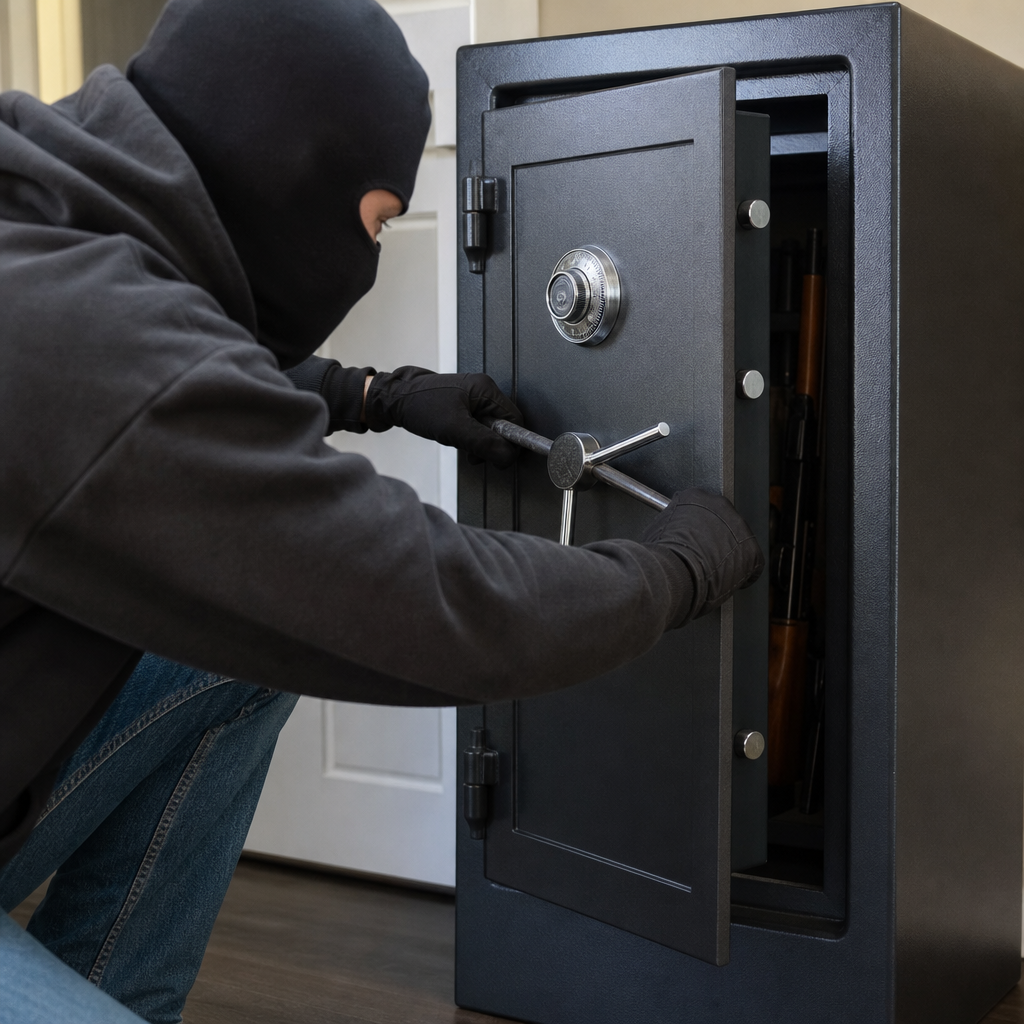
The myth that gun safes are impenetrable to all break-in methods persists because marketing language, dramatic product demonstrations, and understandable owner confidence often blur the line between “secure enough for a realistic threat” and “impossible to defeat.” In practice, no residential security container is invulnerable, and treating any gun safe as absolute protection creates avoidable risk for firearms, documents, heirlooms, and the people who rely on responsible storage. When I evaluate safes, I start with a simple definition: a gun safe is a lockable steel enclosure designed to delay unauthorized access, reduce theft opportunity, and in many cases add fire protection. That definition matters because delay, not invincibility, is the real function. A burglar works against time, noise, visibility, and tool limits. Your safe’s value comes from increasing those costs enough that the attacker gives up, gets interrupted, or chooses an easier target.
This distinction matters for every buyer in the broader Gun Safes & Safety category, especially anyone exploring common gun safe myths and misconceptions. One of the most damaging myths is the belief that heavy weight alone prevents theft. Another is the idea that all “fireproof” safes perform equally. A third is that electronic locks are inherently unreliable while mechanical locks are unbeatable. The hub topic connects all of these misunderstandings, but the central issue is threat modeling. A handgun owner in a suburban home faces different risks than a collector with dozens of long guns, suppressors, optics, and paper records. Children in the home change the storage equation. So do local burglary patterns, floor load limits, humidity, and whether the safe sits in a visible garage or a concealed interior room. The right question is never “Is this safe impenetrable?” The right question is “How much attack time, by what methods, under what conditions, can this safe realistically resist?”
Industry terms can also mislead new buyers. Many products sold as gun safes are technically Residential Security Containers, a category shaped by UL 1037 standards that measure resistance to limited attacks with basic hand tools for a short test window. That does not mean the product is useless; many RSC-rated units are effective for ordinary residential theft deterrence. It does mean buyers should not confuse an entry-level big-box-store container with a high-security burglary safe carrying TL ratings such as TL-15 or TL-30 under UL 687. Those burglary ratings involve more aggressive attack testing and are a different class of security product entirely. Understanding those labels is foundational, because the myth of impenetrability often begins when a marketing brochure uses the word “safe” without clarifying test scope, steel thickness, lock type, boltwork design, or anchoring requirements.
Why does this matter so much? Because overconfidence drives bad decisions. Owners skip bolting the safe down, place it in a garage near abundant tools, neglect humidity control, share access codes casually, or assume insurance is unnecessary. I have seen excellent safes compromised by poor installation and mediocre safes perform acceptably because they were concealed, anchored, monitored, and paired with layered home security. Real protection comes from systems, not slogans. This hub article explains the main ways gun safes are actually attacked, the specifications that influence resistance, the misconceptions that distort buying choices, and the practical steps that turn a vulnerable container into a much harder target.
Why No Gun Safe Is Truly Impenetrable
No gun safe is impenetrable because every barrier can be defeated with enough time, access, knowledge, and tools. Security professionals describe this as the “delay principle.” Steel can be cut, locks can be attacked, bodies can be pried, hinges can be bypassed on poorly designed units, and entire safes can be removed for off-site opening. The useful measure is not whether defeat is theoretically possible, but how difficult it is under realistic conditions. Most residential burglars want speed. They prefer exposed valuables, weak doors, and targets they can carry. A properly installed gun safe changes that calculus by forcing noise, exertion, and tool use. However, if a burglar has privacy for an hour in a detached garage, access to pry bars, abrasive saws, carbide drill bits, or even the homeowner’s own angle grinder, resistance drops fast.
The body of the safe is often the weakest point on consumer models. Many buyers focus on locking bolts and dramatic door images while overlooking steel gauge. A thick door on a thin cabinet body can still be breached through the side, top, or back. Pry attacks remain common because they are simple and rely on leverage rather than sophistication. Cutting attacks are increasingly relevant because cordless power tools have improved dramatically. Modern brushless grinders, reciprocating saws, and portable bandsaws give thieves capabilities that were far less common in residential crimes twenty years ago. Even when a tool attack takes several minutes, that can be enough if the safe is isolated from neighbors, alarms, and occupied spaces.
Another reason impenetrability is a myth is that attackers do not always “open” a safe conventionally. Sometimes they tip it over to exploit weaker seams. Sometimes they attack the lock or relocker area. Sometimes they steal the whole unit. Smaller safes under roughly 750 pounds are especially vulnerable if not anchored into concrete or substantial framing. Criminal cases repeatedly show that a safe in a garage, workshop, or basement can be moved with appliance dollies, pry bars, ratchet straps, or multiple offenders. Once removed, the burglar can work in private with better tools and no time pressure. A safe that survives a ten-minute smash-and-grab may not survive two hours in a storage unit.
Common Break-In Methods Burglars Actually Use
Most real-world safe attacks fall into a small set of methods: prying, cutting, drilling, smashing surrounding structure, lock manipulation, and whole-safe theft. Prying targets door gaps, weak frames, and thin steel. Units with more robust door jambs, better active bolt coverage, and tight tolerances generally resist prying longer. Cutting attacks target the body or door with angle grinders, cut-off wheels, saws, or sometimes torches, though torch resistance varies widely and many consumer gun safes are not designed for serious torch attack. Drilling focuses on lock areas, hardplates, and relockers. Better safes use hardened steel plates, ball-bearing drill resistors, or glass relock systems that complicate this method.
Burglars also exploit context. If a safe is enclosed in flimsy cabinetry, they may remove trim or drywall around it to gain access to sides or anchoring points. If it is in a garage, they may use long pry bars, car jacks, grinders, or even vehicles to shift position. If the lock is electronic, the attack may target user behavior instead of the hardware through guessed codes, shoulder surfing, or factory default combinations that were never changed. Mechanical dial locks avoid battery failure, but they are not magical; poor maintenance, worn components, or amateur manipulation attempts can still become issues. High-quality electronic locks from brands such as Sargent and Greenleaf, SecuRam, and La Gard can be very reliable when properly installed and maintained.
| Break-in method | What the burglar targets | What improves resistance |
|---|---|---|
| Prying | Door gaps, frame flex, weak bolt engagement | Thicker steel, reinforced jambs, solid anchoring, tight clearances |
| Cutting | Thin body panels, exposed sides, door skin | Heavier plate steel, layered barriers, concealed placement, alarms |
| Drilling | Lock body, spindle area, relocker path | Hardplates, drill-resistant materials, quality lock design |
| Whole-safe theft | Portable or unanchored safe | Concrete anchoring, weight, restricted access, surveillance |
| Credential attack | Codes, keys, combinations, owner habits | Unique codes, access discipline, secure backups, audits |
The practical takeaway is direct: burglars usually choose the fastest workable method, not the most cinematic one. That is why placement, anchoring, and visible deterrence matter almost as much as steel thickness. A safe tucked into a closet, bolted to concrete, hemmed in by framing on two sides, and covered by a monitored alarm is much harder to attack than the same model standing free in a garage.
The Specs That Matter More Than Marketing Claims
If you want to separate useful security from gun safe myths and misconceptions, start with measurable specifications. Steel thickness is first. Many mass-market units use 14-gauge or 12-gauge bodies, while stronger residential models may use 10-gauge, 7-gauge, or thicker plate. Lower gauge numbers mean thicker steel. Door construction also matters, but not all thick-looking doors are solid plate; some are composite structures built around fireboard. Composite doors can still perform well, but buyers should know what they are getting. Ask for actual steel thickness on both body and door, not just overall door thickness.
Lock quality matters next. UL-listed locks, whether mechanical or electronic, are preferable to anonymous imports with sparse documentation. Boltwork design, relockers, hardplates, and hinge-side protection influence how well the safe resists force and drilling. Fire ratings need scrutiny too. A manufacturer’s internal fire test is not the same as independent certification, and stated durations mean little without temperature thresholds and test protocols. Insulation materials, door seals, and construction details affect both fire and security, sometimes in tradeoff. More fireboard does not automatically equal stronger burglary resistance.
Finally, pay attention to installation variables buyers often overlook: anchor hole design, base construction, humidity management, and warranty language. A safe with excellent steel but poor anchor access can be frustrating to secure properly. A beautiful interior means little if rust forms on firearms because the owner ignored desiccants, dehumidifier rods, and room climate. Read the fine print on attempted-break-in coverage, lock replacement, and freight service. Serious safe shopping is less about brand slogans and more about verified specifications and setup discipline.
Myths About Locks, Weight, Fire Ratings, and Price
Several gun safe myths and misconceptions cluster around a few headline features. First, electronic versus mechanical locks. Neither category is universally superior. Mechanical dial locks offer long service life and no batteries, but they are slower to open and less convenient under stress. Electronic locks offer faster access and easier code changes, but batteries, keypad wear, and electronics quality matter. A good lock in either category beats a bad lock in the other. Second, heavy safes are not theft-proof. Weight helps, especially against quick removal, but a 700-pound safe on a smooth garage slab is still movable with leverage and dollies if it is not anchored.
Third, expensive does not always mean appropriately secure for your threat profile, and cheap does not always mean useless. A modest RSC anchored correctly in a concealed interior location can be an effective deterrent for a typical household. Conversely, a premium-looking safe with glossy paint and plush interior may still use relatively thin steel. Fourth, fire ratings do not guarantee contents survival. Paper chars at different temperatures than polymer frames, optics adhesives, ammunition packaging, or electronic storage media. Fire departments also note that real house fires involve uneven heat, water intrusion, structural collapse, and prolonged smoldering. Safe contents may be damaged even when the shell remains intact.
Another persistent myth is that external hinges are a vulnerability by default. On many quality safes, the locking bolts or dead bars secure the door independently of the hinges, so cutting the hinges does not release the door. What matters is the overall door retention design. My advice after years of comparing models is straightforward: ignore simplistic claims and evaluate how each feature functions within the entire security system.
How to Build Real Security Around a Gun Safe
The strongest lesson in this hub topic is that a gun safe performs best as one layer in a broader security plan. Start with placement. Interior closets, corners, basement rooms with limited sightlines, and spaces that restrict side access are usually better than garages. Bolt the safe to concrete whenever possible, or to substantial structural members using manufacturer-approved hardware. Add an alarm contact, motion detection, and cameras that capture approach paths rather than just the safe face. If children are in the home, speed of authorized access matters, but so does strict control of combinations, backup keys, and override procedures.
Next, reduce the attacker’s opportunity. Keep power tools locked separately. Do not advertise firearm ownership with decals, open deliveries, or social media photos. Use inventory records with serial numbers, photographs, and insurance documentation stored securely off-site or encrypted in the cloud. Consider a decoy strategy only cautiously; a small visible lockbox can draw initial attention, but it should never replace the primary safe. For high-value collections, separate storage by risk: one container for defensive access, another heavier unit for long-term storage, and a third fire-rated document safe if needed. Layered design is more resilient than trying to force one product to solve every problem.
Maintenance is part of security. Replace electronic lock batteries on schedule with quality brands, test the lock regularly, inspect anchor points, check door seal condition, and manage humidity. A neglected safe can fail open for the owner or fail secure at the worst moment. The practical goal is not perfection. It is to make unauthorized access noisy, slow, uncertain, and likely to fail before the contents are reached.
The myth that gun safes are impenetrable to all break-in methods fails because it misunderstands what safes are built to do. A gun safe is a delay device, not a force field. Real security depends on matching the container to the threat, understanding the difference between residential security containers and higher-rated burglary safes, and recognizing the attack methods burglars actually use: prying, cutting, drilling, credential abuse, and whole-safe theft. Once you see the problem clearly, the buying process becomes much simpler and much more effective.
For anyone researching gun safe myths and misconceptions, this hub should anchor the subtopic: weight is not enough, fire ratings need scrutiny, lock debates require nuance, and marketing language should never replace hard specifications. Steel thickness, lock quality, boltwork, anchoring, placement, and layered home security matter more than showroom theatrics. The best-performing safe in the real world is often not the one with the boldest claims, but the one installed thoughtfully, hidden intelligently, maintained consistently, and supported by alarms, access discipline, and documentation.
If you want better firearm security, audit your current setup today. Check the rating, confirm the steel specs, bolt the safe down, review lock practices, and identify the easiest attack path in your home. Closing those gaps will do far more to protect your firearms than believing any safe is impossible to breach.
Frequently Asked Questions
Are gun safes really impenetrable to every kind of break-in attempt?
No. That is the core myth, and it is important to correct it clearly: no residential gun safe or residential security container is truly impenetrable to every attack method. A gun safe can be very effective, but “effective” is not the same as “invulnerable.” Given enough time, the right tools, enough privacy, and a determined attacker, any container can be breached. The practical question is not whether a safe can be defeated in theory, but how difficult, noisy, slow, and risky it is to defeat in real-world conditions. That distinction matters because many owners hear marketing claims, watch dramatic demonstrations, or see thick steel doors and assume they have purchased absolute protection. In reality, security is always a matter of delay, deterrence, detection, and layered protection.
Most burglaries are opportunistic and fast, which means a properly chosen and properly installed gun safe still provides meaningful protection. It can stop casual thieves, frustrate smash-and-grab attempts, and prevent unauthorized access by children or visitors. But if the safe is lightweight, poorly anchored, thin-walled, badly placed, or loaded with valuables that justify extended attack time, its limits become much more relevant. Understanding those limits leads to better decisions about safe selection, placement, anchoring, alarm integration, insurance, and what should or should not be stored inside. The safest mindset is to view a gun safe as a strong part of a broader security system, not as a magical object that makes risk disappear.
What break-in methods can actually defeat a gun safe?
Gun safes can be attacked in several ways, and the method depends on the construction of the safe, the tools available, and how much uninterrupted time the attacker has. Common attack routes include prying at weak door gaps, attacking hinges or locking areas, tipping the safe over to gain leverage, cutting into thinner steel walls with power tools, drilling vulnerable lock areas, and in some cases carrying off a smaller safe entirely to open later in a private location. Not every method works against every safe, and better-built safes resist these attacks far more effectively, but it is a mistake to assume that a locked door alone solves every threat.
Many people focus only on the lock, when in fact the body of the safe, the door frame, the boltwork, and the installation are just as important. A sophisticated lock on a thin steel cabinet does not create high security. Likewise, a heavy safe that is not bolted down may be more vulnerable than expected because once it is on its back or side, an attacker can apply more force with pry bars or tools. Power tools also change the equation significantly. In a quiet, detached space such as a garage, workshop, or outbuilding, attackers may have more opportunity to use grinders, saws, or drills than owners assume. That is why responsible evaluation looks at the entire attack surface: steel thickness, door design, hardplate protection, relockers, fireboard layout, anchor points, room placement, visibility, and whether an alarm or surveillance system reduces the time available for an attack.
Why do so many people believe the myth that gun safes cannot be broken into?
The belief persists because of a combination of marketing, misunderstanding, and reasonable but incomplete assumptions. Manufacturers and retailers often use strong language such as “ultimate protection,” “maximum security,” or “virtually impenetrable,” which can leave buyers with an exaggerated impression of what a typical residential safe can do. Product demonstrations can also be misleading if they show a safe surviving one specific attack in controlled conditions, while omitting other realistic attack paths. In addition, owners naturally want to feel confident after making a major purchase, especially when it involves firearms, family safety, legal responsibility, and valuable possessions. That confidence is understandable, but it can turn into overconfidence if it is not grounded in how safes are actually rated and defeated.
Another reason the myth survives is that many people do not distinguish between different categories of secure storage. A residential security container, a heavier gun safe, and a true high-security commercial safe are not the same thing, even if they look similar in photos. Price, weight, steel thickness, lock protection, and certification standards vary enormously. Without that context, consumers may compare unlike products and assume all “safes” offer the same level of resistance. The myth is also reinforced by the fact that a good safe often does work exactly as intended against common threats, so owners may never personally see its limitations. The problem is not that gun safes are useless; the problem is that successful everyday protection can create the false impression of absolute protection under all circumstances. A realistic view is more useful: a quality safe meaningfully reduces risk, but it does not eliminate it.
How can I make a gun safe much harder for burglars to defeat?
The most effective approach is to treat safe security as a system rather than a standalone product. Start by buying the most robust safe you can reasonably afford, paying attention not just to brand reputation but to measurable features such as steel thickness, door construction, lock type, relockers, reinforced hardplate, internal hinge protection where relevant, and credible security ratings where available. Then install it intelligently. Anchoring the safe to a solid foundation is one of the most important steps because it prevents thieves from simply removing the unit or tipping it into a more attack-friendly position. Placement matters too. A safe tucked into a tight interior location, where long pry bars are difficult to use and visibility is low, is generally a better choice than one left exposed in an easily accessible garage corner.
Layered security adds critical protection by reducing the time and privacy an intruder has. Alarm systems, motion sensors, surveillance cameras, reinforced doors, good exterior lighting, and monitored entry points all make a safe more effective by increasing the chance that an attack is interrupted. Even simple measures such as limiting who knows you own firearms, avoiding social media oversharing, and controlling access by contractors or casual visitors can reduce targeted theft risk. It is also wise to think carefully about what you store inside. If the contents include especially high-value items such as rare firearms, cash, heirloom jewelry, or irreplaceable documents, you may need stronger storage than a standard residential gun safe provides. Finally, maintain the lock and hardware, keep combinations or override credentials protected, and review your insurance coverage. Real security comes from stacking barriers, not from trusting a single label or marketing promise.
If no gun safe is invulnerable, is owning one still worth it?
Absolutely. Rejecting the myth of impenetrability does not mean rejecting the value of gun safes. A well-chosen gun safe remains one of the most important tools for responsible firearm ownership because it helps prevent unauthorized access, reduces theft risk, supports safer storage habits, and can protect documents and valuables from common household threats. For many real-world scenarios, especially quick burglaries, a good safe is more than enough to stop the attack or force the intruder to give up. That practical value is significant. The mistake is only in expecting perfect protection, which can lead to careless placement, poor installation, weak supporting security, or unrealistic assumptions about what happens during a determined attack.
The better conclusion is that a gun safe is worth owning precisely because it improves security in meaningful ways, even though it has limits. When owners understand those limits, they make better choices: they anchor the safe, place it strategically, use alarms, insure valuable contents, and select a model appropriate to the risks they actually face. They also recognize that child access prevention, theft deterrence, and delay against forced entry are all major wins, even if no product can promise impossibility. In other words, the value of a gun safe does not come from being unbeatable. It comes from making unauthorized access much harder, much slower, and much less likely. That is a realistic standard, and it is the one responsible owners should use.