
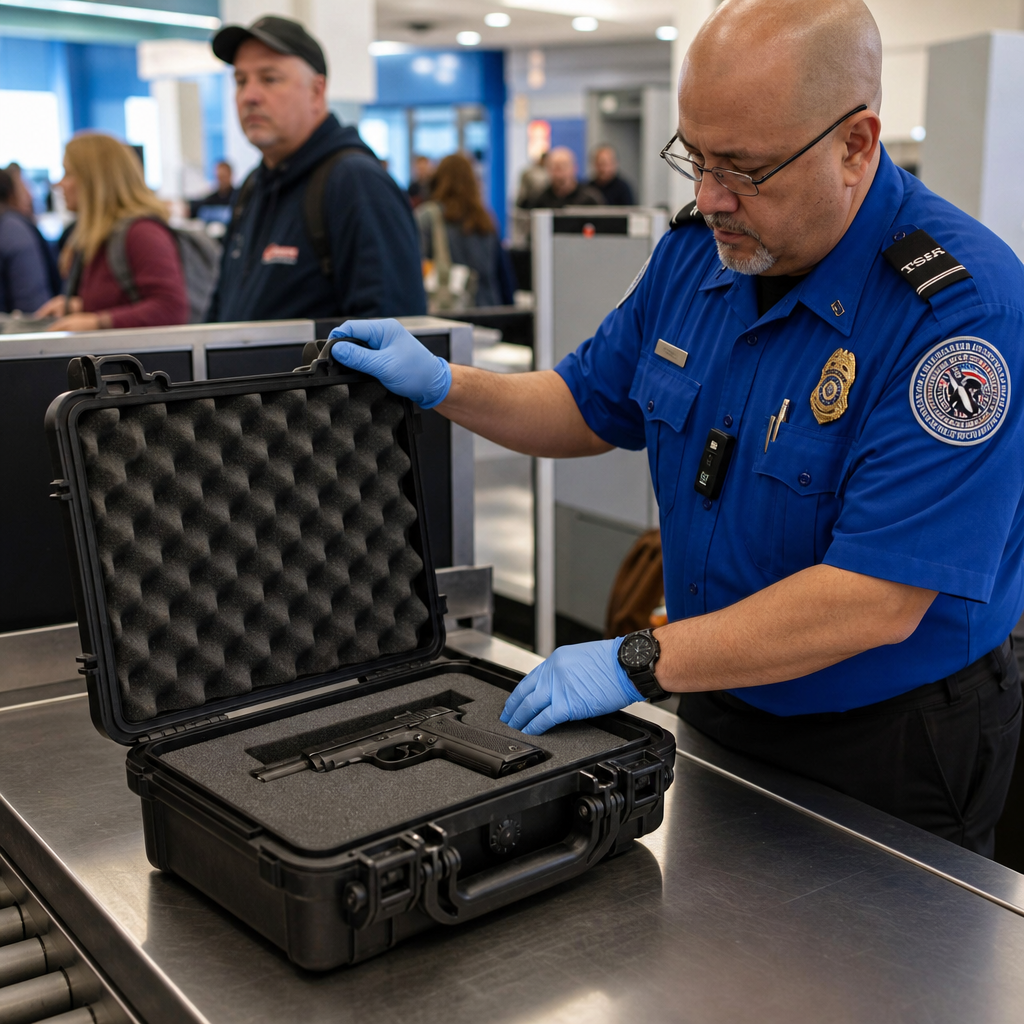
TSA-approved gun safes are useful for legal air travel, but they are not automatically secure enough for every trip, every threat level, or every firearm owner. The phrase “TSA-approved” causes constant confusion because many travelers assume it means a case has passed a high security standard for protecting guns against theft. In practice, it usually means the case meets airline and Transportation Security Administration handling expectations for checked baggage, especially around lockability, hard-sided construction, and inspection procedures. That distinction matters. A travel gun safe can be compliant yet still vulnerable to pry attacks, weak lock bodies, poor cable anchors, or bad packing habits that expose the firearm to loss.
I have worked with handgun lockboxes, full-size cases, and airline check procedures long enough to see the same mistakes repeat: buyers equate a label with real protection, rely on cable boxes meant for cars as if they were baggage vaults, or choose a compact case that passes check-in but fails basic physical abuse. This topic sits at the center of gun safe myths and misconceptions because it blends regulation, product marketing, and security engineering. If you are building a practical gun storage plan, understanding what a TSA-approved gun safe can and cannot do is more valuable than any badge on a package.
Before going further, define the terms clearly. A gun safe for travel is usually a hard-sided, lockable container designed to secure an unloaded firearm during transport. Some are dedicated pistol vaults with steel shells and foam interiors. Others are larger rifle cases made from polymer, aluminum, or composite materials. “Approved” generally refers to acceptability for airline transport, not a universal government certification for burglary resistance. By contrast, residential burglary ratings, fire ratings, lock certifications, and steel thickness are separate issues. Those differences are where many myths begin.
This article serves as a hub for gun safe myths and misconceptions within the broader gun safes and safety category. It explains the biggest misunderstandings, shows how TSA rules intersect with real-world security, and points to the decisions that actually reduce risk. If you want to know whether a TSA-approved gun safe is secure enough for travel, the short answer is this: secure enough depends on the safe’s construction, lock design, fit for the firearm, and how you use it before, during, and after transit.
What “TSA-Approved” Really Means for a Gun Safe
The most important misconception is that TSA approval equals anti-theft performance. It does not. For firearms in checked baggage, the hard case must be locked, and only the passenger should retain the key or combination. The case must fully secure the firearm from access. Airlines may add their own policies about ammunition, magazine placement, and declaration procedures, but the federal handling concept is straightforward: unloaded firearm, hard-sided container, declared at check-in, locked so others cannot open it.
That is why the term gets messy in retail listings. Many products marketed as TSA gun safes are really travel cases compatible with airline rules, not government-tested secure vaults. Some even use TSA-accessible luggage locks, which are a poor choice for firearm cases because firearm containers should not be openable by general TSA master keys. The correct setup is a lock only you control. In other words, “TSA-approved” is often a marketing shortcut, and consumers need to look past it immediately.
From a security standpoint, what matters is whether the case resists common attacks long enough to deter opportunistic theft in baggage systems, hotel rooms, vehicles, and temporary stops. A compliant case can still have thin shell material, weak hinge pins, exposed hasps, or cheap wafer locks. I have handled models that technically lock yet visibly flex at the seam with hand pressure. Those should never be mistaken for robust firearm security.
The Biggest Gun Safe Myths Travelers Believe
Myth one: any hard case is secure. Reality: hard-sided only describes form, not strength. Injection-molded plastic cases vary widely. Premium options from Pelican, Nanuk, and SKB use thicker walls, stronger latches, and better gasketed construction than bargain generic cases. For handguns, steel lockboxes from brands like Fort Knox, V-Line, Vaultek, and Hornady typically resist casual attacks better than thin clamshell cases sold as travel accessories.
Myth two: if it has a cable, it is theft-proof. A security cable is only as strong as its diameter, anchoring point, and the object it wraps around. Many cable lockboxes are intended to delay smash-and-grab theft in a vehicle, not survive determined attacks with bolt cutters. During air travel, the cable often adds little value because baggage thieves target the whole bag, not just the lockbox inside it.
Myth three: small equals discreet, therefore safer. Discretion helps, but undersized safes create fit problems that can stress locks, crush optics, or force poor packing. A safe should fit the firearm, spare magazine if allowed, and protective foam without telegraphing shape through luggage. Overly tight cases also make inspection awkward and increase handling risk.
Myth four: expensive always means secure. Price tracks branding, finish, electronics, and convenience features, not only security. I have seen costly biometric boxes with mediocre pry resistance and simpler mechanical models with thicker steel and better lid overlap. Evaluate design, not marketing tier.
How to Judge Real Travel Security
The best way to judge whether a TSA-approved gun safe is secure enough for travel is to break the purchase into measurable factors: material thickness, lid-to-body fit, hinge protection, lock quality, anchor points, and concealment inside larger luggage. For steel handgun safes, thicker steel generally improves pry resistance, though design matters as much as gauge. A recessed door, anti-pry lip, and robust welded corners outperform flat-edge boxes that expose a gap for tools.
Locks matter just as much. Simplex mechanical pushbutton locks have a strong reputation because they avoid batteries and many electronic failure points. Keyed cam locks vary widely in quality. Electronic keypad locks can be practical if backed by a quality solenoid, manual override, and dependable battery access. Biometric locks are fast, but fingerprint readers on budget travel boxes often struggle with dry fingers, dirt, or rushed use. For airport travel, reliability beats novelty.
Foam and fit also affect security. A loose gun shifts, prints the outline of the case through surrounding baggage, and may damage sights or optics. Closed-cell foam cut to fit the handgun, slide, and accessories prevents movement and presents a cleaner declaration inspection. The goal is a case that looks organized and controlled, not improvised.
| Feature | Better Choice for Travel | Why It Matters |
|---|---|---|
| Case material | Thicker steel or premium reinforced polymer | Improves resistance to flexing, cracking, and prying |
| Lock type | Owner-controlled keyed or mechanical lock | Reduces unauthorized access and avoids TSA-master-key issues |
| Hinges and hasps | Protected or recessed hardware | Limits easy attacks on exposed pins and latch points |
| Interior fit | Custom or dense foam support | Prevents shifting, damage, and awkward inspection |
| Use inside luggage | Placed within an ordinary checked suitcase | Adds concealment and avoids advertising a firearm case |
Airline Compliance Versus Theft Resistance
A traveler needs both compliance and theft resistance, but they are not the same thing. Compliance answers whether the gun can be legally and procedurally checked. Theft resistance answers whether the container can survive rough handling and opportunistic criminal attention. Most travel failures happen when owners optimize for one and ignore the other. For example, a lightweight polymer pistol case may satisfy an airline agent, yet the padlock tabs can spread apart under leverage. Conversely, a heavy-duty case can be secure but become impractical if it exceeds luggage weight limits or attracts attention.
Airlines also differ. Delta, American, United, Southwest, and Alaska Airlines publish firearm transport rules, and they can vary on ammunition packaging details or whether magazines may remain loaded if enclosed. Travelers should check airline policy before every trip because rules and interpretations change. The key point is that no airline policy transforms a weak case into a strong one. Policy governs procedure; design governs protection.
Another misconception is that airport screening itself guarantees safety. Once a checked bag enters baggage handling, it is exposed to conveyor systems, carts, loading areas, transfers, and claim points. A sturdy case slows theft, while a weak one simply rides through the system with your declaration inside. Treat the airport as a chain-of-custody challenge, not a fortress.
Common Product Types and Their Tradeoffs
For handguns, there are three main travel formats. First is the compact steel lockbox, often with a foam insert and optional cable. These are efficient for one or two pistols and fit inside regular luggage. Their weakness is limited size and, on cheaper units, flex around the lid seam. Second is the dedicated pistol case made from reinforced polymer. Better models are durable and weather resistant, but lower-end versions can be vulnerable at the lock points. Third is the larger hard equipment case used for multiple handguns or long guns. These offer the best organization and impact protection but are bulkier, heavier, and more visible.
For long guns, serious travelers usually move toward purpose-built rifle cases with multiple lock points. Pelican Air, SKB iSeries, and Nanuk long-gun cases are common examples because they balance impact resistance, weather sealing, and hardware quality. They are not impenetrable, but they are substantially more travel-ready than bargain cases with thin shells and generic latches. The tradeoff is cost and attention; a large rifle case clearly announces specialized contents to anyone watching baggage flow.
Hotel and vehicle use create another layer of compromise. A TSA-acceptable travel case is often too portable to serve as a true room safe or trunk vault. If the trip involves extended stays, many owners pair a compliant airport case with a secondary security plan, such as a heavier in-room lockbox, discreet storage protocol, or a vehicle safe bolted to structure.
Practical Packing and Handling Mistakes That Undermine Security
The safest gun case can still be undermined by poor handling. The first mistake is using obvious firearm branding on luggage. Cases, stickers, and range-brand tags broadcast value. A plain checked suitcase with the locked firearm case inside is usually more discreet than checking a stand-alone pistol case. The second mistake is choosing weak external padlocks. Even a good case is only as strong as its lock points and locks, so use solid padlocks sized correctly for the hasps without excessive shackle exposure.
The third mistake is failing to rehearse declaration and relocking. I advise travelers to practice opening the case, presenting the unloaded firearm clearly, and relocking it quickly. Fumbling with combinations at the counter creates stress and invites unnecessary handling. The fourth mistake is packing valuables beside the gun case. If a bag already contains a firearm, do not also make it your electronics vault. Concentrated value increases loss severity.
Documentation also matters. Keep serial numbers, photos, and a copy of relevant airline policy accessible. If a bag is delayed or misrouted, precise records help police reports, airline claims, and insurance documentation. Travelers who insure firearms through specialized coverage often recover more smoothly than those relying only on general homeowners policies with sublimits.
When a TSA-Approved Gun Safe Is Secure Enough—and When It Is Not
A TSA-approved gun safe is usually secure enough for travel when four conditions are met: the case is structurally sound, the locks are owner-controlled and reliable, the firearm fits correctly, and the traveler uses sound concealment and handling practices. For a direct flight with a single handgun, a well-built steel lockbox inside ordinary luggage is often a reasonable balance of compliance, portability, and risk reduction. For a quality long-gun case with reinforced lock areas and multiple padlocks, checked travel can also be practical.
It is not secure enough when the product is chosen only for the label, when the shell flexes or gaps under pressure, when TSA-style luggage locks are used, or when the trip involves extended periods in cars, hotel rooms, or uncontrolled environments where a portable case can simply be carried away. In those scenarios, the travel safe should be viewed as one layer, not the whole answer. Layered security is the correct mindset: strong case, discreet luggage, documented chain of custody, and destination storage planning.
The core lesson across gun safe myths and misconceptions is simple. Labels do not secure firearms; design and behavior do. A TSA-approved gun safe can be secure enough for travel, but only if you evaluate real build quality, understand airline rules, and use the case as part of a broader storage strategy. Buy for resistance, not slogans. Check your airline’s current firearm policy, inspect lock points closely, and choose a case you trust before your next trip.
Frequently Asked Questions
What does “TSA-approved” actually mean for a gun safe or firearm case?
In the context of firearm travel, “TSA-approved” is often misunderstood. Many travelers hear that phrase and assume it means a gun safe has been independently tested to resist theft, prying, cutting, or unauthorized access at a high level. In reality, it usually means the case is compatible with airline and Transportation Security Administration procedures for checked baggage, especially that it can be locked, declared, and handled in a way that fits current transport rules. That is very different from saying the container offers serious anti-theft protection.
For firearms, the key standard is not whether the case has a consumer-friendly “TSA-approved” label, but whether it meets airline and TSA requirements for transporting an unloaded firearm in checked baggage inside a hard-sided, locked container. Just as important, the passenger should retain control of the key or combination. That point matters because a lock that allows universal third-party access may be convenient for luggage, but it can create confusion when applied to firearm storage and transport.
So, the phrase “TSA-approved” should be treated as a travel-handling term, not a security rating. A case may be acceptable for legal air travel and still be mediocre at preventing theft. When evaluating a travel gun safe, it is smarter to focus on shell strength, lock quality, hinge protection, fit, pry resistance, cable or anchoring options, and whether the design stays securely closed under rough baggage handling. In short, “TSA-approved” may help tell you a case is travel-oriented, but it does not automatically tell you how secure it really is.
Are TSA-approved gun safes secure enough to prevent theft during travel?
Sometimes, but not always. That is the most accurate answer. A compact handgun safe marketed for airline compliance may be fully adequate for a low-risk trip where the main goal is to comply with regulations and prevent casual access. However, that same safe may be far less reassuring if you are traveling with an expensive pistol, moving through multiple airports, staying in several hotels, or expecting long periods where your firearm is out of your direct control.
Security during travel exists on a spectrum. Some travel safes are basically hard lock boxes designed to satisfy transport rules and deter quick tampering. Others are much more robust, with thicker steel, better lock mechanisms, reinforced corners, stronger lid overlap, and less flex under force. The difference matters. Baggage systems are rough, theft opportunities do exist, and a weak enclosure can be defeated much faster than many owners realize, especially if the case has thin walls, exposed gaps, flimsy latch points, or cheap locks.
It also depends on the threat you are trying to defend against. If your concern is accidental access, a basic compliant case may be enough. If your concern is opportunistic theft by someone handling luggage, you likely want a more substantial case. If your concern is targeted theft, extended hotel storage, or repeated multi-leg travel with a high-value firearm, many lightweight “TSA-approved” options will feel insufficient. For those situations, a stronger hard case from a reputable manufacturer, combined with quality non-shared locks and careful packing, is usually the better choice.
The practical takeaway is this: legal compliance and real security are related, but they are not identical. A TSA-oriented gun safe may be secure enough for some trips, but it should never be assumed secure enough for all trips without looking closely at build quality and your specific travel risk.
Can you use TSA-accessible locks on a firearm case when flying?
This is one of the biggest points of confusion for gun owners, and it is important to get right. Firearm cases generally need to be locked in a way that prevents unauthorized access, and the firearm owner is typically expected to maintain control of the key or combination. That is why many experienced travelers avoid locks designed to be opened with TSA master keys. While those locks are common on ordinary luggage, they are not always the best fit for firearm cases because they introduce another avenue of access beyond the owner.
The safer approach is to use sturdy, non-shared padlocks or integrated locks that only you can open. The goal is to ensure the hard-sided firearm case cannot be easily opened by anyone else during transport. Depending on the case design, you may also want to use every available locking hole rather than just one, since multiple lock points can reduce lid flex and make prying more difficult.
Because airline procedures and interpretations can vary, it is wise to review both current TSA firearm guidance and your airline’s specific policy before your trip. Policies can change, and check-in staff may not always explain things consistently. Even so, the broad principle remains the same: a firearm case should be secured so that unauthorized people cannot gain access, and the owner should retain control over unlocking it if inspection is required.
If you want the simplest rule of thumb, use a hard-sided firearm case with solid, owner-controlled locks rather than relying on the kind of TSA-recognized lock commonly used for regular suitcases. That approach usually aligns better with both security and firearm transport best practices.
What features matter most if you want a travel gun safe that is both airline-compliant and genuinely secure?
Start with hard-sided construction that does not flex easily. Material thickness matters, but so does overall design. A well-built case with good lid overlap, reinforced edges, and minimal pry points will usually outperform a thin box with a flashy label. The lock area should feel strong and well-supported rather than like the weakest point of the product. Hinges should be protected or internal where possible, and the lid should not separate easily from the base when locked.
Next, pay close attention to the locking system. A secure case should allow the use of strong owner-controlled locks, and ideally more than one lock point if the case is large enough. Cheap latches and weak hasps can undermine an otherwise decent case, so those components deserve scrutiny. If a case can be twisted enough to expose a gap near the lock, that is a red flag.
Interior fit matters too. A firearm should sit securely inside the case, ideally with protective foam or a fitted insert that limits movement. This is partly about protecting the firearm from damage during baggage handling, but it also reduces the chance that impact stress will transfer oddly to the shell or latch system. For larger firearms or multiple items, the case should close cleanly without bulging or strain.
If you expect to use the safe outside the airport, portability and anchoring options become important. Some compact safes include steel cables for temporary attachment in a vehicle or hotel room. That does not make them permanent safes, but it can add a useful layer of resistance against quick grab-and-go theft. For longer stays, many owners prefer a heavier portable safe or a more substantial travel case rather than the smallest legal option.
Finally, prioritize reputable brands, realistic testing, and user feedback from actual firearm travelers rather than generic travel-luggage marketing. A case can be technically compliant and still disappointing under real-world stress. The best travel gun safe is the one that satisfies airline rules while also standing up to the kind of abuse and theft risk your trip may actually involve.
How can travelers make a TSA-approved gun safe more secure during a trip?
The first step is choosing the strongest compliant case you can reasonably travel with, but smart handling practices matter just as much. Use high-quality, owner-controlled locks and secure every lock point on the case. Avoid advertising the contents of your luggage with firearm-related stickers, logos, or labels. Discreet packing reduces unnecessary attention and lowers the chance that someone identifies your bag as containing a valuable item.
At the airport, know your airline’s firearm declaration procedure in advance so you can move through check-in confidently and without confusion. Make sure the firearm is unloaded, the case is properly locked, and any required declarations are completed correctly. If your case goes inside a larger suitcase, ensure the outer bag does not interfere with the case’s locks or create weak points. Some travelers prefer a dedicated locked hard case inside regular checked luggage for an added layer of discretion.
During the rest of the trip, think beyond the flight itself. Hotel rooms, rental cars, and roadside stops often create more practical security problems than the airline portion. A lightweight travel safe that was good enough for baggage compliance may not be ideal for leaving unattended overnight. If temporary storage is unavoidable, use cable anchoring if available, keep the safe out of plain sight, and minimize how long the firearm is left unsecured from your direct supervision. When possible, take the locked case with you rather than leaving it in a vehicle.
It is also wise to document your setup before traveling. Record the make, model, and serial number of the firearm, and keep photos of the case and locks. That will not stop theft, but it can help with reporting, insurance, and recovery if something goes wrong. In practical terms, better travel security comes from layering: a strong compliant case, quality locks, discreet packing, policy awareness, and careful handling at every stage of the trip. That layered approach is what turns a merely “TSA-approved” container into a more trustworthy travel solution.