
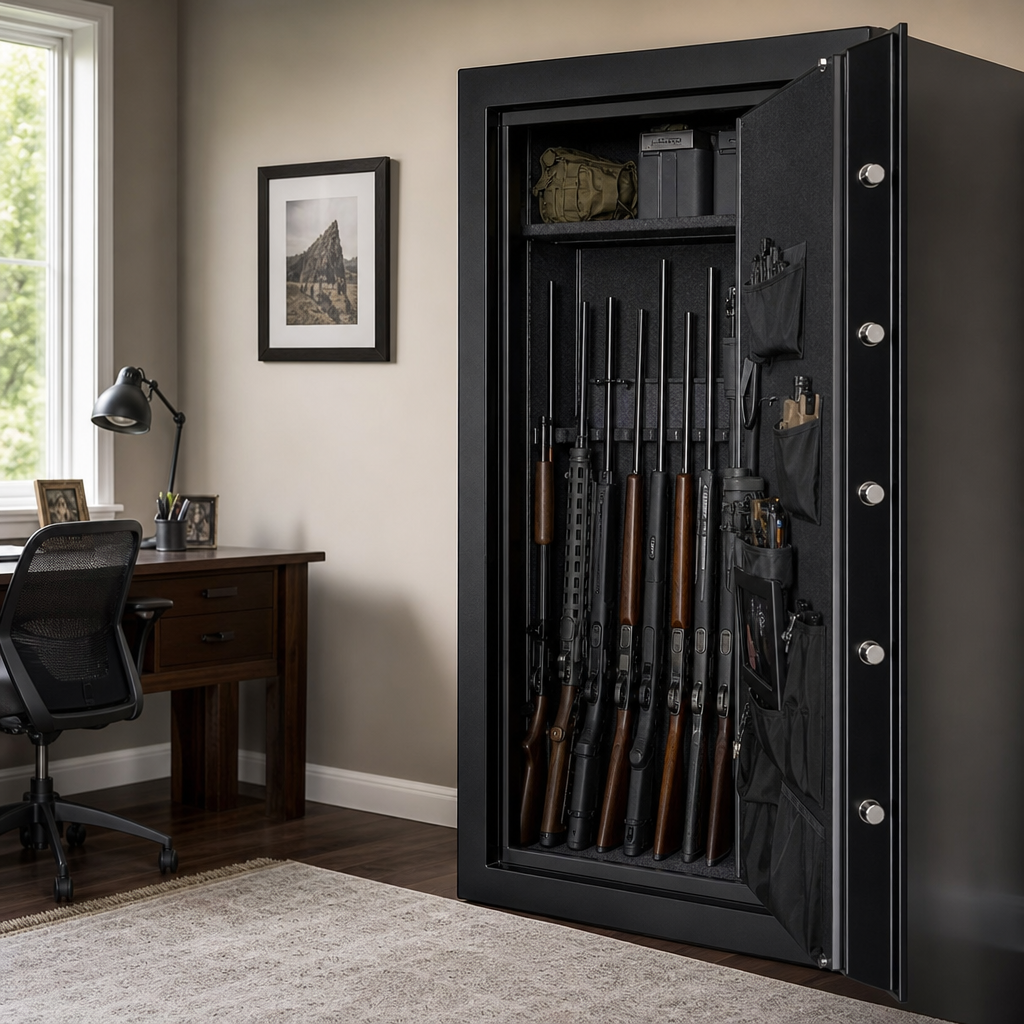
Does every gun safe need a security alarm? The short answer is no, but many owners benefit from one once they understand what a gun safe alarm actually does, what it cannot do, and how it fits into a broader firearm storage plan. In years of evaluating residential security setups, I have seen expensive safes installed with no thought to room placement, anchoring, humidity control, or access discipline, while a modest safe with smart supporting layers performed far better in real life. That is why this question matters: people often buy features based on marketing claims or fear, not based on credible risk assessment.
A gun safe is a lockable storage container designed to restrict unauthorized access to firearms and, depending on construction, to resist burglary, fire, and environmental damage. A security alarm in this context can mean several different things: a door-open alert, a vibration or tamper sensor, a tilt sensor, a local siren, or a monitored signal integrated into a home alarm system. Those are not interchangeable. One of the biggest myths in gun safe buying is that “alarm” is a single feature that automatically makes a safe secure. It does not. Security is layered. The safe body, lock type, boltwork, relocker design, anchoring, concealment, installation location, and user habits all matter at least as much as an alarm, and often more.
This article serves as a hub for gun safe myths and misconceptions because alarm questions rarely stand alone. People ask whether a heavy safe can be stolen, whether fire ratings are standardized, whether biometric locks are unreliable, whether a closet is a good hiding place, and whether children can bypass keypad locks. Those questions connect. If someone believes a larger sticker price guarantees protection, they may ignore the practical realities of pry attacks, thin steel, weak shelves, unanchored cabinets, or batteries that were never replaced. If someone assumes an alarm means police will arrive in time, they may misunderstand how quickly burglaries occur and how delayed many responses can be. Clear answers help owners make better decisions, avoid false confidence, and store firearms more responsibly.
The central idea is simple: a gun safe alarm is a useful accessory in some situations, but it is never a substitute for choosing the right safe and using it correctly. For some households, especially those with children, frequent visitors, cleaners, contractors, or elevated burglary risk, an alarm adds meaningful detection. For others, money is better spent on thicker steel, professional anchoring, better room hardening, or monitored home security. Understanding the tradeoffs is what separates a well-protected gun collection from a setup that only looks secure in a showroom.
Why the “every safe needs an alarm” claim is a myth
The claim sounds sensible because alarms imply urgency, but it ignores how residential break-ins actually happen. Most burglars are opportunistic. They enter, search likely locations quickly, target visible valuables, and leave fast. In that scenario, the first job of a gun safe is delay. If the burglar cannot open, pry, tip, or remove the safe within a short window, the safe has done its core job. An alarm may add noise or notification, but if the safe itself is light, unanchored, made from thin steel, or installed in an exposed garage corner, the alarm may only notify you that the entire unit is already gone.
I have inspected homes where owners proudly mentioned the built-in alarm on a mass-market safe, yet the unit was standing free on carpet over wood subfloor with no anchor bolts. Two people with a hand truck could have rolled it out in minutes. In that case, spending extra on an alarm before anchoring was backwards. The myth persists because alarm features are easy to advertise. Steel gauge, door gap geometry, reinforced lock areas, and concrete expansion anchors are less glamorous, but they are what determine whether an attack fails.
Another problem with the “every safe” claim is that risk is not uniform. A single defensive handgun in a quick-access bedside safe has different storage demands than a long-gun collection in a dedicated safe room. A suburban owner with monitored perimeter security, cameras, and low foot traffic faces a different threat profile than a rural owner who leaves the property unattended for days. Good recommendations start with actual exposure, not blanket rules.
What a gun safe alarm can and cannot do
A gun safe alarm can do three useful things. First, it can alert you when the safe is opened, moved, or tampered with. Second, if tied into a home system, it can trigger a broader alarm response, including phone alerts or monitoring-center contact. Third, it can create time pressure for an intruder who expected privacy. Those are real benefits, especially when the safe contains high-value firearms, NFA items, documents, jewelry, or cash.
What it cannot do is strengthen weak steel, replace anchoring, improve a poor lock, or stop a fast mechanical attack by itself. A local siren may be ignored. A monitored signal may still result in delayed law-enforcement response. A vibration sensor may generate false alarms if sensitivity is set too high or fail to detect slow, careful manipulation if set too low. Batteries die. Wireless signals can drop. These are not reasons to avoid alarms; they are reasons to understand them accurately.
The most effective use of a safe alarm is as part of a detection-and-delay model. Detection tells you something is happening. Delay makes it hard for the attacker to succeed before intervention. If you only buy detection, you may simply receive a well-timed notification of a successful theft. If you only buy delay, you may not know there was an attempted breach until later. Layering both is ideal, but when budgets are limited, the safe’s physical security usually deserves priority.
Common gun safe myths that distort alarm decisions
Alarm confusion is usually fed by broader misconceptions. One common myth is that heavier always means better. Weight helps, but weight alone does not prove burglary resistance. Some large residential security containers gain mass from fireboard rather than thick steel. Another myth is that all fire ratings are comparable. In reality, manufacturers may use different test methods, durations, and temperature claims, so direct comparison is difficult unless an independent standard is specified.
A third myth is that any digital or biometric lock is inherently unreliable. Quality varies, but established lock makers such as Sargent and Greenleaf, SecuRam, and La Gard have durable electronic options when installed correctly and maintained. The real issue is not “electronic versus mechanical” in the abstract; it is quality control, battery maintenance, emergency override policy, and fit for use. Another myth is that hidden placement makes anchoring optional. Concealment helps, but hidden, unanchored safes are still vulnerable to removal. Finally, many owners assume interior gun racks equal child safety. They do not. The lock and access protocol determine child resistance, not the interior layout.
Because these myths overlap, the best hub approach is to treat the alarm question as one branch of a bigger decision tree: what are you protecting, from whom, for how long, in what kind of home, and with what budget?
When an alarm is worth adding to a gun safe
An alarm is worth adding when the cost buys meaningful awareness or response that you would not otherwise have. That is especially true in five situations: households with children or teenagers, homes with regular service visitors, owners who travel often, collections with high replacement value, and safes placed in detached garages or outbuildings. In those cases, knowing immediately that the door opened or the safe moved can prevent unauthorized handling and speed intervention.
If the safe stores both firearms and sensitive items such as passports, suppressor paperwork, estate documents, or emergency cash, an access alert is often more useful than people expect. It creates accountability. You know when the safe was entered and can verify whether the access was legitimate. For shared households, that matters. For estates and family properties, it matters even more.
| Situation | Alarm value | Higher-priority companion measure |
|---|---|---|
| Home with children | High for door-open alerts and unauthorized access awareness | Strict lock discipline and separate ammo policy where appropriate |
| Frequent travel | High for remote notifications during absence | Monitored home security and camera coverage |
| Detached garage installation | High because the safe is farther from daily observation | Anchoring, concealment, and environmental control |
| Budget starter safe | Moderate, but only after physical weaknesses are addressed | Anchor bolts and placement in a constrained corner |
| Large premium safe in occupied home | Moderate to high depending on collection value | Integrated whole-home alarm response |
In practice, I recommend alarms most strongly when the owner already has the fundamentals covered. Once the safe is properly anchored, placed in a low-visibility area, and selected for suitable steel and lock quality, detection becomes a smart next layer rather than a distracting add-on.
When your money is better spent elsewhere
If you are choosing between an alarm module and anchoring hardware, choose anchoring hardware. If you are choosing between a cosmetic upgrade and thicker steel, choose thicker steel. If you are choosing between a built-in siren and moving the safe from the garage to an interior closet with limited pry clearance, move the safe. These choices produce more real security than many buyers realize.
The most common weak points I see are installation and context, not the absence of an alarm. A safe against a wall with open hinge-side access gives pry tools room to work. A safe upstairs may strain structure and limit anchoring options. A garage safe may be visible when the door is open and exposed to humidity swings. A keypad lock with neglected batteries invites avoidable lockouts. None of those problems are solved by adding an alarm sticker.
For entry-level buyers, the best upgrades often include concrete anchoring, oversized fender washers where appropriate to the design, dehumidification with a GoldenRod or desiccant plan, and room-level intrusion detection. Even simple habits, such as keeping the safe out of sight from delivery personnel and posting fewer collection photos online, reduce targeting risk. Security starts long before an alarm sounds.
How to evaluate alarm types for a gun safe
If you decide an alarm is justified, choose the type based on the problem you need solved. Door-open sensors are best for access awareness. Vibration or shock sensors are best for blunt tamper attempts. Tilt sensors help detect removal. Local sirens are simple but limited. Smart modules that push phone notifications are useful, but only if signal reliability and power backup are addressed. Integration with a monitored home system is usually the most robust option because it moves the alert beyond the safe itself.
Look for supervised wireless devices where available, battery status reporting, tamper reporting, and a test procedure you will actually follow. If the safe manufacturer offers a proprietary alarm, compare it to third-party security sensors from established alarm ecosystems such as Honeywell Home, DSC, Qolsys, or Alarm.com-compatible platforms. Proprietary does not automatically mean better. In some cases, the cleaner solution is an external contact sensor on the safe door and a separate shock sensor nearby, both tied into the home panel.
Placement and tuning matter. A shock sensor mounted carelessly may false-trigger when a nearby door slams. A door contact hidden in a thick frame may lose alignment. Test after installation, then test again after normal household activity. Reliable security gear is not just purchased; it is commissioned properly.
The balanced answer for responsible gun owners
No, not every gun safe needs a security alarm. What every gun safe does need is a role within a complete storage strategy: quality construction matched to the threat, secure anchoring, smart placement, dependable locking hardware, controlled access, and routine maintenance. An alarm becomes valuable when it adds timely awareness to a setup that already delays unauthorized access. It is not a magic shield, and treating it like one is one of the most persistent myths in gun safe buying.
For this gun safe myths and misconceptions hub, the key lesson is to reject one-size-fits-all advice. Ask better questions instead. Is the safe easy to remove? Can pry tools reach vulnerable edges? Who enters the home? How quickly would anyone know about unauthorized access? What standard, if any, supports the burglary or fire claims? Those questions produce better outcomes than chasing feature lists.
If you are reviewing your own setup, start with the basics today. Verify that the safe is anchored, the lock is maintained, the location limits visibility and tool access, and your household rules are clear. Then decide whether an alarm closes a real gap. When used for the right reason, a gun safe alarm is a strong supporting layer. When used to compensate for weak fundamentals, it is just noise.
Frequently Asked Questions
Does every gun safe need a security alarm?
No. A security alarm is not a universal requirement for every gun safe, and treating it like one can distract from more important storage decisions. Whether an alarm makes sense depends on the safe itself, where it is installed, how often it is accessed, what level of theft risk exists in the home, and how the owner manages the rest of their security setup. A well-built safe that is properly anchored, placed in a low-visibility location, supported by good home security habits, and protected from unauthorized access may already cover the most important risks for many households. On the other hand, a lighter safe in an exposed location, a home with frequent visitors, or a property in a higher-risk area may benefit substantially from an added alarm layer.
The key point is that an alarm does not replace the core job of the safe. The safe is there to delay, deter, and restrict access. The alarm’s role is different: it adds awareness. It can alert you if a door is opened unexpectedly, if the safe is tampered with, or if someone is trying to move it, depending on the model. That can be valuable, but it only works well when it supports a broader firearm storage plan. In practice, many gun owners are better served by first addressing anchoring, room placement, concealment, lock quality, access discipline, and environmental protection before deciding whether an alarm is worth the extra cost and complexity.
What does a gun safe alarm actually do?
A gun safe alarm is designed to notify you of suspicious activity involving the safe, but the exact features vary widely. Some alarms are simple local units that emit a loud siren when the safe door is opened without authorization or when vibration indicates tampering. Others are integrated into a home security system and can send a phone alert, trigger a monitored alarm response, or log events. More advanced options may detect tilt, impact, motion, or changes in position, which can be useful if someone attempts to pry, cut, or remove the safe from the home.
What many owners misunderstand is that an alarm does not physically stop a break-in. It does not make the steel thicker, the bolts stronger, or the lock more resistant to attack. Its value lies in speeding up detection and increasing pressure on the intruder. A thief who expected privacy may leave sooner if a siren sounds or if they know the home is actively monitored. In that sense, an alarm can reduce the amount of time someone spends working on the safe, and that matters because time is one of the biggest factors in defeating residential security. If a criminal cannot work undisturbed, even a modest safe becomes more effective.
Still, an alarm is only as useful as its setup. If it relies on batteries that are never checked, sends alerts to a phone that is often ignored, or triggers frequent false alarms, it may create more frustration than protection. That is why owners should think of a gun safe alarm as a supporting detection tool, not as a magic shield.
What can’t a gun safe alarm do?
A gun safe alarm cannot compensate for poor safe selection, sloppy installation, or weak daily habits. It cannot stop a thief from entering the home in the first place. It cannot make up for a safe that is too thin, too light, or too easy to carry away. It cannot prevent access if the combination is shared carelessly, written down in an obvious place, or given to someone who should not have it. It also cannot solve environmental issues such as humidity, corrosion, or poor maintenance, which are major concerns in long-term firearm storage.
Another limitation is response time. Even if an alarm works perfectly, help may not arrive immediately. A local siren may scare off one intruder and be ignored by another. A phone alert is only useful if the owner sees it and can act. A monitored alarm may improve the chain of response, but that still does not guarantee immediate intervention. This is why experts emphasize layered protection. A safe should be difficult to attack, difficult to move, and difficult to find or access quickly. The alarm simply makes it harder for someone to operate without consequences.
There is also a practical limit to what owners should expect from technology. Some people buy an alarm believing they have solved the security problem, then overlook basic issues like installing the safe in a garage where it is visible, failing to bolt it down, or placing it where tools are readily available nearby. In real-world home security, those oversights often matter more than whether an alarm is present.
When is adding a security alarm to a gun safe most worthwhile?
An alarm tends to be most worthwhile when it addresses a specific weakness in the storage environment. For example, if the safe is located in a part of the house that is less frequently occupied, an alarm can improve awareness of unauthorized access. If the safe is opened regularly and there is concern about children, guests, contractors, or other visitors being nearby, a door or tamper alert may provide useful peace of mind. If the safe is relatively compact or not especially heavy, a tilt or movement alarm can add value by detecting an attempt to remove it before the thief has time to work on it elsewhere.
It can also be a strong addition for owners who already maintain layered residential security. In homes with cameras, monitored intrusion systems, reinforced doors, and good access control, a safe alarm becomes part of a coordinated response rather than a stand-alone gadget. That is where it performs best. The safe delays access, the alarm triggers attention, cameras capture activity, and the owner has a better chance of intervening quickly or providing useful information to law enforcement.
By contrast, if the owner has not handled the fundamentals, an alarm may not be the first improvement to make. In many cases, money is better spent on a higher-quality safe, better anchoring hardware, discreet placement, dehumidification, improved locks on the room itself, or a full home security assessment. The question is not whether alarms are good or bad. The question is whether the alarm is the next best layer for that particular setup.
What matters more than an alarm when setting up a secure gun safe?
Several factors usually matter more than an alarm, starting with safe quality and installation. A gun safe should match the actual risk. Thin, lightweight containers may keep honest people honest, but they do not provide the same delay against forced entry as a more robust safe. Just as important, the safe should be anchored correctly. A safe that can be tipped, dragged, or loaded into a vehicle gives a thief time to defeat it elsewhere, away from noise and pressure. Anchoring is one of the most overlooked and most important steps in residential firearm security.
Placement matters as well. A safe in a visible master bedroom closet, garage, or open basement corner may be convenient for the owner, but it may also be convenient for a burglar. Better locations often reduce visibility, limit working space around the safe, and make removal more difficult. The surrounding environment also matters. Firearms need protection from humidity and temperature swings, so dehumidifiers, desiccants, and routine inspection should be part of the plan. Security is not only about theft; it is also about preserving the condition and reliability of what is stored inside.
Finally, owner behavior is critical. Good access discipline, strong code management, restricted key control, and thoughtful habits around opening the safe all have a major impact on real security. If children are in the home, if multiple adults share access, or if the safe contains both defensive firearms and valuable collections, those policies become even more important. In most homes, the strongest setup is a layered one: a properly chosen and installed safe, sensible placement, solid environmental protection, disciplined access practices, and then, where appropriate, a security alarm to improve detection. That is why the best answer is not that every gun safe needs an alarm, but that every gun safe needs a plan.