
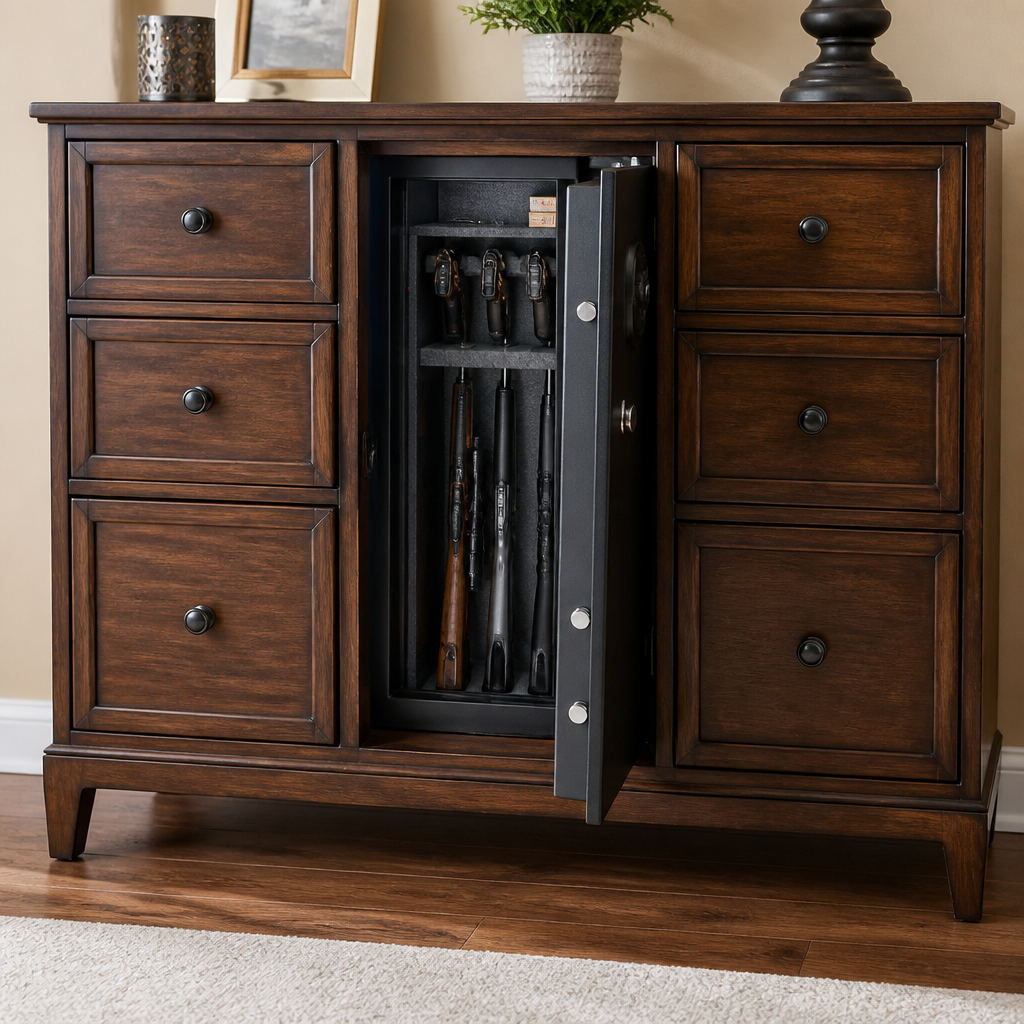
Hidden gun storage inside everyday furniture solves a real problem for responsible owners: how to keep firearms secure, accessible when lawful and necessary, and unobtrusive in a lived-in home. When people ask how to hide a gun safe inside a dresser or cabinet, they usually mean more than camouflage. They want a storage system that reduces casual discovery, supports fast access for authorized adults, protects against children and theft, and fits normal interior design. In practice, that means combining a true safe or lockbox with furniture integration, not simply tucking a pistol behind socks in a drawer. I have helped homeowners plan these installs, and the best results always start with the same principle: concealment is a supplement to security, never a replacement for it.
A gun safe hidden in a dresser or cabinet is a lockable container installed within, behind, beneath, or in place of standard furniture compartments so the storage does not immediately announce itself. The furniture acts as visual cover. The safe provides the actual barrier, typically using steel construction, mechanical or electronic locking, and anchored mounting points. A dresser usually works well in bedrooms where night access matters. A cabinet often works better in living rooms, offices, mudrooms, or workshops where larger long-gun storage or more robust anchoring is possible. Both options can be effective, but they demand attention to dimensions, door swing, drawer clearance, weight load, and safe access ergonomics.
This topic matters because hidden storage sits at the intersection of firearm safety, burglary prevention, and practical home use. Most residential burglars move quickly and look for obvious targets such as visible safes, closets, and nightstands. A well-concealed installation can buy time and lower the chance of discovery. At the same time, many accidental access incidents happen because guns are left in predictable but unsecured places. Concealed furniture storage addresses that risk only when the firearm remains locked. The hub purpose of this guide is to give you the full framework: how to choose the right furniture host, what type of safe fits the use case, how to install it properly, what mistakes make hidden storage fail, and which related hidden and discreet gun storage solutions deserve deeper research next.
Start With the Right Security Goal
The first question is not where to hide the safe. It is what threat you are trying to manage. For most households, there are four separate goals: prevent child access, deter smash-and-grab theft, preserve discreet appearance, and maintain legal defensive access for authorized users. These goals overlap, but they are not identical. A biometric handgun safe mounted behind a false drawer front may be ideal for bedside access yet completely wrong for storing multiple rifles. A heavy steel cabinet hidden inside a built-in credenza may resist theft better, but it may be too slow for emergency access. Defining the goal keeps the project realistic.
When I evaluate a dresser or cabinet for hidden gun storage, I rank security features in this order: locking integrity, anchoring strength, concealment quality, access speed, and cosmetic finish. Many consumers reverse that order and focus first on the secret compartment. That is a mistake. If the furniture can be tipped, the safe pried loose, or the lock defeated with simple hand tools, the hidden aspect adds less protection than expected. Industry standards such as California DOJ roster testing for firearm safety devices and UL Residential Security Container ratings can help identify serious products, though many compact hidden-storage safes do not carry a full UL burglary label. Where labels are absent, evaluate steel thickness, locking bolt engagement, hinge protection, and mounting hardware quality directly.
Placement also matters. A hidden safe should sit in a location that supports normal traffic patterns and does not invite unnecessary attention. A dresser in a primary bedroom often works because it is ordinary, private, and structurally close to wall framing for anti-tip hardware. A cabinet in a home office can blend especially well if electronics, files, and charging cables already make the space look functional. Avoid locations that create moisture problems, heat exposure, or repeated visibility during gatherings. Concealed storage performs best when it disappears into the background of daily life.
Choosing Between a Dresser and a Cabinet
Dressers and cabinets each solve different storage problems. A dresser offers excellent disguise because drawers naturally imply clothing, linens, or small personal items. That makes it a strong host for compact handgun safes, document-and-pistol combinations, and shallow drop-down compartments behind functional drawer faces. The main limitations are depth, drawer slide strength, and top-heavy instability. Many mass-market dressers use thin fiberboard backs, stapled joinery, and light-duty slides that cannot support a steel safe plus loaded firearm weight. If you choose a dresser, solid wood or high-quality plywood construction is strongly preferable, and anti-tip anchoring is mandatory.
A cabinet usually provides better structure, more interior volume, and stronger mounting surfaces. Media consoles, pantry-style cabinets, office credenzas, and utility cabinets can hold larger safes, vertical long-gun compartments, or side-mounted rapid-access units. Because cabinets often have doors instead of stacked drawers, they also allow cleaner opening paths for biometric safes and mechanical pushbutton designs. The tradeoff is visibility. People naturally open cabinets more often than they remove an entire dresser drawer, so concealment depends on compartment design and household habits. In shared living areas, a cabinet may need a false back, hidden panel, or secondary lock to avoid routine exposure.
The best choice depends on firearm type and daily use. For one or two defensive handguns, a reinforced dresser drawer cavity or hidden upper-drawer compartment is often the most intuitive setup. For a mix of handguns, magazines, documents, and valuables, a cabinet with an internal lockbox offers better organization. For AR-style rifles or shotguns, a tall cabinet or built-in wardrobe generally outperforms a dresser because muzzle length, optic clearance, and retrieval angle matter. Match the furniture to the firearm, not the other way around.
Safe Types That Work Inside Furniture
Not every safe belongs inside furniture. The most practical choices are compact handgun safes, vertical pistol safes, under-shelf lockboxes, and slim modular safes designed for bolting into confined spaces. A good hidden-install safe should have pre-drilled anchor holes, pry-resistant door geometry, and a lock that remains reliable in awkward mounting positions. In my experience, mechanical Simplex-style pushbutton locks remain one of the most dependable options for frequent access because they do not depend on batteries or fingerprint consistency. Quality biometric safes can be fast, but they require careful enrollment, regular battery checks, and realistic expectations about dry fingers, dirty sensors, and read-angle sensitivity.
For deeper cabinets, a small steel safe with an interior shelf can store a handgun, spare magazine, passport, cash, and hard drive while still disappearing behind ordinary household items. For dressers, low-profile horizontal safes often fit best because they can sit beneath a drawer box, behind a removable drawer section, or inside a modified lower cavity. Avoid flimsy “hidden furniture” products that substitute magnetic catches and thin sheet metal for real access control. If a unit can be opened by flexing the panel or removing two visible screws, it is concealment furniture, not serious firearm storage.
| Option | Best Use | Main Advantage | Main Limitation |
|---|---|---|---|
| Biometric handgun safe | Fast bedroom access | Quick one-handed entry | Battery and sensor dependence |
| Mechanical pushbutton safe | Frequent reliable use | No electronics required | Usually thicker exterior profile |
| Compact keyed lockbox | Low-cost secondary storage | Affordable and simple | Slower access, weaker theft resistance |
| Slim vertical safe | Cabinet sidewall mounting | Uses narrow spaces efficiently | Limited capacity |
| Modular long-gun safe | Tall cabinet integration | Supports rifles and shotguns | Needs stronger furniture structure |
Size planning should include more than exterior dimensions. Check door opening arc, keypad reach, interior foam thickness, and whether mounted orientation changes accessibility. Some safes advertise a compact footprint but require extra clearance for the lid to spring open. Others have internal hinges that preserve outside width but reduce usable space for optics or weapon lights. Measure the firearm in ready-to-store condition, including magazine baseplates, red dots, and suppressor-height sights. Hidden storage projects fail most often because owners buy the safe first and discover later that the furniture geometry makes access awkward or impossible.
How to Build the Concealment Correctly
Good concealment relies on believable furniture function. In a dresser, the strongest approach is usually to keep most drawers operational while dedicating one cavity, base void, or rear compartment to the safe. A false-bottom drawer can work for a compact lockbox, but it must preserve normal drawer depth enough to avoid suspicion. Another proven method is removing the lower drawer, building an internal platform, and reinstalling the drawer face as a hinged or magnet-released cover in front of a bolted safe. From the outside, the dresser still reads as standard furniture. Inside, the safe remains independently locked and anchored.
In a cabinet, concealment often comes from layered access. The outer doors open to an ordinary-looking shelf arrangement, while the safe sits behind a false back, below a fixed lower shelf, or inside a side cavity hidden by trim. This is especially effective in office credenzas and media cabinets where cables, baskets, or binders create visual noise. The key is restraint. Overcomplicated secret releases, electric latches, or theatrical mechanisms increase failure points. If you need speed, use a straightforward hidden panel with a predictable access path. If you need deeper concealment, prioritize ordinary visual cues over novelty.
Material choice affects both stealth and longevity. Plywood, hardwood framing, and steel angle brackets outperform particleboard and medium-density fiberboard under repeated opening stress. Soft furniture backs should be replaced or reinforced where anchor bolts pass through. Drawer slides should be upgraded if they support unusual loads. Finishing details matter too: consistent hardware, matching paint sheen, and even reveals around panels keep the modification from drawing the eye. The goal is not a movie prop. The goal is furniture that nobody studies twice.
Installation, Anchoring, and Safety Details
A hidden gun safe is only as strong as its installation. Bolt the safe to something substantial whenever possible: wall studs, floor joists, a plywood reinforcement panel tied into cabinet framing, or a steel subframe built inside the furniture. Short screws into thin cabinet walls are not enough. In dressers, reinforce the base and rear wall before mounting, then secure the furniture itself with anti-tip hardware. In cabinets, spread the load with backing plates or large washers so bolts do not crush the wood under force. If you rent, ask what modifications are allowed and whether a freestanding reinforced platform is the best compromise.
Think through access under stress. Can you open the outer panel in the dark? Can you reach the lock without shifting clutter? Does the door swing toward your dominant hand or block it? I test hidden setups with an unloaded firearm and a timer because ergonomics expose problems instantly. A safe that technically fits but forces a wrist twist around a drawer rail is a poor defensive-access design. Add low-level lighting if needed, but avoid bright indicators that reveal the compartment. Also consider humidity control for cabinets near exterior walls or bathrooms. Desiccant packs and small rechargeable dehumidifiers can protect metal surfaces in enclosed spaces.
Household safety rules should be explicit. Authorized users must know the access method, maintenance schedule, and what belongs in the compartment. Unauthorized users, especially children, should never be shown the location as a novelty. Ammunition storage can be separate or co-located depending on local law and use case, but either way the arrangement should be deliberate. Hidden furniture storage is not a substitute for training, readiness discipline, or compliance with state and local requirements on secure storage and child access prevention.
Common Mistakes and Better Hidden Storage Paths
The biggest mistake is confusing secrecy with strength. A gun shoved into a hollow dresser back, taped under a shelf, or placed in a magnetic compartment is not secure storage. The second mistake is using weak furniture that fails structurally before the safe is ever challenged. Third is ignoring retrieval mechanics. I have seen expensive cabinet conversions ruined by doors that blocked the keypad or drawers that jammed under load. Fourth is neglecting maintenance. Electronic locks need batteries replaced on schedule, mounting bolts need periodic checks, and furniture movement can loosen alignment over time.
As a hub for hidden and discreet gun storage solutions, this page should also point you toward adjacent options. Under-bed safes make sense when floor footprint matters and a dresser install would be too shallow. Wall safes hidden behind mirrors or framed art can work in homes with suitable stud bays, though they are usually capacity-limited. Nightstand safes offer the fastest bedside access but are more predictable to burglars if left visible. Bench, ottoman, and headboard storage can blend nicely, yet they must still use true lockable steel compartments. Vehicle lockboxes, closet panel systems, and built-in millwork safes serve different environments and deserve separate evaluation based on access needs, local law, and burglary risk profile.
The best hidden setup is the one you will use consistently, maintain properly, and integrate without shortcuts. Start with a real safe. Choose furniture with enough strength and believable function. Reinforce and anchor everything. Keep the concealment simple, the access path clean, and the storage rules strict. Done well, a gun safe inside a dresser or cabinet gives you two layers of protection: actual physical security and the practical advantage of not advertising where valuables and firearms are kept. Review your current room layout, identify one realistic host piece of furniture, and plan the installation around safety first.
Frequently Asked Questions
1. What is the safest way to hide a gun safe inside a dresser or cabinet?
The safest approach is to think beyond concealment and treat the furniture as part of a complete secure-storage system. A hidden gun safe inside a dresser or cabinet should still be a real safe or lockbox designed for firearm storage, not just a shelf, false panel, or hollowed-out compartment. The goal is to reduce casual discovery while maintaining strong protection against unauthorized access, especially by children, guests, or anyone who should not handle the firearm.
In practical terms, that means choosing a properly sized handgun safe or compact long-gun safe with a dependable lock, then installing it inside a piece of furniture that appears normal in the room. The furniture should be sturdy enough to support the safe’s weight and large enough to allow the door or lid to open without obstruction. It is also wise to anchor the safe to the furniture, the wall, or the floor whenever possible so that a thief cannot simply remove the entire unit. Many people focus heavily on visual concealment, but physical security matters just as much.
You should also consider access speed and reliability. A hidden safe only works well if authorized adults can reach it quickly and consistently under lawful, high-stress circumstances. That usually means placing it in a bedroom dresser, nightstand-style cabinet, office credenza, or another location that is both discreet and practical. Avoid setups that require moving heavy objects, unlocking multiple layers, or navigating awkward drawer configurations in the dark. Good hidden storage strikes a balance between secrecy, security, child safety, and dependable access.
2. Can you put a gun safe in a regular dresser or cabinet without damaging the furniture or making it obvious?
Yes, in many cases you can install a gun safe inside a regular dresser or cabinet without making the furniture look unusual, but success depends on careful planning. First, confirm that the furniture is structurally sound. Lightweight particleboard furniture may not hold up well under the weight of a steel safe, especially if the unit is placed in a drawer or on a shelf not designed for heavy loads. Solid wood dressers, reinforced cabinets, and well-built consoles typically perform better and can support a more secure installation.
It is also important to measure everything precisely. You need enough interior clearance for the safe itself, for the opening arc of the safe door, and for your hand position when retrieving the firearm. A safe that technically fits but cannot open fully or can only be accessed awkwardly is not a good solution. In many installations, people add reinforcement under a drawer base or shelf, upgrade the drawer slides, or remove an interior divider to create a cleaner fit. These changes can often be made without altering the exterior appearance of the furniture.
To keep the setup discreet, preserve normal function wherever possible. A dresser should still look and behave like a dresser, and a cabinet should still blend with the room’s design. Avoid obvious modifications such as uneven drawer faces, visible electronic hardware, or poorly fitted false backs. The best concealed installations are boring to the casual observer. They look like ordinary furniture, operate smoothly, and do not draw attention through noise, bulk, or strange placement. Done correctly, a hidden safe can remain unobtrusive while still providing legitimate locked firearm storage.
3. How do you balance hidden gun storage with fast access for authorized adults?
This is one of the most important questions because hidden firearm storage should not create so much complexity that it defeats the purpose of lawful, emergency access. The best balance comes from pairing discreet placement with a quick-access safe. In most homes, that means using a biometric, RFID, or mechanical push-button safe located inside a dresser drawer, bedside cabinet, or similar piece of furniture where the authorized user already expects to reach. The concealment layer reduces casual discovery, while the quick-access lock reduces delay.
However, speed should never come at the expense of reliability. Some users prefer biometric safes, but fingerprints can occasionally fail due to moisture, positioning, or inconsistent scans. For that reason, many responsible owners choose a safe with multiple entry methods, such as biometric plus keypad, RFID plus key backup, or a Simplex-style mechanical lock. The point is to make sure the safe can be opened quickly in real-world conditions, including low light, stress, or partial hand impairment. Concealed storage must be tested, not just imagined.
Placement also matters. A hidden safe should be located where authorized adults can reach it naturally but where children or visitors are unlikely to interact with it. For example, a top dresser drawer with a reinforced hidden safe compartment may offer better access than a low cabinet behind stacked items. Practice retrieval safely with an unloaded firearm or training aid so you understand how the furniture opens, how the safe door clears, and whether your chosen setup creates snag points or delays. If accessing the firearm feels clumsy during practice, the system needs improvement before you trust it.
4. Is hiding a gun safe inside furniture enough to keep firearms secure from children and theft?
No. Hiding a gun safe inside furniture is helpful, but concealment alone is not enough. It can reduce the chance of casual discovery, which is valuable in a busy household, but true security requires a quality locking container, responsible placement, and thoughtful installation. Children are naturally curious, and experienced thieves know to search bedrooms, offices, and closets. If the firearm is only hidden and not actually secured inside a proper safe, the setup falls short of what responsible owners should expect from home firearm storage.
For child safety, the firearm should be stored in a locked safe that is resistant to tampering and inaccessible without the unlocking method. Ammunition storage may also need separate consideration depending on your household, local laws, and your own risk management approach. The furniture location should not invite exploration. For example, avoid obvious “secret compartment” styling, novelty hidden spaces, or drawers that contain mixed valuables and the firearm safe together. The more ordinary and undramatic the furniture appears, the less likely it is to attract attention.
For theft resistance, anchoring is critical. A small safe hidden in a drawer is much less secure if it can be lifted out in seconds. Bolting the safe to a structural surface, reinforcing the furniture, and choosing a location that is not immediately visible during a quick smash-and-grab all improve security. Many owners also overlook room-level security, such as alarm systems, door reinforcement, cameras, and habits around who enters the home. Hidden gun storage works best as one layer within a broader security plan, not as a stand-alone answer.
5. What should you look for when choosing a dresser or cabinet for a hidden gun safe installation?
Start with strength, size, and normal appearance. A good furniture piece for concealed gun storage should be sturdy enough to support the safe and stable enough that it will not wobble, rack, or tip when opened. Solid wood or heavily reinforced cabinetry is often a better choice than lightweight flat-pack furniture, especially if you plan to mount a steel safe inside a drawer or behind a false panel. Interior dimensions should allow not only for the safe itself, but also for ventilation, door clearance, mounting hardware, and comfortable access.
You should also think carefully about the room and the furniture’s everyday role. The best hidden storage locations tend to be places that make sense in the home’s design and daily routine. Bedroom dressers, home office cabinets, and living room sideboards can all work if they do not seem out of place. What you want to avoid is a setup that signals importance, such as an otherwise empty cabinet, a piece placed awkwardly in a room, or furniture that no one ever uses except the owner. Realistic concealment depends on the furniture blending into normal life.
Finally, evaluate whether the piece can be modified discreetly and securely. Can a shelf be reinforced? Can a drawer front remain aligned after adding a hidden safe? Is there a way to anchor the safe to a wall stud, cabinet frame, or floor beneath the furniture? Can the safe open quietly and fully without banging into drawer slides, face frames, or decorative trim? A good dresser or cabinet for hidden gun safe storage is one that supports secure installation, fast lawful access, and a clean, ordinary appearance all at once. If it looks natural, functions smoothly, and holds a real locking safe properly, it is likely a strong candidate.