
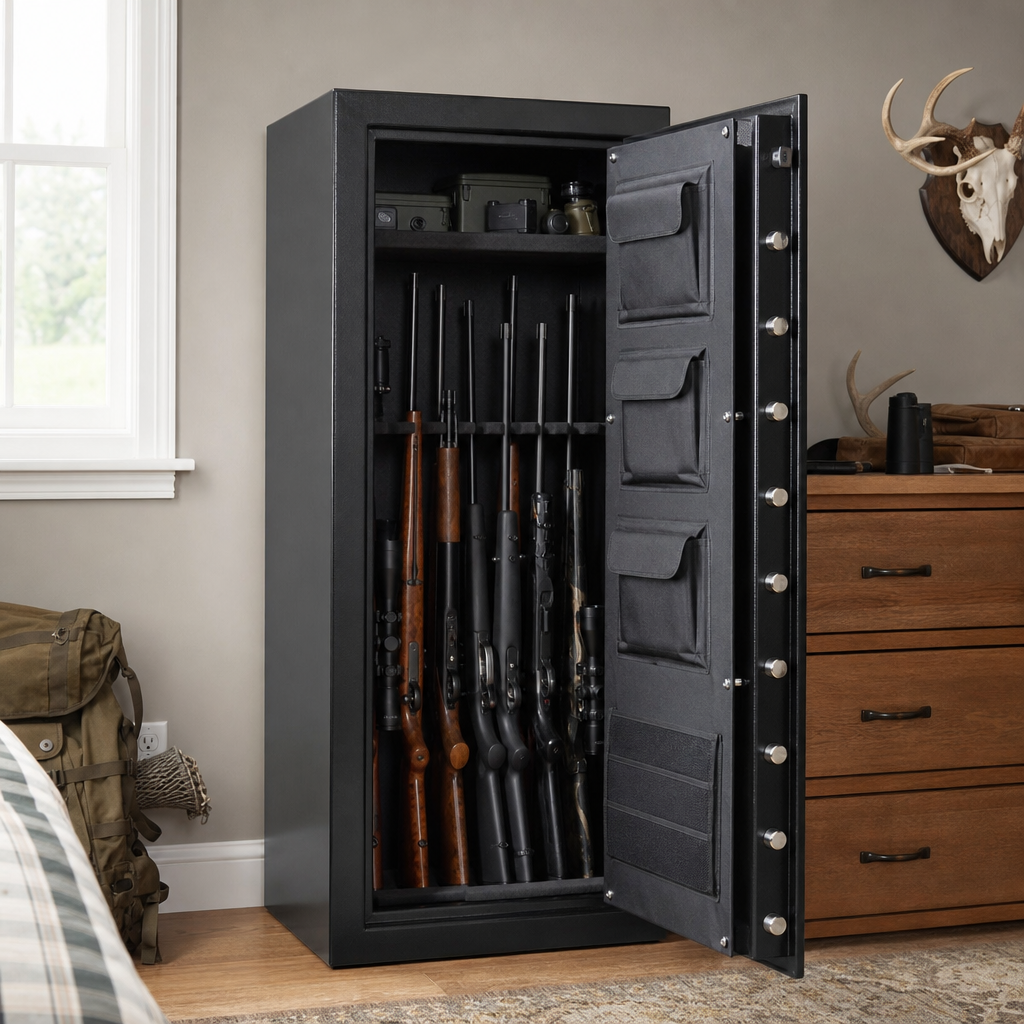
Budget gun safes appeal to first-time gun owners, apartment dwellers, and families who want secure storage without spending several thousand dollars, but the real question is whether lower-priced models provide meaningful protection or only the appearance of safety. In practical terms, a budget gun safe usually falls between about $300 and $1,200 for a long-gun cabinet or entry-level residential safe, while premium gun safes can easily cost $2,000 to $6,000 or more. Affordable brands often promise fire protection, pry resistance, and fast access, yet those claims vary widely in quality, testing, and real-world performance.
After evaluating safes for homeowners, comparing construction specs, and seeing how buyers use them, I can say budget gun safes are often worth it when expectations are realistic. They can deter children, prevent casual theft, and help owners organize firearms responsibly. They are usually not built to defeat a determined burglar with time, pry bars, and power tools. That distinction matters because many buyers assume all “safes” offer comparable security. In reality, steel thickness, door design, lock quality, anchoring, and independent testing separate a modestly useful safe from one that simply adds weight and marketing language.
This hub article covers the full gun safe comparisons and brand spotlights landscape so readers can evaluate affordable options intelligently. It explains what budget gun safes do well, where they fall short, which brands typically offer the strongest value, and how to compare features beyond sticker price. It also serves as a foundation for deeper research into biometric safes, fire ratings, modular cabinets, handgun vaults, and long-gun storage solutions. If you are asking whether an affordable gun safe is good enough for your home, the short answer is yes for many households, but only if you match the safe to the actual risk, know the tradeoffs, and buy from a brand with a credible track record.
What “budget” really means in gun safe comparisons
In the gun safe market, budget does not always mean cheaply made, and expensive does not automatically mean excellent. Most affordable gun safes land in one of three categories: steel security cabinets, entry-level traditional safes, and compact handgun vaults. A thin-wall cabinet from Stack-On or similar brands is primarily designed for access control and organization. An entry-level safe from Winchester, Cannon, Sports Afield, or Mesa may add thicker steel, expanding door bolts, drywall-based fire lining, and upgraded locks. Compact quick-access safes from Vaultek, Hornady, or SnapSafe target bedside or vehicle-adjacent storage rather than full burglary resistance.
Price reflects materials, labor, and distribution, but it also reflects branding and retailer strategy. Tractor Supply, Costco, Cabela’s, Bass Pro Shops, Academy Sports, and warehouse clubs often sell exclusive variants that look similar yet differ in steel gauge, interior trim, and lock packages. Two safes that appear identical online may not have the same body thickness or fire seal. That is why gun safe comparisons should start with a specification sheet, not photos. Buyers should look for body steel gauge, door plate construction, bolt diameter, lock listing, total weight, anchoring hole layout, and whether the fire rating was independently verified or only factory tested.
A useful rule is this: under about 200 pounds, most long-gun “safes” function more like locking containers unless they are firmly anchored. Weight alone is not security, but weight usually correlates with steel content and insulation. Many budget models achieve higher weight by adding drywall fireboard rather than thicker plate steel. That can still be valuable if fire protection is your main concern, but it should not be mistaken for true burglary resistance.
Where affordable gun safes deliver real value
Budget gun safes can be absolutely worth the money when the goal is to reduce the most common, likely risks. For many households, those risks are unauthorized access by children or visitors, smash-and-grab theft, and poor organization that leads to negligent storage. An affordable safe addresses all three better than a closet shelf, under-bed case, or soft bag. In homes with curious teenagers, regular guests, service workers, or shared living spaces, even a modest locking safe provides a significant safety upgrade.
They also perform well when installed intelligently. A $700 safe bolted into a corner of a basement, garage closet, or interior utility room is much harder to remove or pry than a $1,500 safe left freestanding in plain view. Positioning matters. Tight side clearance can limit pry attacks, and concrete anchoring dramatically improves theft resistance. In several homeowner setups I have reviewed, a mid-priced Winchester or Cannon safe with proper anchoring was a practical, balanced solution because it prevented quick removal and forced a burglar to spend more time and create more noise than most residential break-ins allow.
Another value area is compliance with safe-storage expectations. State laws differ, but many owners want documented responsible storage even when not legally required. A budget gun safe can help support household rules, insurance discussions, and basic risk reduction. It can also preserve firearm condition by keeping guns upright, separated, and less exposed to dust or routine handling. Add a dehumidifier rod or desiccant pack, and a basic safe becomes far more useful over time.
Where budget gun safes come up short
The biggest weakness of affordable gun safes is burglary resistance against a committed attacker. Many use 14- to 16-gauge body steel, which is substantially thinner than the heavier steel found in more robust safes. Pry attacks focus on corners and door gaps, and budget safes often have more flex in those areas. Large locking bolts look impressive in marketing photos, but if the door frame and body are thin, bolt size alone does not guarantee strength. This is one of the most misunderstood points in gun safe comparisons.
Fire ratings are another area where caution is essential. Many affordable brands advertise 30, 45, or 60 minutes of fire protection, but there is no single universal testing method across the consumer gun safe category. Some manufacturers rely on internal tests with varying furnace temperatures and cool-down assumptions. By contrast, standards from organizations such as UL are more rigorous, yet many entry-level gun safes do not carry full third-party fire certification. That does not make their fire protection meaningless, but it does mean buyers should treat ratings as comparative guidance rather than a guarantee.
Fit and finish can also vary. Lower-cost electronic locks may have less consistent keypads, relockers may be simpler, interiors may be optimized for a marketing gun count rather than realistic storage, and warranty service can depend heavily on the retailer. A “24-gun safe” often holds far fewer scoped rifles in actual use. For owners with optics, slings, AR-style rifles, or shotguns with accessories, true capacity may be half the advertised number. That gap frustrates buyers who focus on the label instead of the shelving layout.
Affordable gun safe brands worth comparing
Several affordable brands show up repeatedly in buyer research because they meet distinct needs. Stack-On is best understood as an entry point for secure organization and child access prevention, not heavy burglary defense. Its cabinets are common in apartments, closets, and low-risk settings because they are light, relatively inexpensive, and simple to install. Winchester and Cannon occupy the broad middle of the retail market, offering larger long-gun safes through sporting-goods chains with decent interiors and familiar service networks. Their better value often appears during holiday promotions when a safe with an electronic lock and 45-minute fire claim falls under four figures.
Sports Afield, Bighorn, and Kodiak often attract buyers looking for more steel or better feature density at a moderate price. Mesa Safe, while not always “budget” in every category, is frequently praised by experienced buyers because some of its entry models emphasize stronger construction than decorative trim. Hornady and Vaultek are especially relevant for handgun storage and quick-access bedside solutions. They are not direct substitutes for full-size long-gun safes, but they are strong options when fast defensive access and tamper control matter more than collection storage.
| Brand | Typical Strength | Best For | Main Limitation |
|---|---|---|---|
| Stack-On | Low cost, simple cabinets | Basic access control | Limited pry resistance |
| Winchester | Widely available full-size safes | General home use | Specs vary by retailer |
| Cannon | Feature-rich entry models | Families needing fire and storage balance | Marketing can outpace construction details |
| Sports Afield | Competitive pricing and interiors | Value-focused long-gun storage | Not all models are equally robust |
| Mesa | Stronger build reputation | Buyers prioritizing steel quality | Higher cost than bargain brands |
| Vaultek | Modern quick-access handgun safes | Nightstand and personal defense storage | Not for full collections |
No single brand wins every category. The best budget gun safe brand depends on whether your priority is child resistance, basic theft deterrence, bedside access, fire concerns, or storing a growing rifle collection in one place.
How to compare affordable safes like an informed buyer
Start with steel, lock, anchoring, and real storage space. Body steel gauge is one of the clearest indicators of burglary resistance, though manufacturers do not always display it prominently. Lower gauge numbers mean thicker steel. Also examine whether the door uses a formed composite design or includes a solid steel plate. Next, verify the lock. UL-listed electronic or mechanical locks are preferable because lock reliability matters more than flashy keypad styling. If the lock fails, every other feature becomes irrelevant.
Then look at the anchor pattern and intended installation surface. A safe with good anchor access can be secured much more effectively in a garage slab or basement floor. Check interior dimensions, not just external footprint, and compare those dimensions to your longest firearm and widest optic setup. Review hinge design, door swing clearance, and whether shelves can be reconfigured. I regularly tell buyers to ignore the printed gun count and instead calculate capacity based on their actual mix of bolt guns, AR-platform rifles, shotguns, and handguns.
Finally, evaluate warranty and service. Some brands offer lifetime replacement after fire or break-in, but the practical value depends on claims responsiveness, freight logistics, and whether labor or locksmith costs are covered. Read current owner feedback carefully, especially regarding keypad failure, shipping damage, and replacement parts. A budget gun safe is worth more when the manufacturer can support it for years, not just deliver it to your curb.
Who should buy a budget gun safe, and who should skip one
A budget gun safe is a sensible choice for new gun owners, families building safe storage habits, renters with a small collection, and homeowners who need immediate security without delaying the purchase for another year. It is also well suited to layered storage plans. For example, a household may use a quick-access handgun safe in the bedroom and an affordable long-gun safe in a locked utility room. That arrangement often delivers better day-to-day safety than buying one large safe that does not match how the firearms are actually used.
On the other hand, buyers with high-value collections, rural isolation, known burglary exposure, or NFA items should often move beyond the bargain tier. If replacing one optic costs more than the safe, stronger construction becomes easier to justify. The same applies if you expect meaningful fire protection for irreplaceable documents, heirlooms, or large quantities of ammunition. In those cases, spending more on steel thickness, lock quality, and a brand with stronger testing discipline is not overkill; it is alignment between asset value and protection level.
The bottom line in gun safe comparisons and brand spotlights is simple: budget gun safes are worth it when used for realistic purposes and selected with disciplined attention to specifications. They are not miracle products, but they are far better than unsecured storage and often good enough for the risks most households actually face. Compare steel, lock type, anchoring, fire methodology, interior usability, and brand support before you buy. Then match the safe to your firearms, your home layout, and your threat level. If you are building a complete gun storage plan, use this hub as your starting point and continue into detailed brand reviews, fire rating guides, and quick-access safe comparisons before making your final choice.
Frequently Asked Questions
Are budget gun safes actually worth buying?
Yes, budget gun safes can absolutely be worth buying, but only if you understand what they are designed to do and what they are not. For many first-time gun owners, apartment residents, and families trying to improve home safety without making a major financial commitment, an affordable safe is often far better than leaving firearms in a closet, under a bed, or in an unlocked cabinet. A lower-cost safe can provide meaningful protection against unauthorized access by children, casual visitors, and opportunistic thieves who are looking for an easy grab rather than a prolonged break-in. That alone makes many entry-level models a practical investment.
That said, the value of a budget gun safe depends on setting realistic expectations. Most lower-priced models in the roughly $300 to $1,200 range are not built to resist the same level of physical attack, fire exposure, or long-duration burglary attempts as premium safes that cost several thousand dollars. Thinner steel, lighter total weight, simpler locking systems, and more basic internal construction are common tradeoffs. In other words, a budget safe often provides delay and deterrence, not maximum protection. If someone has time, tools, and privacy, many cheaper safes can be breached more easily than higher-end alternatives.
So, are they worth it? For many buyers, yes. If your main goal is to prevent unauthorized handling, comply with safe-storage best practices, and create a stronger barrier than ordinary furniture or lightweight cabinets, a budget safe can deliver solid value. The key is to buy carefully, anchor it properly, and focus on practical security features rather than marketing language. A well-chosen affordable safe can be a smart first step, especially when paired with good placement, humidity control, and responsible firearm handling habits.
What kind of protection can you realistically expect from an affordable gun safe?
The most realistic answer is that affordable gun safes provide basic to moderate protection, not top-tier defense. In the best cases, they are very effective at keeping honest people honest and keeping children or untrained users away from firearms. They can also slow down a smash-and-grab burglar, particularly if the safe is bolted to the floor and placed in a location that limits leverage and access. This type of delay matters more than many buyers realize, because most residential burglaries are fast and opportunistic rather than carefully planned safe-cracking operations.
However, affordable models usually have limits in three major areas: steel thickness, lock and boltwork quality, and fire protection. Many budget safes use thinner gauge steel than premium units, which can make them more vulnerable to prying, cutting, or bending attacks. Some lower-cost locks are reliable enough for normal use, but others may not offer the same long-term durability or tamper resistance as higher-end mechanical or commercial-grade electronic systems. Fire ratings also require scrutiny. Some low-cost safes advertise fire resistance, but the rating may be based on manufacturer testing rather than independent certification, and the duration or temperature threshold may not reflect a severe real-world house fire.
In practical terms, an affordable safe can protect against unauthorized access, basic theft attempts, and limited environmental exposure, especially in ordinary home conditions. It may not stand up for long against a determined intruder with power tools, and it should not be assumed to provide the same fire resilience as a heavy premium safe with verified ratings. Buyers who understand those boundaries are usually the most satisfied. The real strength of a budget safe is that it improves your security baseline significantly, even if it does not offer elite-level protection.
What features should you look for when comparing budget gun safe brands?
When shopping for an affordable gun safe, focus less on flashy advertising and more on the structural details that affect actual security. Start with steel thickness. Heavier steel generally resists prying and deformation better than thinner steel, so this is one of the most important factors in evaluating value. Manufacturers may not always highlight weak points clearly, so it helps to look closely at body construction, door thickness, and overall weight. In many cases, a heavier safe in the same price range signals stronger materials, though weight alone is not the only indicator.
You should also pay close attention to the lock type and the quality of the locking mechanism. Electronic locks are common in budget models because they are convenient and fast to open, but quality varies widely. A good electronic lock from a reputable manufacturer can work well, while a poorly made one may be a long-term frustration. Mechanical dial locks are slower but often favored for durability and simplicity. If available, look for details about relockers, hard plates, and how the boltwork engages, because these features can improve resistance to forced entry.
Beyond the lock, check whether the safe can be anchored securely. This is critical. A budget safe that is not bolted down can sometimes be tipped over, moved, or attacked more easily. Interior capacity is another area where buyers are often misled. Manufacturer firearm counts are usually optimistic, especially if your rifles have scopes, slings, or accessories. It is smart to buy more capacity than you think you need. Finally, evaluate fire claims carefully, read real customer reviews for recurring complaints about fit, lock reliability, or customer service, and give extra credit to brands with transparent specifications rather than vague promises. In the budget category, honest construction details often matter far more than branding slogans.
How do budget gun safes compare to premium models in terms of security and long-term value?
The biggest difference between budget and premium gun safes is not just price, but the level of protection built into the design. Premium safes typically use thicker steel, stronger doors, better welds, more advanced boltwork, more robust lock options, and higher-quality fire insulation. They also tend to weigh much more, which improves both burglary resistance and overall build confidence. In a forced-entry scenario, these differences can be substantial. A premium safe is generally designed to withstand attack longer and more effectively than an entry-level model.
Long-term value is where the comparison becomes more nuanced. If you have a modest firearm collection, live in a lower-risk environment, and primarily need secure storage for safety and basic theft deterrence, a budget safe may offer excellent value for the money. Spending $500 to $1,000 on a decent entry-level safe can be a highly practical decision if it meets your needs today and improves how you store firearms immediately. For many households, that is a responsible and financially sensible choice.
On the other hand, if you own multiple firearms, valuable optics, heirlooms, important documents, or items that would be difficult to replace, a premium safe may be the better long-term investment. Many gun owners eventually outgrow their first affordable safe and end up buying a larger, more secure model later. That can make the initial bargain less economical over time. The best way to think about it is this: budget safes are often strong value purchases for entry-level needs, while premium safes are more comprehensive asset-protection tools. Whether one is “worth it” depends on what you are protecting, the risks you face, and how long you expect the safe to serve your household.
Can a cheap gun safe give a false sense of security, and how can buyers avoid that mistake?
Yes, a cheap gun safe can create a false sense of security if the buyer assumes that any product labeled a “safe” offers serious burglary and fire protection. This is one of the most common problems in the affordable market. Some low-cost products are closer to security cabinets than true heavy-duty safes, even though the marketing language may sound impressive. If a buyer sees claims about steel doors, multiple locking bolts, and fire lining without understanding the actual materials and test standards involved, it is easy to overestimate how much protection the unit really provides.
The best way to avoid that mistake is to evaluate the safe based on verified details instead of broad promises. Look for clear information on steel gauge, total weight, anchoring capability, lock brand or type, and fire-rating methodology. Be cautious with vague terms like “fireproof,” “tamper-resistant,” or “military-style” unless those claims are backed by specifics. Independent ratings, transparent specifications, and consistent owner feedback are much more meaningful than oversized marketing badges on a product page. It is also helpful to think in layers. A safe is only one part of a broader storage strategy that may include alarm systems, cameras, discreet placement, dehumidifiers, and separate locking solutions for ammunition or quick-access defense needs.
Most importantly, match the product to the actual threat. If your main concern is preventing unauthorized household access and improving day-to-day firearm security, a budget safe may be entirely appropriate. If you are expecting it to defeat experienced burglars with tools or survive severe fire exposure for extended periods, you may be disappointed. A realistic understanding of capabilities is what turns a budget safe from a false comfort into a genuinely useful security upgrade. The safest purchase is not necessarily the most expensive one, but the one that honestly aligns with your needs and risk level.