
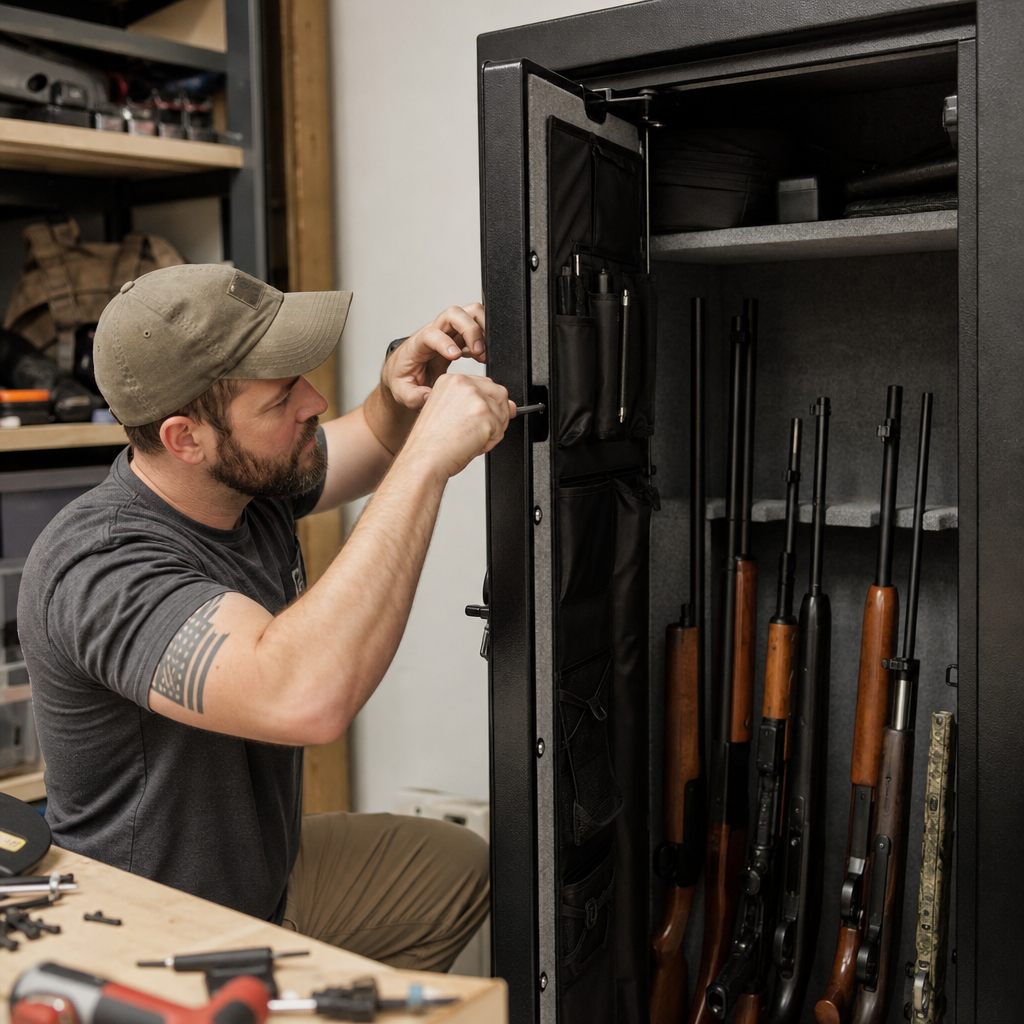
Are DIY gun safe modifications safe and legal? Sometimes, but only when the owner understands the mechanical, fire, electrical, and legal consequences before touching the safe. In practice, most do-it-yourself changes fall into two very different categories: low-risk accessories that improve organization, and high-risk alterations that can weaken security, void a warranty, or create compliance problems. That distinction matters because a gun safe is not just a metal box. It is a security container, a fire-protection system, a humidity-controlled storage space, and, in many homes, part of a broader child-access prevention plan. When people search gun safe myths and misconceptions, they are usually trying to answer practical questions: Does adding shelves reduce protection? Can you drill a safe to run power? Is swapping the lock legal? Will aftermarket lighting affect fire rating? I have worked with homeowners, locksmiths, and installers on these exact issues, and the pattern is consistent. People rarely get into trouble by adding a door organizer with approved fasteners. They get into trouble when they assume heavy steel makes every modification harmless. It does not. Safe bodies rely on precise lock placement, relockers, hard plates, door clearances, insulation layers, and anchoring geometry. Change one element carelessly and you can compromise several others at once. This article serves as a hub for the wider gun safe myths and misconceptions topic by separating fact from folklore, explaining where DIY changes are genuinely safe, and showing where legal or insurance risks begin. If you own a gun safe, plan to buy one, or want to correct outdated advice you have seen online, start with the fundamentals here.
What counts as a DIY gun safe modification
A DIY gun safe modification is any owner-made change that alters how the safe is organized, accessed, powered, mounted, or secured. That includes simple additions such as motion-activated LED lights, dehumidifier rods, handgun racks, magazine bins, and document shelves. It also includes more consequential work such as drilling pass-through holes, replacing a mechanical dial with an electronic lock, adding interior power strips, changing anchor locations, repainting surfaces, replacing door panels, or attaching biometric accessories. The most persistent myth is that all modifications are equally risky. They are not. Safe upgrades are best evaluated by whether they affect four core functions: burglary resistance, fire resistance, reliable lock operation, and legal compliance. If a change touches only removable interior organization and uses manufacturer-approved methods, it is usually low risk. If it changes the steel shell, lockwork, door structure, or factory sealing, risk rises sharply.
Another misconception is that legality depends only on whether firearms remain locked away. Law can be broader than that. State child-access prevention laws, negligent storage standards, rental lease provisions, condominium rules, and insurance policy terms may all influence whether a modification becomes a problem after theft, unauthorized access, or fire. California, for example, has specific standards around firearms safety devices and storage expectations, while some insurance carriers define acceptable safes by construction features or verified ratings. A home insurer may not inspect your interior shelving, but it can ask hard questions after a claim if owner-made wiring contributed to a fire or if a modified lock failed during a burglary. The safest way to think about any gun safe modification is this: legal today does not automatically mean defensible after an incident.
Safe modifications that are usually low risk
Many gun safe improvements are both practical and low risk because they do not alter the safe’s structural or protective systems. Good examples include adhesive LED lighting designed for enclosed spaces, rechargeable puck lights, hygrometers, silica gel canisters, EVA foam handgun hangers, barrel rests, labeled bins, and fabric door organizers approved by the manufacturer. These upgrades improve visibility, reduce clutter, and can actually promote safer storage by making it easier to separate loaded magazines, paperwork, optics, and handguns. I generally recommend starting with organization before considering any permanent work, because most owners overestimate how much structural modification they need. A crowded safe often needs better layout, not a drill.
Even low-risk upgrades should be chosen carefully. Avoid magnets that could interfere with electronic lock keypads or scratch finished interiors. Use low-heat lighting with secure cable management. Keep dehumidifiers clear of ammo boxes, soft cases, and paper records. If a shelf system shifts weight significantly, confirm that it does not obstruct bolts or door closure. The myth here is that accessories are automatically harmless because they sit inside the safe. In reality, poor accessory choices can block emergency access, trap moisture, or create battery maintenance issues. Low risk is not no risk; it means the consequences are manageable when products are matched to the safe’s design and installed according to instructions.
Modifications that commonly create safety or security problems
The most problematic DIY gun safe modifications are drilling new holes, rewiring power inside the safe, swapping locks without confirming boltwork compatibility, grinding interior components for clearance, and altering anchor patterns. Drilling is especially misunderstood. Owners often want a hole for a power cord, Ethernet cable, or alarm contact and assume one small opening cannot matter. On many safes, that opening can breach fireboard, intumescent seals, or anti-pry geometry. It can also expose lock or relocker areas if the location is chosen poorly. A technician with the correct drill point, scope, and manufacturer diagram may do this safely; a homeowner guessing from a video often cannot.
Lock replacement is another major risk area. A retrofit from Group 2 mechanical to electronic can be safe when the lock body, spindle placement, relocker engagement, and bolt throw are correct. It can be unsafe when bargain parts are used or the installer overtightens mounting screws, misaligns the keypad, pinches wires, or fails to test door-open and door-closed cycles repeatedly. Safe locks are not generic consumer hardware. Reputable models from Sargent and Greenleaf, SecuRam, La Gard, and Kaba Mas have known footprints and service procedures, but compatibility still varies by safe brand and door thickness.
| Modification | Typical Risk Level | Main Concern | Best Practice |
|---|---|---|---|
| Add door organizer | Low | Blocking shelves or door closure | Use manufacturer-approved kit and test clearances |
| Install LED lighting | Low | Heat, battery leakage, loose wiring | Choose low-heat products and secure cables |
| Add dehumidifier rod | Low to medium | Improper routing of power cord | Use existing passthrough only if factory provided |
| Drill new power hole | High | Damage to fire lining or lock area | Use factory port or hire a qualified technician |
| Replace lock | Medium to high | Lockout, boltwork mismatch, warranty issues | Confirm compatibility and use a safe locksmith |
| Move anchor points | High | Reduced theft resistance or slab damage | Follow manufacturer anchoring template |
Fire ratings, burglary ratings, and the myths people repeat
A common misconception in gun safe myths and misconceptions content is that a thick-looking safe remains equally protective after modification. Fire ratings and burglary claims do not work that way. Many residential gun safes are not independently burglary rated to UL TL standards. They are built as Residential Security Containers or are simply marketed with proprietary security language. Fire protection can also be based on manufacturer testing rather than third-party certification. That does not make every claim false, but it means owners should be careful about assuming a modified safe still performs exactly as advertised. If you cut, drill, or remove insulation, you may invalidate the conditions under which the safe was originally tested.
Another myth is that adding weight always improves security. Sometimes extra interior steel plates or dense storage systems do make smash-and-grab theft harder, but they can also overload shelves, stress hinges, and make an already top-heavy safe more dangerous if it is not properly anchored. The National Fire Protection Association does not certify gun safes as a category in the way many consumers assume, so buyers need to read manufacturer documentation closely. Ask whether the fire rating is factory tested, independently tested, at what temperature, and for how long. If you later modify the shell, seals, or lining, treat the original fire claim as uncertain unless the manufacturer states otherwise in writing.
Legal issues owners overlook
In most jurisdictions, modifying your own gun safe is not inherently illegal. The legal problems arise from outcome and context. If a modification contributes to unauthorized child access, accidental discharge, theft, or a house fire, it can become evidence of negligence. States differ. Massachusetts has strict storage requirements. California and Connecticut have child-access and storage-related laws with real consequences after misuse. Even in states with less prescriptive statutes, prosecutors and civil attorneys may ask whether the owner acted reasonably. A homemade bypass panel, a poorly installed biometric add-on, or a disabled auto-lock feature can look reckless under scrutiny.
There are also contract-based legal issues. Manufacturer warranties often exclude unauthorized drilling, lock changes, or structural alterations. Insurance policies may reduce or deny claims if the insured misrepresented safe features or if unapproved electrical work caused damage. In rental properties, anchoring into floors or walls may violate lease terms or building rules. For owners storing NFA-regulated items, best practice is even stricter. While federal law does not prescribe one universal safe configuration for all gun owners, enhanced security measures are prudent, documentable, and easier to defend if questions arise. The misconception to avoid is simple: if no statute specifically bans a modification, that does not mean the modification is legally safe.
How to decide whether a modification is worth doing
The best decision framework is to ask five questions before making any change. First, does the modification touch steel, insulation, lockwork, hinges, seals, or anchor points? If yes, pause. Second, does the manufacturer provide an approved accessory, passthrough, or installation method? Third, would the change affect warranty coverage, insurance language, or compliance with your local storage obligations? Fourth, can the safe still be opened if the upgrade fails? Fifth, is the problem you are solving really a storage-layout issue rather than a structural one? In my experience, these questions prevent most expensive mistakes.
When the answer is uncertain, contact the safe manufacturer with the model number and serial number, then speak with a qualified safe technician or locksmith experienced in gun safes rather than a general handyman. Ask for the exact lock model, mounting pattern, and any service bulletin that applies. Take photos of the interior and door edge before work begins. Keep receipts and written guidance. Documentation matters because it proves the change was considered, not improvised. That is the central lesson of this gun safe myths and misconceptions hub: the safest upgrades are reversible, documented, and consistent with how the safe was engineered. If you are planning a change, start with approved accessories, verify the legal and warranty implications, and bring in a professional whenever the modification affects structure, fire protection, or lock reliability.
Frequently Asked Questions
Are DIY gun safe modifications ever considered safe?
Yes, some DIY gun safe modifications can be safe, but that usually applies to low-risk changes that do not affect the safe’s structure, locking system, fire lining, or electrical integrity. Examples include adding removable shelves, handgun racks, moisture control products, battery-powered lighting, or door organizers designed specifically for safes. These upgrades can improve access and storage without changing how the safe resists theft, heat, or unauthorized entry. The key is that the modification should be reversible, non-structural, and compatible with the manufacturer’s design.
Problems begin when owners move beyond organization and start drilling holes, replacing locks, rewiring the interior, cutting shelving supports, removing fireboard, or altering the door and frame. Those kinds of changes can reduce pry resistance, interfere with relockers, compromise insulation, or create electrical and moisture issues inside an enclosed metal environment. A safe is engineered as a complete system, so even a small-seeming change can affect how it performs during a break-in attempt or a fire. In short, DIY modifications are safest when they add convenience without changing the safe’s protective functions.
What types of gun safe modifications are most risky?
The highest-risk modifications are structural, mechanical, and electrical changes. Structural changes include drilling through the body or door, enlarging anchor holes, cutting interior panels, or removing and replacing insulation or liner materials. These actions can weaken steel panels, create leverage points for pry attacks, and reduce the safe’s tested fire performance. Mechanical changes are equally serious because locks, boltwork, relockers, hinges, and handle assemblies work together in a very specific way. Replacing a lock with an incompatible model or adjusting internal parts without technical knowledge can leave the safe easier to defeat, unreliable to open, or impossible to access when needed.
Electrical modifications also deserve caution. Installing hardwired lights, dehumidifiers, outlets, or charging stations may sound harmless, but routing wires through the safe or using unapproved power solutions can create heat buildup, insulation damage, condensation problems, or even fire hazards. Another overlooked risk is adhesive use. Some glues, foams, and fasteners can damage interior finishes or fail under heat. If a modification affects the shell, door, lock, insulation, seal, or internal wiring path, it should be treated as high risk and usually left to the manufacturer or a qualified safe technician.
Can modifying a gun safe void the manufacturer’s warranty?
In many cases, yes. Gun safe manufacturers commonly state that unauthorized alterations can void some or all of the warranty, especially when the owner modifies the lock, drills new openings, changes the door assembly, removes internal fire materials, or installs non-approved components. From the manufacturer’s perspective, once the original design is altered, it becomes difficult to guarantee security ratings, fire protection, or long-term reliability. Even if the change seems minor, warranty claims can become complicated if the manufacturer believes the modification contributed to the problem.
That is why it is important to read the warranty language before making any changes. Some companies allow specific accessories, such as approved lighting kits, dehumidifiers, or organizers, while prohibiting anything that affects structure or lock function. If there is any uncertainty, contact the manufacturer directly and ask whether the planned modification is permitted. Getting that confirmation in writing is smart. It protects you if a future issue arises and helps separate safe, manufacturer-approved upgrades from alterations that could leave you without coverage.
Are DIY gun safe modifications legal, or can they create compliance issues?
They can be legal, but they can also create compliance problems depending on where you live and how the safe is used. Laws vary by state, municipality, and application. For example, a safe used simply for personal storage in one state may only need to function as secure storage, while in another location it may need to meet specific child-access prevention rules, locking standards, or firearm storage requirements tied to ownership, transportation, or household circumstances. If a DIY modification weakens the lock, affects the safe’s ability to remain secured, or changes how it is anchored, it could undermine your compliance with those rules.
There are also practical legal issues beyond statutes. If an altered safe fails during a theft, unauthorized access incident, or injury claim, the owner may face difficult questions from insurers, law enforcement, or attorneys about whether the modification reduced reasonable security. For that reason, legal safety is not just about whether a modification is technically allowed. It is also about whether the change preserves the safe’s intended protective function. Before making any significant alteration, it is wise to review local firearm storage laws, insurance requirements, and manufacturer guidance. When in doubt, consult a qualified attorney or licensed safe professional familiar with firearm storage regulations in your area.
What is the safest way to upgrade a gun safe without creating security or legal problems?
The safest approach is to focus on non-invasive, manufacturer-compatible upgrades that improve storage, visibility, and moisture control without changing the safe’s body or lock system. Good examples include adjustable organizers, rifle rods, removable shelves, pistol hangers, labeled bins, low-heat LED lighting kits approved for safe interiors, and dehumidification products designed for enclosed firearm storage. These improvements make the safe more usable, which can actually support better firearm storage habits, while preserving the original security and fire-resistance design.
Before adding anything, check the owner’s manual and warranty terms, and confirm whether the product is specifically intended for gun safe use. Avoid drilling, welding, cutting, rewiring, or disassembling lock components unless the work is being done by a trained technician and approved by the manufacturer. If you need a more advanced change, such as a lock upgrade, anchoring adjustment, or internal power solution, it is best handled professionally. That route costs more upfront, but it greatly reduces the risk of damaging the safe, losing warranty protection, or creating legal and insurance issues later. In most cases, the safest DIY philosophy is simple: organize and accessorize, but do not redesign the safe.