
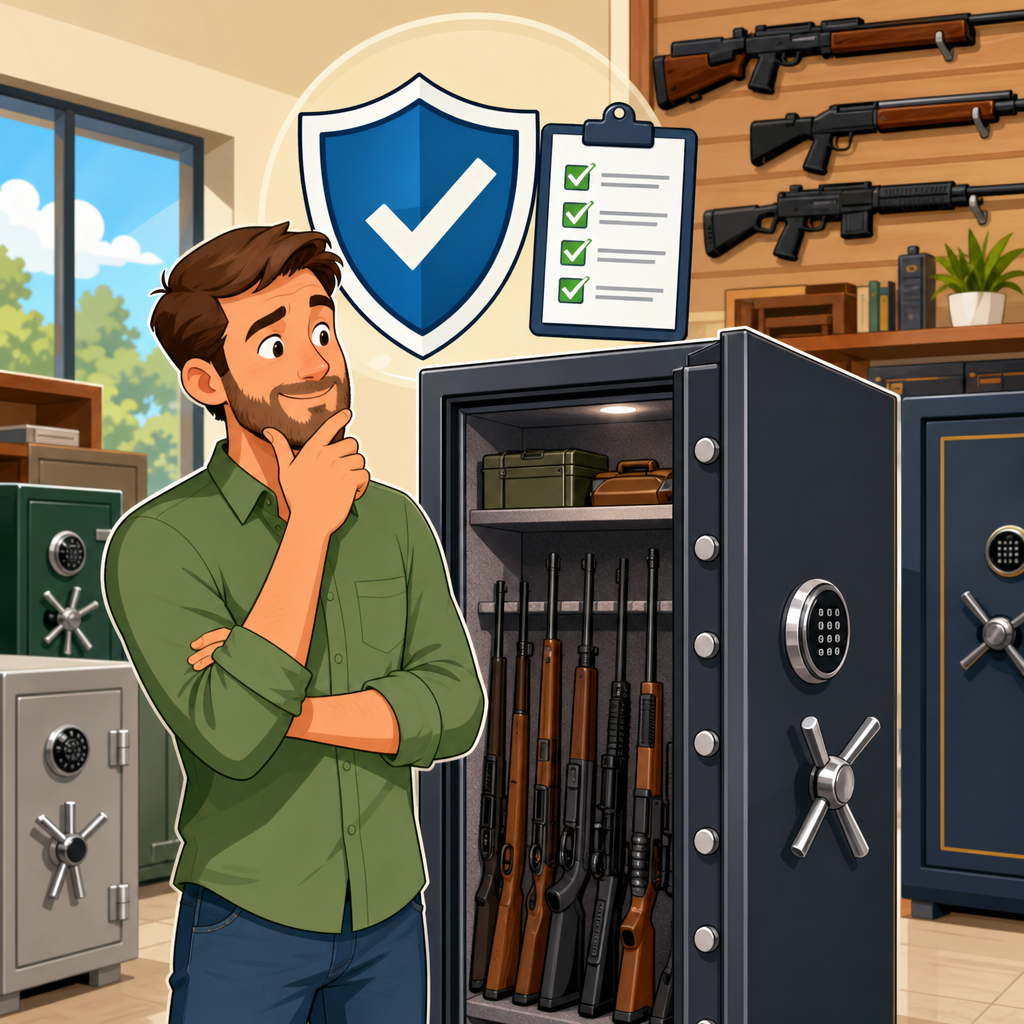
Choosing a gun safe that meets insurance standards starts with understanding a simple truth: insurers care less about marketing language and more about measurable protection against theft, fire, water, and unauthorized access. In practice, that means the best gun safe is not merely large, attractive, or expensive. It is a documented security container or safe with verifiable construction details, a suitable lock, an installation plan, and enough capacity to store firearms and valuables without forcing unsafe habits. For owners building out a responsible storage strategy under the broader Gun Safes & Safety topic, this buying guide serves as the central reference point for evaluating models, comparing ratings, and matching a safe to home insurance expectations.
When people ask how to choose a gun safe that meets insurance standards, they usually mean one of three things. First, they want to know whether a safe can help satisfy a policy requirement for secure storage. Second, they want to know whether the safe will improve their chances of reimbursement after a burglary, fire, or flood. Third, they want confidence that the safe will stand up to real risks rather than showroom claims. I have helped buyers compare residential security containers, UL-rated safes, modular gun cabinets, and insurer documentation requests, and the same pattern appears every time: the right decision comes from reading specifications line by line, not from relying on the biggest discount tag.
Key terms matter. A residential security container, often abbreviated RSC, is not the same thing as a high-security burglary safe. Under UL 1037, an RSC is tested against a basic attack with limited tools and time. That is better than an untested cabinet, but it is still an entry-level rating. A true burglary safe may carry UL classifications such as TL-15 or TL-30, which indicate resistance to tool attacks for longer periods under more demanding test conditions. Fire ratings also vary widely. Some are manufacturer-tested with unclear methods, while others follow recognized protocols such as UL 72. Insurance standards often hinge on these distinctions because claims departments evaluate objective ratings more favorably than vague promises like “fireproof for one hour.”
This matters because firearms combine financial value, liability exposure, and personal safety concerns. A stolen gun can create legal headaches and emotional distress even when reimbursement is available. A poorly chosen safe can also fail during a house fire, allow moisture damage, or tempt owners into leaving guns unsecured because the interior layout is inconvenient. Buying the right model therefore protects more than property value. It supports responsible ownership, may strengthen your insurance position, and creates a storage system you will actually use every day.
Understand What Insurance Standards Usually Require
Insurance companies do not all publish one universal gun safe standard, but their expectations follow a recognizable framework. They want evidence that the firearms were stored in a locked container, that the level of protection matched the value insured, and that the owner can document both the contents and the safe itself. Some carriers only require “secure storage,” while others set sublimits for firearms unless you schedule them individually. In many policies, theft coverage for firearms is capped separately from the rest of personal property, and accessories such as optics may be treated differently. Before buying any safe, read your declarations page, theft limitations, endorsements, and scheduled property options.
In my experience, buyers often assume any large gun safe automatically satisfies insurance. That assumption is risky. A policy may reimburse only up to a low theft sublimit unless you add a rider. Another policy may cover more if the firearms are in a bolted-down safe with a central station alarm. Some specialty insurers ask for make, model, serial number, purchase receipts, appraisals for collectible firearms, and photographs of the storage setup. If you own high-value rifles, transferable machine guns where lawful, or collectible shotguns, ask the insurer in writing what storage level they expect. Written confirmation avoids arguments later.
The most useful question to ask an agent is direct: “What safe ratings, lock requirements, and documentation do you need for full theft and fire coverage on my firearms?” That phrasing pushes the conversation toward specifics. If the representative cannot answer, ask for underwriting guidance. Insurance standards are really a combination of policy wording, underwriting rules, and claims expectations. Your purchase decision should meet all three.
Know the Ratings That Actually Matter
If you want a gun safe that meets insurance standards, ratings are the starting point because they provide common language across brands. The basic ladder begins with untested gun cabinets, moves to RSC-rated containers, and then to true burglary safes. For many households, an RSC from a reputable manufacturer is the practical floor. It offers materially better resistance than a thin steel cabinet, especially when paired with anchoring and alarm monitoring. However, once firearm values rise into five figures, many insurers and experienced owners begin looking beyond standard RSC construction.
Steel thickness deserves close attention. Many mass-market gun safes use 14-gauge or 12-gauge steel bodies. Those can slow smash-and-grab theft, but they are vulnerable to aggressive prying and cutting. Better units may use 10-gauge or 7-gauge bodies, composite construction, reinforced door edges, and hard plates protecting the lock area. Door design matters as much as raw thickness. A thick door on a weak frame is still a weak system. Continuous welds, internal hinges with pry resistance, and robust boltwork improve performance under attack.
Fire ratings must also be interpreted carefully. Fireboard insulation, door seals, and test duration all affect survivability. A label stating “90 minutes at 1200 degrees” means little if the protocol is proprietary and excludes cool-down time, which is when contents are often damaged. For insurance purposes, recognized testing carries more weight because it is repeatable and documented. That does not mean every manufacturer-tested model is poor; it means you should treat unsupported ratings as sales claims until proven otherwise.
| Feature | Entry-Level Cabinet | RSC Gun Safe | Higher-Security Safe |
|---|---|---|---|
| Typical body steel | 16-18 gauge | 12-14 gauge, sometimes 10 | 10 gauge or thicker, often composite |
| Burglary testing | Usually none | UL 1037 RSC or similar | UL TL ratings or equivalent |
| Fire protection | Minimal or none | Commonly included | More robust construction and seals |
| Insurance suitability | Basic secure storage only | Often acceptable for standard collections | Best for high-value collections |
| Best use case | Low-risk budget storage | Most households | Collectors and high-value owners |
Lock certification matters too. Mechanical dial locks have a long service history and are favored for reliability, though they are slower to open. Electronic locks offer speed and user-code management, but quality varies sharply. Look for locks from recognized manufacturers such as Sargent and Greenleaf, SecuRam, or La Gard, and confirm whether the lock is UL listed. Cheap import keypads can become the weak link in an otherwise respectable safe.
Match the Safe to Your Collection, Risk, and Policy
The right gun safe for insurance purposes depends on what you own and where you live. A homeowner with three hunting rifles in a low-crime suburb has different needs than a collector with twenty firearms, several suppressors where lawful, premium optics, and a detached workshop. Start by calculating replacement cost, not sentimental value. Include scopes, red dots, magazines if covered, documents, tax stamps where applicable, and jewelry or cash you may store in the same unit. The total may push you into a different class of safe than you originally planned.
Location risk changes the equation. In regions with higher burglary rates, longer police response times, or rural properties with outbuildings, a heavier and better-anchored safe makes more sense. Fire exposure also varies. Homes in wildfire zones, older wood-frame structures, or upper-floor installations may benefit from stronger fire performance and water-resistant features because sprinkler discharge and firefighter hose water often damage contents after the flames are out. Humidity matters as well. In coastal and southern climates, dehumidifiers, desiccants, and interior circulation are not optional if you want to prevent rust.
Capacity planning is where many buyers make expensive mistakes. Gun safes almost never hold the advertised number of firearms once optics, slings, bipods, and modern chassis rifles enter the picture. A “24-gun safe” may realistically fit 12 to 16 long guns without crowding. Crowding causes dings, awkward access, and eventually unsafe overflow storage. For a hub-level buying guide, the rule is simple: buy at least one size larger than your current collection requires. Future purchases, documents, ammunition segregation, and shelving flexibility justify the extra room.
Evaluate Installation, Placement, and Documentation
A gun safe can meet insurance standards on paper and still underperform in the real world if installation is poor. Weight helps, but anchoring is essential. Many theft crews do not attack the safe immediately. They tip it over, move it to a garage or truck, and open it later using better tools and more time. Bolting the safe to concrete is the strongest common approach. If you must install on a wood floor, use manufacturer-approved reinforcement and verify load capacity. A 700-pound safe on an upper floor may require structural review.
Placement should reduce both visibility and attack opportunity. A ground-floor interior corner, closet, or basement location often works well because walls can limit prying access and concrete simplifies anchoring. Avoid obvious sight lines from front windows, social media photos, or delivery-day exposure. If movers bring in a large safe, assume neighbors notice. Layered security matters here. Alarm contacts, motion sensors, exterior cameras, and monitored systems can significantly reduce the time a burglar is willing to spend attacking the safe.
Documentation is the overlooked part of choosing a gun safe that meets insurance standards. Save the invoice, model number, lock type, serial number, photos of the installed safe, and any rating documentation. Keep a separate inventory of firearms with photographs, serial numbers, receipts, and appraisals for collectible pieces. Store copies in encrypted cloud storage and off-site backup. During claims work, organized documentation shortens delays and strengthens credibility. I have seen straightforward claims become frustrating simply because owners could not quickly prove what they had or how it was secured.
Compare Costs Without Buying on Price Alone
Price matters, but cost should be measured against loss exposure and expected service life. A bargain safe that fails under pry attack is not a bargain. Neither is an oversized premium safe with a rating your insurer never asked for if it drains the budget needed for alarms, riders, or professional installation. Most buyers should think in terms of total protection cost: safe price, delivery, installation, anchoring, humidity control, lock upgrades, and insurance adjustments.
For many households, the sweet spot is a reputable RSC-class gun safe with a quality lock, 10- or 12-gauge steel, fire lining with documented methodology, and professional anchoring. Brands vary by market, but the evaluation process should stay constant. Read independent owner reports, check warranty language, look for locksmith service availability in your area, and ask whether the company stocks replacement locks, shelves, and door seals. A strong warranty is useful only if the brand has a credible dealer and service network.
If your collection value is high, compare the annual insurance premium for scheduled firearms against the one-time cost of stepping up to a stronger safe. Sometimes the better safe lowers overall risk enough to justify itself over several years, especially when paired with a monitored alarm. Sometimes it does not, and scheduled coverage remains the better move. The right answer is financial and practical, not emotional.
The best way to choose a gun safe that meets insurance standards is to treat the purchase as part of a complete risk-management plan. Start with your policy, confirm the insurer’s expectations in writing, and then buy to a documented standard rather than a marketing slogan. Focus on verified ratings, steel thickness, lock quality, realistic fire protection, installation, and inventory records. Those factors determine whether the safe will help during a claim and whether it will actually protect your firearms when something goes wrong.
As the hub article for Buying Guides within Gun Safes & Safety, this page sets the framework for every deeper comparison you make next: safe sizes, lock types, fire ratings, placement strategies, and premium versus budget models. The core takeaway is straightforward. Insurance-friendly gun storage is not about owning the largest box in the showroom. It is about selecting a container with the right tested protection for your collection, installing it correctly, and documenting everything clearly.
Before you buy, call your insurer, list your firearms and accessories, measure your space, and set a realistic protection budget. Then compare safes against those requirements line by line. That process will lead you to a safer home, a stronger insurance position, and a gun safe you can trust for years.
Frequently Asked Questions
What do insurance companies usually look for in a gun safe?
Most insurance companies are not evaluating a gun safe based on branding, showroom appearance, or broad marketing claims such as “heavy-duty” or “ultimate protection.” They typically care about documented, verifiable features that reduce the likelihood and severity of a loss. That includes the safe’s construction, locking system, resistance to forced entry, fire protection details, and how the unit is installed in the home or business. In many cases, insurers want to know whether the container is a true safe or a residential security container, what gauge steel was used in the body and door, whether the door has substantial locking bolts, and whether the lock is listed or certified by a recognized testing organization.
They may also consider where the safe is located, whether it is bolted down, and whether it is part of a broader risk-reduction strategy that includes alarms, surveillance, or limited-key access. For higher-value collections, insurers may request purchase receipts, model numbers, photographs, serial numbers, or independent ratings rather than relying on manufacturer brochures alone. The key point is that insurance standards are usually grounded in measurable protection. If a safe has clear specifications, recognized lock credentials, a realistic fire rating, and secure installation, it is far more likely to satisfy underwriting requirements than one that simply looks impressive.
Is a fire rating on a gun safe enough to meet insurance standards?
A fire rating is important, but by itself it is rarely enough to satisfy insurance concerns. Insurance carriers generally view a gun safe as a multi-risk protection device, which means it should address more than just fire. A safe may advertise impressive heat resistance, but if it has weak steel, a vulnerable locking system, or poor anchoring, it may still fall short of what an insurer considers adequate protection against theft or unauthorized access. In other words, fire protection is only one part of the evaluation.
It is also important to look closely at how the fire rating was established. Some ratings are based on internal manufacturer testing rather than independent laboratory verification, and not all tests use the same temperature, duration, or pass criteria. A rating that sounds strong in marketing materials may not tell you whether paper documents, optics, ammunition, or certain firearm components would actually survive under real-world conditions. If your insurer is focused on loss prevention, they will usually place more confidence in specific, documented standards than in vague claims like “90 minutes of fire protection.”
For that reason, the best approach is to choose a safe with balanced protection: credible fire resistance, solid anti-theft construction, a reliable lock, and secure installation. If you are trying to meet insurance standards, ask your carrier whether they require a minimum fire duration, a certain test method, or additional protections for valuables stored alongside firearms. A safe that is well-rounded and well-documented is generally much more insurable than one that emphasizes only a single feature.
What type of lock is best if I want a gun safe that insurers will approve?
From an insurance standpoint, the best lock is usually the one that is dependable, appropriately rated, and suited to how the safe will actually be used. Insurers often prefer locks with recognized certifications or listings because those provide an objective basis for evaluating quality. Traditional mechanical dial locks are valued for their long-term reliability and minimal dependence on batteries or electronics. Many owners and insurers appreciate the fact that they have fewer failure points and a long history of use on secure containers.
Electronic locks can also meet insurance expectations when they come from reputable manufacturers and carry recognized ratings. Their main advantage is speed and convenience, which can encourage consistent use. However, quality matters. A poorly made electronic keypad may create avoidable service issues, while a commercial-grade electronic lock with lockout features, tamper resistance, and a proven track record may be entirely acceptable to an insurer. Biometric locks can be convenient, but some insurance professionals are more cautious with them unless they are paired with a strong mechanical or electronic locking system and come from a manufacturer with a solid reputation.
The practical takeaway is that there is no universal “best” lock for every policy. What matters is whether the lock is suitable for the safe, resistant to manipulation, and supported by documentation. If you are selecting a safe for insurance compliance, look for a lock with recognized testing credentials, avoid bargain-grade hardware, and confirm whether your carrier has preferences regarding mechanical versus electronic systems. A strong safe with a weak lock can undermine the entire purchase, so lock quality should never be treated as a secondary feature.
Does bolting down a gun safe really matter for insurance purposes?
Yes, bolting down a gun safe can matter a great deal for insurance purposes because it directly affects theft risk. Even a heavy safe can be more vulnerable than people assume if it is left unsecured. Criminals may not try to defeat the safe on site; instead, they may remove it from the property and attack it later with more time and better tools. Anchoring the safe to a concrete slab or another suitable structural surface makes that type of theft significantly harder and shows the insurer that the safe is part of a serious security plan rather than just a storage cabinet placed in a convenient location.
Many insurers see anchoring as an important risk-control measure, especially for lighter safes, residential security containers, or safes installed in garages, utility rooms, or areas with easier exterior access. Proper placement also matters. A safe installed in a discreet, low-visibility area, with limited working room around the sides, is generally more secure than one displayed in an open room where pry attacks are easier. The installation should follow the manufacturer’s instructions and use appropriate hardware for the floor type and structure. A poor anchoring job may not provide the protection you expect and may even become a point of concern if there is a claim.
If your goal is to meet insurance standards, think of bolting down the safe as one of the easiest ways to strengthen your position. Keep records of installation, including photos, receipts, and any professional work performed. When an insurer asks how firearms and valuables are protected, being able to say that the safe is not only rated and locked properly but also permanently anchored can make your overall security profile much stronger.
How large and how strong should a gun safe be to satisfy insurance requirements?
The right size and strength depend on what you are storing, the total insured value, and the insurer’s underwriting standards, but in general, bigger is not automatically better and stronger matters more than simple capacity. A safe should be large enough to hold your firearms, accessories, documents, and any other valuables without overcrowding. Overfilled safes are harder to organize, more likely to cause damage to contents, and may tempt owners to leave some items unsecured. At the same time, buying a very large safe with modest construction just for storage volume may be less effective than buying a somewhat smaller unit with stronger steel, a better lock, and more credible ratings.
Strength is usually measured through practical details: door construction, body thickness, reinforcement in critical attack points, hinge protection, locking bolt design, relockers, and verified classifications where applicable. For many households, a well-built residential security container may be sufficient if it is anchored correctly and matched to the value of the collection. For higher-value collections, rare firearms, or situations where jewelry, cash, and important documents are stored together, insurers may expect a more substantial safe or additional layers of protection. This is especially true when the insured amount rises beyond ordinary personal property limits.
A smart approach is to buy for current needs plus moderate future growth while prioritizing documented security over cosmetic features. Review your policy limits and ask your insurer whether they have minimum construction expectations tied to declared value. Then choose a safe that offers enough interior room, verified lock quality, realistic fire protection, and a structure appropriate for the risk level. A safe that is properly sized, properly built, and properly installed is far more likely to meet insurance standards than one chosen mainly for appearance or advertised capacity.