
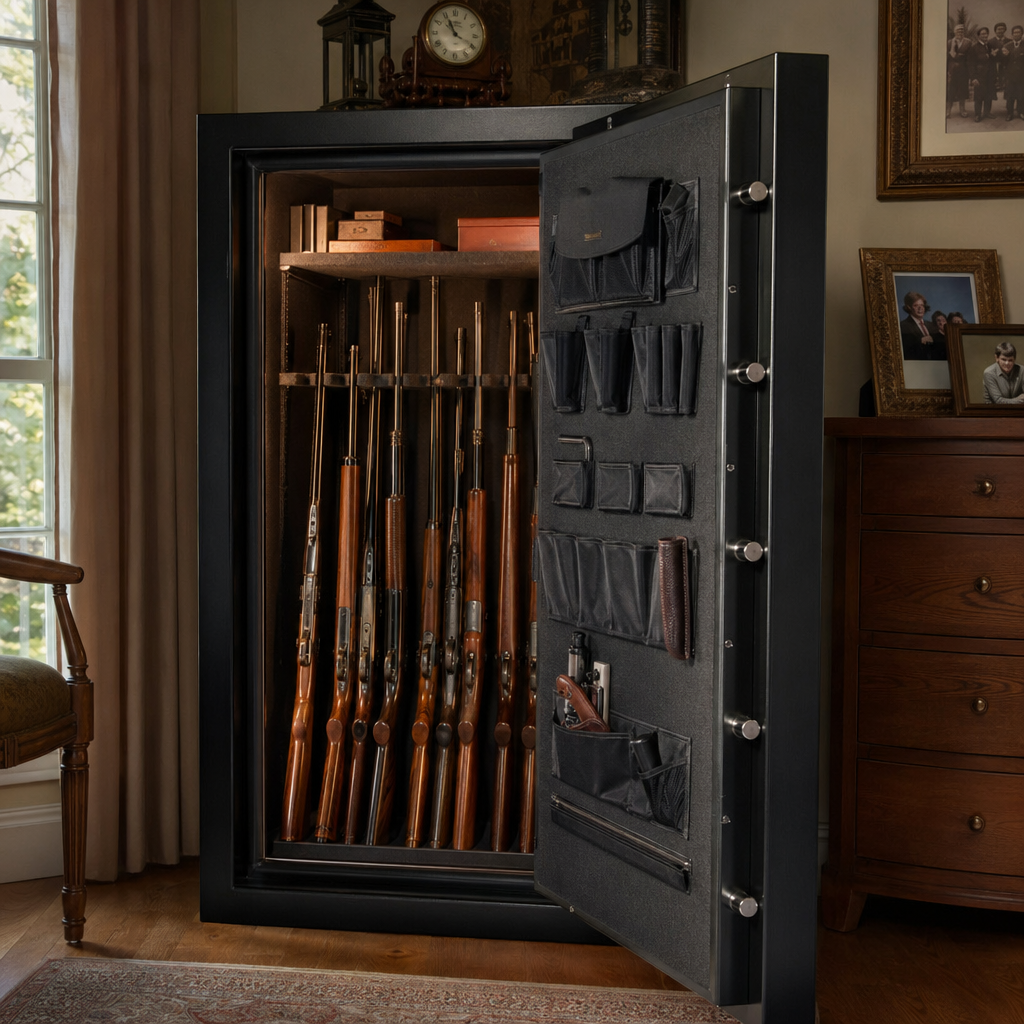
Family heirloom firearms carry two kinds of value at once: monetary worth and personal history. A revolver passed down from a grandparent, a military service pistol with original papers, or a finely blued shotgun used on family hunts cannot be replaced by simply filing an insurance claim. Choosing the best gun safes for protecting family heirloom firearms therefore requires more than buying the largest steel box at a big-box store. It means understanding construction quality, fire resistance, humidity control, access systems, insurance documentation, and the practical realities of where the safe will live inside your home.
In my experience helping owners evaluate safes for inherited rifles, antique revolvers, and collectible shotguns, the biggest mistake is shopping by advertised gun count alone. A “24-gun safe” often stores far fewer long guns once scopes, slings, and soft sleeves are involved, and heirloom pieces usually need more spacing and gentler contact surfaces than modern utility firearms. For a buying guide focused on preserving family history, the right question is not just what fits, but what protects finish, wood, provenance, and lawful access over decades.
A gun safe, in this context, is a secure steel enclosure designed to deter theft, slow fire damage, and create a controlled storage environment. Not all products sold as gun safes provide the same level of protection. Some are residential security containers tested to UL standards for basic attack resistance, while true high-security safes use thicker bodies, harder plate steel, reinforced doors, and more complex locking systems. For heirloom firearms, that distinction matters because theft attempts typically exploit weak doors, thin bodies, or poor anchoring long before a lock itself fails.
This guide serves as a buying hub for the broader gun safes and safety category. It explains what features matter most, how to compare safe types, what tradeoffs to accept, and which brands and configurations are best suited to collectible firearms rather than purely defensive storage. If you are deciding between a fire-lined safe, a modular safe for a tight stairwell, or a premium American-made model with better steel and interior customization, the sections below will help you buy with confidence and avoid costly mistakes.
What Makes a Gun Safe Suitable for Heirloom Firearms
The best gun safes for protecting family heirloom firearms prioritize physical protection, environmental stability, and careful interior support. Physical protection begins with steel thickness. Many entry-level cabinets use 14- to 16-gauge steel bodies, which are better than open racks but vulnerable to prying and cutting. Serious safes for collectible guns typically start around 12-gauge bodies, with stronger options moving to 10-gauge or thicker. Door construction also matters. Composite doors with multiple layers, hard plates over the lock, and active locking bolts on multiple sides resist pry attacks far better than simple sheet-metal doors with decorative boltwork.
Fire protection deserves careful reading because marketing labels can be misleading. A stated fire rating of 30, 60, or 90 minutes is only useful if you know the test temperature, whether the rating came from independent testing, and how the door seal performs during expansion. For heirlooms with original grips, wood stocks, leather slings, or paper documents, internal heat and steam are both concerns. Even when firearms survive structurally, elevated humidity after a fire event can damage bluing and stock finish. That is why dehumidification and post-event inspection should be part of your buying plan, not an afterthought.
Interior design matters more for collectibles than for tactical storage. Velour or fabric-lined shelves, adjustable barrel supports, and room for silicone-treated socks reduce metal-to-metal contact and accidental stock dings. Antique firearms with longer barrels or unusual shapes often fit poorly in standard interiors, so flexible shelving is valuable. I strongly prefer interiors that allow a mix of vertical long-gun storage and side shelving for boxed handguns, provenance files, and accessories such as desiccant canisters and hygrometers.
The lock is another major decision. Mechanical dial locks remain durable, proven, and independent of batteries. Electronic locks offer speed and easier code changes, which many households prefer. Higher-end safes may offer redundant systems or EMP-resistant electronic options. For heirloom firearms that are rarely handled, speed matters less than reliability and serviceability. A quality lock from Sargent and Greenleaf, SecuRam, or La Gard is more important than whether it beeps or spins.
Best Types of Gun Safes for Different Homes and Collections
There is no single best safe for every family. The right choice depends on collection size, home layout, local fire risk, and whether the heirloom guns are frequently displayed, occasionally used, or strictly preserved. Standard full-size gun safes work well for most homeowners with mixed collections. They provide a balance of capacity, burglary deterrence, and fire lining. For a family with six inherited long guns and several handguns, a nominal 30- to 40-gun model is often the realistic minimum because usable capacity is lower than advertised.
Modular gun safes are a strong option when a basement stairway, older home, or condo hallway makes moving a welded safe impractical. Brands such as Zanotti have built a reputation for knock-down designs that assemble in place while still offering respectable security. These are especially useful when you need to place a safe in a low-visibility interior room rather than a garage. The tradeoff is usually less fire protection than a heavily insulated welded model, so collectors often add room-level fire mitigation and separate document protection.
High-security gun safes from brands such as Graffunder, AMSEC, Fort Knox, and Liberty’s higher lines appeal to owners of valuable collections. These models often feature thicker steel, stronger boltwork, relockers, and more robust hard plate protection. If your heirloom firearms include engraved Colts, pre-64 Winchesters, or documented military bring-backs, moving up a tier makes sense. I have seen collections where one inherited revolver justified the extra cost of a better safe because replacement value and family significance far exceeded the price difference between midrange and premium storage.
For some households, a two-safe strategy is best. One compact quick-access safe stores a defensive handgun, while a larger anchored safe protects heirloom firearms and documents. Separating these roles reduces handling of collectibles and keeps the heirloom safe focused on long-term preservation. That strategy also simplifies interior setup because shelves can be dedicated to archival boxes, appraisal records, and accessories instead of daily-carry gear.
| Safe Type | Best For | Key Strength | Main Tradeoff |
|---|---|---|---|
| Entry full-size safe | Small inherited collections on a budget | Affordable theft deterrence | Thinner steel and limited interior flexibility |
| Midrange fire-lined safe | Most families with mixed long guns and handguns | Balanced security and fire protection | Advertised capacity is often overstated |
| Modular safe | Homes with difficult installation paths | Assembles in tight spaces | Usually less fire insulation |
| Premium high-security safe | Rare, documented, or high-value heirlooms | Better steel, lock protection, and customization | Higher cost and weight |
How to Evaluate Security, Fire Ratings, and Environmental Protection
When comparing safes, start with burglary resistance because theft risk is typically more immediate than total structural fire loss. Look for body steel thickness, door edge design, internal hinges or protected external hinges, relockers, and anchor holes. Anchor the safe to concrete whenever possible. Even a heavy safe becomes vulnerable if thieves can tip it over and attack weaker areas with pry bars. Location matters too. A concealed interior room gives you more protection time than a garage corner visible from the street.
Next, scrutinize fire claims. Some manufacturers provide meaningful details, while others advertise broad numbers without explaining method or threshold. Ask what temperature the exterior reached during testing, what internal temperature was maintained, and how long the safe remained below damage thresholds. Paper chars at about 451 degrees Fahrenheit, but wood finishes, lubricants, optics, and polymers can be affected at much lower levels. For heirloom firearms, think in terms of reducing damage, not guaranteeing perfection. A better fire-rated safe buys time for the fire service and limits peak internal heat.
Environmental control is often overlooked, yet it is essential for preserving blued steel, case coloring, and aged walnut. Safe interiors can trap moisture, especially in basements or humid climates. Use a powered dehumidifier rod if electricity is available, or rechargeable desiccants if it is not. Add a digital hygrometer and aim for stable, moderate humidity rather than extreme dryness. Over-oiling can attract dust and degrade some materials, so use proven rust preventives such as Renaissance Wax for certain surfaces or collector-appropriate gun oils applied sparingly.
Documenting the collection is another protection layer. Keep photographs, serial numbers, appraisals, and family history records in a separate fire-rated document container or encrypted cloud archive. If a loss occurs, provenance can materially affect insurance settlement and future restoration decisions. For military or antique pieces, original papers may be as important as the firearm itself, so do not store them loose against gun oil and humidity. Use archival sleeves and separate shelves.
Recommended Buying Criteria, Brands, and Common Mistakes to Avoid
If you want a practical shortlist, focus first on established brands with service networks and transparent specifications. AMSEC is widely respected for options ranging from solid midrange safes to higher-security models. Fort Knox is known for customization, interior flexibility, and heavier construction in upper lines. Liberty remains popular for broad dealer availability and accessible feature sets, though exact construction varies by model line. Browning often appeals to owners who want organized interiors, while Graffunder occupies a premium niche for serious collectors wanting heavy steel and custom builds. The model matters more than the logo, so compare specific body gauges, lock options, and fire details.
Buy larger than you think you need. This is the most consistent lesson I have learned from safe owners. A safe that seems oversized in the showroom quickly fills with scoped rifles, archival boxes, handguns in rugs, spare shelves, and dehumidifier equipment. For heirloom firearms, extra space is protective because it reduces contact and allows careful placement. Crowding expensive wood stocks against each other is an avoidable mistake.
Avoid overvaluing cosmetic features. Door organizers, embossed finishes, and interior lighting are useful, but they do not compensate for thin steel or weak lock protection. Also avoid relying on “waterproof” language without understanding limits. Many gun safes use expanding seals that help during firefighting, but prolonged submersion or severe structural collapse can still defeat them. If your area faces flood risk, elevate the safe if feasible and review separate water-damage insurance limitations.
Do not ignore installation. Professional delivery, proper anchoring, and discreet placement are part of the purchase, not optional extras. The best gun safe for protecting family heirloom firearms is the one that is difficult to discover, difficult to move, and stable in temperature and humidity year-round. Before buying, measure doorways, stair turns, floor load capacity, and power access for dehumidifiers. Then compare warranties, locksmith support, and replacement lock service. A well-chosen safe protects not only firearms, but the stories attached to them.
The right buying guide ends with a clear principle: match the safe to the importance of the collection, not just the number of guns. Heirloom firearms deserve stronger steel, realistic fire protection, controlled humidity, and interiors that prevent damage during long storage. For most families, that means a midrange or premium safe from a reputable brand, oversized for future needs, professionally installed, and anchored in a low-visibility location. If the collection is exceptionally valuable or irreplaceable, modular convenience should give way to heavier construction and better lock protection.
As you build out your broader gun safes and safety plan, use this hub as the starting point for deeper decisions on fire ratings, lock types, humidity control, placement, and insurance documentation. Review your collection item by item, rank each firearm by financial and sentimental value, and buy the level of protection the collection truly warrants. A thoughtful safe purchase preserves condition, provenance, and peace of mind. Start by measuring your space, setting a realistic budget, and shortlisting two or three safes built for long-term preservation.
Frequently Asked Questions
What should I look for in a gun safe when protecting family heirloom firearms?
When you are storing family heirloom firearms, the goal is not just basic theft prevention. You are protecting items that may have historical significance, original finishes, matching serial-numbered parts, family documentation, and emotional value that cannot be replaced. A good safe for heirloom firearms should start with strong steel construction, a reliable locking system, and a door design that resists prying. Look closely at body steel thickness, door plate strength, bolt coverage, and hinge design rather than relying only on marketing terms. In general, heavier safes with better-built doors and more robust locking mechanisms provide a higher level of real-world protection.
Fire protection is also essential, but it should be evaluated carefully. Many heirloom firearms are vulnerable not only to direct flame, but also to heat damage, moisture, smoke residue, and interior humidity changes after a fire event. A safe with a credible fire rating, quality door seals, and a design intended to limit heat transfer can offer an important extra layer of defense. That said, no fire rating should be viewed as a guarantee under every condition, so it helps to combine fire resistance with placement in a lower-risk part of the home.
Interior protection matters just as much as outer security. Older firearms often have delicate wood stocks, case coloring, fine bluing, engraving, leather accessories, and original paperwork. Choose a safe with a soft interior, adjustable shelving, and enough space to avoid crowding. You should also plan for humidity control using a dehumidifier rod, desiccant system, or both. In short, the best safe for heirloom firearms balances burglary resistance, fire protection, interior care, and climate management rather than focusing on only one feature.
Is a fireproof gun safe really necessary for heirloom firearms?
For most owners of family heirloom firearms, the answer is yes. Fire protection is not a luxury feature when the contents include irreplaceable guns, documents, photographs, military papers, provenance records, and accessories passed down through generations. Even if a firearm survives a house fire structurally, extreme heat can damage wood stocks, warp components, degrade finishes, ruin grips, and destroy paper records that help establish the firearm’s story and value. Smoke and moisture exposure after the fire can also create corrosion risks very quickly.
However, it is important to understand what a fire rating actually means. Safe manufacturers may list a time-and-temperature rating, but testing standards can vary, and not all published ratings are equal. A better approach is to look for a safe from a reputable manufacturer that is transparent about how its fire protection is designed and tested. Features such as multiple layers of fireboard, heat-expanding door seals, tight door gaps, and a well-built body can all contribute to better performance.
That said, fire resistance should be part of a broader protection strategy. Safe location matters. Installing the safe on a lower level, away from obvious high-fuel areas, can improve survival odds in a fire. Keeping heirloom documents in fire-rated document pouches or secondary containers inside the safe can add another layer of protection. If your firearms have especially high collector or historical value, pairing a quality fire-rated safe with proper insurance and detailed inventory records is the smartest long-term plan.
How do I control humidity inside a gun safe to prevent rust and stock damage?
Humidity control is one of the most overlooked parts of protecting heirloom firearms, and it is especially important for older guns with original finishes, aged wood, and vintage leather or paper accessories. Excess moisture can lead to rust, pitting, mildew, and swelling or cracking in wood stocks. On the other hand, major swings in humidity can also be harmful over time. A gun safe creates a more controlled environment, but it does not automatically solve moisture problems by itself.
The most common solutions are electric dehumidifier rods, rechargeable desiccants, or a combination of both. A dehumidifier rod gently warms the air inside the safe, helping reduce condensation and maintain circulation. Desiccants absorb excess moisture and can be especially useful in humid climates or in safes that are opened less often. Including a small hygrometer inside the safe is a smart move because it lets you monitor actual humidity levels rather than guessing. For many heirloom firearms, maintaining stable moderate humidity is more important than chasing the lowest possible number.
Good storage practices also matter. Wipe firearms down with an appropriate preservative before storage, avoid foam cases for long-term storage unless they are specifically designed for archival use, and make sure guns are not packed so tightly that air cannot circulate. If you are storing original documents, holsters, or fabric items alongside the firearms, keep them organized in a way that reduces contact with metal surfaces and allows airflow. A quality gun safe with active humidity management is one of the best defenses against the slow, silent damage that can diminish both collector value and family legacy.
Should heirloom firearms be stored differently than modern guns inside a safe?
Yes, in many cases they should. Modern utility firearms are often easier to replace and may be less sensitive to small environmental changes, while heirloom firearms frequently have original bluing, older varnishes, hand-checkered wood, antique metals, paper labels, and family-related accessories that need gentler treatment. That means storage inside the safe should be planned around preservation, not just capacity. If possible, avoid overcrowding heirloom guns with everyday firearms, especially if frequent access increases the chance of bumps, scratches, or finish wear.
Heirloom firearms benefit from padded contact points, stable positioning, and separation from items that could transfer moisture or oils. Adjustable shelving and dedicated racks can help keep stocks and barrels from rubbing against neighboring guns. If a firearm has historical documents, medals, original boxes, or photographs associated with it, consider storing those materials in protective archival sleeves or document containers within the safe. This helps preserve the full story of the firearm, which is often just as important as the firearm itself.
It is also wise to inspect heirloom firearms periodically, even when they are safely stored. Check for signs of rust, changes in wood condition, shifts in humidity, and any wear caused by storage position. Use cleaning and protective products that are appropriate for older finishes and collectible pieces rather than treating them exactly like modern range guns. The best gun safe setup for heirlooms is one that combines security with museum-minded care: clean organization, environmental stability, gentle contact surfaces, and enough room to avoid unnecessary handling damage.
What size and type of gun safe is best for a collection of family heirloom firearms?
The best size is usually larger than you think you need. Safe capacity numbers are often based on idealized storage arrangements and may not reflect the extra space required for scoped rifles, older shotguns, display-style positioning, paperwork, and accessories. Heirloom firearms should not be crammed together. A safe that gives each piece room to rest without pressure on stocks, barrels, or sights is much better for long-term preservation. If you have only a few heirloom guns today, choosing a slightly larger safe can also leave room for archival boxes, records, and future family additions.
As for type, many owners do well with a high-quality residential gun safe that offers strong anti-theft construction, meaningful fire resistance, and adjustable interior storage. If the heirlooms are especially valuable or historically significant, you may want to look at higher-security safes with upgraded steel, better locks, and stronger burglary protection. The lock type should be chosen based on reliability and personal preference. Mechanical dial locks are often valued for long-term durability, while quality electronic locks offer faster access. Either can work well if sourced from a reputable manufacturer.
Do not overlook installation. A properly anchored safe is far more secure than one that can be tipped or removed. Placement should balance discretion, structural support, and environmental considerations. For many households, the ideal setup is a larger, well-built safe anchored in a low-visibility location, equipped with humidity control, organized to separate delicate heirlooms from everyday firearms, and sized to protect not just the guns but the history that comes with them. That combination gives you a much better chance of preserving both financial value and family meaning for the next generation.