
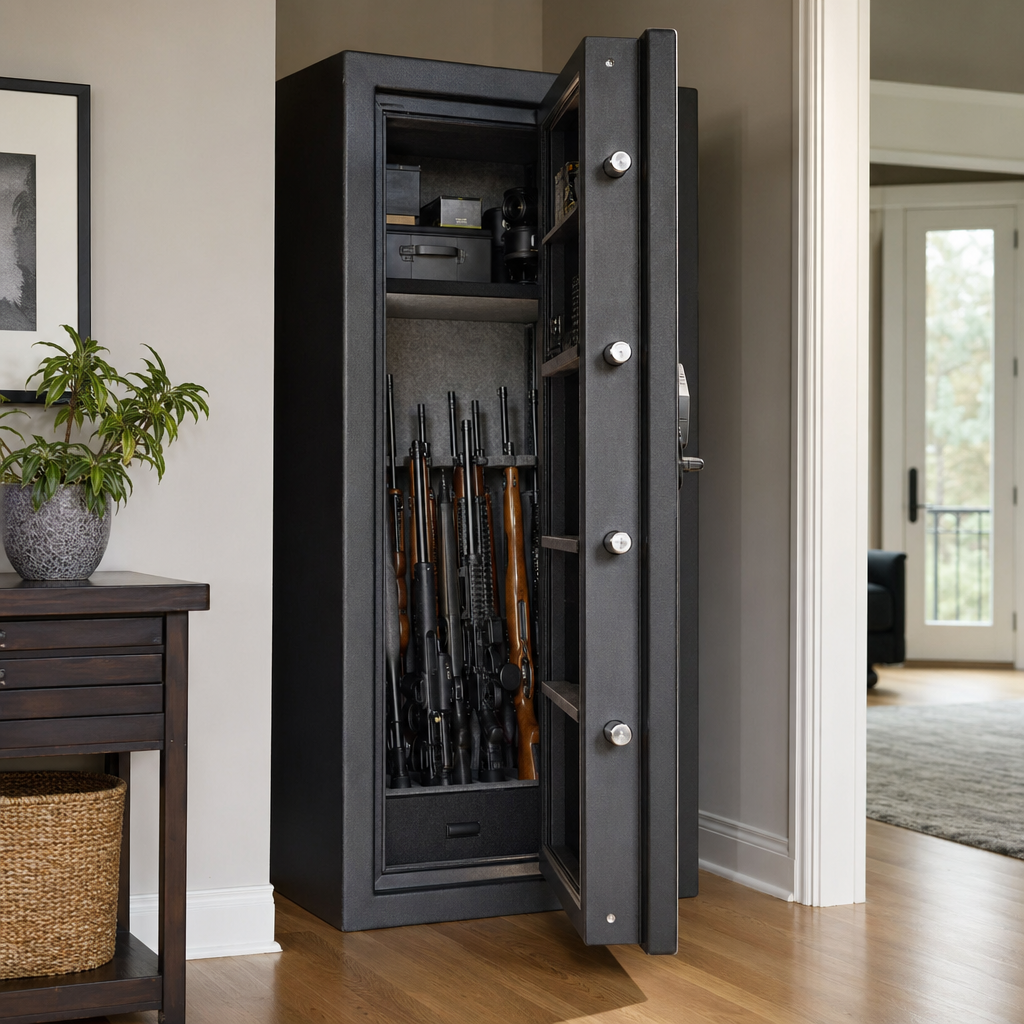
Choosing a gun safe that can be integrated into home security systems starts with understanding that the safe is no longer just a heavy steel box; it is part of a larger protective network that includes intrusion detection, fire protection, access control, monitoring, and emergency response. In practical terms, integration means your safe can communicate useful status signals to the same platform that watches doors, windows, cameras, smoke detectors, and alarms. For homeowners, that matters because firearms require a higher standard of control than ordinary valuables. You are protecting against theft, unauthorized access, child access, and delayed response when something goes wrong. A well-chosen safe reduces those risks, but a well-chosen safe tied into your home security system improves visibility, accountability, and speed.
When buyers search for the best gun safe for home security integration, they are usually asking three questions: what features actually matter, which connection methods are reliable, and how much safe they really need. I have helped evaluate safes for family homes, rural properties, and collector setups, and the same lesson keeps repeating: the purchase goes wrong when people buy for size and price alone. Steel thickness, lock type, sensor compatibility, and installation conditions determine whether the safe supports your security plan or becomes an isolated weak point. This buying guide explains the key terms, the major selection criteria, and the tradeoffs behind common options so you can choose a gun safe that fits both your firearms and your security architecture.
Start with the security role your gun safe needs to play
The first step is defining the job. A gun safe for integration should serve four functions at once: resist forced entry, limit unauthorized access, survive environmental threats such as fire or humidity, and provide status information to your home security system. If one of those functions is missing, the safe may still store firearms, but it will not perform well as part of a modern home protection strategy. For example, a basic Residential Security Container can deter casual theft, yet if it has thin steel, no hardplate, no relocker, and no way to monitor door state, it may fail under targeted attack and leave your alarm platform blind.
Buyers should separate “safe” from “cabinet.” Many low-cost products sold online are locking cabinets made from sheet steel with simple cam locks. They can organize long guns and keep children out temporarily, but they do not offer meaningful burglary resistance. A true gun safe should have a reinforced door, internal hinges or protected external hinges, solid locking bolts, and anchoring points. If you need a benchmark, look for independently discussed construction details and, where available, burglary or fire testing references. Standards from Underwriters Laboratories, including UL 1037 for Residential Security Containers and UL 687 for burglary-resistant safes, help clarify the difference between consumer-grade deterrence and tested protection.
The role also depends on who lives in the home. A household with children needs strict access control and tamper alerts. A competitive shooter who accesses firearms often needs a lock that balances speed and auditability. A collector with optics, suppressors, and documents may need more interior flexibility and dehumidification than a casual owner. A rural property may prioritize long battery life and local siren outputs because broadband outages are common. Defining the role first keeps you from overpaying for unnecessary features while missing the integration features that truly matter.
Evaluate physical construction before you look at smart features
Integration features are useful only if the safe itself is physically credible. Start with steel thickness. Manufacturers often advertise “12-gauge steel” or “10-gauge steel,” and lower gauge numbers indicate thicker steel. For many homeowners, 12-gauge is an entry point, while 10-gauge or thicker provides noticeably better resistance against prying and cutting. Door construction matters as much as body steel. Composite doors with multiple layers, hardplate protection over the lock, and active locking bolts on multiple sides improve burglary resistance. A relocker is another important feature; it triggers secondary locking if the main lock is attacked.
Interior fit also affects safety. Long gun safes should accommodate scoped rifles without crowding, and shelves should support handguns, ammunition, and documents without forcing unsafe stacking. Firearms packed too tightly are harder to inventory and easier to mishandle. In real installations, I recommend buying 25 to 40 percent more capacity than your current collection. Manufacturers routinely overstate rifle counts by assuming bare guns with no optics, slings, or accessories. A “24-gun safe” often stores far fewer practical setups.
Fire protection claims deserve scrutiny. Pay attention to the test duration, temperature, and whether the rating comes from the manufacturer or an independent lab. Some safes advertise 30, 60, or 90 minutes at temperatures between 1200 and 1680 degrees Fahrenheit, but the methodology varies widely. Fireboard insulation, door seals that expand under heat, and protected seams all matter. Fire ratings do not make contents invulnerable, especially optics, electronics, and paper documents, but they buy time during a house fire. If your safe is integrated into a security system, tie it to smoke and heat alerts as well, because notification speed can matter more than the label on the brochure.
Choose an access method that matches both security and integration
The best lock type for an integrated gun safe depends on how often you access it, who needs access, and what signals your security system can monitor. Mechanical dial locks are proven, durable, and immune to battery failure, but they are slower and usually offer limited native integration. Electronic keypad locks are common because they are faster and easier to use, and many support door-position switches, tamper inputs, or aftermarket sensor kits. Biometric locks offer quick access, especially for handgun safes, but quality varies sharply. Capacitive sensors, enrollment quality, and backup entry methods determine whether the lock is dependable or frustrating.
For home security integration, the lock itself does not always need to be “smart.” In many setups, the safer and more reliable approach is using supervised contact sensors and vibration or tilt sensors connected to the alarm panel rather than relying on cloud-connected lock software. A recessed magnetic contact can report whether the safe door is open or closed. A shock sensor can flag hammering, drilling, or aggressive prying. If the safe is moved, a tilt sensor can trigger an alert. These simple signals are often more useful than remote unlocking, which most security professionals advise against for firearm storage.
There are exceptions. Some premium safes and access-control systems support event logs, duress codes, one-time user codes, and integration with platforms such as Alarm.com, Control4, Crestron, or professionally installed panel ecosystems from Honeywell Home or DSC. Those features can be valuable in households with multiple authorized users because they create accountability. Still, remote lock management should be approached conservatively. The safest design is one that supports remote monitoring and notification without enabling remote opening. For firearm storage, visibility is desirable; remote release usually is not.
Know the integration paths: hardwired, wireless, and hybrid
Gun safe integration generally happens through one of three paths: hardwired sensors to an alarm panel, wireless encrypted sensors paired with a hub, or a hybrid approach that combines both. Hardwired integration is the most stable choice in new construction or major remodels. It avoids battery maintenance for door contacts, offers clean supervision, and is difficult for casual attackers to disrupt. If the safe sits in a closet or dedicated safe room, prewiring for contacts, glass-break coverage nearby, and a dedicated motion detector creates a layered defense.
Wireless integration is more common in finished homes. Modern encrypted wireless sensors from established alarm brands are far more reliable than early consumer devices, and they make retrofits realistic. The tradeoff is battery maintenance and, in some homes, signal challenges caused by concrete, metal shelving, or the safe itself. Sensor placement matters. A wireless contact mounted poorly on a steel safe can lead to false trouble signals or unreliable reporting. In these cases, external surface contacts rated for metal installations or wireless transmitters with wired contacts can solve the problem.
Hybrid setups are often best. You might use a hardwired contact on the safe door and wireless environmental sensors nearby, or wire the safe room while keeping the rest of the house on a wireless platform. The right path depends on your panel, monitoring provider, and installation constraints.
| Integration option | Best use case | Main advantages | Main limitations |
|---|---|---|---|
| Hardwired contact and shock sensors | New builds, remodels, dedicated safe rooms | High reliability, no sensor batteries, strong supervision | Requires cabling, harder to retrofit |
| Encrypted wireless sensors | Finished homes, quick retrofit projects | Fast installation, flexible placement, broad compatibility | Battery upkeep, possible signal issues near steel |
| Hybrid system | Complex homes, phased upgrades | Balances reliability and flexibility, easier expansion | More planning, mixed maintenance requirements |
Whichever path you choose, confirm compatibility before purchase. Ask whether the safe can accept a door contact without affecting fire seals, whether the lock warranty permits sensor installation, and whether your alarm platform can create specific alerts for safe access after hours or during armed-away mode. Good integration is designed before delivery day, not improvised afterward.
Prioritize monitoring, alerts, and event visibility
A monitored gun safe adds value because it tells you what happened and when. At minimum, your setup should support open and closed status, tamper or vibration alerts, and notifications through a mobile app or monitoring center. If someone opens the safe while the system is armed, you should know immediately. If the door remains open for an unusual period, that should also trigger a notification. These are straightforward automations on many modern alarm platforms, yet buyers often overlook them and focus only on the safe’s lock.
Advanced visibility can include access schedules, user-specific codes, and camera-triggered recordings when the safe area is entered. A nearby indoor camera aimed at the room entrance, not directly at the keypad, can document who approached the safe while avoiding exposure of combinations. If your system supports scene logic, you can illuminate the closet or safe room when the safe door opens and send a silent alert if the opening occurs during vacation mode. These features are especially useful for households with teens, house sitters, cleaners, or part-time staff.
Professional monitoring is worth considering because firearm theft often occurs during short windows when homes are empty. A local siren can scare off a burglar, but a monitored signal creates an external response path. Response times still depend on your jurisdiction and permit rules, so verify how your provider handles burglary, fire, and panic events. The practical goal is not technological novelty. It is reducing the time between unauthorized access and intervention.
Match the safe to its installation environment
Where the safe sits is a buying decision, not an afterthought. Location affects burglary resistance, fire survival, sensor performance, and daily usability. A safe installed on a concrete slab in a ground-floor closet is generally easier to anchor securely than one placed on a raised wood floor. Basement installations may offer concealment and thermal advantages during a fire, but they raise humidity concerns. Garage installations are common in some regions, yet garages can expose the safe to wider temperature swings, visible delivery activity, and easier tool access for thieves.
Anchoring is essential. Even a heavy safe can be tipped onto its back to improve pry leverage or loaded onto a dolly if left unsecured. Use manufacturer-approved anchor points and hardware appropriate for concrete or structural wood. If your safe includes integrated lighting, dehumidifiers, or networked accessories, plan power carefully. A pass-through port should preserve fire resistance as much as possible, and cords should not create a visible clue for intruders. In several home assessments I have done, the strongest safes were weakened by poor placement in obvious master bedroom closets with no camera coverage and no secondary sensor protection.
Environmental control also matters. Firearms, optics, and documents can suffer in damp spaces. A goldenrod-style heater, desiccant packs, or a dedicated dehumidifier can prevent rust, but monitor conditions rather than guessing. Temperature and humidity sensors integrated with your home system provide useful oversight. If humidity rises beyond safe levels, you get an alert before corrosion appears.
Use this hub to guide related buying decisions
As a sub-pillar hub for gun safe buying guides, this page should help you evaluate the next questions in your research. After narrowing down integration-ready safes, compare handgun safes versus full-size long gun safes based on speed, capacity, and placement. Review biometric versus keypad locks with attention to failure modes, backup entry, and maintenance. Study fire ratings separately from burglary ratings because they solve different problems. Look at modular safes if your home has tight stairwells or upper-floor constraints. Research safe room design if your collection size or risk profile justifies layered storage beyond a single container.
You should also compare delivery and installation services, not just products. White-glove delivery, stair carries, and discreet scheduling reduce both injury risk and information leakage. Warranty support matters too. Some lock brands offer stronger replacement policies, and some safe makers have better parts availability years later. The best buying process is systematic: define risks, set required features, shortlist brands, verify integration compatibility, and plan installation before purchase.
Choosing a gun safe that integrates with home security systems is ultimately about building layers that work together. Strong steel, credible locking hardware, proper anchoring, and thoughtful sensor integration create a safer result than any single feature can provide. The right safe should resist attack, control access, survive common hazards, and report meaningful events to the same system that protects the rest of your home.
If you remember only a few points, make them these: buy for construction first, integration second, and marketing claims last; prefer monitored status and tamper alerts over remote unlocking; and match the safe to your home’s layout, humidity, and wiring realities. A gun safe is not a standalone purchase. It is part of your broader safety plan, your household routines, and your legal responsibility as a firearm owner.
Use this hub as your starting point for every gun safe buying decision. From here, move deeper into lock types, fire protection, installation methods, and size planning so you can choose a safe that protects firearms responsibly and fits your security system from day one.
Frequently Asked Questions
What does it actually mean for a gun safe to be integrated into a home security system?
Integration means the gun safe does more than physically store firearms and valuables behind steel and a lock. It becomes part of the same security ecosystem that monitors doors, windows, motion sensors, cameras, smoke detectors, glass-break sensors, alarms, and in some cases professional monitoring services. A truly integrated safe can send status information such as whether the door is open or closed, whether someone attempted unauthorized access, whether vibration or tampering was detected, and whether environmental conditions like heat or smoke may be threatening the contents.
In practical terms, this allows homeowners to see safe-related alerts inside the same app or control panel they already use for the rest of the house. For example, if the safe is opened outside of a normal schedule, the system may trigger a notification, activate cameras nearby, log the event, or alert a monitoring center. Some setups can also incorporate automation rules, such as turning on lights in the room when the safe is accessed, recording camera footage automatically, or escalating alerts if the safe is opened while the house is armed away. This broader visibility is valuable because it closes a common blind spot: many homes have perimeter protection, but the most sensitive assets inside the home are still isolated from the main security system unless the safe is intentionally connected.
When shopping, it is important to distinguish between a safe that is merely “smart” and one that is genuinely integration-ready. A smart safe may have a keypad, app, or electronic lock, but that does not guarantee compatibility with your alarm panel, home automation platform, or monitoring service. Ask whether the safe supports hardwired alarm contacts, tamper outputs, relay connections, API-based smart home integration, or compatibility with platforms such as Z-Wave, Zigbee, or other professionally installed systems. The goal is not just convenience; it is coordinated protection across access control, intrusion detection, and emergency response.
Which features matter most when choosing a gun safe that needs to work with an existing security system?
The most important features are the ones that support both physical protection and clean, reliable system integration. Start with the safe’s core protective qualities: steel thickness, door construction, bolt design, pry resistance, anchoring capability, and verified fire protection. A connected safe still has to perform like a safe first. If the body is too thin, the door frame is weak, or the fire rating is poorly documented, integration features will not make up for those shortcomings. Look for a model designed to resist unauthorized entry and survive realistic hazards, not just one with a digital control panel.
Next, focus on the integration hardware. A good candidate should support door position sensors, tamper detection, and alarm outputs that can communicate with your broader system. Hardwired dry contacts are especially useful because they can be connected to many alarm panels and professional security installations with high reliability. If you prefer a modern smart home environment, look for manufacturer support for secure connectivity standards or bridge modules that allow the safe to report status to your automation platform. Also ask whether the lock can generate audit trails, assign multiple user codes, define access schedules, and produce alerts after repeated failed entry attempts.
Power and fail-safe behavior are also critical. Electronic locks and communication modules should have dependable battery backup or auxiliary power options so the safe can still function during outages. You should know what happens if home internet fails, if the security hub goes offline, or if a wireless signal is interrupted. In a strong setup, the safe remains secure regardless of network conditions, while local alerts, logging, or hardwired triggers continue to operate. Finally, think about room placement and ecosystem fit. A safe installed in a closet, office, or master bedroom should work alongside nearby cameras, motion detectors, glass-break sensors, and smoke detectors. The best choice is the one that fits your home’s existing infrastructure rather than forcing a patchwork of adapters and workarounds.
Are smart locks and app-enabled gun safes enough, or should I still prioritize traditional security and fire protection?
You should absolutely prioritize traditional safe construction and fire protection first. Smart locks, app control, and notifications are useful enhancements, but they should be layered onto a solid physical foundation rather than treated as the main source of security. The safe’s steel body, door reinforcement, anti-pry features, internal bolt work, anchor points, and fire-resistant design remain the most important factors in preventing theft and protecting firearms from household disasters. If those fundamentals are weak, remote alerts may simply tell you that a criminal has already compromised the container.
Electronic convenience features should be evaluated through the lens of risk management. App-enabled access can help you monitor status, manage authorized users, and receive immediate alerts if the safe is opened or tampered with. However, every connected feature introduces questions about cybersecurity, battery life, firmware updates, signal reliability, and user error. That does not mean connected features are bad; it means they need to be implemented thoughtfully. Choose brands that clearly explain their encryption practices, update policies, local override procedures, and account protections such as multi-factor authentication. If the safe uses wireless communication, verify that connectivity is secure and does not create a new avenue for compromise.
A balanced approach is best. Look for a safe that offers strong burglary resistance, a credible fire rating, secure anchoring options, and a lock system with proven reliability. Then evaluate the electronic layer: audit logs, open-close notifications, tamper alerts, integration with cameras and alarm systems, and any remote management tools. In short, technology should enhance awareness and control, not substitute for steel, lock quality, and fire protection. Homeowners who keep this priority order in mind usually end up with a safer and more dependable long-term solution.
How can I make sure a gun safe will be compatible with my current alarm, monitoring, or smart home setup?
Compatibility starts with identifying exactly what you already have. Many homeowners say they have a “security system,” but that can mean a professionally installed alarm panel, a DIY smart home hub, a camera-only setup, or a mixture of platforms that do not always communicate well with one another. Before buying a safe, list your current components: alarm brand, sensors, cameras, smart home hub, monitoring service, mobile apps, and any automation protocols in use. Once you know your ecosystem, ask the safe manufacturer or dealer for specific integration details rather than general claims of being “smart” or “connected.”
Key questions include whether the safe has hardwired alarm contacts, what type of outputs it provides, whether it supports third-party monitoring, whether it can trigger scenes or automations, and whether event data can be viewed in the same interface as your other security devices. If your home uses a professionally monitored panel, your installer may prefer a safe with dry contact outputs for door status and tamper events. If you rely on a smart home platform, you may need a compatible module, bridge, or relay device that translates safe activity into readable signals for your hub. Ask whether these integrations are native or whether they require custom wiring or programming.
It is also wise to think through the installation path before purchase. Some safes are easy to connect during a new security installation but harder to integrate after the room is finished, especially if hidden wiring is needed. If you are remodeling or building, plan for power, low-voltage wiring, network access, and nearby camera coverage in advance. If the safe is going into an existing room, ask about wireless options, signal strength, battery replacement procedures, and how the system behaves during outages. In many cases, the most reliable solution combines local physical security with simple integration points rather than relying on complicated cloud-only features. A brief consultation with both the safe dealer and your alarm installer can prevent expensive compatibility surprises.
What installation and monitoring practices help get the most security value from an integrated gun safe?
Proper installation is just as important as choosing the right safe. Start by placing the safe in a location that supports both discretion and layered protection. A hidden or low-visibility area can reduce casual discovery, but the space should also allow secure anchoring, good structural support, and access to power or sensor wiring if needed. The room itself should be part of the security plan, ideally covered by door sensors, motion detection, and camera visibility. If someone reaches the safe, your home security system should already be recording, detecting movement, and preparing to alert you or a monitoring service.
Anchoring the safe is essential. Even a heavy safe can be moved or attacked more easily if it is not bolted down properly. Use manufacturer-approved anchoring methods and, if possible, install the safe on a solid surface that supports both weight and stability. If the safe includes door contacts or tamper signals, make sure those are professionally connected and tested. If cameras are used, position them to capture the approach to the safe area rather than pointing directly at keypads or combinations in a way that could expose access habits. Good camera placement gives context without compromising privacy or lock security.
On the monitoring side, configure meaningful alerts instead of enabling every possible notification. Useful examples include alerts when the safe is opened while the house is armed away, when repeated failed code attempts occur, when the safe remains open too long, or when tamper or vibration sensors activate. Review event logs periodically and update user permissions when household access needs change. Replace batteries on schedule, test integration points regularly, and confirm that your monitoring provider understands how safe-related alarms