
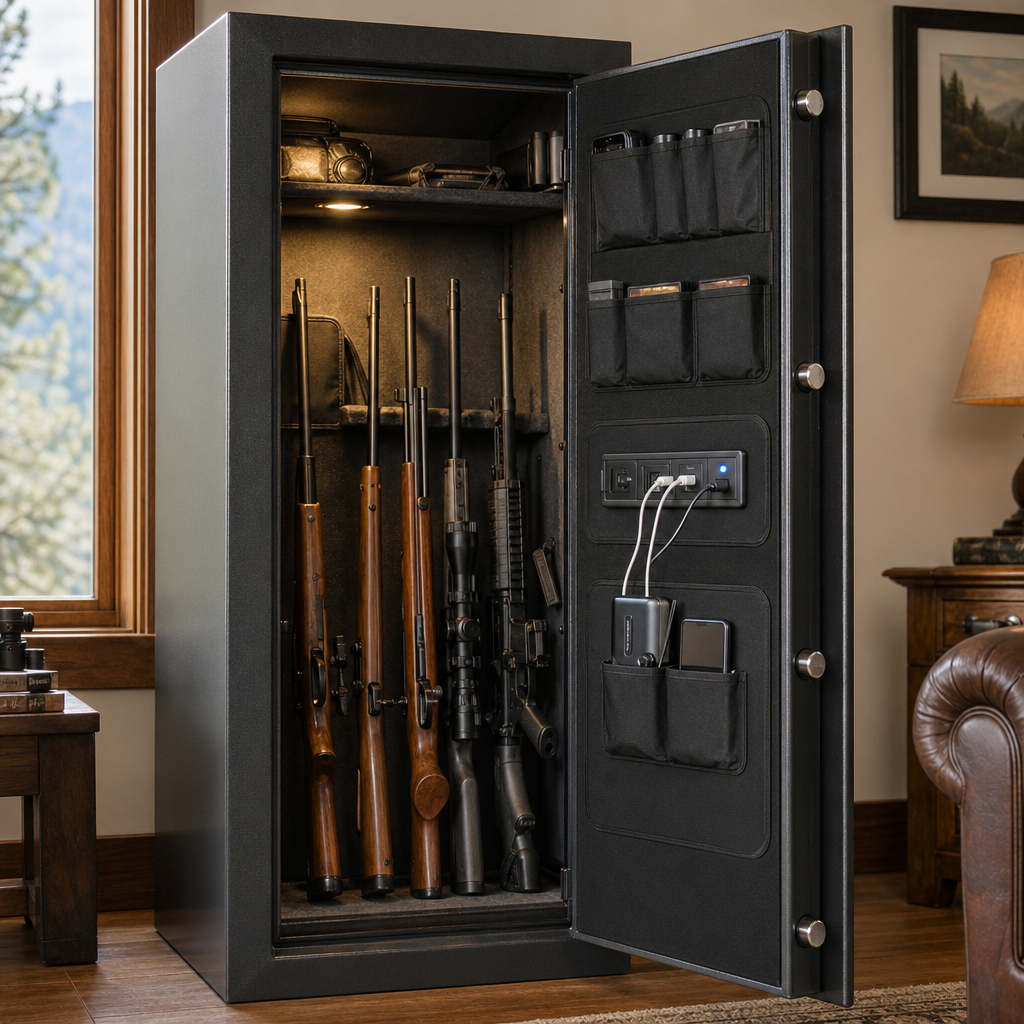
Gun owners increasingly want storage that does more than lock firearms away, which is why the best gun safes that include built-in charging ports for accessories have become a practical buying category rather than a novelty. In this guide, built-in charging ports refers to factory-installed USB outlets, AC power strips, pass-through power kits, or integrated docking points that let you power dehumidifiers, rechargeable optics, pistol vault lights, biometric scanners, and handheld electronics without running cords through a partly open door. That matters because modern firearm setups are electronics-heavy: red dots use batteries, humidity control protects steel, interior LED kits improve access, and emergency bedside safes often need constant power for lighting or charging a phone. I have evaluated safes in homes, retail showrooms, and installer setups, and the pattern is clear: charging convenience is useful only when it is paired with solid burglary resistance, dependable fire protection, and a layout that matches how you actually store guns. A weak cabinet with USB ports is still a weak cabinet. A well-built safe with sensible power management, by contrast, can improve readiness, preserve gear, and reduce cable clutter while keeping safety standards at the center of the decision.
What built-in charging ports really add to a gun safe
The main advantage of built-in charging ports is controlled power access inside a locked environment. That sounds simple, but it solves several common problems at once. First, you can run an electric dehumidifier or desiccant recharger continuously, which helps prevent rust in humid regions. Second, interior LED lighting can stay powered without relying on disposable batteries that die when you need them most. Third, bedside handgun safes with USB or AC outlets can support a phone, smartwatch, or weapon light charger while keeping defensive storage consolidated in one place. In practice, the best implementations use either a rear power inlet connected to an internal outlet strip or a UL-recognized accessory module mounted by the manufacturer. That is better than a do-it-yourself cord routed through a gasket, because improvised cable runs can compromise door sealing, create pinch points, and look unfinished.
Not every powered safe is designed the same way. Some compact pistol safes offer external USB-A or USB-C ports mainly for convenience. Full-size long-gun safes more often include a power outlet kit with two to six AC sockets plus USB charging. A few premium models integrate wireless charging shelves, though these are less common and less useful when a heavy steel door or shelf geometry interferes with placement. The key question is not whether a safe has power, but whether that power supports your use case. If you need to run a GoldenRod dehumidifier, charge handheld radios, and power door-side lights, an AC outlet strip is more versatile than USB alone. If your goal is a streamlined nightstand setup, a compact biometric safe with USB-C input and interior lighting may be enough.
How to judge security first and convenience second
When shoppers focus on charging ports, they can miss the fundamentals that make a gun safe worth buying. Start with steel thickness. Many entry-level products marketed as safes are closer to residential security cabinets, often using 14-gauge to 16-gauge steel. That can deter casual access but is vulnerable to aggressive pry attacks. For better burglary resistance, look for thicker bodies and doors, stronger frame design, hard plates protecting the lock, internal hinges or reinforced external hinges, and active locking bolts on multiple sides. Weight also matters. A heavier safe is generally harder to remove, and bolting it to concrete further increases security. I always tell buyers to think in layers: steel construction, lock protection, boltwork, anchoring, and placement inside the home all matter more than any charging feature.
Fire protection deserves the same scrutiny. Brands advertise fire ratings in ways that are not always comparable, because test methods vary. Some ratings are based on in-house tests rather than independent laboratories such as UL or Intertek/ETL. A longer fire rating is useful, but construction quality, door seals, drywall layering, and actual house fire conditions all affect real outcomes. If documents, optics, or suppressor paperwork will be stored inside, prioritize a model with a credible fire claim and good door sealing. Also ask how the power system is routed. A proper pass-through should not create obvious weaknesses around the body. Convenience features should complement security and fire performance, never substitute for them.
Buying criteria that separate a smart purchase from a gimmick
The best buying guides translate specifications into real ownership outcomes. Capacity is the first filter. Manufacturer gun counts are optimistic and usually assume slim, unscoped long guns packed tightly together. If you own AR-pattern rifles with optics, larger bolt guns, or shotguns with side saddles, cut the stated capacity significantly. Interior configuration matters more than the printed number on the tag. Adjustable shelving, barrel rests, door organizers, and power access near the shelves make a real difference when charging lights, hearing protection, or handheld thermal units. Measure your longest firearm, the width of your largest optic, and the footprint of any accessory chargers before you buy.
Lock type is the next decision. Mechanical dial locks are proven and do not rely on batteries, but they are slower in low light and less convenient for frequent access. Electronic keypad locks are fast and common on modern safes, though quality varies by brand and lock supplier. Biometric locks can be useful on quick-access handgun safes, especially from established makers, but fingerprint performance depends on sensor quality, finger condition, and backup access methods. For a powered safe, do not assume external power means the lock itself is fail-proof. Ask whether the lock has its own battery compartment, emergency override, and lockout behavior during low-voltage events. Good charging features do not excuse a mediocre lock.
| Buying factor | What to look for | Why it matters |
|---|---|---|
| Power setup | Internal AC outlet strip, USB ports, protected pass-through | Supports dehumidifiers, lights, and chargers without pinched cords |
| Steel and boltwork | Thicker steel, reinforced door edge, hard plate, relocker | Improves resistance to pry and drill attacks |
| Fire protection | Credible rating, expanding seal, layered insulation | Helps protect firearms, documents, and electronics from heat and smoke |
| Interior layout | Adjustable shelving, door pockets, outlet placement | Makes real-world storage and charging practical |
| Anchoring | Factory anchor holes and proper hardware | Reduces theft by removal and stabilizes heavy safes |
Types of gun safes with charging ports and who they suit best
Compact handgun safes are the most straightforward category. These are designed for one to four pistols, often with biometric or keypad access, and many include USB-powered interior lighting or external charging for small devices. They fit nightstands, closets, and vehicles, though vehicle use raises separate legal and security concerns. For a bedside role, the right model opens reliably, mounts securely, and provides enough interior clearance for a pistol with a mounted optic. If a unit advertises charging, verify whether it is charging the safe’s own battery system or offering output for your accessories. Those are different features and are often confused in marketing.
Full-size rifle safes and modular cabinets with internal outlet kits serve a different buyer. They are ideal for households storing multiple long guns, ammunition in compliance with local practices, documents, and support equipment such as electronic hearing protection or flashlight batteries. Here, charging ports are less about daily phone charging and more about maintaining the environment and powering accessories. Liberty Safe, Cannon, Browning, Rhino Metals, Sports Afield, and Vaultek are examples of brands buyers often compare, though specific feature availability changes by line and year. Vaultek has pushed smart features strongly in the compact-safe segment, while traditional full-size manufacturers more commonly offer outlet kits and lighting as bundled or optional accessories. Read the exact product sheet, because a brochure image may show accessories not included in the base package.
Installation, power management, and safety considerations
A gun safe with built-in charging ports still needs proper installation. Place the safe where the floor can support the weight, where humidity is manageable, and where the power cord route is protected. Basement installations are common, but moisture control is essential. Upper floors may work for smaller safes, but check structural load. Anchoring to concrete is best for heavy units; wood-floor anchoring can still help but should be done with appropriate hardware and joist awareness. Installers I trust also think about outlet location before delivery. A safe crammed into a corner with no access to the rear inlet becomes frustrating to service later. Leave enough clearance for the door swing, shelving changes, and cord inspection.
Electrical safety is not optional. Do not overload internal strips with high-draw devices, and use charging equipment appropriate for enclosed spaces. A dehumidifier rod typically draws little power, while multiple battery chargers running continuously create more heat. Keep combustible clutter to a minimum, and follow manufacturer guidance about extension cords; many recommend plugging the safe directly into a wall outlet. If you want surge protection, use a quality UL-listed solution compatible with the safe’s design. Also remember that some jurisdictions regulate how firearms and ammunition must be stored, especially around children or prohibited persons. A powered safe can improve utility, but legal compliance still comes first.
How to compare brands, warranties, and long-term value
Price alone is a poor buying guide for gun safes. The better comparison is value over years of ownership. Evaluate warranty terms for lock coverage, fire replacement, and shipping responsibilities. Some manufacturers offer transferable warranties; others limit support to the original buyer. Customer service quality matters more than many shoppers expect, because damaged freight delivery, electronic lock issues, and accessory kit questions are common pain points. Look for brands with established dealer networks and documented replacement-part support. Independent reviews can help, but prioritize detailed owner reports that discuss fit, finish, lock reliability, and post-sale support rather than one-line star ratings.
For most buyers, the sweet spot is a reputable safe with an internal outlet kit, adjustable interior, decent fire protection, and enough true capacity for future growth. Spending more on heavier steel and better lock protection usually pays off longer than spending more on app features. Charging ports are valuable when they support humidity control, visibility, and organized accessory storage. They are less valuable when they exist mainly to decorate a spec sheet. If you are building out a broader firearm storage plan, use this buying guide as your hub: compare safe sizes, quick-access options, fire ratings, lock types, and installation requirements before choosing a model. Make a checklist of your firearms, accessories, room conditions, and power needs, then buy the safest solution that fits your space and budget.
The best gun safes that include built-in charging ports for accessories combine secure storage with useful power management, not gadget appeal for its own sake. The right choice starts with burglary resistance, fire protection, lock reliability, anchoring, and realistic capacity. Once those fundamentals are in place, built-in AC outlets, USB ports, and protected pass-through systems can meaningfully improve ownership by powering dehumidifiers, lights, optics chargers, and bedside essentials. Buyers should match the safe type to the job: compact biometric pistol safes for quick access, larger long-gun safes for collection storage, and modular interiors for mixed equipment. They should also verify the exact power features included, because marketing photos often blur the line between standard equipment and optional accessories.
Long-term satisfaction comes from planning the entire setup rather than chasing a single feature. Measure your firearms and accessories, identify where the safe will live, confirm floor strength and outlet access, and review warranty support before ordering. If possible, inspect door construction, lock feel, interior fit, and outlet placement in person at a dealer. A powered safe should make your storage safer, cleaner, and easier to maintain, while still meeting the core purpose of preventing unauthorized access and reducing theft risk. Use this hub as your starting point for the broader Gun Safes & Safety buying process, compare models carefully, and choose the option that protects both your firearms and the electronic gear that now travels with them every day.
Frequently Asked Questions
1. What does it mean when a gun safe has built-in charging ports for accessories?
When a gun safe includes built-in charging ports, it means the safe is designed to provide power inside or directly at the safe without requiring owners to improvise with extension cords, drilled holes, or aftermarket wiring. Depending on the model, this can include factory-installed USB ports, standard AC outlets, internal power strips, pass-through power kits, or dedicated docking points that route electricity into the safe in a protected and organized way. The main purpose is convenience, but it also improves functionality because many modern firearm owners rely on rechargeable accessories that benefit from secure in-safe charging and power access.
These ports are commonly used to run dehumidifiers, motion-activated interior lights, electronic hygrometers, biometric lock backup power systems, rechargeable pistol vault lights, optics chargers, handheld radios, and other small electronics. In a practical sense, the feature turns the safe from simple locked storage into a controlled equipment hub. That is especially useful for owners who store firearms alongside optics, spare batteries, handheld tools, and defensive accessories that need to stay charged and ready.
It is also important to understand that built-in charging ports do not all work the same way. Some safes offer only a basic outlet strip inside the door panel or rear wall, while others provide a better-integrated system with cable management channels, sealed pass-through ports, and surge-protected power access. The best options are factory-installed or manufacturer-approved, because they preserve the safe’s structure and avoid compromising fire seals or security features. In short, a gun safe with built-in charging ports gives you secure storage plus clean, intentional power access for the gear you actually use.
2. Are gun safes with charging ports safe to use for electronics, batteries, and accessory charging?
Yes, in most cases they are safe to use, provided the safe is designed for that purpose and the owner follows reasonable charging practices. A well-made gun safe with integrated power access is intended to support low-draw accessories such as dehumidifiers, LED lighting, biometric scanners, USB-charged optics components, and compact electronics. The key advantage of a factory-built solution is that the manufacturer has already accounted for safe cable routing, insulation, and how power enters the cabinet without weakening the body or interfering with the door seal.
That said, “safe to use” does not mean “ideal for every charging scenario.” You should still pay attention to the electrical load limits of the internal outlets or USB ports, avoid overloading power strips with multiple high-draw devices, and follow the charging recommendations for lithium-ion batteries. For example, charging a small flashlight, pistol light, red dot battery dock, or a dehumidifier is very different from running a cluster of large charging bricks continuously in a compact enclosed space. The safest approach is to use the built-in ports for devices the safe was realistically designed to support and to avoid turning the interior into a high-heat charging cabinet.
Many experienced owners also prefer to charge mission-critical batteries under supervision, then store them in the safe once topped off, especially if those batteries are larger or more heat-sensitive. If you plan to use the safe regularly for charging, look for models with UL-listed electrical components, surge protection, organized cable management, and enough interior room to prevent cords from tangling around firearms. Used correctly, built-in charging ports are a smart and safe feature, but they work best when paired with common-sense power management.
3. What accessories are most useful to power or charge inside a gun safe?
The most useful accessories to power inside a gun safe are usually the ones that improve readiness, visibility, and long-term storage conditions. Dehumidifiers are at the top of the list because moisture control is one of the most important parts of firearm storage, especially in humid climates or basements. A powered dehumidifier or air circulation device helps reduce condensation risk and protects firearms, magazines, optics, and metal components from corrosion. Interior LED lighting is another highly practical use, since it makes it much easier to identify firearms and accessories quickly without fumbling in the dark.
Rechargeable accessories are also a natural fit. Owners commonly use built-in USB or AC ports to maintain pistol vault lights, biometric scanner backup batteries, handheld flashlights, hearing protection, compact radios, and charging docks for small optics-related components. If the safe is part of a home-defense setup, keeping these items organized and powered in one secure place can save time and reduce clutter. This is especially valuable for people who want their safe to function as a complete readiness station rather than just a locked box for guns.
However, the best use of the charging ports depends on the safe’s size and layout. In a large long-gun safe, internal lighting, dehumidification, and accessory charging make a lot of sense because there is room to route cables cleanly and maintain separation between firearms and electronics. In a smaller handgun safe, the most useful powered items are usually a compact interior light, biometric system backup power, or one or two small rechargeable devices. The common theme is practicality: the best powered accessories are the ones that improve security, preservation, and accessibility without introducing unnecessary heat, clutter, or maintenance headaches.
4. Do built-in charging ports affect a gun safe’s security, fire protection, or overall durability?
They can, but when the safe is designed properly by the manufacturer, the effect is usually minimal and well controlled. The concern many buyers have is understandable: anytime power needs to enter a secure, fire-rated enclosure, there is a possibility that a poorly designed opening could weaken the safe body, interfere with insulation, or create a vulnerability around cable access. That is why factory-installed systems are generally preferable to DIY modifications. A manufacturer-engineered pass-through kit is typically built to preserve the safe’s protective structure much better than a home-drilled hole or improvised wiring setup.
From a security standpoint, a built-in charging port should not meaningfully reduce protection if it is integrated correctly. Reputable safe makers place cable entry points in controlled locations and design them so they do not provide practical tampering access. From a fire-protection standpoint, quality matters even more. Fire-rated safes rely on seals, insulation layers, and carefully managed seams, so a charging feature should be part of that design rather than added later. Buyers should read the specifications carefully and look for mention of manufacturer-installed outlet kits, sealed pass-through systems, and any details related to preserving fire resistance.
As for long-term durability, built-in power access can actually improve the ownership experience because it reduces the temptation to force cords through the door jamb or repeatedly open and close the safe around external wiring. That kind of improvised use can wear seals, damage cables, and create inconvenience over time. A properly integrated charging system keeps the safe neater and more functional. The bottom line is simple: charging ports are not automatically a drawback, but they should be treated as a premium design feature that needs to be executed well. If security and fire protection are priorities, always favor safes that include power access as a purpose-built part of the original design.
5. What should I look for when choosing the best gun safe with built-in charging ports?
Start by looking beyond the charging feature itself and evaluating the safe as a safe first. Steel thickness, locking mechanism quality, bolt design, pry resistance, interior capacity, and fire protection should still be your primary decision points. Built-in charging ports are valuable, but they should complement a strong security platform rather than distract from weak core construction. Once the safe meets your baseline standards for protection, then compare how well the power system is integrated and whether it realistically supports the accessories you plan to keep inside.
Pay attention to the type and number of power connections. Some users only need a single AC outlet for a dehumidifier and a USB port for a light, while others may want several internal outlets for a more fully equipped setup. Look for practical details such as surge protection, internal outlet placement, cable routing, door organizer compatibility, and whether the safe includes an actual factory-installed power strip or just a basic pass-through hole. Placement matters more than many buyers realize, because poorly positioned ports can make charging awkward and lead to tangled cords around long guns, shelves, or stored ammunition.
You should also consider interior layout and your intended use case. A handgun owner may benefit most from compact USB charging and biometric lock support, while a long-gun owner may prioritize multiple outlets for dehumidification, lighting, and accessory charging. If the safe will be installed in a garage, closet, or basement, check how easy it is to access external power and whether the safe’s cord routing works with your installation space. Finally, buy from a reputable brand that clearly explains how the charging system is built into the safe and whether it is covered under warranty. The best gun safe with built-in charging ports is the one that combines serious physical protection with clean, reliable, and manufacturer-approved power access for the gear you actually depend on.