
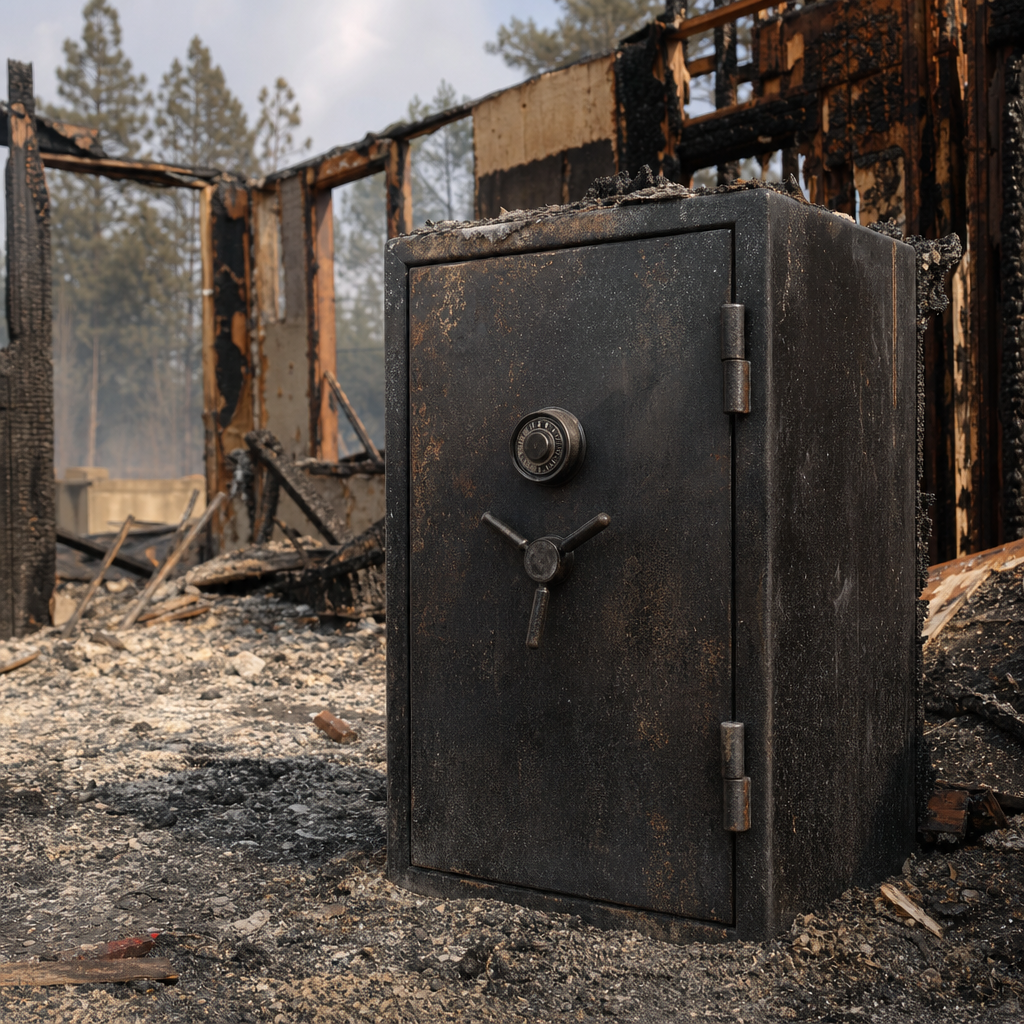
Wildfire risk has changed how gun owners evaluate storage, and the central question is no longer whether a safe can stop theft alone, but whether a fireproof gun safe can survive the heat, smoke, impact, and structural collapse that often come with a real wildfire. In practical terms, “fireproof” is marketing shorthand. No residential safe is literally proof against all fire conditions. What buyers need to understand is fire resistance: how long a safe can keep its interior below a critical temperature under a defined test. For firearms, optics, ammunition, paper records, and electronic media, those limits differ. A safe that protects steel rifles may still ruin polymer parts, wood stocks, scopes, passports, deeds, and hard drives. That distinction matters because wildfire exposure is not the same as a short-lived house fire in a controlled lab.
I have helped clients choose safes after structure losses, and the same misconception appears every time: they assumed a label like “60 minutes at 1400°F” meant the safe would be fine in any fire. It does not. Wildfires can produce prolonged radiant heat, direct flame contact, ember intrusion, falling debris, and post-fire hose streams. Garages and outbuildings are especially vulnerable because surrounding fuel loads, stored gasoline, and exposed framing can intensify burn conditions. The right answer to whether fireproof gun safes survive wildfires is therefore conditional. Some do, many partially do, and some fail in ways the brochure never explains. Understanding ratings, construction, placement, and backup planning is what turns a gun safe from a basic steel box into true disaster-resistant storage.
This hub article covers the full landscape of fireproof and disaster-resistant storage for firearms. It explains how fire ratings work, what materials inside a safe are most at risk, why wildfire conditions are uniquely destructive, which construction details matter most, how water and smoke damage complicate recovery, and what setup choices improve survival odds. If you are comparing models, planning a safe room, or deciding whether to supplement a gun safe with document chests, dehumidification, insurance, and digital records, this guide gives you the framework. The goal is not to promise invincibility. It is to help you build layered protection that stands a realistic chance when a wildfire moves through your area.
What fire ratings on gun safes actually mean
A fire rating is only meaningful when you know the testing method behind it. The most credible benchmarks come from standardized protocols such as UL 72 for record protection, though many gun safe manufacturers use proprietary tests instead of full third-party certification. A common claim might state that a safe is rated for 30, 60, 90, or 120 minutes at 1200°F, 1400°F, or 1680°F. That usually means the exterior was heated in a furnace while the manufacturer measured interior temperature rise. The key number for paper is roughly 350°F, because paper chars around that point. Media protection is stricter: digital storage can fail around 125°F to 150°F depending on humidity and media type. Firearms themselves tolerate more heat than documents, but finishes, stocks, lubricants, optics adhesives, and polymer components can be damaged well below the temperature that would structurally destroy steel.
In real buying decisions, I treat a verified fire rating as one data point, not a verdict. Ask whether the safe was tested empty or loaded, whether heat was applied from all sides, whether a hose-stream test followed heating, and whether the unit endured impact from a fall into a lower floor. Those details matter because wildfires often leave safes buried under collapsed framing and then drenched. Many residential gun safes use gypsum-based fireboard in wall cavities. That material releases steam when heated and slows temperature rise, but its effectiveness depends on thickness, coverage, door gaps, and overall fit. A nominal “90-minute” safe with poor door seals or thin body steel can underperform badly when exposed longer than the marketing scenario.
The safest interpretation is simple: fire ratings indicate relative resistance, not guaranteed survival. Higher-rated models with third-party testing, tighter door seals, and heavier construction generally do better. But wildfire survival depends just as much on where the safe is installed and what else is burning around it.
Why wildfires are harder on safes than many house fires
Wildfires create a different hazard profile from the furnace tests used in advertising. A moving wildfire can ignite vegetation, decks, fences, mulch, vehicles, sheds, propane lines, and neighboring structures before the main home becomes involved. That means a safe may be exposed to hours of escalating heat, not just a brief peak. Radiant heat can preheat a building long before flames touch it. Ember storms can enter attic vents, eaves, garages, and broken windows. Once the structure ignites, burn duration depends on fuel load, construction type, wind, and suppression delays. In the western United States and parts of Canada and Australia, entire subdivisions have seen sustained exposure that exceeds common residential fire assumptions.
Location inside the home changes everything. A safe on a garage slab often has one advantage: concrete under it reduces the chance of falling into a basement. But garages also contain accelerants, vehicles, tires, solvents, and open-span roofs that can collapse early. A safe on an interior ground-floor concrete slab often performs better than one on an upper level where collapse can compound damage. In wildfire loss reviews, I have seen safes survive with scorched exteriors when placed against interior masonry walls, while similar units in garages were warped, flooded, and buried under steel trusses. The same model can produce radically different outcomes because wildfire destruction is environmental, not just product-specific.
Another challenge is duration after flame front passage. A wildfire may move through quickly, but residual burning can continue for hours. If firefighters cannot access the property immediately, the safe remains in a hostile environment longer than its published rating. That is why buyers in wildfire zones should lean toward higher fire ratings than they think they need and should prioritize installation choices as heavily as brand.
Construction features that improve wildfire survival
When comparing safes for wildfire resistance, focus on body steel, door design, insulation system, seal quality, anchoring, and lock protection. Body steel matters because thin shells deform faster, allowing gaps that vent heat and smoke into the interior. Many big-box gun safes use 14- or 12-gauge steel bodies; premium models may move to 10-gauge, 7-gauge, or composite plate construction. Heavier steel does not replace insulation, but it preserves structural integrity longer. Door design is equally important. Multi-step door jambs, continuous fire seals, and robust hinge-side reinforcement reduce pathways for hot gases. Palusol-style intumescent seals that expand under heat can help, though their performance depends on proper fit and full perimeter coverage.
Insulation type is not all equal. Drywall-based layers are common and cost-effective, but poured or proprietary composite insulation can provide more uniform coverage and better endurance. Concrete amalgamate and ceramic-based barriers appear in higher-end burglary and fire safes. Locking systems need attention too. Electronic locks are convenient, yet after severe fire they may fail even if the interior survives. Many owners in fire country prefer mechanical dial locks for long-term resilience, though quality electronic locks from SecuRam, Sargent and Greenleaf, and La Gard are reliable under normal conditions. Whatever the lock, the relocker and hardplate arrangement should protect against both forced entry and heat-related mechanical distortion.
| Feature | Why it matters in a wildfire | What to look for |
|---|---|---|
| Fire rating | Longer resistance delays interior heat rise during sustained exposure | Independent testing, 90+ minutes preferred in high-risk zones |
| Body steel | Heavier walls resist warping, puncture, and gap formation | 10-gauge or thicker, or composite body construction |
| Door seal | Limits smoke, ember, and hot gas intrusion | Full-perimeter intumescent seal with tight door fit |
| Placement | Reduces exposure to collapse and fuel-rich areas | Interior location on concrete slab, away from garage hazards |
| Anchoring | Prevents tipping and movement during collapse or impact | Anchor bolts into slab per manufacturer specifications |
Weight alone is not proof of quality, but it often signals more steel and insulation. If a safe claims exceptional fire performance while weighing surprisingly little for its size, inspect the details carefully. Marketing language can be generous; construction cannot.
What inside the safe is most vulnerable
Many owners think first about the guns, but the most vulnerable contents are often accessories and records. Wooden stocks can crack, warp, or delaminate after extreme heat and moisture cycling. Polymer pistol frames, recoil pads, slings, and magazine baseplates can deform at temperatures far below steel failure. Optics are especially sensitive because lenses, seals, adhesives, nitrogen purging, and electronics can be ruined by heat or smoke contamination. Ammunition usually does not detonate like Hollywood depicts when unconfined, but cartridges can cook off, and packaging, primers, and powder stability can all be affected. Manufacturers generally recommend replacing ammo exposed to high heat, smoke, or firefighting water.
Documents and media need stricter protection than firearms. Birth certificates, trust paperwork, tax records, NFA documents, passports, backup drives, and family photos are often irreplaceable. A gun safe advertised for firearms may not maintain the lower internal temperatures and humidity control required for digital media. For that reason, I often recommend a layered approach: firearms in the gun safe, critical paper records in a rated document chest inside the safe, and digital copies encrypted in cloud storage plus an off-site backup. That may sound redundant, but after a wildfire, redundancy is what separates inconvenience from permanent loss.
Interior organization also affects survivability. Overpacked safes trap heat, obstruct airflow for dehumidifiers, and make post-fire salvage harder. Use silicone-treated gun socks cautiously because some materials can retain moisture after suppression. Store optics and important documents in protective cases or pouches rated for heat and moisture resistance, but remember that no pouch turns a low-rated safe into a media safe.
Smoke, water, and aftermath damage people underestimate
If a safe survives the flames, the contents may still be damaged by smoke and water. Wildfire smoke is corrosive. It contains fine particulates and combustion byproducts that settle into actions, bores, optics turrets, and trigger assemblies. Combined with humidity from suppression efforts, those residues can accelerate rust within days. I have opened safes after fires where the exterior looked awful but the interior temperature stayed low enough to spare the guns; even so, everything required immediate disassembly, cleaning, and lubrication because smoke had entered through small gaps or during recovery.
Water is just as destructive. Hose streams, sprinkler discharge, rain through a damaged roof, and steam generated during heating can saturate safe interiors. Fireboard insulation may hold moisture long after the event, creating a humid microclimate that continues corroding metal. After any fire exposure, remove contents quickly if safe to do so, document everything for insurance, and begin stabilization. Use nitrile gloves, photograph serial numbers, separate wet paper documents with freezer paper if salvage is possible, and contact a conservator for irreplaceable records. For firearms, a gunsmith can assess heat exposure, especially if there is any question about metallurgy changes in barrels, springs, or receivers. A gun that “looks fine” is not necessarily safe to fire after severe heat.
Post-fire replacement decisions should be conservative. Ammunition, defensive optics, and electronics exposed to significant heat or moisture are poor candidates for casual reuse. Disaster-resistant storage is not only about surviving ignition; it is also about enabling safe recovery.
Best practices for installing a gun safe in wildfire country
The highest-value improvement most owners can make is smart installation. Put the safe on a concrete slab whenever possible. An interior room on the ground floor is usually better than a garage, exterior wall, or upstairs bedroom. If your home has a basement, evaluate collapse risk carefully; a safe that falls through weakened framing may become inaccessible even if it survives. Keep the safe away from windows, fuel storage, and rooms with high combustible loads. Anchor it properly so it cannot tip during structural failure or forced entry. Maintain defensible space outside the home, harden vents against embers, and reduce nearby fuels; these are home-level wildfire measures, but they directly improve safe survival odds.
Consider the room itself as part of the protection system. Concrete, brick, or masonry surroundings buffer heat better than lightweight framed enclosures. Some owners create a hardened closet with Type X gypsum board, masonry walls, and a solid-core or steel door. That does not replace the safe; it adds another thermal barrier. If you keep suppressors, tax stamps, heirloom firearms, or high-value optics, this layered setup is worth serious consideration. Monitoring also helps. A temperature and humidity sensor with remote alerts can show whether the safe environment remains stable during normal seasons, and a home inventory stored off-site speeds claims if disaster strikes.
Finally, match the safe to the hazard. In moderate-risk areas, a quality residential gun safe with a credible 60- to 90-minute rating may be sufficient. In severe wildfire zones, especially rural properties with delayed fire response, move up to a higher-rated unit or a true burglary/fire composite safe, even if interior capacity is smaller. Better to protect fewer essentials well than to overestimate a large, lightly built cabinet.
How to think about fireproof and disaster-resistant storage as a complete system
The best wildfire strategy is layered. Start with risk assessment: local fire history, vegetation, topography, access roads, and response times. Then choose a safe with credible fire resistance, heavier steel, and reliable sealing. Install it in the most favorable location, anchor it, and reduce surrounding hazards. Separate the protection problem by content type. Firearms need corrosion control and structural security. Documents need lower internal temperatures. Digital backups need off-site redundancy. Insurance should reflect current values, serial numbers should be recorded, and photos should be stored somewhere other than the safe itself. If you evacuate under warning, take the most irreplaceable items when lawful and practical, but assume you may have minutes, not hours.
So, can fireproof gun safes survive wildfires? Yes, some can, but survival is never guaranteed by the label alone. The safes that perform best are well-built, independently tested, properly installed, and part of a broader disaster-resistant storage plan. That is the main takeaway for anyone building out a gun safes and safety strategy: buy for the real conditions you face, not the easiest marketing claim. Review your current setup, identify its weak points, and upgrade the layers that matter most before the next fire season arrives.
Frequently Asked Questions
Can a fireproof gun safe actually survive a wildfire?
A fireproof gun safe can survive some wildfire conditions, but the honest answer is that survival depends on the severity of the fire and the construction of the safe. In the real world, “fireproof” is a marketing term, not a technical guarantee. Residential gun safes are better described as fire-resistant, meaning they are designed to keep interior temperatures below a damaging threshold for a limited amount of time under controlled test conditions. In a wildfire, a safe may face much more than heat alone. It can be exposed to prolonged radiant heat, direct flame, smoke intrusion, falling debris, impact from collapsing walls or roofs, and even shifts in the foundation beneath it.
A quality fire-resistant safe has a better chance of protecting firearms, documents, and valuables during a wildfire than a basic theft-only cabinet, but no residential safe should be viewed as invincible. Some fires pass quickly, and a well-built safe anchored in a protected interior location may perform well. In other cases, homes burn long enough and hot enough that the safe’s insulation, door seals, lock components, or interior finish fail. The most practical takeaway is that a good safe improves your odds significantly, but it is only one layer of protection. Fire rating, build quality, placement in the home, and post-fire recovery all matter.
What does a gun safe’s fire rating really mean in a wildfire scenario?
A gun safe’s fire rating usually refers to how long the safe can keep its interior below a specified temperature when exposed to a certain external heat level during a standardized test. For example, a manufacturer might claim a safe is rated for 30, 60, 90, or 120 minutes at a listed temperature. That sounds straightforward, but buyers need to read those claims carefully. Not all ratings come from the same test standard, and some are based on manufacturer testing rather than independent third-party certification. That distinction matters because wildfire conditions do not unfold like a laboratory furnace test.
In a real wildfire, heat exposure may be uneven, prolonged, and combined with smoke pressure, wind-fed flames, ember attack, and structural collapse. A safe that performs well in a controlled rating test may still be compromised if a burning beam falls on it or if it sits inside a home that remains fully involved for hours. The rating should be treated as a comparative tool, not a promise. In general, higher and independently verified fire ratings are better, especially if paired with thicker steel, robust door seals, and quality insulation. For wildfire-prone regions, buyers should focus less on the word “fireproof” and more on the specifics of tested fire resistance, the temperature threshold used, and whether the rating reflects realistic severe-fire exposure.
What features matter most if you want a gun safe for wildfire protection?
If wildfire resistance is a priority, several features matter more than branding language. First is the actual fire rating, preferably one that is independently tested and clearly stated. Second is the insulation system. Many residential safes rely on layers of fireboard, while some higher-end models use more advanced composite materials. The amount, placement, and quality of insulation affect how long the interior stays below critical temperatures. Third is the door seal. An expanding heat-activated seal can help block smoke and heat from entering around the door gap, which is important because smoke and superheated gases can damage contents even before flames reach the safe.
Steel thickness and overall body construction also matter because wildfire events can include impact and collapse, not just heat. A heavier safe with stronger welds and better structural integrity is more likely to remain intact if building materials fall onto it. Lock protection is another overlooked issue. Electronic locks may be convenient, but any lock system should be shielded against heat and impact, and owners should understand emergency access options after a fire. Interior configuration matters as well. Firearms with wood stocks, optics, ammunition, paperwork, and accessories all have different heat tolerances. Finally, location and anchoring are critical features of the overall setup. Even a strong safe can be compromised if it tips, falls through weakened flooring, or sits in an area of the home with maximum fire exposure. The best wildfire-ready choice combines fire resistance, structural strength, smart installation, and realistic expectations.
Where should a gun safe be placed to improve its chances during a wildfire?
Placement can make a meaningful difference in whether a safe survives a wildfire. In general, interior locations are better than exterior-facing ones because they are less directly exposed to radiant heat, windows breaking under fire conditions, and immediate flame contact. A safe placed against an exterior wall or in a garage may be easier to access for daily use, but those areas often become vulnerable early in a structure fire. A garage, in particular, can be a high-risk location because it may contain fuels, vehicles, and chemicals that intensify fire conditions. By contrast, a safe positioned in a central part of the home, away from large window openings and combustible storage, may benefit from a more buffered thermal environment during the early stages of a wildfire.
Ground-level concrete slabs are often preferable to upper floors because they reduce the risk of the safe falling through weakened framing during structural collapse. Anchoring the safe properly helps keep it upright and stable under impact. If possible, avoid placing it beneath heavy unsupported roof spans or shelving that could crash onto it. Some owners in wildfire-prone areas also build reinforced safe closets or use additional noncombustible surroundings to increase protection. While no placement can eliminate all wildfire risk, choosing a stable, interior, lower-level location on concrete can improve both fire performance and recoverability after the event.
What should gun owners do beyond buying a fire-resistant safe?
A fire-resistant gun safe should be part of a broader wildfire protection plan, not the entire plan. Start by documenting all firearms, optics, accessories, and important records with photos, serial numbers, appraisals, and digital backups stored off-site or in the cloud. Review your insurance coverage carefully, because many owners assume firearms are fully covered when policy limits or special conditions may apply. Consider whether riders or specialized coverage are needed for higher-value collections. If you live in a high-risk wildfire area, think about defensible space around the home, ember-resistant upgrades, and whether your safe room or storage area can be improved with more noncombustible materials.
It is also wise to think about what happens after the fire. Even if the safe remains standing, contents may be exposed to smoke residue, moisture from firefighting efforts, or hidden heat damage. Firearms should be inspected and cleaned appropriately before use, especially if optics, stocks, lubricants, or ammunition were subjected to high temperatures. If evacuation is likely in your area, have a plan for the most important items you can legally and safely remove in advance when time allows. In short, the safest mindset is layered protection: choose a better safe, place it intelligently, harden the home where possible, maintain records, and understand that wildfire survival is about reducing risk, not eliminating it entirely.