
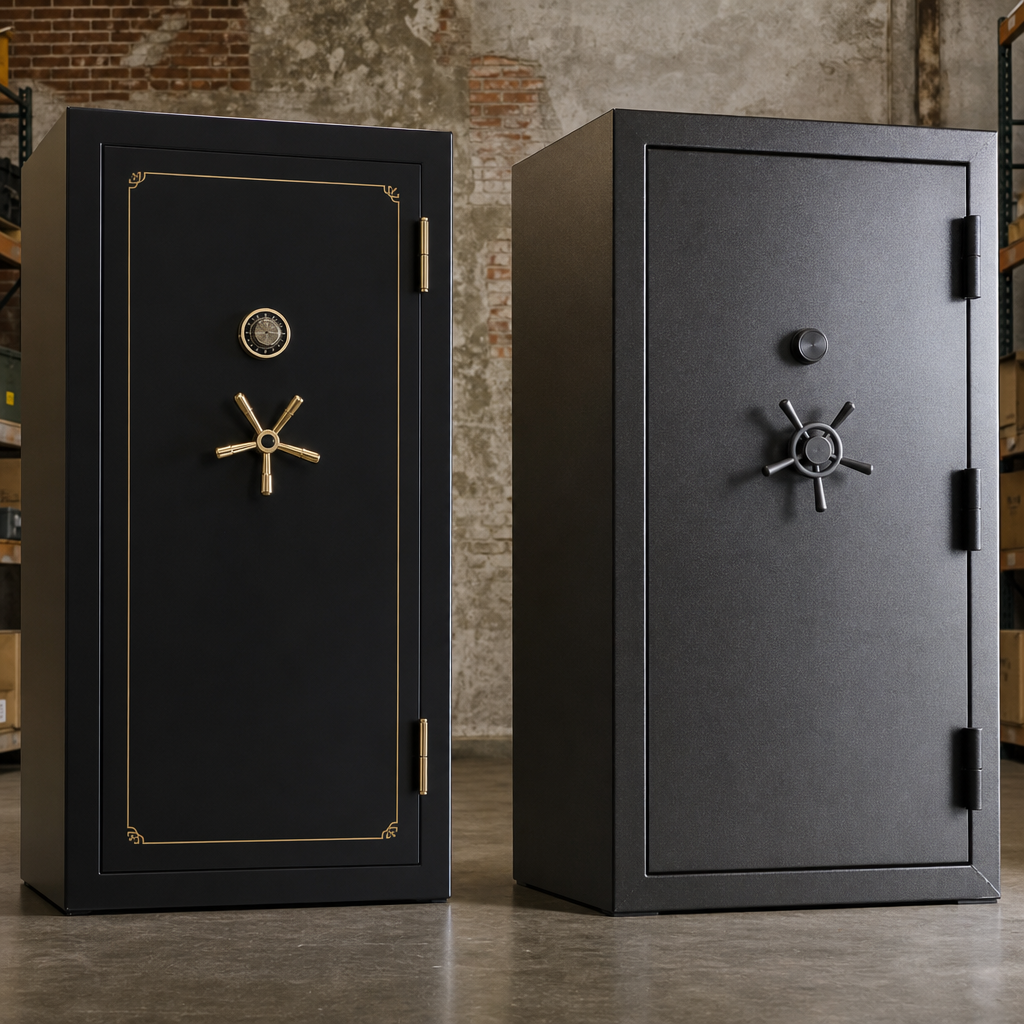
Choosing between Fort Knox and Rhino Metals comes down to one question: which gun safe delivers better build quality where it matters most, from steel thickness and door strength to lock reliability, fit, finish, and long-term durability. In the gun safe market, “build quality” is not a marketing slogan; it is the measurable combination of body construction, weld integrity, door architecture, boltwork design, fire protection methods, hardware grade, and quality control. I have inspected, moved, and evaluated safes from both brands in dealer showrooms and residential installations, and the same lesson keeps repeating: specifications on a brochure only tell part of the story, while the way a safe is assembled and supported after delivery tells the rest.
Fort Knox and Rhino Metals both occupy the premium end of the residential gun safe category, but they take different paths to get there. Fort Knox has built its reputation on heavy American-made construction, broad customization, and a conservative approach to steel and structure. Rhino Metals, through lines such as Rhino, Ironworks, Kodiak, and Longhorn, is known for distinctive styling, practical interior layouts, and feature-rich safes that often feel more accessible for buyers who want premium touches without stepping into true custom-safe pricing. For anyone researching gun safe comparisons and brand spotlights, this matchup matters because it highlights the tradeoffs buyers face across the whole category: thicker steel versus broader features, custom options versus standardized value, and old-school mass versus modern presentation.
The answer is not that one brand wins every category. If your top priority is raw cabinet strength, heavier bodies, and a more configurable build process, Fort Knox usually holds the edge. If you want attractive design, useful interior systems, solid overall construction, and strong value at multiple price tiers, Rhino Metals competes well and in some models offers a better ownership experience for the money. To decide correctly, you need to compare how each brand builds the shell, door, lock area, interior, and fire package, and then match those choices to your actual risk profile, collection size, and installation environment.
What Build Quality Means in a Gun Safe
Build quality in a gun safe starts with steel gauge, but it does not end there. A 10-gauge body with poor welds, a weak door frame, and sloppy boltwork can underperform a better-engineered unit that distributes force more effectively. When I evaluate safes, I look first at body steel thickness, door plate composition, continuous versus segmented welds, frame rigidity, hard plate and relocker placement around the lock, hinge design, anchor hole reinforcement, and whether the interior structure feels stable under load. These are the parts that determine how a safe responds to pry attacks, abusive handling during moves, humidity cycles, and years of repeated opening and closing.
Fire protection also belongs in any honest build-quality discussion, but buyers should read fire claims carefully. There is no single universal fire rating standard that all residential gun safe makers use the same way. Some brands rely on proprietary testing, gypsum board layering, door seals, and advertised time-temperature claims. Others provide more detailed construction disclosure but still stop short of a third-party burglary and fire certification like those seen on commercial safes. In practical terms, better build quality means not only more insulation or longer stated fire times, but better door fit, tighter body seams, and construction that keeps insulation in place after transport and use.
Fit and finish matter more than many shoppers assume. A sagging door, uneven gaps, rough handle travel, or flimsy shelving are signs that tolerances and assembly discipline may be inconsistent. Premium safes should feel precise. The handle should engage smoothly. The locking bolts should extend and retract cleanly. The door should close with controlled weight rather than scraping the frame. Good paint, durable interiors, and organized accessory layouts are not cosmetic extras alone; they reflect the manufacturing culture behind the product.
Fort Knox Build Quality: Heavy Construction and Custom Strength
Fort Knox has long appealed to buyers who want a safe built with an emphasis on steel, mass, and upgrade paths. Across its lines, one of the strongest arguments in Fort Knox’s favor is body thickness. Many of its models can be configured with heavier steel than what is commonly found in mainstream gun safes, and that matters because the body is often the attack point in real residential break-ins once criminals realize the door is slow to defeat. Fort Knox also emphasizes American manufacturing, which for many buyers is not just a patriotic preference but a proxy for tighter control over fabrication, component sourcing, and customization.
In hands-on comparisons, Fort Knox doors generally feel dense and rigid, especially on higher-tier models. Door strength is more than apparent thickness; it is the result of internal reinforcement, edge design, lock protection, and frame engagement. Fort Knox typically performs well here. Their safes often project the kind of overbuilt character that serious owners notice immediately during delivery: substantial weight, controlled hinge movement, and a cabinet that does not feel flexible when being positioned. This is one reason the brand remains popular with buyers storing larger rifle collections, high-value optics, NFA items, or mixed firearms and documents.
Another build-quality advantage is customization. Fort Knox buyers can often specify steel upgrades, lock choices, interiors, and exterior finishes. That matters because a safe should match the threat model. A basement installation in a humid region, for example, may call for different interior planning and dehumidification support than a first-floor closet installation. In my experience, the ability to order a safe closer to your exact needs often produces a better long-term result than buying a feature-loaded model with fixed construction choices. The tradeoff is straightforward: Fort Knox usually costs more, weighs more, and may require more deliberate planning for delivery and placement.
Rhino Metals Build Quality: Practical Engineering and Strong Value
Rhino Metals approaches the market with a broader lineup and a wider spread of price points. The company’s appeal is that buyers can step into premium styling and useful features without always paying custom-safe prices. Lines like Rhino Ironworks are especially recognizable because of their antique-style finishes and decorative hardware, but the core question is whether the underlying construction supports the premium image. On many models, the answer is yes. Rhino Metals generally offers solid cabinet integrity, respectable steel choices, good interior flexibility, and thoughtful details that improve day-to-day use.
Where Rhino often stands out is owner-friendly design. Door organizers, adjustable shelving, lighting options, and layouts that accommodate modern rifles are practical benefits, not gimmicks. A gun safe that is easier to organize is more likely to be used correctly, and a better-organized safe reduces the temptation to lean firearms in unstable ways or overpack optics and accessories into tight spaces. I have seen many buyers underestimate this point until they start filling the safe. Rhino’s interiors often feel designed by people who understand how real collections grow.
In pure build quality, Rhino Metals is strongest when evaluated within price class rather than against the heaviest custom-oriented competition. The best way to read the brand is not “equal to every Fort Knox on steel mass,” but “often excellent for the money with better-than-average construction and presentation.” Some Rhino models are extremely competitive, while entry-level lines are more value driven and should not be confused with the company’s higher-end offerings. That distinction matters. Rhino’s brand umbrella includes products aimed at different budgets, so shoppers need to compare specific series, not just logos on the door.
Head-to-Head Comparison: Steel, Doors, Locks, Fire, and Finish
If the comparison is narrowed strictly to build quality, Fort Knox usually takes the lead on body steel options, door heft, and customization depth. Rhino Metals counters with better value in many configurations, strong fit and finish, and practical layouts that make ownership easier. The buyer question is whether “better build quality” means maximum physical resistance regardless of price, or the best blend of construction, usability, and cost.
| Category | Fort Knox | Rhino Metals | Build Quality Verdict |
|---|---|---|---|
| Body steel options | Typically heavier, with meaningful upgrade paths | Varies by line; solid but often less aggressive at comparable tiers | Fort Knox |
| Door construction | Dense, rigid, strong frame engagement | Good strength, especially in upper lines | Fort Knox |
| Lock protection | Strong lock area engineering and upgrade flexibility | Good modern protection on many models | Slight edge Fort Knox |
| Interior design | Customizable, functional | Often more user-friendly out of the box | Rhino Metals |
| Fit and finish | Premium, especially on upgraded builds | Very strong styling and presentation | Tie by model |
| Value for money | Excellent if maximizing steel is the goal | Often better feature-to-price balance | Rhino Metals |
Locks are a critical but often misunderstood part of build quality. Both brands commonly offer reputable lock options, including electronic and mechanical formats from established safe lock manufacturers. Mechanical dial locks still have a reputation for long service life and simplicity, while quality electronic locks offer faster access. Neither lock type can compensate for weak lock mounting, poor hard plate placement, or inadequate relockers, so the surrounding structure matters more than the keypad or dial alone. Buyers who want minimum electronics often lean Fort Knox, but Rhino also supports serious lock configurations depending on the model.
Fire construction is harder to score definitively because manufacturers present it differently. Fort Knox tends to appeal to buyers who prioritize robust shell construction first and fire protection as part of a broader heavy-duty package. Rhino frequently markets attractive fire numbers and feature sets in a way that resonates with retail shoppers. In real homes, however, fire performance depends on installation location, duration of exposure, surrounding fuel load, and whether the safe is anchored on a concrete slab, tucked into a closet, or exposed in a garage. Build quality helps, but no residential gun safe should be treated as invincible in a catastrophic fire.
Who Should Buy Fort Knox and Who Should Buy Rhino Metals
Buy Fort Knox if your priority is the strongest cabinet and door construction you can reasonably place in a home, especially if you are willing to pay for steel upgrades and want a safe configured to specific requirements. Fort Knox is an excellent fit for collectors with expensive rifles, high-end scopes, suppressors, irreplaceable documents, and jewelry stored together. It is also the better choice for buyers who think in decades, not years, and want a safe that feels closer to a serious security container than a decorative storage piece. If you have ever looked at a safe and immediately asked, “How thick is the body, and what can I upgrade?” you are probably the Fort Knox customer.
Buy Rhino Metals if you want strong overall construction, better design convenience, and a product line that offers compelling choices across multiple budgets. Rhino is often the smarter buy for households that need an attractive safe in a visible room, owners who value organized interiors and quicker setup, and buyers balancing security with aesthetic fit. It is also a strong option for people purchasing their first premium safe and wanting a brand that feels refined without requiring every decision to become a custom-order exercise.
For the broader Gun Safe Comparisons & Brand Spotlights category, this matchup illustrates a useful rule: compare the exact series, steel specification, and lock package, then factor in dealer support and delivery quality. A great safe can be compromised by poor installation, while a slightly lighter safe that is properly anchored, hidden, dehumidified, and correctly organized can outperform expectations.
Final Verdict on Better Build Quality
Fort Knox offers better build quality in the strictest sense. Its advantage comes from heavier construction philosophy, stronger body and door options, and deeper customization that allows buyers to prioritize steel and structural security. When two comparably positioned models are examined through the lens of cabinet strength, lock-area protection, and overall mass, Fort Knox generally wins.
Rhino Metals remains an excellent competitor because build quality is not only about maximum thickness. It is also about consistency, usability, interior efficiency, and getting a safe that fits the buyer’s real life. In many homes, Rhino provides the better balance of price, appearance, and functional design while still delivering credible protection. That makes it a strong recommendation for a large share of buyers, especially those moving up from entry-level safes.
If your goal is the most overbuilt gun safe construction between these two brands, choose Fort Knox. If your goal is premium feel, practical features, and strong value without giving up serious security, choose Rhino Metals. Use this hub as your starting point for deeper gun safe comparisons, then narrow your decision by steel thickness, lock type, fire construction, interior layout, and the quality of the dealer who will deliver and anchor the safe in your home.
Frequently Asked Questions
1. When comparing Fort Knox vs. Rhino Metals, what does “build quality” actually mean in a gun safe?
Build quality in a gun safe is much more than the logo on the door or the advertised fire rating. It is the total package of how the safe is engineered, fabricated, assembled, and finished. That starts with steel thickness in the body and door, but it also includes how the steel is formed, whether seams are continuously welded or spot welded, how robust the door frame is, how the boltwork engages, how the hinges are supported, and how well the lock is integrated into the overall design. A safe can look impressive on a showroom floor and still cut corners in the places most owners never see.
In a Fort Knox vs. Rhino Metals comparison, build quality usually comes down to where each brand puts its manufacturing emphasis. Fort Knox has long been known for customization, heavier steel options, and a reputation for stout construction in its upper-tier models. Rhino Metals, depending on the product line, often focuses on blending attractive fit and finish with solid security features and broad market appeal. That means the answer is rarely as simple as saying one brand is always better. It depends heavily on which specific model lines are being compared and whether you are looking at entry-level, mid-tier, or premium safes.
If you are trying to judge build quality like a professional, look at measurable details: gauge or plate thickness, door edge design, internal frame reinforcement, type of relockers, lock brand, bolt diameter and engagement, fire board layering, and overall consistency in assembly. Also pay attention to tolerances. A well-built safe should have a solid, confident feel when the handle is turned, a door that closes without slop, clean welds, even gaps, and an interior that reflects careful assembly rather than rushed production. True build quality is the difference between a safe that simply checks marketing boxes and one that inspires confidence after years of daily use.
2. Which brand generally offers thicker steel and stronger door construction: Fort Knox or Rhino Metals?
Fort Knox often has the edge in this category, especially when you move into models that allow upgraded body steel and heavier door configurations. The company has built much of its reputation around robust American-made construction and the ability to spec a safe with more substantial steel than what is commonly found in mass-market offerings. On many Fort Knox models, buyers can choose upgraded body thicknesses and reinforced doors that materially change the security profile of the safe. That flexibility matters because body steel and door structure are two of the most important factors in resisting pry attacks and tool-based entry attempts.
Rhino Metals also produces serious safes, but its lineup is more varied, and the steel story depends greatly on whether you are looking at one of its more affordable lines or one of its premium offerings. Some Rhino safes are designed to hit a stronger value point, which can mean respectable but less aggressive steel specs than a comparably configured Fort Knox. On the other hand, higher-end Rhino models can be very competitive and may include strong door construction, good composite design elements, and thoughtful reinforcement. The key is not to assume every safe wearing the same brand badge is built to the same standard.
Door construction deserves separate attention because the door is the most frequently attacked part of any gun safe. A thick outer plate alone is not enough if the door frame flexes or the boltwork is poorly supported. In general, Fort Knox tends to score well with buyers who prioritize sheer mass and rigid door architecture. Rhino often appeals to buyers who want a refined package with strong security features, but model-by-model analysis is essential. If build quality is your primary concern, compare actual published steel specifications, inspect how the door is built from the edge inward, and do not rely on broad phrases like “heavy-duty” or “vault-style” without supporting details.
3. How do Fort Knox and Rhino Metals compare in lock reliability, boltwork design, and day-to-day mechanical quality?
Lock reliability is one of the most overlooked parts of build quality because it is less visible than thick steel or glossy paint, yet it affects your safe every single time you use it. Both Fort Knox and Rhino Metals typically offer respected lock options, including mechanical dial locks and electronic locks from known manufacturers. In most cases, the real issue is not whether one brand has invented a better lock, but how well that lock is installed, protected, and integrated with the safe’s boltwork system. A premium lock on a poorly executed mechanism will still deliver a disappointing ownership experience.
Fort Knox has a strong reputation for substantial boltwork and a mechanically confident feel, particularly on higher-end models. The handle action often feels deliberate and solid, which is usually a sign that tolerances, linkage, and door alignment were given proper attention. Rhino Metals also offers reliable locking systems, and many owners are satisfied with the smoothness and usability of the mechanism. However, mechanical quality can vary by product tier, so it is important to compare apples to apples. A premium Rhino may outperform a lower-tier competitor from another brand, while a premium Fort Knox may feel more overbuilt than many mainstream alternatives.
When evaluating this category, focus on more than the lock type. Ask whether the safe includes relockers, hard plates, protected linkage, and a boltwork design that resists side pressure or punch attacks. Also evaluate long-term usability: Does the handle move smoothly? Does the door sag? Are there signs of rubbing, misalignment, or inconsistent engagement? Better build quality shows up in the details after years of opening and closing, not just on day one. For buyers choosing between Fort Knox and Rhino Metals, the safer conclusion is that both can be dependable, but Fort Knox more often stands out for buyers who want a heavier, more mechanically substantial feel, while Rhino can offer a strong balance of function, finish, and user-friendly operation depending on the model.
4. Which safe brand tends to have better fit, finish, and overall quality control?
Fit, finish, and quality control are where a buyer starts to separate a merely decent safe from a truly well-executed one. Fit refers to how precisely components come together: door gaps, trim alignment, interior panel installation, hinge placement, and lock or handle mounting. Finish refers to coating quality, texture consistency, interior fabric work, shelf fitment, and the overall presentation of the safe inside and out. Quality control is the system behind both of those things. It is the difference between a brand that builds one nice sample for photography and one that consistently ships safes with uniform assembly standards.
Fort Knox has historically enjoyed a strong reputation for craftsmanship, especially among buyers who value custom options and a hand-built feel. Many owners appreciate the sense that the safe was assembled with security first and aesthetics second, though the exterior and interior finishes can still be impressive. Rhino Metals often earns praise for attractive styling, refined interiors, and good showroom appeal. In some cases, Rhino may appear more polished at first glance, especially in lines aimed at buyers who want a safe that looks as premium as it functions. But cosmetic appeal should always be backed by consistent structural execution.
If you are trying to decide which brand has better overall quality control, inspect examples in person whenever possible. Check welds for consistency, look at the door gap around the perimeter, test the handle travel, examine the hinge area, and inspect the interior corners and shelf supports. A well-controlled manufacturing process leaves clues everywhere. Neither brand should be judged solely by one anecdote, positive or negative, but Fort Knox generally has a stronger reputation among buyers who emphasize ruggedness and long-term structural confidence, while Rhino often competes well in finish quality and consumer-facing refinement. The best answer, again, depends on the exact line being compared, because quality control can be excellent in one series and merely average in another.
5. If long-term durability is the main goal, which is the better investment: Fort Knox or Rhino Metals?
If your definition of value is long-term durability under real ownership conditions, Fort Knox often emerges as the stronger investment, particularly for buyers willing to pay for upgraded steel and premium construction. A durable gun safe is not just one that resists burglary attempts; it is one that maintains door alignment, lock reliability, interior integrity, and finish quality after years of use, moving, temperature changes, and heavy loading. Heavier steel, stronger door architecture, and more robust internal reinforcement all tend to pay off over time, especially if the safe is used frequently or installed in less-than-ideal environments.
That said, Rhino Metals can still be an excellent investment for many owners. If you choose one of the company’s better-built lines and the specifications match your security needs, you may get a very appealing combination of durability, usability, and finish quality. For some buyers, Rhino offers a smarter overall package because it balances practical security with aesthetics and price. Not every owner needs the heaviest, most overbuilt safe possible. The right investment is the one that aligns with your risk level, budget, and expectations for how long the safe will remain in service.
The best way to make the call is to strip away branding and compare the actual construction details on the specific models you are considering. Review body steel, door thickness, boltwork layout, lock type, fire insulation method, hinge support, warranty terms, and how the safe feels in person. If two safes are similarly priced and one clearly delivers more steel