
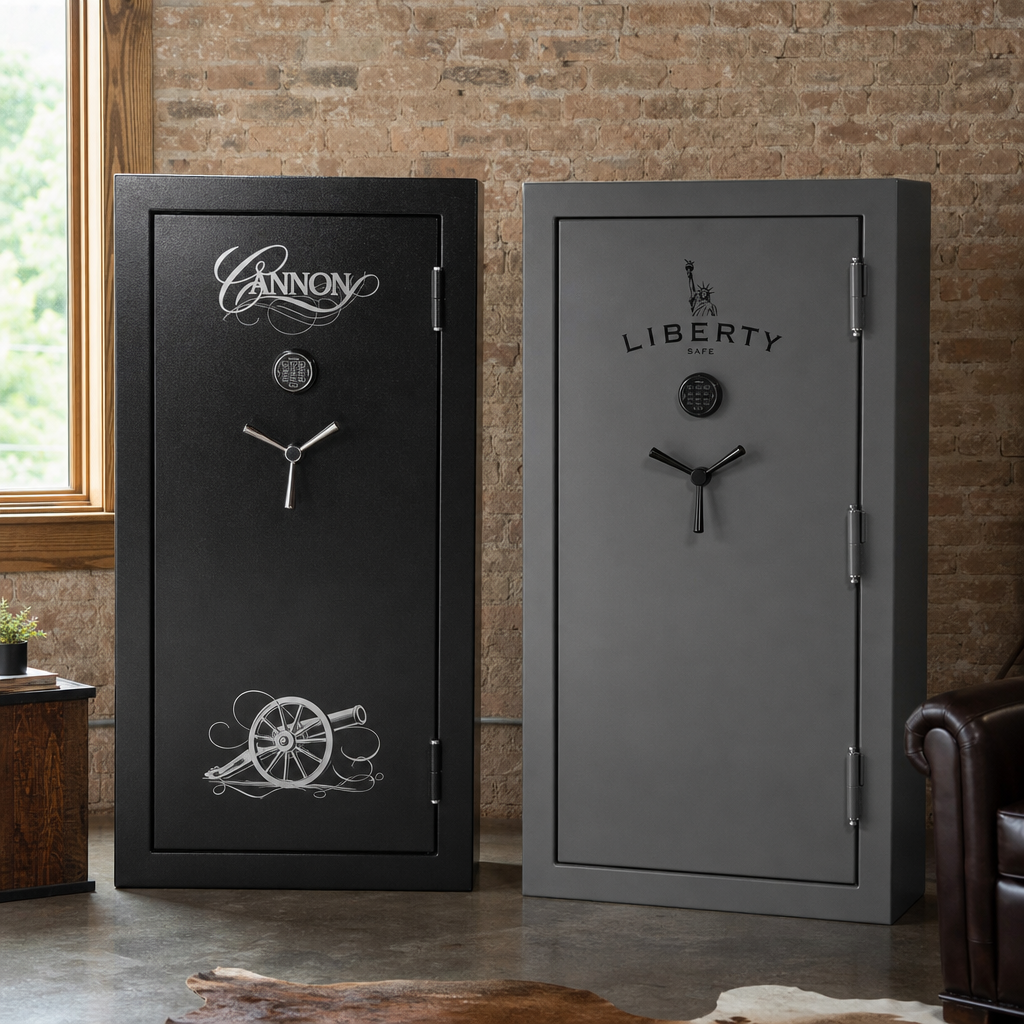
Choosing between Cannon and Liberty often starts with size, fire rating, or price, but the smartest buyers look at warranty coverage first. A gun safe warranty is the manufacturer’s written promise covering defects, lock failures, break-ins, fire damage, replacement parts, and sometimes shipping or labor. In practical terms, the warranty tells you what happens after the sale, when the keypad fails at 10 p.m., when movers damage the door, or when a house fire leaves the safe standing but compromised. I have worked with homeowners comparing safes for first purchases, upgrades, insurance compliance, and long-term firearm storage, and warranty language is where the most expensive misunderstandings usually happen.
This matters because a gun safe is not a disposable product. Buyers expect ten, twenty, or thirty years of service, and many use the same unit through multiple moves, remodels, and firearm collection changes. A generous warranty can reduce ownership cost, protect against lock and finish issues, and give confidence that the company will still answer the phone if something goes wrong. A weak or narrow warranty can leave the owner paying for freight, locksmith service, replacement locks, or even a total loss after a burglary or fire event. For a sub-pillar topic like gun safe comparisons and brand spotlights, warranty terms are the clearest way to compare how manufacturers stand behind their products.
At a high level, Cannon and Liberty both market long-term protection, but they do not always package coverage in exactly the same way across all product lines. The right question is not simply which brand has the longer warranty headline. The better question is which warranty is broader, easier to use, and more consistent from entry-level safes to premium models. Buyers also need to separate three different issues that are often blurred together: the body warranty on the safe, the lock warranty on the mechanical or electronic lock, and event-based replacement promises for fire or attempted break-in. Those distinctions determine whether a claim is simple and inexpensive or frustrating and costly.
As the hub page for gun safe comparisons and brand spotlights, this article compares Cannon vs. Liberty through the lens of warranty structure, customer use cases, lock coverage, fine print, and ownership risk. It also explains how to evaluate other safe brands using the same framework, so readers can move from one comparison article to another with a consistent checklist. If you are asking which gun safe offers the best warranty, the short answer is that Liberty usually has the stronger reputation for clearly defined lifetime-style support, especially on body, fire, and attempted break-in coverage, while Cannon can still be competitive depending on model, retailer, and lock terms. The details, however, decide the winner for your situation.
What a gun safe warranty should cover before you compare brands
The best gun safe warranty covers more than manufacturing defects. It should address five areas directly: defects in materials and workmanship, lock or keypad failure, damage from fire, damage from attempted burglary, and the cost of returning the safe to usable condition. In my experience, buyers often focus only on the phrase “lifetime warranty” and miss the operational terms that matter most. A lifetime promise sounds strong, but if the owner must pay freight, hire a locksmith independently, or transport a 700-pound safe to a service center, the value drops sharply.
A serious warranty comparison starts with definitions. “Defects” usually means problems caused by manufacturing, such as door misalignment, weld failure, paint defects, or internal component issues. “Lock coverage” may be provided by the safe maker, the lock maker, or both, and electronic locks often have different terms than mechanical dial locks. “Fire coverage” can mean repair, replacement, or a new safe after a verified residential fire. “Attempted break-in coverage” typically means the company replaces the safe if a forced entry attempt damages it, even if the thief fails. This specific clause is one of the clearest signs that a manufacturer understands real-world safe ownership.
Another critical point is transferability. Most gun safe warranties apply only to the original purchaser and require proof of purchase. That is standard, but it affects resale value and estate transfers. Installation also matters. Some claims are denied if damage resulted from improper placement, moisture neglect, unauthorized modifications, or commercial use when the safe was sold for residential use. Before choosing Cannon or Liberty, buyers should review the exact warranty statement for the model they want, because dealer listings often shorten or simplify terms in ways that leave out meaningful limitations.
Cannon vs. Liberty warranty comparison at a glance
Liberty has built much of its reputation on a broad lifetime-style warranty that commonly includes defects, free replacement in the event of fire, and free replacement after an attempted break-in. Cannon has also offered substantial warranty protection, often including lifetime components on the safe body and event-based support on selected models, but the consistency can vary more by product family and seller presentation. When I compare the two for buyers who want the strongest safety net, Liberty usually comes out ahead on clarity and confidence, even when the price is slightly higher.
| Warranty factor | Liberty | Cannon |
|---|---|---|
| Defects in materials and workmanship | Commonly covered for life of the safe for original owner | Often covered, but terms may vary by model line |
| Fire damage replacement | Widely promoted on many residential safes | Available on many models, but verify retailer listing against manufacturer terms |
| Attempted break-in replacement | Strong differentiator and frequently highlighted | May be included on some lines; less consistently emphasized |
| Lock coverage | Generally supported, but electronic lock terms still require checking | Can differ by lock type and series; read specifics carefully |
| Ease of understanding | Usually clearer and easier to summarize | More dependent on exact model documentation |
This table captures the practical difference. Liberty tends to present its warranty in a way that buyers can understand quickly: if the safe has a manufacturing issue, if a fire damages it, or if a burglar attacks it, the company stands behind the product. Cannon’s protection is not necessarily weak, but shoppers need to verify line-specific terms with more care. That extra diligence is not fatal, yet it adds uncertainty, especially when buying through warehouse clubs, big-box retailers, or marketplace listings where product descriptions may condense legal language into marketing bullets.
Where Liberty usually wins on warranty strength
Liberty’s main advantage is comprehensiveness. Across many of its residential gun safes, the company has been known for a lifetime warranty against unlawful attempted break-in and fire, plus defects in materials and workmanship. That combination matters because it addresses both manufacturing risk and catastrophic events. Most owners will never need a burglary replacement clause, but if they do, it is one of the most valuable promises in the category. Replacing a damaged safe after a forced entry attempt is expensive, logistically difficult, and emotionally stressful. A manufacturer that takes responsibility for that scenario is offering meaningful support, not just a marketing slogan.
Liberty also tends to earn points for easier warranty storytelling. When I explain brand differences to customers, Liberty is usually simpler to summarize without caveats. Simplicity reduces purchasing friction and lowers the chance of disappointment later. A buyer can understand that the safe is protected for defects and that major events like fire or break-in are covered, subject to standard proof requirements. That clarity is especially important for first-time gun safe buyers who are already evaluating steel thickness, UL-listed lock options, fireboard construction, door organizers, and anchoring methods.
Another advantage is brand stability and documentation culture. Liberty has long been one of the most recognized names in the U.S. gun safe market, and that matters for long-horizon purchases. A warranty is only as useful as the company backing it. Well-known manufacturers with established dealer networks, customer service systems, and replacement part availability are generally safer bets than brands with inconsistent support channels. Warranty value is not purely legal; it is operational. The best-written promise is useless if the company is hard to reach or slow to authorize service.
Where Cannon can still compete and when it may be enough
Cannon remains a relevant option because many buyers find attractive price-to-feature combinations in its lineup. In entry-level and mid-range segments, Cannon safes often show up in retailers where shoppers can compare dimensions, interiors, and promotional pricing easily. For buyers who prioritize immediate availability and lower upfront cost, Cannon can deliver strong value. If the model includes lifetime defect coverage and event-based replacement terms comparable to Liberty’s, the decision may come down to size, layout, and local delivery support rather than warranty alone.
Cannon may also be sufficient for owners with lower-risk storage needs. For example, someone storing a few long guns in a climate-controlled room, with monitored home security, low wildfire risk, and no expectation of frequent relocation may reasonably accept narrower lock terms or less prominent break-in language in exchange for better pricing. Not every buyer needs the broadest possible warranty. What matters is matching coverage to likely risks. A second-floor closet installation in a low-risk suburban setting presents different concerns than a garage placement in a wildfire-prone area.
That said, Cannon buyers should be disciplined about verification. Read the manufacturer warranty PDF, not just the retailer bullet list. Confirm whether labor, parts, locksmith service, freight, and replacement are included. Ask whether cosmetic damage is excluded, whether electronic lock failure is fully covered, and whether the warranty applies after a residential fire even if the contents are not insured. These questions are not academic. They determine out-of-pocket cost at the moment when the owner most needs straightforward support.
Lock warranties, exclusions, and the fine print that decide the real winner
Lock coverage is where many gun safe comparisons become more nuanced. Mechanical dial locks generally have fewer failure points and often inspire more long-term confidence, while electronic locks offer speed and convenience but rely on keypads, batteries, and internal circuitry. In service calls I have seen, owners frequently assume a failed electronic keypad falls under the same lifetime terms as the safe body. Sometimes it does, sometimes it does not, and sometimes the manufacturer covers the lock while excluding labor or emergency opening. That distinction can turn a “covered” failure into a several-hundred-dollar service event.
Exclusions matter just as much. Common exclusions include damage from unauthorized modifications, negligent use, humidity-related neglect, commercial application, improper installation, and cosmetic issues that do not affect function. Some warranties require inspection, photographs, police or fire reports, and original sales documentation. Those requirements are reasonable, but they need to be understood before purchase. A buyer who keeps records, registers the safe if requested, and installs it correctly is far more likely to have a smooth claim experience.
The most practical way to judge Cannon vs. Liberty is to ask three direct questions. First, if the lock fails, who pays to open and repair the safe? Second, if the house burns and the safe is structurally compromised, is the owner getting repair, replacement, or a credit? Third, if burglars attack the safe and ruin the door or boltwork, does the company replace it outright? The brand that answers those questions more completely, in writing, has the better warranty. In most cases, that brand is Liberty, though buyers should still verify the current policy for the exact model and production year.
How this comparison fits the broader gun safe comparisons and brand spotlights hub
Cannon vs. Liberty is one of the most useful matchups because it teaches the framework readers should apply to every brand comparison in the gun safe category. Whether the next article compares Liberty vs. Winchester, Cannon vs. Browning, Rhino vs. Fort Knox, or Sports Afield vs. Stack-On, the process is the same. Start with verified warranty language, then compare steel construction, lock type, fire certification claims, interior flexibility, dealer support, and delivery realities. Brand spotlights are valuable only when they move beyond catalog features and test how a company performs after the sale.
This hub exists to help readers build that decision system. Warranty is the anchor because it reflects design confidence, service infrastructure, and long-term ownership cost. A safe brand that offers replacement after attempted break-in is signaling confidence in both construction and customer care. A brand that writes vague terms or leaves major service costs undefined is shifting risk back to the buyer. Once you learn to spot that difference, every other comparison becomes easier and more objective.
For most shoppers asking which gun safe offers the best warranty, Liberty is the stronger recommendation because its coverage is usually broader, clearer, and easier to rely on in real ownership scenarios. Cannon can still be the right choice when pricing, local availability, or a specific model fit your needs, but it requires more careful document review. The takeaway for this entire subtopic is simple: never compare gun safes by features alone. Compare the promise behind them. Read the warranty, match it to your risks, and then choose the safe that protects both your firearms and your investment. If you are building your shortlist now, use this hub as your starting point and review each brand comparison with the same warranty-first checklist.
Frequently Asked Questions
What should buyers compare first when looking at Cannon vs. Liberty gun safe warranties?
The first thing to compare is not the headline phrase like “lifetime warranty,” but the actual scope of coverage. A strong gun safe warranty should clearly explain what is covered if the safe has a manufacturing defect, if the lock or keypad fails, if there is attempted forced entry, or if the safe is damaged by fire. Buyers should also look for whether the company covers parts only or parts and labor, whether freight or shipping is included, and whether the warranty applies to the original owner only. In a real-world situation, these details matter more than marketing language because they determine whether you are paying out of pocket when something goes wrong.
When comparing Cannon and Liberty, it is smart to read the fine print around lock coverage, post-fire replacement, and break-in assistance. Some warranties are generous with cabinet replacement after a qualifying fire or attempted burglary but more limited when it comes to electronic lock failure, technician service, or cosmetic issues caused during moving. That distinction is important because many service calls happen long before a fire or break-in ever occurs. A buyer who wants the most practical protection should prioritize a warranty that addresses the most common ownership problems first: lock malfunction, defective components, damaged interior parts, and service responsiveness.
Does a lifetime warranty always mean Cannon or Liberty provides better long-term protection?
No. “Lifetime warranty” sounds reassuring, but it does not automatically mean one safe offers better protection than the other. In the gun safe industry, a lifetime warranty usually applies to the body and structure of the safe under specific circumstances, such as defects in materials or workmanship, and in some cases fire damage or attempted break-in. However, the term may not extend equally to all components. Electronic locks, paint finishes, interior lights, dehumidifiers, and accessories may have shorter coverage periods or separate warranty terms altogether.
That is why the best way to evaluate Cannon vs. Liberty is to ask what the lifetime promise actually includes. For example, if one company offers lifetime fire and attempted break-in replacement but has more limited terms for lock systems or service calls, while the other provides clearer lock support or easier claims processing, the second company may deliver a better ownership experience even if both advertise lifetime protection. Long-term protection depends on the details: how easy it is to make a claim, how quickly the company authorizes repairs, whether locksmith expenses are reimbursed, and whether the replacement process is straightforward after a major loss. A strong warranty is not just long in duration; it is useful when you need it.
How do fire damage and attempted break-in warranty terms usually differ between Cannon and Liberty safes?
Fire damage and attempted break-in coverage are often among the most important parts of a gun safe warranty because those are the events owners hope never happen but most want protection against. In many cases, both Cannon and Liberty offer meaningful coverage in these areas, but the differences can come down to claim requirements and replacement logistics. Buyers should confirm whether the manufacturer will repair the safe, replace it with a comparable model, or issue only partial compensation. It is also important to verify whether documentation such as a fire report, police report, proof of purchase, or photographs is required before the claim is approved.
Another key difference is what happens after the event. A warranty may promise replacement of the safe itself, but not necessarily cover the cost of removing the damaged unit, shipping the new one, or reinstalling it in the home. That can become expensive, especially with larger models. Some manufacturers are stronger in replacement language, while others may be more limited or more dependent on dealer involvement. For buyers comparing Cannon vs. Liberty strictly on warranty value, the better choice is usually the brand that not only acknowledges fire and attempted burglary coverage, but also makes the recovery process practical and affordable after the claim is approved.
Are lock failures, keypad problems, and service calls covered equally under both brands?
Not always, and this is one of the most overlooked areas in the Cannon vs. Liberty warranty comparison. Lock and keypad issues are among the most common frustrations gun safe owners face because electronic components can fail unexpectedly, batteries can be misdiagnosed as system issues, and mechanical parts can wear over time. Some warranties cover the lock body or keypad for a defined period, while others may cover replacement parts but not the labor required to install them. In some cases, the owner may need to work through an authorized dealer or approved locksmith rather than call any local technician they choose.
This matters because a lock failure is usually urgent. If the safe will not open late at night or during a time-sensitive need, the practical value of the warranty depends on response time and ease of service authorization. Buyers should ask whether the company will pay for a locksmith, reimburse emergency service, ship replacement lock parts quickly, or require troubleshooting steps before approving help. A warranty that looks impressive on paper can feel weak if it leaves the owner arranging and funding the repair upfront. For many people, the brand with the clearer, faster, and more owner-friendly lock service policy offers the better warranty, even if the structural warranty language appears similar between the two.
Which brand offers the best warranty overall: Cannon or Liberty?
The most accurate answer is that the best warranty depends on what kind of protection matters most to you. If your priority is broad coverage for major loss events like fire damage or attempted break-in, both brands may appear competitive, and the difference may come down to claim handling, shipping responsibility, and replacement terms. If your priority is everyday ownership peace of mind, then lock coverage, service responsiveness, and how the manufacturer handles defective components may be more important than headline lifetime language. In that sense, the “best” warranty is the one that is easiest to use, not just the one with the biggest promise.
For a buyer trying to make the smartest decision, the best approach is to compare the written warranty side by side before purchasing. Look at coverage for defects, lock failure, fire, forced entry, parts, labor, freight, and who is eligible to file a claim. Also consider the brand’s reputation for customer service, because warranty value is strongly tied to how the company treats owners after the sale. If Cannon offers stronger terms in the specific model you want, it may be the better buy. If Liberty provides clearer support, better replacement handling, or smoother service access, then Liberty may win on warranty strength. The bottom line is simple: do not judge by the word “lifetime” alone; judge by how completely the warranty protects you when something actually goes wrong.