
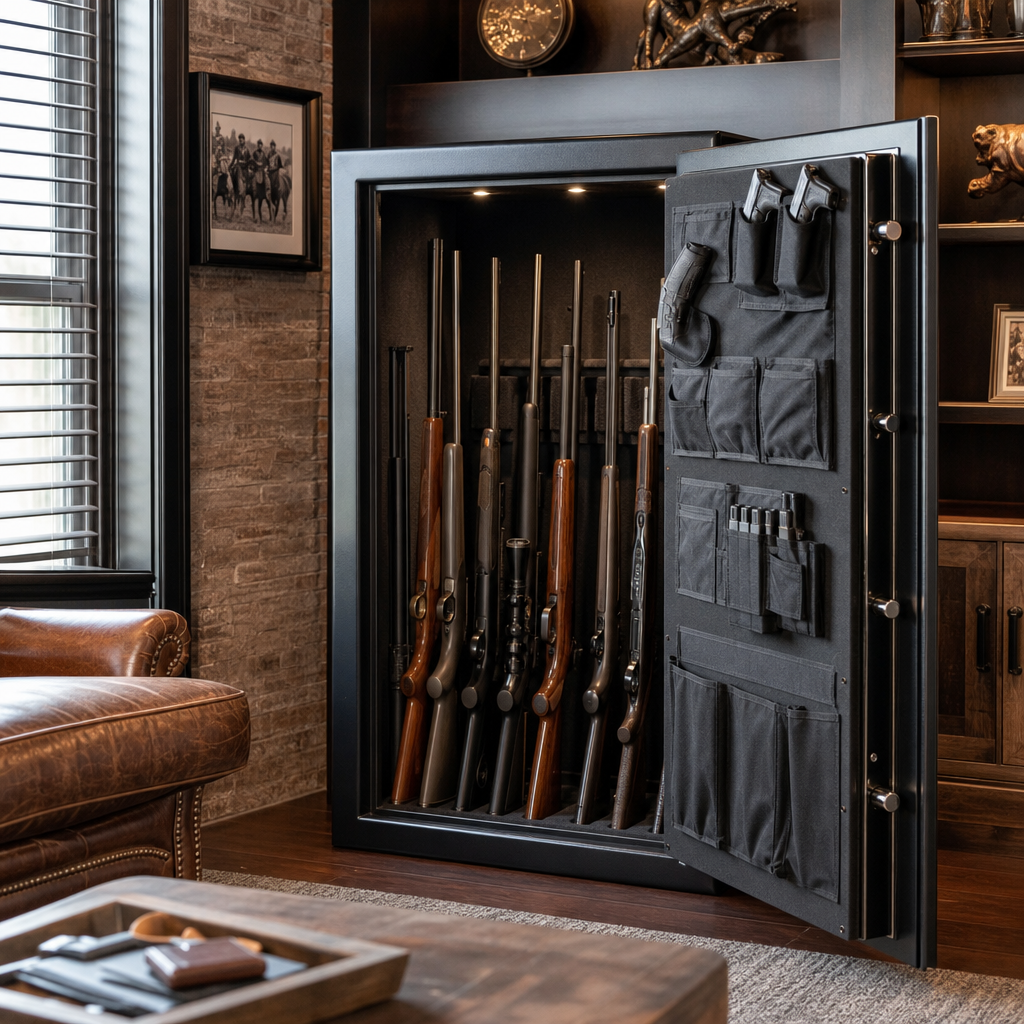
Choosing a gun safe for firearm owners who own high-value guns starts with understanding that premium firearms demand more than basic storage. A high-value gun may be expensive because of craftsmanship, rarity, historical provenance, custom engraving, match-grade performance, or sentimental importance passed through a family collection. In practical terms, these owners are not simply buying a metal box; they are managing theft risk, fire exposure, humidity, unauthorized access, insurance requirements, and long-term preservation. Over the years, I have seen buyers focus on glossy finishes, oversized logos, or headline fire ratings while missing more important details such as steel thickness, lock reliability, anchoring method, and usable interior dimensions.
This article serves as a hub for gun safe buyer personas within the gun safes and safety category, with a specific focus on owners of high-value firearms. A buyer persona is a practical profile that groups owners by priorities, habits, constraints, and decision triggers. One collector may care most about protection for a six-figure estate collection, while another wants fast access to two custom 1911 pistols and a premium over-under shotgun. By understanding these personas, you can match the safe type, lock style, fire strategy, humidity controls, and installation plan to the actual risk. That matters because the wrong safe often fails long before a criminal attack or a house fire; it fails the moment daily use becomes inconvenient, space runs out, or the owner discovers the interior damages wood stocks, optics, or fine finishes.
For high-value firearm owners, the stakes are higher than for the average household. Insurance carriers may require appraisals, scheduled riders, documented serial numbers, and evidence of secure storage. Some collections include antique Winchesters, Holland & Holland shotguns, Korth revolvers, Nighthawk Custom pistols, transferable machine guns, or precision rifles topped with optics worth several thousand dollars alone. A safe selected for these assets must be evaluated as part of a broader protection system that includes room placement, alarm integration, dehumidification, inventory control, and realistic capacity planning. The sections below explain the main buyer personas, what each one needs, and how to choose a safe that protects valuable firearms without compromising access, preservation, or peace of mind.
The serious collector persona: preservation, documentation, and layered security
The serious collector usually owns multiple firearms with uncommon value drivers: provenance, limited production runs, historical relevance, or bespoke finishing. This buyer often keeps a documented inventory with serial numbers, photographs, appraisals, and purchase records. In my experience, collectors benefit most from a gun safe that behaves like a secure vault cabinet rather than a general sporting-goods container. That means thicker steel body construction, a more robust door plate, quality boltwork, a relocker, hard plate protection over the lock, and a reputable lock from manufacturers such as S&G or La Gard.
Collectors should prioritize interior protection as much as burglary resistance. Soft fabrics can trap dust, adhesives can off-gas, and crowded racks can cause stock dings or scope contact. For that reason, modular interiors from brands such as Liberty, Browning, Fort Knox, American Security, and Rhino can be more useful than fixed-slot layouts. A collector with engraved side-by-sides or high-polish blued revolvers should also plan for controlled humidity. A goldenrod-style heater, desiccant rotation, and a hygrometer are not accessories; they are core preservation tools. Ideal relative humidity is generally around 45 to 50 percent for mixed metal and wood storage, though local climate can change the target.
Collectors also gain value from placing the safe in a climate-moderated interior room instead of a damp garage. Fire ratings deserve scrutiny. Many advertised ratings are based on proprietary tests rather than UL fire endurance standards. Drywall-based fire lining helps, but in a severe structure fire, location matters greatly. A safe on a concrete slab in a garage may resist some heat patterns better, yet that same garage can expose guns to humidity swings and easier visibility during burglary. The right answer depends on the house layout, but for collectible guns, I usually recommend a concealed interior location, anchored to concrete or reinforced flooring, supported by a monitored alarm and meticulous inventory records.
The defensive owner persona: premium firearms that must remain accessible
Some owners have high-value guns because they rely on premium defensive tools: Wilson Combat pistols, Staccato handguns, custom AR platforms, or short-barreled rifles with suppressors and optics. Their main challenge is balancing security with access speed. A giant traditional safe may protect the collection, but it can slow retrieval if the primary firearm is buried behind long guns and gear. In these cases, the best strategy is often a two-safe system: a main burglary-rated safe for the larger collection and a dedicated quick-access safe for one or two ready firearms.
For this persona, biometric locks can be useful but should never be purchased on marketing claims alone. I have tested models that opened reliably for months and others that failed after dirty fingers, low batteries, or slight alignment issues. Fast access matters, but reliability matters more. A simplex mechanical pushbutton lock remains one of the strongest choices for a bedside or closet quick-access unit because it avoids battery dependence and can be opened by touch in darkness. RFID-enabled designs can also work well if the owner trains consistently and maintains backups.
Defensive owners should think through real household patterns. If children visit often, if contractors enter the home, or if cleaning staff have access, unattended firearms on hidden shelves are not an acceptable compromise. A premium defensive setup often includes a compact handgun safe secured to furniture or structure, plus a larger RSC or higher-grade safe for carbines, ammunition, NFA paperwork, and spare optics. The central buying lesson for this persona is straightforward: your best gun safe is the one that protects unauthorized access without making your emergency plan unrealistic.
The investor and heirloom owner persona: protecting financial and family value
The investor or heirloom owner may not shoot often, but the firearms under their care can represent substantial value. These guns might be inherited Colts, pre-64 Winchesters, presentation-grade shotguns, factory unfired commemoratives, or transferable NFA items with values shaped by scarcity and regulation. For this persona, the gun safe decision sits close to estate planning and insurance management. The owner needs preservation, documentation, and continuity so that value survives transfer, not just theft prevention.
A common mistake here is undersizing. Heirloom owners often assume a dozen guns require a “12-gun safe,” but manufacturer capacity claims are usually optimistic and based on bare rifles without optics, slings, or bolt handles. In practice, a safe advertised for 24 guns may fit 12 to 16 comfortably when long guns have scopes and thick stocks. Buying larger protects spacing and future acquisitions. It also creates room for archival sleeves, paperwork folders, hard drives containing photos, and appraisal documents stored in a separate fire pouch inside the safe.
| Buyer persona | Primary concern | Best safe features | Common mistake |
|---|---|---|---|
| Serious collector | Preservation and theft resistance | Thicker steel, modular interior, humidity control, documented inventory | Trusting marketing fire claims without checking construction |
| Defensive owner | Fast authorized access | Two-safe setup, reliable quick-access lock, anchored main safe | Choosing speed over lock reliability |
| Investor or heirloom owner | Long-term value retention | Oversized interior, appraisal records, stable environment, insurance coordination | Buying to current count instead of future storage needs |
| Competitive shooter | Organization and gear management | Adjustable shelving, power access, door storage, desiccant and lighting | Cramming optics and accessories into fixed racks |
Insurance coordination is especially important for this buyer persona. Standard homeowners coverage may impose low sublimits for firearms, sometimes far below the actual value of a collection. Scheduled personal property coverage can fill the gap, but insurers may ask about safe type, alarm systems, and installation. Keep appraisals updated and review whether market appreciation has outpaced coverage. For owners of heirloom guns, the safe should support orderly transfer: clearly labeled records, duplicate keys where relevant, lock combination management, and instructions for trusted heirs or executors.
The competitive shooter and premium gear owner persona: organization under frequent use
Competitive shooters and dedicated enthusiasts often own valuable guns because performance equipment is expensive. A practical collection might include a custom bolt rifle, a tuned 2011 pistol, multiple AR uppers, thermal optics, suppressors, tripods, chronographs, and match ammunition. Unlike the investor, this owner opens the safe constantly. That usage pattern changes what matters. Durability of hinges, interior flexibility, LED lighting, electrical pass-throughs, and shelving for accessories become central buying factors.
Frequent-use owners are the first to notice when manufacturer gun counts are fiction. Scoped rifles clash, muzzle brakes snag fabric, and accessories end up piled on the floor. This is where configurable interiors earn their price. Rifle rods, half shelves, pull-out bins, and door organizers help separate firearms from optics, magazines, and suppressors. A power outlet kit inside the safe can support dehumidifiers, rechargeable task lights, and in some cases optic battery management. If you store expensive glass from Nightforce, Schmidt & Bender, Leupold, or Trijicon, keeping it from impact and condensation is just as important as protecting the serialized firearm underneath.
This persona should also think about placement relative to loading benches and cleaning areas. I usually discourage storing solvents inside the main safe because chemical vapors can affect finishes over time. Instead, keep the safe near the work area but separate from oils, cleaners, and bulk ammunition. For match shooters who travel, concealment matters too. Social media photos, visible safe deliveries, and stickers on vehicles can unintentionally advertise inventory. The best safe purchase for a premium gear owner is one that supports disciplined routines: unload, clean, document, dry, and store without forcing shortcuts.
How to match safe specifications to high-value firearms
Once you identify your buyer persona, evaluate the specifications that actually determine performance. Start with steel thickness. Lower-cost residential security containers often use thinner bodies and rely on door cosmetics to imply strength. For valuable collections, compare body gauge, door construction, continuous weld quality, and bolt coverage. Heavier safes generally resist attack better, but design matters as much as raw weight. A well-engineered safe with strong lock protection and proper anchoring can outperform a larger but poorly built competitor.
Next, assess the lock. Mechanical dial locks remain proven and durable, though slower for some users. Electronic keypad locks offer speed and easy code changes, but quality varies sharply. Stick with established lock brands and verify service support in your area. For fire resistance, read beyond the headline number. Ask what temperature was used, how long the test lasted, whether the rating is independently verified, and what interior temperature threshold was measured. Paper chars around 451 degrees Fahrenheit, but wood stocks, adhesives, lubricants, and optics can be affected under different conditions.
Installation is nonnegotiable. An unanchored safe can be tipped, pried, or removed entirely. Use manufacturer-approved anchoring points into concrete whenever possible, or reinforce framed floors appropriately. Corner placement can reduce pry access. Closet installations can improve concealment, but measure door swing, stair access, and floor load before delivery. Finally, plan for growth. If you own six premium firearms today, buy for twelve to eighteen. High-value owners rarely regret extra capacity, but they often regret replacing an undersized safe after the collection expands.
Making the hub decision: choose for your real risks, not for marketing
The right gun safe for high-value firearms depends on the owner behind the purchase. Serious collectors need preservation and records. Defensive owners need reliable access without sacrificing control. Investors and heirloom custodians need long-term value protection tied to insurance and estate planning. Competitive shooters need flexible organization that supports constant use. Those buyer personas are the foundation for every detailed article in this subtopic because they explain why two owners with equally expensive guns may need completely different safe setups.
If there is one principle worth remembering, it is this: buy according to your real risks. A polished finish, a dramatic fire sticker, or a large advertised gun count tells you very little about how a safe will perform in your home. Look instead at steel, lock quality, anchoring, humidity control, interior fit, and how the safe integrates with alarms, documentation, and daily routines. High-value firearms deserve a storage plan, not just a purchase.
Use this buyer-persona hub as your starting point when comparing safe sizes, lock types, fire ratings, and installation methods. Define what kind of owner you are, list the exact firearms and accessories you must protect, and choose the safe that matches those needs honestly. That step will save money, reduce risk, and protect the firearms that matter most.
Frequently Asked Questions
What should firearm owners prioritize when choosing a gun safe for high-value guns?
When you own high-value firearms, the first priority is understanding that the safe is part of a broader risk-management strategy, not just a storage purchase. Expensive guns often carry value beyond retail price. They may be collectible, historically significant, custom-built, competition-tuned, or personally irreplaceable. Because of that, the right gun safe should address several threats at once: forced entry, fire, humidity, unauthorized access, and documentation needs for insurance and estate planning.
Start with burglary protection. Pay close attention to steel thickness, door construction, locking bolts, pry resistance, hard plates, relockers, and the overall reputation of the manufacturer. A safe with a thin body and flashy interior may look impressive but still offer weak resistance to attack. For premium firearms, heavier construction and better-engineered locking systems matter more than cosmetic extras. Owners should also consider where the safe will be installed, whether it can be anchored securely, and how visible it may be to visitors, service personnel, or contractors.
Fire protection is the next major factor, but it should be evaluated carefully. Fire ratings vary widely, and not all advertised ratings are equally meaningful. A high-value gun owner should look for realistic fire resistance suited to the risks in the home, while remembering that heat, smoke, and water from fire suppression can all damage firearms. Interior humidity control is equally important, especially for blued finishes, engraved metalwork, wood stocks, optics, and collectible pieces with delicate materials. A good safe should have room for dehumidification tools and enough interior spacing to avoid crowding firearms together.
Finally, consider access control and long-term organization. A collector or serious owner may need separate storage areas for documents, valuables, optics, suppressors, ammunition, or provenance records. The best safe for high-value guns is one that balances security, preservation, accessibility, and inventory management. In other words, choose a safe that protects the firearms you own today while also supporting the way your collection may grow over time.
How important are fire ratings and humidity control for protecting premium firearms?
They are extremely important, especially for owners of high-end, collectible, or heirloom firearms. Theft often gets the most attention, but fire and moisture can be just as financially and emotionally devastating. Premium firearms can suffer permanent damage from high heat, corrosive humidity, smoke residue, and sudden exposure to water during fire suppression. Fine wood stocks may warp or crack, metal surfaces may oxidize, engravings can lose crisp appearance, and optics or accessory electronics may fail after heat or moisture exposure.
Fire ratings deserve close scrutiny because not all ratings are presented the same way. Some safes advertise impressive numbers without explaining the test conditions, duration, or internal temperature limits. For firearm owners with high-value guns, it helps to think less in terms of marketing claims and more in terms of practical protection. A better-insulated safe with a credible construction standard can buy critical time during a residential fire, but no safe makes the contents invulnerable under every fire scenario. The goal is to improve survivability, reduce damage, and give emergency response more time to make a difference.
Humidity control is often the overlooked half of preservation. Even in climates that seem dry, safes can trap moisture, especially in basements, garages, or homes with seasonal temperature swings. For collectors, this is a serious issue because rust and finish degradation can begin quietly and spread over time. That is why many owners of valuable firearms use electric dehumidifiers, desiccant systems, or both. The safe should support these tools and allow enough interior airflow so firearms are not pressed tightly together.
Good preservation also means regular inspection. A quality gun safe helps create a controlled environment, but owners should still inspect their collection, maintain protective coatings where appropriate, and keep documentation of each firearm’s condition. For high-value guns, proper fire resistance and humidity management are not optional extras. They are core features that protect both financial value and historical or personal significance.
Are larger, heavier gun safes always better for owners of expensive firearms?
Not always, but in many cases, size and weight do improve security and flexibility. A heavier safe is generally more difficult for thieves to move, tip, or remove from the home, especially when it is properly anchored. More mass often also means thicker steel, stronger doors, and better resistance to common attack methods. For owners of high-value guns, that can be a meaningful advantage. However, bigger is not automatically better if the safe has poor build quality, weak locking components, or is installed in an unsuitable location.
What matters is the combination of construction quality, fit for the collection, and installation conditions. A well-built mid-sized safe anchored correctly in a discreet, climate-controlled location may protect expensive firearms better than an oversized, lightly built safe sitting unanchored in a garage. The safe should allow enough room for the collection without forcing guns to touch, lean awkwardly, or compete for shelf space with accessories and documents. Overcrowding can damage finishes and makes proper inventory control harder.
Owners should also think ahead. Manufacturer capacity estimates are often optimistic, especially if the collection includes scoped rifles, wide fore-ends, custom stocks, or display-grade long guns that deserve more spacing. Buying slightly larger than your current needs is usually wise. It provides room for future acquisitions, interior organization upgrades, and safer separation of valuable firearms from other stored items.
That said, size creates practical considerations. Floor strength, delivery logistics, stair access, and concealment all matter. A massive safe placed in a location that draws attention or creates installation issues may not be the best solution. For expensive firearms, the best approach is to choose the highest quality safe you can reasonably install, secure, and maintain, with enough interior capacity to protect the collection properly rather than merely contain it.
What locking system is best for a gun safe holding rare or high-value guns?
The best locking system is the one that combines strong security, dependable performance, and practical access for the owner’s real-world needs. In most cases, firearm owners choosing a safe for rare or high-value guns will compare mechanical dial locks and electronic keypad locks. Both can be good choices when sourced from reputable manufacturers and paired with a well-built safe. The decision often comes down to reliability preferences, speed of access, and how the safe will be used day to day.
Mechanical dial locks are often valued for long-term durability and simplicity. They do not rely on batteries or electronics, and many owners appreciate their proven track record. For collectors or owners who open the safe less frequently, a mechanical lock can be an excellent choice. Electronic locks, on the other hand, provide faster access and greater convenience. That can matter if the safe is used regularly or if multiple authorized users need controlled access. High-quality electronic locks can be very reliable, but buyers should avoid low-grade components and should understand battery maintenance requirements.
For premium firearms, the lock itself is only part of the equation. The safe should also include hard plate protection, relockers, robust bolt work, and door construction designed to resist drilling, punching, and prying. A sophisticated lock on a weak safe body does not create true security. Likewise, owners should think about who needs access and under what circumstances. If unauthorized family access is a concern, lock management and code discipline become just as important as the hardware.
Many high-value gun owners also benefit from layered security beyond the lock. That can include alarm integration, surveillance, a concealed installation area, and limited disclosure about the collection. In practice, the “best” locking system is one piece of a larger security plan. Choose a reputable lock type you trust, but make sure the entire safe is engineered to protect valuable firearms against both opportunistic theft and determined attack.
How does a gun safe affect insurance, documentation, and long-term value protection for a firearm collection?
A quality gun safe can play an important role in insurance eligibility, claim support, and preservation of long-term value. Insurers that cover firearms, collectibles, or scheduled personal property often want to know how the collection is stored. Secure storage may help satisfy underwriting expectations, support lower risk assessments, or strengthen your position if a loss occurs. While a safe does not replace insurance, it demonstrates that you took reasonable steps to protect the collection from theft, unauthorized access, and environmental damage.
Documentation is just as important as the safe itself. Owners of high-value guns should maintain a detailed inventory that includes serial numbers, photographs, purchase records, appraisals, provenance documents, customization records, and any historical materials tied to the firearm. A well-organized safe can help store both the firearms and the supporting paperwork, but many owners also keep digital backups and off-site copies of their records. If a claim ever needs to be filed, complete documentation can make the difference between a smooth process and a difficult dispute over value or ownership.
From a preservation standpoint, a good safe helps maintain condition, and condition is central to long-term value. Collectible firearms can lose substantial worth from rust, stock damage, poor storage marks, or preventable environmental exposure. Proper spacing, humidity control, and secure handling all support value retention. For heirloom firearms or historically significant pieces, preserving originality is often just as important as protecting replacement cost.
In the long run,