
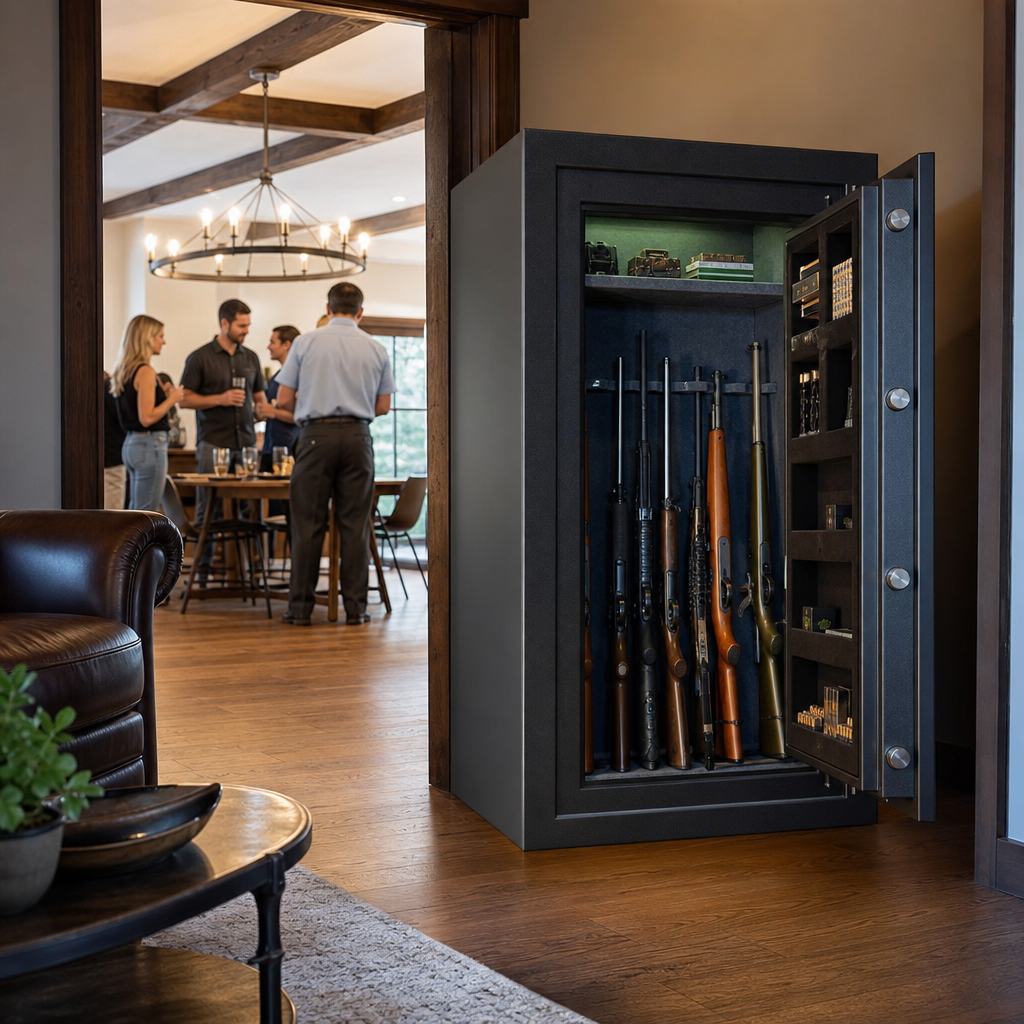
Choosing the best gun safes for people who frequently host guests starts with a simple reality: every extra visitor increases the chance of unauthorized access, accidental discovery, or a security lapse. In homes where friends, relatives, contractors, babysitters, housekeepers, or overnight guests come and go, firearm storage has to do more than resist burglary. It must also control curiosity, limit opportunistic handling, and keep access restricted even when routines change. That is why buyer personas matter. A buyer persona is a practical profile built around habits, household patterns, risk tolerance, property layout, and response needs. Instead of asking only, “What safe is strongest?” the better question is, “What safe fits the way this home actually works when guests are present?”
I have helped evaluate safes for families who host holiday gatherings, rural homeowners with weekend visitors, urban professionals who use guest rooms for short stays, and parents managing a constant stream of playdates. The same lesson appears every time: the right gun safe is not universal. A safe that works for a collector in a locked basement may be wrong for a family with teens, frequent service workers, and a primary defensive handgun. This article serves as a hub for gun safe buyer personas within the broader gun safes and safety topic. It explains the main host-focused personas, the safe features that matter most, and the tradeoffs between access speed, concealment, fire protection, capacity, and placement. If you host guests often, the best gun safe is the one that preserves fast authorized access while making unauthorized access meaningfully harder.
What Makes a Gun Safe Right for a Home With Frequent Guests
For households with regular visitors, a gun safe should meet five requirements. First, it must provide reliable access control. Biometric readers, mechanical simplex locks, and quality electronic keypads all have a place, but cheap electronics and novelty locks fail too often. Second, it needs enough structural security for its role. A thin lockbox may secure a bedside handgun from a child or guest, but it is not a substitute for a full-size long-gun safe with reinforced steel, hard plate protection, and internal hinge-side locking support. Third, placement matters as much as construction. Safes visible in a spare room, office, or garage attract attention. Fourth, the safe must fit the owner’s retrieval needs. Defensive firearms need one kind of access; hunting rifles, collectibles, and backup guns need another. Fifth, anchoring is nonnegotiable. An unbolted safe, especially under 750 pounds, can often be tipped, pried, or removed.
Standards and product details help cut through marketing. For handgun vaults, I look for proven designs from brands such as Fort Knox, V-Line, Vaultek, Hornady, and GunVault’s higher-end models, not the cheapest imports with inconsistent lock reliability. For larger safes, consider body steel thickness, door construction, bolt coverage, relockers, UL-listed lock components where available, and independent fire testing rather than broad claims printed on a brochure. California Department of Justice approval can be a baseline for some buyers, but it is not the same as serious burglary resistance. Fire ratings also need context. A “30-minute” or “60-minute” label may reflect internal company testing, not a universal standard. In guest-heavy homes, however, burglary resistance and discreet placement usually matter more than extreme fire endurance.
The host-specific difference is unpredictability. Guests may sleep in rooms near a closet safe, children may wander, and service workers may note where valuables are kept. The best gun safe for frequent hosts minimizes visible cues, reduces handling opportunities, and keeps the owner in control under social pressure. If someone asks to see a firearm collection, the correct answer is usually no. The safe should support that boundary by staying out of sight and out of casual conversation.
The Main Buyer Personas for Frequent Hosts
Most host households fall into a handful of repeatable gun safe buyer personas. The social family host has children, visiting relatives, and neighborhood kids regularly entering the home. This buyer needs layered storage: a fast-access handgun vault for the defensive firearm and a separate anchored long-gun safe for everything else. The entertaining professional hosts dinner parties, out-of-town colleagues, or short overnight stays in a smaller home or condo. That buyer prioritizes concealment, compact form factors, and quiet access. The multi-generational host manages aging parents, adult children, or extended family staying for days at a time. This persona often needs larger capacity, access accountability, and clear separation between daily-use guns and archival or hunting firearms.
Another common persona is the rural weekend host. These homeowners may have larger collections, more land, and more houseguests during hunting season, holidays, or outdoor events. They usually benefit from a true gun cabinet upgrade: heavier steel, wider interior organization, dehumidification, and dedicated ammo storage. Then there is the short-term guest or home-share host, who has strangers or semi-strangers entering the home. For this buyer, concealment and room-level planning become critical. A visible safe in a guest-accessible office or closet can turn into a target. Finally, there is the preparedness-minded host who insists on immediate defensive access while still maintaining strict control during gatherings. This persona often needs two or three safes positioned by role rather than one oversized unit doing everything poorly.
Thinking in personas keeps buyers from overspending in the wrong category. I have seen owners buy a huge decorative safe with velvet interiors and rifle-count claims they never truly needed, while ignoring the bedside handgun vault that would matter most during a crowded holiday weekend. I have also seen the opposite: reliance on a single quick-access pistol box while long guns remained in soft cases in an office closet. The best decision comes from matching storage type to hosting pattern, household traffic, firearm mix, and likely use.
Best Safe Types by Persona and Use Case
The safest and most practical approach for frequent hosts is usually a layered system, not a single purchase. A rapid-access handgun safe works best for owners who keep one defensive pistol accessible but want it secured from guests. Mechanical pushbutton boxes such as V-Line and Fort Knox pistol boxes remain excellent because they do not depend on batteries and are fast under stress. Biometric bedside vaults can also work well when they come from reputable brands and include keypad or key backup. I recommend buyers test fingerprint enrollment under dry, cold, and hurried conditions before trusting any biometric unit for primary defense.
For rifles, shotguns, and handguns not needed immediately, a full-size safe or residential security container is the better fit. Models from Liberty, Browning, Winchester, Fort Knox, American Security, and Rhino often cover the range from entry-level to premium. The right size is almost never the size advertised. A “24-gun” safe may realistically hold 12 to 16 long guns with optics, slings, and practical spacing. In homes with frequent guests, extra interior room matters because crowded safes encourage temporary staging of uncased guns elsewhere, which defeats the point. Interior shelving for documents, jewelry, passports, and hard drives can also reduce the number of visible valuables in guest-accessible areas.
| Buyer persona | Best safe setup | Why it works for frequent hosts |
|---|---|---|
| Social family host | Bedside handgun vault plus anchored long-gun safe | Separates fast defensive access from child and guest exposure |
| Entertaining professional | Concealed compact safe in bedroom closet plus drawer or nightstand vault | Fits small spaces and keeps storage out of guest view |
| Multi-generational host | Large organized safe with audited access habits and secondary handgun vault | Handles more guns, more people, and clearer role-based storage |
| Rural weekend host | Heavier full-size safe with dehumidifier, anchoring, and ammo separation | Supports larger collections and seasonal guest traffic |
| Home-share or short-term guest host | Hidden anchored safe in restricted room plus no visible gun cues | Reduces targeting risk from unfamiliar visitors |
| Preparedness-minded host | Multiple safes by function, including one rapid-access vault | Maintains readiness without exposing the full collection |
Wall safes and furniture safes deserve caution. They can be useful for a single handgun or documents, but many offer less pry resistance than owners expect, and installation quality determines everything. In guest-heavy homes, hidden placement behind clothes in a closet or in a secured primary suite is preferable to novelty concealment furniture that experienced thieves recognize instantly. Under-bed safes can work for narrow spaces, especially with rifles or shotguns, but only if they are anchored and positioned where guests cannot casually access the room.
Lock Types, Access Speed, and Real-World Reliability
Lock choice is one of the most important decisions for frequent hosts because it shapes both security and daily behavior. Mechanical simplex locks are outstanding for quick-access handgun safes. They are durable, easy to use in darkness, and unaffected by battery failure. Their weakness is limited combination complexity compared with some digital systems, but in practical home use they remain one of the most dependable options. Electronic keypad locks on full-size safes are popular because they are convenient and easy to share with one trusted adult, though I advise against broad code sharing in extended family settings. A quality UL-listed electronic lock from SecuRam, Sargent and Greenleaf, or La Gard is a stronger bet than an off-brand keypad bundled with a discount safe.
Biometric locks solve a real problem for some hosts: they allow access without visible keypad entry when guests are nearby. Still, not all fingerprint systems are equal. Sensor quality, firmware, enrollment capacity, and backup method matter. Capacitive sensors usually outperform cheaper swipe systems, but all biometrics require maintenance and repeat testing. If your fingers are wet from dishes after a dinner party or dry from winter conditions, recognition can slow. That is why the best biometric safes always include a reliable secondary method.
Traditional dial locks remain strong on larger safes and are often preferred for long-term durability, but they are slower to open under stress. For owners whose firearms are mainly stored, not rapidly accessed, that tradeoff is acceptable. For a defensive handgun in a house full of guests, it usually is not. My rule is simple: use the fastest lock that remains reliable, intentional, and appropriate to the firearm’s role. Convenience that encourages proper storage is a security feature in itself.
Placement, Discretion, and Household Traffic Planning
Even the best gun safe fails if it is placed where guests can study it, touch it, or infer what is inside. In homes with frequent visitors, the primary suite is usually the safest location because access is socially limited. A closet corner, built-in alcove, or low-visibility wall section works better than a garage, game room, or home office that doubles as a guest room. Garages are especially poor choices in many households because they attract contractors, delivery personnel, and neighbors, while also exposing safes to humidity and easier attack with tools.
Discretion means more than hiding the safe itself. It also means reducing surrounding signals: branded gun stickers, stacked ammunition boxes, visible hard cases, tactical decor, and casual conversation about firearms all increase attention. I have seen households dramatically improve security simply by moving a safe out of a visible office, covering anchor bolts cleanly, and storing accessories out of sight. If you use a cleaning bench or display rack, rethink it when guests are common. Security is behavioral as much as physical.
Traffic planning matters too. Map who enters which rooms during parties, holidays, overnight stays, or routine service visits. If the guest bathroom sits beside the room containing your safe, expect more observation than you think. If children use the primary bedroom during playdates, a bedside vault needs stronger concealment. The best placements are boring, private, anchored, climate-aware, and inconsistent with guest movement patterns.
How to Buy the Right Safe Without Overbuying or Undersecuring
Start with your actual risk profile, not an aspirational shopping list. Count your firearms by type, identify which one requires quick defensive access, and note how often guests include children, unfamiliar adults, or overnight visitors. Then assess the house: room privacy, floor structure, humidity, concealment opportunities, and anchoring options. Budget for installation, not just the sticker price. A moderately priced safe that is professionally delivered, bolted down, and placed well is usually a better investment than a larger premium safe left unanchored in a visible room.
Plan for growth, but not fantasy. Buy more capacity than you currently need, yet resist rifle-count marketing. Ask about steel gauge, door thickness, lock brand, fire seal design, bolt pattern, and warranty service. If possible, open and close the model in person. Listen for rattles, feel for flex, and inspect weld consistency. The best gun safes for people who frequently host guests are the ones owners actually use every day, without excuses, shortcuts, or temporary staging during gatherings.
For most households, the winning formula is straightforward: one high-quality quick-access handgun vault for immediate defense, one anchored larger safe for the rest, discreet placement in private areas, and disciplined routines around guests. That setup protects against curiosity, reduces accidental access, and limits theft opportunity without making ownership impractical. Use this hub as your starting point for every gun safe buyer persona decision under the broader gun safes and safety category. Match the safe to your hosting style, household traffic, and firearm roles, then install it correctly and practice using it. Good storage is not just about protecting guns. It is about protecting people, preserving control, and making sure hospitality never compromises safety.
Frequently Asked Questions
1. What features matter most in a gun safe for a home that regularly has guests?
For households that frequently host guests, the most important gun safe features go beyond basic theft protection. Quick and reliable access control is critical, which is why many owners prioritize modern locking systems such as biometric scanners, electronic keypads, or advanced mechanical locks with strong anti-tamper construction. The goal is to make sure authorized users can get in when necessary, while preventing children, visitors, service workers, or overnight guests from gaining access out of curiosity or convenience.
Safe placement and concealment also matter. In a high-traffic home, a safe that sits in plain sight in a guest room, office, or open closet may attract attention even if it remains locked. A well-designed safe for this type of environment should be easy to anchor securely to the floor or wall, resistant to pry attacks, and compact enough to install in a discreet location that guests are unlikely to enter or notice. Interior organization is another major factor. If firearms, magazines, documents, and valuables are all stored together, owners need shelving, door organizers, and dedicated compartments that help maintain order and reduce the chance of careless handling.
For many buyers, audit-friendly features such as tamper alerts, backlit keypads, silent entry modes, and low-battery warnings are especially useful when the household routine is constantly changing. In a guest-heavy home, predictable habits can break down quickly. You may have people staying late, sleeping over, or moving through areas of the house you normally keep private. A safe that helps you maintain consistent control under those conditions is usually a better fit than one chosen solely for size or advertised burglary ratings.
2. Is a biometric gun safe a smart choice when people are frequently coming in and out of the house?
A biometric gun safe can be an excellent choice for a home with frequent visitors, but only if it is a high-quality model with dependable performance and a secondary access method. The main advantage of biometric access is speed. In a busy house, you may not want to fumble with keys or remember a code while also trying to keep storage discreet. Fingerprint access allows authorized adults to open the safe quickly while still keeping it locked at all times, which is exactly the kind of routine that reduces accidental exposure when guests are nearby.
That said, biometric performance varies widely. Lower-end fingerprint readers can struggle with inconsistent scans, dry skin, dirty sensors, or poor finger placement. In a home where access reliability matters, the better strategy is to choose a biometric safe from a reputable manufacturer that also includes a keypad or backup key override. This provides convenience without forcing you to rely on a single technology. It is also wise to enroll multiple fingerprints for each authorized user, including different fingers and both hands if possible, so access remains dependable under stress.
For households with children, babysitters, repair crews, visiting relatives, or regular overnight company, biometric safes work best when paired with common-sense policies. Keep the safe mounted securely, avoid demonstrating how it opens in front of others, and periodically test the reader to make sure it still functions properly. A biometric lock is not automatically safer than every other option, but in a guest-heavy home, it often supports the most important goal: keeping the safe locked consistently because authorized users can still access it easily when needed.
3. Where should a gun safe be placed if you often have overnight guests, housekeepers, or contractors in the home?
The best location for a gun safe in a home with frequent visitors is one that balances security, discretion, and daily practicality. In general, you want to avoid placing the safe anywhere guests are likely to enter unsupervised, such as a guest bedroom, common office, hallway closet, or visible corner of a primary bedroom that may be accessed during cleaning or hosting. A private closet, secured utility area, restricted-access room, or another low-traffic location is usually a better option, especially if the safe can be bolted down and kept out of immediate view.
Discreet placement matters because guest safety is not just about preventing forced entry into the safe. It is also about preventing casual awareness that firearms are stored nearby. The fewer people who know where the safe is located, the lower the chance of curiosity, awkward questions, attempted access, or targeted theft. In homes with housekeepers, babysitters, dog walkers, or contractors, this becomes even more important because people may legitimately move through private areas while you are distracted or away.
Accessibility still matters, however. A safe hidden so well that the owner avoids using it properly is not serving its purpose. The ideal placement allows the owner to lock firearms up immediately after handling them and access them without leaving them unsecured during transitions. For many households, that means choosing a location that is private but still easy for authorized adults to reach. It is also worth considering how your hosting patterns affect exposure. If family gatherings, holiday stays, or maintenance work regularly change who has access to different parts of the home, your safe placement should account for those shifting routines rather than assuming private areas will always stay private.
4. Do people who host often need a large full-size gun safe, or is a smaller quick-access safe enough?
The right size depends on what firearms are being stored, how often they are accessed, and how many layers of security the household needs. For people who host frequently, a smaller quick-access safe can be enough if the primary goal is securing a defensive handgun while maintaining rapid authorized access. These safes are often ideal for bedside, closet, or office use, especially when they are bolted down and feature strong locking systems. They help prevent guests, children, or workers from casually encountering an unsecured firearm during normal household activity.
However, if the home contains multiple firearms, spare magazines, ammunition, important documents, or other valuables, a full-size gun safe may be the better long-term solution. In homes with regular visitors, a larger safe offers a central, controlled storage point that reduces the temptation to leave firearms in less secure locations. It can also make compliance with your own household rules easier. Instead of relying on several temporary storage habits during gatherings or overnight stays, you have one place where everything can be secured consistently.
Many experienced owners find that a layered setup works best. A larger full-size safe stores the main collection, while a separate quick-access handgun safe provides limited authorized access for immediate defensive needs. This arrangement can be especially practical in homes where guests are common, because it allows you to keep long guns and less frequently used firearms locked away in a more robust safe while still maintaining secure, controlled access to a defensive firearm. The key is to match the storage approach to your actual hosting patterns, not just to the number of guns you own.
5. How can gun owners reduce risk when hosting guests, even if they already have a good safe?
A good safe is the foundation, but risk reduction in a guest-heavy home also depends on routine and discipline. The most important habit is simple: firearms should be secured every time they are not under the direct control of an authorized adult. That means no leaving a handgun in a nightstand, on a shelf, in a backpack, under a bed, or in a vehicle just because company is over and the schedule feels chaotic. Homes with frequent visitors create more opportunities for momentary lapses, and those lapses are often what lead to unauthorized handling or accidental discovery.
It also helps to review access practices regularly. Limit safe codes, keys, and enrolled fingerprints to trusted, authorized adults only. Change keypad codes if household dynamics change, and never share access casually with relatives or temporary guests. If children visit often, even if they do not live in the home, storage standards should reflect that. Likewise, if cleaners, pet sitters, or contractors routinely enter the house when you are not present, it is worth checking that the safe remains anchored, concealed, and consistently locked.
Another smart step is to plan ahead for unusual hosting situations. Overnight guests, parties, holiday gatherings, home renovations, and short-term caregiving can all disrupt normal routines. Before those events happen, decide where firearms will be stored, who retains access, and whether additional precautions are needed. Some owners also benefit from using safe accessories such as dehumidifiers, interior lighting, cable restraints, and door organizers to keep the storage space controlled and orderly. Ultimately, the safest home for hosting is one where gun storage is not improvised. It is deliberate, repeatable, and strong enough to hold up even when the house is full and routines are less predictable.