
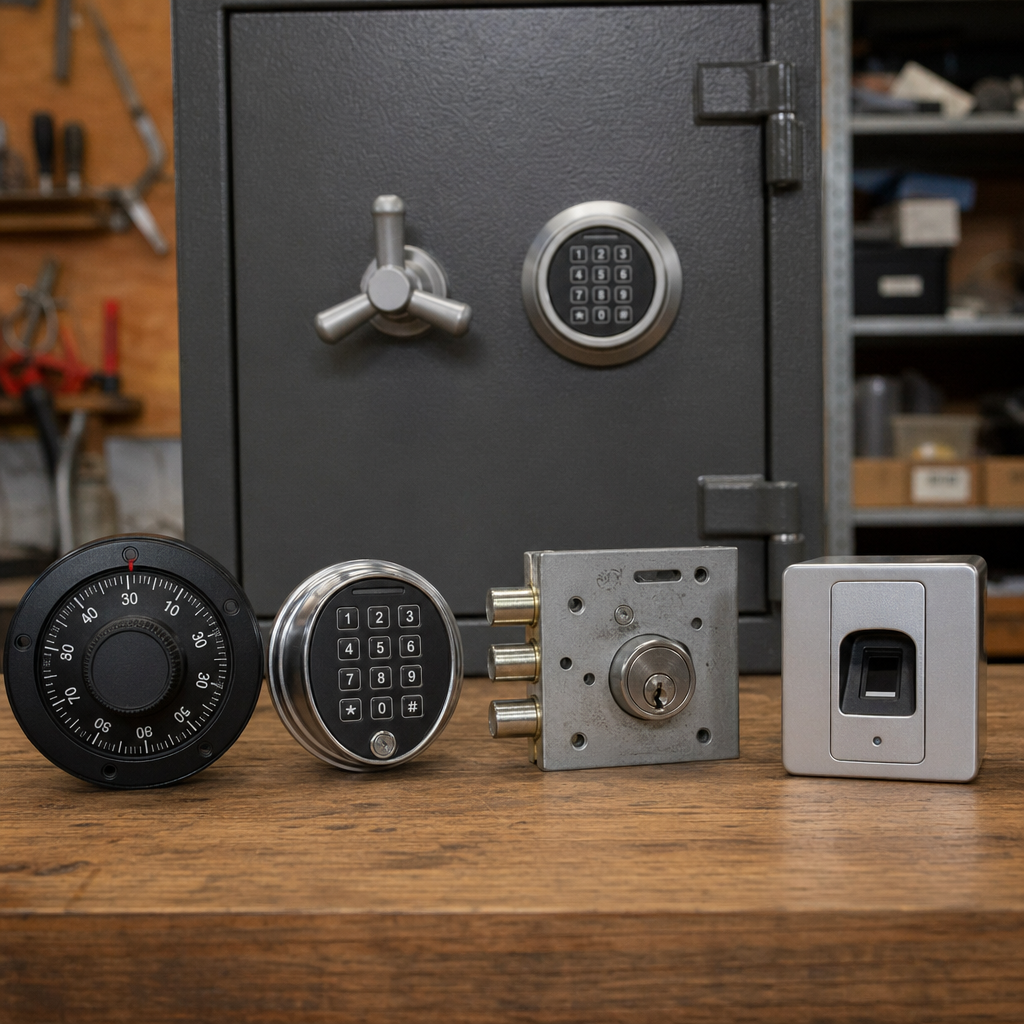
Choosing the right safe lock is the most important decision in any safe buying guide because the lock controls daily access, resistance to tampering, long term reliability, and ultimately whether your valuables remain protected when you need them most. In the gun safes and safety category, lock selection matters even more because a poor locking mechanism can slow emergency access, fail during a power issue, or create avoidable risks for children and unauthorized users. When buyers compare different types of safe locking mechanisms, they are usually weighing four factors at once: security, speed, durability, and convenience. A locking mechanism is the system that authenticates the user and retracts the boltwork, while the boltwork is the physical assembly of steel bolts securing the door. That distinction matters because marketing often focuses on thick steel doors and fire ratings, even though lock design is what most owners interact with every day. In my experience evaluating residential security containers, burglary-rated safes, and gun safes for mixed household use, buyers often underestimate how much climate, battery habits, service availability, and user skill affect lock performance over ten years. A keypad that feels fast in a showroom may become frustrating with gloves, low light, or aging fingers. A mechanical dial that seems outdated may still outperform electronics after decades of neglect. This guide explains the major safe lock types, how each works, where each fits, and what tradeoffs should shape a confident purchase.
Mechanical combination locks: proven security with minimal dependency
Mechanical combination locks remain the benchmark for long service life because they operate without batteries, software, or circuit boards. The classic design uses a dial connected to a spindle and drive cam, which aligns a stack of internal wheels and gates in the correct sequence. Once aligned, the fence drops and allows the lock bolt to retract. Well-known lock makers such as Sargent and Greenleaf, La Gard, and AMSEC have built their reputations on variations of this mechanism, and many UL-listed Group 2 and Group 1 locks still rely on this architecture. For buyers who ask which safe lock is most reliable over decades, the practical answer is usually a quality mechanical dial lock installed correctly and serviced when needed.
The advantages are straightforward. Mechanical locks resist many failure modes that affect electronic systems, including dead batteries, keypad membrane wear, and electrical component corrosion. They also tolerate long periods of disuse. I have opened older safes that sat untouched for years, and the mechanical locks still functioned after basic maintenance. For households storing firearms for controlled but not immediate access, these locks provide dependable security and strong resistance to casual tampering. They also eliminate concerns about electromagnetic interference, firmware glitches, or digital bypass rumors that occasionally affect low-end imported keypad locks.
The drawbacks are equally real. Mechanical dials are slower, especially under stress. Opening requires precise left-right dialing, attention to index marks, and enough dexterity to avoid over-rotation. That makes them less ideal for owners who expect rapid defensive access. Combination changes often require a locksmith or a change key procedure that many consumers are uncomfortable performing. Users with limited vision or reduced hand strength may also find the dial frustrating. In a gun safe buying decision, mechanical locks fit best when the priority is long-term dependability and controlled access rather than speed.
Electronic keypad locks: speed, convenience, and modern usability
Electronic keypad locks dominate the residential gun safe market because they are fast, intuitive, and easy to manage for most households. Instead of wheel packs, these systems use a keypad, control board, and motor or solenoid to release the lock when the correct code is entered. Many current safes pair electronic locks with relockers and hard plates to improve drill resistance. For people searching for the best safe lock for quick access, a reputable electronic keypad lock is often the most balanced choice. Quality matters here more than in any other category, because the market ranges from robust UL Type 1 electronic locks to cheap consumer-grade assemblies with inconsistent quality control.
The main benefit is access speed. A practiced user can enter a code in seconds, even in darkness, and many locks allow simple code changes without a service call. This is especially valuable in households where one safe serves multiple roles, such as firearm storage, document protection, and daily access to valuables. Electronic locks also reduce user error. Many failed openings on dial locks come from misdialing, while keypad locks largely remove that variable. Better models add penalty lockouts after repeated wrong attempts, low-battery indicators, and audible or visual feedback that confirms code entry.
However, electronic locks demand disciplined ownership. Batteries must be replaced proactively with quality alkaline cells recommended by the manufacturer, not ignored until failure. Humidity, battery leakage, impact damage, and low-cost components can all shorten service life. I strongly advise buyers to ask which lock model is installed rather than accepting a generic description like digital lock. A safe body built from heavy steel is undermined if the installed lock is an unproven import with poor parts support. For gun safes intended for primary defensive access, choose a recognized lock brand, test the keypad monthly, and maintain backup entry procedures according to the manufacturer’s instructions.
Biometric locks: fingerprint access and where it truly works
Biometric safe locks use fingerprint recognition to authenticate the user, promising the fastest possible entry with no need to remember a code. In practice, biometric performance varies enormously by sensor quality, enrollment method, and environmental conditions. Capacitive sensors generally outperform cheaper optical sensors in compact handgun vaults because they read skin ridge patterns more consistently and are harder to fool with poor-quality prints. Many biometric gun safes also include a keypad or override key, which is essential because no biometric system should be treated as infallible.
Buyers often ask whether a biometric safe lock is secure enough for firearms. The honest answer is yes, but only in the right application and with the right expectations. For rapid-access bedside handgun safes, a high-quality biometric lock can be very effective when multiple fingers from each authorized user are enrolled and tested repeatedly. I recommend enrolling at least two fingers per hand, then confirming performance with dry fingers, slightly damp fingers, and low-light access. This mirrors real use better than a quick showroom demo. Modern units from brands focused on handgun vaults have improved substantially, but biometric locks still show more variability than good mechanical or electronic keypad systems.
The limitations are important. Fingerprint readers can struggle with cuts, dirt, worn fingerprints, heavy moisture, or extreme cold. Larger long-gun safes with biometric locks may look impressive in marketing materials, yet many owners still rely on the keypad because scanner consistency is not perfect. Biometric access should be viewed as a convenience layer, not a substitute for good engineering. For maximum security, prioritize lock certification, anti-tamper features, and reliable override methods over novelty. If a safe will be accessed only occasionally, a biometric reader may offer little benefit compared with the maintenance and testing it requires.
Key locks and dual-lock systems: simple designs with specialized uses
Traditional key locks are less common on full-size gun safes but still appear on cash boxes, document chests, and some entry-level firearm cabinets. Their security depends heavily on cylinder quality. A basic wafer lock offers limited resistance to picking and bypass, while a high-security pin tumbler or dimple cylinder can perform much better. Even so, stand-alone key locks are usually not the first recommendation for maximum-security gun storage because physical key control becomes the weak point. If a key is lost, copied, or stored near the safe, the lock’s technical strength becomes irrelevant.
Where key mechanisms do make sense is in dual-lock systems or secondary locking roles. For example, some handgun vaults pair biometrics with a key override, and some commercial safes use dual custody arrangements requiring both a key and combination. In residential use, a dual-lock setup can reduce single-point failure, but it can also add complexity during emergencies. I have seen buyers assume two locks automatically mean better protection, yet poor key management often offsets the gain. If two adults need access, separate credentials can help accountability, but the design should still support practical, repeatable use.
| Lock type | Best use case | Main advantage | Main limitation |
|---|---|---|---|
| Mechanical combination | Long-term storage, low-maintenance ownership | Excellent durability without batteries | Slowest access under stress |
| Electronic keypad | General-purpose gun safe access | Fast entry and easy code changes | Requires battery and component maintenance |
| Biometric | Rapid-access handgun safes | Very quick entry when well configured | Performance varies with fingers and sensor quality |
| Key or dual-lock | Specialized applications, backup access | Simple operation or layered control | Key control can become the weakest link |
For most buyers building a complete buying guide shortlist, key-based systems are supporting players rather than the headline choice. They are worth understanding because they affect backup access, warranty claims, and household procedures. If your safe includes an override key, confirm where it will be stored, who can access it, and whether using it leaves evidence of entry. A backup key hidden in the same bedroom as the handgun safe may solve convenience problems while creating a serious child access risk.
How to evaluate lock quality when buying a gun safe
The lock type alone does not determine security. Buyers should evaluate certification, installation, materials, and serviceability. Start with recognized testing. UL listings for safe locks provide a more meaningful benchmark than vague claims about military-grade protection. On the safe itself, look for drill-resistant hard plates, spring-loaded relockers, reinforced lock mounting, and well-designed boltwork that cannot be easily compromised by attacking the handle area. A strong lock on a weak door frame is not maximum security; the full system must work together.
Brand reputation matters because replacement parts and qualified technicians are part of ownership, not just purchase. AMSEC, Liberty Safe, Fort Knox, Browning, Rhino Metals, and other established safe manufacturers typically specify the lock brand or offer upgrade paths. Ask the dealer whether the lock is field-serviceable, how code resets are handled, and what failure rates they see in actual warranty work. This is where experience at the dealer level is useful. The best salespeople can tell you which lock models come back for service and which rarely cause trouble.
Also match the lock to the environment and the user. A garage-installed gun safe in a humid coastal climate places different demands on electronics than a climate-controlled interior closet. A retired owner opening the safe twice a month may prefer a dial lock, while a household needing controlled but fast access to a defensive firearm usually benefits from a premium electronic keypad. If children are present, audit the entire access chain: lock type, backup credentials, code-sharing habits, and anchoring. For a true buying guide decision, the best lock is the one that remains secure, usable, and maintainable in your specific home.
Choosing the right locking mechanism for maximum security
Maximum security is not a single feature; it is the result of matching the locking mechanism to the threat level, access pattern, and owner discipline. For most full-size gun safes, the strongest all-around recommendation is a high-quality electronic keypad lock from a recognized manufacturer, backed by relockers, hard plate protection, and good battery habits. It offers the best mix of speed and practical security for everyday residential use. For buyers who prioritize longevity above all else and do not need rapid entry, a mechanical combination lock remains the most time-tested option. For bedside handgun vaults, biometrics can be excellent when treated as a convenience feature and validated through repeated real-world testing.
The key takeaway from any safe lock comparison is that the right answer depends less on marketing claims than on use case. Ask direct questions before buying: Who needs access? How fast? How often? In what environment? With what backup plan? Then verify the lock brand, certification, and support network before judging a safe by its exterior alone. This hub should guide the rest of your gun safe buying research, from safe size and fire ratings to anchoring and placement. Use it as your starting point, shortlist safes with proven lock options, and choose the mechanism you will trust, maintain, and use correctly for years.
Frequently Asked Questions
What are the main types of safe locking mechanisms, and how do they differ in everyday use?
The most common safe locking mechanisms are mechanical combination locks, electronic keypad locks, biometric locks, and key-operated locks, with some safes also using dual-lock systems that combine two methods for added control. Mechanical combination locks are the traditional dial-style locks known for durability and independence from batteries or power. They are often favored by buyers who want long-term reliability and fewer electronic failure points, but they usually take longer to open and require more deliberate operation. Electronic keypad locks use a code entered on a digital pad, making them faster and more convenient for daily access. They are especially popular in home safes and gun safes because they can provide quicker entry in time-sensitive situations. Biometric locks use fingerprint recognition and are designed for rapid access with minimal steps, which can be useful when speed matters, though performance depends heavily on sensor quality and maintenance. Key locks are simple but generally less desirable as the primary lock on a secure safe because keys can be lost, copied, or discovered by unauthorized users.
In practical terms, the best option depends on how the safe will be used. If the priority is proven reliability over many years with minimal maintenance, a mechanical lock remains a strong choice. If the safe will be accessed often and convenience matters, an electronic keypad is often the preferred balance of security and speed. If the goal is the fastest possible access, biometric systems may be attractive, but they should be selected carefully from reputable manufacturers and understood as technology that can vary in consistency. Buyers should not focus only on convenience, though. A safe lock affects access speed, user error risk, maintenance needs, tamper resistance, and the ability to function under stress. That is why lock type is one of the most important comparisons in any safe buying guide.
Which safe lock is considered the most secure against tampering and unauthorized access?
There is no single lock type that is automatically the most secure in every situation, because overall security depends on the quality of the lock, the safe’s construction, the relocking features, and how the owner uses it. That said, high-quality mechanical combination locks have a long-standing reputation for dependable security because they are not vulnerable to dead batteries, electronic glitches, or software-related weaknesses. Their internal design is well understood, mature, and difficult to defeat when built to commercial standards. This makes them a strong choice for buyers who value consistency and resistance to long-term failure. However, a quality electronic lock can also be extremely secure, especially when it includes anti-tamper lockout features, secure code management, hardplate protection, and internal relockers designed to resist forced entry attempts.
For many buyers, the more useful question is not “Which lock is strongest in theory?” but “Which lock gives me secure access without creating mistakes or vulnerabilities in real life?” A very secure mechanical lock is less effective if the owner struggles to use it quickly and leaves the safe improperly secured. Likewise, a biometric lock may offer fast access, but if it has inconsistent fingerprint recognition or poor construction, that convenience can become a weakness. In homes with firearms, child safety and unauthorized access prevention are critical, so the safest lock is one that combines solid tamper resistance with dependable daily operation. Reputable certification, quality manufacturing, strong boltwork integration, and a lock type that matches the owner’s routine are usually more important than choosing a category based on marketing claims alone.
Are electronic and biometric safe locks reliable enough for gun safes and emergency access?
Electronic and biometric locks can be highly effective for gun safes, but their reliability depends heavily on build quality, proper maintenance, and realistic expectations. Electronic keypad locks are widely considered one of the best choices for gun safes because they offer a strong balance between speed and security. A well-made electronic lock allows users to enter a code quickly, often in low light and under pressure, which matters in emergency situations. Many models also include lockout features after repeated incorrect entries, which helps prevent unauthorized guessing. However, electronic locks rely on batteries, so routine battery replacement and periodic testing are essential. Most battery failures are predictable and avoidable if the owner follows a maintenance schedule and keeps the keypad and contacts in good condition.
Biometric locks can offer even faster access because they eliminate the need to recall and enter a code, but they are more variable in real-world performance. Factors such as dirty sensors, dry skin, moisture, cuts on fingers, or inconsistent scanner quality can affect recognition. For that reason, biometric locks are best chosen from proven brands and ideally paired with a backup entry method, such as a keypad override or secondary access option. In a gun safe context, that backup matters because emergency access must be fast, but it must also be dependable. Buyers should avoid assuming that all biometric systems perform equally. A premium biometric lock may work very well, while a lower-end model may create delays at exactly the wrong time. For many households, a quality electronic keypad remains the safest all-around choice for balancing emergency readiness, family safety, and long-term usability.
What maintenance and long-term reliability issues should buyers consider before choosing a safe lock?
Long-term reliability is one of the most overlooked parts of selecting a safe lock. Mechanical combination locks generally require the least day-to-day attention because they do not depend on batteries or external power. They are known for lasting many years when manufactured well and installed properly. That said, they can still need occasional professional servicing, especially in heavily used safes or older units where wear, dust, or misalignment may affect smooth operation. Their biggest advantage is consistency over time, but their slower operation and steeper learning curve can matter if multiple household members need regular access. Buyers should also consider whether everyone who may need access can operate the dial correctly under stress.
Electronic locks require more active ownership. Batteries need to be replaced on schedule rather than waiting for a low-power warning, and users should test the lock regularly to ensure reliable function. Keypad wear, moisture exposure, and poor battery habits can all affect performance. Biometric locks need even more attention because the sensor must be kept clean, enrolled fingerprints may need updating, and backup access methods should be tested periodically. No matter the lock type, reliability also depends on quality control, proper installation, and the safe’s environment. Extreme humidity, corrosion, temperature swings, and rough handling can reduce lock life. Buyers who want the fewest maintenance concerns often prefer mechanical locks, while those who prioritize speed may accept the added upkeep of electronic or biometric systems. The key is understanding that every lock involves trade-offs, and long-term dependability should be evaluated just as seriously as convenience on day one.
How do you choose the best safe locking mechanism for home security, firearms storage, and family safety?
The best safe locking mechanism is the one that fits the specific security demands of the household while remaining practical to use every day. For general home security, buyers should think about what will be stored, how often the safe will be opened, who needs access, and what level of speed is necessary. If the safe is for documents, jewelry, cash, or valuables that are not needed urgently, a mechanical combination lock may be an excellent choice because of its long-term durability and freedom from battery dependence. If the safe will be opened frequently, an electronic keypad often makes more sense because it reduces friction in everyday use and encourages consistent locking habits. In many homes, convenience directly supports security because a safe that is easy to use is more likely to be locked properly every time.
For firearms storage, the decision becomes even more important. Buyers need to balance quick authorized access with strong protection against children, guests, and unauthorized users. A quality electronic keypad lock is often the strongest all-around option for gun safes because it combines speed, simple operation, and strong security features when purchased from a reputable manufacturer. Biometric locks may also be suitable for rapid-access firearm safes, especially for owners who want immediate access with minimal input, but they should only be chosen after confirming they perform reliably and include dependable backup entry. Mechanical locks still have a place in firearm storage, especially for long-term security and lower maintenance, but they may be slower in a high-stress moment. Ultimately, the right choice comes down to matching the lock to the risk level, access needs, maintenance willingness, and skill level of the people who will actually use the safe. That practical match is what delivers maximum security in the real world.