
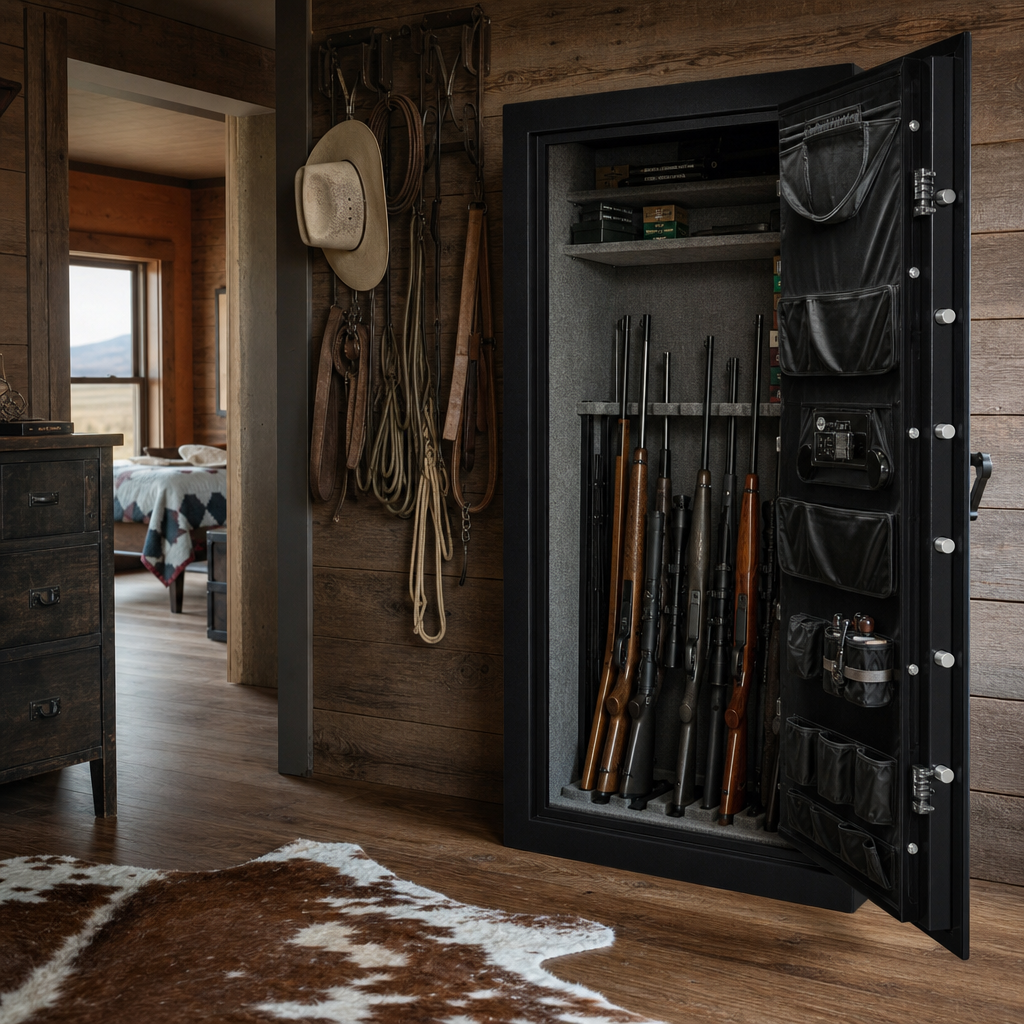
Choosing the best gun safes for ranches and remote properties requires a different standard than buying a safe for a suburban hallway closet. On large acreage, owners face longer police response times, greater exposure to dust and humidity, frequent vehicle traffic, hired hands moving through outbuildings, and a real need to balance fast firearm access with disciplined security. In my experience evaluating safes for rural homes, barns, shop buildings, and hunting cabins, the winning models are rarely the flashiest. They are the units that survive hard use, resist pry attacks, manage interior climate, and fit the way ranch families actually store rifles, handguns, optics, documents, and ammunition.
A gun safe, in practical terms, is a reinforced locking container designed to prevent unauthorized access, delay theft, and reduce damage from fire or environmental conditions. For remote properties, the phrase best gun safes means more than thick steel and a glossy brochure. It means selecting a safe with the right burglary rating, fire protection strategy, lock type, anchoring method, and installation location for a property where help may be twenty or forty minutes away. It also means planning for the realities of ranch life: mud rooms, generator backup, metal buildings, utility rooms, and seasonal occupancy patterns.
This buying guide serves as the hub for ranch owners, land managers, hunters, and rural homeowners who want a clear framework before comparing specific models. If you understand body steel thickness, door construction, relockers, fireboard, dehumidification, and placement, you can narrow the market quickly and avoid paying for features that do not improve security. You can also identify when a premium safe is justified and when a lighter residential security container can still work if it is properly anchored and placed. The goal is straightforward: protect firearms, keep access controlled, and choose a safe that matches the risks of remote property ownership.
What Makes a Gun Safe Suitable for a Ranch or Remote Property
The best gun safes for ranches and remote properties are built for delayed response environments. In a town, a smash-and-grab burglar may only have a few minutes. On isolated land, that same intruder may have more time, more privacy, and more room to use pry bars, grinders, chains, or even a vehicle. That changes the buying equation. A ranch-safe setup should prioritize heavier steel, better boltwork, stronger door frames, and anchoring that prevents the unit from being tipped over or dragged out. Weight matters because mass slows removal, but construction matters more. A 1,000-pound safe with thin steel can still fail faster than a smaller safe with a stronger door and body.
Location also defines suitability. Many rural owners keep safes in shops, garages, tack rooms, guest houses, or hunting lodges, not just inside the main home. Those spaces often face wider temperature swings and higher moisture levels. A safe for remote use should therefore support climate control accessories such as goldenrod-style dehumidifiers, rechargeable desiccant, door seals, and organized interiors that keep firearms off cold steel walls. If the safe will live in an outbuilding, the floor structure, slab anchoring points, and exposure to wildfire or flood risk should shape the final choice.
Capacity claims need a reality check. A “36-gun” safe rarely holds thirty-six scoped long guns in an efficient, usable layout. On ranches, collections often include bolt-action hunting rifles, AR-pattern carbines, shotguns, revolvers, suppressors where lawful, optics cases, and important paperwork. In real use, I advise buyers to treat stated capacity as marketing and shop one size larger than they think they need. Better interior spacing reduces stock dings, speeds access, and makes room for seasonal growth.
Key Buying Criteria: Steel, Locks, Fire Ratings, and Real Security
When comparing safes, start with body steel and door steel, because these determine resistance to pry and punch attacks. Steel thickness is commonly listed in gauge; lower numbers indicate thicker steel. Many entry-level residential security containers use 14-gauge or 12-gauge bodies. For remote properties, 10-gauge bodies are a stronger baseline, while serious buyers often move into 7-gauge or composite constructions on higher-end safes. Door design is equally important. A thick door edge, reinforced frame, and robust hinge-side protection matter more than the simple count of locking bolts advertised on a showroom tag.
Lock choice affects both reliability and convenience. Mechanical dial locks from brands such as Sargent and Greenleaf have a long reputation for durability and independence from batteries, but they are slower to open and less convenient in low light. Electronic locks offer faster access and user code changes, and quality matters. SecuRam and Sargent and Greenleaf electronic options are commonly found on better safes. On remote properties with power outages, battery replacement discipline is essential. I generally recommend electronic locks for primary-use safes in occupied homes and mechanical locks for low-access or backup storage, especially in seasonal cabins.
Fire ratings deserve careful reading because not all ratings are created equally. Manufacturers may list 30, 60, 90, or 120 minutes at temperatures ranging from 1,200 to 1,800 degrees Fahrenheit, but test methods vary widely unless the product carries an independently recognized standard. Drywall-based insulation can perform adequately in many house fires, yet it may not protect contents equally across all burn profiles, especially where collapse or prolonged heat exposure occurs. Rural buyers should treat fire ratings as comparative guidance, not guarantees, and pair them with practical measures such as safe placement away from fuel storage and installation on a slab when possible.
| Criterion | Good for Many Homes | Better for Ranches and Remote Properties | Why It Matters |
|---|---|---|---|
| Body steel | 12-14 gauge | 10 gauge or thicker | Improves resistance to pry attacks and tool entry |
| Lock type | Basic electronic | UL-listed electronic or mechanical dial | Higher reliability in harsh conditions and long-term use |
| Fire rating | 30-45 minutes | 60+ minutes with credible testing details | Rural fire response can take longer |
| Weight | 300-500 pounds | 700+ pounds, anchored | Harder to remove from isolated properties |
| Installation | Closet placement | Concrete anchoring in conditioned interior space | Reduces theft, moisture, and tip-over risk |
Best Types of Gun Safes for Rural Use Cases
Not every ranch needs the same safe. For a primary residence with a broad firearm collection, a full-size long-gun safe remains the standard choice. Brands such as Fort Knox, AMSEC, Liberty, Browning, and Rhino regularly appear in serious comparisons because they offer multiple steel tiers, better interiors, and dealer-supported delivery. Within those lines, buyers should look beyond brand reputation and examine the exact series. Every major manufacturer has entry, midrange, and premium constructions, and performance differences between those tiers are substantial.
For working ranch houses where one or two defensive firearms need faster access, a secondary quick-access handgun or rifle safe can complement the main safe. Hornady RAPiD, Vaultek, and ShotLock make products aimed at controlled rapid access. These are not substitutes for a true long-gun safe, but they solve a real problem: keeping one ready firearm secured from children, visitors, or employees while avoiding repeated trips to the main vault. On large properties, layered storage is often the smartest answer rather than expecting one safe to do everything.
For barns, shop offices, and detached lodges, modular safes deserve attention. Zanotti Armor is a known name in knockdown safe construction, allowing delivery into hard-to-reach rooms where a welded safe cannot be moved. That matters on older ranch homes with narrow stairs, stone thresholds, or elevated cabins. Modular does not automatically mean weak; the question is how the panels interlock, how the seams are protected, and whether the installed unit can be anchored effectively. For owners managing difficult access routes, modular construction can be the practical way to secure firearms without sacrificing too much protection.
If document protection is a major concern, consider whether a separate burglary-rated safe or interior lockbox is warranted. Gun safes are often used to store deeds, passports, cash, hard drives, and estate records, but long-gun interiors are not always ideal for those items. On remote properties, a hybrid approach works well: a large gun safe for firearms and a smaller high-security document safe inside the home for irreplaceable records. This setup improves organization and reduces the time the main gun safe must stay open during routine paperwork access.
Placement, Anchoring, and Environmental Control on Large Properties
Where you place a gun safe on a ranch can matter as much as which model you buy. The safest location is usually inside the primary residence, on a concrete slab, out of obvious sight lines, in a room with controlled humidity. Closets, utility rooms, and interior corners are common choices because they limit pry access to the sides and rear. In contrast, garages and metal outbuildings invite temperature swings, visible delivery paths, and easier access to tools that burglars can use against the safe. If an outbuilding is the only option, reinforce the room itself with solid-core doors, quality deadbolts, monitored alarms, and cameras.
Anchoring is non-negotiable. Even heavy safes can be tipped, pried from weaker angles, or loaded with dollies and machinery. Proper concrete anchors dramatically improve security by forcing an attacker to defeat the safe on site rather than removing it for later attack. I have seen buyers spend thousands on upgraded steel and then skip professional anchoring, which is a costly mistake. Use manufacturer-approved anchor points, verify slab condition, and confirm clearance for door swing before final installation. If the floor is wood-framed, consult a contractor about load distribution and structural support.
Moisture control is a constant issue on rural properties. Condensation can form when exterior temperatures shift quickly, especially in metal buildings. A safe dehumidifier rod, desiccant packs, and interior hygrometer are basic tools, not accessories to add later. Aim to keep interior humidity near levels that limit rust risk without drying wood stocks excessively. Silicone-treated gun socks help, but they are not enough by themselves. Wipe firearms down with corrosion inhibitors, inspect optics mounts and sling swivels, and do not store wet guns after a day in the field. Environmental discipline extends the value of the safe you buy.
How to Match Your Budget to the Right Safe Tier
Budgeting for the best gun safes for ranches and remote properties works best when buyers think in tiers. At the entry tier, often under $1,200 before delivery, you will mostly find lighter residential security containers suitable for modest collections in lower-risk situations. These can work for rural owners if they are anchored correctly, kept inside the home, and supported by alarms and cameras. They are better than unsecured closets, but they are not ideal where theft risk is elevated or occupancy is seasonal.
In the midrange, roughly $1,500 to $3,500 depending on size and finish, buyers gain meaningful improvements: thicker steel, better door construction, upgraded lock options, improved interiors, and more credible fire protection. This is where many ranch owners should focus. A solid midrange safe from AMSEC, Liberty’s higher lines, Browning ProSteel tiers, or Rhino can deliver practical security without reaching custom-safe pricing. The jump from big-box promotional safes to dealer-specified midrange models is usually larger than buyers expect.
Above that, premium and semi-custom safes justify their cost when the firearm collection is valuable, the property is highly isolated, or the buyer wants stronger steel and refined fitment. Fort Knox, Graffunder, AMSEC BF and RF lines, and other premium offerings provide thicker bodies, plate doors, advanced bolt systems, and more robust locking mechanisms. Delivery costs, stair fees, and anchoring can add several hundred dollars or more, so total installed cost should guide the decision rather than sticker price alone. A cheap safe badly installed is a poor value; a well-installed midrange safe often outperforms a premium unit placed carelessly.
Common Buying Mistakes and a Smarter Shortlist Process
The most common mistake is buying on capacity and cosmetics instead of construction. Gloss paint, door organizers, and LED lights are nice, but steel, locking system quality, and anchoring are what stop theft. Another mistake is trusting brand reputation without checking the exact model line. A respected manufacturer can still sell entry-level units that are not robust enough for remote properties. Buyers also underestimate future storage needs. After adding suppressor accessories, optics boxes, documents, and handguns, a safe fills much faster than expected.
A smarter shortlist process starts with five questions. Where will the safe be installed? How much time would a burglar likely have? What firearms and valuables need storage today and in five years? What humidity conditions will the safe face? And what total installed budget is realistic? From there, compare only models that meet your minimum steel threshold, lock preference, fire goal, and anchoring plan. Request the actual weight, body gauge, door thickness, lock brand, and interior dimensions from the dealer. If those details are vague, move on.
For buyers building out a broader safety plan, this hub should connect naturally to related guides on fire ratings, safe lock types, dehumidifier setup, handgun safes, and professional installation. That is the right way to shop in this category: not as a single impulse purchase, but as part of a complete firearms security system tailored to the property. The best choice is the safe you can verify, install correctly, maintain consistently, and rely on for years.
The best gun safes for ranches and remote properties are the ones that match rural risk with real construction quality. For most buyers, that means thicker steel than entry-level models, a dependable lock from a recognized maker, credible fire protection, proper anchoring, and interior climate control. It also means honest planning about where the safe will live, how much usable space you need, and whether one large safe should be paired with smaller quick-access or document storage solutions. These decisions matter more on isolated land because burglars may have more time and environmental stress is often higher.
If you remember one principle, let it be this: buy for your property conditions, not for showroom marketing. A ranch safe has to work in the real world of dust, humidity, outbuildings, generators, and long response times. Evaluate steel, lock quality, installation, and placement before you look at trim packages or inflated gun-count claims. That approach leads to better security and fewer regrets.
Use this buying guide as your starting point, then build your shortlist around construction, installation, and environment. Compare serious models, ask dealers detailed questions, and invest in professional delivery and anchoring. A well-chosen safe protects firearms, supports responsible ownership, and gives rural families lasting peace of mind.
Frequently Asked Questions
What makes a gun safe for a ranch or remote property different from a standard home gun safe?
A gun safe for a ranch, farm, hunting cabin, or other remote property has to solve a broader set of problems than a typical residential safe designed for a hallway closet or spare bedroom. In rural settings, owners often deal with longer emergency response times, multiple outbuildings, frequent dust intrusion, seasonal humidity swings, mud and debris from boots and vehicles, and more people moving across the property, including family members, guests, ranch hands, contractors, and service workers. That means the safe cannot simply be “good enough” for basic storage. It needs to be physically robust, resistant to opportunistic theft, dependable in harsher environmental conditions, and practical enough for daily use.
Weight and construction matter more on remote properties because thieves may have more time and privacy to work. A light safe with thin steel can be tipped, pried, or hauled away from a detached building much more easily than owners expect. For rural use, a heavier body, stronger door construction, quality locking bolts, and proper anchoring are far more important than decorative features. Fire protection also carries extra value because fire department response can take longer on large acreage, and many ranch properties include fuel storage, workshops, electrical loads, and equipment that increase fire risk.
Interior conditions are another major difference. Barns, shops, and cabins are often not climate controlled, so safe buyers should pay close attention to door seals, finish quality, and provisions for dehumidification. In practical terms, the best gun safes for ranches are the ones that combine real burglary resistance, useful fire protection, solid environmental control options, and reliable access methods without becoming so inconvenient that owners leave firearms unsecured elsewhere. A rural gun safe is not just a storage box; it is part of the property’s overall security system.
Should a gun safe on a remote property be installed in the main house, a barn, a shop, or a hunting cabin?
The best location depends on how the firearms are used, but in most cases, the primary safe should be installed in the main house or another occupied, climate-stable, access-controlled structure rather than in a detached outbuilding. Detached barns and shops are often more visible to workers and visitors, more vulnerable to break-ins, and easier for thieves to access without being noticed. They also tend to have poorer humidity control and more dust exposure. If a criminal gets uninterrupted time inside an isolated building with power tools or pry bars, even a decent safe can be challenged.
That said, rural life is rarely one-size-fits-all. Many owners need a secondary security solution in a shop, bunkhouse, or hunting cabin because that is where work or hunting activity begins and ends. In those cases, the better approach is usually a layered setup: keep the primary collection in a heavy, anchored safe inside the main residence, and use a smaller but still high-quality safe or secure locker in a secondary building for limited-access firearms that are regularly used there. This allows fast operational access without exposing the entire collection to a more vulnerable structure.
Placement inside the building matters too. Choose a discreet location with limited visibility from windows and traffic paths. A corner installation helps reduce pry access, and a concrete slab floor is ideal for anchoring. Avoid obvious spots that every contractor or visitor will see. On remote properties, concealment, structural anchoring, and environmental stability all work together. The right location is the one that reduces theft opportunity, supports safe use habits, and protects firearms from both human threats and the rural environment.
What security features should I prioritize when buying a gun safe for a ranch or large acreage property?
Start with real steel thickness and overall construction quality, not just marketing language. Many buyers focus on capacity, upholstery, or electronic features first, but on remote properties the core question is simple: how hard will this safe be to break into or remove? Look for a body and door built with meaningful steel thickness, strong boltwork, reinforced door edges, quality hinges or hinge-side protection, and a design that resists prying attacks. A safe that is merely large but lightly built may offer storage convenience while still being a poor security value.
Anchoring is absolutely essential. Even a very good safe becomes far more effective when it is bolted to concrete. On rural properties, thieves may have vehicles, chains, jacks, and time. If the safe is not anchored, they may bypass the lock entirely by carrying it away for later attack. A ranch-ready setup should also include smart placement, exterior door and alarm upgrades, camera coverage, and limited knowledge of the safe’s location. The safe should be one layer in a larger security plan, not the only layer.
Lock type deserves careful thought. Electronic locks provide fast access, which is valuable when predators, livestock issues, or unexpected nighttime disturbances arise. However, the lock should come from a reputable manufacturer and have a track record of reliability. Mechanical dial locks remain attractive for owners who value simplicity and long-term durability, especially in locations with unstable temperatures or limited service access. Many rural owners choose high-quality electronic locks for speed, while others prefer a mechanical lock on the primary safe and a faster-access option for a defensive firearm stored separately but securely. Fire rating, relockers, hard plates, interior lighting, and dehumidifier passthroughs are all worthwhile features, but they should come after strong construction and proper installation.
How important are fire protection and humidity control for gun safes on remote properties?
They are critically important, and often more important than many first-time buyers realize. Rural properties face several factors that increase the stakes: delayed fire response, greater distance from hydrants or water sources, detached structures with electrical equipment, welding or mechanical work in shops, stored fuels, wood stoves in cabins, and broader seasonal swings in temperature and moisture. A safe with meaningful fire protection can make the difference between preserving firearms, important documents, and optics or losing them in a fast-moving structure fire.
At the same time, moisture is a slower but very common threat. Ranch houses, bunkhouses, barns, and hunting cabins often experience daily and seasonal humidity changes that can encourage rust, stock swelling, mold, and optic damage. Even if the safe itself is well built, the interior environment can still harm firearms if it is not managed. That is why a rural-safe setup should include a dehumidifier or desiccant system, regular inspection, and enough internal air space to avoid cramming guns tightly together. Overpacked safes trap moisture and increase the risk of scratches and corrosion.
Buyers should also be realistic about what fire ratings mean. Not all ratings are equal, and published numbers can vary in credibility depending on the manufacturer and test standard used. Rather than shopping only by the highest minute count on a brochure, look for a reputable brand, solid construction, a good door seal, and a safe sized and placed appropriately for the building. Fire and moisture protection are not side issues on a remote property; they are core buying criteria. The best ranch safe is one that protects against both forced entry and the environmental conditions that come with rural ownership.
Is it better to buy one large gun safe or multiple smaller safes for a ranch or remote setup?
For many rural owners, multiple safes are the smarter long-term solution. One large safe in the main house is often the best place for the primary collection, heirlooms, optics, ammunition components, and important paperwork. But ranch life is spread across distance. Firearms may be used in the house for defense, in a shop during predator or livestock work, in a side-by-side or truck during property checks, and in a hunting cabin during seasonal trips. A single centralized safe can become inconvenient enough that people start leaving guns unsecured in the wrong places.
A better approach is usually to separate storage by role and risk. Keep the majority of firearms in a substantial primary safe installed in the most secure, climate-controlled building. Then add one or more secondary safes, cabinets, or rapid-access units for specific use cases, such as a defensive long gun near the bedroom, a limited-access rifle in a shop office, or a compact safe in a hunting cabin for short-term stays. This creates convenience without sacrificing discipline, and it reduces the chance that the entire collection is exposed if one location is compromised.
That said, every additional safe introduces another lock, another installation decision, and another security point to manage. The key is to avoid buying cheap secondary storage that undermines the whole strategy. If you split your storage, each unit should still be anchored, placed intelligently, and matched to the risk level of that building. For most ranch and remote-property owners, the strongest setup is not one giant safe by itself, but a layered system anchored around a quality primary safe and supported by smaller, purpose-built secure storage where it is actually needed.