
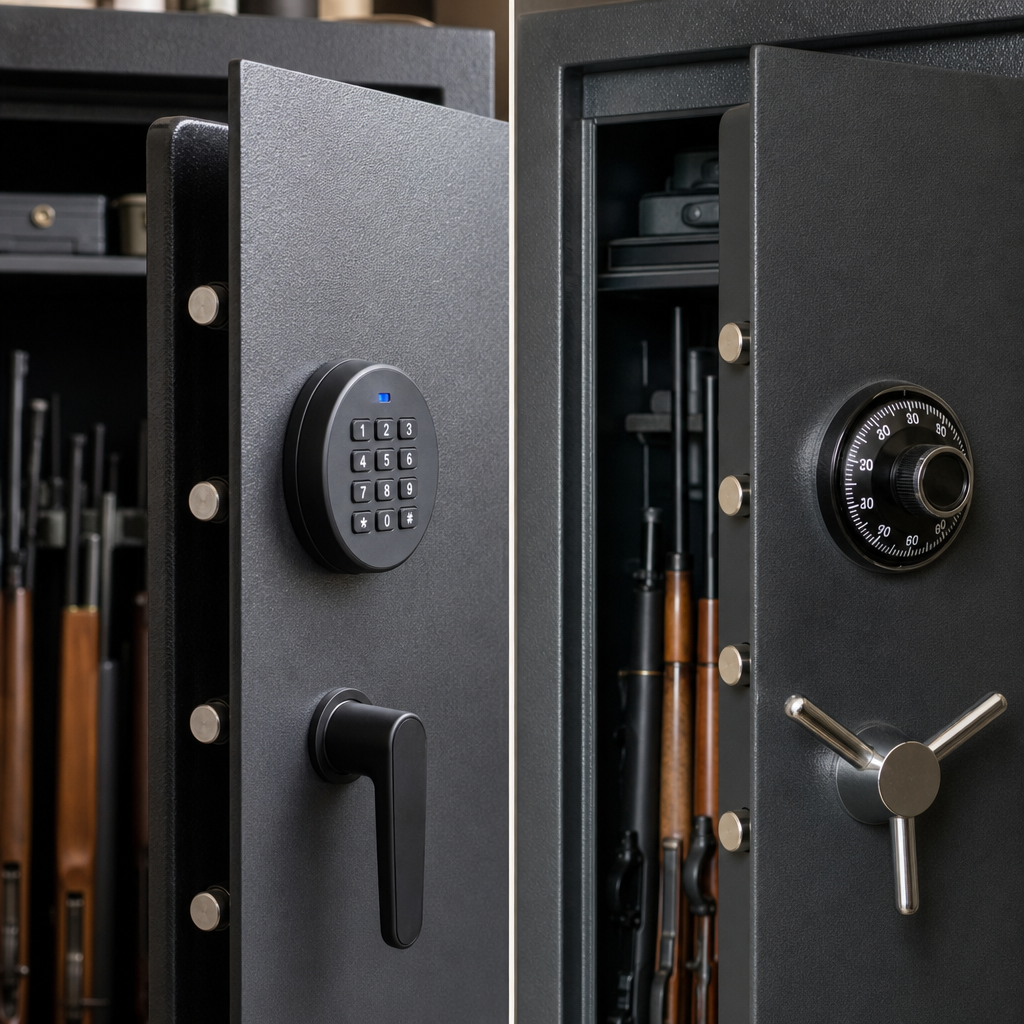
Choosing between gun safes with electronic locks and mechanical locks affects daily access, long-term reliability, burglary resistance, maintenance needs, and how confidently you can secure firearms at home. In the gun safes and safety category, this comparison matters because the lock is the part you interact with every time, and it often determines whether a safe feels convenient or frustrating in real use. Electronic locks use a keypad and internal circuit board to release the boltwork after a correct code is entered. Mechanical locks use a dial, wheel pack, and fence, typically in the familiar three-number combination format. Both can protect firearms effectively when paired with a properly built safe, but they solve different problems.
I have worked with both styles across compact bedside pistol safes, mid-size residential gun safes, and heavier burglary-rated units, and the lock choice consistently changes the ownership experience more than buyers expect. People often focus on capacity, exterior paint, or door organizer layouts, then realize later that the lock dictates access speed, battery management, user training, and service calls. A lock also influences who in the household can operate the safe reliably under stress. For a parent storing a defensive handgun, a keypad may be the practical choice. For a collector storing long guns with infrequent access, a dial can be the lower-maintenance option.
This hub article covers the full landscape of gun safe comparisons and brand spotlights within this subtopic. It explains how electronic and mechanical locks work, where each performs best, what security standards matter, how major brands approach lock options, and which tradeoffs should guide your decision. If you are comparing Liberty, Fort Knox, Browning, Winchester, Hornady, Vaultek, Steelwater, Rhino, American Security, or SnapSafe, the same core principles apply. The best lock is not the one with the most features. It is the one that matches your threat model, access pattern, and tolerance for maintenance while preserving dependable security over years of ownership.
How Electronic and Mechanical Gun Safe Locks Differ in Practice
The simplest way to compare electronic and mechanical gun safe locks is this: electronic locks prioritize speed and user convenience, while mechanical locks prioritize simplicity and long service life without dependence on power. An electronic lock contains a keypad, battery, wiring harness, and lock body with a motor or solenoid. After a valid code, the lock retracts and allows the handle to throw the bolts. A mechanical lock relies on aligning internal wheels to a set combination, allowing the fence to drop and the lock to open. Neither system is automatically stronger against attack; what matters is the lock’s quality, certification, installation, and the safe body around it.
In daily use, electronic locks are usually faster. Most users can enter a six-digit code and open the safe in seconds, even in low light. Many models allow silent entry, multiple user codes, penalty lockouts after repeated wrong attempts, and simple code changes without a locksmith. Mechanical locks are slower by design. They require precise dialing, stopping on exact numbers, and consistent technique. Experienced owners get faster with practice, but a dial almost never matches a keypad for emergency access. That difference is why many handgun safes and quick-access units lean electronic, especially those intended for home defense.
However, convenience is not free. Electronic locks introduce battery dependence and more components that can fail. Even high-quality electronic safe locks from Sargent and Greenleaf, SecuRam, or LaGard occasionally need keypad replacement, battery changes, or board service. Mechanical locks avoid those issues. A quality Group 2 or similar dial lock can run for decades with minimal attention if not abused. That reliability appeals to buyers who open the safe less often and want the lowest possible chance of being locked out by dead batteries or electronics. In my experience, owners who hate maintenance tend to be happiest with a mechanical dial once they accept the slower opening process.
Security Standards, Certifications, and What Actually Protects Firearms
Many buyers assume the lock type determines security by itself, but the safe’s construction matters at least as much as the lock. Steel thickness, door design, hard plate, relockers, hinge protection, anchoring, and overall fit all influence burglary resistance. A premium lock on a thin steel cabinet does not create true safe-level security. When comparing options, look for recognized lock certifications and for meaningful construction details. Underwriters Laboratories has long set the benchmark for many lock and container ratings. UL Type 1 electronic locks and UL-listed mechanical locks are common indicators of baseline quality, though the exact listing language varies by product category.
Burglary protection also depends on how the lock integrates with the boltwork. Better safes shield the lock with hard plate to resist drilling and use one or more relockers that trigger if the lock is punched or attacked. Some add ball-bearing hard plate to deflect drill bits. These features matter whether the exterior is a keypad or a dial. On residential gun safes, buyers should also understand the common Residential Security Container designation. An RSC rating indicates a level of resistance against limited tool attacks, but it is not the same as a commercial TL-rated burglary safe. For many households, an anchored RSC in a concealed location is still a strong practical solution.
Fire protection claims deserve scrutiny too. Lock choice has little to do with insulation performance, but electronic locks can be more sensitive to heat exposure than mechanical systems after a fire event. That does not mean mechanical locks make a safe fireproof. It means you should evaluate fire ratings, door seals, gypsum or composite insulation methods, and test transparency independently from the lock discussion. I always tell buyers to separate three questions: how fast do I need access, how likely is forced entry, and how important is post-disaster serviceability. Those questions produce better decisions than asking which lock is universally better, because there is no universal winner.
Reliability, Maintenance, and Long-Term Ownership Costs
Over ten years of ownership, maintenance patterns become more important than showroom impressions. Electronic locks require periodic battery replacement, and the best practice is preventive replacement on a schedule rather than waiting for low-battery behavior. Most consumer keypads use a 9-volt battery, though some use AA cells or internal rechargeable systems. Cheap batteries, battery leakage, and ignored warnings cause many avoidable lockouts. Keypad wear can also matter in humid garages or unconditioned spaces. When I inspect safes in those environments, corroded contacts and sticky buttons appear more often than outright lock-body failure.
Mechanical locks demand less routine attention, but they are not maintenance-free. Dials can drift if damaged, combination changes should be done correctly, and worn components eventually require service. A safe that is slammed, moved carelessly, or exposed to dirt can develop dialing issues. Still, the service intervals are usually longer than with electronic systems. Another practical issue is user error. Mechanical lockouts often happen because a family member forgot the dialing sequence or rushed the process. Electronic lockouts more often involve dead batteries, code confusion, or keypad problems. The difference is not just hardware; it is how humans interact with the hardware.
| Factor | Electronic Lock | Mechanical Lock |
|---|---|---|
| Access speed | Very fast, usually seconds | Slower, requires precise dialing |
| Power source | Battery dependent | No battery required |
| Code changes | Usually easy for owner | Often slower, may need technician |
| Long-term service | More electronic components to replace | Fewer routine interventions |
| Stress use | Easier for most users | Harder under pressure |
| Best fit | Frequent access and defensive use | Infrequent access and simplicity |
Cost should be viewed over the full life of the safe. Electronic locks can add purchase price and occasional replacement expense, especially if you choose premium redundant systems with keypad plus backup key or biometric layers. Mechanical locks may cost less to maintain, but if you later decide the slow operation no longer fits your needs, retrofitting can erase that advantage. Professional lock swaps are possible on many safes, though not all, and compatibility with the existing spindle hole, mounting pattern, and door panel design should be confirmed first. In brand spotlights, this is where dealer support matters. Good local safe dealers save owners time and frustration when upgrades or repairs are needed.
Use Cases: Home Defense, Hunting, Collections, and Family Access
The best way to choose between electronic and mechanical locks is to match the lock to a real use case. For home defense, an electronic lock is usually the better answer. If you may need access in darkness, under adrenaline, or while moving quickly, pressing a memorized code beats dialing multiple rotations. This is especially true for handgun vaults near a bed or in a closet. Brands like Hornady and Vaultek built much of their reputation on this exact scenario: rapid authorized access with features like interior lights, tamper alerts, and simple code management. For defensive storage, speed is a security feature, not just a convenience feature.
For long-gun storage used mainly for hunting season, range trips, or collection management, mechanical locks become more appealing. If the safe is opened once every few days or even once a week, the extra thirty seconds of dialing is often irrelevant. In return, you eliminate battery monitoring and reduce electronic failure points. I have seen many traditional gun owners prefer mechanical locks because they trust what they can feel working inside the dial. That confidence matters. A safe owner who does not fully trust the lock may leave the safe open more often than intended, which defeats the entire purpose of secure storage.
Family access and user training deserve serious attention. In multi-adult households, electronic locks are easier to teach and easier to audit mentally. Some allow multiple codes, which helps when one user needs temporary access. Mechanical locks can be more difficult for users with reduced dexterity, visual limitations, or no experience with combination dials. On the other hand, households with children may appreciate that younger users are less likely to open a mechanical dial lock accidentally, though responsible storage still depends on disciplined secrecy, anchoring, and layered controls. No lock style substitutes for safe handling rules, unloaded storage where appropriate, and physical separation of unauthorized users from firearms.
Brand Spotlights and What to Compare Across the Market
Across major brands, the electronic-versus-mechanical decision often reflects each company’s design priorities. Liberty Safe has long offered both options across popular residential lines, giving buyers flexibility depending on access needs and budget. Fort Knox is known for heavier customization, where lock choice becomes one part of a broader build specification including steel upgrades and interior configuration. American Security, often shortened to AMSEC, is frequently cited by professionals because it spans true burglary-rated products and better-built gun safes, making it useful for buyers who want more than a basic big-box offering.
Browning and Winchester serve a broad mainstream audience, often emphasizing capacity, door organization, and dealer availability. In these lines, electronic locks are common because they suit the expectations of buyers who want fast, uncomplicated access. Rhino and Steelwater appeal to shoppers comparing value against features like thicker steel, hard plate, or upgraded boltwork. SnapSafe is often considered by buyers who need modular delivery in tight spaces, where lock choice is only one part of a larger installation problem. For compact quick-access products, Vaultek and Hornady are especially visible, with electronic systems that prioritize speed, user programmability, and modern interface design.
When comparing brands, do not stop at the lock label. Ask who manufactures the lock, whether it is UL listed, how the lock is protected inside the door, what the warranty covers, and how service is handled if the keypad fails or the combination is lost. Also compare dealer setup, delivery, anchoring, and post-sale support. A strong brand on paper can become a weak purchase if local service is poor. As the hub for gun safe comparisons and brand spotlights, this page should guide your next steps: narrow the use case, shortlist brands with proven dealer networks, then compare actual construction and lock quality rather than marketing language alone.
How to Make the Right Choice for Your Safe
If you need the shortest answer, choose an electronic lock when quick, frequent access matters most, and choose a mechanical lock when low-maintenance longevity matters most. Then verify that the safe itself has adequate steel, relockers, hard plate, fire protection appropriate to your environment, and secure anchoring. For many buyers, the lock decision feels like the headline issue, but the smartest purchase balances the entire system. A mediocre safe with your favorite lock is still a mediocre safe. A well-built safe with the wrong lock can still become frustrating enough that you use it poorly.
The strongest takeaway from comparing gun safes with electronic locks vs. mechanical locks is that both are legitimate choices when sourced from reputable brands and matched to the owner’s real habits. Electronic locks excel in accessibility, simple code changes, and defensive readiness. Mechanical locks excel in simplicity, independence from batteries, and a long record of dependable service. Neither is perfect. Electronic systems need battery discipline and quality components. Mechanical systems require patience, practice, and acceptance of slower entry. Those tradeoffs are not minor details; they define ownership.
Use this hub as your starting point for deeper gun safe comparisons and brand spotlights. Identify how often you open the safe, who needs access, where the safe will sit, and what level of theft resistance you realistically need. Then compare specific models from Liberty, Fort Knox, AMSEC, Browning, Winchester, Rhino, Steelwater, Hornady, Vaultek, and SnapSafe with those priorities in mind. If possible, test both lock types in person through a qualified dealer before buying. A few minutes of hands-on use will often make the right answer obvious. Choose the lock you will trust, maintain, and use correctly every single time.
Frequently Asked Questions
Which is better for everyday use: a gun safe with an electronic lock or a mechanical lock?
For everyday use, the better choice usually comes down to whether you value speed and convenience more than simplicity and tradition. Electronic locks are popular because they are fast to open, easy to program, and practical for people who may need frequent access to their safe. With a keypad lock, you typically enter a code and turn the handle, which feels much quicker than dialing a combination manually. That matters if the safe is part of a daily routine, such as securing a home-defense firearm, storing valuables you access often, or sharing controlled access with another authorized adult in the household.
Mechanical locks appeal to buyers who prefer a straightforward, time-tested design. They do not rely on batteries, keypads, or circuit boards, and many owners like the predictability of a properly built dial lock. However, they are usually slower to operate, especially in low light or under stress, and they require more care when dialing the exact combination sequence. For some people, that extra time is no big deal. For others, it becomes a daily annoyance.
In practical terms, electronic locks often feel more user-friendly, while mechanical locks often feel more deliberate and traditional. If fast access, simple code changes, and ease of use matter most, electronic locks usually win for daily convenience. If you prefer a lock style with fewer electronic components and do not mind slower access, a mechanical lock may be the better fit.
Are electronic gun safe locks reliable enough for long-term use?
Yes, quality electronic gun safe locks can be very reliable, but the key word is quality. A well-made electronic lock from a reputable safe manufacturer or trusted lock brand can perform very well for years when installed correctly and maintained properly. That said, electronic locks contain more components than mechanical locks, including a keypad, wiring, lock body, and internal electronics. More parts can mean more potential failure points over the long term, especially if the lock is cheaply made or exposed to moisture, corrosion, or rough use.
Battery management is one of the biggest factors in real-world reliability. Most electronic safe locks depend on a battery, and if the battery becomes weak or dies, access can be delayed until it is replaced. In many designs, replacing the battery is straightforward and can be done from the outside, but owners still need to stay ahead of the issue by changing batteries on schedule and paying attention to low-battery warnings. Ignoring that simple maintenance step is one of the most common reasons people become frustrated with electronic locks.
Mechanical locks are often viewed as the benchmark for long-term durability because they do not depend on power. A high-quality mechanical dial can last for decades, which is one reason many commercial and institutional safes still use them. However, that does not mean mechanical locks are failure-proof. They can wear, drift out of adjustment, or become harder to operate if poorly serviced or heavily used. The best takeaway is that both lock types can be dependable if you buy a well-built safe, avoid low-end components, and follow the manufacturer’s maintenance recommendations.
Which type of lock offers better security against theft or tampering?
In most cases, the overall security of the gun safe matters more than whether the lock is electronic or mechanical. A safe’s steel thickness, door construction, boltwork, hard plate, relocking features, anchoring method, and resistance to pry attacks often play a much bigger role in burglary protection than the lock style alone. A weak safe with a good lock is still a weak safe, and a well-built safe with either lock type will usually offer better real protection than a poorly built model dressed up with extra features.
That said, each lock type has its own security considerations. Electronic locks can offer useful advantages such as quick code changes, multiple user codes on some models, and the ability to remove access immediately if a code needs to be updated. Those features can be helpful in households where access control matters. On the other hand, cheaper electronic locks may be more vulnerable to wear, keypad issues, or poor design, which is why it is important to choose a reputable brand rather than focusing on features alone.
Mechanical locks are respected for their simplicity and are less dependent on electronic components, which some buyers see as an advantage from a tamper-resistance standpoint. They also avoid the concern of battery-related lockouts. However, no lock type should be treated as invulnerable. A professional burglar rarely attacks the lock in isolation if the safe itself can be pried, cut, or removed. For the strongest protection, focus on a quality safe body, a proven lock from a trusted manufacturer, and proper installation, especially bolting the safe down in a secure location.
What maintenance do electronic and mechanical gun safe locks require?
Electronic locks are generally easy to live with, but they do require routine battery attention. Most manufacturers recommend replacing the battery on a schedule rather than waiting for it to fail. Using the battery type specified by the manufacturer is important, because cheap or off-brand batteries can cause inconsistent performance. It is also smart to test the lock regularly, keep the keypad clean and dry, and make sure all household users know the correct operation sequence. If the lock begins to respond slowly, beep differently, or show low-power warnings, it should be addressed immediately rather than put off.
Mechanical locks require less day-to-day maintenance, but they are not completely maintenance-free. Owners should avoid forcing the dial, spinning it aggressively, or assuming rough handling will not matter. Over time, a mechanical lock may benefit from professional service if the dial becomes stiff, the combination feels inconsistent, or the lock no longer aligns as smoothly as it used to. In general, mechanical locks should be serviced by qualified technicians rather than lubricated or adjusted casually by the owner, since improper handling can make the problem worse.
For both lock types, the safe should be kept in a clean, dry environment to reduce the risk of corrosion and long-term wear. It is also wise to test the lock with the safe door open after changing batteries, updating codes, or performing any service-related task. Good maintenance habits are simple but important, because the lock is the one part of the safe you depend on every single time you use it.
How should I decide between an electronic lock and a mechanical lock for my home gun safe?
The best way to decide is to match the lock type to how you actually plan to use the safe. If quick access is a high priority, if you dislike dialing combinations, or if you want the convenience of changing a code yourself, an electronic lock is often the most practical choice. Many homeowners find that electronic locks make the safe easier to use consistently, and that matters because a safe that is convenient is more likely to be used properly every time. For homes where authorized adults may need access and the access code may occasionally need to change, electronic locks can be especially appealing.
If your top priorities are mechanical simplicity, no battery dependence, and confidence in a traditional lock design, a mechanical lock may make more sense. This is often the preferred option for buyers who do not need rapid entry and who value long-established reliability over speed. A mechanical dial can be a very good fit for long-term storage, lower-frequency access, or owners who simply trust a non-electronic system more.
It also helps to think beyond the lock itself. Consider where the safe will be installed, how often it will be opened, who will have access, whether the environment is humid, and how disciplined you are about maintenance. A buyer who never wants to think about batteries may be happier with a mechanical lock. A buyer who wants fast, repeatable access and easy code management may be happier with an electronic lock. Neither is automatically better for every household. The right choice is the one that balances security, usability, maintenance, and peace of mind for your specific situation.