
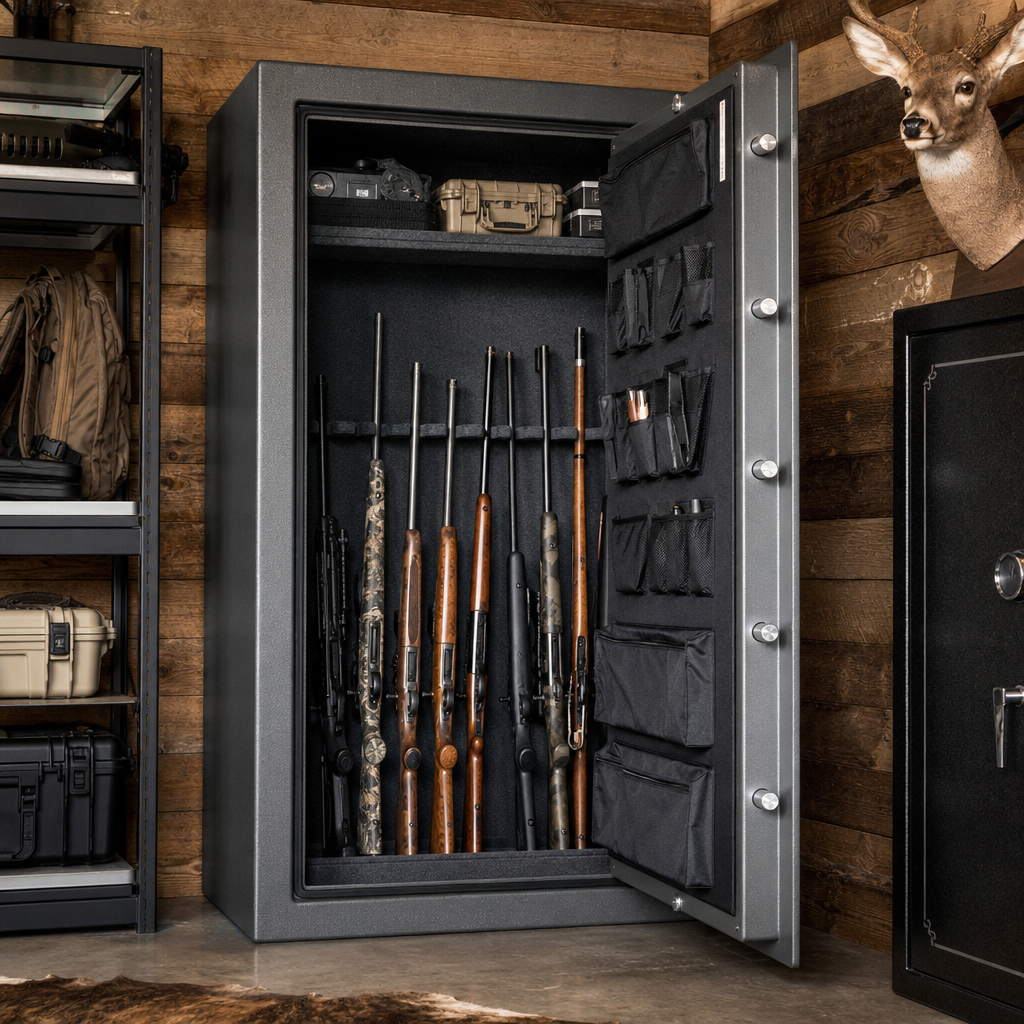
Choosing the best gun safes for rifles is not just about buying a heavy steel box; it is about balancing burglary protection, fire resistance, storage layout, long-term reliability, and compliance with safe firearm practices. In the rifle market, “best” means the safe fits the owner’s collection, home, threat level, and budget. A hunter with three scoped bolt actions needs different shelving and depth than a competitive shooter storing AR-platform rifles with optics, magazines, and suppressor-ready accessories. After evaluating safes for homeowners, collectors, and first-time buyers, I have found that the strongest purchases come from understanding construction details rather than relying on glossy showroom claims.
A rifle gun safe is a locking security container designed to store long guns in an upright, organized, and protected configuration. Important terms matter here. Gauge refers to steel thickness; lower gauge numbers mean thicker steel. Fire rating describes how long the safe is tested to maintain a target internal temperature during heat exposure. Lock type usually means electronic, mechanical dial, or redundant systems. Residential Security Container, often shortened to RSC, is the common Underwriters Laboratories classification for many consumer gun safes, while higher burglary ratings such as TL-15 or TL-30 belong to a different class entirely. Understanding these terms helps buyers compare top brands on substance instead of slogans.
This topic matters because rifle safes serve several jobs at once. They reduce unauthorized access, help prevent theft, protect optics and stocks from household damage, and create a disciplined storage system that keeps firearms separated from casual handling. In real homes, placement constraints, humidity, and fast access needs shape the decision as much as catalog specifications. This hub article covers the core comparison points behind leading brands, the major categories of rifle safes, and the tradeoffs between entry-level and premium models. If you are researching gun safe comparisons and brand spotlights, this page gives you the framework to judge every follow-up review more accurately.
What Makes a Rifle Gun Safe Worth Buying
The best rifle gun safe starts with body strength and door construction. Many mass-market models use 14-gauge or 12-gauge steel bodies, which can be acceptable for basic residential protection when the safe is anchored correctly. Better mid-range safes often move to 11-gauge steel, and premium models may use 10-gauge or thicker plate components. Door thickness can be misleading because manufacturers sometimes advertise total thickness that includes cladding, insulation, and interior panels rather than solid steel. The useful question is simple: how much actual steel is in the body and door, and how well is the door supported by the frame, hinges, and bolt system?
Locking systems matter, but not in the simplistic way many buyers assume. Modern electronic locks from established manufacturers such as Sargent and Greenleaf or SecuRam are usually easier for families to use quickly and accurately. Mechanical dial locks remain respected for durability and independence from batteries, though they are slower. A good safe also needs hardplate protection, relockers, and a robust bolt design. In practice, poor installation defeats good hardware. I have seen heavy safes tipped with pry leverage because they were left unanchored on smooth concrete. Anchoring to slab or a structurally sound floor is one of the most important performance upgrades a buyer can make.
Interior design is another deciding factor for rifles. Advertised capacities are notoriously optimistic because they count slim long guns without optics or slings, packed tightly side by side. Real capacity drops fast once you store scoped hunting rifles, chassis rifles, ARs with pistol grips, or long shotguns. Modular interiors from systems like Browning’s DPX, Rhino’s adjustable supports, or Liberty’s flexible shelving are genuinely useful because they let owners mix long gun racks with shelves for ammo, documents, handguns, and accessories. For many households, a “24-gun” safe is realistically a 10- to 14-rifle safe if optics and practical spacing matter.
Top Rifle Gun Safe Brands Compared
Liberty Safe remains one of the most recognized names because it covers broad price tiers and offers dependable fit and finish. Lines such as Centurion, Colonial, Franklin, and Presidential span entry-level through premium. Liberty safes typically stand out for dealer availability, polished interiors, and user-friendly layouts. The tradeoff is that lower lines can look more robust than their steel specifications suggest, so buyers should compare actual body gauge, door steel, and fire ratings model by model. For many suburban owners who want a conventional upright rifle safe with good support and parts availability, Liberty is a practical benchmark.
Browning gun safes are especially strong in interior organization. Their rifle rack systems often make better use of space for scoped firearms than basic barrel-rest layouts. Browning also tends to emphasize door organization, which is valuable because handguns, choke tubes, and documents otherwise consume shelf space inside the main compartment. Cannon serves the budget-conscious market with widely available models that offer a lot of listed capacity for the price, though serious buyers should inspect weld quality, steel thickness, and lock pedigree carefully. Winchester-branded safes, often sold through major retailers, fill a similar role: accessible, decent for moderate needs, but best evaluated as practical consumer safes rather than elite security products.
At the heavier end, Fort Knox, American Security, and Rhino deserve special attention. Fort Knox offers meaningful customization, heavier steel options, and upgraded locking arrangements that appeal to collectors building a long-term storage solution. American Security, widely known as AMSEC, has one of the strongest reputations in the industry because it operates across both gun safes and commercial security containers. Its BF series is especially notable for combining a stout steel body with a poured proprietary fire barrier that outclasses lightweight drywall-heavy designs. Rhino often balances aesthetics, solid construction, and useful interiors well, while higher-end lines from Graffunder occupy a near-vault category for buyers prioritizing burglary resistance above all else.
| Brand | Best Fit | Strengths | Main Tradeoff |
|---|---|---|---|
| Liberty | Mainstream homeowners | Wide range, dealer support, good interiors | Specs vary significantly by line |
| Browning | Scoped rifle owners | Excellent interior organization | Not every model leads on steel thickness |
| Cannon | Budget buyers | Accessible pricing, broad availability | Entry models can be lightly built |
| Winchester | Retail convenience shoppers | Easy to find, familiar layouts | Often basic security for the money |
| AMSEC | Security-focused buyers | Strong build quality, respected fire barrier | Higher cost and weight |
| Fort Knox | Collectors and custom buyers | Heavy options, customization | Price climbs quickly with upgrades |
| Rhino | Balanced premium shoppers | Good finish, useful interiors, solid specs | Dealer selection varies by region |
Entry-Level, Mid-Range, and Premium Safes
Entry-level rifle safes usually appeal to first-time gun owners, apartment dwellers, or households needing immediate locked storage without spending several thousand dollars. In this range, expect lighter steel, simpler interiors, and fire ratings that look impressive in marketing but deserve scrutiny. Some low-cost safes rely heavily on gypsum board layers for heat protection and use 14-gauge bodies that resist casual attack more than determined prying. That does not make them useless. When anchored in a closet, hidden from easy view, and paired with home security measures, an entry-level safe can be a major step up from a cabinet or unsecured room corner.
Mid-range safes are where many rifle owners find the best value. This segment often includes 12-gauge to 11-gauge bodies, better door construction, more credible fire insulation, improved lock options, and interiors that actually support mixed firearm collections. Brands like Liberty, Browning, Rhino, and selected Winchester or Cannon models compete here, but exact model specs matter more than logos. I usually advise buyers with six to twelve long guns to start their search in this tier because it avoids the most common regret in safe buying: outgrowing a cheap safe in two years and discovering that moving it costs almost as much as upgrading it.
Premium safes justify their price when the collection value, theft risk, or expected service life is high. Heavier steel bodies, thicker door plates, reinforced frames, quality paint and upholstery, and better fire barriers are typical. This is where AMSEC BF, Fort Knox Defender or Maverick-equipped builds, and upper Liberty or Rhino lines begin to separate themselves. In higher brackets, buyers should also think beyond gun counts and ask better questions: Can the safe resist pry attacks on the top corner? Is the lock serviceable locally? Does the interior support precision rifles and optics? Will the safe still feel adequate after the collection doubles? Premium buyers are purchasing margin, not just storage.
How to Evaluate Fire Ratings, Security Ratings, and Marketing Claims
Fire ratings create more confusion than any other gun safe specification. There is no single universal standard used the same way across all brands, and test conditions vary widely. Some companies use proprietary furnace testing, while others reference independent protocols. The useful approach is comparative, not absolute. A safe with a credible heat barrier, door seals, and substantial mass generally performs better than a superficially similar model with a thin shell and aggressive brochure language. AMSEC’s poured insulation designs have earned respect because they differ materially from the basic drywall construction common in budget safes. Buyers storing valuable wood stocks, documents, or irreplaceable heirlooms should take fire design seriously.
Security ratings also need context. Most consumer gun safes are RSC-class containers, which means they meet a baseline standard against limited attack using simple hand tools for a short test period. That is not the same as commercial burglary ratings such as TL-15 or TL-30. A buyer who assumes any “safe” offers vault-grade protection is likely to be disappointed. Steel thickness, door gap design, hinge-side reinforcement, and anchor strategy all matter more than branding language. In actual burglary cases, thieves commonly attack accessible corners, use pry bars, or attempt to tip the safe. Concealment, alarm coverage, and installation location strengthen safe performance dramatically.
Marketing claims around capacity and access deserve equal caution. A “36-gun” label is often a packaging convenience, not a real-world loading plan. If your rifles wear scopes, bipods, lights, or slings, subtract generously. Quick-access promises can also be overplayed. Large rifle safes are for secure storage first, not bedside-speed deployment. If rapid defensive access matters, many households pair a main rifle safe with a dedicated handgun safe or a smaller rapid-entry long-gun locker. That layered approach reflects how experienced owners actually live: one container for broad security, another for immediate authorized access, and both integrated into a safe handling routine.
Buying Tips for Different Rifle Owners
Hunters should prioritize depth, stock-friendly rack spacing, and humidity control. Traditional walnut and blued steel benefit from stable conditions, especially in basements or coastal climates. A dehumidifier rod and desiccant system are inexpensive insurance. AR owners need wider spacing because optics, pistol grips, and magazines make standard racks feel cramped quickly. Collectors with premium glass should consider lined shelving, door organizers that reduce contact between guns, and enough headroom to avoid bumping turrets during removal. Families with children should place lock reliability and user discipline above every decorative feature. A safe that is easy to lock every single time is safer than a complicated one used inconsistently.
Placement affects both security and usability. Ground-floor concrete is ideal because it supports weight and simplifies anchoring. Upstairs installation requires checking structural load capacity, especially for safes approaching or exceeding 1,000 pounds before firearms and accessories are added. Closet placement helps concealment and can reduce pry access to the sides. Garage placement is common but introduces humidity swings and visibility risks unless the safe is shielded from the door line and climate fluctuations. Delivery is part of the purchase, not an afterthought. Professional installers with stair-climbing equipment, liability coverage, and anchoring experience are worth using for anything beyond a light cabinet.
For this hub under Gun Safes & Safety, the most useful next step is comparing specific models within the brand families covered here. Start by narrowing your budget, realistic rifle count, and placement constraints. Then compare steel gauge, lock brand, fire barrier type, interior flexibility, warranty terms, and delivery options. The best gun safes for rifles are the ones that fit your collection today, still fit it in five years, and add real resistance when someone tries to force entry or fire threatens the room. Use this guide as your baseline, then move into detailed brand spotlights and model comparisons to choose with confidence.
Frequently Asked Questions
What should I look for when comparing the best gun safes for rifles?
Start by thinking beyond the advertised steel gauge or the number printed on the door. The best rifle safe is the one that matches your actual collection, your available space, your security concerns, and how you use your firearms day to day. For most buyers, the key comparison points are steel thickness, door construction, locking system, fire protection, interior layout, bolt-down capability, and real usable capacity. A safe that claims it holds 24 rifles may realistically hold far fewer once you add scopes, bipods, slings, AR-style rifles, and other bulky accessories.
Security is usually the first major category to evaluate. Look at the body steel, the door edge, the number and quality of locking bolts, and whether the safe has pry-resistant features such as reinforced frames or recessed doors. Fire resistance also matters, but buyers should read the fine print. A fire rating is only meaningful if you understand the test temperature, the duration, and whether the safe was independently verified. Interior design is equally important for rifle owners because shelving, barrel rests, adjustable racks, and deep interiors can make the difference between a safe that stores your collection neatly and one that becomes frustrating almost immediately.
Brand reputation matters too, but it should not replace feature-by-feature evaluation. Some top brands are known for stronger burglary protection, while others stand out for value, fireboard insulation, flexible interiors, or dealer support. It is also smart to consider long-term reliability, including lock replacement availability, parts support, hinge durability, and warranty service. In short, compare safes based on how well they protect and organize your specific rifles, not just on marketing claims or maximum capacity numbers.
How much fire protection do I really need in a rifle safe?
The right level of fire protection depends on your home, your region, and what you are trying to preserve. Many rifle owners focus on theft prevention first, but fire protection can be just as important because house fires can expose a safe to intense heat, smoke, moisture, and structural collapse. A higher fire rating generally means more layers of insulation, better seals, and a stronger overall design, but the number on the label should always be interpreted carefully. Not all fire ratings are tested the same way, and manufacturers may use different standards or internal methods.
For many households, a moderate to strong fire rating offers a practical balance. If you live in a suburban or urban area with relatively quick fire department response times, a safe with a solid mid-range fire rating may be enough. If you live in a rural area, store valuable optics and documents in the same safe, or want greater protection from prolonged heat exposure, it makes sense to step up to a model with more robust fire insulation and a better-sealed door. Keep in mind that fire protection is not just about the guns themselves. Stocks, optics, slings, paperwork, and electronic accessories can all be damaged at lower temperatures than the steel shell would suggest.
It is also important to understand that fire resistance often involves tradeoffs. More insulation can add weight, affect interior dimensions, and increase cost. That is why the best approach is to match the safe to your risk profile rather than assuming the highest published rating is automatically necessary. A well-built safe in a protected location, properly anchored and chosen from a reputable brand, often provides a better overall solution than chasing a single fire-rating number without considering the broader design.
Are premium gun safe brands really worth the extra money for rifle storage?
In many cases, yes, but only if the extra cost buys features that matter for your situation. Premium brands often justify their price with thicker steel, stronger doors, better weld quality, more sophisticated locking systems, improved fire protection, and more refined interiors. They may also offer tighter manufacturing tolerances, better finish quality, stronger warranties, and more dependable customer support. For a rifle owner with a sizable collection, expensive optics, or a higher burglary risk, these differences can absolutely be worth paying for.
That said, not every buyer needs a top-tier safe. If you own a small number of rifles, live in a lower-risk area, and mainly want secure, organized storage that supports safe firearm practices, a well-chosen mid-range model can be an excellent value. Many affordable brands now offer adjustable shelving, door organizers, electronic or mechanical lock options, and reasonable fire ratings at prices that make sense for everyday owners. The key is to avoid paying for premium branding alone without verifying the actual construction and features.
A useful way to think about it is this: premium safes tend to offer a larger margin of protection and better long-term satisfaction, while value-oriented safes can still be very effective when properly matched to the owner’s needs. If your rifles include scoped precision guns, AR-platform rifles with accessories, or sentimental firearms you cannot easily replace, spending more for stronger construction and a better interior layout often pays off over time. If your needs are simpler, a carefully selected mid-tier safe from a reputable manufacturer may deliver most of the practical benefits without stretching the budget unnecessarily.
How many rifles will a gun safe actually hold compared to its advertised capacity?
Usually fewer than the manufacturer claims. Advertised rifle capacity is often based on tightly packing slim long guns side by side, with little consideration for scopes, pistol grips, large objective lenses, bipods, slings, or modern sporting rifle configurations. In real-world use, the usable capacity can be significantly lower, especially if your collection includes AR-style rifles, chassis rifles, lever guns with optics, or bolt actions with oversized scopes. That is why experienced buyers rarely shop by stated capacity alone.
A better strategy is to buy more space than you think you need. If you currently own six rifles, a safe advertised for 12 to 18 rifles may be more realistic than one labeled for 8 or 10. Extra room improves access, prevents guns from rubbing against one another, and gives you space for magazines, suppressor-related accessories, documents, and future additions to your collection. Adjustable shelving and modular interiors are especially helpful because they let you create dedicated space for taller optics, shorter carbines, and mixed firearm types.
Depth matters just as much as width. Rifle owners often discover that a safe with insufficient interior depth makes it difficult to close the door when scoped rifles are stored near shelves or door organizers. A well-designed safe should allow practical spacing, not just theoretical maximum packing. When comparing brands, look for interior measurements, shelf flexibility, door panel storage, and reviews from owners with similar rifles. In most cases, the best safe is the one that stores fewer guns comfortably rather than more guns unrealistically.
What features matter most for storing scoped rifles, AR-platform rifles, and accessories safely?
For modern rifle collections, interior layout is one of the most overlooked but most important factors. Scoped rifles need enough depth so optics do not interfere with shelves or the door panel. AR-platform rifles need room for pistol grips, adjustable stocks, mounted lights, and larger magazines. If you own suppressor-ready rifles or use bulky accessories, the safe should offer flexible storage that can adapt to different overall lengths and profiles. A flat, basic interior may work for traditional hunting rifles, but it often becomes inefficient with modern configurations.
Look for adjustable shelving, configurable barrel rests, removable partitions, and door organizers that hold handguns, documents, and magazines without crowding the long-gun area. Good interior lighting is also helpful because it improves visibility and reduces the chance of bumping optics or finishes when removing a rifle. Soft interior materials, stable racks, and thoughtful spacing protect both the firearms and the accessories attached to them. In a practical sense, a well-organized safe supports safer firearm handling because you can access and return rifles without shifting multiple guns around.
Environmental control is another important feature. A dehumidifier or desiccant system can help protect blued steel, optics, and wood stocks from moisture damage over time. Secure anchoring is essential as well, because even a heavy safe is more vulnerable if it is not bolted down. Finally, choose a lock type you trust and can use consistently, whether that is a mechanical dial, electronic keypad, or another reputable locking system. For rifle owners with mixed collections, the best safe is not just strong and fire-resistant; it is designed to store real-world firearms and accessories efficiently, securely, and with room to grow.