
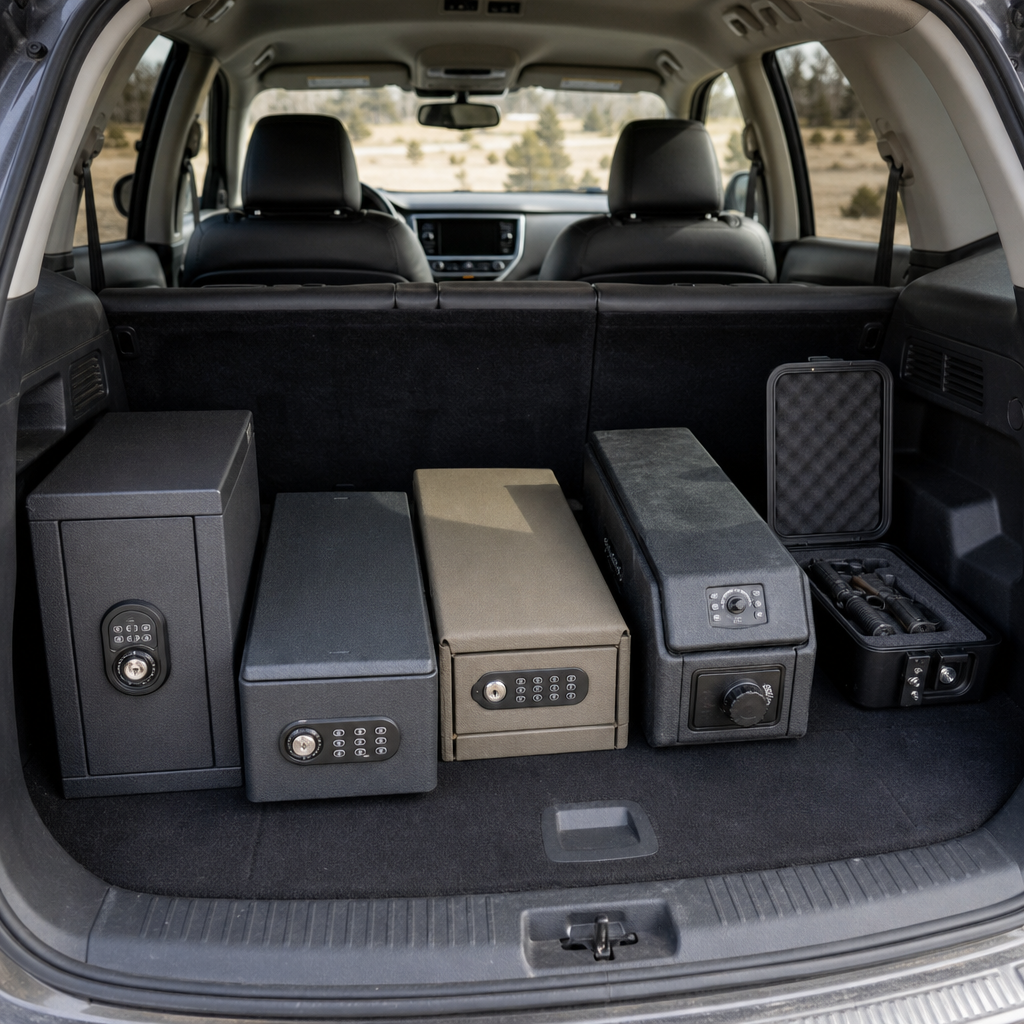
Choosing the best vehicle gun safe is not just about buying a lockbox that fits under a seat. It is about balancing fast access, theft resistance, legal compliance, discreet installation, and day-to-day practicality inside one of the most vulnerable environments for firearm storage. Vehicles are frequent targets for smash-and-grab theft, and a handgun left in a console or glove box is far easier to steal than one anchored inside a purpose-built safe. In my experience evaluating safes for trucks, SUVs, and sedans, the difference between a good vehicle gun safe and a bad one usually comes down to construction quality, lock reliability, and how well the unit matches the owner’s carry habits.
A vehicle gun safe is a compact firearm security container designed for temporary storage inside a car, truck, or SUV. Unlike full-size residential gun safes, these products emphasize concealment, limited-space mounting, and quick retrieval. The best models use 12-gauge or thicker steel, reinforced doors, anti-pry lips, tamper-resistant hinges, and secure tethering or bolted installation points. Common lock types include simplex mechanical pushbutton locks, electronic keypads, biometric fingerprint readers, and tubular key overrides. Each option serves a different user profile, and none is perfect in every scenario.
This comparison matters because vehicle break-ins happen fast. The National Crime Information Center and multiple city police departments have repeatedly warned that stolen firearms from cars are a major source of illegal gun circulation. That makes safe selection a safety issue, not merely a gear purchase. Buyers also face a crowded market with strong brand claims but meaningful differences in steel thickness, locking mechanisms, interior fit, and long-term durability. This hub page covers the leading brands, where they excel, where they compromise, and how to choose the right safe for your specific vehicle and routine.
As a sub-pillar within Gun Safes & Safety, this guide also frames the broader category of gun safe comparisons and brand spotlights. If you later evaluate bedside handgun safes, biometric pistol boxes, modular rifle cabinets, or fire-rated home safes, the same core questions apply: What threat are you defending against, how fast do you need access, and what failures are unacceptable? Vehicle storage simply compresses those decisions into a smaller, harsher, more theft-prone space.
What makes a vehicle gun safe worth buying
The best vehicle gun safes share five traits. First, they use real steel, not thin sheet metal that flexes under hand tools. Second, they include an effective lock that still works under stress. Third, they mount in a way that meaningfully delays theft. Fourth, they fit the firearm you actually carry, including an optic, light, or extended magazine if applicable. Fifth, they are discreet enough to avoid drawing attention during normal use.
Quick-access performance matters, but so does resistance time. No compact safe is invulnerable. The objective is to force noise, tools, and time into the theft attempt. A lockbox connected only by a light cable can stop a casual thief but not a determined one with bolt cutters. A console replacement safe integrated into the vehicle structure offers a much higher level of security because it is harder to locate, harder to access, and harder to remove intact.
Environmental conditions matter too. Vehicle interiors experience heat, cold, vibration, and humidity swings that can expose weaknesses in electronics, adhesives, gasketing, and finishes. I have seen inexpensive keypad safes work well on a bench yet fail after months of rattling in a truck. Brands that build for mobile use usually reinforce hinges, simplify electronics, and use powder-coated steel that tolerates abrasion better than painted finishes.
Top vehicle gun safe brands compared
The market leaders generally fall into two groups: dedicated vehicle-integration brands and portable lockbox brands. Console Vault, Tuffy Security Products, and TruckVault focus heavily on model-specific installs for trucks and SUVs. Hornady, Vaultek, SnapSafe, GunVault, and Bulldog Cases are better known for portable handgun safes that can be tethered or mounted inside many vehicles. Titan Safe offers compact options with respected mechanical locking systems, while Fort Knox has long influenced the quick-access safe market with heavy steel construction and simplex-style access.
| Brand | Best Known For | Main Strength | Main Tradeoff |
|---|---|---|---|
| Console Vault | Vehicle-specific console safes | Factory-like fit and strong concealment | Higher cost and vehicle compatibility limits |
| Tuffy Security Products | Rugged steel drawers and consoles | Heavy-duty build for trucks and off-road use | Bulkier designs in some applications |
| TruckVault | Pickup and SUV drawer systems | Large hidden storage capacity | Expensive and less focused on fastest access |
| Hornady | Portable lockboxes and RFID access | Good feature set and broad availability | Some models prioritize convenience over steel thickness |
| Vaultek | Electronic and biometric pistol safes | Modern access options and polished interiors | Battery dependence and premium pricing |
| SnapSafe | Affordable lockboxes | Value pricing and simple deployment | More basic anti-pry protection |
For most buyers, the first question is whether they want a dedicated in-vehicle installation or a portable handgun safe. Dedicated designs win on concealment and theft resistance. Portable designs win on flexibility, lower cost, and easier transfer between vehicles. That tradeoff defines almost every brand comparison in this category.
Console Vault, Tuffy, and TruckVault: integrated solutions
Console Vault is one of the strongest names in this segment because it turns the factory center console into a hidden lockable compartment. In many trucks and full-size SUVs, the fit is excellent, installation uses existing interior geometry, and the lid remains visually discreet. Buyers can often choose between an electronic lock and a three-digit mechanical lock. I generally prefer the mechanical option for duty-like reliability, especially in hot climates where battery neglect becomes common. Console Vault is ideal for owners who drive the same vehicle for years and want the best blend of concealment and accessibility.
Tuffy Security Products takes a more overtly heavy-duty approach. Its steel consoles, under-seat drawers, cargo organizers, and security drawers are especially popular among Jeep, Tacoma, and overland owners. Tuffy products often use welded steel assemblies, weather-resistant finishes, and robust latch systems designed for harsh use. They are excellent where vibration, dirt, and rough handling are normal. The compromise is aesthetics and interior space. Some Tuffy units look more utilitarian than factory-integrated, and the heaviest designs can reduce cabin flexibility.
TruckVault serves a different buyer. Its drawer systems are commonly installed in pickups, law-enforcement SUVs, and expedition vehicles where the owner needs to secure not just a pistol, but other equipment as well. These systems can hide firearms beneath a flat load floor and are difficult to remove quickly. They are highly secure relative to ordinary portable safes, but they are not built for the fastest one-handed defensive access. TruckVault makes the most sense when secure transport and organized hidden storage are the priority.
Hornady, Vaultek, and SnapSafe: portable lockboxes and quick access
Hornady has built a strong reputation by offering multiple access technologies, including RFID, keypad, and key entry, across products like the Alpha Elite and RAPiD series. For vehicle use, Hornady portable lockboxes are most compelling when a user wants a recognizable brand, decent steel construction, and straightforward cable or bolt-down mounting. The company’s stronger models improve pry resistance with better lid overlap and sturdier corners than bargain brands. Hornady is often a solid middle ground between price and performance.
Vaultek targets users who want premium features such as biometric opening, backlit keypads, Bluetooth monitoring on some models, and well-finished interiors that protect optics and slide finishes. For concealed carriers who routinely remove a pistol before entering restricted locations, that convenience has real value. Still, every electronic and biometric system introduces dependency on batteries, firmware logic, and sensor consistency. I have found Vaultek products impressive in fit and user experience, but they require disciplined battery management and realistic expectations about emergency overrides.
SnapSafe competes on practicality and price. Its lockboxes are common entry points for owners who need legal transport compliance or temporary storage during daily travel. They are not usually the strongest option in a direct pry-resistance comparison, but they are widely available, easy to use, and adequate when paired with smart placement and a realistic threat model. For many commuters, a well-positioned SnapSafe attached to a concealed anchor point is still a substantial improvement over glove-box storage.
How lock types affect security and access
Mechanical simplex-style locks remain the benchmark for reliability in quick-access gun storage. They do not need batteries, tolerate temperature swings, and can often be opened rapidly by touch with practice. That is why brands inspired by Fort Knox and Titan design principles continue to attract serious buyers. The downside is that code lengths are limited, and some users find the button sequence less intuitive than a keypad.
Electronic keypads allow longer codes and often faster learning for new users. Better models lock positively and recover quickly after a failed attempt. However, they rely on batteries and electronics that can degrade over time. Biometric locks are the fastest in ideal conditions, but fingerprints can fail with sweat, dust, cold, cuts, or poor sensor placement. For a vehicle safe used daily, I recommend treating biometrics as a convenience layer, not the sole reason to buy.
Key-only safes are usually the least desirable for defensive access because keys can be lost, copied, or unavailable in a hurried moment. They can still work for transport compliance or low-frequency storage, but they lag behind mechanical pushbutton and well-executed electronic systems for routine carry use.
How to choose the right safe for your vehicle and routine
Start with your use case. If you routinely disarm before entering a courthouse, school zone, or posted workplace, you need very fast access and discreet operation. A console-integrated safe or a premium portable safe mounted beside the driver seat works best. If your priority is securing a firearm during road trips, hotel stops, or trailhead parking, a heavier under-seat drawer or cargo-area drawer system may be the smarter choice.
Next, measure the handgun with its actual configuration. Many buyers forget red-dot sights, threaded barrels, weapon lights, or extended base plates. Check door swing clearance too. In compact cars, a safe that technically fits under a seat may become unusable once seat rails and carpet contour are considered. Finally, verify mounting points. A safe is only as strong as the structure holding it. Bolting to reinforced steel or using a truly protected anchor path is far better than looping a cable around an exposed seat frame.
Research compatibility, compare lock systems, and choose the vehicle gun safe that matches your threats, your firearm, and your daily routine. The right model reduces theft risk, supports lawful storage, and gives you confidence every time you leave your car.
Frequently Asked Questions
What should I look for when comparing the best vehicle gun safes?
Start with the fundamentals: construction, lock quality, mounting method, fit inside your specific vehicle, and how quickly you can access the firearm when you legitimately need it. A strong vehicle gun safe should use heavy-gauge steel, reinforced seams, and a pry-resistant door design rather than thin sheet metal that can be bent open with basic hand tools. The lock matters just as much. Some drivers prefer a simple key lock for reliability, while others want a mechanical push-button or electronic keypad for faster access. Biometric models can be convenient, but in a vehicle environment they should be judged carefully because dust, temperature swings, vibration, and inconsistent finger placement can affect performance.
The next major factor is theft resistance in real-world conditions. In a car or truck, the safe should not only lock securely but also anchor solidly to the vehicle structure. A lockbox that is merely tucked under a seat is not a real security solution. The best brands offer steel security cables, bolt-down hardware, or purpose-built console and under-seat systems that make removal much more difficult during a smash-and-grab. Interior size is another practical issue. You need enough room for your handgun and possibly a spare magazine, but not so much excess space that the safe becomes bulky, obvious, or difficult to hide.
It is also important to compare how each safe works with your daily routine. A compact handgun safe for a commuter sedan may be very different from what works best in a full-size truck, SUV, or work vehicle. In my experience evaluating safes for trucks, larger under-seat units can offer excellent capacity and concealment, but only if they do not interfere with seat travel, wiring, floor vents, or factory storage systems. The best vehicle gun safe is the one that balances access, concealment, mounting security, and usability in your exact vehicle instead of simply offering the lowest price or the longest feature list.
Are console safes or under-seat safes better than portable vehicle lock boxes?
In many cases, yes. Console safes and under-seat safes usually provide a stronger long-term solution because they are designed around the vehicle itself and are often mounted directly to factory attachment points or hidden structural areas. That gives them an advantage in both concealment and theft resistance. A well-made console safe can look almost factory-installed, which matters because the less attention the safe draws, the less likely a thief is to target it. Under-seat safes can also be excellent, especially in trucks where there is often more usable space and a better opportunity to install a larger, more secure unit.
Portable lock boxes still have a role, especially for people who drive multiple vehicles, rent cars, travel frequently, or need a lower-cost option. A good portable box paired with a properly secured steel cable is far better than leaving a handgun in a glove box or center console. However, portable units are generally more vulnerable to theft because the entire box may be removed if it is not anchored well or if the cable attachment point is weak. They can also shift around, reduce discreetness, and sometimes force awkward access positions depending on where they are placed.
The better option depends on your priorities. If your goal is maximum concealment and a more permanent, integrated solution, a console or under-seat safe is usually the better choice. If you need flexibility and portability, a high-quality lock box can still work, but it should be treated as a compromise rather than the ideal setup. In a direct brand comparison, this is one of the most important distinctions to make, because two products may both be called vehicle gun safes while offering very different levels of real protection.
How important is fast access in a vehicle gun safe compared to theft resistance?
Both matter, but theft resistance should never be sacrificed so heavily that the safe becomes little more than a locked container with minimal real security. A vehicle is one of the most compromised storage environments for firearms. Cars and trucks are broken into quickly, often in public places, and thieves typically have a short window to grab anything valuable. That means the safe must be difficult to pry open and difficult to remove. If a product opens very quickly but is made from thin metal or relies on a weak latch, it may fail at its most important job.
That said, access speed still matters because a safe that is too slow, awkward, or frustrating may lead owners to skip using it altogether. The best brands recognize this and aim for a practical middle ground. Mechanical simplex-style locks are often appreciated because they avoid battery concerns and can be opened by feel. Electronic keypads can also work well if they are responsive, durable, and backed by a reliable override option. Biometric safes can offer very fast entry, but they should be tested realistically in vehicle conditions rather than judged on marketing claims alone.
A smart way to think about this is that a vehicle gun safe is primarily a secure temporary storage device, not a bedside quick-access safe. Its first job is to prevent unauthorized access and reduce theft risk when you must leave the firearm in the vehicle. Its second job is to let you retrieve it efficiently and safely when appropriate. The best products do not force you to choose one extreme or the other. Instead, they deliver enough speed for practical use while maintaining the structural integrity and mounting security necessary for a vehicle environment.
Do vehicle gun safes help with legal compliance and responsible firearm storage?
Yes, but they are not a substitute for understanding the laws where you live and travel. A quality vehicle gun safe can play an important role in responsible storage by reducing unauthorized access, especially when you must leave a firearm unattended in a car or truck. In some jurisdictions, secured storage may be required in certain circumstances, and in others it may not be explicitly mandated but is still the most prudent course of action. A purpose-built safe is a far better option than a glove compartment, center console, door pocket, or loose bag, all of which offer little to no meaningful security.
Legal compliance, however, is rarely as simple as owning a safe. Firearm transportation laws can vary by state and locality, including rules about loaded versus unloaded firearms, magazine storage, permit status, concealed carry reciprocity, and where firearms may legally be taken or temporarily stored. If you commute across state lines, park at workplaces with specific policies, or enter prohibited locations where you must leave the firearm in the vehicle, these details matter. The safe helps by creating a controlled, locked storage method, but it does not automatically make every storage scenario lawful.
From a practical standpoint, a vehicle safe also supports responsible gun ownership by reducing the chance of theft that could put a stolen firearm back into criminal circulation. That is one of the strongest arguments for using one. If you are comparing brands, look for models that not only lock securely but also install discreetly and stay anchored under stress. Compliance is partly about law, but it is also about demonstrating that you took reasonable, serious steps to secure the firearm in one of the highest-risk places it could be left.
Which brands tend to stand out when analyzing vehicle gun safes for trucks, SUVs, and daily drivers?
The strongest brands usually separate themselves in three areas: build quality, vehicle-specific design, and lock reliability. Some manufacturers focus on universal lock boxes that can fit many vehicles, while others specialize in console safes or under-seat systems tailored to specific truck and SUV models. For truck owners especially, vehicle-specific designs can be a major advantage because they make better use of available space, look more discreet after installation, and are often harder for a thief to identify and remove quickly. A brand that engineers around actual vehicle layouts generally offers a more refined solution than one selling a generic box for every application.
When analyzing top brands, pay close attention to steel thickness, hinge protection, anti-pry features, finish quality, and how the locking mechanism holds up over time. Also consider whether the company provides meaningful installation hardware, clear instructions, replacement key support, and responsive customer service. Those details matter more than many buyers expect. A safe can look impressive online but become far less appealing if it rattles, interferes with seat movement, uses flimsy mounting points, or has a keypad that becomes inconsistent after months of use.
For daily drivers, the best brand is often the one that matches your use case rather than the one with the loudest marketing. A compact sedan owner may prioritize a low-profile lock box that disappears under a seat. A truck owner may benefit more from a dedicated under-seat vault with greater capacity and stronger mounting. An SUV owner may need a solution that balances cargo access, passenger room, and concealed placement. In my experience evaluating safes for trucks, the standout products are rarely the ones promising every feature at once. They are the ones that get the core job right: secure installation, durable construction, discreet integration, and dependable access day after day.