
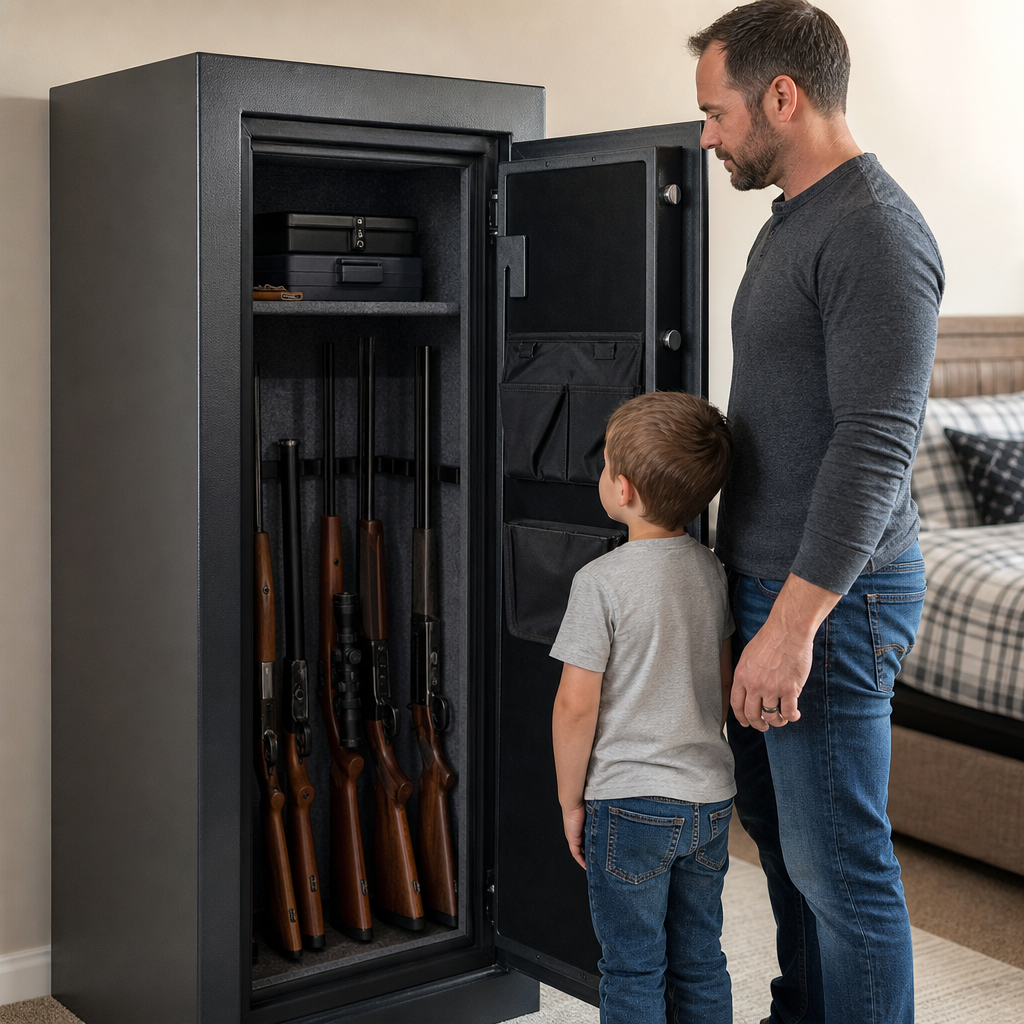
Parents who own firearms face a distinct storage challenge: preventing unauthorized access by children while keeping a defensive firearm reachable under stress. Gun safes for parents sit at the intersection of home security, child safety, lawful ownership, and emergency readiness. In practice, that means choosing storage that resists curious hands, delays theft, and still opens reliably in seconds when needed. I have helped families evaluate bedside vaults, full-size rifle safes, and layered storage plans, and the same pattern appears every time: the right safe depends less on brand loyalty than on household routine, child age, firearm mix, and response expectations during a break-in. This hub article explains the main buyer personas in the parental market, the tradeoffs among access methods, and the practical standards that separate a smart purchase from a costly mistake. If you are comparing gun safes for parents, start by defining secure, accessible, and appropriate for your home. Secure means resistant to children, smash-and-grab theft, and tampering. Accessible means operable in darkness, under adrenaline, and within the legal framework of your state. Appropriate means sized, mounted, and organized for the firearms you actually own, not the collection you imagine buying later.
Why does this matter so much? Because most failures happen at the margins: a handgun left in a nightstand because a cheap biometric reader became unreliable; a rifle cabinet overloaded with documents and ammunition; a keypad code shared too freely among adults; a safe never bolted down and stolen whole. Parents also have to think beyond toddlers. Young children test latches. Preteens mimic adults. Teenagers search deliberately, especially if friends are visiting. A storage plan that works when a child is three may be inadequate when that child is thirteen. The good news is that modern options are far better than they were a decade ago. California Department of Justice roster standards, UL-listed locks, 12-gauge and 10-gauge steel bodies, pry-resistant doors, silent-entry modes, and app-based audit trails now give families meaningful choices. The key is matching the product to the user profile. That is where buyer personas help. They translate abstract features into real household needs, making it easier to decide whether you need a quick-access pistol vault, a modular closet safe, a fire-rated long-gun safe, or a two-safe strategy that separates daily defensive access from bulk storage.
Why parental gun safe buying is different
Parents are not generic safe buyers. They evaluate products under three simultaneous pressures: child access prevention, emergency access speed, and household compliance. A single adult living alone can tolerate a slower lock if burglary resistance is the priority. A parent with two children sleeping down the hall usually cannot. That buyer may need a bedside handgun vault that opens in under two seconds and a separate anchored safe for additional firearms. In my experience, the biggest mistake parents make is trying to force one product to solve every problem. A full-size fire safe in the garage is excellent for collection storage, but it is a poor substitute for a fast-access pistol safe in a master bedroom. Likewise, a compact biometric box is useful for one home-defense handgun, but it is not secure enough for multiple rifles or valuable heirlooms.
Parental buyers also need to think in layers. Mechanical reliability, placement, mounting, code management, and training all matter. The National Shooting Sports Foundation has long emphasized storing firearms unloaded and locked when not in use, with ammunition stored separately if immediate defensive access is not required. For many parents, the most effective arrangement is layered storage: one quickly accessible firearm secured near the primary sleeping area, and all other firearms locked in a heavier, anchored safe. This setup reduces daily handling, limits child exposure, and simplifies household rules. It also supports future internal linking across the broader gun safes and safety topic because the bedside-vault decision is different from the long-gun-safe decision, even though both belong to the same family safety plan.
The core buyer personas parents should understand
The first major persona is the new parent handgun owner. This buyer often purchased a firearm for home defense after having a child and wants a simple, low-risk setup. The best fit is usually a compact, quick-access handgun safe with a mechanical simplex lock, quality keypad, or proven biometric plus backup code. Capacity matters less than reliability. Models from Fort Knox, V-Line, Vaultek, and Hornady often enter this comparison because they offer different tradeoffs in speed, electronics, and mounting. For this persona, the safe should be bolted to furniture or structure, positioned consistently, and practiced with weekly using an unloaded firearm.
The second persona is the growing family with mixed firearms. These households own one or two handguns, a shotgun, and perhaps a hunting rifle or AR-platform rifle. They need both child resistance and organized storage. Here, a modular long-gun safe or residential security container paired with a smaller handgun vault works best. SecureIt cabinets appeal to parents who prioritize fast organization and flexible rifle access, while heavier safes from Liberty, Browning, or American Security can provide better burglary resistance and, in many cases, fire protection. Parents in this group should measure actual firearm length, optic height, and shelf needs before buying, because advertised capacities are commonly optimistic.
The third persona is the apartment or small-home parent. Space constraints change everything. Weight limits, shared walls, and limited closet depth may rule out a traditional 700-pound safe. Under-bed safes, vertical closet safes, and discreet furniture-integrated vaults become relevant. This buyer needs products that can be anchored effectively without obvious visibility, and that can survive a move. A shallow rifle safe hidden in a bedroom closet may outperform a bulky garage cabinet simply because it stays inside conditioned space, remains easier to access, and is less exposed to moisture.
The fourth persona is the rural or collector parent. This household may own several long guns, suppressor-ready rifles, hunting firearms, and family valuables. Burglary delay, humidity management, and inventory control rise in importance. These parents should focus on steel thickness, door construction, hard plates protecting the lock, internal hinges versus external hinges with dead bars, dehumidification rods, and documented fire ratings from credible testing methods. Accessibility still matters, but this persona usually benefits from a dedicated quick-access handgun safe in the bedroom plus a substantial main safe elsewhere in the home.
| Parent buyer persona | Primary concern | Best safe type | Common mistake |
|---|---|---|---|
| New parent handgun owner | Prevent child access while keeping one pistol ready | Bolted quick-access handgun vault | Buying an unanchored budget lockbox |
| Growing family with mixed firearms | Organizing several guns safely | Long-gun safe plus bedside handgun safe | Relying on one safe for every use case |
| Apartment or small-home parent | Space efficiency and discreet placement | Under-bed or closet safe | Ignoring anchor points and moisture control |
| Rural or collector parent | Theft delay, capacity, and preservation | Heavy anchored safe with dehumidification | Trusting marketing capacity numbers |
How to balance security and fast access
Parents often ask a direct question: what is the fastest safe that is still secure against children? The practical answer is a well-made mechanical pushbutton or electronic keypad safe with consistent tactile operation and a backup method. Biometrics can be excellent, but only when the sensor quality is high, enrollment is done correctly, and multiple fingers are programmed. I have seen inexpensive biometric safes fail repeatedly when fingers were dry, sweaty, or slightly misaligned in the dark. For that reason, I advise parents to judge any opening system by three standards: one-handed operation, repeatable success under stress, and resistance to casual tampering by older children.
Mechanical simplex-style locks earn loyalty because they require no batteries and provide strong consistency. Their downside is limited code complexity and usually higher cost in well-built boxes. Electronic keypads are common, affordable, and fast, but require battery maintenance and should include lockout protections and tamper alerts. Biometric safes offer the shortest learning curve for many adults, especially spouses who do not train often, but quality varies sharply by manufacturer. If you choose biometric access, insist on backup entry by code or key, test in darkness, and replace batteries on a calendar schedule rather than after low-power warnings.
Accessibility also depends on placement. A safe that opens in 1.5 seconds is still slow if it is across the room, behind hanging clothes, or blocked by a laundry basket. Bedside placement should allow a natural reach from a normal sleeping position without sweeping family members during retrieval. Parents with small children should avoid obvious, low-mounted locations that invite touching or observation. For long guns, consider whether you realistically need immediate access at all. Many families are better served by keeping rifles secured in the main safe and relying on a stored handgun for urgent home defense.
Features that matter more than marketing
Steel thickness is more important than glossy paint, interior lighting, or oversized capacity claims. For handgun safes, look for robust steel bodies, reinforced lids, protected hinges, and solid mounting points. For larger safes, 12-gauge steel is a reasonable starting point, while 10-gauge or composite constructions provide better resistance to attack. Door gaps should be tight, bolts should engage securely, and the lock area should have drill resistance. If a safe is marketed as a residential security container, understand that this is not the same as a commercial burglary safe, but it can still be appropriate for many homes when anchored correctly.
Fire ratings deserve skepticism. Manufacturers may advertise 30, 60, or 90 minutes at high temperatures, but testing methods differ widely. Ask whether the rating is based on independent testing, what temperature was used, and whether the seal and insulation design are documented. Parents often store birth certificates, passports, backup drives, and heirloom photos alongside firearms, so interior temperature performance matters. At the same time, fire protection should not overshadow burglary resistance. A thin safe with generous insulation can still be vulnerable to pry attacks.
Inside the safe, practical organization reduces unsafe handling. Door organizers, handgun hangers, barrel rests, and labeled shelves make it easier to return firearms to the same location without rummaging. Humidity control matters in basements, garages, and humid climates. GoldenRod dehumidifiers, rechargeable desiccants, and wireless hygrometers are inexpensive insurance against rust. If children are in the home, maintain a strict rule that safe access happens only when necessary, never as casual display. The safe is not just a storage box; it is part of the household safety system.
Installation, training, and long-term family planning
A great safe installed poorly is still a weak point. Every parent should ask: can a burglar carry this away, can a child see me open it, and can every authorized adult use it correctly at 2 a.m.? Anchor compact safes to solid framing, heavy furniture tied to structure, or concrete where possible. Anchor full-size safes to slab or reinforced flooring using the manufacturer’s hardware guidance. Avoid garages when climate swings are severe unless the safe is adequately protected from moisture. Keep keys, override tools, and factory defaults out of the house or in a separately secured location.
Training is where secure yet accessible becomes real. Adults should rehearse opening the safe in darkness, from both sides of the bed if relevant, and after mild physical exertion to simulate elevated heart rate. Time the process. If one spouse repeatedly fails the biometric reader, that is not a minor issue; it is a buying signal to change lock type or enrollment. As children age, revisit the plan. A safe choice made for toddlers may need upgrading when a teenager becomes stronger, more observant, and more technologically savvy. Some families also add monitored room alarms, camera coverage of the safe area, or tamper notifications through smart safe platforms.
As the hub for gun safe buyer personas, this topic comes down to fit. New parents need simple, reliable quick access. Growing families need layered storage. Small-home households need compact, discreet solutions. Collectors and rural parents need heavier protection with better organization and climate control. Across every persona, the winning formula is the same: buy for your actual routine, choose proven lock technology, mount the safe correctly, and practice until access is automatic. A well-chosen gun safe protects children, reduces theft risk, and supports responsible ownership without sacrificing readiness. Review your household needs, compare safe types honestly, and build a storage plan that will still work as your family grows.
Frequently Asked Questions
What type of gun safe is best for parents who need both child safety and quick access?
The best option for most parents is not a single safe, but a layered storage setup that matches how each firearm is used in the home. A quick-access handgun safe is often the right choice for a defensive firearm that may need to be reached under stress, especially in a bedroom or other controlled location. These smaller safes are designed to open in seconds using a biometric reader, electronic keypad, RFID system, or a simple mechanical push-button lock. For long guns, spare firearms, and ammunition, a larger full-size safe or locking cabinet in a more secure area of the home usually makes more sense.
For parents, the key is balancing speed with true unauthorized-access prevention. A safe that opens fast but can be pried open, guessed open, or left unsecured is not doing its job. Likewise, a heavy-duty safe that takes too long to access may not serve a real home-defense role. In practical terms, many families keep one dedicated defensive firearm in a bolted-down quick-access safe and store everything else in a larger safe with higher theft resistance. This creates separation between immediate-access needs and long-term secure storage.
When evaluating options, focus on reliability, mounting capability, solid construction, and lock consistency. A bedside safe should be securely anchored so it cannot simply be carried away. The opening method should work predictably in low light, while tired, and under adrenaline. Parents should also think about the ages and behavior of their children. A toddler, a curious grade-schooler, and a tech-savvy teenager each present different risks. The best safe is the one that fits your firearm, your room layout, your response plan, and your household’s actual safety needs.
Are biometric gun safes reliable enough for families, or is a keypad or mechanical lock safer?
Biometric gun safes can be a good fit for parents, but they should never be chosen on marketing alone. A well-made biometric safe can provide very fast access, which is appealing when every second matters. However, fingerprint readers vary widely in quality. Factors such as dry skin, sweat, dirt, poor finger placement, partial prints, and battery condition can affect performance. That means the real question is not whether biometric safes are universally reliable, but whether a specific model has been proven dependable through repeated real-world use in your home.
For that reason, many experienced firearm owners prefer a safe that offers more than one entry method. A biometric reader backed up by a keypad, RFID, or physical override can give you both speed and redundancy. Electronic keypads are popular because they are simple, fast to learn, and consistent when practiced regularly. Mechanical push-button locks are also highly respected because they do not rely on batteries and can often be operated by touch in the dark. Each system has tradeoffs, and the best choice depends on how comfortable you are using it under pressure.
Parents should test any safe extensively before relying on it. Open it multiple times during the day and night, using your normal sleeping hand position and low-light conditions. Replace batteries on schedule, keep backup access methods secure, and make sure all authorized adults in the home can operate the safe confidently. Most importantly, no lock type replaces safe habits. If the safe is left open, the code is shared carelessly, or the backup key is hidden somewhere children can discover, even the best lock system is undermined. Reliability comes from both equipment quality and disciplined use.
Where should parents place a gun safe in the home for maximum safety and accessibility?
Placement matters just as much as the safe itself. For a defensive handgun, the ideal location is usually somewhere that an authorized adult can reach quickly but a child cannot casually access, observe, or manipulate. In many homes, that means a bolted quick-access safe attached to a bed frame, nightstand structure, closet base, wall stud, or other solid mounting point in the primary bedroom. The goal is to keep the firearm available to the adult who may need it, while preventing a child from finding a portable box and experimenting with it.
Visibility and routine are also part of the equation. Parents should avoid placing a safe in an area where children frequently play, where guests have easy sightlines, or where cleaning staff, contractors, or visitors may notice it unnecessarily. At the same time, the safe should not be hidden so awkwardly that access becomes inconsistent or unsafe during an emergency. You want a repeatable, practiced movement path. If retrieval requires kneeling into a cluttered closet, reaching behind stored items, or dealing with a poor angle, that may slow response and increase risk.
For larger safes, choose a low-traffic but secure location, ideally one that allows anchoring to the floor or wall structure. A closet, dedicated room, or other controlled area often works well. Environmental factors also matter: avoid excess humidity, poor ventilation, or flood-prone locations if possible. In a family home, placement should support a full safety plan, not just storage. That includes thinking through who sleeps where, how children move through the house at night, and how to maintain control of the firearm before, during, and after any defensive incident. Good placement reduces both unauthorized access risk and fumbling under stress.
How can parents make sure children never gain unauthorized access to firearms, even if they are curious?
The most effective approach is to assume curiosity is normal and plan accordingly. Children do not need malicious intent to create a tragedy; curiosity, imitation, and impulsive behavior are enough. That is why secure storage must be constant, not situational. Firearms should remain locked when not under the direct control of a responsible adult, and safes should stay secured every time, not just when it feels convenient. Parents should also avoid predictable mistakes such as leaving a handgun in a drawer “just for the night,” storing a loaded magazine nearby without a plan, or hiding backup keys in obvious spots.
Education is important, but it is not a substitute for physical security. Children should be taught age-appropriate firearm safety rules, including never touching a gun and immediately telling an adult if they find one. Even so, parents should not rely on instruction alone, because children vary in maturity and may still test boundaries. Teenagers, in particular, may be more capable of discovering codes, locating keys, or watching adults enter combinations. That means code discipline, private access habits, and periodic review of storage procedures are essential in a household with older kids.
A strong family safety plan also includes controlling the broader environment. Keep safe access methods confidential, avoid discussing storage details casually, and be mindful of what children’s friends may see or overhear. Consider whether ammunition should be stored separately for some firearms, depending on your household risk profile and intended use. Check the safe regularly for tampering, battery issues, and proper locking. Finally, every adult in the home should follow the same standards. Child access prevention breaks down quickly when one person is careful and another becomes casual. Consistency is what turns good intentions into real protection.
What features should parents look for when buying a gun safe for home defense and family security?
Parents should start with the fundamentals: secure locking, sturdy construction, fast operation, and the ability to anchor the safe properly. For a quick-access safe, look for solid steel construction, anti-pry features, reliable hinges, interior protection that will not damage the firearm, and a lock system that can be used quickly in darkness or under stress. For a larger safe, prioritize structural strength, quality locking bolts, secure door fitment, and enough interior capacity to avoid unsafe overflow or temporary storage shortcuts later.
Mounting capability is one of the most overlooked features, but it is especially important in homes with children. A portable safe that is not bolted down can be removed, hidden, or tampered with elsewhere. Interior lighting can be very useful for nighttime access, and silent or muted entry features may matter if parents want to avoid alerting children during an emergency. Battery status indicators, low-battery warnings, and backup entry methods are also valuable, provided the backup method is itself secured responsibly.
Beyond the hardware, parents should think about fit and use case. The safe should accommodate the specific firearm in its ready condition, including any mounted light or optic. It should open wide enough to allow a clean, consistent draw without snagging. If more than one adult may need access, setup and training should reflect that reality. Finally, theft resistance and fire protection can matter, but they should be evaluated honestly. Many products advertise broad security claims that do not tell the full story. A safe should be chosen based on how it will actually be used in your household: to block child access, delay theft, support lawful and responsible ownership, and still allow dependable access when seconds count.