
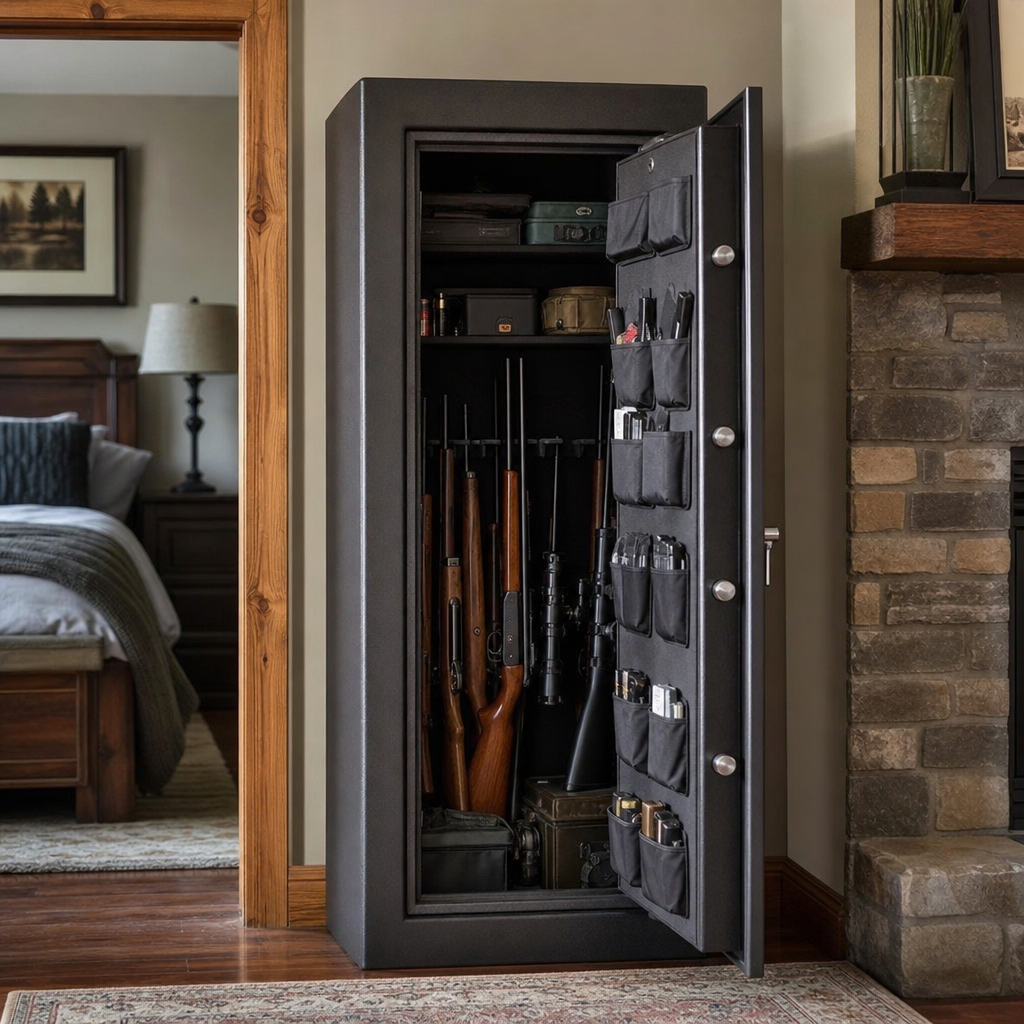
Fire can destroy a home in minutes, and when firearms, documents, heirlooms, and ammunition are stored together, the quality of a gun safe’s fire resistance becomes far more than a marketing feature. For homeowners, improving gun safe fire resistance means understanding how heat moves, how safes are tested, where failures usually happen, and what practical upgrades reduce risk during a real house fire. “Fireproof” is often used casually, but no residential gun safe is literally impervious to fire under all conditions. A more accurate term is fire-resistant storage: a safe designed to slow internal temperature rise long enough to protect contents through a defined test duration. Disaster-resistant storage goes further by considering smoke, water from sprinklers or fire hoses, structural collapse, and post-fire theft exposure. I have evaluated safes after fire events and helped homeowners choose replacements, and the pattern is consistent: performance depends not only on the safe rating itself, but also on placement, sealing, maintenance, and whether the contents match the safe’s actual protection level.
This matters because common residential fires routinely exceed 1,100°F, and localized conditions can climb much higher near flashover. Paper chars around 451°F, many polymers deform far earlier, wood gun stocks crack with rapid heat changes, optics can fail from heat and smoke, and electronic media is even more vulnerable. A homeowner who buys a safe based only on steel thickness or brand reputation can miss the factors that determine survival. The goal of this hub article is to explain the full picture of fireproof and disaster-resistant storage, from ratings and insulation to room selection and recovery planning, so you can make better decisions and identify where a dedicated document safe, dehumidification system, or monitored alarm should complement your main gun safe.
Understand what gun safe fire ratings really mean
A gun safe fire rating tells you two things: the target external temperature during a test and the period the interior is expected to remain below a specified threshold. The threshold commonly used for paper protection is 350°F because paper ignition and serious degradation accelerate above that point. Many residential gun safes are marketed with labels such as 30 minutes at 1,200°F or 60 minutes at 1,400°F. Those numbers are useful, but only if you know who performed the test and how it was conducted. Independent laboratory standards, such as those associated with UL fire endurance testing for record protection, are more meaningful than manufacturer-only claims. In the gun safe market, however, many ratings are self-certified. That does not automatically make them false, but it does require closer scrutiny.
When I review a rating, I look for whether the safe was tested as a complete unit, whether thermocouples measured interior temperature at multiple points, whether the test included a cool-down phase, and whether the door remained shut after expansion and distortion. Cool-down matters because many contents are damaged after the active flames are gone; the insulated body can continue transferring heat inward for hours. A safe that survives a short furnace exposure may still cook the contents during the descent from peak temperature. Homeowners should also distinguish gun safe ratings from true data or media protection ratings. Digital backups, hard drives, photos, and some optics adhesives may fail at temperatures well below what paper can tolerate. If your safe stores irreplaceable records or electronics, a smaller internal media chest is often the correct upgrade.
Strengthen the safe’s weak points: door seals, insulation, and body design
The most vulnerable parts of a gun safe during a fire are rarely the thick steel panels highlighted in product brochures. Failures usually occur at door gaps, thin top panels, inadequate insulation, and corners where heat bridges form. Good fire resistance starts with insulation choice. Many residential safes use layers of gypsum board because chemically bound water in gypsum absorbs heat as steam is released. This is a legitimate, cost-effective approach, but not all gypsum builds are equal. More layers generally improve endurance, yet installation quality matters just as much. Gaps, compression points, and unprotected seams can create hot spots. Higher-end safes may use proprietary concrete composites, ceramic fiber, or poured insulation systems that provide more uniform coverage and better structural stability under prolonged heat.
Door seals deserve special attention. Intumescent seals expand when heated, helping block smoke and hot gases from entering around the door perimeter. If a safe lacks a true expanding seal, or if the seal is damaged, brittle, or poorly adhered, smoke infiltration can ruin firearms and paper even when direct flame never reaches the interior. Homeowners can inspect seals annually for cracks, separation, and compression damage. Replace worn seals with manufacturer-approved components rather than generic weatherstripping, which is not designed for fire conditions. Also inspect boltwork clearances and hinge-side gaps. A large visible gap can be a sign that the door fit is too loose for effective heat and smoke control. Body design matters too: continuous welds, reinforced door frames, and protected corners reduce paths for heat ingress and improve the safe’s ability to stay closed if the cabinet twists under fire exposure.
Choose the right installation location to reduce fire exposure
Where a gun safe sits in the home can improve or undermine its fire resistance. In actual losses I have seen, the same safe model performed very differently based on room location. The safest location is typically on a ground-level concrete slab in a low-combustible area, away from garages storing fuel, workshops, kitchens, and utility rooms with ignition sources. A basement can be excellent if flood risk is controlled, because surrounding earth and concrete moderate temperature extremes. In contrast, an upstairs closet may feel discreet but can expose the safe to faster structural collapse and higher heat if the room becomes fully involved. Once the floor fails, impact can distort the safe body or door, creating openings for smoke and water.
Wall adjacency also matters. Exterior walls can be beneficial because one side of the fire load is reduced, but only if the wall is not heavily insulated with materials that hold heat and only if the safe is not directly beneath windows that can vent flames inward. Clearance around the safe helps as well. Packing a safe tightly into cabinetry or surrounding it with boxes, clothing, and stored goods increases available fuel and can lengthen the period of intense heating. Anchor the safe to concrete when possible, both for theft prevention and for stability during firefighting operations. If you must place the safe over wood framing, verify floor load capacity. Large gun safes can exceed 1,000 pounds before contents, and structural sag can affect door alignment even before any fire occurs.
Use layered protection for documents, optics, and vulnerable valuables
A gun safe is often asked to protect more than firearms, and that is where homeowners make preventable mistakes. Firearms themselves can often survive temperatures that would destroy passports, paper deeds, cash, backup drives, suppressor paperwork, photographs, and jewelry boxes lined with adhesives or fabrics. Layered protection means matching each item to the right environment. For paper records, a UL-classified document chest placed inside the gun safe creates a second thermal barrier. For digital media, use a media-rated container designed to keep internal temperature and humidity lower than a standard document safe. I routinely recommend this nested approach because it compensates for the reality that many gun safes offer good firearm protection but only moderate document protection.
| Stored Item | Main Risk in a Fire | Best Protection Strategy |
|---|---|---|
| Firearms | Heat damage, corrosion from smoke and water | Gun safe with verified fire rating, desiccant, post-fire cleaning plan |
| Paper documents | Charring above 350°F | UL-rated document chest inside the gun safe |
| Digital media | Failure from lower heat and humidity thresholds | Media-rated internal safe or off-site encrypted backup |
| Optics and electronics | Lens coatings, batteries, adhesives, circuit damage | Padded cases, battery removal, separate heat-sensitive storage |
| Ammunition | Packaging failure, moisture, heat exposure | Factory boxes in sealed cans stored per local code and maker guidance |
Layering also applies to inventory control. Store serial numbers, photographs, receipts, and insurance schedules in a cloud vault or bank safe deposit box, not only inside the gun safe. If a fire renders the safe inaccessible for days, you still need proof of ownership for claims and police reports. Consider protective sleeves for documents, silicone-treated gun socks for rust prevention after water exposure, and dedicated shelves that keep optics from contacting hot steel surfaces. None of these measures changes the furnace rating on paper, but together they meaningfully improve real-world survivability.
Manage moisture, smoke, and water after the flames
Many homeowners focus only on heat, yet smoke and water cause enormous post-fire losses. During a fire, pressure changes can draw acidic smoke into small openings, leaving soot and corrosive residues on metal finishes, wood, leather slings, and optic internals. During suppression, thousands of gallons of water may enter the structure, and a safe that remains closed can trap steam and moisture as it cools. This is why improving fire resistance must include moisture control and recovery planning. Use a dehumidifier rod or rechargeable desiccant under normal conditions, but understand that these devices do not make a safe waterproof and provide no benefit if the seal fails during a fire.
Ask whether your safe has a palusol-style expanding seal, a door sill that slows runoff entry, and protected bolt holes. If the safe is in a basement or a region with storm surge or wildfire response concerns, elevate it slightly on a noncombustible pedestal while maintaining secure anchoring. After a fire, do not force open a hot safe. Rapid oxygen introduction can intensify smoldering, and sudden cooling can crack stocks or optics. Coordinate with the fire department, insurer, and safe manufacturer. Once it is safe to open, remove firearms promptly, wipe down residues, apply a preservative oil, and arrange professional gunsmith inspection for any firearm exposed to significant heat. Ammunition exposed to fire or saturation should be handled according to manufacturer recommendations and local hazardous waste rules, not casually dried and reused.
Buy smarter: features that justify the cost and claims to question
Homeowners often ask which upgrades are worth paying for. In my experience, the best value comes from verified fire performance, heavier and more continuous insulation, robust intumescent door seals, quality fit and finish, and installation on a concrete slab by experienced movers. A thicker steel body helps security and can slow deformation, but steel alone conducts heat quickly; without effective insulation, thicker steel does not equal better fire protection. Door organization panels, interior lighting, and power outlets are convenient, yet every penetration should be assessed because openings can complicate fire and humidity control. If a safe includes an electrical pass-through, confirm how it is sealed and whether adding power affects the fire barrier.
Be skeptical of vague terms such as “fireproof up to 2,300 degrees” without duration, test method, or internal temperature data. Question ratings that omit cool-down performance or rely on language like “equivalent to” a recognized standard. Ask for test documentation, warranty details after a fire, and whether replacement coverage includes locksmith or freight costs. Established brands such as Liberty Safe, Fort Knox, AMSEC, Browning, and Rhino offer a range of models, but no brand is uniformly best; model-specific construction is what matters. Also consider local wildfire or hurricane risk. In wildfire zones, ember intrusion and prolonged radiant heat are serious concerns. In hurricane regions, anchoring, elevated placement, and water management may be as important as furnace rating. The right purchase is the safe that matches your threat profile, home construction, and the specific contents you are trying to preserve.
Improving gun safe fire resistance is not a single product decision; it is a system built from accurate ratings, better installation, layered storage, and disciplined maintenance. Homeowners who understand the difference between marketing language and tested performance make better choices and usually spend money more efficiently. Start with the safe itself: look for credible fire test information, sound insulation design, a well-fitted door, and an intact expanding seal. Then improve the environment around it by choosing a lower-risk location, anchoring it properly, keeping combustibles away, and planning for moisture and smoke as seriously as flame. Finally, protect contents according to their vulnerability. Firearms, paper documents, digital media, optics, and ammunition do not all fail at the same temperature, so they should not all be stored the same way.
As the hub for fireproof and disaster-resistant storage, this topic leads naturally into deeper guides on safe placement, document chests, humidity control, waterproofing limits, wildfire preparation, and post-fire recovery. The main benefit is straightforward: a well-chosen and well-managed gun safe gives you more time, better odds, and fewer irreversible losses when a disaster hits. Review your current safe this week, identify the weakest point in its fire protection setup, and make one concrete upgrade now.
Frequently Asked Questions
1. What does “fire-resistant” really mean for a gun safe, and is any safe truly fireproof?
For homeowners, “fire-resistant” is the more accurate term, because no residential gun safe is literally immune to fire under all conditions. A safe can delay heat intrusion, but it cannot guarantee indefinite protection in a severe house fire. When manufacturers advertise a safe as “fireproof,” they are usually using consumer-friendly language rather than a strict technical description. What matters is how long the safe can keep internal temperatures below damaging thresholds while exposed to a specified external temperature.
That distinction is important because different contents fail at different temperatures. Paper documents begin to char and degrade at relatively low temperatures, electronic media is even more vulnerable, and ammunition, optics, wood stocks, and certain finishes can all be damaged well before the steel shell of the safe itself shows obvious failure. In practical terms, fire resistance is about buying time during a fast-moving structure fire, not making contents invulnerable.
Homeowners should also understand that published fire ratings are not always equal from brand to brand. Some ratings come from independent testing, while others are based on internal manufacturer methods. A label stating “60 minutes at 1,200 degrees” sounds reassuring, but it only has real value if you know how the test was conducted, whether the safe was preheated, whether it was humidity-cycled first, and what internal temperature was allowed before the test was considered a failure. The best approach is to treat fire ratings as comparative indicators rather than absolute promises.
In other words, improving gun safe fire resistance starts with realistic expectations. A good safe slows heat transfer, protects contents during many common residential fire scenarios, and reduces the chance of catastrophic loss. It does not make the safe indestructible. The goal is layered protection: a better-rated safe, smarter placement in the home, tighter seals, and storage practices that reduce what is exposed to peak heat.
2. How are gun safe fire ratings tested, and what should homeowners look for when comparing safes?
Fire ratings are meant to indicate how long a safe can withstand elevated temperatures before the interior becomes hot enough to damage contents, but the details behind those ratings matter tremendously. In general, testing involves exposing a safe to a furnace at a designated temperature for a specified period, then measuring whether the interior stays below a target threshold. However, not all tests are equally demanding, and that is why homeowners should look beyond the headline number.
One of the first things to check is whether the test was performed by an independent laboratory or by the manufacturer. Independent certification generally carries more credibility because it follows a defined protocol and reduces the incentive to present optimistic results. You should also ask what internal temperature standard was used. For paper protection, the classic benchmark is keeping the interior below about 350 degrees Fahrenheit, but that standard may not be enough for photographs, electronics, digital media, or delicate valuables. If you store more than firearms, the safe’s rating should be evaluated in light of everything inside it.
Another critical detail is whether the safe was tested with heat exposure only or also included a cooldown phase. In real house fires, contents can continue to be damaged after flames are controlled because the safe remains hot for hours. Some better tests account for this by measuring internal conditions during and after heating. Drop tests are also relevant. In a structural fire, floors can weaken and collapse, sending a safe into a lower level while it is still superheated. A safe that survives furnace exposure but fails structurally after a drop may not protect contents nearly as well in a real emergency.
Homeowners comparing models should pay attention to door construction, fire board thickness, door seals, body gap tolerances, and overall mass. Heavier safes with more insulation often perform better because they absorb and slow heat transfer more effectively. Marketing claims alone are not enough. Ask direct questions: Who tested it? What temperature was used? How long? What internal temperature counted as failure? Was there a door seal? Was the safe tested as-configured or in an upgraded version? Those answers will tell you much more than a large sticker on the showroom floor.
3. Where do gun safes usually fail during a fire, and what upgrades help most?
Most gun safes do not fail because the steel body instantly melts. They fail because heat finds weak points. The most common problem areas are the door seam, locking side gaps, thinner steel sections, insufficient insulation, exposed boltwork areas, and any place where hot gases can enter faster than the safe can resist them. In many fires, the door is the most vulnerable part of the safe, not the body panels. Even a relatively solid steel shell can lose protective value if the door seal is poor or the frame fit is loose.
One of the most effective upgrades is improving the safe’s sealing system. Heat-activated intumescent door seals expand when exposed to high temperatures and help block smoke, heat, and combustion gases from entering through the door gap. If a safe lacks a robust expanding seal, adding one, where manufacturer-approved, can significantly improve resistance at the point most likely to leak. Homeowners should also inspect the condition of existing seals over time, because wear, compression damage, or improper closure can reduce effectiveness.
Additional fire lining is another meaningful upgrade, especially in models with modest factory insulation. Many residential safes use layers of gypsum-based fireboard, which releases chemically bound water as it heats and slows temperature rise. Increasing insulation thickness, particularly around the door and top of the safe, can help because heat often attacks from above during a house fire. That said, modifications should be done carefully so they do not interfere with locking mechanisms, relockers, or door closure. Professional installation is preferable when altering a safe’s interior fire barrier.
Smaller practical improvements also matter. Tightening hinge-side fit, minimizing unnecessary interior air gaps, and using fire-rated document boxes inside the safe creates a layered defense. If your safe has electrical pass-through holes, those are worth reviewing, because they can become a heat entry point if poorly sealed. Ultimately, homeowners get the best results by addressing the known weak spots first: the door perimeter, insulation thickness, penetrations, and placement conditions. Fire resistance is rarely improved by one dramatic change; it is usually improved by several targeted upgrades that slow heat at every stage.
4. Does where I put the gun safe in my house affect its fire resistance?
Yes, placement has a major effect on how a gun safe performs in a real fire. Even a well-built safe can be exposed to far more severe conditions if it is installed in a vulnerable part of the home. Garages, top-floor rooms, bonus rooms over garages, and areas surrounded by heavy fuel loads often see faster temperature escalation and longer burn times. By contrast, placing the safe on a ground-level concrete slab or in a lower-risk interior location can reduce exposure intensity and improve the odds that the safe stays within its protective limits.
One of the best locations is often on a concrete floor at the lowest practical level of the home, provided the area is not highly prone to flooding. Concrete does not burn, does not collapse the way a wood-framed floor can, and helps reduce the chance that the safe falls through during a structural failure. A safe located upstairs may be subjected to higher heat accumulation and then dropped when floor joists fail, which can damage doors, seams, and insulation layers at the worst possible time.
Wall proximity and surrounding materials also matter. A safe tucked into a tight closet full of clothing, cardboard, and stored household goods is sitting inside extra fuel. That surrounding combustible load can raise local temperatures and prolong exposure. Homeowners should keep the area around the safe as clear as possible and avoid storing flammable materials nearby. Installing the safe against an exterior wall can sometimes help with access and security, but it may also introduce moisture and temperature swings depending on the climate. Fire performance should be weighed along with burglary protection and environmental control.
Placement should also account for emergency response realities. If firefighters can reach the area more quickly and the safe is less likely to be buried under collapse debris, recovery conditions improve. In short, the safe itself is only part of the equation. A mid-range safe installed wisely can outperform a better-rated safe installed in the hottest, most collapse-prone part of the home. Homeowners who want to improve fire resistance should think of location as a free upgrade that can make a meaningful difference.
5. What can homeowners store or add inside the safe to better protect firearms, documents, and valuables during a fire?
Interior organization and secondary protective containers can significantly improve outcomes during a fire. A gun safe protects the overall compartment, but sensitive items often need one more layer. Fire-rated document chests, media boxes, and insulated pouches can help shield passports, deeds, photos, cash, backup drives, and heirlooms from rapid temperature spikes. This is especially important because the internal temperature of a gun safe may remain low enough to protect firearms while still becoming high enough to ruin paper, adhesives, optics, or electronic media.
For firearms themselves, homeowners should focus on reducing avoidable heat-related damage and post-fire corrosion. Soft cases, foam linings, and certain synthetic fabrics can trap moisture or degrade under heat, so long-term storage methods should be chosen carefully. Important documents and irreplaceable keepsakes are often best