
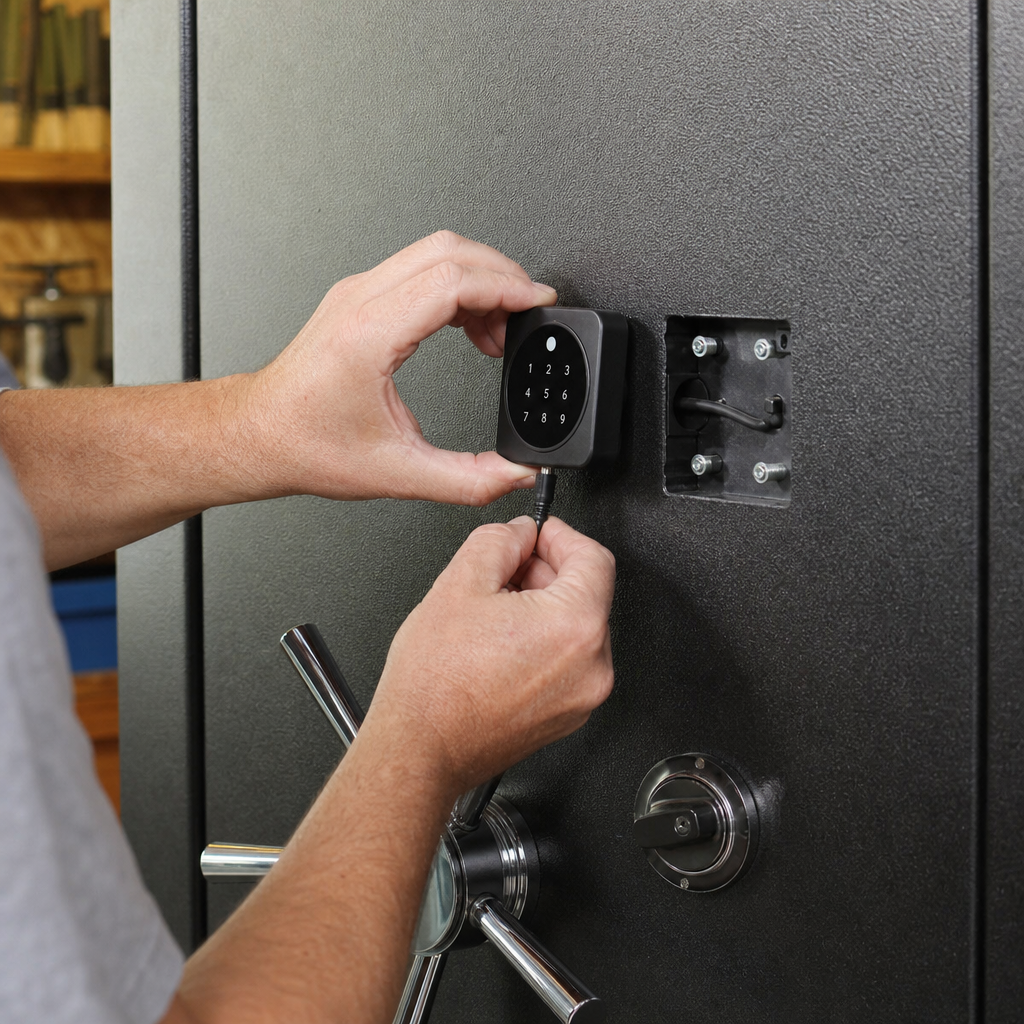
Adding a remote locking system to your gun safe can improve access control, auditability, and day-to-day convenience, but it also changes the security model of the safe and demands careful planning. In practical terms, a remote locking system is any setup that lets you lock, unlock, monitor, or authorize access without turning the safe’s handle and dial directly at the door, usually through a keypad, phone app, fob, biometric reader, relay, or networked controller. For gun owners, this matters because safe security is not only about resisting burglary; it is also about preventing unauthorized access by children, visitors, employees, or household members who should not handle firearms. I have worked on safe retrofits in home workshops and commercial settings, and the consistent lesson is simple: convenience only helps if the modification preserves mechanical integrity, fire protection, and legal compliance. This guide serves as the central resource for custom and DIY gun safe modifications, with remote locking as the anchor topic and related upgrade paths clearly explained.
Before choosing parts, define the kind of gun safe you own and the level of modification it can safely accept. A residential security container from brands like Liberty, Cannon, or Winchester is not built the same way as a commercial burglary-rated safe with a UL-listed lock body and hardplate. Many consumer gun safes use electronic keypad locks from SecuRam, Sargent and Greenleaf, or La Gard, and those are often easier to upgrade than older direct-drive mechanical dial systems. Key terms matter here. A lock body is the mechanism that physically secures or releases the boltwork. The boltwork is the network of bars and cams moved by the handle. A relocker is a secondary device that triggers during tampering. A remote locking system may control the primary lock, add a secondary blocking device, or simply monitor state and send alerts. Those are very different approaches, and understanding the difference prevents dangerous mistakes. The safest DIY projects usually add controlled access around an existing certified lock rather than replacing critical internal security parts without manufacturer guidance.
Start with the Safe, the Lock, and the Security Goal
The first step is assessing what you are trying to solve. If your goal is faster authorized access, a modern EMP-resistant electronic lock or biometric add-on may be enough. If your goal is preventing access during travel or after business hours, a remote disable feature or interior solenoid deadbolt can make sense. If your goal is full app-based control from anywhere, you need to think carefully about network risk, fail-safe behavior, and power loss. In most retrofits I recommend separating convenience from primary security: leave the safe’s main lock in a proven certified configuration and add remote control as a secondary layer. That design limits the damage if the remote module fails, loses power, or is compromised.
Identify the lock footprint before buying anything. Many safe locks share a standard mounting pattern, but the cable routing, spindle hole dimensions, lock bolt travel, and keypad compatibility still vary. A SecuRam ProLogic, for example, does not use the same ecosystem as every La Gard or S&G product. Check the back of the door panel, photograph the lock body, note the lock model, and confirm whether the manufacturer approves substitutions. If the safe is still under warranty, ask whether drilling, welding, or replacing the lock voids coverage. Some companies explicitly state that unauthorized door modifications can affect fire lining, door alignment, and liability.
You should also define the trigger method. Common options include a keypad at the safe, a wireless key fob, Bluetooth through a phone, Wi-Fi app control, hardwired wall switch, RFID credential, and biometric reader. Each carries tradeoffs. Bluetooth has limited range but a smaller attack surface than cloud-connected Wi-Fi. RFID is fast and simple, but tags can be lost or cloned if low-grade systems are used. Biometric readers are convenient, yet finger quality, moisture, gloves, and sensor quality affect reliability. Hardwired controls are less flexible but generally more predictable. For most homeowners, the strongest balance is a local electronic lock plus a separate alerting module, not direct internet unlocking.
Choose the Right Remote Locking Architecture
There are three realistic architectures for a gun safe remote locking system. The first is direct lock replacement, where you swap the existing lock for a model that supports advanced credentials or external control. The second is secondary locking, where you leave the original lock intact and add an interior actuator or blocker that must also release. The third is access supervision, where the safe still opens normally at the door, but sensors, alarms, and permissions are managed remotely. In my experience, the third option is the easiest to execute safely, while the second often provides the best compromise between added control and preserving the original safe design.
Direct replacement is common when upgrading from a mechanical dial to an electronic lock. Products from Sargent and Greenleaf, dormakaba La Gard, and SecuRam are widely used, and some support multiple users, time delay, dual custody, and audit trails. These features matter for collectors, FFL holders, and households with structured access rules. However, direct replacement is only a smart DIY project when the new lock is designed for the safe’s door thickness, mounting format, and boltwork interface. Poorly matched replacement locks can cause bolt pressure, incomplete retraction, lockouts, or interference with relockers.
Secondary locking is more specialized. A common example is mounting a 12-volt solenoid deadbolt or electromagnetic blocking pin on the inside of the door so the main safe lock can retract normally, but the handle still cannot move until the secondary device releases. This method lets the original lock remain the security backbone. It also means the added electronics can fail without permanently disabling the safe if an override is designed correctly. The challenge is engineering. The actuator must resist vibration, have proper stroke length, mount to reinforced steel rather than insulation board, and avoid interfering with linkages under torque.
Access supervision is the least invasive option and is often the best hub strategy for custom and DIY gun safe modifications. You can add a reed contact or Hall-effect sensor to detect door state, a tilt or vibration sensor to detect tampering, an interior battery-backed controller, and an alert module that reports events locally or through a monitored platform. Systems built around Konnected, Honeywell sensors, or Z-Wave dry-contact modules can provide high-value awareness without touching the certified lock body. If your safe is in a garage, workshop, or outbuilding, this visibility is often more useful than remote unlock capability.
| Approach | Best For | Main Advantages | Main Risks |
|---|---|---|---|
| Direct lock replacement | Replacing outdated lock hardware | Cleaner installation, built-in user codes, audit features | Compatibility errors, warranty issues, lockout risk |
| Secondary interior lock | Adding remote control while keeping original lock | Preserves primary lock, flexible trigger options | Complex fabrication, power and override design required |
| Access supervision | Monitoring and alerts | Least invasive, strong safety value, easier DIY path | Does not physically unlock or lock the safe |
Hardware, Power, and Connectivity Decisions
Reliable hardware selection determines whether the project feels professional or improvised. For the lock or actuator, use components with published cycle ratings and clear voltage requirements. For controllers, choose hardware that can handle dry-contact inputs, relay outputs, and battery backup. I have had better long-term results using industrial relays, fused distribution blocks, and enclosed DC power supplies than relying on hobby-grade smart-home devices alone. A safe door is a harsh environment for electronics because steel attenuates wireless signals, interior heat can rise, and repeated door movement stresses wiring.
Power design is where many DIY modifications fail. If you are adding any remote feature, define what happens during a blackout, dead battery, or cut wire. A safe should never become easier to open because power failed, and it should not trap you in a permanent lockout because a cheap battery pack leaked or a charger died. The strongest practice is fail-secure behavior for any added locking component, backed by an interior battery with supervised status and an external emergency power option. Many modern electronic safe locks already support external battery contact points at the keypad for this reason. If you build your own secondary lock, include low-voltage cutoff protection and a documented manual override procedure.
Connectivity should be conservative. I strongly discourage exposing a gun safe directly to the internet through an unlocked smart relay or generic app. If remote notifications are needed, use encrypted platforms with strong authentication, and prefer alerting over remote unlock. A practical example is a safe that can only be unlocked locally through a keypad or credential, while a separate alarm module sends notifications if the door opens outside scheduled hours. If you insist on remote control, place it behind multi-factor authentication, limit commands to temporary access windows, and log every event. Treat the safe like a high-value security asset, not a smart light switch.
Installation Process and Common DIY Modifications
A disciplined installation process protects both the safe and the firearms inside it. Start by unloading all firearms and removing ammunition. Pull the interior door panel to expose the lock cavity and boltwork. Photograph every linkage, washer, clip, and relocker component before touching anything. If you are replacing the lock, verify bolt throw and mounting screw depth with the safe unlocked and the door open. Never test a new lock with the safe door closed until you have cycled it repeatedly in the open position. That one rule prevents many expensive lockouts.
For direct electronic lock upgrades, follow the lock manufacturer’s template exactly. Use the approved cable path, keep wires clear of moving parts, and avoid pinching between the inner panel and door shell. If the keypad requires a spindle opening adaptation, do not enlarge hardened areas without confirming the door construction. On fire-lined safes, uncontrolled drilling can crack gypsum-based insulation and reduce fire performance. On some composite doors, hidden glass relock plates or hardplates sit near the lock area. Hitting them with the wrong bit can trigger security components or damage tooling.
For secondary remote locking systems, fabricate mounting brackets from steel or aluminum with mechanical fasteners into structural sections of the door. Avoid self-tapping screws into thin sheet metal alone. A solenoid should block handle movement or boltwork travel positively, not rely on friction. Test the actuator under slight handle pressure, because safe boltwork often binds if the door seal compresses unevenly. Add strain relief to all door wiring and use a flexible loom if the cable crosses a hinge gap. Magnetic contacts should be shimmed and aligned so they still read correctly despite door sag, thick paint, or thermal movement.
This hub topic also connects naturally to other custom and DIY gun safe modifications. While the lock project is open, many owners add LED lighting, dehumidifier power routing, interior organization panels, door storage pouches, anchored bases, and vibration alarms. Those upgrades can complement remote locking if they are planned together. For example, running low-voltage wiring once is cleaner than reopening the door panel later. Likewise, adding a service loop and labeled terminal block now makes future troubleshooting much easier. A well-executed modification looks integrated, serviceable, and reversible where possible.
Safety, Compliance, and Long-Term Maintenance
Any modification to a gun safe must preserve lawful, responsible firearm storage. State requirements vary, but many laws focus on preventing access by minors, prohibited persons, or unauthorized users. If your safe stores NFA items or business inventory, access control may also affect recordkeeping and operational procedures. For households, the legal question is usually straightforward: does the modification maintain or improve secure storage under foreseeable conditions? A remote unlock feature that can be triggered casually from a phone may not meet that standard if it creates easy pathways for misuse.
There are also insurance and certification considerations. A gun safe marketed with a California DOJ-approved lock or a UL-listed lock may lose part of its documented status if you replace hardware with uncertified components. Insurers rarely inspect every retrofit, but after a loss they may ask whether the container was modified. Keep records of lock models, installation dates, wiring diagrams, and any manufacturer correspondence approving the change. That documentation is useful for service, resale, and claims.
Maintenance is nonnegotiable. Test the system monthly with the door open. Check battery voltage under load, inspect wires for chafing, verify sensor reporting, and confirm that backup access still works. Replace batteries on a fixed schedule rather than waiting for low-battery warnings. Clean biometric readers if used, and update app credentials when household members change. If your setup includes wireless communication, review signal strength after moving the safe, adding shelving, or changing nearby appliances. I have seen metal cabinets, freezers, and Wi-Fi extenders alter connectivity enough to create inconsistent behavior that owners misread as lock failure.
The best remote locking system for a gun safe is the one that strengthens control without weakening the safe’s core function: secure, dependable firearm storage. In most cases, that means starting with the existing lock, identifying whether you need replacement, secondary locking, or monitoring, and choosing the least invasive design that meets the goal. It also means respecting the realities of safe construction, power failure, wireless risk, and legal responsibility. DIY modifications can work very well, but only when they are approached like security engineering, not consumer gadget installation.
As the hub for custom and DIY gun safe modifications, this guide points to the bigger pattern. Remote locking is only one part of a smarter safe. Interior lighting, power management, anchoring, climate control, inventory tracking, and tamper alerts all become more effective when planned together around the safe’s structure and your actual use case. The owners who get the best results are the ones who document the existing setup, use reputable lock hardware, test every change with the door open, and keep fail-secure operation as the standard.
If you are ready to upgrade, begin with a full assessment of your safe model, lock type, warranty status, and access goals, then build a parts list before turning a screw. That disciplined first step will save time, reduce lockout risk, and help you create a gun safe remote locking system that is genuinely safer, not just more convenient.
Frequently Asked Questions
What exactly is a remote locking system for a gun safe, and how is it different from a standard electronic lock?
A remote locking system is any setup that allows you to lock, unlock, authorize access, or monitor your gun safe without relying only on a traditional mechanical dial or a basic keypad mounted on the safe door. In many cases, it adds a second layer of control through a phone app, wireless fob, biometric reader, network-connected controller, relay module, or external keypad. A standard electronic lock usually replaces a mechanical dial with a local code entry system at the safe itself. A remote system goes further by extending control beyond the door, which can improve convenience, support access logs, and make it easier to manage who can open the safe and when.
That added convenience comes with a different security model. Instead of evaluating only the strength of the safe body, bolts, and lock, you also have to think about power loss, wireless signals, software reliability, user permissions, emergency override procedures, and whether the system can fail safely. In other words, adding remote capability is not just a hardware upgrade. It is a broader access-control change. For gun owners, that means balancing faster, more flexible access with the need to preserve security, reliability, and legal responsibility for firearm storage.
Can I add a remote locking system to any gun safe, or are some safes better candidates than others?
Not every gun safe is a good candidate for a remote locking retrofit. The best candidates are safes with modern lock bodies, enough internal clearance around the lock and relocker area, and a door design that can accommodate additional wiring, sensors, or control modules without compromising the safe’s integrity. Some safes already use electronic lock platforms that support upgrades or accessory modules, while others may require major modification to the door, hardplate, spindle area, or lock mounting points. If the safe uses a high-security mechanical lock, adding remote actuation can be far more complex than simply swapping in a keypad or app-enabled unit.
You also need to consider fire lining, drill-resistant plates, warranty terms, and the safe’s certification status. Poorly planned modifications can weaken burglary resistance, affect fire protection, or void the manufacturer’s warranty. In many cases, the right approach is not a fully remote unlock feature but a hybrid system that adds monitoring, alerts, dual authorization, or scheduled access control while preserving a proven lock mechanism. Before buying parts, it is smart to confirm compatibility with the safe manufacturer and consult a qualified safe technician or locksmith who has experience with gun safes specifically. The goal is to improve function without undermining the safe’s primary job, which is securing firearms against unauthorized access.
What security risks should I think about before installing a remote or app-controlled locking system?
The biggest mistake people make is focusing only on convenience and not on the new attack surface they are creating. A remotely controlled safe lock can introduce risks related to wireless interception, weak passwords, poorly secured apps, lost phones, compromised user accounts, power interruptions, and software bugs. If the system connects to Wi-Fi, Bluetooth, cellular, or a home automation platform, each connection path becomes part of the security picture. A strong steel safe can still be undermined by weak digital access controls if setup is rushed or defaults are left in place.
To reduce risk, look for systems that support strong authentication, encrypted communication, role-based user permissions, local audit logs, tamper alerts, and secure fallback access if electronics fail. Multi-factor authentication, unique passcodes for different users, and app account security are especially important if more than one person needs access. You should also think through practical scenarios: what happens if your phone battery dies, your network goes down, or the lock loses power? A secure installation should include emergency access planning, battery management, and clear rules about who can grant or revoke access. For firearm storage, reliability and controlled accountability matter just as much as technical features. If a remote system makes access easier for the right person, it must also make access harder for everyone else.
Is professional installation necessary, or can I retrofit a remote locking system myself?
That depends on the safe, the lock type, and the complexity of the system you want to add. Simple upgrades, such as replacing an existing compatible electronic lock with a manufacturer-approved keypad or access module, may be within reach for someone comfortable following technical instructions. However, once the project involves internal wiring, lock boltwork interaction, relays, biometric devices, network configuration, or modifications to the door structure, professional installation becomes the safer choice. Gun safes are precision security devices, and even a small mistake can cause a lockout, interfere with bolt operation, damage a relocker, or reduce the safe’s resistance to attack.
A qualified locksmith or safe technician can verify that the new system does not bind the lock, obstruct the boltwork, or create an exploitable weakness. They can also test fail-secure behavior, emergency override access, battery backup performance, and code management. For many owners, professional installation is worth it because it reduces the chances of ending up with a safe that is less secure, less reliable, or difficult to service later. If you do choose the DIY route, stay within systems that are explicitly approved for your safe model, avoid drilling or modifying the door unless the manufacturer authorizes it, and test the setup repeatedly with the safe door open before trusting it in daily use.
What features should I prioritize if I want a remote locking system that is both convenient and responsible for firearm storage?
The best feature set is one that improves control without sacrificing dependable access and safe storage practices. Start with core security features: encrypted communication, unique user credentials, configurable permissions, tamper alerts, event logs, and a reliable local override method. A detailed audit trail is especially useful because it tells you when the safe was opened, by whom, and sometimes how access was granted. That can be valuable for households, training environments, or anyone who wants more accountability around firearm access. Battery status monitoring and backup power options are also high priorities, since a smart system is only helpful if it remains dependable when you need it.
From a usability standpoint, look for features that match your actual routine rather than flashy extras. Time-based access windows, dual authorization, silent alerts, lock status notifications, and integration with a monitored security setup can be more useful than full remote unlock from anywhere. In many cases, the most responsible option is a system that allows remote monitoring and controlled authorization while requiring a local step to physically open the safe. That preserves convenience and oversight without making firearm access too casual or too exposed to digital failure points. Above all, choose a system that supports safe storage discipline, clear user management, and a predictable emergency plan, because convenience should never come at the expense of security or responsible firearm control.