
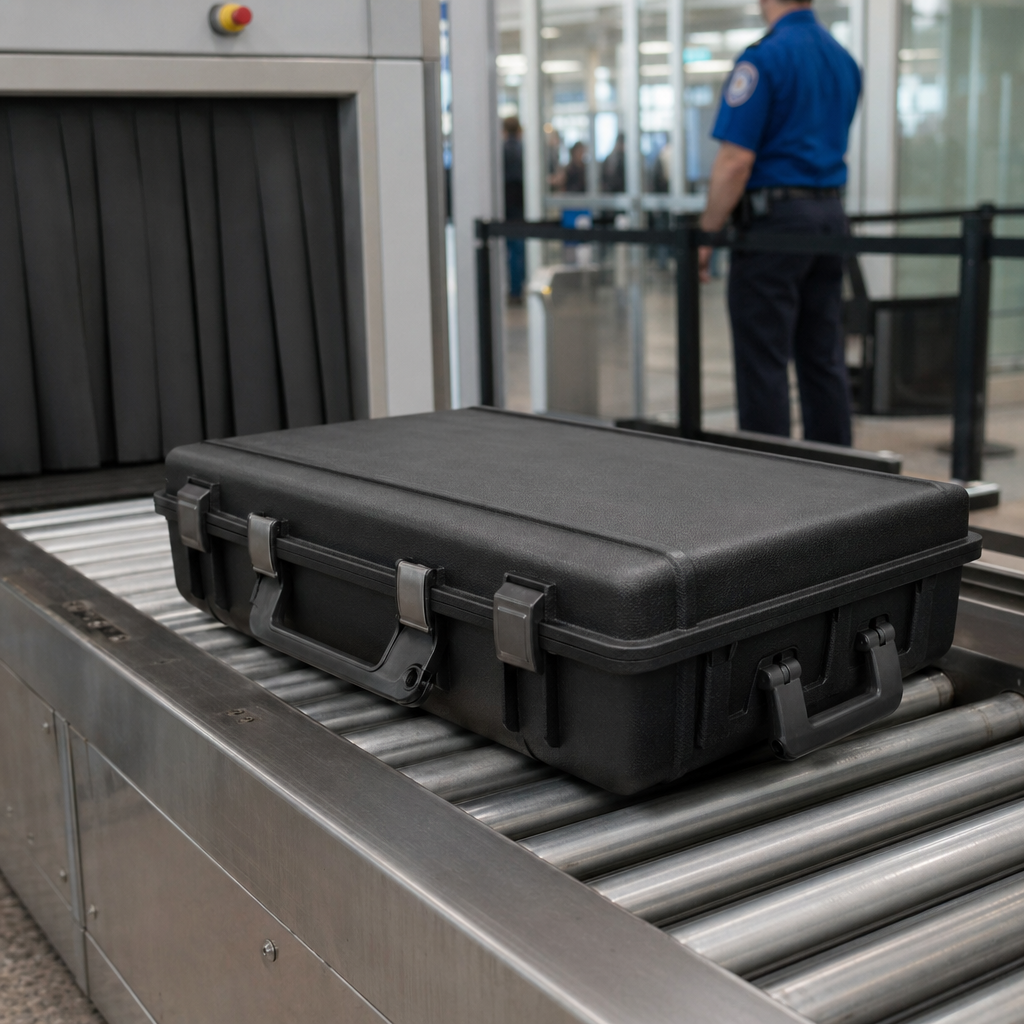
Choosing a gun safe that meets TSA travel guidelines starts with understanding a simple rule: when you fly with a firearm, the gun must be unloaded, locked in a hard-sided container, and inaccessible during transport. Many buyers assume any lockbox sold as a “travel gun safe” will qualify, but that is not always true in practice. After helping travelers evaluate cases for checked baggage, rental-car transfers, hotel stays, and home storage between trips, I have seen the same mistakes repeatedly: cable boxes mistaken for airline-ready cases, weak latches that fail baggage handling, and lock systems that satisfy marketing copy but not the letter of airline and federal requirements.
A gun safe for travel is not the same thing as a full-size home safe. In this context, “gun safe” usually means a portable lockable container designed to secure one or more unloaded firearms during transit. TSA guidelines govern how firearms are packed for commercial flights in the United States, while individual airlines may impose additional conditions on ammunition, weight, declarations, and case placement. That distinction matters. A case can comply with baseline federal transport rules yet still create problems at the counter if it is oversized, difficult to inspect, or incompatible with an airline’s published firearm policy.
This buying guide is the hub for the broader Gun Safes & Safety topic because travel requirements force you to evaluate security, compliance, durability, and convenience at the same time. The right case should resist prying, survive baggage handling, prevent unauthorized access, and still fit your trip profile. It also needs practical details buyers often overlook, such as reinforced lock points, foam that protects sights and optics, and a footprint that works inside standard luggage. If you are comparing lock boxes, handgun cases, or compact rifle cases, the goal is not just finding a container that locks. The goal is choosing a gun safe that clearly meets TSA travel guidelines, aligns with airline rules, and gives you confidence from check-in to arrival.
Understand the TSA baseline before you compare products
The first filter is legal and procedural, not cosmetic. TSA requires firearms to be unloaded and locked in a hard-sided container that completely secures the firearm from being accessed. Only the passenger may retain the key or combination unless TSA specifically requests access during screening. In real terms, that means a soft pistol sleeve with a luggage lock is not enough, and a flimsy plastic case with flex around the lid may be rejected even if it technically has lock holes.
Start by reading the firearm transport page published by TSA and then check your airline’s own rules. Major airlines often mirror the federal standard but differ on ammunition packaging, maximum ammo weight, whether magazines must be empty, and whether the locked gun case can ride inside a larger checked suitcase. I advise buyers to print or save both sets of rules before flying. Counter staff are usually knowledgeable, but consistency varies across airports, and having the written policy helps resolve uncertainty quickly.
When manufacturers claim “TSA approved,” read that phrase carefully. For firearm containers, what matters is not a TSA-accessible luggage lock system. In fact, the firearm case should be locked so that only you can open it. The better indicator is whether the case is hard-sided, has robust lock points, closes without gaps, and is built for firearm transport. Ignore vague marketing language and focus on construction details and compliance language that map directly to published transportation rules.
Choose the right case type for your firearm and trip
The best travel gun safe depends on what you are transporting and how often you travel. For a single handgun, a compact hard case with two lock points is usually the most efficient option. Models from brands such as Pelican, Nanuk, Vaultek, and LifePod-style manufacturers are common starting points because they combine impact-resistant shells with denser foam and stronger hardware than generic lockboxes. If your pistol has a red dot, threaded barrel, or tall suppressor-height sights, verify internal dimensions rather than relying on a basic “fits most handguns” claim.
For two handguns, look for a wider hard case with customizable foam and independent space for magazines. The case should close flat without pressure on optics or controls. I have seen travelers damage slide-mounted optics simply because foam was cut too tightly and the lid compressed the sight during baggage handling. A little clearance is safer than a perfect showroom fit.
Long guns change the equation. A true rifle case that meets airline transport expectations should have a rigid shell, multiple locking points, pressure-equalization support for altitude changes, and wheels or handles that can survive baggage systems. Cases from SKB, Pelican, and Nanuk are widely used for this reason. They are heavier and more expensive than entry-level molded cases, but the difference in latch quality and shell rigidity is obvious once you handle both side by side.
If you want one product for flying and vehicle security, be cautious. Many portable handgun safes with steel cables are useful in cars and hotel rooms, but some are better viewed as anti-theft boxes than flight-ready firearm cases. A cable-secured steel box can be excellent for temporary vehicle storage, yet its thin-gauge steel, single lock point, or lid flex may make it a poor choice for checked-airline transport. Buy for the actual use case, not the label.
Evaluate build quality, lock strength, and real security
Travel compliance is the minimum standard; real security requires more. Shell material matters first. Injection-molded polymer can be sufficient when thick and reinforced, but thin plastic flexes at the corners and around lock holes. Steel cases resist cutting and prying better, though they can add weight and may offer less impact absorption for delicate optics unless the interior is well padded. For most travelers, a premium polymer hard case with reinforced lock areas offers the best balance of weight, durability, and protection.
Locking points are where many products fail. One centered lock on a case with wide edges can leave enough flex for a lid corner to lift. Two lock points are preferable for handgun cases, and multiple points are standard for rifle cases. Check whether the hasps are metal-reinforced and whether padlocks sit flush enough to avoid snagging in luggage systems. A robust lock interface often tells you more about case quality than the exterior finish.
Lock choice matters too. Keyed padlocks are simple and reliable, but travel is smoother when you bring spare keys stored separately. Combination padlocks remove the key problem but can be slower under stress at the check-in counter if you do not practice. Biometric locks are convenient for daily access, yet for air travel I generally favor mechanical reliability over convenience. Fingerprint readers can be affected by dry skin, moisture, battery failure, or hurried repositioning. If a biometric safe is your preferred option, make sure it also has a reliable backup key or code and verify how the lock behaves when power is low.
| Feature | What to Look For | Why It Matters for TSA Travel |
|---|---|---|
| Case shell | Hard-sided polymer or steel with minimal flex | Prevents access and survives baggage handling |
| Lock points | At least two for handguns; multiple for long guns | Reduces pry gaps and secures the lid evenly |
| Locks | Non-TSA-accessible padlocks or integrated lock only you control | Matches the rule that only the passenger retains access |
| Interior | Closed-cell or custom-cut foam with clearance for optics | Protects firearm components from impact damage |
| Size | Fits firearm, magazines, and case tags without crowding | Simplifies inspection and improves packing safety |
| Documentation | Clear specs, warranty, and compliance-focused product details | Helps verify suitability before purchase and travel |
Size, fit, and packing details that prevent airport problems
Dimensions matter more than buyers expect. A case that technically fits your firearm can still be wrong if it forces awkward packing, presses the muzzle into foam, or leaves no room for unloaded magazines and documentation. Measure your firearm with its actual travel configuration. Include optic height, magazine well extensions, light attachments you intend to transport, and barrel length with any thread protector installed. Then compare those measurements against the true interior dimensions, not just external product size.
For handgun travel inside checked luggage, I generally recommend placing the locked firearm case inside a larger suitcase unless your airline requires a standalone case for specific firearms or sizes. This adds concealment, protects the case from cosmetic damage, and leaves room for compliant ammunition packaging elsewhere in the bag. The larger suitcase should also be lockable, although that outer layer serves a different role than the firearm case itself.
Foam deserves close attention. Pick-and-pluck foam is easy to customize, but heavy use can loosen it over time. Closed-cell inserts and laser-cut foam hold shape better for frequent flyers. If you carry a pistol with a mounted optic, create support around the frame and slide, not direct pressure on the optic body. For revolvers, support the frame and barrel evenly so the cylinder is not bearing the load during drops.
Ammunition rules create additional packing considerations. TSA permits small arms ammunition in checked baggage when securely packed in fiber, wood, plastic, or metal boxes specifically designed to carry ammo. Airlines may limit total weight, often around 11 pounds, though you must verify your carrier’s rule. Do not assume loaded magazines are acceptable just because some sources online say they can be if enclosed; airline interpretation varies. Factory boxes or dedicated ammo cases are the least controversial option.
Buying criteria, brand examples, and mistakes to avoid
When comparing products, use a checklist instead of shopping by price alone. First, verify hard-sided construction and independent lockability. Second, inspect how many lock points the case has and whether the surrounding material is reinforced. Third, review interior dimensions and foam layout for your exact firearm setup. Fourth, compare empty weight, because overweight checked bags add cost quickly, especially with rifle cases. Fifth, read the warranty and replacement-parts policy. Travel gear takes abuse, and latches, foam, and handles eventually need service.
In practical buying terms, a traveler carrying one defensive handgun a few times a year may do well with a compact Pelican or Nanuk-style case plus quality padlocks. Someone who wants quick access in a hotel room and secure vehicle storage may prefer a Vaultek-type electronic safe for ground use, but should still confirm whether the shell rigidity and lock design are robust enough for airline travel. Hunters and competitive shooters transporting long guns usually benefit from investing in heavier-duty SKB iSeries or Pelican rifle cases because repeated airline handling exposes weak hardware fast.
The biggest mistake is buying a cheap case twice. Entry-level products often advertise portability and affordability, but weak hinges, shallow lock holes, and brittle foam show their limits on the first serious trip. Another common error is confusing “TSA lock” language with firearm compliance. For gun cases, the priority is exclusive passenger control, not universal screening access. I also see buyers overlook airline-specific steps such as declaration procedures, early arrival times, and local laws at the destination. A compliant safe is essential, but it is only one part of lawful travel.
As the hub for Buying Guides within Gun Safes & Safety, this page should anchor your next decisions: whether you need a dedicated handgun travel case, a rifle hard case, a vehicle lock box, or a modular storage setup that covers the entire trip. The best choice is the one that clearly satisfies TSA travel guidelines, matches your firearm and accessories, and holds up under repeated use.
A smart purchase comes down to five essentials. Choose a hard-sided case, make sure the firearm is unloaded, use locks only you control, size the interior for your actual setup, and confirm your airline’s specific ammunition and declaration rules before travel day. Those steps prevent most check-in disputes and greatly reduce the risk of damage or unauthorized access.
If you are building a safer travel system, start with the case first and then work outward to luggage, ammo storage, and destination laws. Compare two or three reputable models, measure carefully, and buy the one that meets both compliance and real-world durability requirements. That approach saves money, shortens airport stress, and gives you a travel gun safe you can trust every time you fly.
Frequently Asked Questions
What exactly does TSA require for a gun safe or case when flying with a firearm?
TSA’s core requirements are straightforward, but they matter in the details. The firearm must be unloaded, placed inside a hard-sided container, locked, and transported only in checked baggage. The container must fully secure the firearm so it cannot be accessed during transport. In practical terms, that means the case should be rigid enough to resist being pried open, and the lock points should keep every edge of the container closed when locked. If the lid can be flexed open enough to reach inside, that is a red flag, even if the product is marketed as a travel gun safe.
Just as important, the passenger must retain control of the key or combination. That is one reason many experienced travelers prefer robust keyed or combination locks they personally manage, rather than assuming any integrated lock automatically satisfies airline and TSA expectations. At the ticket counter, you will typically need to declare the unloaded firearm to the airline and follow that carrier’s procedure for inspection and declaration. TSA may inspect the case, but the firearm should remain inaccessible once the case is locked and checked.
It is also wise to remember that TSA sets the baseline, while airlines may impose additional rules on case dimensions, ammunition packaging, and the number of firearms allowed. So when choosing a safe or travel case, do not just ask, “Is it hard-sided?” Ask whether it locks securely at all access points, whether the lock area resists tampering, whether the case can hold up inside checked luggage, and whether it aligns with your specific airline’s published firearm policy. A truly TSA-appropriate choice is one that satisfies the rule on paper and performs reliably in real-world baggage handling.
Will any product labeled “travel gun safe” or “TSA approved” work for airline travel?
No, and this is one of the most common misunderstandings buyers make. Marketing terms like “travel gun safe,” “portable pistol safe,” or even “TSA approved” do not automatically mean a case is suitable for transporting a firearm in checked baggage. Some compact lockboxes are built more for temporary vehicle storage or nightstand use than for the realities of airline travel. They may have thin metal shells, weak hinge points, inadequate locking tabs, or enough lid flex that a corner can be pulled open even when locked. A label cannot substitute for actual construction quality.
In addition, the phrase “TSA approved” can confuse consumers because it is often associated with luggage locks that TSA agents can open with a master key. For firearm cases, travelers generally want a setup where the passenger—not the public, not baggage handlers, and not anyone else—controls access. What matters most is not the sticker on the packaging but whether the case is a true hard-sided container that can be securely locked and that prevents access to the firearm during transport.
The better approach is to evaluate the product like a piece of security equipment, not like a travel accessory. Look for steel or other rigid construction, reinforced lock areas, strong hinges, minimal gaps around the lid, and little to no pry space when closed. If it has pre-drilled lock holes, make sure they are solidly reinforced and sized for quality locks. If it uses an integrated lock, assess whether that lock is backed by a substantial latch mechanism. Reviews can help, but your own physical inspection matters more. If you can twist it, bend it, or imagine it failing after a rough baggage-handling cycle, keep shopping.
What features should I look for to choose a gun safe that actually meets TSA travel guidelines and holds up in real travel situations?
Start with the non-negotiables: hard-sided construction, a secure locking system, and a design that prevents access when locked. From there, focus on strength and fit. A good travel-safe choice should be large enough to hold your unloaded firearm securely without excessive empty space, but not so oversized that it shifts around unnecessarily inside checked luggage. Interior foam or a fitted interior can help protect the firearm and reduce movement, especially during long trips or multiple connections.
Pay close attention to lock design. Cases with multiple lock points often provide better security than those relying on a single weak latch. If you are using padlocks, choose durable locks that fit snugly in the lock holes and do not leave excessive slack. Inspect the hinges too. Continuous piano hinges, recessed hinges, and reinforced hinge mounts tend to inspire more confidence than exposed, lightweight hardware. The case should also close tightly enough that no part of the firearm can be accessed through gaps or flex points.
Real travel adds another layer. If you expect to move through airports, rental cars, hotels, and family homes, portability matters. A case that is compliant but awkward, excessively heavy, or difficult to secure during transfers may become frustrating fast. Some travelers benefit from a compact steel case with a security cable for lawful temporary vehicle anchoring, while others need a larger hard case that rides inside a suitcase. The best choice depends on how you travel, how often you check bags, and whether the safe will also serve as storage at your destination. In short, choose for the entire trip—not just the airline counter.
Are biometric safes a good option for TSA-compliant travel, or should I choose a keyed or combination lock instead?
Biometric safes can be convenient, but they should be approached carefully for air travel. Fingerprint access is appealing in a home setting because it offers quick entry, but travel introduces variables that can make biometrics less dependable. Dry skin, dirty sensors, dead batteries, cold weather, rushed handling, and inconsistent fingerprint reads can all become problems at the worst possible time. If a biometric safe fails to open when you need to present the contents for declaration or inspection, that convenience quickly becomes a liability.
That is why many experienced travelers favor keyed or mechanical combination locks, or at least choose biometric safes that include a dependable backup method. Simplicity matters when you are moving through check-in lines and dealing with airline staff who may not all handle firearm declarations the same way. A sturdy hard-sided case with a solid keyed or combination lock often provides more confidence than a tech-heavy option with more potential failure points.
If you are considering a biometric model, evaluate it as a security device first and a convenience feature second. Ask whether the shell is genuinely rigid, whether the latch mechanism is strong, whether the biometric system has a proven track record, and whether battery failure would create a serious problem during travel. Also confirm that you can still secure the case in a way that keeps the firearm inaccessible throughout transport. For many travelers, a robust non-biometric case is the safer and more predictable choice. Biometrics may be fine for hotel-room or home use between trips, but for checked baggage, reliability usually beats novelty.
What are the most common mistakes people make when buying a gun safe for TSA-compliant travel?
The biggest mistake is buying based on product labels instead of actual requirements. People often assume that if a seller calls something a “travel safe,” it must be suitable for flying with a firearm. In reality, many of these products are designed for temporary storage in a car, drawer, or hotel room and are not strong enough for airline transport. Another common mistake is focusing only on whether the case locks, without checking whether it can still be pried open, bent, or partially accessed while locked.
A second frequent problem is choosing the wrong size or format for the trip. Some travelers buy a very small handgun lockbox without considering how it will fit inside checked luggage, whether it leaves room for protective padding, or how they will manage legal storage during rental-car transfers and overnight hotel stays. Others go too large, creating unnecessary weight and inconvenience. Smart buyers think through the entire travel chain: airport check-in, baggage handling, ground transportation, lodging, and return travel.
Another mistake is overlooking airline-specific rules and state or local laws at the destination. TSA compliance is only one piece of the puzzle. You still need to follow your airline’s declaration and ammunition rules, and you must understand the laws where you are departing, arriving, and stopping. Finally, many people underestimate the importance of build quality. Thin steel, flimsy locks, weak hinges, and poor tolerances often reveal themselves only after purchase. The best way to avoid regret is to inspect the case carefully, verify the locking method, compare it against actual TSA and airline requirements, and choose a model that is secure enough for checked baggage and practical enough for the rest of your travel routine.