
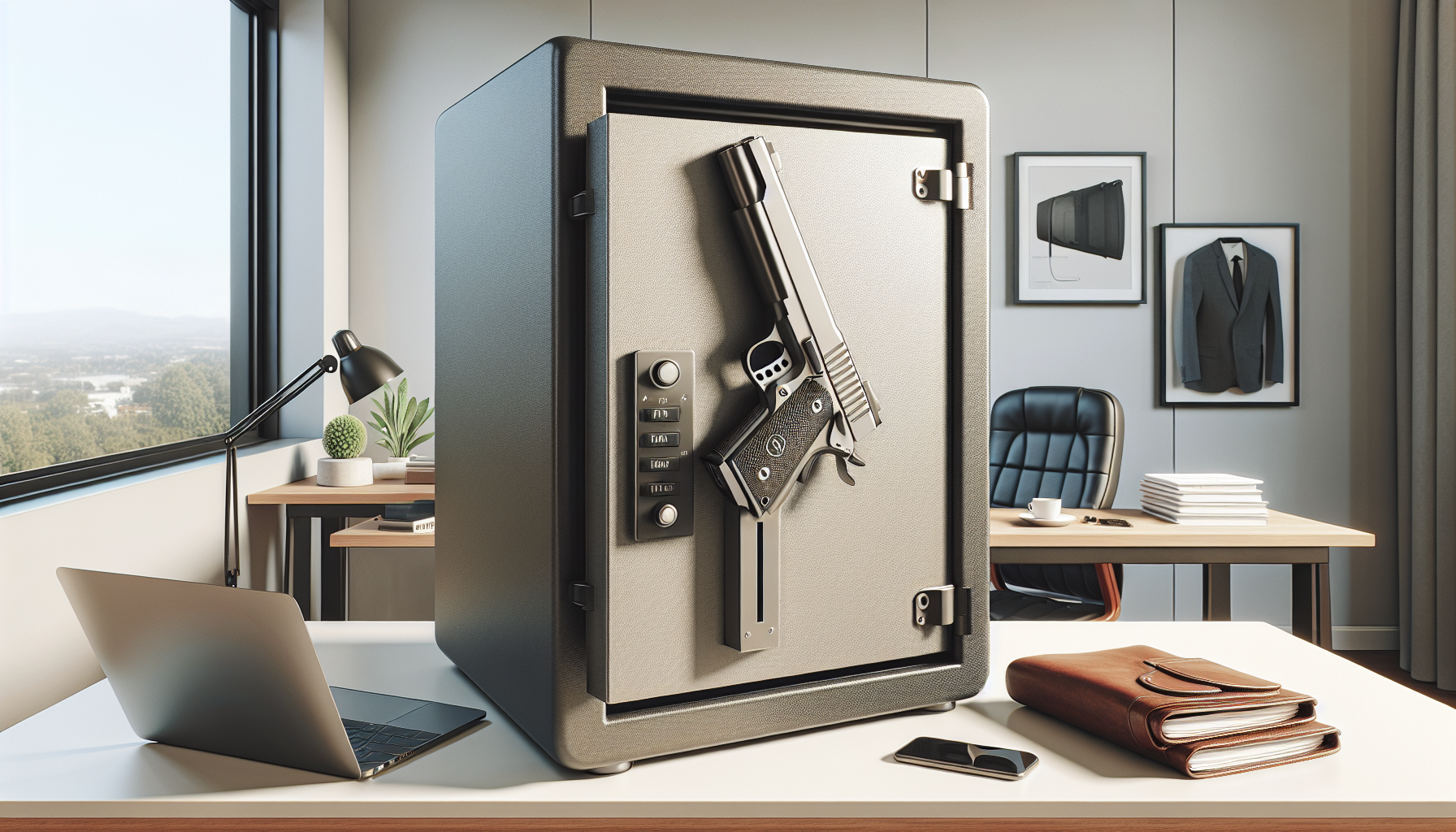
Choosing a gun safe that is easy to move if needed sounds simple until you start balancing security, weight, fire protection, legal storage needs, floor loading, and the reality of getting a 600 pound steel box through a hallway without damaging your home. In my experience helping buyers compare residential security containers, modular safes, and full-size gun safes, the biggest mistake is treating mobility as an afterthought. A safe that is impossible to relocate can become a problem during a move, a remodel, a flooring replacement, or even a room repurposing. A well-chosen movable gun safe protects firearms today without locking you into a bad setup later.
Before comparing products, define the key terms. A gun safe is a lockable storage unit designed for firearms, often with features such as reinforced steel, pry-resistant doors, relockers, fire insulation, and interior racks. In the consumer market, many products are technically residential security containers rather than high-security commercial safes rated to TL standards. Easy to move does not mean light enough to carry casually. It means the safe can be relocated with reasonable planning, proper equipment, and acceptable risk. That usually involves manageable weight, dimensions that fit standard doorways, the right center of gravity, anchor systems that can be removed and reinstalled, and delivery access that matches your home.
This matters because safe ownership is not static. People move houses, downsize, add children, convert offices into nurseries, or decide that a garage placement creates too much humidity. Many also discover that their first safe is too small. A movable gun safe gives you flexibility without forcing you into thin steel or poor locking systems. The best buying guide approach is to think in layers: theft resistance, fire performance, capacity, accessibility, and relocatability. If one layer dominates, the purchase often disappoints. A safe that moves easily but can be peeled open with basic hand tools is not a smart buy. A safe with exceptional steel thickness and fire board but no practical way to get it upstairs or out of a closet may be just as impractical. The goal is durable protection you can still live with over time.
For buyers researching gun safes and safety, this article serves as a hub for the buying guide questions that matter most: what size to buy, how much safe weight is enough, whether modular gun safes are worth it, what fire ratings actually mean, how to compare locks, and which installation choices preserve both security and future mobility. If you understand those decisions before you buy, you can choose a gun safe that is secure now and movable later without expensive surprises.
Start with the right definition of movable
When shoppers say they want an easy-to-move gun safe, they usually mean one of three things. First, they may need a safe that professional movers or safe movers can relocate during a household move. Second, they may want to reposition it inside the home without major demolition. Third, they may need a modular safe that can be disassembled into panels and moved through stairs, narrow turns, basements, or apartments. These are different requirements, and the best product for one may be wrong for another.
In practical terms, conventional welded gun safes under roughly 400 pounds are easier to move but usually offer lighter steel, smaller capacity, or fewer fire layers. Midweight safes in the 450 to 800 pound range often hit the sweet spot for home use because they still provide meaningful mass and stronger construction while remaining relocatable by professionals with stair-climbing dollies, pallet jacks, and lift gates. Above that range, movement becomes more specialized, especially if the safe must cross wood floors, tight landings, or upper stories. I advise buyers to evaluate not just the product weight but also how it will move from truck to final position and then, later, from that position to the next home.
Dimensions matter as much as pounds. A safe that is 28 inches deep may not clear older stairwells or tight utility room doors. Door swing is another overlooked issue. Some safes need substantial clearance for the handle and full door arc, which can make a “fit” impossible in practice. Measure every doorway, hallway, stair width, landing depth, and ceiling height along the path. Then compare those numbers to the safe body dimensions, not just the shipping dimensions listed online.
Choose a construction type that balances security and relocation
The easiest way to narrow the field is to compare welded safes, modular safes, and gun cabinets honestly. Welded safes are the familiar one-piece units. Their advantage is structural simplicity and, in many models, better resistance to prying because the body is continuous. Their disadvantage is obvious: once delivered, they are cumbersome. Modular safes use separate steel panels assembled in the room. Done well, they provide strong security with far better relocation options because the panels can be broken down for a move. Gun cabinets are the lightest option but generally use thinner steel and provide limited burglary resistance.
For many homeowners, modular designs from brands such as Zanotti or SnapSafe deserve serious attention. They solve access problems that defeat traditional safes, especially in basements, lofts, and homes with narrow stair turns. In my experience, modular units are especially useful for renters and military families who expect future moves. The tradeoff is that assembly quality matters. Panel connections, door fit, and anchoring are critical. A poorly assembled modular safe can lose much of its intended performance.
Material thickness is where marketing often gets fuzzy. Look for actual steel gauge or inch measurements for the body and door. Lower gauge numbers mean thicker steel. A 12-gauge body is materially stronger than 14-gauge, and a plate steel door adds meaningful pry resistance. Weight alone is not proof of strength because fire insulation adds mass without improving burglary protection. Ask what portion of the weight comes from steel versus gypsum board, concrete-based fill, or interior components.
| Type | Typical Advantage | Main Limitation | Best Fit |
|---|---|---|---|
| Welded gun safe | Strong one-piece construction | Hardest to relocate through tight spaces | Owners with stable placement and good access |
| Modular gun safe | Panels move through doors and stairs easily | Assembly quality and seam design matter | Frequent movers, basements, apartments |
| Gun cabinet | Low weight and low cost | Limited theft resistance | Budget storage where legal compliance is the priority |
Match safe weight to realistic security needs
A common buying question is how heavy a gun safe should be. The answer depends on whether your main threat is unauthorized access by children, smash-and-grab burglary, or a more determined attack with pry bars and time. If your concern is basic household safety and compliance, a lighter safe or cabinet anchored correctly may be sufficient. If you want meaningful burglary resistance, more mass and thicker steel become important because thieves prefer quick wins. Unanchored lightweight safes can be tipped, pried, or removed entirely.
I usually frame it this way: below about 300 pounds, mobility is easy but theft risk rises sharply unless the safe is anchored exceptionally well in a low-visibility location. Between 400 and 700 pounds, you can still move the safe with planning, but casual thieves are far less likely to take it. Between 700 and 1,000 pounds, security improves, yet installation and floor load become more serious concerns. Above 1,000 pounds, moving costs, structural constraints, and route planning can dominate the purchase decision.
Anchoring changes the equation. A 500 pound safe bolted into concrete is much more secure than an 800 pound safe sitting loose in a garage. If future mobility matters, choose a model with accessible anchor holes and install it so bolts can be removed without destroying flooring or cabinetry. On wood subfloors, use proper lag hardware into joists or a reinforced platform as recommended by the manufacturer. On slab foundations, concrete anchors are usually preferable. The point is simple: smart anchoring gives you security now and preserves the ability to move later.
Understand fire ratings without overpaying for marketing
Fire protection is important, but buyers often misunderstand what published ratings mean. Many residential gun safe fire ratings come from manufacturer testing rather than independent certification. That does not make them worthless, but it means you should read them critically. Ask for the temperature, duration, testing method, and whether sensors measured internal temperature at multiple points. Paper chars around 451 degrees Fahrenheit, but wood stocks, optics, electronics, and ammunition introduce different concerns.
For a safe that still needs to be movable, avoid assuming the highest advertised fire number is automatically best. More fireboard and heavier fill can add substantial weight. In many homes, a moderate fire rating paired with smart placement is more practical than chasing extreme numbers. Locating the safe on a ground floor away from fuel-rich areas, maintaining smoke alarms, and reducing clutter nearby all improve outcomes. In wildfire zones or remote areas with delayed fire response, stronger fire protection may justify extra weight. In urban areas with quick response times, a balanced specification may be wiser.
Pay attention to door seals as well. Expanding intumescent seals can help block smoke and heat transfer around the door edge. Better door fit and more robust hinge-side protection also matter. Fireboard thickness alone is not the whole story. If two safes weigh the same, but one uses thicker steel and better sealing while the other relies on bulk filler, the first may be the better long-term purchase.
Pick locks and layouts that support daily use and future moves
The lock matters because the best safe is the one you consistently use. Electronic keypad locks are fast and convenient, especially for owners who access firearms frequently. Mechanical dial locks are slower but time-tested and less dependent on electronics. Higher-end options may include redundant systems, EMP-resistant claims, or biometric entry. For most buyers, the best choice is a UL-listed electronic or mechanical lock from a recognized manufacturer such as Sargent and Greenleaf or SecuRam, installed on a safe with strong boltwork and a reliable warranty.
From a moving perspective, simplicity helps. Delicate external accessories, oversized handles, protruding keypads, and decorative hardware can complicate transport. Recessed or removable handles are preferable. Interior layout matters too. Adjustable shelving allows the safe to evolve when your firearm collection changes. If you later move from long guns to a mix of rifles, handguns, documents, and optics, a flexible interior delays the need for a second safe. That matters because replacing an undersized safe is often more expensive than moving a correctly sized one.
Capacity claims are famously optimistic. A “24 gun” safe rarely stores 24 scoped rifles in a practical way. Buy for 25 to 50 percent more room than you think you need. That advice comes from seeing countless owners outgrow their first safe within a few years. If mobility is a priority, the sweet spot is often a mid-size safe with honest interior dimensions rather than the tallest, deepest cabinet that barely fits your current house.
Plan delivery, placement, and the next move before you buy
The smartest gun safe purchase is made with a tape measure in one hand and a delivery route plan in the other. Start outside. Can a truck access your driveway? Are there steps, steep grades, gravel, or soft ground? Inside, note door widths, thresholds, stair angles, floor transitions, and turning radiuses. Then think ahead to the next move. If you may sell the home, can the safe be removed without tearing trim, railing, or built-ins apart?
Placement affects both security and mobility. A closet installation can conceal the safe and make theft harder, but some closets create impossible extraction angles later. Garages offer easy access for delivery and eventual moves, yet they often bring moisture, temperature swings, and higher visibility when doors are open. Basements are secure and climate-stable in some homes, but stairs can make future relocation expensive. A first-floor interior room on a slab is often the best compromise if the layout allows it.
Use professional safe movers when the unit exceeds what standard household movers handle comfortably. Ask whether they carry insurance specific to safes, what equipment they use, and whether they will bolt the safe down. A reputable dealer will discuss curbside versus in-home delivery clearly. This buying guide principle is nonnegotiable: if the seller cannot explain delivery requirements, support after the sale may be equally weak.
Best buying criteria for a movable gun safe hub decision
If you want a clear decision framework, prioritize these factors in order: verified dimensions, realistic empty weight, steel thickness, anchor design, lock quality, fire specification, interior flexibility, and service support. That order reflects what usually causes regret. People rarely complain that they measured too carefully. They often complain that a safe was heavier than expected, weaker than the brochure implied, or impossible to fit where planned.
For most households, the best movable gun safe is not the cheapest cabinet or the heaviest fortress. It is a mid-size, high-value model or modular design that fits your access route, uses credible steel thickness, accepts secure anchoring, and offers enough interior space for growth. Compare warranties, replacement key or lock procedures, and dealer reputation. Read installation instructions before purchase, not after delivery. If possible, see the safe in person and work the lock, inspect the welds, and test shelf adjustability.
This buying guide hub should also point your next research steps. After narrowing your options, dig deeper into articles on safe size planning, modular versus welded safes, electronic versus mechanical locks, fire rating methodology, moisture control, and professional installation. Those topics determine whether a safe remains useful for years or becomes a costly compromise.
The central takeaway is straightforward. Choose a gun safe that is easy to move if needed by defining mobility correctly, matching weight to threat level, favoring honest construction over marketing, and planning delivery and anchoring from the start. When you do that, you get secure firearm storage that can adapt to moves, remodels, and changing family needs. Measure your space, list your priorities, and compare a few well-built models before you buy.
Frequently Asked Questions
What type of gun safe is easiest to move if I may need to relocate it later?
If future mobility matters, the easiest category to work with is usually a modular gun safe or a lighter residential security container rather than a traditional one-piece heavy safe. A modular safe is designed to be carried in sections and assembled in place, which makes it dramatically easier to get through stairs, tight hallways, interior doorways, and corners without the same risk of wall, flooring, or trim damage. That matters in real homes, where the challenge is often not just total weight but where that weight has to go and how it gets there.
A lighter one-piece gun safe can still be a good choice if you want simpler installation and a lower purchase price, but you need to look carefully at the tradeoff. As weight goes down, ease of moving goes up, but theft resistance may go down too unless the safe is properly anchored and built with solid locking features. In practical terms, many buyers do best by identifying the lightest safe that still meets their storage needs, then confirming it can be anchored securely at the current location and realistically moved again if life changes. If you expect a future home sale, apartment move, remodel, or room conversion, buying with transport in mind from the beginning is usually far smarter than trying to solve the problem later.
How heavy should a gun safe be if I want it to be secure but still reasonably movable?
There is no single perfect weight, because the right answer depends on your firearm collection, how often you think you may move, the structure of your home, and your willingness to rely on anchoring rather than sheer mass. In general, the goal is not to find the heaviest safe you can afford if mobility is a priority. It is to find a safe heavy enough to provide meaningful security and stability, but not so heavy that relocation becomes a major construction project. For many homeowners, once you get into several hundred pounds before loading firearms, accessories, and ammunition, movement becomes a specialized task that may require professional equipment, multiple movers, and careful route planning.
It also helps to remember that installed weight is what matters, not just shipping weight. Shelving, long guns, handguns, magazines, optics, documents, and ammo can add substantial mass. A safe that seems manageable when empty can become far more difficult to relocate after years of use. If you want a practical balance, think in terms of total ownership, not just delivery day. A safe that can be broken down, one with removable interiors and doors, or one built for easier disassembly may offer a better long-term solution than a slightly heavier model with no mobility advantages. Security should come from construction quality, lock reliability, placement, and proper anchoring, not from weight alone.
Does choosing a lighter or modular gun safe mean giving up too much security?
Not necessarily, but it does mean you need to evaluate security more carefully and realistically. Many buyers assume that heavier automatically means safer, but that is only partly true. Weight helps resist quick grab-and-go theft, yet real security comes from a combination of steel thickness, door construction, bolt design, lock quality, pry resistance, anchoring, and how visible or accessible the safe is in the home. A lighter safe that is well designed and properly bolted down can be a far better choice than an unanchored heavier unit placed in an exposed area.
Modular safes in particular deserve a close look because some are engineered specifically to provide serious protection while solving the installation and relocation problem. The key is to avoid treating all modular or lighter safes as equal. Compare body construction, door strength, lock type, fire protection method, and how the panels connect. Ask whether the safe has been independently tested or whether the claims are purely marketing language. Also think about your actual threat level. Most residential buyers are trying to prevent unauthorized access, meet safe storage obligations, and deter common burglary attempts, not defend against prolonged attacks with specialty tools. If that sounds like your use case, a well-chosen movable safe can absolutely make sense without compromising responsible storage.
What should I check in my house before buying a gun safe that I may need to move in and out later?
Before you buy, measure everything. That includes exterior doors, interior doors, stair widths, hallway turns, ceiling clearances, and the final room where the safe will sit. Buyers often focus only on the footprint of the safe and forget that delivery and future removal require extra space for hand trucks, lift equipment, tilt angles, and protective padding. A safe that technically fits a room may still be extremely difficult to get into or out of that room without removing doors, railings, or trim. Planning the route in advance can save a lot of frustration and expense.
You should also evaluate floor loading and structural support. A heavy safe on a concrete slab presents a very different situation than a safe placed on an upper floor framed with wood joists. Even if the floor can support the weight, moving that load across the surface can create point-load stress or damage certain flooring materials. Hardwood, tile, laminate, and stair treads can all be vulnerable during installation and relocation. On top of that, think about where you can anchor the safe, whether humidity control is needed, how concealed the location is, and whether the room choice will still make sense if your household changes. The best buying decision is the one that fits both the current home and a plausible future move, not just today’s empty corner.
Is it better to hire professional safe movers, or can I move a gun safe myself if needed?
For most full-size gun safes, especially once you get into the several-hundred-pound range, professional movers are the safer and smarter option. Moving a gun safe is not just a strength problem. It is a risk-management problem involving weight distribution, center of gravity, stair negotiation, floor protection, wall clearance, tie-down technique, and the possibility of serious injury or major property damage if something shifts unexpectedly. A 600-pound steel box does not need much momentum to damage floors, crush fingers, gouge drywall, or become unstable on stairs.
That said, some smaller safes and certain modular units are intentionally designed to be handled more easily, and those may be realistic for careful self-move situations if the route is simple and the equipment is appropriate. Even then, the key is not to underestimate the process. You would want proper dollies, straps, floor protection, enough help, and a clear plan for unloading, positioning, and re-anchoring the safe. In many cases, the cost of professional safe moving is minor compared to the value of the firearms, the cost of repairing a home, or the consequences of an accident. If mobility is one of your top priorities, choose a safe that reduces future moving complexity from the start, but do not confuse “easier to move” with “easy to move carelessly.”