
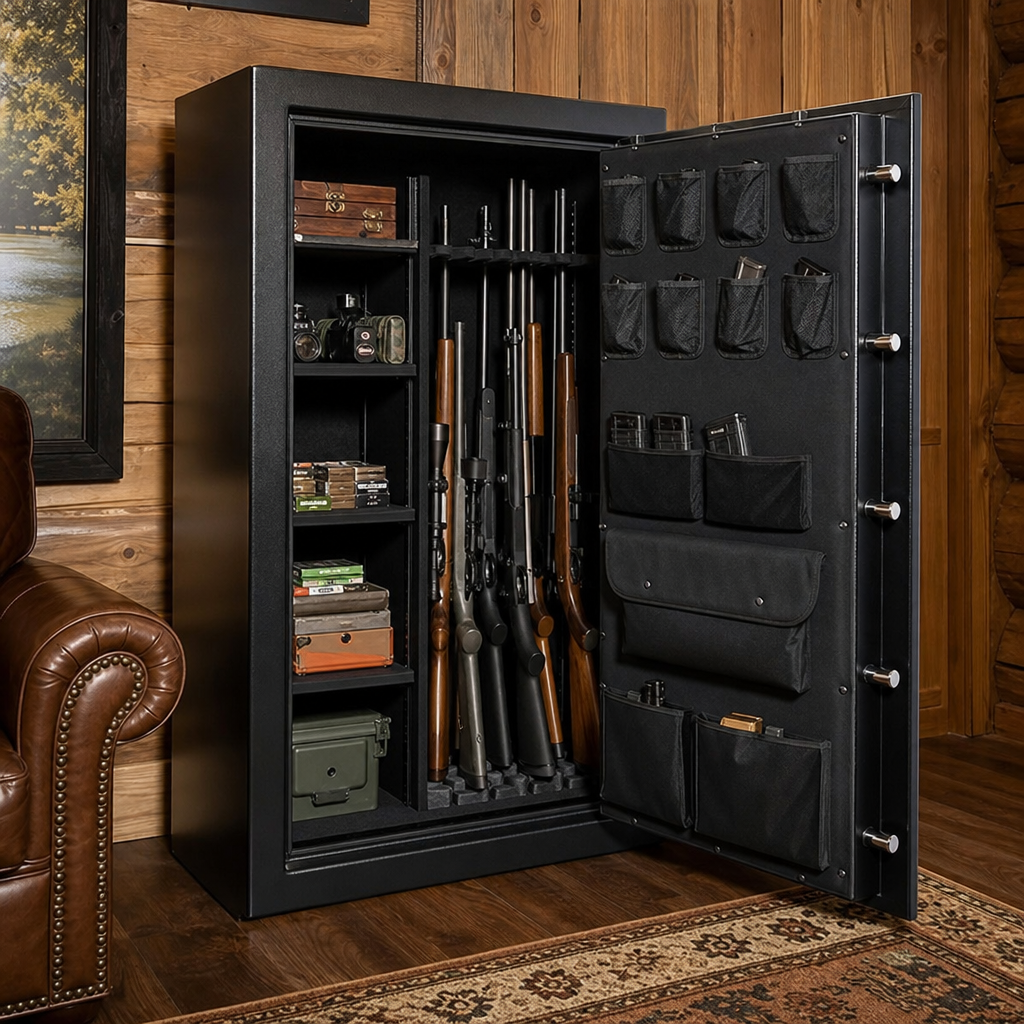
The best gun safes that offer built-in gun racks for organization do more than lock firearms away; they create a structured storage system that protects weapons, speeds access, and reduces preventable damage. In the gun safes and safety category, this buying guide serves as a hub because shoppers rarely need only a box with a lock. They need a long gun safe, rifle safe, or modular cabinet that fits their collection, supports optics and accessories, complies with household safety goals, and keeps every firearm stored in a stable position. Built-in gun racks matter because they turn unused interior volume into ordered capacity. A rack keeps stocks, barrels, and forends separated, limits metal-on-metal contact, helps you count inventory quickly, and makes it easier to store handguns, documents, magazines, and ammunition in dedicated zones. After evaluating safes in homes, retail showrooms, and installation projects, I have seen the same pattern repeatedly: a well-designed interior often matters as much as steel thickness or lock type for long-term owner satisfaction.
When people search for the best gun safe with built-in gun racks, they usually mean one of three things. First, they may want a traditional long gun safe with notched barrel rests and a carpeted floor rack for rifles and shotguns. Second, they may want an adjustable interior that combines long gun slots with shelves, door organizers, and pistol pouches. Third, they may want a higher-end safe with specialized racks for scoped rifles, AR-style firearms, or mixed collections. Understanding those categories prevents a common mistake: buying based on the advertised gun count alone. Capacity ratings are often optimistic and based on slim, unscoped long guns stored tightly together. In actual use, optics, bipods, slings, and wider stocks reduce capacity materially. That is why organization is not a cosmetic feature. It is a buying criterion that affects usability, fire protection, access planning, and whether a safe still works after your collection changes over the next five or ten years.
This guide explains how to compare built-in gun rack designs, how to judge true capacity, which lock and fire features matter, and which brands and configurations deserve attention. It also points shoppers toward related topics they should explore next, including fire ratings, biometric locks, modular interiors, and installation practices. If you want one page that helps you shop intelligently before drilling anchor holes into a concrete slab, this is that page.
What Built-In Gun Racks Actually Do Inside a Safe
A built-in gun rack is the interior system that holds firearms upright, separated, and supported. In most long gun safes, that means a barrel rest near the back wall paired with a base rack or carpeted floor cutout that keeps buttstocks from sliding. Better systems add adjustable barrel saddles, wider spacing for scoped rifles, and side storage that lets you use the door without knocking guns out of position. The practical benefit is straightforward: every firearm has a defined place. That reduces searching, fumbling, and accidental contact between blued steel, cerakote finishes, wood stocks, and optics.
Built-in racks also improve safety habits. A disorganized safe encourages temporary leaning, stacking, and crowding. Over time, that leads to scuffed finishes, pressure on scopes, and unstable storage. I have opened safes where five advertised extra slots were technically available, but using them meant wedging rifles so tightly that the owner avoided rotating guns entirely. A proper rack solves that by matching slot width to the real shape of the collection. Hunters with wood-stocked bolt actions need different spacing than owners storing AR-15 platforms with mounted lights and red dots. If the rack does not acknowledge those differences, the safe may be secure but not truly functional.
There is also an inventory advantage. Organized interiors make visual checks simple. You can confirm what is present, identify open slots, and see whether a cleaning kit or important document has shifted. For households balancing security with ready awareness, that matters. A good rack turns a safe from passive storage into an active management system.
How to Judge Capacity, Layout, and Real-World Fit
The fastest way to buy the wrong safe is to trust the “24-gun,” “36-gun,” or “48-gun” label without analyzing your actual firearms. Industry capacity figures are not standardized in a way that reflects modern accessories. A 24-gun safe may hold 10 to 14 scoped rifles comfortably, especially if several are tactical platforms. Measure the interior height, width, and depth, then compare those dimensions to the longest firearm you expect to store, including muzzle devices and elevated optics. Depth matters more than many buyers expect because a shallow body can force scoped rifles to angle awkwardly or contact the door organizer.
Layout is equally important. Some safes place all long gun racks in a single row across the back. Others use a split interior with a rack on one side and shelves on the other. For mixed collections, split interiors are often the better choice because they reserve room for ammo, documents, suppressor paperwork, handguns, and valuables. However, a split layout reduces maximum long gun capacity. That tradeoff is worth making if you prioritize organization over headline numbers.
Pay attention to shelf adjustability. Modular interiors from brands such as Liberty Safe, Browning, and Rhino Metals can be reconfigured as your collection grows. That flexibility is valuable when a household adds shorter carbines, youth rifles, or larger optics. Door storage can also change usable capacity significantly. A premium door panel with handgun holsters, mesh pockets, and magazine loops moves smaller items off the shelves and frees room for long guns. In practice, the combination of a sensible rack plus an organized door panel often delivers more usable space than simply buying the next larger safe with a basic interior.
Features That Separate a Good Gun Safe From a Great One
Organization only matters if the safe itself meets core performance standards. Start with body and door construction. Steel gauge affects resistance to prying and cutting; lower gauge numbers indicate thicker steel. Entry-level residential security containers often use 14-gauge or 12-gauge steel bodies, while stronger models move into 10-gauge or thicker. Door design, internal hinges versus external hinges, and bolt coverage all affect attack resistance. For many buyers, a safe verified to the UL Residential Security Container standard provides a useful baseline, though higher burglary ratings exist for commercial-grade units.
Lock choice deserves careful thought. Mechanical dial locks remain reliable and time-tested, though they are slower to open. Electronic keypad locks offer faster access and easier code changes. Biometric locks can be convenient, but sensor quality varies and should be tested under realistic conditions. In field use, I have found that a quality electronic keypad from a recognized lock maker such as Sargent and Greenleaf or SecuRam gives the best balance of speed and reliability for most households. Redundant-entry systems, where available, add confidence.
Fire protection is another area where marketing claims need scrutiny. Fire ratings vary by time and temperature, and not all testing methods are equal. Look for named testing protocols or transparent descriptions rather than generic “fireproof” language. Door seals, layered insulation, and continuous welds all contribute. Keep expectations realistic: a gun safe is not a data vault. Paper documents, optics adhesives, and ammunition may respond differently to heat. For many owners, the right solution is a fire-rated gun safe combined with a smaller internal document container for passports, deeds, and backups.
Best Types of Gun Safes With Built-In Gun Racks
The best option depends on your collection size, home layout, and budget. The table below summarizes the main categories buyers should compare.
| Safe type | Best for | Built-in rack style | Main advantage | Main limitation |
|---|---|---|---|---|
| Traditional long gun safe | Hunting rifles and shotguns | Rear barrel rest with floor rack | Simple, proven layout | Less adaptable for optics-heavy firearms |
| Modular interior safe | Mixed collections | Adjustable racks and shelves | Flexible as needs change | Usually costs more |
| Tactical gun safe | AR-style rifles and accessories | Wider spacing, door storage, accessory zones | Handles modern setups better | Advertised capacity still runs high |
| Compact long gun safe | Apartments and smaller homes | Basic vertical rack | Fits tight spaces | Limited future expansion |
| High-security premium safe | Large or valuable collections | Heavy-duty adjustable racks | Better burglary and fire resistance | Weight and price |
Traditional long gun safes remain the most common purchase because they are widely available and cost-effective. Models from Winchester Safes, Cannon, Stack-On, and Sports Afield often fit this category. They work well for straightforward hunting setups, especially where most firearms are unscoped or lightly scoped. Modular interior safes, often seen from Liberty, Browning ProSteel, and Rhino Metals, suit buyers who value organization enough to pay for it. Tactical safes are useful for owners with AR platforms, optics, slings, and chest-level accessories that make conventional narrow racks frustrating.
If you expect your collection to change, buy for the next stage, not the current one. That rule prevents expensive replacement later. Many owners outgrow a compact safe within two years, especially after adding handguns, tax documents, jewelry, or family records. A larger safe with a better interior usually proves cheaper than upgrading twice.
Brand and Buying Considerations for This Hub Topic
As a buying-guide hub, this page should help you evaluate brands and connect the questions that deserve deeper research. Liberty Safe is known for modular interiors, broad dealer support, and practical door panel systems. Browning stands out for interior organization concepts such as Axis Adjustable Shelving and layouts that support scoped rifles more intelligently than flat legacy racks. Rhino Metals, including Kodiak lines, often delivers solid value with useful interior flexibility. Fort Knox, AMSEC, and higher-tier premium brands target buyers who want thicker steel, stronger burglary resistance, and more customization.
Dealer support matters more than many online shoppers realize. White-glove delivery, in-home placement, and anchoring affect both safety and owner satisfaction. A 700-pound safe positioned poorly can block doors, strain flooring, or become difficult to service. Professional installers also understand humidity control, leveling, and clearance for door swing. If your safe will sit in a garage, basement, or climate-variable room, ask about dehumidifier rods, desiccants, and elevated bases to reduce moisture risk. Rust prevention is part of safe ownership, not an afterthought.
At this point in the buying journey, readers should also branch into related guides. Review detailed comparisons of biometric versus keypad locks, learn how to interpret fire ratings, study safe placement and bolting methods, and compare interior lighting systems. Those connected topics sharpen the final decision because the best gun safe with built-in gun racks is rarely defined by a single specification. It is defined by how well the safe supports secure daily use in your specific home.
Common Mistakes Buyers Make and How to Avoid Them
The first mistake is underestimating size. Buy more capacity than you need today. The second is treating gun count as a universal metric when interior geometry matters more. The third is overvaluing cosmetics while ignoring lock quality, steel thickness, and installation. I have seen buyers choose an attractive gloss finish and decorative hardware, then struggle with cramped racks and poor door clearance every week afterward.
Another common mistake is overlooking access frequency. If you access the safe often, interior lighting, shelf visibility, and rack spacing matter immensely. For occasional storage, they still matter, just less. Finally, buyers often forget the room around the safe. Measure hallways, stairs, and corners before delivery. Confirm floor load if placing a large safe upstairs. Anchor the safe whenever practical; even heavy safes can be tipped for attack leverage if left unsecured.
A disciplined buying process fixes most of these problems. List every firearm, note optics and accessories, decide what else the safe must hold, measure the intended location, and compare true interior layouts rather than just exterior dimensions. That approach leads to better organization from day one.
The best gun safes that offer built-in gun racks for organization combine secure construction with an interior that reflects how people actually store firearms today. A rack is not a minor convenience. It protects finishes, supports faster inventory checks, improves access, and helps a safe deliver its advertised purpose over years of use. The right choice starts with honest capacity planning, then moves through layout, steel thickness, lock quality, fire protection, and installation. Buyers who focus only on the headline gun count usually end up frustrated. Buyers who study interior design, real spacing, and accessory storage make smarter long-term purchases.
For most households, the winning formula is simple: buy larger than your current collection requires, choose a modular or well-spaced rack system, insist on a proven lock, and install the safe correctly in a low-moisture location. From there, use this buying-guide hub to continue into related safe and safety topics such as lock comparisons, fire ratings, humidity control, and placement strategies. Those connected decisions turn a decent purchase into a durable security plan.
If you are shopping now, start by measuring your firearms and room, then shortlist safes with adjustable built-in gun racks from established brands. That single step will narrow the field quickly and lead you toward a gun safe that stays organized, secure, and useful for years.
Frequently Asked Questions
What are the main benefits of a gun safe with built-in gun racks compared with a standard empty interior?
A gun safe with built-in gun racks offers much more than simple storage capacity. The biggest advantage is organization. Instead of leaning rifles and shotguns against one another, the rack system gives each firearm a defined position, which helps prevent stocks, barrels, optics, and finishes from rubbing together. That reduces cosmetic wear and lowers the chance of accidental bumps that can damage scopes, sights, slings, bipods, or other attached accessories.
Built-in racks also improve space efficiency. A well-designed interior lets you store more firearms in a footprint that stays manageable inside a closet, bedroom, office, or dedicated gun room. This is especially important for owners with a mix of long guns, scoped rifles, tactical platforms, and hunting firearms, since proper rack spacing can make a major difference in how many guns the safe can realistically hold. In many cases, the advertised capacity of a safe only becomes practical when the rack layout is engineered to support organized storage.
Another benefit is quicker, safer access. When firearms are upright, separated, and consistently positioned, you can identify and retrieve the gun you need without shifting several others around. That matters for convenience, but it also matters for safety, because less handling means fewer opportunities for drops, impacts, and preventable mistakes. For households focused on responsible storage, a built-in rack system supports both security and order, making the safe easier to use correctly every day.
How do I choose the right gun safe size and rack layout for rifles, shotguns, and scoped firearms?
Start by looking beyond the manufacturer’s listed gun count. Capacity numbers are often based on slim, unscoped long guns stored under ideal conditions, which rarely matches how most collections actually look in real life. If you own rifles with mounted optics, larger bolt handles, extended magazines, wide fore-ends, or slings, you will need more room per firearm than the label may suggest. A safe advertised for 20 guns may function more realistically as a 10- to 14-gun safe once accessories and spacing are factored in.
The rack layout matters just as much as raw size. Look for interiors with adjustable or modular racks that can accommodate different barrel lengths, stock profiles, and optic heights. Some of the best safes use barrel rests, individual slots, and staggered positioning to keep firearms separated while making better use of internal depth. If your collection includes both hunting rifles and tactical carbines, flexibility is especially valuable because a one-size-fits-all rack can become frustrating quickly.
It is also wise to buy for future growth, not just current inventory. Many firearm owners outgrow a safe sooner than expected once they add another rifle, shotgun, suppressor-ready setup, or accessory kit. In addition to firearm space, think about shelves for handguns, ammunition, documents, and valuables if you want one secure storage hub. A good rule is to choose a safe noticeably larger than your present collection requires, with a rack system that can be reconfigured as your storage needs evolve.
Are built-in gun racks safe for protecting firearms with optics, wood stocks, and sensitive finishes?
Yes, when the safe is well designed, built-in gun racks can be an excellent way to protect firearms with optics, wood furniture, and premium finishes. The key is how the contact points are constructed. Quality interiors typically use padded barrel rests, soft-lined slots, carpeted surfaces, or protective polymer materials that keep metal and wood from scraping against hard edges. That cushioning helps preserve bluing, Cerakote, laminate finishes, and traditional wood stocks over time.
For scoped firearms, the most important consideration is spacing. A cramped rack that forces optics to bump one another defeats the purpose of organized storage. Better gun safes account for the additional width and height created by mounted scopes, red dots, magnifiers, and backup sights. Some interiors are designed specifically to alternate positions or provide offset spacing so firearms can sit securely without crowding. This is particularly useful for modern sporting rifles and precision setups that take up more room than a basic iron-sighted hunting gun.
Humidity control also plays a major role in protecting finishes and wood. Even the best rack layout cannot prevent corrosion or stock damage if moisture is not managed. For that reason, many owners pair their safe with a dehumidifier rod, desiccant system, or other internal moisture-control solution. In short, a built-in rack is absolutely safe for valuable firearms when it offers soft support, adequate spacing, and a climate-conscious storage environment.
What security features should I prioritize besides the built-in rack system?
While interior organization is important, the safe’s core job is still protection. Start with the body and door construction. Heavier steel generally provides better resistance to pry attempts and forced entry than thinner metal cabinets. Pay attention to door fit, reinforcing plates, locking bolt coverage, and the overall rigidity of the safe. A strong rack system inside does not compensate for a weak shell outside.
Next, evaluate the lock type and locking mechanism. Electronic locks offer speed and convenience, while mechanical dial locks are often valued for long-term simplicity and reliability. Neither is automatically better in every case; the right choice depends on your preferences, access needs, and maintenance expectations. Regardless of lock style, it is worth looking for a reputable lock brand and a proven boltwork system that secures multiple sides of the door where applicable.
Fire protection, anchoring capability, and placement are also essential. If the safe includes a fire rating, review the details rather than relying on marketing language alone. The ability to bolt the safe to the floor is critical because even a heavy safe can be more vulnerable if thieves can tip, pry, or remove it. Finally, think about where the safe will live. A well-placed, anchored safe in a discreet location offers better real-world security than a larger unit installed carelessly. The best buying decision balances organization, theft resistance, and household safety in one package.
Can a gun safe with built-in racks help with household safety and responsible firearm storage?
Absolutely. A gun safe with built-in racks supports household safety by making secure storage more consistent and easier to maintain. When every firearm has a dedicated position, owners are less likely to stack guns loosely, leave one out temporarily, or create clutter inside the safe that discourages proper use. The result is a storage system that promotes routine, disciplined handling rather than last-minute improvisation.
This kind of organization is especially valuable in homes where safety expectations are a top priority. Built-in racks make it easier to keep firearms unloaded, separated, and visually accounted for at a glance. You can quickly confirm what is in the safe, what has been removed, and whether each long gun is stored correctly. That level of order can be important for families, collectors, hunters, and anyone who wants a more controlled storage environment.
Responsible storage also extends beyond unauthorized access. Proper rack spacing helps reduce accidental damage, minimizes unnecessary handling, and creates room for storing related safety tools such as chamber flags, lock devices, documents, and maintenance items in an orderly way. In that sense, a well-designed gun safe is not just a lockbox. It becomes a central safety system for firearm ownership, combining security, accessibility, protection, and day-to-day accountability.