
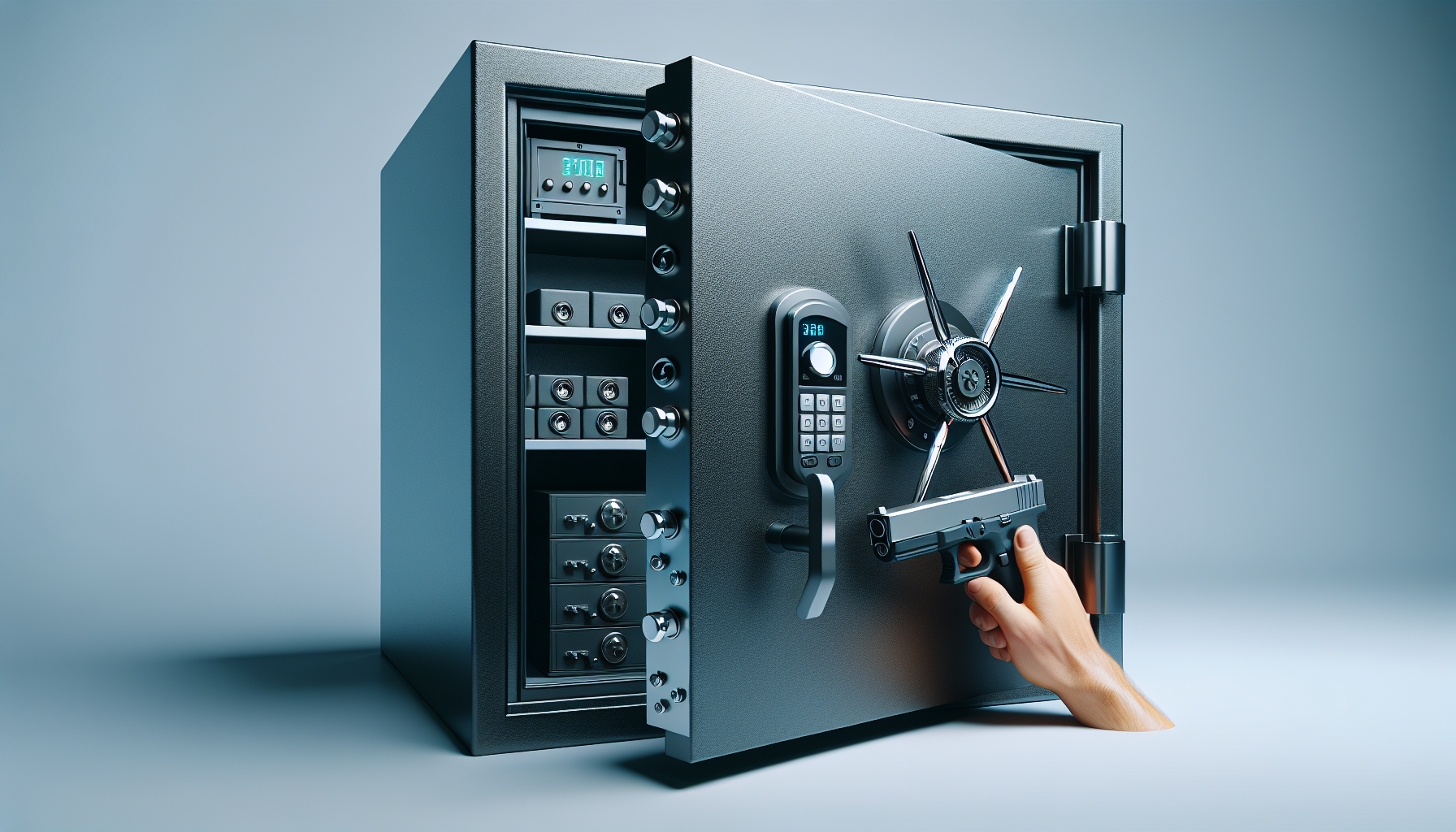
Choosing a gun safe with advanced alarm systems means balancing theft protection, fire resistance, fast access, legal responsibilities, and the reliability of the electronics that warn you when something is wrong. In my experience evaluating residential security equipment and helping buyers compare safe specifications, the biggest mistake is focusing on steel thickness or lock type alone while treating the alarm package as a minor add-on. A modern gun safe alarm system can do far more than emit a siren. Depending on the model, it may detect vibration, forced entry, door opening, tilt, temperature spikes, humidity problems, failed lock attempts, or power interruptions, and it may send those alerts to your phone or to a monitored security platform.
That matters because a gun safe is not just a storage box. It is part of a larger firearm safety system that protects against unauthorized access, burglary, fire, and environmental damage. For families with children, households with frequent visitors, or owners of collectible firearms, suppressors, optics, and documents, the consequences of choosing the wrong safe can be severe. A good buying decision reduces the chance of theft, supports responsible storage, and preserves the value of the contents over time. This hub article explains how to choose a gun safe with advanced alarm systems, what features deserve the most attention, how to compare specifications, and where each buying consideration fits within a complete gun safes and safety strategy.
Before comparing products, define the key terms clearly. A gun safe is a secure container designed to store firearms and related valuables. A lock can be mechanical, electronic, biometric, or dual-mode. An advanced alarm system is a set of integrated sensors and notifications that go beyond a basic audible alert. It may include a keypad tamper alarm, accelerometer-based movement sensing, door-contact switches, heat or smoke response, and wireless connectivity through Wi-Fi, cellular modules, or home security integrations. Fire ratings describe how long the safe can protect contents at stated temperatures, though ratings vary by manufacturer and test method. Burglary resistance depends on steel gauge, plate construction, door design, relockers, boltwork, hard plates, and how well the safe is anchored. Those pieces must work together, because a sophisticated alarm cannot compensate for weak physical construction, and a heavy safe without meaningful alerts leaves a blind spot when intrusion begins.
Start With Risk: What Are You Protecting, From Whom, and In What Environment?
The best gun safe buying guide starts with a risk assessment. List what will go inside: handguns, long guns, ammunition, tax stamps, passports, heirloom jewelry, optics, and digital media all create different storage priorities. Then identify the threat profile. In a suburban home, the common risks are smash-and-grab burglary, unauthorized access by children or guests, and water or smoke damage after a fire response. In a rural property, delayed police response may make local sirens and phone alerts more important. In a condo, floor loading, delivery logistics, and discretion during installation matter more than buyers first expect.
I advise buyers to estimate replacement value, not just purchase price. A safe holding six rifles, two pistols, night vision, suppressors, and tax documents can easily contain tens of thousands of dollars in assets. That level of value changes what counts as an acceptable alarm system. For example, a basic keypad beep after repeated wrong codes is insufficient if the safe sits in a detached workshop. In that scenario, a vibration alarm, tilt sensor, and remote notification provide a meaningful improvement because they can alert you before thieves remove the safe entirely.
Location inside the home also affects alarm needs. A closet installation on a slab foundation supports heavier safes and lowers tip risk. An upstairs office may require a smaller safe or structural review. Humid basements demand better door seals, desiccant management, and interior humidity monitoring. If the safe is visible from a garage, movement detection and immediate door-open alerts become more valuable because attackers can work quickly when the safe is easy to reach.
Evaluate the Alarm System as Carefully as the Steel and Lock
When buyers ask what qualifies as an advanced alarm system, the answer is straightforward: it should detect multiple threat types, notify you quickly, and keep working under stress. At minimum, look for door-open detection, tamper or vibration sensing, and a loud local siren. Better systems add tilt detection, incorrect code lockout alerts, low-battery warnings, and independent backup power. Premium safes or aftermarket modules may also support app-based notifications, event logs, silent alerts, or integration with a monitored alarm ecosystem such as Alarm.com, Honeywell, or a professionally installed central station setup.
There is an important distinction between an onboard alarm and a connected alarm. An onboard alarm usually triggers a siren at the safe when the unit is moved or attacked. That can deter an amateur burglar, but it does nothing if nobody is home or if the safe is located in a detached structure. A connected alarm adds remote awareness. If the safe can notify your phone of vibration, a door event, or rising heat, you can respond faster and preserve evidence with camera checks, neighbor calls, or immediate police notification. For many households, that is the difference between an irritating noise and a useful security layer.
Ask direct questions when comparing models. What exactly triggers the alarm? How many failed keypad attempts before lockout? Does the unit keep logging events after a power loss? Is the siren volume stated in decibels? Can the alarm be armed independently of the lock? Does it use replaceable batteries, internal rechargeable backup, or AC power with battery redundancy? If the safe connects to an app, does it use encryption, two-factor authentication, and firmware updates? Electronic convenience is valuable, but any connected feature should be judged with the same seriousness as the lock itself.
Compare Core Buying Criteria Before You Narrow the Field
A gun safe with advanced alarm systems still has to perform the basics well. Weak steel, poor fire sealing, or flimsy boltwork will undermine every sensor. Use a structured comparison so the alarm package does not distract from fundamentals.
| Buying Factor | What to Look For | Why It Matters |
|---|---|---|
| Steel construction | Thicker body steel, reinforced door, pry-resistant seams | Slows forced entry and defeats simple hand tools |
| Lock system | UL-listed mechanical or electronic lock, reliable biometric only from proven brands | Lock quality affects access speed, failure rate, and resistance to manipulation |
| Alarm features | Vibration, door, tilt, wrong-code, heat, remote alerts, backup power | Creates early warning and better incident response |
| Fire protection | Clear time-and-temperature rating, expanding seals, documented test method | Protects firearms, paper records, and optics during a structure fire |
| Capacity | Realistic long-gun count, adjustable interior, shelf options | Published capacity is often optimistic; overcrowding reduces usability |
| Anchoring | Pre-drilled anchor holes, hardware, concrete or structural mounting plan | Prevents thieves from tipping or removing the safe for off-site attack |
| Environmental control | Dehumidifier port, interior hygrometer, seal quality | Reduces rust, mold, and stock or optic damage |
| Warranty and service | Lock warranty, fire replacement policy, responsive support | Electronics and moving parts need credible long-term support |
This framework is practical because it reflects how safe failures happen in the real world. Many burglaries are not sophisticated safecracking attempts. They are hurried attacks with pry bars, grinders, and the plan to remove the entire safe if possible. Many ownership regrets are also ordinary: the door is too shallow for scoped rifles, the app stops receiving alerts after a router change, or the battery compartment is awkward enough that maintenance gets ignored. A buying guide should prevent these predictable problems, not just recite marketing language.
Understand Lock Types, Power Management, and Connectivity Tradeoffs
Mechanical dial locks remain durable and familiar, and high-quality models have an excellent service history. Their drawbacks are slower access and less flexibility. Electronic keypad locks are now common because they allow fast entry, easy code changes, and features like penalty lockouts or duress codes on some systems. Biometric locks promise speed, but performance varies widely with sensor quality, finger condition, and enrollment setup. I recommend biometric access only when it is supported by a proven electronic keypad backup and a brand with a strong record in lock manufacturing, not just furniture-grade cabinetry.
Power management is central to alarm reliability. A connected safe that loses notification ability when batteries weaken is not advanced in any meaningful sense. Check for low-battery warnings, external jump capability for lock access, and whether the alarm module has independent backup power. Some buyers plug a safe into household power for interior lighting and then assume the system is maintenance-free. It is not. Power outages, unplugged cords, and battery aging are normal conditions. The right purchase includes a maintenance schedule from day one.
Connectivity introduces both benefits and obligations. Wi-Fi-enabled safes can provide remote status and instant alerts, but they rely on home network stability and sound cybersecurity practices. Change default credentials, use strong passwords, enable two-factor authentication when available, and apply firmware updates. If you prefer lower digital exposure, choose a safe with a robust local alarm and pair it with room-level security sensors or cameras. That layered approach often delivers more dependable results than a weak app ecosystem attached to an otherwise solid safe.
Look Beyond Advertised Capacity, Fire Ratings, and Brand Claims
Published long-gun counts are routinely optimistic. A “24-gun safe” may store far fewer modern rifles once optics, bipods, slings, and wider handguards enter the equation. If you own AR-platform rifles, scoped hunting rifles, or shotguns with accessories, subtract generously from the advertised number. Adjustable barrel rests, modular shelving, and dedicated handgun door panels can improve usable capacity more than a larger headline number. Buyers who plan for realistic spacing avoid the common problem of banging optics together and turning retrieval into a frustrating shuffle.
Fire ratings require scrutiny because there is no universal single standard across all consumer gun safes. One manufacturer may state 60 minutes at 1,200 degrees Fahrenheit, while another claims 75 minutes at 1,400 degrees, yet the testing methods can differ. Look for transparency about how the rating was established, whether seals expand under heat, and whether the safe body and door have consistent insulation design. No consumer fire safe makes contents invulnerable in every structure fire, especially if the home experiences prolonged burn time or collapse, but honest ratings remain useful for comparison.
Brand reputation matters, but not as a substitute for specifications. Established names such as Liberty Safe, Fort Knox, Browning, Rhino Metals, Vaultek, and Hornady are often compared because they occupy different spaces in the market, from heavy traditional safes to technology-forward compact units. The right choice depends on use case. A bedside handgun safe with app alerts solves a different problem than a full-size long-gun safe anchored in a closet. Treat reviews carefully. Pay more attention to repeated themes like lock responsiveness, support quality, finish durability, and real installation feedback than to star averages alone.
Installation, Monitoring, and Long-Term Maintenance Complete the Buying Decision
The purchase is only half the project. Proper installation determines whether the safe and its alarm system can perform as intended. Anchor the safe to concrete when possible, or to an engineered structural surface approved for the load. Place it where attackers have limited working room for pry bars and grinders. Avoid locations with chronic moisture or severe temperature swings unless the safe and room are designed for them. If the safe includes remote alerts, test signal strength at the final installation point before the crew leaves. I have seen good safes downgraded by bad placement more often than by manufacturing defects.
Monitoring strategy should match your household routine. Some owners want silent push notifications backed by cameras. Others want a local siren that immediately announces tampering. In many homes, the strongest setup is layered: safe alarm, room contact sensor, camera coverage, and whole-home monitored security. That combination creates detection, deterrence, verification, and response. It also reduces false confidence in any single device. A safe alarm can tell you the unit was moved, but a camera can tell you who moved it and how many people were involved.
Maintenance is not optional. Replace batteries on schedule, test the keypad and alarm monthly, verify app notifications after phone or router changes, inspect anchor bolts, and monitor interior humidity with a hygrometer. Use desiccants or electric dehumidifiers as needed. Keep a written inventory with serial numbers and photographs stored securely outside the safe. If a fire or burglary occurs, documentation speeds police reports and insurance claims. Responsible gun storage is a system, not a one-time purchase.
Choose a gun safe with advanced alarm systems by matching the safe to your risks, demanding strong physical construction, and insisting that the electronics provide meaningful detection rather than marketing flash. The best models combine reliable locks, practical remote or local alerts, realistic capacity, credible fire protection, and solid anchoring options. They also fit your daily use, because a secure safe that is frustrating to access or maintain often leads to shortcuts that undermine safety.
As a hub for gun safe buying guides, the core lesson is simple: buy for the full lifecycle, not the showroom moment. Evaluate theft resistance, fire performance, alarm triggers, connectivity, service support, installation conditions, and maintenance workload before you commit. If you do that carefully, you will end up with a safe that protects firearms, supports responsible ownership, and gives you faster awareness when something goes wrong. Use this framework to compare models side by side, then move on to detailed reviews and installation planning with a clear checklist in hand.
Frequently Asked Questions
What should I look for in a gun safe with an advanced alarm system?
Start by treating the alarm system as part of the safe’s overall security design, not as a bonus feature. A good advanced alarm package should do more than make noise if someone tampers with the door. Look for multiple alert triggers such as vibration or impact detection, door-open notifications, failed access attempt alerts, tilt or movement sensors, and temperature or smoke warnings if the safe is intended to help protect firearms during a fire event. The best systems also provide clear status indicators so you know whether the alarm is armed, whether the battery is healthy, and whether a fault has been detected.
It is also important to evaluate how the alarm system communicates. Some safes use a local siren only, while others offer app-based notifications, text alerts through a connected hub, or integration with a home security system. For many buyers, remote notification is the real advantage of an advanced system because it tells you something is wrong even when you are away from home. Just be sure to verify whether any connectivity features depend on Wi-Fi, Bluetooth, a subscription service, or a separate monitoring platform.
Finally, pay attention to reliability and user interface quality. An advanced system is only useful if it works consistently and is simple enough to use correctly. Check whether the alarm has backup power, whether the electronics are protected from tampering, and whether alerts can be customized to reduce nuisance alarms. A safe that combines solid burglary protection, appropriate fire resistance, dependable locking hardware, and a well-designed alarm system is usually a much better choice than a heavier or thicker safe with weak electronic features.
Is a loud siren enough, or should I choose a gun safe alarm system with app alerts and monitoring features?
A loud siren is helpful, but by itself it is rarely enough to count as an advanced alarm solution. A siren can scare off an opportunistic intruder, especially during a quick break-in, and it can alert people in the home that the safe is being tampered with. However, a siren has obvious limits. If no one is home, or if the safe is located in a basement, garage, or insulated room, the sound may not lead to a fast response. That is why many buyers now prefer systems that can also send remote alerts.
App notifications, text alerts, or integration with a home alarm system can dramatically improve situational awareness. If the safe door is opened unexpectedly, if the safe is moved, or if someone repeatedly enters the wrong code, you can know about it right away even when you are not on the property. In practical terms, that can give you time to contact law enforcement, check cameras, or notify a trusted family member. For households that travel often or leave firearms stored for long periods, remote visibility is a major advantage.
That said, do not assume that more connectivity automatically means better protection. Wireless features should be secure, stable, and easy to manage. Ask how alerts are delivered, what happens during an internet outage, whether there is local alarm capability if the network fails, and whether firmware updates are available. The best setup for most homeowners is a layered one: a strong local siren, onboard tamper detection, and some form of remote notification or system integration. That combination provides both immediate deterrence and off-site awareness.
How do I balance theft protection, fire resistance, and fast access when choosing a gun safe with advanced alarms?
This is where many buyers make the wrong tradeoff. They focus on one category, such as steel thickness or lock speed, and assume the rest can be added later. In reality, a safe works best when theft protection, fire resistance, access speed, and alarm capability support each other. For theft protection, consider body construction, door strength, locking bolts, pry resistance, anchor options, and whether the alarm can detect movement or attempted forced entry. For fire resistance, look for independently explained ratings, heat-expanding seals, and realistic fire durations instead of marketing claims alone. For access speed, think about how quickly an authorized user can open the safe under stress without increasing the risk of unauthorized entry.
The right balance depends on how the firearms will actually be used. If the safe is mainly for long-term storage, you may place more value on stronger burglary resistance, layered alarms, and longer fire protection. If one firearm must be available for defensive use, rapid access becomes more important, but that should not come at the cost of accidental lockouts, unreliable electronics, or weak construction. In that situation, buyers often do best with a safe that uses a fast and proven locking method, includes battery backup or redundant entry options, and provides alerts for door status and tampering.
Advanced alarms help bridge these competing priorities because they add information, not just noise. A good system can warn you about unauthorized access, low battery conditions, changes in internal temperature, or movement of the safe itself. That means you are not relying on lock strength alone. The smartest approach is to define your top use case first, then choose the safe whose construction, fire rating, lock design, and alarm features all fit that purpose without creating weak points elsewhere.
Are electronic locks and alarm systems on gun safes reliable enough for long-term use?
They can be very reliable, but only if you choose quality components and understand the maintenance requirements. Modern electronic locks and alarm modules have improved significantly, and many perform well for years in residential environments. The problem is that buyers often compare features without asking how the electronics are powered, how they behave when batteries weaken, and whether there is a backup entry method. Reliability is not just about whether the keypad lights up today; it is about whether the safe still functions correctly after repeated use, seasonal temperature changes, and periods of inactivity.
Look for systems with low-battery warnings, easy battery replacement, protected wiring, and clear emergency procedures. Some safes include external battery contacts or backup power access so you can restore power without opening the door by force. It is also wise to ask whether the alarm and lock are separate systems or share the same power source, because a failure in one should not quietly disable the other. Reputable manufacturers usually provide better documentation, replacement parts, and customer support, all of which matter if the safe is meant for long-term firearm storage.
Routine testing is part of ownership. Check the lock, verify alarm triggers, replace batteries on a schedule rather than waiting for failure, and confirm that app-based alerts are still reaching your phone after software or router changes. In short, yes, electronic systems can be dependable, but only when they are treated like serious security hardware rather than set-and-forget gadgets. If reliability is your top concern, prioritize proven brands, simple and well-executed controls, and a safe design that still offers security even if an electronic feature temporarily goes offline.
Can an advanced alarm system help with legal responsibilities and safe firearm storage practices?
Yes, although it should be viewed as a support tool rather than a substitute for compliance or responsible ownership. Safe storage laws vary by state and locality, and some regulations focus on preventing access by minors, unauthorized users, or prohibited persons. An advanced alarm system can strengthen your storage practices by alerting you when the safe is opened unexpectedly, when repeated failed access attempts occur, or when the safe is moved or tampered with. Those alerts create an extra layer of accountability and awareness that a basic mechanical container does not provide.
For households with children, visitors, service personnel, or multiple adults, this added visibility can be especially valuable. If a safe door is left open, if someone tries to guess the code, or if the unit is disturbed while you are away, the alarm system gives you a chance to respond quickly. Some connected systems may also maintain event logs, which can help you review when the safe was accessed. While that does not replace proper legal advice or local compliance requirements, it can be useful for households that want stronger control over firearm access.
The most important point is that an alarm-equipped safe should still meet the fundamentals of responsible storage: secure locking, resistance to unauthorized entry, proper anchoring, dependable operation, and user practices that prevent code sharing or careless access. If legal compliance is one of your main reasons for buying, review your local laws and then choose a safe whose alarm features reinforce those duties. The best advanced systems do not just make the safe louder; they help you monitor access, catch problems early, and maintain a higher standard of firearm security day to day.