
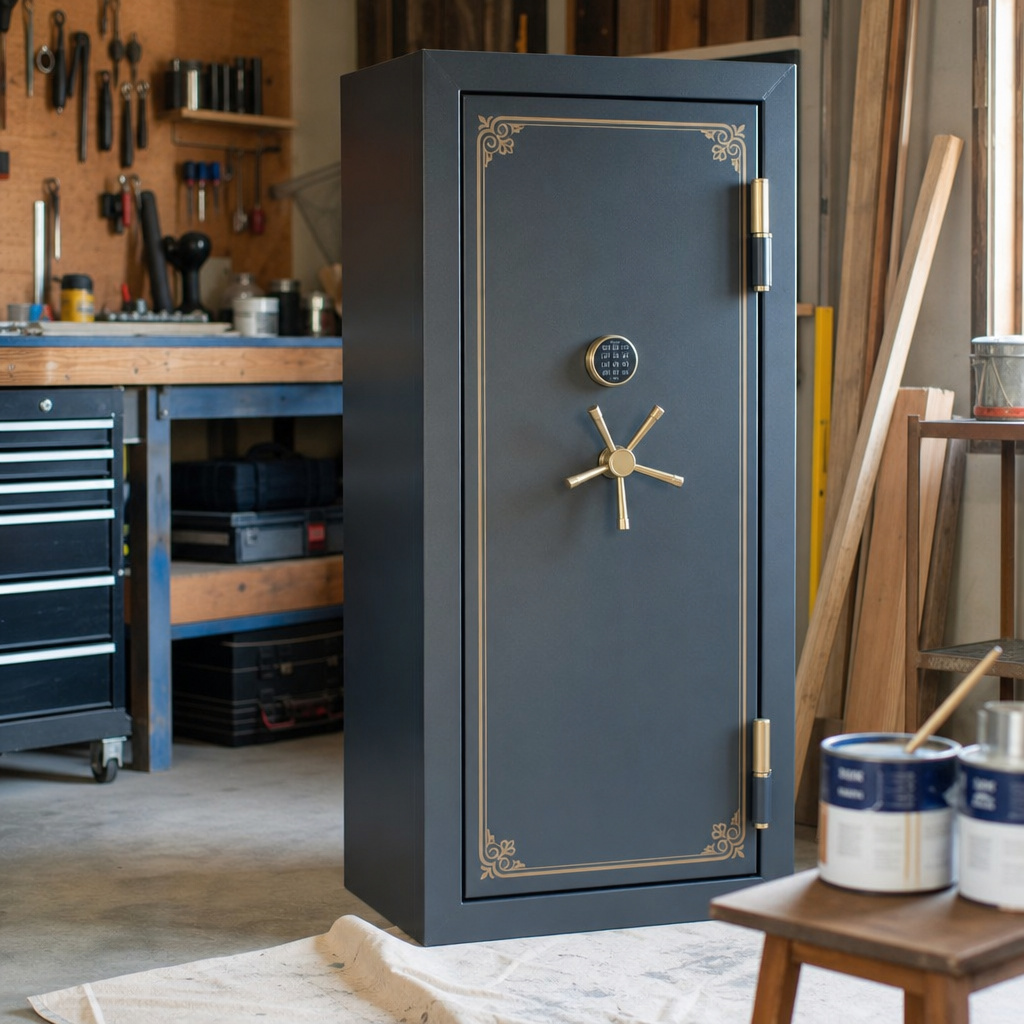
Painting and refinishing a gun safe is one of the most practical ways to create a custom look while extending the life of the steel underneath. A gun safe often sits in a garage, closet, office, or dedicated gun room for decades, so the factory finish eventually shows scratches, surface rust, UV fading, or plain visual mismatch with the space around it. When done correctly, refinishing is not cosmetic guesswork. It is a controlled process of surface preparation, coating selection, safe masking, and proper curing that protects metal, preserves function, and upgrades appearance without compromising security.
In my experience working around steel cabinets, shop equipment, and residential safes, the difference between a durable custom finish and a peeling mess comes down to preparation. Paint does not hide bad prep. It amplifies it. Owners searching how to paint and refinish a gun safe for a custom look usually want answers to the same questions: can you repaint a gun safe, what paint works on textured steel, do you need primer, can you change the color, and will refinishing damage the locking system or fire lining. The short answer is yes, a gun safe can be repainted, but only if you treat it like a precision metal-finishing project rather than a weekend craft job.
This hub article covers the full custom and DIY gun safe modification category, with painting and refinishing as the foundation. It explains when a safe should be painted, how to evaluate the original coating, which tools and materials matter, and where the limits are for home users. It also addresses related upgrades such as hardware refinishing, decal removal, interior refreshes, lighting coordination, and environmental protection. If you plan to customize a gun safe, start with the exterior finish, because every other visual modification builds on that surface.
When painting or refinishing a gun safe makes sense
Refinishing makes sense when the safe is structurally sound and the existing finish is ugly, damaged, or inconsistent with your room design. Common cases include scratched powder-coated doors, light oxidation from humid garages, mismatched secondhand safes, and branded graphics that clash with a cleaner look. It is also the right move after relocating a safe, because moving straps, dollies, and pry bars often chip corners and edges. A proper repaint can restore those vulnerable spots before corrosion spreads.
It does not make sense to paint over active rust, severe denting, water damage, or questionable structural integrity. Those problems need diagnosis first. Surface rust on a bottom edge is usually repairable. Deep scaling rust around seams may indicate repeated moisture exposure. Likewise, if the safe has electronic lock issues, compromised door alignment, or swelling interior panels from past water intrusion, fix those before touching the finish. A custom exterior should never distract from basic safe function.
Owners also need to distinguish between cosmetic refinishing and modifications that could affect warranty coverage. Many manufacturers treat repainting as a cosmetic change that does not alter burglary performance, but drilling, welding, changing hinges, or removing fireboard panels can void support terms. Read the manual, record the serial number, and photograph the safe before work begins. That habit helps with insurance documentation too, especially for larger safes listed by UL or built with certified lock components from brands such as Sargent and Greenleaf or SecuRam.
Choosing the right finish, paint system, and sheen
The best paint system for a gun safe depends on location, existing coating, and the look you want. Most residential safes leave the factory with a powder-coated or textured enamel finish. You are usually not removing that entire coating unless it is failing. Instead, you clean, abrade, spot-prime exposed metal, and apply a compatible topcoat. For most DIY users, the strongest practical choices are direct-to-metal enamel, acrylic urethane, or quality epoxy primer topped with enamel or urethane. Spray cans can work on smaller safes, but an HVLP sprayer gives more control and a more uniform build on full-size doors and side panels.
Flat black hides imperfections, but it also shows fingerprints and dust. Satin and eggshell are the most forgiving for home safes because they mute surface waves while still looking finished. Semi-gloss is easier to wipe clean but highlights dents, orange peel, and poor bodywork. Textured coatings are useful when the original finish was pebbled and you want to blend repairs without stripping to bare steel. Hammered-finish paints can disguise minor surface defects, though they rarely match modern factory textures exactly.
Color choice matters beyond aesthetics. Dark safes absorb more radiant heat from nearby windows, while lighter neutrals reduce visible dust and blend better in living spaces. In high-use mudrooms or garages, medium charcoal, bronze, and graphite tend to age better than pure black. If the safe is a centerpiece in a hunting lodge or office, custom colors such as olive drab, deep green, or matte navy can work well when paired with understated hardware. What should be avoided is any soft household wall paint, chalk paint, or decorative craft coating. Those products are not designed for abrasion, oils from hands, or contact with gun care solvents.
Surface preparation: the step that determines the result
If you remember only one part of this guide, remember this: ninety percent of a good gun safe paint job is preparation. Start by unloading firearms, magazines, documents, and shelf contents. Disconnect any dehumidifier, lighting kit, or electronic accessories. If the safe has an electronic lock, remove the battery and protect the keypad carefully; do not flood it with cleaners. Vacuum dust from seams, then wash the exterior with a degreaser that leaves no silicone or wax residue. Ordinary dish soap is not enough if the safe has years of gun oil, furniture polish overspray, or garage grime on the surface.
After cleaning, inspect every panel under bright angled light. Mark chips, rust spots, and dents with painter’s tape. Sand glossy areas to create mechanical adhesion, usually with 180- to 320-grit abrasives depending on how aggressive the prep needs to be. Feather chipped edges so the repair does not telegraph through the new finish. For rust, remove oxidation fully with abrasive pads, a wire wheel used carefully on localized spots, or hand sanding. If bare steel is exposed, prime it quickly to prevent flash rust, especially in humid climates.
Masking is equally important. Protect hinges if they are exposed and moving, cover the keypad, dial ring, handle spindle area, logos you intend to keep, and door gaps where excess paint could thicken the seal area. Do not paint over intumescent fire seals unless the manufacturer specifically approves it. Those seals expand under heat, and contaminating them with heavy coatings is a bad practice. I also avoid soaking the edges around relocker or lock mounting points because trapped solvents and overspray can create problems that are completely unrelated to the cosmetic work.
Tools, materials, and common use cases
Most home users do not need an industrial booth, but they do need the right materials. A clean, dust-controlled work zone, proper respirator, nitrile gloves, tack cloths, quality masking tape, degreaser, abrasive pads, sandpaper, filler for shallow dents, primer, and topcoat are the baseline. For spraying, an HVLP turbine or compressor-driven gun improves atomization and reduces striping on large flat doors. If you use aerosol products, buy enough from the same batch when possible and test the fan pattern first. Consistency matters more than brand loyalty.
| Task | Recommended option | Why it works |
|---|---|---|
| Cleaning oily exterior | Wax and grease remover | Removes gun oil, silicone, and residue better than soap |
| Scuffing intact finish | 180-320 grit abrasive | Creates adhesion without unnecessary metal removal |
| Repairing bare steel spots | Epoxy or self-etch primer | Improves corrosion resistance and topcoat bonding |
| Topcoat for DIY full repaint | Acrylic enamel or urethane | Durable, chemical resistant, and available in many sheens |
| Small touch-up chips | Matched enamel aerosol or brush touch-up | Fast repair for corners, edges, and move damage |
Named tools help narrow the field. Scotch-Brite pads are useful for scuffing textures without flattening them too aggressively. Bondo Glazing and Spot Putty can handle tiny imperfections, though it should be used sparingly and sanded smooth before primer. Rust-Oleum Professional, Sherwin-Williams industrial coatings, and automotive-grade systems from PPG or SEM are common choices, but compatibility always matters more than label reputation. Follow the technical data sheet for recoat windows, reducer selection, and cure time.
How to paint a gun safe safely and get a professional-looking finish
The actual painting sequence is straightforward once prep is complete. Start with spot primer on bare metal and repaired areas. If the whole safe is uneven in color or has multiple repairs, use a full primer coat for uniformity. Allow the primer to cure as directed, then sand lightly if the product calls for it. Wipe down with a lint-free cloth and tack cloth. Apply thin, even coats rather than one heavy pass. The safe door is the panel most people stare at, so watch your gun distance and overlap carefully to avoid tiger striping, dry spray, or runs.
Temperature and humidity control the outcome more than many owners expect. Most coatings like ambient temperatures around 60 to 80 degrees Fahrenheit and moderate humidity. Too cold, and the paint will not flow or cure correctly. Too humid, and you risk blushing or delayed cure. If you are painting in a garage, turn off ignition sources, increase ventilation safely, and keep dust low. Never spray solvent-based coatings near water heater pilots, furnaces, or active appliances.
Let each coat flash properly before recoating. Rushing this stage traps solvents and softens the whole film. Once the final coat is on, resist the urge to reassemble immediately. Handles, trim pieces, organizational accessories, and magnetic door panels can mar fresh paint long before it feels fully hardened to the touch. Many finishes are dry in hours but need days to reach handling strength and longer to achieve full chemical resistance. Patience is part of the finish system.
Related custom and DIY gun safe modifications to plan with refinishing
Because this page is the hub for custom and DIY gun safe modifications, painting should be seen as the anchor project around which smaller upgrades are organized. The smartest time to replace faded decals, update emblems, swap handle finishes, and clean or repaint external hardware is during refinishing, not after. If you are adding LED lighting, a door organizer, pistol racks, or moisture control accessories, coordinate wiring routes and attachment points before the final coat cures. That sequence prevents scratching a new finish while retrofitting accessories later.
Interior refreshes are another natural companion project. Many older safes have peeling carpet, tired shelf boards, or odors from years of storage. Replacing fabric, adding closed-cell barrier material where appropriate, and improving layout can make the custom exterior feel complete. I usually recommend owners separate interior aesthetic changes from structural components. Replace shelf covering, add modular racks, and install lighting, but do not remove fireboard or alter lockwork covers unless a qualified technician says it is safe. Cosmetic ambition should stop where fire protection and lock reliability begin.
Finally, think long term about maintenance. A refinished safe benefits from low-humidity storage, a GoldenRod or desiccant system, and occasional wipe-downs with a non-silicone cleaner. Keep gun solvents off the new finish, touch up chips promptly, and use felt pads on nearby furniture or equipment that could strike the door. If your safe lives in a garage, elevating it slightly above bare concrete and controlling condensation will do as much for the finish as the paint itself.
Painting and refinishing a gun safe for a custom look is worthwhile when the project is approached like metal finishing, not decorative improvisation. The durable result comes from accurate assessment, thorough cleaning, proper abrasion, compatible primer and topcoat selection, careful masking, and enough cure time. Those steps protect steel, improve appearance, and create a clean foundation for every other custom and DIY gun safe modification, from hardware updates to interior lighting and storage accessories.
The main benefit is not just visual. A well-refinished safe resists rust better, fits its environment, and stays easier to maintain over time. Just as important, disciplined refinishing teaches the right boundary for safe customization: improve surfaces and organization, but do not interfere with lock components, door seals, or fire-protection materials. That balance preserves security while giving you a personalized finish that looks intentional rather than improvised.
If your safe is scratched, faded, or simply out of place in the room, start with a plan. Inspect the condition, choose a coating system designed for metal, gather the right tools, and tackle preparation before paint. Then use this hub as your roadmap for the wider world of custom and DIY gun safe modifications, building each upgrade on a finish that is durable, clean, and made to last.
Frequently Asked Questions
Can you paint a gun safe yourself, or is professional refinishing usually the better option?
Yes, many gun safes can be painted and refinished successfully as a do-it-yourself project, provided you approach the job like a metal refinishing project rather than a simple decorative paint job. The deciding factors are the safe’s condition, your workspace, and your expectations for the final appearance. If the safe only has cosmetic wear such as scratches, light surface rust, faded factory paint, or minor scuffs, a careful DIY refinishing process is often enough to produce a clean, durable custom look. On the other hand, if the safe has heavy corrosion, deep pitting, damaged hinges, fire seal issues, electronic lock concerns, or a very large high-end finish that you want to replicate perfectly, professional help may be worth the cost.
The biggest difference between an average result and a long-lasting result is surface preparation. A gun safe is heavy steel, and coatings only perform as well as the surface beneath them. That means thoroughly cleaning away oils, removing loose paint and rust, feathering chipped areas, sanding for proper adhesion, and masking all parts that should never be coated, including locks, relocker-related areas, door seals, serial labels, and moving hardware where paint buildup could interfere with operation. Professionals have spray equipment, controlled environments, and specialized coatings, but a patient homeowner can still achieve excellent results with quality metal primer and paint designed for steel.
A good DIY approach is especially practical when your goal is to change color, refresh a worn exterior, or better match a garage, office, or gun room. Just make sure you are working in a well-ventilated area, following product cure times, and never compromising safe function for appearance. In short, painting a gun safe yourself is absolutely possible, but only if you treat it as a careful refinishing process with attention to preparation, coating compatibility, and safe operation from start to finish.
What is the best type of paint or coating to use on a gun safe for durability and appearance?
The best coating depends on how you use the safe, where it is located, and what kind of finish you want. In most cases, a durable metal primer followed by a high-quality enamel, epoxy-based coating, or direct-to-metal coating made for steel surfaces will give the best balance of adhesion, appearance, and long-term protection. A gun safe sits in one place for years, but that does not mean it has an easy life. It may be exposed to humidity, temperature swings, abrasion from handling, cleaning chemicals, and occasional impacts, especially in garages, workshops, or basements. Because of that, ordinary interior wall paint or low-grade general-purpose paint is not appropriate.
For safes with bare metal spots or areas where rust has been removed, a rust-inhibiting primer is usually the right starting point. Primers help seal the surface and improve the bond between the steel and the finish coat. If you are painting over an existing factory finish that is still mostly sound, you may be able to scuff sand and apply a compatible direct-to-metal topcoat, but it is still important to follow the manufacturer’s recommendations for prep and recoat windows. Oil-based enamels can be very durable, while certain acrylic enamel formulations offer easier application and cleanup. Epoxy and industrial alkyd coatings can provide even greater toughness, though they may require stricter prep and more attention to ventilation.
Spray-applied finishes usually produce the smoothest custom appearance, but brushing or rolling can still work on utility safes if appearance is less critical. Matte, satin, textured, and low-gloss finishes are popular because they hide surface imperfections better than high gloss. If your safe is in a room with sunlight exposure, UV resistance also matters because some coatings fade faster than others. In general, the best coating is one specifically intended for metal, appropriate for your environment, and applied over a properly prepared surface. Choosing the right paint matters, but choosing a complete system of cleaning, sanding, priming, and finishing matters even more.
How do you prepare a gun safe before painting so the new finish actually lasts?
Preparation is the most important part of refinishing a gun safe, because even premium paint will fail if it is applied over dirt, oil, rust, or loose coating. Start by emptying the safe completely and moving it, if possible, to a clean, well-ventilated workspace with adequate lighting. Remove or protect any interior items, shelving, door organizers, and soft materials that could trap overspray or sanding dust. Before any sanding begins, clean the exterior thoroughly with a degreasing cleaner that removes fingerprints, waxes, silicone residues, and oils. Many coating problems begin because the surface looked clean but still had contaminants that prevented proper adhesion.
Once clean, inspect the safe carefully for scratches, rust spots, bubbling paint, dents, and chipped areas. Any rust needs to be addressed fully, not just painted over. That usually means sanding, wire brushing, or mechanically removing loose corrosion down to a stable surface. If there is pitting, smooth and feather the area as much as possible so the repaired section blends into the surrounding finish. Existing glossy paint should be scuffed so the primer or topcoat has something to grip. The goal is not always to strip the entire safe to bare metal, but to create a sound, uniform surface with no failing material left behind.
Masking is just as critical as sanding. Carefully cover the lock dial or keypad, handle spindle areas, hinges if needed, labels, door seals, bolt openings, and any moving or precision-fit components. You want a fresh finish on the body and door exterior, not paint buildup in areas that affect operation or security. After sanding and masking, wipe the surface again to remove all dust. Then apply primer only where needed, or across the full surface if your coating system calls for it. Allow full drying or curing between stages. Skipping steps may save an afternoon, but it usually shortens the life of the finish dramatically. Lasting results come from patient prep, not from adding extra coats at the end.
Is it safe to paint around the lock, handle, hinges, and door seal, or can that cause problems?
It can absolutely cause problems if those areas are not masked correctly. A gun safe is not just a steel cabinet with a door; it is a mechanical security device with moving parts, close tolerances, and in many cases sensitive lock components. Paint overspray, thick coating buildup, or sanding debris around the lock, handle assembly, hinge points, relocking components, and door seal can interfere with smooth operation and potentially create expensive service issues. That is why masking is not optional. It is one of the most important parts of a safe refinishing job.
The lock area deserves special care. Whether your safe uses a mechanical dial lock or an electronic keypad, you do not want paint entering openings, seams, or mounting points. The same applies to the handle hub and any areas where moving hardware passes through the door. Hinges should be evaluated individually. Some exposed hinges can be painted carefully on the exterior surface, but pivot points should remain free of excess coating. Door seals, especially on fire-rated safes, should never be casually painted over. These seals are part of the safe’s protective performance, and coating them can alter their flexibility, adhesion, or fit.
Also pay attention to identification tags, warning labels, and serial information. In many cases, it is wise to preserve them uncovered or carefully masked rather than burying them under a custom finish. If the safe has trim pieces, logos, or decorative panels, decide in advance whether they will be removed, masked, or integrated into the new look. A careful refinishing job improves appearance without changing how the safe opens, closes, locks, seals, and protects its contents. If you are ever unsure whether a component should be painted, the safer choice is to mask it off and keep the coating limited to non-moving exterior steel surfaces.
How long does a refinished gun safe last, and what is the best way to maintain the new finish?
A properly refinished gun safe can look good and remain well protected for many years, but longevity depends on the quality of the prep work, the coating system used, and the environment where the safe lives. A safe in a climate-controlled office or interior gun room will generally hold its finish much longer than one in a humid garage, basement, or outbuilding with temperature swings. If rust was removed completely, the surface was primed correctly, and the topcoat was allowed to cure fully, the finish can remain attractive and protective for a very long time. If preparation was rushed or moisture issues were never addressed, even a nice-looking paint job may begin to chip, bubble, or show corrosion again sooner than expected.
Maintenance is straightforward but important. Dust the exterior regularly and wipe it down with a soft cloth using a cleaner that is safe for painted metal surfaces. Avoid harsh solvents, abrasive pads, or aggressive polishes unless the coating manufacturer specifically approves them. If the safe gets scratched, touch up exposed metal promptly so moisture does not get a chance to start corrosion beneath the surface. It is also wise to monitor the room itself. Managing humidity with ventilation, climate control, or a dehumidifier helps protect both the finish and the firearms or valuables stored inside.
Another overlooked part of maintenance is respecting cure time. A