
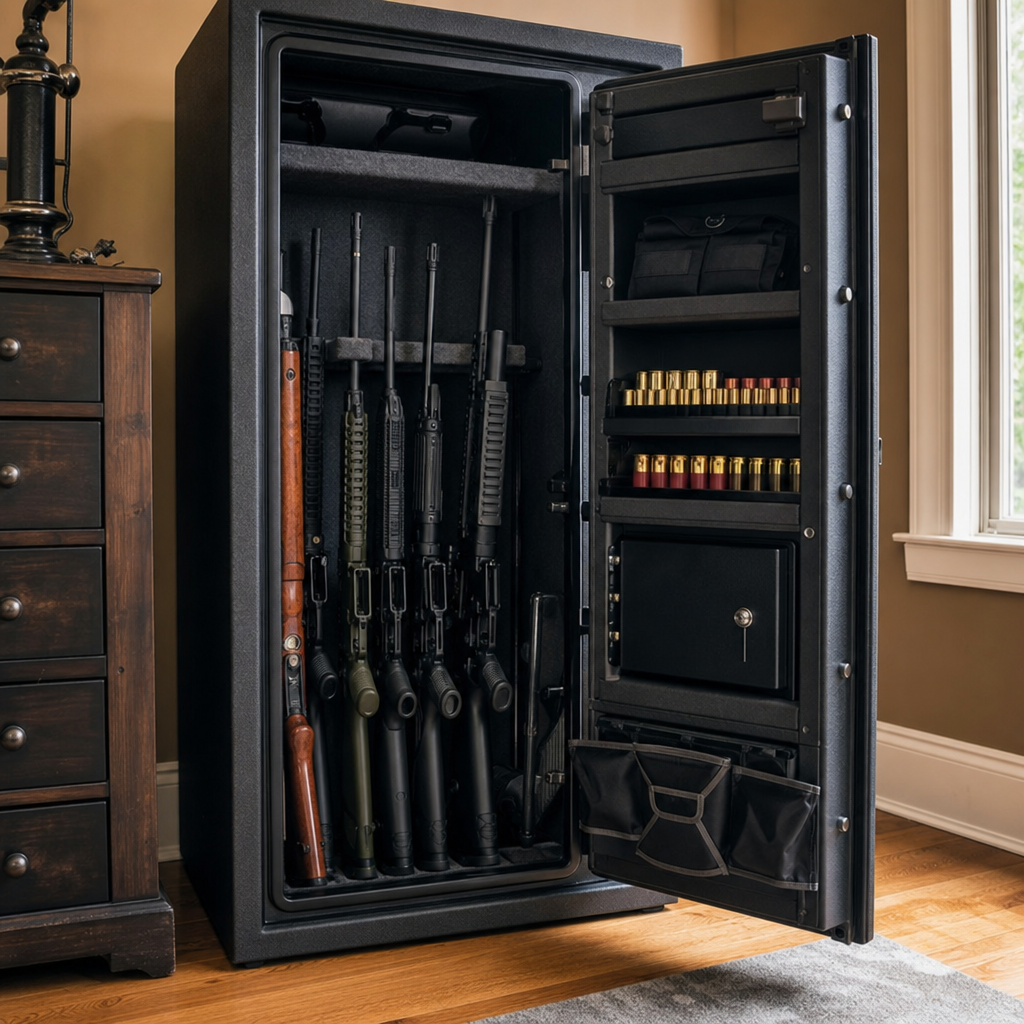
Choosing a gun safe that offers secure ammo storage separately is one of the most important decisions a firearm owner can make, because the right design reduces unauthorized access, improves organization, protects equipment from theft and fire, and helps you store guns and ammunition in a way that aligns with common safety guidance. In practical terms, “separate ammo storage” usually means ammunition is locked in its own internal compartment, a dedicated secondary safe, or a physically distinct section that cannot be opened at the same time as the primary firearm area without another key, code, or lock. That distinction matters because many buyers assume a shelf or bin counts as separation when it does not. After years of evaluating safes for homes, workshops, and hunting cabins, I have found that the best buying decisions come from matching the safe’s construction, locking system, interior layout, and installation method to the owner’s actual use pattern rather than to marketing claims. This guide serves as a hub for gun safe buying guides by explaining what features matter most, what tradeoffs to expect at different price points, and how to compare options confidently before you buy.
What separate ammo storage really means
Separate ammo storage means ammunition is secured independently from firearms, not merely placed on another shelf inside the same unlocked compartment. In a quality gun safe, that usually takes one of three forms: a locking internal compartment, often called an interior locker; a dedicated secondary safe mounted nearby or inside a larger enclosure; or a dual-access design with independent locking zones. For most households, the interior locking compartment is the most practical option because it provides quick organization while maintaining a barrier between firearms and loaded magazines, loose cartridges, and boxed ammunition. If children, guests, contractors, or other untrained adults may access part of the room, independent locking zones provide a stronger safety margin.
This matters for safety, daily use, and compliance with the intent of many storage recommendations. Firearms should be inaccessible to unauthorized users, and ammunition should not be immediately available alongside them. Keeping the two secured separately also simplifies inventory, makes maintenance easier, and reduces clutter that can damage optics, stocks, or documents stored in the safe. Buyers often ask whether separate storage inside one safe is enough. The practical answer is yes if the ammo compartment has its own genuine lock and sturdy steel body, but no if “separate” only refers to a shelf divider, soft pouch, or unsecured drawer.
How to evaluate safe construction before anything else
The first buying filter is build quality. Ignore upholstery, graphics, and accessory bundles until you know the steel thickness, door construction, bolt design, hinge protection, and anchoring options. Many residential gun safes use 14-gauge to 12-gauge steel bodies, while stronger models move into 10-gauge or thicker. Lower gauge numbers indicate thicker steel. For burglary resistance, thicker steel matters more than plush interiors. A safe with a 12-gauge body, reinforced door edge, hard plate protecting the lock, and active locking bolts on multiple sides is generally a better security purchase than a thinner safe with a glossy finish and more shelves.
Door gaps deserve close attention. A tight door seam reduces prying leverage. Continuous welds are better than sparse stitch welds. Internal hinges are not automatically stronger than external hinges, but hinge-side dead bars or fixed locking bolts are essential. Ask whether the safe has relockers, which trigger additional lock engagement if someone attacks the lock area. If the manufacturer cannot clearly explain steel thickness, bolt count, and lock protection, treat that as a warning sign. Real security specifications are precise; weak products rely on vague language such as “solid steel construction” or “tamper resistant” without details.
Lock types, access control, and why the ammo compartment lock matters too
The main lock and the ammo compartment lock both deserve scrutiny. Mechanical dial locks remain dependable, require no batteries, and have a long service record, but they are slower to open and less convenient for frequent access. Electronic keypad locks are faster and easier for most households, especially when multiple authorized users need controlled access. Premium electronic locks from established makers such as Sargent and Greenleaf or SecuRam are typically preferable to unbranded keypads. Biometric locks can be useful for rapid entry, but fingerprint readers vary widely in reliability, especially with dirty fingers, cold weather, or aging sensors. I advise buyers to treat biometrics as a convenience layer, not a substitute for proven lock quality.
For the separate ammo compartment, a simple tubular key lock may be adequate if the internal box itself is steel and securely mounted, but a weak wafer lock on thin sheet metal is not meaningful security. If teenagers, roommates, or short-term renters are part of the household environment, the secondary compartment should resist casual bypass and forced opening. It is also smart to control access differently. For example, one adult may have the main safe code while another retains the ammo locker key, creating intentional separation. This is not right for every home, but it is a valid strategy for layered control.
Choosing the right storage layout for firearms and ammunition
Capacity claims on gun safes are notoriously optimistic. A “24-gun safe” rarely stores 24 scoped long guns comfortably. Real capacity depends on optics, bipods, slings, modern sporting rifle widths, and whether you also store handguns, documents, suppressors where lawful, magazines, and valuables. When separate ammo storage is a priority, interior layout becomes even more important because the ammo compartment takes up usable volume. If you currently own eight long guns, two handguns, and several thousand rounds of ammunition, a nominal 18-gun safe will probably feel cramped very quickly.
Look for adjustable shelving, barrel rests that accommodate scoped rifles, and a dedicated top or bottom locking compartment sized for your actual ammunition quantities. Ammunition is heavy, so shelf strength matters. A shelf that sags under multiple loaded cans is not a small issue; it can damage interiors and interfere with door operation. Many buyers benefit from storing only ready-use amounts inside the main safe’s ammo locker and keeping bulk ammunition in a separate dedicated ammo safe or steel cabinet in the same secured room. That approach improves space efficiency while preserving separation and reducing total load on interior shelves.
| Feature | What to look for | Why it matters |
|---|---|---|
| Safe body steel | 12-gauge minimum, 10-gauge better | Improves pry and impact resistance |
| Ammo compartment | Independent steel locker with its own lock | Provides true separate ammo storage |
| Fire rating | Verified duration and temperature details | Protects contents during residential fires |
| Lock brand | Recognized lock maker and service support | Reduces failure risk and improves longevity |
| Anchoring | Pre-drilled holes and concrete anchors | Prevents thief removal of the whole safe |
| Interior capacity | Buy 30 to 50 percent larger than current need | Accounts for optics, accessories, and growth |
Fire protection, humidity control, and ammunition considerations
Fire ratings are one of the most misunderstood parts of gun safe buying. Manufacturers may advertise ratings such as 30, 60, or 90 minutes at specified temperatures, but test methods are not always standardized across the market. Some brands conduct independent verification, while others rely on internal testing. A fire lining package can be worthwhile, especially if you store documents, optics, wood stocks, and handguns with sensitive finishes. However, fireboard and door seals do not make a thin safe into a high-security safe. Burglary resistance and fire resistance are related but separate performance categories.
Ammunition storage adds another layer of consideration: moisture control. Smokeless powder and primers are sensitive to prolonged humidity exposure, and brass cases can corrode in damp environments. A dehumidifier rod or rechargeable desiccant canister is often essential, especially in basements, garages, and coastal climates. I strongly prefer safes with pass-through access for power so a dehumidifier can be installed cleanly. If you use an internal ammo locker, confirm that air circulation is sufficient and inspect it periodically. Sealed does not mean dry. The best setup combines stable indoor climate, desiccant monitoring, and sensible rotation of older ammunition stock.
Installation, placement, and the role of a secondary ammo safe
Even an excellent safe underperforms if installed poorly. A common mistake is buying a large safe and leaving it free-standing on a garage slab with no anchors. Most residential safes can be tipped, pried, or moved by determined thieves if they are not bolted down. Anchor the safe to concrete whenever possible, or to a structurally sound floor system using the manufacturer’s guidance. Positioning also matters. Closets, corners, and alcoves reduce pry access to the sides and back. Avoid locations with direct moisture exposure, flood risk, or wide public visibility during routine household activity.
For many buyers, the best answer to secure ammo storage separately is not a bigger all-in-one safe but a paired system: one primary gun safe and one smaller dedicated ammo safe or locking steel cabinet nearby. This works especially well for high-volume shooters, reloaders, or households with limited floor space inside the main safe. A secondary ammo safe can carry the weight of bulk .223, 9mm, 12-gauge, or hunting cartridges without crowding rifles and handguns. It also creates stronger access separation. If one authorized adult needs firearms for sport or defense but not unrestricted access to bulk ammunition, the secondary safe provides clean control.
Buying by use case: households, collectors, hunters, and first-time owners
The right buying guide advice changes by use case. A first-time firearm owner with one handgun and one shotgun should prioritize straightforward locking, compact placement, and a real internal ammo locker instead of overspending on collector-level capacity. A family household with children should emphasize layered access control, bolting, and routines that keep spare keys offsite or in another secure location. Hunters often need flexible storage for long guns with optics, cleaning gear, seasonal documents, and several ammunition calibers, so adjustable shelving and a roomy interior locker are especially useful.
Collectors and competitive shooters usually outgrow entry-level safes quickly. In those cases, buy ahead. If your current inventory suggests a 24-gun model, a 36- or 48-gun class safe is often the practical minimum. Owners of modern sporting rifles, precision rifles with large optics, and multiple handguns should also think in cubic space, not advertised gun count. Another real-world factor is serviceability. Ask who in your area can repair the lock, replace a failed keypad, or move the safe professionally. A safe is a long-term purchase. Local support matters almost as much as the specifications printed on the label.
How to compare brands, certifications, and common marketing claims
When comparing brands, focus on verifiable specifications and service reputation. Useful signals include published steel thickness, lock brand, weight, fire test details, warranty terms, replacement key or combination procedures, and whether the company has a track record of honoring claims. Weight is not a perfect proxy for security, but it often reflects more steel and insulation. If two safes have similar external dimensions and one weighs substantially more, there is usually a structural reason. Established names in the market differ by product tier, so judge the individual model, not just the logo on the door.
Be careful with broad claims such as “California approved,” “military style,” or “fireproof.” Those phrases can mean very little without context. Some jurisdictions maintain standards for firearm safety devices, but a certification for minimum lockbox performance is not the same as high burglary resistance. Likewise, no residential safe is truly fireproof. The honest question is how long it can protect contents under a defined test condition. As you continue exploring this buying-guides hub, compare articles on safe sizes, lock types, fire ratings, installation, and child-access prevention so you can narrow your shortlist with a full picture rather than one feature in isolation.
The best gun safe for secure separate ammo storage is the one that combines real steel construction, a genuinely independent locking ammo compartment or secondary safe, dependable access control, adequate fire and humidity protection, and correct installation in your space. Buyers who start with appearance or advertised gun count usually regret it; buyers who start with steel thickness, lock quality, capacity realism, and anchoring usually make better long-term choices. If you remember one rule, make it this: separate ammo storage must be independently locked, not merely organized on another shelf. From there, match the safe to your household, your collection, and your growth over the next five to ten years.
This buying-guides hub is designed to help you move from broad research to a confident purchase. Use it to compare construction levels, lock systems, interior layouts, fire protection claims, and installation requirements before spending money. Measure your available space, estimate your real firearm and ammunition volume, and shortlist models with verified specifications from reputable brands. Then review the related guides in the Gun Safes & Safety topic to refine your decision and build a storage setup that is safer, more secure, and easier to live with every day.
Frequently Asked Questions
What does “separate ammo storage” actually mean in a gun safe?
In the context of a gun safe, “separate ammo storage” usually means ammunition is secured in its own locked area rather than sitting loose beside firearms. That can take several forms. Some safes include an internal locking compartment designed specifically for ammunition, documents, or valuables. Others are paired with a dedicated secondary safe placed nearby, or they are set up so ammunition is stored in a physically distinct locked cabinet or container. The key idea is separation through access control and organization, not just putting ammo on a different shelf.
This matters because it adds another barrier against unauthorized access, especially in homes with children, guests, or service workers who may be present. It also helps keep the interior of the main gun safe more organized, which can make it easier to access firearms, optics, magazines, and paperwork without clutter. From a practical standpoint, separate storage can also help reduce the chance of damage caused by spills, loose rounds, poor stacking, or overcrowding inside the main safe. When evaluating a safe, look closely at how that separate storage is built: whether it locks independently, how much it holds, whether it is reinforced, and whether it fits the amount and type of ammunition you actually keep on hand.
Why is it important to choose a gun safe with a separate locking ammo compartment?
A separate locking ammo compartment adds meaningful security and supports safer storage habits. If someone gains access to the main safe, an independently locked ammo area can still prevent immediate access to loaded magazines, boxes of cartridges, or other ammunition supplies. That extra layer can be especially valuable in households where multiple adults have different access permissions, or where you want tighter control over who can reach what. It is a simple feature, but it can create a real difference in how effectively you manage security.
There are also benefits beyond access control. Separate ammo storage improves organization by preventing shelves and door panels from becoming overloaded with mixed gear. Firearms, magazines, important documents, and ammunition all compete for space inside a safe, and when everything is packed together, it becomes harder to maintain order and easier to make mistakes. A dedicated compartment helps you categorize inventory, monitor supply levels, and reduce interior clutter. It also aligns well with common safety guidance that encourages storing guns and ammunition apart, especially when the goal is to reduce unauthorized use and support responsible storage practices in everyday life.
What features should I look for when comparing safes with separate ammo storage?
Start with the construction of the safe itself. A strong steel body, a solid door, reliable locking bolts, and a reputable lock type are all fundamental. Then evaluate the separate ammo area specifically. Ideally, it should have its own lock, sturdy walls, and enough capacity for the quantity and packaging of ammunition you plan to store. Some internal compartments are useful only for a few boxes, while others are deep enough to hold substantial weight. Check shelf ratings and overall interior layout, because ammunition is heavy, and flimsy shelves or poorly supported compartments can sag over time.
You should also consider fire protection, humidity control, and mounting capability. If the safe is advertised as fire resistant, review the stated rating carefully rather than relying on a general marketing claim. Because ammunition, firearms, optics, and documents all benefit from a stable interior environment, it is smart to look for a setup that can accommodate a dehumidifier or desiccant system. Finally, think about access and workflow. An internal ammo locker may be convenient for quick inventory management, but a dedicated secondary safe may offer better true separation. The best choice depends on your collection size, the people in your household, available space, and whether your top priority is convenience, organization, or layered security.
Is an internal locking compartment enough, or is a separate ammo safe better?
An internal locking compartment is often enough for many firearm owners, especially if the main safe is high quality and the internal compartment is genuinely lockable and well built. This setup can offer a practical balance between security, convenience, and space efficiency. It keeps ammunition controlled and organized without requiring additional floor space, and it can work well for people with moderate ammo quantities who want a tidy all-in-one storage solution.
That said, a separate ammo safe may be the better option if you store a larger volume of ammunition, want stricter physical separation, or need more flexible access control. A secondary safe can reduce crowding in the primary gun safe, make weight distribution easier to manage, and allow you to place ammunition in a different part of the room or home if that better fits your storage plan. It can also be useful when different adults need access to firearms and ammunition under different conditions. In short, an internal locker is often a solid and practical choice, but a dedicated ammo safe typically provides greater capacity and stronger separation when your needs are more demanding.
How do I choose the right size and layout for a gun safe that stores guns and ammo separately?
Choose a size larger than your current collection requires. Many buyers shop for a safe based on the number of firearms they own today, only to run out of space once optics, slings, documents, magazines, handguns, and ammunition are added. Manufacturer capacity numbers are often optimistic and based on tightly packed long guns without accessories. If separate ammo storage is a priority, you need to account not only for firearm slots, but also for the real volume and weight of the ammunition you intend to secure. A safe that seems roomy in a showroom can become cramped quickly in actual use.
Layout matters just as much as exterior dimensions. Look for adjustable shelving, usable door storage, reinforced interior compartments, and a design that lets you separate categories of gear cleanly. Think through how you will access firearms, how often you rotate ammunition, and whether you need room for documents, valuables, or defensive equipment. If you plan to store boxed ammo, bulk cans, or loaded magazines, confirm that shelves and compartments can handle the load safely. A well-chosen layout makes the safe easier to use consistently, and that is important because the most secure setup is the one that supports good habits every day.