
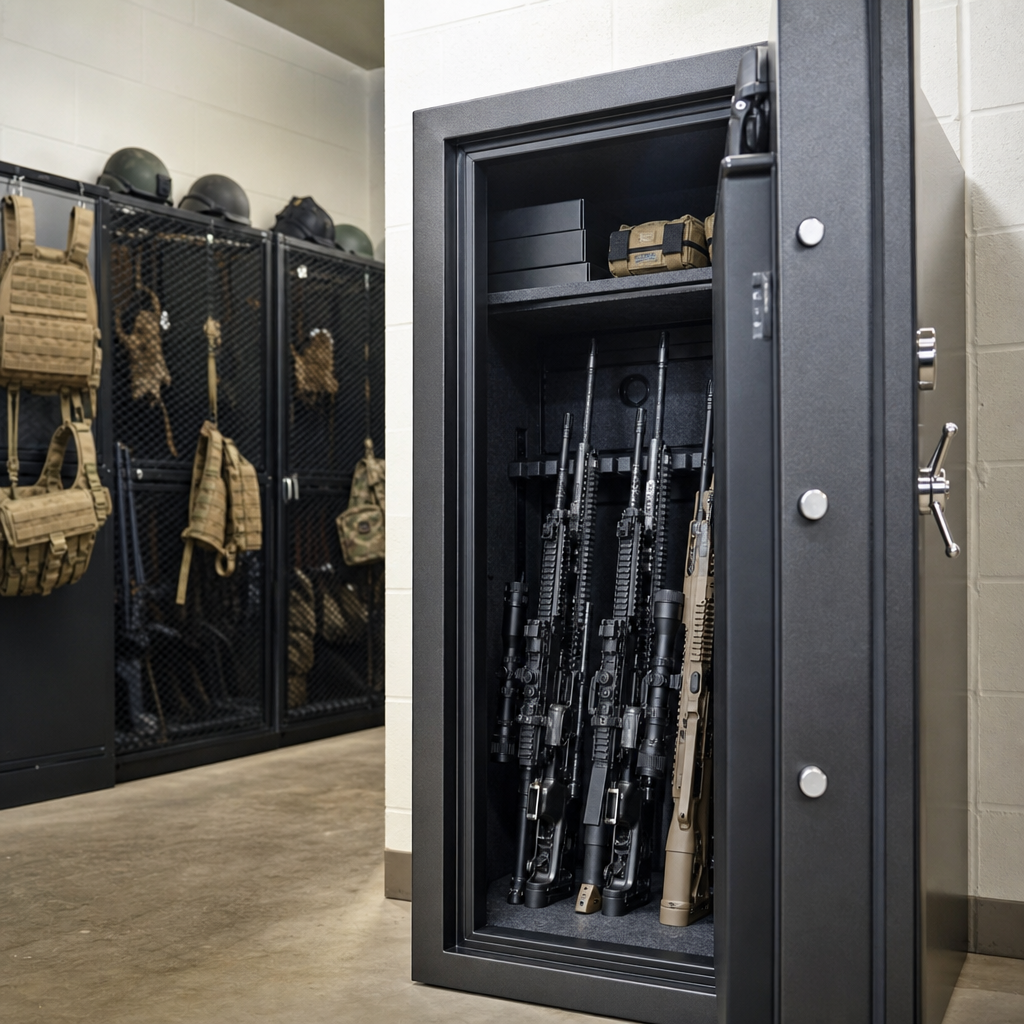
Choosing the best gun safes for military and law enforcement agencies requires more than comparing price tags and steel gauges. Agencies need secure weapons storage that protects duty firearms, supports rapid accountability, survives heavy daily use, and aligns with policy, insurance, and evidence-control requirements. In this buying guide, a gun safe is any locked storage system designed to prevent unauthorized access to firearms, ammunition, or weapon accessories, while an agency-grade safe must also address chain of custody, armory workflow, and institutional risk. I have worked with departments evaluating armory rooms, modular lockers, and high-security safes, and the pattern is always the same: the right purchase reduces loss, negligent access, and administrative friction, while the wrong one creates bottlenecks and liability. For police departments, sheriff’s offices, corrections teams, military units, and federal contractors, storage decisions affect readiness as much as security. A patrol rifle that cannot be logged quickly at shift change, or a sidearm locker that fails under constant opening cycles, becomes an operational problem. This hub article explains how to evaluate agency gun safes, what standards matter, which configurations fit different missions, and how to compare buying options clearly before you commit budget.
What agency buyers should evaluate first
The first question is not brand; it is use case. A precinct armory, a SWAT equipment room, a base weapons vault, and a corrections facility all need different storage architectures. Start by defining exactly what must be secured: handguns, patrol rifles, precision rifles, less-lethal launchers, optics, suppressors, magazines, and controlled ammunition. Then define access patterns. If firearms are issued once per shift to dozens of officers, you need a high-cycle system with fast authentication and clear auditing. If weapons are long-term stored for reserve inventory, burglary resistance and interior capacity may matter more than speed. Good buying guides separate these contexts because one cabinet rarely serves all of them well.
Capacity planning is where many agencies underspecify. I recommend counting current inventory, projected growth over five to seven years, and non-firearm items that will inevitably end up in the same enclosure, such as body-worn camera docks, bolt assemblies, evidence locks, and armorers’ tools. A safe listed for twenty rifles may hold far fewer once optics, weapon lights, and slings are installed. Depth and door clearance matter as much as stated slot count. If your patrol rifles carry LPVOs, red dots on risers, or fixed magnifiers, interior spacing should be checked against actual weapon profiles, not catalog assumptions.
Construction details deserve direct scrutiny. For agency use, the conversation should include body steel thickness, door plate thickness, hardplate protection at the lock, relockers, anti-pry door design, continuous welds, and anchor provisions. Composite doors and concrete-based burglary insulation can improve attack resistance, but they add weight and installation complexity. Interior hinges may reduce pry points, while quality external hinges can allow full door swing for easier weapon retrieval. Fire protection is also relevant, especially for centralized armories located in mixed-use municipal buildings, but fire ratings should be interpreted carefully because test methods vary by manufacturer.
Locking method is another primary filter. Mechanical dial locks remain durable and resistant to battery failure, but they slow issue and return. Electronic keypad locks improve speed, yet code sharing can undermine accountability if departments lack strict credential policies. Networked smart locks, RFID access, and biometric systems can create a reliable audit trail, but they also add cybersecurity, maintenance, and training obligations. In practice, the best choice depends on whether your agency values simplicity, speed, auditability, or integration with broader access-control systems.
Security standards, compliance, and risk management
Agency buyers should prioritize independently recognized standards rather than marketing terms like tactical, heavy duty, or military style. Underwriters Laboratories ratings are among the most useful signals. A UL RSC classification indicates residential security protection against limited attack and may suit low-risk administrative storage, but it is often not enough for centralized armories or high-value weapon inventories. UL TL-15 and TL-30 ratings indicate tested resistance against tool attacks for fifteen or thirty minutes on the door, and these ratings are more appropriate when agencies store large numbers of weapons or serialized accessories in one location. Some buyers also evaluate federal specifications for armory vault doors or modular vault panels, especially in military settings where room-level security is part of the design.
Physical security is only part of compliance. Policies from state POST boards, CJIS-related facility controls where applicable, local evidence procedures, and insurance requirements can all influence safe selection. For example, if a department must document who accessed a controlled weapon and when, a standalone mechanical safe may be secure but administratively weak. If an agency stores NFA-regulated suppressors or short-barreled rifles, inventory controls and access logs become even more important. I have seen procurement teams focus heavily on burglary ratings and overlook audit requirements, then spend additional money later on external logging systems that should have been integrated from the start.
Environmental risk also changes the buying decision. Coastal agencies may need corrosion-resistant finishes or dehumidification systems because salt air can accelerate rust inside poorly managed safes. Facilities in humid southern climates often benefit from desiccant management, GoldenRod-style dehumidifiers, or HVAC-balanced armory rooms. In wildfire-prone western regions, fire endurance and smoke-sealing features become more significant. A sound buying guide addresses these local variables because a safe that performs well in a dry inland county may perform poorly in a marine environment.
Finally, risk management includes installation. An excellent safe installed on weak flooring, unanchored concrete, or in a visible traffic area is a compromised investment. Agencies should confirm floor load capacity, anchor pattern compatibility, ADA-adjacent clearance issues, camera coverage, alarm integration, and whether installers are experienced with commercial safes rather than residential delivery. The procurement file should document all of this. If an incident occurs, decision-makers need to show not only that they bought a capable product, but that they selected, placed, and maintained it responsibly.
Types of gun safes and storage systems for agency use
Most military and law enforcement buyers will choose from five broad categories: traditional burglary-rated safes, weapon cabinets, modular lockers, day-use handgun lockers, and full armory vault systems. Traditional safes are best when agencies want concentrated security for smaller numbers of high-value firearms, serialized optics, or restricted accessories. They typically offer better attack resistance than simple cabinets, but their single-door design can slow access when many users need gear at once. Weapon cabinets, by contrast, emphasize organized capacity and speed, but many low-end models offer limited pry resistance and should not be mistaken for true safes.
Modular lockers solve a common agency challenge: individualized accountability. Instead of one central compartment, each officer or team receives a separate locked bay for a rifle, sidearm, or go-bag. Companies such as SecureIt have influenced this segment by focusing on configurable interiors and fast access, while traditional detention and evidence-storage manufacturers often build institutional locker banks with electronic credentialing. These systems work well in stations where officers need to secure long guns temporarily at booking, in administrative buildings, or during off-duty transitions. Their drawback is lower consolidated protection than a rated vault room unless the surrounding facility security is strong.
Day-use handgun lockers are especially useful in courthouses, jail intake areas, schools with sworn personnel, and training academies. A properly built handgun locker bank allows safe temporary storage without officers handing a loaded weapon to staff. The best units use individual compartments with numbered keys or electronic assignments, reinforced doors, and anti-fish designs. This category is often underappreciated in buying guides, but it can meaningfully reduce negligent handling at secure-entry points.
For larger installations, full armory vault systems are often the correct answer. These can include modular vault panels, vault doors, caged areas for separate categories of weapons, issue windows, and integrated inventory workstations. They are expensive and require facility planning, but they provide the strongest blend of capacity, control, and life-cycle value for organizations with large inventories. In several municipal and federal projects I have reviewed, agencies initially priced a room full of premium safes, then realized a properly designed vault room delivered better workflow and lower per-weapon storage cost over time.
| Storage type | Best fit | Main strength | Main limitation |
|---|---|---|---|
| Burglary-rated safe | Restricted weapons, high-value accessories, small armories | Strong attack resistance | Slower group access |
| Weapon cabinet | General rifle storage in controlled facilities | High capacity and organization | Often weaker against forced entry |
| Modular locker system | Individual officer accountability | Fast issue and return | Depends heavily on room security |
| Handgun locker bank | Temporary storage at secure checkpoints | Safe short-term transfer control | Not suitable for long-gun inventory |
| Armory vault system | Large departments and military units | Best overall control and scalability | Highest planning and installation cost |
Lock technology, audit trails, and access control
Electronic access has changed what agencies should expect from a gun safe. Modern systems can assign unique PINs, smart cards, fobs, or biometrics to individual users and produce time-stamped audit logs. For police and military organizations, that matters because storage is not just about keeping intruders out; it is about proving authorized handling. If a rifle is missing an optic, if an M4 bolt group is swapped, or if a duty pistol is checked out after hours, administrators need reliable records. That requirement pushes many agencies toward network-capable locks or locker systems that sync with central software.
Biometric access can be useful, but it should be treated carefully. Fingerprint readers have improved, yet dirt, gloves, cuts, and moisture still affect performance in real operational settings. For that reason, many institutional buyers prefer dual-mode systems such as card plus PIN, or biometric plus supervisor override. Multi-factor access is particularly valuable for sensitive inventories like select-fire weapons, breaching shotguns, or suppressors. In my experience, the best systems balance speed for authorized users with a fallback path that does not create a lockout during power or network disruption.
Cybersecurity should be on the checklist whenever a safe connects to a network. Ask whether credentials are encrypted, whether firmware is signed, how logs are exported, what happens during connectivity loss, and whether the vendor supports role-based permissions. A smart locker that stores weapons but cannot be patched or audited properly introduces a different class of risk. Procurement teams should involve IT and physical security staff together instead of letting armory purchases happen in isolation.
Power management also matters. Some electronic safe locks are battery powered at the keypad, while larger locker systems may rely on facility power with battery backup. Agencies should verify expected battery life, emergency override procedures, and replacement intervals. A simple maintenance calendar prevents most access failures. When departments complain that electronic locks are unreliable, the root cause is often neglected battery replacement, poor user provisioning, or unsupported firmware rather than the lock hardware itself.
How to compare vendors, pricing, and long-term value
The best buying guide for agency gun safes compares total life-cycle cost, not just purchase price. A lower-cost cabinet may look attractive in a grant application, but if it lacks interior flexibility, audit logging, or service support, replacement costs arrive early. Ask vendors for detailed specifications, independent ratings, lead times, warranty terms, lock certifications, and service network coverage. Institutional buyers should also request references from similar agencies. A company that performs well in residential retail does not automatically understand police shift changes, military issue procedures, or public procurement documentation.
Pricing usually scales with steel content, certification level, lock sophistication, and installation complexity. A basic long-gun cabinet may cost a fraction of a rated safe, while a modular intelligent locker wall can rival the cost of a small vault project. That does not make the locker wall overpriced if it eliminates manual logs, reduces staffing time, and improves accountability. I encourage agencies to price the problem, not only the product. If an armorer spends two extra hours daily reconciling checkouts because storage is poorly designed, labor cost becomes part of the safe’s true price.
Vendor support is often the deciding factor after deployment. Safes and lockers need reconfiguration, credential updates, lock servicing, and sometimes emergency opening. Agencies should ask how quickly a technician can respond, whether parts are stocked domestically, and what training is included for armorers or facilities staff. Good vendors provide commissioning support, user training, and documentation that procurement teams can keep on file for audits and future expansion.
As a hub for buying guides under gun safes and safety, this page should lead readers to deeper comparisons on biometric gun safes, rifle safe sizes, fire ratings, smart locker systems, and installation best practices. The core principle stays constant: match the storage system to the mission, verify standards, demand accountable access control, and budget for the full operating life of the solution. Agencies that do this well reduce theft exposure, tighten weapon accountability, and make daily operations smoother for armorers and line personnel. Start with an inventory and workflow assessment, then build a shortlist around real operational needs rather than generic catalog claims.
Frequently Asked Questions
What makes a gun safe “agency-grade” for military and law enforcement use?
An agency-grade gun safe is built for a very different environment than a residential safe. Military units, police departments, sheriff’s offices, and other public safety organizations need storage that can handle frequent access, multiple authorized users, strict chain-of-custody expectations, and constant operational wear. In practice, that means the safe should offer strong resistance to unauthorized entry, reinforced construction, dependable locking hardware, and a design that supports organized storage of handguns, rifles, patrol carbines, ammunition, and accessories.
Beyond physical strength, agency-grade also means the safe supports accountability. Interior layouts should help armorers, supervisors, or evidence personnel quickly verify what is stored, what has been checked out, and what is missing. Adjustable racks, labeled compartments, weapon-specific storage, and compatibility with asset tracking procedures all matter. In many agencies, the safe is not just a box with a lock; it is part of a larger control system tied to policy compliance, audits, inventory management, and liability reduction.
Durability is another defining factor. A safe used in a barracks, armory, ready room, precinct, training facility, or evidence area may be opened many times a day. Hinges, locks, handles, shelving, and boltwork must withstand repeated use without introducing security gaps or maintenance headaches. Agencies also often require anchoring options, controlled access logs, fire or environmental protection depending on the mission, and enough capacity for future expansion. In short, an agency-grade gun safe is designed to secure firearms while also supporting operational readiness, accountability, and long-term institutional use.
Which locking system is best for military and law enforcement gun safes?
The best locking system depends on how the agency balances security, speed, user management, and administrative control. Mechanical dial locks are valued for simplicity and long-term reliability because they do not depend on batteries or electronics. They can be a good fit where access is limited to a small number of trained personnel and where opening speed is less critical than consistency. However, they are slower to operate and less convenient when combinations need to be changed frequently due to staffing or policy changes.
Electronic keypad locks are popular in agency settings because they allow faster access and easier code changes. That is especially useful in departments with shift rotations, armory staff changes, or the need to revoke access quickly. Higher-end electronic locks may also support multiple user credentials, audit trails, dual-control access, time-delay features, and supervisor override protocols. These features can be extremely valuable where the safe is part of a documented weapons accountability program.
Biometric systems can offer quick access, but agencies should evaluate them carefully. Fingerprint readers may work well in controlled environments, but dirt, gloves, moisture, injuries, and heavy use can affect performance. For mission-critical applications, many agencies prefer a layered approach, such as an electronic lock with code management and audit capability, plus a backup key or override process governed by policy. The most effective choice is usually the one that matches the agency’s actual workflow: secure enough to prevent unauthorized access, fast enough for legitimate use, and manageable enough for administrators to maintain without creating delays or loopholes.
How important are compliance, policy, and evidence-control requirements when choosing a gun safe?
They are central to the decision. For military and law enforcement agencies, firearm storage is rarely just a purchasing issue; it is a compliance and risk-management issue. The safe must support internal policies for authorized access, key or code control, issuance procedures, weapon return protocols, ammunition separation if required, and documentation standards. It also needs to align with any applicable state, local, departmental, military, accreditation, or insurance requirements. A safe that is physically strong but incompatible with agency procedures can create operational and legal problems.
Evidence-control requirements are especially important when firearms are stored as seized property or as part of criminal investigations. In those situations, the storage system should help preserve chain of custody, restrict access to designated personnel, and reduce the risk of tampering, loss, or cross-contamination of evidence. Agencies may need segregated storage zones, individually controlled compartments, serialized tracking, and clear audit documentation showing who accessed the safe and when. That level of control can be just as important as burglary resistance.
Insurance and liability considerations also come into play. If a firearm is lost, stolen, misused, or accessed by an unauthorized person, the agency may face legal exposure, reputational damage, and administrative fallout. Choosing a safe that supports documented controls can help reduce those risks. Before buying, agencies should involve command staff, armorers, facilities personnel, procurement teams, and legal or compliance stakeholders to make sure the safe fits the full policy environment. The right safe should not only secure weapons physically, but also strengthen accountability and defensibility during audits, inspections, and post-incident reviews.
What size and interior configuration should an agency look for in a gun safe?
Agencies should start by planning for real-world storage needs, not just current firearm counts. A safe must accommodate the number and type of weapons actually in service, including duty pistols, patrol rifles, shotguns, less-lethal launchers, training weapons, optics, magazines, suppressors where applicable, and related accessories. It is also wise to account for growth. Department expansion, equipment upgrades, special response teams, and evidence surges can quickly overwhelm a safe that looked adequate on paper during procurement.
Interior configuration matters as much as overall capacity. A poorly organized safe can slow down issue and return procedures, increase the chance of damage, and make inventory checks harder. Agencies often benefit from adjustable rifle racks, pistol shelves, compartmentalized bins, door-mounted organizers, and labeled storage zones that separate assigned weapons, reserve weapons, and accessories. If the safe will be used in an armory or equipment room, layouts that allow quick visual verification can save significant time during shift changes and inspections.
It is also important to think about the installation environment. A safe that is too large for the available room, doorway clearance, floor load rating, or workflow area may create practical problems even if it offers ample capacity. Agencies should evaluate where the unit will sit, how it will be anchored, who will use it, and whether multiple people may need simultaneous access to nearby equipment. In many cases, the best answer is not simply the biggest safe available, but the safest and most efficient configuration for the agency’s mission, staffing model, and accountability procedures.
How can agencies evaluate durability and long-term value instead of focusing only on price?
Price matters, but for military and law enforcement buyers, long-term value is usually the more important metric. A lower-cost safe may appear attractive upfront, yet become expensive if it wears out quickly, fails under heavy use, requires frequent lock service, or lacks the features needed for proper weapons accountability. Agencies should evaluate construction quality, door strength, boltwork design, hinge durability, lock reputation, finish quality, and how well the unit stands up to repeated daily opening and closing.
Maintenance and support should be part of the evaluation. Ask whether replacement parts are readily available, whether the manufacturer or dealer offers service support, how warranty issues are handled, and what the expected lifespan is under institutional use. Review the lock’s power requirements if electronic, the process for code changes, and whether staff can perform basic administrative tasks without specialized technicians. Reliability under routine operational stress is one of the clearest indicators of value.
It is also smart to assess the total cost of ownership. That includes delivery, installation, anchoring, access-control integration, interior customization, future expansion, and downtime if the safe fails. A well-built safe that costs more initially may save money over time by reducing maintenance calls, minimizing weapon damage, supporting faster inventory checks, and lowering security risk. For agencies, the best value is a safe that protects firearms, supports policy compliance, remains dependable for years, and performs consistently in the demanding conditions of military and law enforcement operations.