
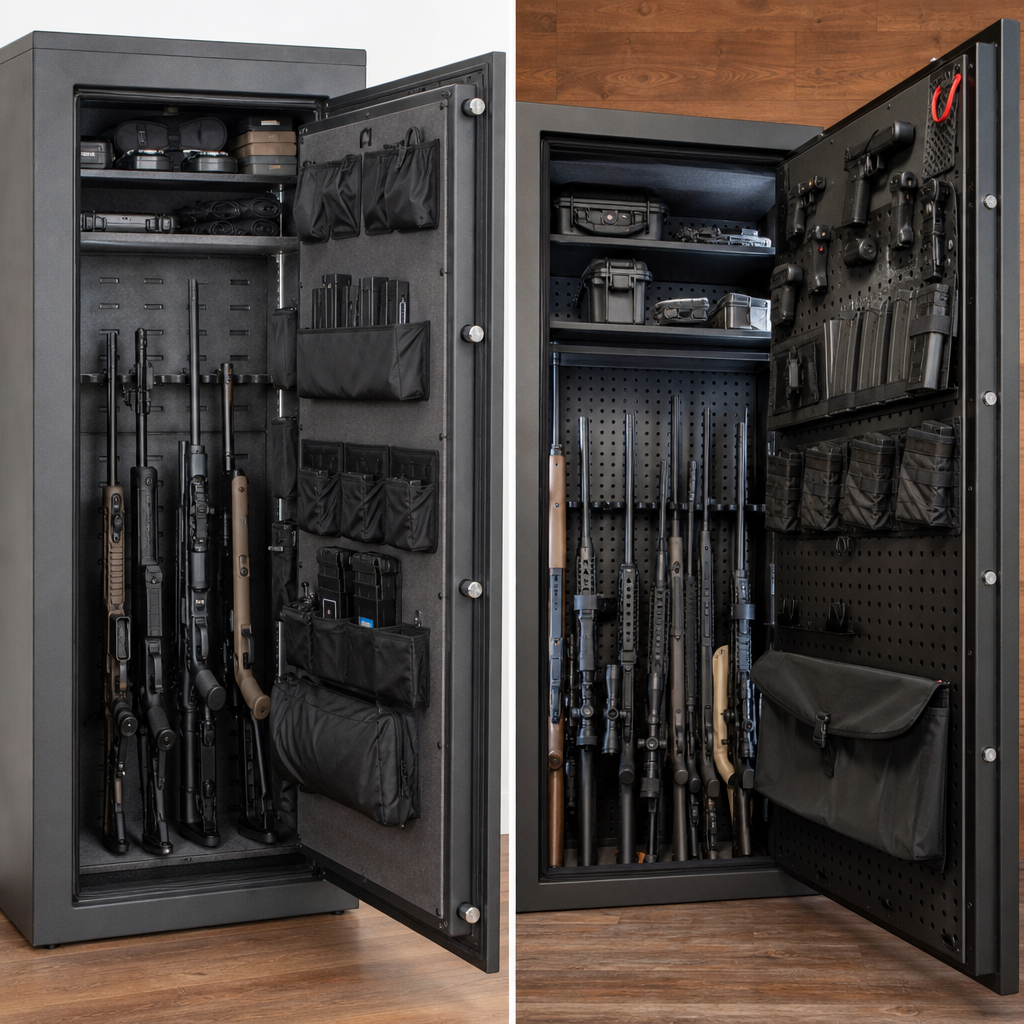
Choosing between SnapSafe and SecureIt is not just a brand preference decision; it is a practical choice about burglary resistance, interior flexibility, installation constraints, and how you actually store firearms at home. In the gun safes and safety category, modular gun safes occupy a specific niche: they break down into panels for easier delivery and assembly, yet aim to provide security closer to a traditional cabinet or safe than lightweight lockers can offer. For buyers comparing gun safe brands, this distinction matters because many homes cannot accept a fully welded safe due to stairs, narrow hallways, weight limits, or rental restrictions.
I have worked with homeowners who assumed all modular gun safes were basically interchangeable until we measured door openings, discussed anchoring points, and looked honestly at what they needed to protect. That is where SnapSafe vs. SecureIt becomes a useful comparison. SnapSafe is best known for modular safes that emphasize steel construction, pry resistance, and a conventional safe format. SecureIt built its reputation around organized firearm storage, faster access, and configurable interiors, often appealing to enthusiasts who want efficient layouts rather than a single deep cavity.
Before comparing the two, define the key terms. A modular gun safe is shipped in sections and assembled onsite. Fire protection refers to tested or advertised resistance to heat over a set period, though ratings vary by manufacturer and methodology. Burglary resistance is influenced by steel thickness, door design, boltwork, seam protection, lock quality, and anchoring. Capacity claims are marketing estimates based on tightly packed long guns with minimal optics, which rarely reflects real ownership patterns. Interior configurability means how well the storage system handles rifles with scopes, carbines, handguns, accessories, and documents without wasting space.
This topic matters because a poor gun safe choice creates long-term friction. If the safe is too cramped, owners stack guns unsafely. If assembly is difficult, the safe may never be properly anchored. If access is too slow, defensive firearms may end up stored elsewhere. If the body is too light or the frame too flexible, a thief with pry tools gains an advantage. The right comparison therefore goes beyond headline capacity and sale price. It should evaluate design philosophy, real installation conditions, and the kind of collection you own today and will likely own in five years.
Brand Positioning and Core Design Philosophy
SnapSafe and SecureIt approach modular storage from different starting points. SnapSafe generally builds around the traditional safe expectation: heavier steel panels, a formed door, multiple locking bolts, and a familiar vertical rifle-storage cavity. Its modular lineup appeals to buyers who want a safe that feels as close as possible to a standard residential security container while solving the delivery problem. In homes with basement stairs or second-floor offices, that delivery problem is often the deciding factor.
SecureIt, by contrast, approaches the category through military-inspired organization and access control. The company is closely associated with the CradleGrid storage system, a panel-based interior that lets users mount rifles, shelves, bins, and accessories in a much more deliberate way than carpeted barrel notches and foam dividers allow. In practical terms, SecureIt often feels less like a classic safe and more like a purpose-built armory cabinet with advanced layout options. That difference is not cosmetic; it shapes who should buy each brand.
For a buyer who prioritizes brute deterrence, SnapSafe usually enters the conversation first. For a buyer who prioritizes efficient use of space, visibility, and support for modern sporting rifles with optics, lights, and slings, SecureIt often looks smarter. Neither philosophy is wrong. They answer different storage problems, and understanding that saves buyers from comparing only sticker price.
Security Construction: Steel, Doors, Locks, and Anchoring
If the central question is which modular gun safe is better for security, SnapSafe usually holds the stronger argument. Its modular safes are designed to approximate the structure of a residential safe, using interlocking panels, substantial doors, and multi-point locking systems. In side-by-side evaluations, this conventional safe geometry generally offers more resistance to prying than lighter cabinet-style products. A formed door with robust locking bolts creates more work for an intruder, especially when the unit is anchored correctly into concrete or substantial wood framing.
SecureIt products are secure storage solutions, but many are best understood as high-quality gun cabinets rather than direct equivalents to heavier traditional safes. That matters because burglary resistance is not just about locking a door; it is about slowing a thief who has leverage, time, and privacy. Steel thickness, exposed seams, and cabinet flex all affect that outcome. In real homes, most smash-and-grab burglars leave quickly, so visible deterrence and anchoring matter enormously. But if your threat model includes a more determined attacker, more steel and stronger door construction are meaningful advantages.
Lock options matter too. SnapSafe commonly uses electronic or mechanical lock systems comparable to what buyers expect in safe retail showrooms. SecureIt also offers keyed and electronic access depending on model, but the overall security package differs by product family. I always advise buyers to look beyond the lock faceplate and ask a simpler question: when the lock is attacked, what exactly is the attacker trying to bend, pry, or cut next? The answer usually favors the heavier enclosure.
| Comparison Point | SnapSafe | SecureIt |
|---|---|---|
| Primary design goal | Traditional safe-style security in modular form | Organized firearm storage with flexible access |
| Typical burglary emphasis | Stronger pry resistance and heavier construction | Good deterrence, but often lighter than full safe designs |
| Interior layout style | Conventional shelves and long-gun storage | Highly configurable panel-based system |
| Best fit user | Buyer prioritizing security first | Buyer prioritizing organization and access first |
Anchoring is the hidden variable in nearly every gun safe comparison. An unanchored safe, even a relatively heavy one, can be tipped to attack seams or moved with appliance dollies. A lighter modular cabinet absolutely must be anchored. SecureIt owners who install their units correctly often get better real-world security than buyers who spend more on a heavier safe but never bolt it down. Installation discipline matters as much as brochure language.
Interior Storage, Capacity Claims, and Daily Use
This is the section where SecureIt often wins. Traditional rifle-count ratings are notoriously optimistic. A “12-gun” or “18-gun” capacity often assumes slim, unscoped long guns packed closely together. The moment you introduce AR-pattern rifles, large scopes, offset mounts, bipods, suppressor-ready configurations, or slings, actual capacity drops sharply. SecureIt’s interior system is built for this reality. Rifles can be spaced more intelligently, optics do not fight for the same vertical channel, and accessories can be mounted where you can actually see them.
In households with mixed firearm types, that visibility changes behavior. Owners are more likely to return guns to the safe when there is a defined place for each item. Magazines, ear protection, cleaning kits, and handguns stop becoming loose clutter. I have seen collections that looked overcrowded in a conventional safe become manageable in a SecureIt cabinet simply because every slot was intentional. That organizational benefit is not just convenience; it reduces accidental contact damage to optics and makes inventory control easier.
SnapSafe interiors are more familiar to anyone who has shopped for residential safes: shelving, carpeted walls, and vertical long-gun racks. For traditional hunting rifles and shotguns, that format works well. It is also intuitive for buyers who do not want to learn a new storage system. The limitation appears when the collection is dominated by modern carbines or when owners want quick visual access to a range setup. In those use cases, the conventional deep-cavity interior can waste volume even when the external dimensions look generous.
Daily use should drive the decision. If you rotate firearms for hunting seasons, training classes, or home-defense roles, SecureIt’s layout efficiency is a major strength. If you mainly want to place rifles, documents, and valuables into a more fortress-like enclosure and leave them there, SnapSafe feels more aligned with that job.
Assembly, Placement, and Home Installation Realities
Modular gun safes exist because installation is often harder than shopping. SnapSafe has a strong advantage over welded safes when access routes are narrow, but it still assembles into a substantial unit that requires planning, time, and at least two people for safe handling. The benefit is obvious in older homes, finished basements, and upstairs bonus rooms where a one-piece safe would be impossible or prohibitively expensive to move.
SecureIt products are generally easier to position and manage because many models are lighter and more cabinet-like. That can be a huge benefit for renters, military families who move often, or owners setting up storage in closets, offices, and rooms where floor loading is a concern. Ease of movement, however, should not be confused with equal resistance after installation. The more portable the unit, the more important proper anchoring becomes.
Another practical factor is disassembly. If you expect a future move, modular construction can save significant money and prevent damage to walls and staircases. SnapSafe’s take-down capability is one of its strongest selling points because it preserves much of the feel of a traditional safe while remaining relocatable. SecureIt also serves mobile households well, but from a different angle: simpler relocation and reconfiguration, particularly for users whose collection and room layout change frequently.
Fire Protection, Value, and Which Buyers Should Choose Each Brand
Fire protection is where buyers need caution. Some SnapSafe models include fire-resistant features or ratings that make them more appealing for documents, heirlooms, and ammunition storage alongside firearms. SecureIt products, depending on the line, may place less emphasis on fire insulation and more on access and organization. Buyers should verify the exact model specifications rather than assume the brand name answers the question. Fire ratings are not universally comparable across manufacturers, and the test protocol matters.
Value depends on what problem you are paying to solve. If your primary need is a modular gun safe that delivers stronger physical security than a typical cabinet, SnapSafe often provides better value. You are buying steel, door strength, and a more traditional safe profile. If your primary need is organized, accessible firearm storage for a modern collection, SecureIt often provides better functional value even when the security profile is lighter. You are paying for usability and space efficiency, not just mass.
For a first-time buyer asking, “Which modular gun safe is better overall?” the fairest answer is conditional. SnapSafe is better if security is the top priority and you want the closest thing to a conventional safe that can still be assembled inside the home. SecureIt is better if your priority is fast, visible, configurable storage for rifles with accessories and you accept that some models compete more with premium cabinets than heavier safes.
This hub page should also guide your next comparison decisions within gun safe comparisons and brand spotlights. After narrowing SnapSafe vs. SecureIt, the next useful steps are to compare modular safes against welded safes, evaluate electronic versus mechanical locks, review fire-rated gun safe claims, and examine whether your collection is better served by safe-style shelving or a dedicated organizational grid system. Those related comparisons are where buyers turn a broad brand preference into a purchase that fits their home, risk level, and daily routine.
SnapSafe and SecureIt both solve a real problem, but they solve different versions of it. SnapSafe is the stronger choice when you want modular delivery without giving up the feel and deterrence of a more traditional safe. SecureIt is the stronger choice when you want superior organization, easier access, and a layout built around real rifles with optics and accessories rather than optimistic capacity math. In other words, one leans harder into security construction, while the other leans harder into storage intelligence.
The smartest way to choose is to rank your priorities before you shop. Measure your access route, list the firearms and valuables you will store, decide whether fire resistance matters, and be honest about how often you need access. Then compare the exact models, not just the brands, because product lines vary. If you are building out your gun safes and safety plan, use this hub as the starting point for deeper brand spotlights, lock comparisons, fire-rating guides, and installation best practices. A well-chosen safe does more than hold firearms; it supports safer habits, better security, and fewer compromises every day.
Frequently Asked Questions
1. What is the biggest practical difference between SnapSafe and SecureIt modular gun safes?
The biggest real-world difference is that SnapSafe and SecureIt generally approach firearm storage from two different priorities. SnapSafe tends to appeal more to buyers who want a heavier, more traditional safe-like experience in a modular format. Its value proposition is often centered on thicker steel, greater overall mass, and a design philosophy that feels closer to a conventional residential security container that happens to ship in pieces. That makes it especially attractive for homeowners who are primarily worried about smash-and-grab burglary attempts and want a storage solution that feels substantial once assembled.
SecureIt, by contrast, is often favored by gun owners who care most about fast access, flexible organization, and efficient use of interior space. The brand is well known for its configurable interiors, cradles, shelves, bins, and layout options that make it easier to store rifles, carbines, optics-equipped firearms, magazines, and accessories without wasting room. Instead of emphasizing “big heavy box” thinking alone, SecureIt’s system is designed around organized readiness and practical storage management.
So if you strip away marketing and look at day-to-day ownership, the choice usually comes down to this: SnapSafe often leans stronger on weight and conventional safe-style security, while SecureIt often leans stronger on accessibility and interior adaptability. Neither is automatically “better” for every buyer. If your top concern is getting more burglary resistance out of a modular unit, SnapSafe may have the edge. If your top concern is storing a modern firearms collection neatly, accessibly, and in a more customized way, SecureIt may be the better fit.
2. Which brand offers better burglary protection: SnapSafe or SecureIt?
For buyers focused specifically on burglary resistance, SnapSafe is often the brand that gets the nod, but that answer needs some nuance. In the modular safe category, burglary protection is shaped by several factors: steel thickness, door design, locking mechanism, total assembled weight, pry resistance, boltwork, and whether the unit is anchored properly. Modular construction is convenient because the safe can be carried in sections and assembled in tight spaces, but every modular design has to prove it can still resist forced entry once put together.
SnapSafe models are frequently viewed as more “safe-like” in the traditional sense because they tend to emphasize robust construction and heavier overall form. That can be an advantage against quick attacks with basic pry tools, especially when the unit is bolted down correctly. More mass and a more conventional security-container design can increase the time, effort, and noise required for an intruder to get inside. For many homeowners, that delay is the entire goal, since most residential burglaries are opportunistic and time-sensitive.
SecureIt products are not necessarily weak, but the company’s design priorities often place equal or greater focus on organized storage and fast deployment rather than maximizing sheer anti-pry presence. In practical terms, that means some shoppers may perceive SecureIt as closer to a high-quality security cabinet approach, depending on the model, while SnapSafe may feel more like a traditional safe adapted into modular form.
The most important takeaway is that either brand will perform far better when installed intelligently. A gun safe that is not anchored can be tipped, moved, or attacked more easily. A unit placed in a concealed location, against a wall, in a corner, or where pry access is limited can become significantly harder to defeat. If burglary resistance is your number-one buying criterion, compare specific model specs rather than just the logo on the door. But broadly speaking, buyers seeking the stronger security-first profile often end up preferring SnapSafe.
3. Is SecureIt better than SnapSafe for organizing rifles, optics, and gear?
For many collections, yes, SecureIt is often better when interior organization is the deciding factor. One of SecureIt’s strongest advantages is the way it treats storage as an active system rather than a fixed box with a few shelves. That matters because modern gun owners often store AR-style rifles, scoped bolt guns, slings, lights, suppressor-ready setups, plate carriers, mags, documents, and handguns all in the same cabinet or safe. Traditional interiors can waste space quickly when firearms have optics, bipods, or nonstandard dimensions.
SecureIt’s configurable approach makes it easier to build around those realities. The ability to adjust support points, create vertical storage patterns, separate gear categories, and avoid stock-to-stock crowding can be a major advantage. For users with a mixed collection, especially tactical rifles or accessorized firearms, that flexibility can translate into better protection for the guns themselves because they are less likely to bang into each other or sit awkwardly on generic barrel rests.
SnapSafe interiors can still work well, especially for buyers with a more conventional storage plan or fewer odd-shaped firearms. If your collection is mostly standard long guns and you simply want secure containment with some shelf space, a SnapSafe may be perfectly satisfactory. But if you are the type of owner who wants every rifle to have a dedicated place, every magazine grouped logically, and every accessory placed for quick retrieval, SecureIt often feels more purpose-built.
In short, SecureIt tends to excel in storage efficiency and customization, while SnapSafe tends to excel in giving you a more traditional safe environment. If your frustration with gun storage is “I can never fit everything cleanly,” SecureIt may solve that problem better. If your frustration is “I want stronger protection than a locker can offer,” SnapSafe may be the more compelling answer.
4. Are SnapSafe and SecureIt both good choices for homes with stairs, tight hallways, or difficult installation spaces?
Yes, and this is exactly why many people shop modular gun safes in the first place. Both SnapSafe and SecureIt appeal to buyers who cannot realistically move a one-piece traditional safe into the final installation area. Basements, upstairs rooms, narrow doorways, older homes, condos, and interior corners often make standard safe delivery either extremely expensive or completely impossible. A modular gun safe solves that problem by allowing the unit to be carried in manageable sections and assembled where it will stay.
That said, there can still be important differences in panel weight, assembly complexity, and final footprint. SnapSafe’s heavier, more security-oriented designs can mean the individual components are still substantial, even if they are easier to handle than a full-size welded safe. Buyers should not assume “modular” means “light.” It means “breaks down for transport.” If you are carrying components up stairs or through awkward turns, check the weight of the heaviest panel, not just the assembled weight.
SecureIt may be especially appealing in constrained spaces if the buyer values manageable installation plus interior efficiency. Depending on the exact model, the assembly process may also feel more straightforward for users who want practical storage without the feel of building a massive traditional safe onsite.
The smart buying move is to measure everything before purchase: exterior doors, interior doors, stair width, hallway turns, ceiling clearance, closet openings, and the actual room where the safe will sit. Also account for whether the door can fully swing open once assembled. A modular safe that fits into a room but cannot open properly is a frustrating mistake. If your home has severe access limitations, both brands deserve consideration, but SnapSafe may appeal more if you are willing to deal with heavier components for a stronger final structure, while SecureIt may appeal more if ease of use and storage efficiency are equal priorities.
5. How should buyers decide whether SnapSafe or SecureIt is the better value for their needs?
The better value depends less on sticker price alone and more on what problem you are trying to solve. A lot of gun safe shoppers make the mistake of comparing only cost and stated capacity, but “capacity” numbers are often optimistic and “value” changes dramatically depending on your priorities. The right question is not just “Which one is cheaper?” but “Which one does the job I actually need with the fewest compromises?”
If you want a modular gun safe because your house cannot accept a traditional welded safe, and your top concern is getting as much anti-theft strength as possible in that format, SnapSafe may deliver better value even if the upfront cost is higher. That is because you are buying into heavier construction and a more security-centered design. For someone worried about break-ins, that extra emphasis can be worth paying for.
If your collection includes multiple rifles with optics, accessories, and specialized gear, and you want a system that keeps everything organized, visible, and quickly accessible, SecureIt may be the better value even if it is not the “heavier” option. Better organization can reduce frustration, prevent crowding damage, and make your storage setup more useful every single day. In that sense, the value comes from functionality, not just from steel and lock specs.
Buyers should also factor in hidden ownership considerations: assembly time, anchoring requirements, expansion needs, interior accessories, placement constraints, and how long the safe will fit the collection before an upgrade is necessary. A lower-cost option is not a bargain if it becomes too cramped or poorly organized within a year. Likewise, a heavier safe is not automatically the best purchase if it makes access inconvenient and discourages proper use.
For most shoppers, the simplest rule is this: choose SnapSafe if your buying logic starts