
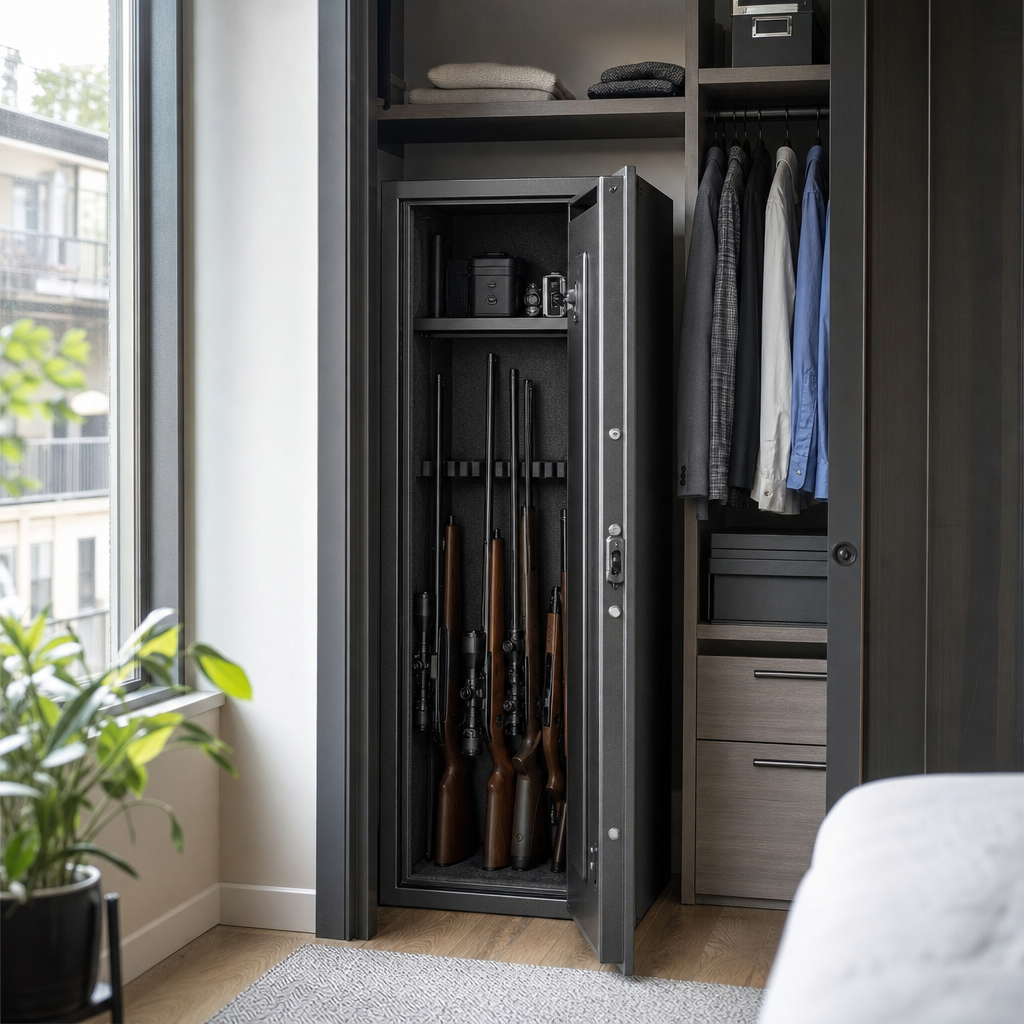
Finding the best gun safes for apartment dwellers starts with a different set of priorities than shopping for a safe in a detached home. In apartments, space is limited, walls may be shared, floors may have weight limits, and lease agreements often restrict permanent installation. A good apartment gun safe must therefore balance security, size, fire resistance, accessibility, and discreet placement. It should protect firearms from theft, unauthorized access, and accidental handling while fitting into a bedroom closet, utility nook, or underused corner without overwhelming the room. That combination is why apartment buyers need a more careful comparison of gun safe brands and designs than most general buying guides provide.
In practice, I have found that apartment shoppers usually ask the same questions first: How heavy should a safe be if I cannot bolt it to a concrete slab? Is a biometric lock reliable enough for daily access? Do I need a full-size long-gun cabinet, or would a modular rifle safe or under-bed model work better? Those questions matter because apartment living introduces tradeoffs. A heavier safe resists theft better, but moving it up stairs can be difficult and may require professional delivery. A slim vertical safe saves floor space, but shelves and door organizers may be more useful if the collection includes handguns, documents, optics, and ammunition. The right answer depends on the firearms owned, the layout of the apartment, and the realistic threat level.
This hub article covers gun safe comparisons and brand spotlights with apartment living in mind. It reviews leading names such as Vaultek, SecureIt, Hornady, Liberty Safe, Fort Knox, Browning, Winchester, Barska, and Stack-On, explains where each brand fits, and outlines what features matter most in small spaces. It also serves as a foundation for deeper pages on biometric safes, under-bed safes, modular rifle storage, handgun vaults, and lease-friendly installation strategies. If you want a practical, experience-based overview of the best gun safes for apartment dwellers, start here and use these comparisons to narrow your shortlist before buying.
What Apartment Dwellers Should Prioritize in a Gun Safe
The best apartment gun safe is not automatically the biggest or the most expensive. It is the one that matches your room layout, firearm type, and installation constraints. For most renters, the core priorities are external dimensions, internal configuration, lock reliability, anti-pry construction, and manageable weight. A safe that is 57 to 60 inches tall and under 22 inches wide often fits standard closets better than broad, traditional residential security containers. If you own one or two rifles and a few handguns, interior flexibility matters more than maximum capacity numbers, which are often optimistic and based on unscoped long guns packed tightly together.
Weight deserves special attention. Many true gun safes weigh between 300 and 800 pounds, while cabinets and modular systems may fall between 100 and 250 pounds. In apartments, a safe in the 150 to 400 pound range often provides the most practical balance. It is heavy enough to slow down theft, especially when anchored to studs or a reinforced platform where permitted, but still realistic to move through hallways and elevators. Buyers should verify floor loading concerns with building management if considering anything very heavy, particularly in older buildings. The National Rifle Association and most major safe manufacturers consistently recommend anchoring whenever possible because even a well-built safe is more vulnerable if thieves can tip it over and attack the door seam.
Fire protection is another area where apartment buyers need realism. A 30-minute or 60-minute fire rating can be valuable, but ratings vary because no single universal consumer standard governs every manufacturer claim. Look for details such as temperature threshold, duration, and whether the safe uses gypsum board, proprietary insulation, or expanding door seals. In apartments, where neighboring units and shared systems can accelerate smoke and heat spread, some level of fire resistance is helpful, but security and fit should usually come first. A giant fire-rated safe that cannot be placed discreetly is often less useful than a compact, sturdy model that actually fits your space and daily routine.
Top Brands Reviewed for Apartment Use
Vaultek stands out for compact handgun safes and modern access control. Its LifePod, Slider, and MX Series models are popular with apartment residents because they fit in closets, nightstands, or shelves while offering biometric, keypad, app-based, or backup key access depending on model. Vaultek products are not designed to replace a full heavy safe for multiple rifles, but for handguns and quick-access defensive storage they are among the best choices for renters who need discretion and fast entry. In my experience, their advantage is usability: owners are more likely to secure a firearm consistently when the safe is convenient and compact.
SecureIt is one of the strongest brands for apartment rifle storage. Its Agile line uses a modular approach with lighter steel construction than traditional gun safes but better organization than basic cabinets. The Agile Model 52, for example, is narrow enough for many closets and supports practical rifle staging with cradles and accessory panels. This makes SecureIt ideal for renters who own AR-platform rifles, shotguns, and optics-heavy setups that do not fit well in traditional rack spacing. The tradeoff is that it does not offer the same burglary resistance as a much heavier composite safe from Liberty or Fort Knox, but for many apartments the footprint and configurability are far more realistic.
Hornady has built a strong reputation in RFID-enabled security products, especially handgun vaults and specialty safes. The RAPiD line includes nightstand, closet, and vehicle-oriented options that work well for apartment residents prioritizing rapid defensive access. Hornady’s long-gun offerings also deserve consideration where space is tight. The main strength here is the access ecosystem: wristbands, stickers, and tags make repeat entry simple. The limitation is that some buyers may prefer purely mechanical redundancy over electronics-heavy systems, especially for long-term backup storage.
Liberty Safe remains one of the most recognized names in the market and is best known for residential security containers with thicker bodies, stronger bolts, and better fire insulation than entry-level cabinets. For apartment dwellers, Liberty’s smaller models, such as the Centurion line, can make sense if the building allows delivery and anchoring. These safes offer more true theft resistance than lightweight alternatives, which is valuable in urban areas where burglary is a realistic concern. The challenge is weight and bulk. A Liberty safe may be excellent on paper but impractical for a third-floor walk-up apartment.
Fort Knox sits at the premium end, with robust steel, customization, and serious anti-pry construction. For most apartment residents, Fort Knox is aspirational rather than practical. However, buyers in luxury high-rise buildings or ground-floor units who want the strongest residential option should keep the brand on the radar. Browning and Winchester occupy the middle ground, offering broad dealer availability, decent interiors, and a mix of entry-level and mid-tier models. Barska and Stack-On are more budget-focused, often serving first-time owners who need basic secure storage to meet safety requirements and keep firearms away from children or visitors.
Best Safe Types for Common Apartment Setups
Apartment dwellers rarely need one universal safe type. They need the type that fits how they live. If the primary goal is fast access to a handgun for home defense, a bedside biometric or RFID safe from Vaultek or Hornady is usually the best choice. These safes are compact, easy to conceal, and realistic for everyday use. They also pair well with a second, larger safe for long-gun storage. For many renters, that two-safe strategy works better than trying to force every firearm into one oversized unit.
For rifle owners in small apartments, under-bed safes and narrow modular cabinets are often the smartest formats. Under-bed designs use dead space and keep visual clutter down, which matters in studio and one-bedroom layouts. They also help owners avoid placing a tall safe in plain view when closet space is limited. The downside is that bed-frame clearance varies, and access can be awkward if the room is crowded. Slim upright safes, by contrast, fit better in closets and can be easier to organize, especially when storing slings, magazines, and optics.
If budget is the top concern, a locking steel cabinet can still be a reasonable starting point, provided the buyer understands its limits. Cabinets deter casual access and satisfy many basic safe-storage goals, but they are not equivalent to a true pry-resistant safe with heavier steel, internal hinges, relockers, and fire protection. I generally recommend cabinets for low-risk situations, temporary setups, or owners planning to upgrade later. In dense apartment environments, where a thief may have privacy during daytime work hours, stronger construction is worth paying for if the space allows it.
| Apartment Need | Best Safe Type | Recommended Brands | Main Tradeoff |
|---|---|---|---|
| Quick handgun access | Biometric or RFID handgun vault | Vaultek, Hornady | Limited long-gun capacity |
| Closet rifle storage | Slim modular upright safe | SecureIt, Stack-On | Less burglary resistance than heavy safes |
| Higher theft protection | Compact traditional gun safe | Liberty Safe, Browning, Winchester | More weight and harder delivery |
| Low-profile bedroom storage | Under-bed safe | Hornady, Vaultek | Bed clearance and access angle |
| Budget compliance storage | Locking gun cabinet | Barska, Stack-On | Lower resistance to pry attacks |
How to Compare Security Features Without Getting Misled
Marketing language around gun safes can be confusing, especially for first-time buyers. Terms like military-grade steel, biometric security, and fireproof are often used loosely. The better method is to compare measurable details. Start with steel thickness. Lower gauge numbers indicate thicker steel, so 12-gauge is stronger than 14-gauge, and 10-gauge is stronger still. Door construction matters as much as body steel because many attacks target the door edge with pry bars. Look for recessed doors, solid locking bolts, reinforced frames, and anti-tamper features rather than focusing only on lock type.
Locks should be judged by reliability, not novelty. Electronic keypads are common and usually dependable from established brands. Biometric locks are convenient, but fingerprint scanners vary widely in speed and consistency depending on finger condition, sensor quality, and enrollment setup. Mechanical dial locks remain highly trusted for long-term durability, though they are slower for emergency access. In apartment settings, many owners benefit from a split approach: a fast-access handgun vault for immediate defensive use and a separate keypad or mechanical safe for longer-term storage.
Another overlooked comparison point is interior usability. A safe that claims to hold twelve rifles may realistically hold six modern rifles with optics, lights, and slings. Door organizers, adjustable shelves, barrel cradles, and power ports for dehumidifiers can materially improve storage efficiency. This is one reason SecureIt and Browning often perform well in owner satisfaction: their layouts frequently make better use of compact footprints than older rack designs. A safe that fits your actual gear cleanly is safer than one that encourages crowding, muzzle overlap, or keeping extra firearms unsecured outside the safe.
Placement, Installation, and Lease-Friendly Tactics
The safest location in an apartment is usually the one that combines concealment, structural support, and practical access. Bedroom closets are common because they keep the safe out of sight and near daily living space. Interior corners can also work well, especially when they limit pry-bar access on the sides. Avoid obvious visibility from windows, and do not place a safe where movers, maintenance workers, or casual guests can immediately see it. Discretion remains one of the strongest security layers in apartment environments.
Anchoring is ideal, but renters often need alternatives that do not violate lease terms. Some compact safes can be anchored to heavy furniture, reinforced closet platforms, or wall studs using existing framing spaces, though permission should be confirmed first. Cable-secured handgun safes offer another layer for temporary setups. While not equivalent to hard anchoring, they are better than free-standing storage. Professional installers can also recommend noninvasive methods for certain buildings. If management permits installation, document everything and keep records so the unit can be restored properly when moving out.
Moving day planning is equally important. Measure doorways, stairwells, elevator dimensions, and closet openings before ordering. Confirm whether the manufacturer or dealer provides threshold delivery, room-of-choice delivery, or stair carry service. I have seen buyers choose an excellent safe only to learn it cannot make the turn into the bedroom closet. That problem is preventable. In apartment safe buying, dimensions on the spec sheet are not minor details; they are deciding factors.
Which Brands Are Best for Different Buyers
For first-time handgun owners, Vaultek and Hornady are usually the easiest recommendations because they combine compact sizing with fast daily access. For renters storing rifles in a closet, SecureIt is often the most apartment-friendly brand because modular design solves spacing problems that traditional safes create. For buyers who prioritize theft resistance above everything else and can support the weight, Liberty Safe is one of the strongest all-around choices in the accessible mainstream market. Browning and Winchester are sensible middle-path brands for shoppers who want broader model variety and local retailer support.
Budget buyers should approach Barska and Stack-On with clear expectations. These brands can be useful, especially for legal compliance, child safety, and starter storage, but they are generally best seen as entry points rather than end-state solutions. Premium buyers with more space and budget may consider Fort Knox, though apartment practicality must be assessed honestly. The best gun safe for apartment dwellers is not the one with the most dramatic specifications. It is the one you can install responsibly, use consistently, and trust to secure your firearms in the real conditions of apartment life.
Use this hub as your starting point for deeper comparisons across biometric safes, compact rifle storage, under-bed options, and brand-specific reviews. Narrow your choices by space, firearm type, and installation limits first, then compare lock style, steel thickness, and fire rating. That approach leads to better buying decisions and safer ownership. If you are building a shortlist now, begin with two or three brands that match your apartment layout and storage needs, then verify dimensions before you buy.
Frequently Asked Questions
What should apartment dwellers prioritize when choosing a gun safe?
Apartment dwellers should usually start with size, weight, and placement flexibility before looking at larger home-safe features. In a detached house, buyers may have more freedom to install a heavy safe in a garage, basement, or dedicated room. In an apartment, that is rarely the case. The best gun safe for an apartment needs to fit into a closet, bedroom corner, under a bed, or another discreet location without overwhelming the living space. It also needs to provide meaningful protection against theft and unauthorized access without becoming impossible to move during a lease transition.
Security is still the top concern, but it should be considered in practical terms. A safe with solid steel construction, pry-resistant door design, reinforced locking bolts, and a reliable locking system is far more useful than a bulky unit that technically offers more storage but cannot be placed properly. Many apartment owners and renters also prefer safes that can be anchored in a non-destructive or minimally invasive way, depending on lease rules. That makes compact long-gun safes, modular cabinets, and quick-access handgun safes especially appealing.
Fire resistance is another important factor, but it needs to be balanced with realistic apartment needs. A high fire rating is valuable, yet many fire-rated safes become significantly heavier and larger. For apartment living, it often makes sense to choose a safe that offers a moderate fire rating along with manageable dimensions and better placement options. Accessibility matters too. If the safe is intended for defensive firearms, quick entry through a dependable electronic, biometric, or mechanical lock may be just as important as steel thickness. In short, apartment dwellers should look for a safe that balances protection, footprint, weight, discretion, and usability rather than simply buying the largest or heaviest model available.
Are heavier gun safes always better for apartments?
No, heavier gun safes are not always better for apartment living. While weight can help deter theft by making a safe harder to carry away, apartment buyers have to think about several additional factors. First, large and heavy safes can be difficult to move through narrow hallways, stairwells, elevators, and door frames. Second, upper-floor apartments may have floor-load considerations that make extremely heavy safes less practical. Third, some lease agreements may restrict certain installation methods or modifications that are commonly used to secure a heavier safe permanently.
That does not mean weight is unimportant. A very light safe can be vulnerable if a thief can simply remove it and attempt to open it elsewhere. The goal is to find a middle ground: enough mass and strong enough construction to resist quick theft attempts, but not so much weight that the safe becomes unmanageable or creates installation problems. In many apartments, a mid-sized safe anchored properly in an approved way offers better real-world security than an oversized safe that cannot be installed correctly or must sit in an obvious location.
It is also worth remembering that safe design matters as much as total weight. Steel gauge, door reinforcement, hinge protection, lock quality, and anti-pry features all contribute to security. A well-designed compact safe from a respected brand may outperform a heavier but lower-quality model. For many apartment dwellers, the best choice is a safe that is strong enough to resist forced entry, small enough to be placed discreetly, and light enough to be moved safely when relocating. Practical security is often more valuable than maximum bulk.
Can you install a gun safe in an apartment without violating a lease?
In many cases, yes, but it depends entirely on the lease terms, the building rules, and the installation method. Apartment residents should review their lease carefully before buying a safe, especially if they plan to anchor it to the floor or wall. Some landlords prohibit drilling into structural surfaces, while others allow limited modifications as long as repairs are made at move-out. Because of this, it is smart to verify the rules in writing rather than assuming standard home installation practices are allowed.
If permanent anchoring is restricted, there are still practical options. Some apartment dwellers place compact safes inside closets, built-in cabinetry, or furniture enclosures to reduce visibility. Others choose smaller safes that can be secured to heavy furniture, bed frames, or approved mounting surfaces, provided the method complies with the lease. Quick-access handgun safes are often easier to integrate into apartment living because they can be mounted in discreet locations with minimal impact. Under-bed safes, closet safes, and low-profile vertical cabinets are also popular because they offer security while fitting naturally into smaller floor plans.
The key is to balance legal compliance with actual protection. A safe that cannot be anchored at all should still be placed where it is difficult to detect and inconvenient to remove quickly. If anchoring is permitted, professional or careful manufacturer-guided installation can improve theft resistance significantly. Before making a final purchase, apartment dwellers should think through where the safe will sit, how it will be moved in, whether the lock will remain accessible, and what the landlord allows. That planning step often determines whether a safe will be genuinely useful long term.
Which gun safe features matter most when comparing top brands for apartment use?
When comparing top brands for apartment-friendly gun safes, the most important features usually include footprint, internal layout, lock reliability, steel construction, pry resistance, and practical fire protection. Brand reputation matters, but the best brand for an apartment is not necessarily the one that makes the biggest or most heavily armored safe. It is the one that offers strong security in a size and format that works in limited living space. A brand known for slim long-gun safes, modular interiors, and reliable quick-access models may be a better fit for renters than a brand focused mainly on oversized full-size vaults.
Lock type deserves close attention. Electronic locks are convenient and fast, which appeals to many owners, but they should come from a reputable manufacturer and have a good track record for consistent performance. Biometric locks can be useful for quick access, especially in compact handgun safes, though quality varies widely between brands. Mechanical locks remain highly trusted for durability, but they are usually slower to open. In an apartment setting, the right choice often depends on whether the safe is meant for defensive access, long-term storage, or both.
Interior flexibility is another feature that often separates brands. Apartment owners typically need to maximize every inch of storage, so adjustable shelving, door organizers, handgun racks, and convertible layouts can make a major difference. External dimensions should always be compared alongside internal capacity claims, since some brands market a safe by its theoretical firearm count even though realistic storage is lower once optics, slings, documents, and accessories are included. The best apartment-safe brands tend to be those that combine efficient space use, dependable construction, and discreet designs that blend into smaller living environments.
What are the best places to keep a gun safe in an apartment?
The best place to keep a gun safe in an apartment is somewhere discreet, stable, and convenient enough that the safe will actually be used consistently. For many people, that means a bedroom closet, a tucked-away corner of a bedroom, under a bed, or inside a large cabinet or wardrobe. The ideal spot keeps the safe out of plain view from visitors, maintenance workers, and anyone looking in from outside windows. Discretion is a major security advantage in apartment living because preventing attention is often the first layer of defense.
Placement should also account for the structure of the apartment. A safe should sit on a stable surface and, if possible, near a location where anchoring is permitted and effective. Moisture, heat sources, and obvious entry points should be avoided. For example, placing a safe directly in front of a window, near a patio door, or in a shared storage area reduces security. If the safe is being used for home defense firearms, the location must also allow quick access while still preventing unauthorized handling by children, guests, or roommates.
Many apartment dwellers benefit from thinking in terms of layered placement. A compact handgun safe may be kept in a bedroom for quick access, while a separate long-gun safe or cabinet is placed in a closet for general storage. This approach can make better use of small spaces while matching storage type to actual use. Whatever location is chosen, the safe should fit naturally into the room, remain accessible for locking and unlocking, and not force the owner into unsafe habits such as leaving firearms unsecured because the safe is too inconvenient to reach. The best placement is the one that supports both security and consistent responsible use.