
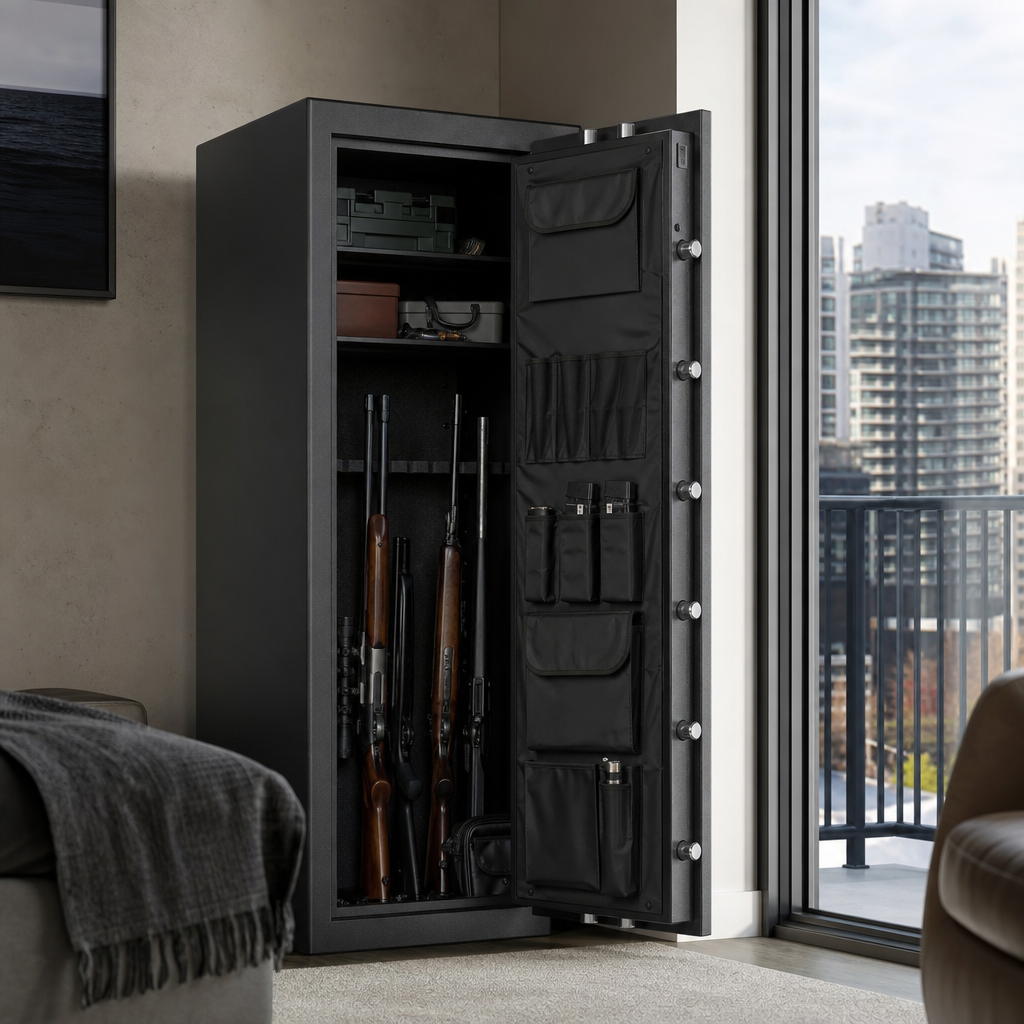
Apartment living changes how you evaluate secure firearm storage, because square footage is limited, neighbors are close, and a building fire can spread faster through shared walls, utility chases, and stacked units than many owners expect. The best fireproof gun safes for apartment dwellers are not simply smaller versions of large residential vaults. They are compact, weight-conscious, theft-resistant, and independently tested to withstand heat, smoke, water, and the practical realities of moving through hallways, elevators, and stairs. If you rent or own a condo, those constraints matter as much as lock quality.
In this guide, fireproof means a safe built with insulating materials and rated to keep interior temperatures below the threshold that damages firearms, ammunition packaging, paper records, optics, and electronic accessories during a defined fire exposure. Disaster-resistant storage goes further. It includes resistance to smoke infiltration, water from sprinklers or firefighters, impact during structural collapse, and anchoring systems that reduce tip-over or smash-and-grab theft. Through years of evaluating safes for urban clients, I have found that apartment buyers make the same mistake repeatedly: they shop by advertised “fireproof” labels instead of verified fire ratings, locking design, dimensions, and installation feasibility.
This sub-pillar hub explains how to choose an apartment-friendly fireproof gun safe, which features matter most, and where each safe category fits. It also points you toward related subjects within gun safes and safety, including quick-access handgun safes, under-bed safes, biometric locks, moisture control, and long-gun organization. If you want one page that connects fire protection with burglary resistance and realistic apartment use, this is it.
What Apartment Dwellers Need From a Fireproof Gun Safe
The core challenge is balancing three competing factors: interior capacity, external footprint, and total weight. A true fire-rated safe uses layers of steel and insulation, so every increase in fire endurance adds bulk. In a detached home with a garage, that is manageable. In a third-floor apartment, it changes everything. I generally tell apartment residents to begin with a tape measure, the building’s lease terms, and the route from curb to final placement before they compare lock types or shelving layouts.
For most apartment dwellers, the right category is a compact upright long-gun safe, a wide but shallow under-bed safe, or a high-security handgun safe reinforced with fire lining. A full-size 40-gun cabinet is rarely practical. Hall closets, bedroom corners, and interior walls are usually better locations than exterior-facing walls, where temperature swings and humidity are worse. Weight is not just a moving issue. Concentrated loads on older floors can become a concern, especially with concrete-filled or heavily insulated safes. Many modern apartment-suitable models land between 100 and 350 pounds before firearms are loaded, which is far easier to manage than 700-pound traditional gun safes.
Burglary protection still matters because apartment theft often happens quickly. Shared hallways increase exposure during moves, maintenance visits, and deliveries. That is why thin metal gun cabinets with a cosmetic “fire seal” are poor substitutes for real safes. Look for steel bodies, internal hinges or protected external hinges, active locking bolts, relockers, and pre-drilled anchor holes. If a burglar can pry the door in ninety seconds, the fire liner does not save the purchase.
How Fire Ratings Actually Work
Fire ratings are one of the most misunderstood parts of buying a gun safe. Marketing terms like “fireproof” have no universal legal meaning in consumer safe advertising. What matters is the tested duration, the furnace temperature, and the maximum interior temperature maintained during the test. Paper chars around 350 degrees Fahrenheit, but plastics, optics, lubricants, adhesives, and electronic items can degrade sooner. Firearms themselves can survive more heat than documents, yet finishes, stocks, grips, and sight systems may not. That is why better safes specify both time and temperature.
Independent testing laboratories such as UL are the gold standard, though many gun safes rely on manufacturer-run or third-party furnace tests instead of full certification. A common consumer benchmark is 30 to 60 minutes at 1,200 to 1,400 degrees Fahrenheit. In apartment settings, that can be meaningful because sprinkler systems, fire department response times, and compartmentalized construction often shorten direct flame exposure. Still, not all multi-family buildings perform equally. Older wood-frame apartments can burn hot and spread rapidly, while modern concrete or steel structures may confine fire better but flood units with water and smoke.
The practical lesson is simple: verified fire ratings beat slogans. If a brand cannot explain the test method, insulation type, door seal, and body construction, treat the claim cautiously. I also advise clients to separate media protection from firearm protection. A safe that keeps paper below the damage threshold may still run too hot for backup drives, thermal optics, or batteries. If you store digital media, passports, or cash with firearms, add a small certified media box inside the gun safe.
Best Safe Types for Small Apartments
Different floor plans call for different formats, and there is no single best fireproof gun safe for every apartment dweller. The best option is the one that fits your firearm mix, can be installed securely, and will realistically stay in use. A safe that is too heavy to move in or too awkward to access often ends up left unlocked, which defeats the purpose.
| Safe type | Best use | Typical apartment advantage | Main tradeoff |
|---|---|---|---|
| Compact upright fire-rated gun safe | 2 to 8 long guns plus documents and handguns | Small footprint in a closet or bedroom corner | Depth can crowd narrow closets |
| Under-bed fire-resistant safe | Handguns, broken-down long guns, valuables | Uses otherwise wasted space | Lower capacity for scoped rifles |
| Fire-rated handgun safe | One to four pistols with quick access | Easy to conceal in furniture or closets | Limited room for long guns and gear |
| Modular gun safe with fire lining | Residents who need upper-floor installation | Panels move through tight stairs and elevators | Usually higher cost for comparable capacity |
Compact upright safes are usually the sweet spot for apartment owners with a couple of rifles and handguns. Brands such as Hollon, Steelwater, Winchester, and Sports Afield offer models in the 10- to 20-gun nominal class that function more realistically as 4- to 8-gun safes when optics are mounted. Under-bed units work well for studio apartments and low-visibility setups. Vaultek, SnapSafe, and Hornady have strong offerings in the handgun and compact category, though true fire resistance is more common in traditional box safes than in ultra-fast access units.
Modular safes deserve special attention for apartment dwellers. Systems from companies such as SnapSafe can be carried in pieces and assembled inside the unit, avoiding the damage and logistical headaches of moving a single heavy welded body. The tradeoff is that not every modular model offers the same fire performance as welded competitors, so compare ratings carefully. For many renters, however, the ability to install a substantial safe without professional rigging is the deciding factor.
Key Features That Separate Good Safes From Weak Ones
The door is the most attacked part of any gun safe, so start there. Pry resistance comes from steel thickness, door overlap, bolt engagement, and rigid frame construction. A safe with a thin shell and decorative bolts can look impressive in photos while offering minimal resistance in real use. In apartment thefts, hand tools are common because criminals want speed and quiet. Strong corner reinforcement and tight door tolerances matter more than oversized branding or glossy paint.
Locking systems deserve equal scrutiny. Mechanical dial locks remain dependable and require no batteries, but they are slower for defensive access. Electronic keypad locks are faster and common on apartment-friendly safes, though quality varies. Look for commercial-grade lock brands, EMP backup options where relevant, and a manual override only if it does not weaken security. Biometric locks can be useful on bedside handgun safes, but fingerprint readers should be viewed as convenience features, not the sole measure of quality. The best units pair biometrics with keypad access and an audit trail or tamper alerts.
Fire seals and interior organization also matter. Expanding door seals reduce smoke and water intrusion during a fire response. Adjustable shelving lets you configure room for handguns, passports, insurance documents, and suppressor paperwork. Door organizers can improve capacity, but cheap ones steal depth from scoped rifles. I have seen apartment owners buy a compact safe rated for “12 guns,” then discover it only fits six once optics, slings, and magazines are considered. Realistic capacity planning prevents that frustration.
Placement, Anchoring, and Lease Considerations
The safest location in an apartment is usually discreet, climate-stable, and hard to access with pry bars. Bedroom closets are common because they hide the safe and provide side-wall resistance. A utility room may work if humidity is controlled. Avoid placing a safe where a maintenance worker, cleaner, or guest can casually observe it. Visibility increases targeted theft risk, particularly in dense buildings where people notice move-ins and expensive purchases.
Anchoring is essential, but apartment dwellers must balance security with lease restrictions. Many safes include pre-drilled anchor holes for concrete or wood subfloors. In rental units, permanent floor anchoring may require landlord approval. Some residents use heavy furniture integration, closet platforms tied into studs, or approved anchoring methods that can be reversed at move-out. None of these are as strong as a proper concrete anchor, but almost anything is better than leaving a compact safe free-standing and portable.
Also consider what happens during a fire response. Sprinklers and hoses create secondary damage, so elevating the safe slightly off the floor can help. In flood-prone regions or ground-floor units, use desiccants, a dehumidifier rod if power access is safe and practical, and waterproof document pouches inside the safe. Disaster-resistant storage is a layered system, not a single feature.
Recommended Buying Strategy and Hub Topics to Explore Next
If you are choosing among the best fireproof gun safes for apartment dwellers, set priorities in this order: legal compliance, safe fit within the apartment, verified fire performance, burglary resistance, and day-to-day usability. Measure the intended space, the doorway, elevator, and stair clearance. Confirm the loaded weight, not just the shipping weight. Then compare whether the safe has a credible fire rating, substantial steel construction, quality lock hardware, and an anchoring plan you can actually implement. That process consistently leads to better purchases than shopping by discount price or advertised gun count.
As the hub page for fireproof and disaster-resistant storage, this article connects to several supporting topics every firearm owner should understand. If you need faster defensive access, the next step is comparing quick-access handgun safes and biometric bedside models. If your challenge is hiding firearms in a small unit, under-bed safes and modular closet safes deserve a closer look. If corrosion is the bigger risk than flames, focus on humidity control, dehumidifier rods, silica packs, and rust-prevention practices. Families with children should also review safe placement, tamper alerts, and layered household storage rules.
The right apartment gun safe is not the largest model or the loudest marketing claim. It is the one that survives realistic fire conditions, resists opportunistic theft, fits your living space, and supports consistent safe habits. Start with measurements, insist on real fire data, and buy for your actual apartment, not an imaginary future house. That approach protects firearms, documents, and peace of mind. Use this hub as your starting point, then move to the related guides that match your storage needs.
Frequently Asked Questions
What makes a fireproof gun safe a good fit for apartment living?
A good apartment-friendly fireproof gun safe balances protection, size, weight, and day-to-day practicality. In a house, you may have room for a large, heavy vault with a long fire rating and thick steel construction. In an apartment, that same safe can be difficult to move in, may exceed what is realistic for upper-floor placement, and can draw unwanted attention during delivery or installation. The best options for apartment dwellers are compact enough to fit in closets, bedroom corners, or discreet storage areas, yet strong enough to resist unauthorized access and provide meaningful fire protection.
Fire protection matters even more in multifamily buildings because heat, smoke, and water can spread quickly through shared walls, ceilings, and utility spaces. A quality safe should offer a verified fire rating from a reputable source or transparent manufacturer testing, rather than relying on vague marketing language. You should also look for solid steel construction, reinforced door edges, quality locking bolts, and relockers or anti-pry features. For apartment use, interior capacity should match your actual needs instead of assuming bigger is always better. Many owners do better with a smaller safe that secures one to four long guns, handguns, documents, and accessories rather than a bulky cabinet that wastes space and complicates placement.
Another major consideration is discreet installation. Apartment dwellers benefit from safes that can be anchored where permitted, hidden behind clothing in a closet, or integrated into existing furniture layouts. The best apartment safe is not just “small.” It is a well-designed storage solution that protects firearms from fire, theft, and environmental exposure without overwhelming your living space or creating moving challenges.
How much fire protection do apartment dwellers really need in a gun safe?
Apartment dwellers should take fire ratings seriously, but they should also understand what those ratings mean in real-world use. In general, a fire rating of at least 30 to 60 minutes at a clearly stated temperature is a practical minimum for many apartment owners. That can provide a useful buffer in fast-moving building fires, especially when combined with solid sealing against smoke and some resistance to water from sprinklers or fire hoses. However, not all fire ratings are created equal. Some are based on in-house testing with limited disclosure, while others come from independent certification. Whenever possible, look for safes with clearly documented test standards, temperature thresholds, and duration.
The reason this matters in apartments is that fire behavior can be different from a detached home. Heat may enter from adjacent units, hallways, or overhead spaces before flames ever reach your apartment directly. Smoke damage can also be severe, and firefighting efforts often introduce large amounts of water. A safe that only claims “fireproof” without discussing door seals, internal temperature control, or water resistance may leave you with a false sense of security. Fireproof is not an absolute term; it is a performance category with limits.
For most apartment residents, the best approach is to choose the strongest fire protection available within a reasonable size and weight range. If you are storing firearms along with paper records, optics, passports, cash, or digital media, remember that these contents can be damaged at different temperatures. Paper may survive conditions that ruin electronics or heat-sensitive accessories. In short, apartment dwellers should prioritize tested fire resistance, smoke-expanding door seals, and build quality, while recognizing that no safe is invincible. A well-rated compact safe is usually far better than an oversized, poorly tested model chosen only for capacity.
Are compact gun safes secure enough against theft, or are they too easy to steal?
Compact safes can be very secure, but only when they are selected and installed correctly. One of the biggest concerns in an apartment is that a smaller safe may be easier for thieves to carry away. That risk is real, which is why weight alone should never be your only theft deterrent strategy. A well-made compact safe should include thick steel, a pry-resistant door, robust locking bolts, and a high-quality lock, whether mechanical, electronic, or biometric. Just as important, it should be anchored to a floor or wall structure whenever your lease, local rules, and building conditions allow.
Anchor points are often what turn a compact safe from a vulnerable box into a serious security barrier. In apartments, that may mean securing the safe inside a closet, in a low-visibility location, and fastening it to a concrete slab or approved structural surface. If drilling is restricted, some renters use creative placement methods such as surrounding the safe with built-ins or placing it where removal would be difficult without time and noise. While these measures are not substitutes for anchoring, they can improve resistance to quick grab-and-go theft.
Security also depends on staying realistic about threat level. Many apartment burglaries are crimes of opportunity. A thief who encounters a hidden, bolted, steel safe is often far less likely to spend extra time attacking it, especially in a shared building where noise can attract attention. On the other hand, lightweight lockboxes or thin steel cabinets may offer convenience but provide far less protection. For apartment dwellers, the ideal choice is often a compact but purpose-built safe that is heavy enough to deter casual theft, strong enough to resist common attack methods, and small enough to fit discreetly in a limited space.
Where is the best place to put a fireproof gun safe in an apartment?
The best location is usually one that combines concealment, structural practicality, and some separation from the most fire- and moisture-prone areas of the apartment. Closets are often the top choice because they help keep the safe out of sight, reduce visual attention from guests or maintenance workers, and make it easier to integrate the safe into your everyday routine. A bedroom closet, interior storage closet, or other low-traffic area is generally preferable to obvious locations such as the living room or entryway. Keeping the safe hidden matters in apartment settings, where neighbors, movers, contractors, and visitors may have more opportunities to observe your layout.
You should also think about structural support and access. A compact safe is often more suitable for upper floors because it places less load on the structure and is easier to move safely through hallways, stairs, and elevators. Even so, it is wise to position it on a stable, level surface and avoid locations where water may pool during sprinkler discharge or plumbing leaks. That usually means not placing it directly under vulnerable plumbing lines, near laundry equipment, or in areas exposed to routine humidity. If possible, choose an interior location rather than an exterior wall that may experience temperature swings or moisture issues.
Finally, placement should support fast but controlled access. A safe hidden so well that it is difficult for the owner to use may lead to poor storage habits. The ideal apartment location allows responsible access while still maintaining concealment and resistance to removal. Before installation, review lease terms and building rules regarding drilling, anchoring, and modifications. In many cases, a discreet closet installation with approved anchoring offers the best balance of fire safety, theft resistance, and practical usability.
What other features should apartment dwellers look for besides fire resistance?
Fire resistance is only one part of the decision. Apartment dwellers should also pay close attention to water resistance, smoke sealing, lock reliability, interior organization, and overall footprint. In a multifamily fire event, sprinkler systems and fire hoses may expose the safe to significant moisture even if flames never directly reach it. That makes door seals, tight construction, and corrosion-resistant interiors especially valuable. A safe that survives heat but allows water intrusion can still leave firearms, documents, and accessories damaged.
Lock type is another major consideration. Electronic locks are popular because they provide quick access and are easy to use in tight spaces, but they should come from reputable manufacturers and include clear battery-access procedures. Mechanical dial locks can be slower, but many owners appreciate their long-term reliability. Biometric locks offer convenience, especially for handgun storage, though quality varies widely and they should be tested regularly under real conditions rather than trusted blindly out of the box. No matter which lock type you choose, consistency and reliability are more important than flashy features.
Interior design matters more in apartments than many buyers realize. Adjustable shelves, handgun racks, door organizers, and soft-lined compartments can help you use a smaller safe far more efficiently. That means you can often choose a lower-profile model without sacrificing useful storage. Look for a safe with a layout that matches your firearm types and accessory needs instead of paying for nominal gun-count claims that rarely reflect real-world fit. Also consider noise, finish quality, and external dimensions, since apartment owners often need a safe that can pass through narrow doorways and blend into a compact room. The best apartment gun safe is a complete protection system: fire-resistant, theft-conscious, moisture-aware, and sized for the realities of limited living space.