
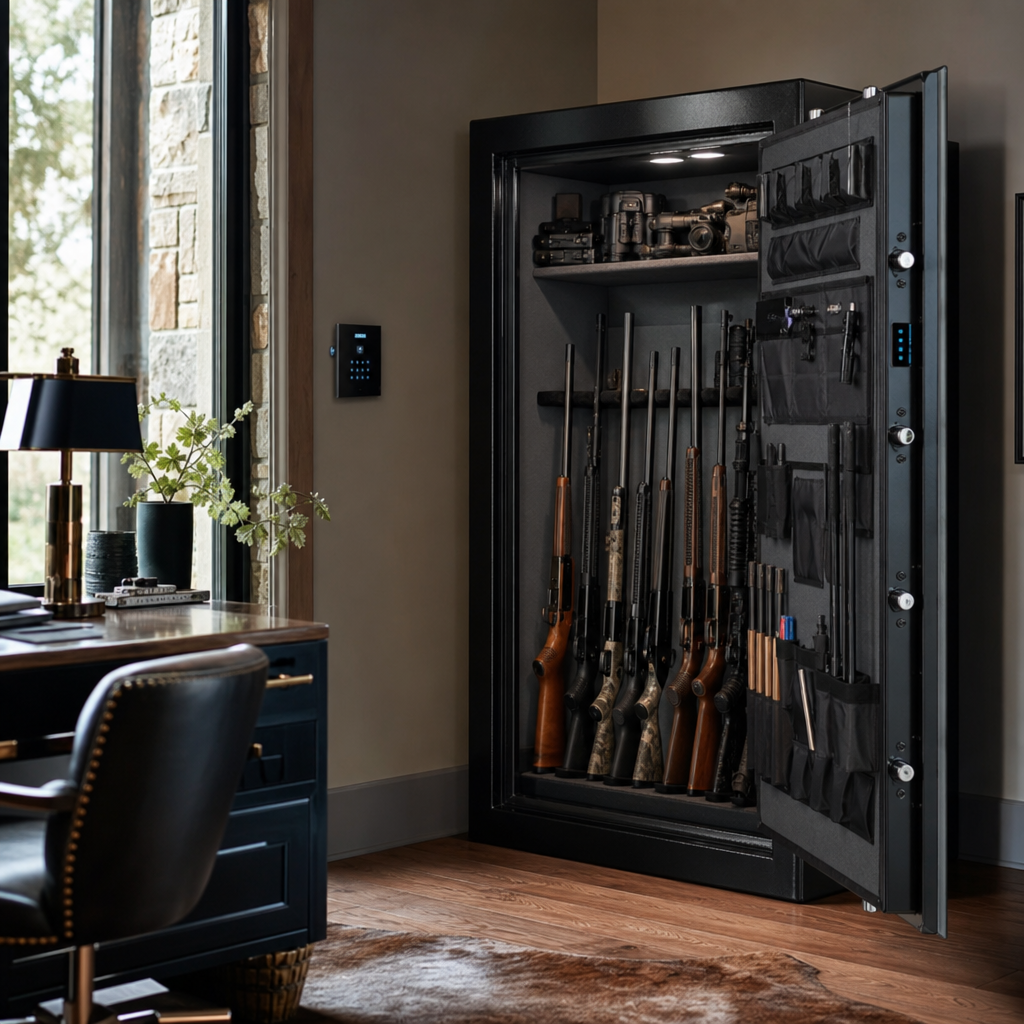
Choosing the best gun safes for homeowners with advanced smart security systems starts with understanding who is buying, what risks they are managing, and how a safe fits into a connected home without adding weak points. In the gun safe buyer personas category, this hub article maps the major homeowner profiles, from families with children to collectors, rural property owners, frequent travelers, and tech-forward users who automate nearly everything. A gun safe is not just a steel box with a lock. It is a layered security device designed to prevent unauthorized access, delay theft, protect firearms from fire and water, and support responsible storage practices. For homeowners running smart alarms, cameras, sensors, and app-based monitoring, the right safe must also work with those systems in practical ways. That means balancing burglary resistance, fire ratings, lock reliability, interior capacity, installation requirements, and digital integration. I have helped buyers compare safes after remodels, insurance reviews, and home security upgrades, and the same pattern keeps appearing: the best choice depends less on brand marketing and more on the homeowner’s specific use case. This guide explains those buyer personas in plain terms, shows what each group should prioritize, and highlights the features that matter most when a safe becomes part of a modern home security strategy.
Why buyer personas matter when choosing a smart-home gun safe
Buyer personas are practical profiles that group homeowners by needs, constraints, and likely buying criteria. In the gun safe buyer personas subtopic, they help answer a question many retailers gloss over: which safe fits the owner’s life, not just the firearm count? A family with two handguns and young children needs very different access speed and placement options than a collector storing twenty long guns with optics. A homeowner with a monitored alarm and whole-home automation may want sensor outputs, power access, humidity control, and camera coverage near the safe location. Another buyer may care more about pry resistance, bolt-down flexibility, and whether the safe can be moved into a second-floor office.
For smart-home users, personas matter even more because connected environments create both advantages and tradeoffs. Smart cameras, door contacts, and motion detectors improve awareness around the safe, but a heavily connected setup can tempt buyers toward unnecessary wireless lock features that may add complexity without improving core security. In most homes, the best practice is simple: keep the safe’s physical security primary and use the smart system as an external monitoring layer. I recommend buyers begin with five questions. What firearms are being stored? Who must access them, and how quickly? What is the realistic theft risk in that neighborhood and floor plan? What environmental risks exist, such as humidity, wildfire exposure, or basement flooding? How will the safe interact with the alarm, camera, and power layout already in place? Those answers define the right safe faster than any sales brochure.
The core personas in this sub-pillar and what each one needs
This hub page covers the main homeowner profiles that shape gun safe selection. The first is the family safety buyer, usually prioritizing child access prevention, reliable quick access for defensive firearms, and simple daily routines. The second is the smart-home integrator, a homeowner who already uses systems such as Alarm.com, Ring Alarm, SimpliSafe, Abode, Control4, Apple Home, Google Home, or Home Assistant and wants the safe area monitored through sensors, cameras, and automations. The third is the theft-focused suburban buyer, often storing several firearms and wanting a heavier safe with stronger steel, better door construction, and credible bolt-down performance. The fourth is the collector and enthusiast, who needs interior organization, long-gun capacity, power strips, dehumidification, and protection for optics, documents, and valuables. The fifth is the rural property owner, who may face slower police response times and therefore values higher delay against forced entry, larger capacity, and environmental protection. The sixth is the frequent traveler or second-home owner, who needs durable unattended security, remote alerts from surrounding devices, and often insurer-friendly documentation.
| Buyer persona | Primary goal | Top safe features | Smart security priority |
|---|---|---|---|
| Family safety buyer | Prevent unauthorized access at home | Fast lock, anchored cabinet or safe, simple organization | Door sensors, hallway camera, bedtime checks |
| Smart-home integrator | Make the safe part of a monitored environment | Reliable lock, internal power, discreet placement | Alarm scenes, environmental sensors, video coverage |
| Theft-focused suburban buyer | Delay smash-and-grab burglary | Heavier steel, robust bolts, concrete anchoring | Entry alerts, glass-break sensors, exterior cameras |
| Collector and enthusiast | Protect multiple firearms and accessories | Larger capacity, shelving, power, humidity control | Room monitoring, inventory records, smoke sensors |
| Rural property owner | Withstand delayed response times | Higher weight, better fire rating, larger storage | Perimeter cameras, cellular backup, outage alerts |
| Traveler or second-home owner | Secure firearms while away for long periods | Strong anchoring, audit habits, low-maintenance interior | Remote notifications, backup power, tamper visibility |
These personas overlap. A rural homeowner can also be a collector. A parent may also travel often. That is why this hub should guide readers to more focused pages within the gun safe buyer personas cluster, such as safes for families with children, safes for collectors, quick-access handgun safes for bedrooms, or best gun safes for vacation homes. The point of the persona framework is not to label buyers rigidly. It is to force a requirements-based purchase.
How smart security systems should interact with a gun safe
A gun safe should integrate with a smart security system mostly through its surroundings, not through internet-dependent unlocking. The strongest setups I have seen use a conventional electronic keypad or mechanical lock on the safe itself, then add layered awareness around it. A recessed door contact on the closet or room, a motion sensor covering the approach path, and a camera aimed at the doorway provide useful evidence and real-time alerts without altering the safe’s attack surface. If the safe is in a utility room or office, adding leak sensors, smoke detectors, and temperature monitoring can protect contents from hazards that theft-focused buyers often overlook.
Homeowners frequently ask whether biometric locks are worth it. The answer depends on use. For a bedside handgun safe, a high-quality biometric model can be effective if paired with a tested backup keypad and consistent maintenance. For a main long-gun safe, reliability, boltwork strength, and anchoring matter far more than fingerprint convenience. Electronic keypad locks from established lock makers such as SecuRam, Sargent and Greenleaf, and La Gard are generally better choices than novelty app-controlled systems. If power is needed inside the safe for lighting or dehumidifiers, route it cleanly through a manufacturer-provided pass-through and protect the circuit with a surge suppressor if the home sees unstable power. Smart security should improve visibility and response, not replace sound physical security engineering.
Features that separate a marketing safe from a serious purchase
Many homeowners first compare safes by advertised gun count and fire minutes, but serious evaluation goes deeper. Steel thickness is a major factor. Thicker body steel and a reinforced door resist prying and cutting better than thin sheet metal with decorative cladding. Weight matters because it affects both construction robustness and how easily thieves can move the unit. Anchoring matters just as much; even a heavy safe should be bolted to concrete or a structurally appropriate floor using the manufacturer’s hardware guidance. Lock quality, hard plate protection, relocker design, and door fit all matter more than touchscreen extras.
Fire protection requires careful reading. Fire ratings are not standardized across all brands, and test conditions vary. A claimed 60-minute or 90-minute rating does not mean every interior location remains equally cool, especially near door gaps or top shelves. Buyers storing documents should use a dedicated document container inside the safe because paper chars at lower temperatures than many people realize. Moisture control is another nonnegotiable issue. In humid regions, use a GoldenRod-style dehumidifier, silica packs, or both, and verify that airflow around the safe location is not trapping damp air. Interior organization also affects real capacity. A safe marketed for 24 guns may realistically hold far fewer once scopes, slings, and modern rifle profiles are accounted for. Serious buyers ignore headline counts and map actual inventory.
Matching safe types to homeowner scenarios
Different homeowner scenarios call for different safe formats. A full-size gun safe is usually best for households storing multiple long guns, ammunition, documents, and valuables in one controlled location. These units fit collectors, rural owners, and homeowners who want stronger burglary and fire performance. A handgun safe or quick-access pistol vault serves a different role: it provides secure but fast access in a bedroom, office, or vehicle staging area. For many families, the right answer is not one or the other but both. I often recommend a larger anchored safe for primary storage and a smaller quick-access unit for the one defensive firearm that must remain available to an authorized adult.
Placement changes performance. Garages are convenient but can expose safes to humidity swings, visible delivery paths, and weaker anchoring surfaces if not planned carefully. Basements reduce visibility but may increase flood risk. Master closets are common because they offer concealment and daily access, but they can become obvious targets if the rest of the home suggests predictable layouts. Safe rooms and home offices work well when they are covered by cameras and protected by solid-core doors. In every case, buyers should think like a burglar. What can be seen from windows? How close is the safe to an exterior exit? Is there room to use pry tools? Good placement can add meaningful delay before the safe is ever attacked.
Recommendations by persona and buying mistakes to avoid
For families with children, prioritize consistent locking, fast authorized access, and simple routines over oversized capacity. A reputable handgun safe in the bedroom plus a bolted full-size safe elsewhere is often the strongest combination. For smart-home integrators, keep the lock itself simple and dependable, then add room contacts, camera coverage, and environmental monitoring. For suburban theft-focused buyers, spend money on steel, weight, anchoring, and concealed placement before paying for interior cosmetics. For collectors, buy more capacity than current inventory suggests, because optics, accessories, and future purchases consume space quickly. For rural owners, invest in delay: heavier units, stronger doors, better fire performance, and backup power for the broader security system. For travelers, prioritize tamper evidence, remote visibility, and documented serial-number records stored securely off-site.
The most common mistakes are predictable. Buyers overestimate gun count, underestimate delivery and installation logistics, and trust fire ratings without reading test details. They place safes in garages without humidity control, skip anchoring because the unit feels heavy, and choose bargain biometric locks that fail under dirty-finger conditions. Another mistake is assuming a smart home automatically makes storage safer. Cameras and alerts are helpful only if they are positioned well, recording reliably, and supported by battery or cellular backup during outages. The best gun safes for homeowners with advanced smart security systems are the ones that treat connectivity as support, not as a substitute for steel, lock quality, and disciplined storage habits.
The best gun safes for homeowners with advanced smart security systems are selected by matching the safe to the buyer persona, the firearms being stored, and the home’s real threat profile. That is the central lesson of this gun safe buyer personas hub. Families need dependable prevention of unauthorized access. Collectors need realistic capacity, environmental control, and stronger organization. Rural owners need more delay and resilience because help may be farther away. Travelers need dependable security while the property is unattended. Smart-home users, regardless of persona, get the best results when they build layered protection: a well-made safe, proper anchoring, concealed placement, and a surrounding network of cameras, sensors, smoke detection, and remote alerts. The safe remains the physical barrier. The smart system provides awareness, evidence, and faster response.
If you are comparing options now, start with a simple written checklist: firearm count, access speed, placement, theft risk, fire risk, humidity exposure, and existing security devices near the intended location. Then use that checklist to narrow the safe style, lock type, and installation plan before comparing brands. This approach prevents expensive mistakes and leads to a purchase that will still make sense years from now. As you build out the rest of this subtopic, move next to the persona-specific guides that fit your household, because the right safe is never just the most popular model. It is the one designed for how you actually live, secure, and store firearms at home responsibly every day.
Frequently Asked Questions
What should homeowners look for in a gun safe that works well with advanced smart security systems?
The best gun safe for a connected home should do more than store firearms behind a locked door. It should support your larger home security strategy without creating new vulnerabilities. Homeowners should start with the fundamentals: thick steel construction, solid bolt work, reliable fire protection, secure anchoring options, and a lock system with a strong track record for durability. From there, smart-home compatibility becomes the next layer. A quality safe may offer features such as app-based monitoring, tamper alerts, audit trails, remote status notifications, or integration with broader alarm systems, but those conveniences should never come at the expense of core physical security.
It is also important to think about how the safe fits the homeowner’s specific risk profile. A family with children may prioritize fast but controlled access paired with strict user permissions and alerting. A collector may need larger storage capacity, interior organization, humidity control, and detailed access logs. A frequent traveler may care most about remote monitoring and immediate notifications if the safe is moved, opened, or tampered with. Rural homeowners may focus more on pry resistance, long battery life, and reliable operation even during internet outages or power interruptions. In every case, the best choice is a safe that complements the household’s security habits, not one that relies on flashy technology alone.
Homeowners should also evaluate whether the safe’s smart functions are local, cloud-based, or dependent on third-party platforms. A safe that can still function securely when Wi-Fi is down is usually the better long-term option. If any smart features are included, look for encrypted communication, strong authentication, firmware update support, and a manufacturer with a reputation for security-minded design. In practical terms, the right smart gun safe is one that remains secure as a safe first and a connected device second.
Are smart gun safes actually secure, or do connected features make them more vulnerable?
Smart gun safes can be secure, but only when they are designed with both physical and digital threats in mind. The biggest mistake buyers make is assuming that “smart” automatically means “better.” In reality, a connected safe introduces a second layer of security considerations. In addition to resisting theft, forced entry, and fire, it must also protect against unauthorized digital access, weak app credentials, insecure wireless connections, and poor software maintenance. A well-designed smart safe can offer meaningful advantages, such as instant tamper alerts, access history, and integration with a home alarm system. A poorly designed one can add unnecessary risk.
The key question is whether the safe’s smart features are built on a secure foundation. Homeowners should look for features such as multi-factor authentication, encrypted data transmission, limited remote controls, secure user-role management, and dependable firmware support from the manufacturer. It is generally better to have remote monitoring than remote unlocking. Notifications that tell you the safe has been accessed can be very useful; the ability to open the safe from a phone over the internet is, for many homeowners, a much riskier design choice. Good security design limits the attack surface while still providing visibility and convenience.
Another important factor is network hygiene in the home itself. Even a strong smart safe can be undermined by weak Wi-Fi passwords, reused login credentials, outdated routers, or poorly secured smart-home hubs. Homeowners who want a connected safe should treat it like any other critical security device. That means using unique passwords, enabling multi-factor authentication when available, keeping software updated, and placing security devices on a well-managed network. In short, smart features do not automatically make a gun safe unsafe, but they do raise the standard for what buyers should evaluate before trusting the product.
Which type of homeowner benefits most from a smart gun safe?
Several types of homeowners can benefit from a smart gun safe, but the value depends on how they live, what they own, and which risks matter most in their daily routines. Families with children often benefit from safes that combine fast authorized access with clear accountability. Features like access logs, user-specific credentials, and instant notifications can help parents maintain tighter control and verify that firearms remain secure at all times. In these homes, the goal is not just theft prevention; it is preventing unauthorized access while still allowing quick retrieval in an emergency.
Tech-forward homeowners are another strong fit because they already understand how connected devices function within a larger security ecosystem. For them, a smart gun safe can become one more monitored point in the home, much like smart locks, cameras, sensors, and alarm panels. The right model can support routines such as custom alerts, centralized monitoring, and automated awareness of unusual activity. Frequent travelers also benefit because remote visibility can provide peace of mind when the home is empty for long periods. If the safe is accessed unexpectedly or moved, they know immediately and can respond faster.
Collectors and owners with larger inventories may also find smart features especially useful, though for a different reason. They often care about controlled access, recordkeeping, and environmental management as much as basic security. A safe with internal monitoring, audit tracking, and integration with a broader surveillance system can support those needs well. On the other hand, not every homeowner needs a smart safe. If the home has limited internet reliability, the owner prefers minimal digital exposure, or the primary goal is straightforward long-gun storage in a low-tech environment, a high-quality traditional safe may still be the better choice. The best fit depends less on trendiness and more on the homeowner’s actual security habits and lifestyle.
How important is backup access in a smart gun safe for homeowners?
Backup access is extremely important because no electronic system is immune to failure. Batteries die, keypads malfunction, biometric readers can become inconsistent, and power or network issues can interrupt certain connected features. For a homeowner, especially one who may rely on the safe for both secure storage and emergency access, the safe should never become inaccessible due to a minor technical issue. A good smart gun safe should include a dependable backup method that is secure, practical, and clearly explained by the manufacturer.
The best backup approach depends on the safe’s design, but homeowners should be cautious about solutions that trade away too much security for convenience. For example, a concealed mechanical override key can be useful, but only if it is well protected and not easy to exploit. Some models use redundant credential methods, such as biometric access plus keypad entry, which can be a stronger option than relying on a single method alone. Others may support emergency power input for dead batteries so the owner can restore access without compromising the lock. What matters is that the backup system is intentional, tested, and does not create an obvious bypass point for unauthorized users.
Backup access also matters from a planning perspective. Homeowners should ask practical questions before buying: Can the safe be opened if the battery fails unexpectedly? Does it still work if the internet is down? How often must firmware or app updates be installed? Can multiple trusted users gain access if one method stops working? In a true home-security setup, redundancy is a strength. A smart gun safe should not depend on a single sensor, battery, app, or wireless connection to remain useful. Reliable fallback access is part of what separates a serious security product from a gadget.
Can a smart gun safe be integrated into a larger home security plan without creating weak points?
Yes, but integration should be done carefully and with a security-first mindset. A smart gun safe should support the larger home protection strategy, not simply add another app to manage. In a strong setup, the safe works alongside intrusion alarms, security cameras, smart locks, motion sensors, and environmental monitoring. For example, a homeowner might receive an immediate alert if the safe is opened outside a normal schedule, if vibration suggests tampering, or if a break-in alarm is triggered while the safe is being accessed. When these systems reinforce one another, the homeowner gains better awareness and a faster response capability.
That said, every integration point is also a potential attack surface. The more broadly a safe is connected to third-party platforms, voice assistants, cloud services, or automation routines, the more carefully the homeowner should review permissions and access controls. As a general rule, status alerts and monitoring are safer integration choices than remote unlocking or highly permissive automation. A homeowner may want the safe to notify them, log activity, or trigger camera recording, but not necessarily to respond to broad voice commands or internet-based open requests. Sensible limits help preserve both convenience and security.
The most secure approach is to treat the gun safe as a high-priority device within the home network. Use strong account protections, maintain firmware updates, separate critical devices from less secure consumer gadgets when possible, and limit integrations to those with a clear purpose. Homeowners should also choose brands that document their security practices and continue supporting products over time. In the end, a smart gun safe can fit very well into an advanced home security environment, but it should be integrated deliberately, with the same care given to alarm panels, cameras, and entry systems.