
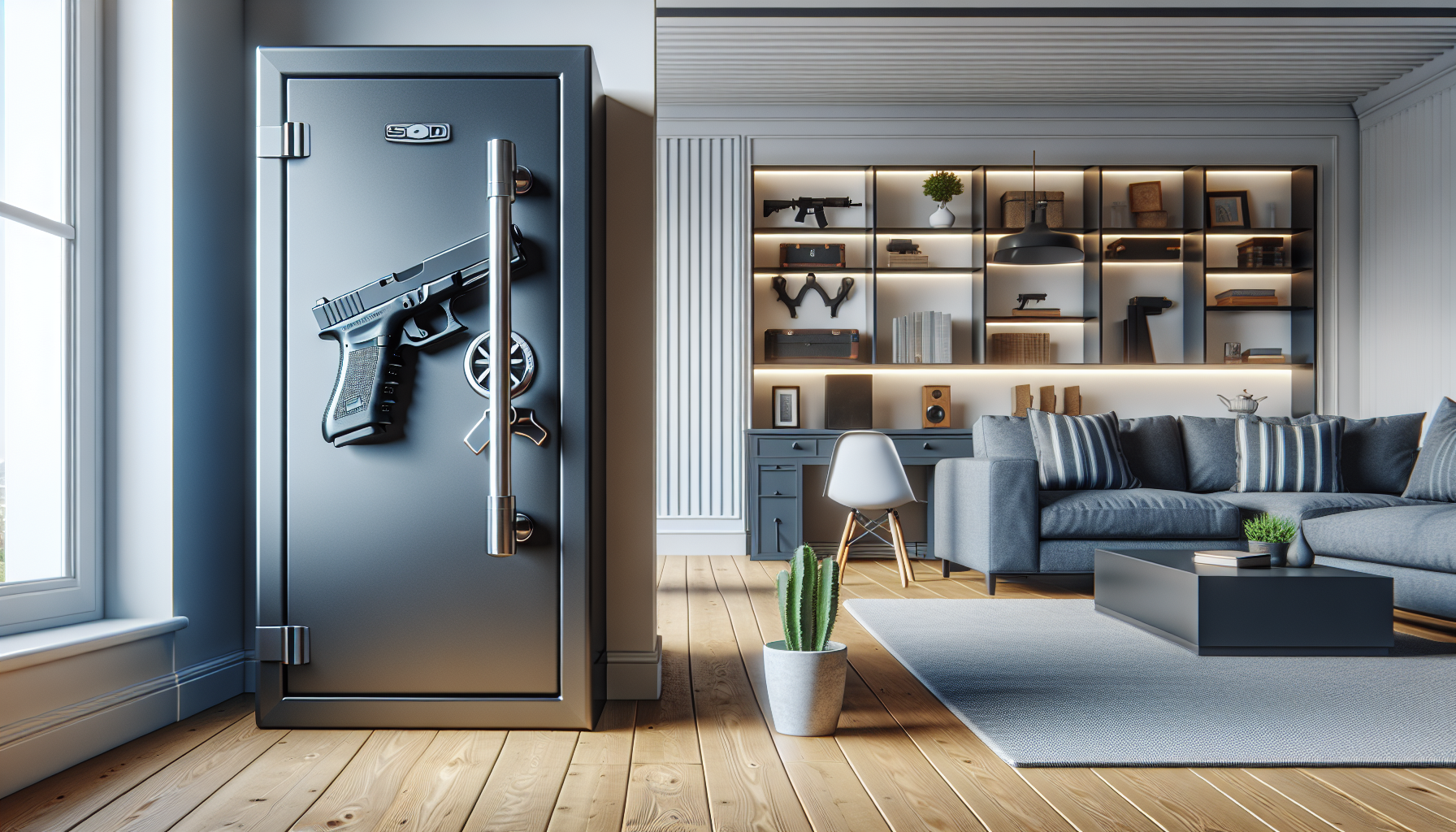
The best quick-access gun safes for home defense balance three nonnegotiable needs: speed, security, and reliability under stress. A quick-access gun safe is a compact firearm storage device designed to open in seconds while still preventing unauthorized access by children, guests, burglars, or anyone who should not handle a defensive weapon. In home defense, that balance matters because a handgun locked too slowly may be useless in an emergency, while a firearm left unsecured creates daily risk that far outweighs convenience. After testing bedside vaults, handgun lockboxes, vertical rifle safes, and biometric units in real homes, I have found that the right choice depends less on marketing claims and more on access method, mounting, construction quality, and how the safe fits your defensive plan.
For most households, the best quick-access gun safe is not simply the fastest one on a spec sheet. It is the model that opens reliably in darkness, under adrenaline, with one hand, every single time. Buyers should understand basic categories before comparing products. Handgun safes are the most common home defense option because they fit on a nightstand, in a closet, or bolted beside a bed frame. Long-gun quick-access safes store rifles or shotguns vertically and often use electronic keypads or RFID entry. Lockboxes emphasize portability, while dedicated bedside safes prioritize anchored security. Important terms include gauge, which describes steel thickness; pry resistance, which reflects how well the door and seams resist forced entry; biometric access, which uses fingerprints; and redundant entry, meaning backup access through a key or secondary code.
This buying guide matters because safe selection affects response time, child safety, legal compliance, and theft prevention. The U.S. Department of Justice, the National Shooting Sports Foundation, and most firearms instructors consistently recommend secure storage when guns are not under direct control. In practical use, that means the safe must support your home-defense workflow: where the firearm lives, whether it stays loaded, who else is in the house, and how quickly you may need it. A parent with young children has different priorities than a single adult in a studio apartment, yet both need dependable access. This hub article explains the core buying criteria, the major safe types, the strengths and weaknesses of biometric versus keypad entry, realistic price tiers, installation best practices, and the mistakes that cause buyer regret. Use it as the foundation for any deeper article on handgun safes, bedside vaults, or biometric gun safe reviews.
What Makes a Quick-Access Gun Safe Effective for Home Defense
An effective quick-access gun safe does four things well. First, it opens fast enough to support a defensive response. Second, it prevents unauthorized access. Third, it survives routine abuse, including repeated opening cycles, battery drain, dust, and occasional impacts. Fourth, it mounts securely so a burglar cannot simply carry it away. In my experience, buyers often overfocus on opening speed and underweight security details such as weld quality, lid overlap, hinge protection, and anchor points. A unit that pops open in 1.2 seconds but can be defeated with a screwdriver is not a serious home-defense safe.
Construction is the first filter. Look for heavy-gauge steel, reinforced doors, internal hinges or protected external hinges, and a design with minimal pry gaps. Many quality handgun safes use 12-gauge or thicker steel bodies, while bargain models may rely on thinner metal that flexes under leverage. Gas struts and spring-assisted doors improve one-handed access, but they should not introduce weak mounting points. Interior lining also matters. Foam or soft-touch liners protect firearm finishes, reduce rattle, and prevent accessories like red-dot sights from getting knocked out of zero during repeated storage.
Reliability is the second filter. A quick-access lock must work when your hands are sweaty, when the room is dark, and when you have just been startled awake. Mechanical Simplex-style pushbutton locks remain highly respected because they do not depend on batteries or fingerprint sensors. Electronic keypads can be very fast and easy to program, especially when buttons are backlit or shaped for tactile indexing. Biometric systems offer impressive convenience, but the quality spread is enormous. A good sensor can recognize a stored fingerprint quickly; a poor one can fail repeatedly with dry skin, minor cuts, or inconsistent finger placement. That is why redundant access is essential on any electronic or biometric model.
Types of Quick-Access Gun Safes and Who They Suit Best
The main categories are bedside handgun safes, drawer-style safes, portable lockboxes, in-wall units, and vertical long-gun safes. Bedside handgun safes are the default recommendation for most home-defense owners. They are compact, easy to mount to furniture or flooring, and typically open with a flip-up lid or pull-out tray. Popular examples in this class include offerings from Fort Knox, Vaultek, Hornady, V-Line, and GunVault. They work best when your primary defensive firearm is a handgun equipped with a weapon light and perhaps a micro red dot.
Drawer-style safes are useful when discretion matters. These units slide out horizontally and can fit under beds, inside furniture, or in closets. They usually provide good access to one or two handguns plus spare magazines. I often recommend them for households that want a low-visibility installation without sacrificing speed. The tradeoff is that they require enough clearance for full extension, and some cheaper drawer rails feel rough after heavy use.
Portable lockboxes suit travel, vehicle storage, or temporary solutions, but they are usually not ideal as a primary home-defense safe unless firmly secured with a steel cable or bolted in place. They are better than leaving a firearm loose in a drawer, yet most offer lower pry resistance than a true bedside vault. In-wall safes hide well and can integrate cleanly into a room, though installation is more involved and depth is limited by stud spacing. Vertical long-gun safes are designed for shotguns, pistol-caliber carbines, or AR-pattern rifles used for defense. They open quickly and keep a shoulder-fired firearm accessible, but they occupy more space and demand careful setup if optics, lights, or suppressor-height configurations are involved.
| Safe Type | Best For | Main Strength | Main Limitation |
|---|---|---|---|
| Bedside handgun safe | Most homeowners | Fast one-hand access | Limited storage capacity |
| Drawer-style safe | Discreet bedroom storage | Concealed installation | Needs slide clearance |
| Portable lockbox | Travel or secondary use | Flexible placement | Usually weaker against prying |
| In-wall safe | Hidden permanent storage | Excellent concealment | Complex installation |
| Vertical long-gun safe | Rifle or shotgun access | Stores defensive long guns | Takes more room |
Locking Methods: Biometric, Keypad, RFID, and Mechanical
If buyers ask me which locking method is best, the honest answer is that no single system wins for every household. Mechanical pushbutton locks have the strongest reliability reputation because they are battery-free, tactile, and proven over decades. Models from brands like Fort Knox and V-Line are widely trusted for exactly that reason. The downside is cost and code complexity limits. Some users also find that opening a mechanical lock is slightly slower until muscle memory is built through repetition.
Electronic keypads are common because they are affordable, intuitive, and fast. A well-designed keypad safe allows silent entry and can be opened by touch with enough practice. Look for raised buttons, low-battery warnings, and an internal battery compartment that does not require awkward servicing. Cheap keypads often fail not because the electronics stop entirely, but because buttons wear, membranes loosen, or flimsy latches drift out of alignment after hundreds of cycles.
Biometric safes appeal to buyers who want instant access without remembering a code. High-end fingerprint readers have improved dramatically, especially capacitive sensors with good enrollment software. Vaultek and Hornady have pushed this category forward with better app integration, multiple enrolled prints, and faster wake times. Still, biometrics must be tested with every intended user, in different conditions, and with realistic placement. I advise treating biometric access as a convenience layer rather than your only layer. If the safe also includes keypad or key backup, it becomes much easier to recommend.
RFID systems are less common but genuinely useful. Some safes open with a wristband, sticker, or fob placed near the reader, which can be extremely fast in darkness. Hornady RAPiD products are the best-known example. The weakness is dependency on keeping the RFID tag available and secure. If a child finds the wristband or a burglar spots the tag hidden near the safe, the security model changes immediately.
How to Evaluate Build Quality, Mounting, and Real Security
Security begins with steel, but it does not end there. The most overlooked buying factor is mounting. Any quick-access gun safe that is not bolted down is partly a carrying case. Even a heavy handgun safe can disappear in seconds during a burglary if it sits loose on a shelf. Always examine anchor hole placement, included hardware, and the surface you plan to mount into. Solid wood furniture, bed frames with reinforcement, concrete, and subfloor structures can all work, but each requires the right fasteners. Lag bolts into weak particleboard are not a real solution.
Door design deserves close attention. Strong safes use recessed doors, anti-pry tabs, stout locking lugs, and tight tolerances that reduce leverage points. External hinges are not necessarily bad if the door remains captive when hinges are cut, but exposed seams can still provide opportunities for attack on cheaper units. Weight is not a perfect measure of strength, yet it is a useful clue. If a “safe” feels suspiciously light for its dimensions, the steel is likely thin.
Fire protection is often misunderstood in this category. Most true quick-access gun safes do not provide meaningful fire resistance, and buyers should not assume they do unless a tested rating is clearly stated. For a home-defense handgun safe, rapid accessibility usually matters more than fire lining, but if document or heirloom protection is part of the mission, a separate full-size fire-rated safe may be the better answer. Security is always about matching the tool to the risk.
Choosing the Right Safe for Your Room, Firearm, and Household
The best safe placement depends on where you are most likely to need defensive access. For many people, that is the bedroom. A bedside safe should open on the side your dominant hand naturally reaches, and the lid or drawer path should not strike lamps, bed rails, or walls. I have seen excellent safes become frustrating simply because the owner never tested them from a realistic sleeping position. Practice matters here. Sit up, reach, open, acquire grip, and confirm that the motion is smooth and repeatable.
Your firearm setup affects sizing more than many listings admit. A pistol with a mounted light, extended magazine, threaded barrel protector, or enclosed-emitter optic may not fit the same footprint as the plain handgun shown in product photos. Measure length, height, and optic clearance before buying. Long-gun owners should verify overall length with the stock collapsed or extended as stored, and should check whether the safe accommodates a mounted optic without forcing awkward angles.
Household composition is equally important. In homes with children, I strongly favor anchored safes with either mechanical or high-quality keypad entry over very cheap biometric boxes. In multi-adult households, store multiple fingerprints or ensure both users can reliably operate the lock in darkness. If guests, contractors, or caregivers are regularly present, concealment becomes more valuable. A visible safe can still be secure, but an unseen one is less likely to attract attack in the first place.
Price Tiers, Brand Examples, and Common Buying Mistakes
Quick-access gun safe pricing generally falls into three bands. Entry-level models under about $150 can improve safety substantially compared with unsecured storage, but quality is inconsistent. These are best treated as minimum-viable options for low-risk environments or temporary use. Midrange safes from roughly $150 to $350 often offer the best value, with better steel, smoother doors, improved electronics, and more secure mounting. Premium models above $350 usually justify their cost through thicker construction, better fit and finish, proven lock systems, and stronger warranty support.
Several brands have earned attention for specific strengths. Fort Knox and V-Line are frequently praised for durable mechanical designs. Vaultek has built a strong reputation for feature-rich electronic and biometric models with smart monitoring options. Hornady stands out for RFID access and solid defensive-use layouts. GunVault popularized the category years ago, though shoppers should still compare individual models carefully because brand reputation alone does not guarantee equal performance across every unit.
The biggest buying mistakes are predictable. People buy a safe too small for their firearm setup. They trust biometrics without testing enrollment. They ignore battery replacement schedules. They skip mounting. They place the safe where the door cannot fully open. Or they choose a low-cost box with weak seams, then assume it provides serious theft protection. The best buying guide advice is simple: define the firearm, the room, the users, and the threat level before you compare features. Then buy the most reliable quick-access gun safe your budget supports, mount it correctly, and practice until operation is automatic. If you are building out a broader gun safes and safety plan, use this hub as your starting point and move next to model-specific reviews, installation guides, and secure-storage articles tailored to your firearm type.
Frequently Asked Questions
What should I look for in the best quick-access gun safe for home defense?
The best quick-access gun safe for home defense should deliver three things every single time: fast entry, dependable lockout protection, and consistent operation under pressure. In practical terms, that means choosing a safe that opens in seconds, protects against unauthorized access, and works reliably when your heart rate is elevated and fine motor skills are reduced. A good model should be built from sturdy steel, have a reinforced lid or door, resist prying, and include a secure mounting option so the safe cannot simply be carried away. For most households, the ideal size is compact enough to fit near a bed, in a closet, or on a shelf, but large enough to hold the firearm you actually use for defense, including any mounted light or optic.
The locking method matters just as much as the construction. Biometric safes can be extremely fast, but the fingerprint reader needs to be high quality and consistent in real-world conditions, not just in perfect showroom demos. Keypad safes remain popular because they are simple, predictable, and often easier to trust in low-light situations. Mechanical push-button locks are also highly regarded because they do not depend on electronics and can be very reliable with practice. Many of the best home defense safes include backup access methods, such as a key override or secondary code entry, which adds another layer of redundancy.
Battery life, interior layout, and ease of operation should not be overlooked. A safe that technically opens quickly is still a poor choice if the handgun shifts around inside, catches on the opening, or is hard to grasp in the dark. Look for an interior that positions the firearm consistently and allows a clean draw. Audible alerts, silent mode options, low-battery warnings, and illuminated keypads can also improve usability. In short, the best quick-access gun safe is not just fast on paper. It should be secure, intuitive, durable, and easy to operate correctly when seconds matter.
Are biometric gun safes reliable enough for home defense use?
Biometric gun safes can be reliable enough for home defense, but only when the fingerprint system is well made, properly programmed, and regularly tested. A quality biometric safe offers one major advantage: very fast access with minimal thought. In a stressful situation, that simplicity can be useful because it reduces the need to remember or physically enter a code. However, biometric performance varies widely between brands and models. A premium fingerprint scanner may read quickly and consistently, while a cheaper one may struggle with partial contact, dry skin, sweat, or awkward finger placement.
That is why the safest approach is to treat biometrics as a convenience feature only when backed by redundancy. A home defense safe should not rely on a fingerprint reader alone. It should also provide a dependable backup method, such as a keypad, mechanical buttons, or a physical override key. Good biometric safes also allow multiple stored fingerprints, which lets you register several fingers from each authorized user and improves reliability if one finger does not scan cleanly. Testing under realistic conditions is critical. You should practice opening the safe in the dark, while standing in a hurry, and from the angles you would actually use during the night.
For many homeowners, the answer is not whether biometric safes are good or bad in general, but whether a specific model has proven itself through repetition. If the scanner works every time in your environment and you maintain fresh batteries, it can be an excellent option. If it fails even occasionally in practice, that uncertainty is a serious concern for a home defense role. Reliability under stress always comes first, so biometrics are best when they are fast, consistent, and supported by a trusted backup entry method.
Where is the best place to install a quick-access gun safe in the home?
The best place to install a quick-access gun safe depends on your home layout, your defensive plan, and who lives in the house, but the most common choice is the primary bedroom. That location makes sense because many home intrusions happen at night, and the defensive firearm is often needed closest to where people sleep. A bedside position, inside a nightstand, attached to a bed frame, or mounted in a nearby closet can provide fast access while still keeping the firearm secured from children, visitors, and unauthorized adults. The goal is to minimize retrieval time without sacrificing safety or making the safe obvious to a burglar.
Placement should always consider concealment, access angle, and mounting security. A quick-access safe should be mounted to a solid surface whenever possible, such as furniture framing, wall studs, or the floor, depending on the design. This helps prevent smash-and-grab theft and keeps the safe stable during opening. The location should also let you reach the lock naturally in low light and retrieve the firearm without awkward hand positions. If you store the safe too low, too far away, or behind clutter, access can become slower than expected. If it is too exposed, you may be giving up security and discretion.
Some homes benefit from more than one quick-access safe. For example, households may place one in the bedroom and another in a home office or another area where adults spend significant time. That said, every additional firearm storage location increases the need for disciplined access control and consistent training. Whichever location you choose, the safe should support your real routine, not an idealized one. You want it close enough to matter in an emergency, hidden enough to avoid attention, and secured well enough that it remains part of a responsible home defense setup.
How fast should a quick-access gun safe open in a real emergency?
In a real emergency, a quick-access gun safe should open in just a few seconds, but speed has to be understood in context. The right benchmark is not simply the manufacturer’s advertised opening time. It is how quickly you can identify the safe, activate the lock under stress, open it smoothly, and obtain a proper firing grip on the firearm in darkness or low light. A safe that claims one-second biometric access may still be slower in practice if the lid opens awkwardly, the scanner is inconsistent, or the firearm is hard to grasp. True access time includes the full sequence from awareness to secure retrieval.
For home defense, the best safes are designed to reduce hesitation and unnecessary movement. Large, tactile buttons, reliable gas struts or spring-assisted doors, and interiors that present the handgun in a repeatable orientation can make a significant difference. The user should be able to operate the safe almost automatically. That is why practice matters so much. You should rehearse opening the safe from your bed, from a standing position, and in low-light conditions. Timed repetitions often reveal whether a safe is genuinely quick or merely sounds quick in product marketing.
At the same time, it is important not to chase speed at the expense of security. A firearm that is instantly accessible to everyone in the house is not securely stored, and that defeats the entire purpose of a quick-access safe. The best models strike the right balance: fast enough to support a defensive response, secure enough to prevent unauthorized handling, and reliable enough to trust when adrenaline is high. If a safe opens consistently in a few seconds and you can operate it without fumbling, it is likely meeting the standard that matters most.
Do quick-access gun safes keep firearms safe from children and burglars?
Yes, a well-made quick-access gun safe can dramatically improve safety around children and reduce the risk of unauthorized handling, but it is important to be realistic about what these safes are designed to do. A quick-access safe is primarily intended to prevent immediate access by children, guests, and casual intruders while still allowing an authorized adult to retrieve a defensive firearm quickly. In that role, it is a major safety upgrade over leaving a handgun in a drawer, under a mattress, or on a shelf. For families with children, that difference is especially important because curiosity and unsupervised access are exactly the risks secure storage is meant to address.
Against burglars, quick-access safes offer meaningful protection, but they are not all equal. Compact bedside safes are generally not the same as large, heavy, full-size gun safes designed for long-term burglary resistance. Their protection depends heavily on steel thickness, lock strength, pry resistance, and whether they are properly mounted. An unmounted quick-access safe may stop a child, but a burglar could potentially remove the entire unit and attack it later. That is why mounting hardware and installation quality matter so much. A securely bolted safe with a reinforced structure gives you far more real-world protection than a lightweight box sitting loose in a drawer.
Safe storage is also part of a larger responsibility plan. Even the best quick-access gun safe works best when combined with secure firearm handling habits, regular maintenance, and age-appropriate safety education for children. If your priority is home defense, the ideal setup is one that gives authorized adults dependable access while making unauthorized access highly difficult and unlikely. In other words, a quick-access safe is not just about speed. It is a practical tool for reducing daily risk while keeping a defensive firearm available when it is truly needed.