
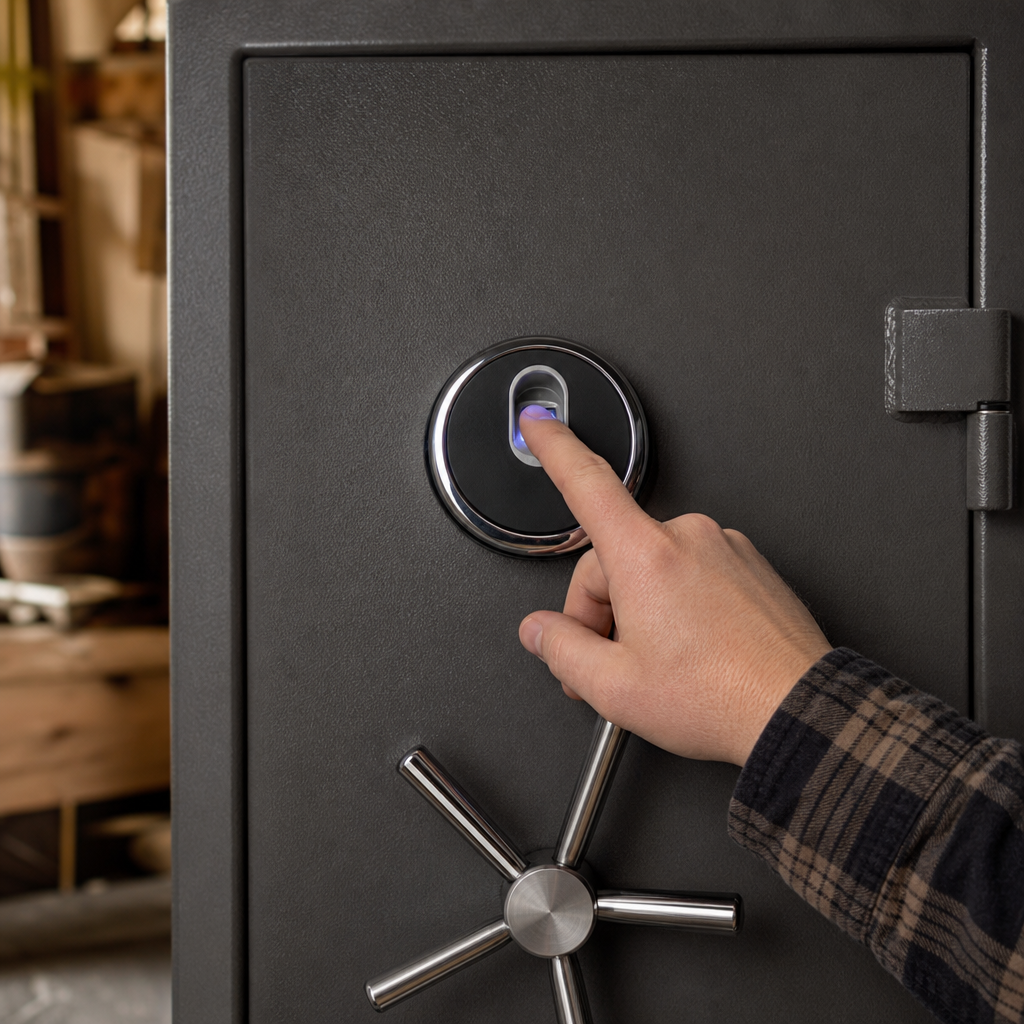
Fingerprint scanners on gun safes promise instant access, simple setup, and modern security, but the truth is more complicated: biometric locks can be useful, yet they are not automatically faster, safer, or more reliable than mechanical or electronic alternatives. In the gun safes and safety category, this topic sits inside the broader conversation around gun safe myths and misconceptions, because buyers often make decisions based on marketing claims instead of testing standards, lock design, and daily-use reality. A fingerprint scanner reads unique ridge patterns on a finger and compares that scan to stored templates, while a gun safe biometric lock combines that sensor with a latch release system, electronics, and a power source. In practice, performance depends less on the word biometric and more on sensor quality, enrollment process, fallback entry method, battery management, and the overall construction of the safe. I have tested compact handgun safes, bedside vaults, and full-size long-gun safes with fingerprint locks, and the pattern is consistent: the lock can be excellent, mediocre, or frustrating regardless of the sales pitch. This matters because safe access is a safety issue, not just a convenience issue. If a lock fails to recognize a finger under stress, a defensive firearm may be inaccessible when seconds count; if the scanner opens too easily or the housing is poorly built, unauthorized access becomes the bigger risk. Understanding what biometric gun safes do well, where they fail, and which myths mislead shoppers helps owners choose equipment that supports secure storage, responsible firearm ownership, and realistic emergency access.
Myth 1: Fingerprint scanners are always the fastest way to open a gun safe
The most common misconception is that a fingerprint scanner guarantees the fastest entry. Sometimes it does, especially on a quality bedside safe with a responsive capacitive sensor and properly enrolled prints. But speed is situational. A four-button electronic keypad can be opened in one deliberate motion by touch in the dark, while a scanner may require exact finger placement, sufficient skin contact, and a clean sensor window. During testing, I have seen users beat biometric models with a simple simplex-style mechanical pushbutton lock because muscle memory is more dependable than a partial read from a dry or angled thumb. In other words, biometric access can be fast, but it is not universally fastest.
Environmental conditions matter more than most buyers expect. Wet hands, lotion, dirt, sawdust, blood, gloves, and cold skin can reduce read quality. Small children and older adults may also present enrollment challenges if ridge detail is less distinct. This does not make biometric safes useless; it means the performance ceiling shown in advertisements is not the same as real-world performance during stress. For quick-access defensive storage, speed should be measured by repeatable first-try openings across multiple conditions, not by the single best attempt.
Myth 2: A biometric lock is more secure just because it uses fingerprints
Security is determined by the whole system. A strong lock on a weak safe body is not truly secure, and a fingerprint scanner on a thin metal box does not transform that box into a high-security container. Buyers should evaluate steel thickness, pry resistance, hinge protection, lock bolt engagement, anchoring points, tamper alerts, and compliance with recognized standards. For firearm storage, the California Department of Justice roster, UL ratings on related lock components, and independent drop or pry testing provide more meaningful signals than a generic biometric label.
A low-cost fingerprint safe can fail in predictable ways. The sensor bezel may be easy to break, the emergency key override may be vulnerable to picking, or the lid can flex enough to defeat the latch. Some imported units prioritize flashy features over engineering. Conversely, some premium biometric handgun safes pair robust steel construction with anti-pry tabs, gas struts, and encrypted template storage, making them meaningfully stronger than bargain keypad units. The lesson is simple: biometric technology is only one layer. True gun safe security comes from build quality, lock design, and installation.
Myth 3: Fingerprint scanners are unreliable and should never be trusted
This myth swings too far in the opposite direction. Modern fingerprint locks are not inherently unreliable. Better sensors use improved algorithms, higher-resolution image capture, and multi-angle enrollment to recognize fingers more consistently than early consumer biometrics did. Brands with solid quality control have dramatically fewer false rejects than the first wave of inexpensive scanner safes that damaged the category’s reputation. If you enroll the same finger several times at slightly different angles and include at least one backup finger from each authorized user, reliability usually improves substantially.
That said, every biometric lock has two error risks: false rejection, where the right user is denied, and false acceptance, where the wrong user is recognized. Manufacturers often advertise one number without context. What matters to owners is repeatability under realistic use. A good setup includes tested backup access, fresh batteries, and periodic retraining of enrolled fingers if recognition drifts. In my experience, dismissing all fingerprint gun safes as gimmicks is as inaccurate as assuming all of them are flawless. The right conclusion is that quality biometric safes can be dependable when chosen carefully and maintained properly.
Myth 4: Fingerprint scanners work the same on every type of gun safe
Biometric performance varies by safe category. On compact handgun safes, the scanner is usually the primary selling point because quick access is the use case. On full-size rifle safes, fingerprint entry is often secondary to overall capacity, fire lining, shelving, and burglary resistance. The lock may still be convenient, but large safes are slower to open physically, even after the scanner authenticates the user. A buyer expecting bedside-vault speed from a 600-pound long-gun safe is comparing two very different products.
Use case should drive selection. A small quick-access biometric safe near the bed can make sense for staged home-defense storage, while a larger traditional safe in a closet or garage may be better with a proven electronic keypad or mechanical dial. Many households benefit from both: one fast-access handgun safe for immediate defensive needs and one heavier safe for long-term firearm storage, ammunition management, and theft deterrence. That layered approach resolves several gun safe myths at once by matching technology to purpose instead of asking one device to do everything.
What actually determines biometric gun safe performance
When I evaluate fingerprint scanners on gun safes, I focus on measurable factors rather than labels. Sensor type matters; capacitive sensors generally outperform older strip-style designs because they capture richer ridge detail in a shorter interaction. Enrollment quality matters just as much. If the setup process records only one flat press of a thumb, first-try access rates often drop. Power design matters too. Units with clear low-battery warnings and accessible battery compartments are easier to maintain than safes that hide failure until lockout anxiety starts. Fallback entry also matters. A backup keypad is usually preferable to a simple tubular key override, assuming the keypad is well designed and not easily observed.
| Factor | What to Check | Why It Matters |
|---|---|---|
| Sensor quality | Capacitive reader, fast wake time, consistent angle tolerance | Improves first-try recognition under stress |
| Enrollment options | Multiple scans per finger, several user slots, backup fingers | Reduces false rejects and supports household access |
| Power system | Low-battery alerts, external jump option, easy battery access | Prevents avoidable lockout and maintenance lapses |
| Backup entry | Secure keypad or protected override design | Adds resilience when biometrics fail |
| Safe construction | Steel gauge, anti-pry features, anchor holes, hinge protection | Determines real resistance to theft and tampering |
Testing method is the final piece. Open the safe dozens of times with clean hands, dry hands, and after light physical exertion. Try it in darkness. Try your non-dominant hand. Time first-attempt success rather than average success after retries. This kind of testing reveals the truth quickly. A scanner that works 95 percent of the time at a trade show may feel unacceptable in a bedroom at 2 a.m. if the five percent failure arrives when urgency is highest.
How this topic connects to broader gun safe myths and misconceptions
Fingerprint scanners are only one branch of a bigger buyer-education problem. Many gun safe myths and misconceptions start with absolute claims: heavier always means safer, fire ratings are directly comparable across brands, any safe is childproof, electronic locks always fail, or a closet is a sufficient substitute for secure storage. In practice, every claim needs context. Fire ratings differ by test method and temperature curve. Weight matters, but anchoring often matters more for theft prevention. Child resistance depends on lock integrity, placement, code discipline, and whether keys are hidden responsibly. Biometrics fit this pattern exactly. They are neither miracle technology nor automatic liability.
As a sub-pillar hub page, this issue also points buyers toward related decision areas. Owners comparing biometric and keypad safes should also learn how safe placement affects humidity and corrosion, why dehumidifiers matter, how to interpret advertised steel gauge, and why emergency access plans should be rehearsed. Safe ownership is a system. The lock, the container, the room, the mounting method, and the habits of everyone in the household all interact. That systems view is the most effective way to cut through myths and choose storage that serves both safety and access needs.
Who should buy a fingerprint gun safe, and who should not
A fingerprint gun safe makes the most sense for owners who need quick access to a handgun, can commit to regular testing, and want multiple authorized users without sharing a code. In homes where two adults may need access, enrolling several fingers from each person can be more practical than managing a memorized sequence under stress. These safes are also useful for people who struggle with fine motor input on small buttons, provided their fingerprints enroll well and the sensor performs consistently.
They are a weaker fit for buyers who want a set-it-and-forget-it solution with no maintenance. If you do not plan to replace batteries on schedule, clean the sensor, verify backup access, and test the lock routinely, a mechanical or high-quality keypad model may be the better choice. Fingerprint safes can also frustrate users whose hands are frequently cut, abraded, or gloved due to work conditions. For long-gun storage where immediate draw speed is not the primary concern, overall safe construction usually deserves more budget than the lock interface. Matching the product to the user prevents disappointment and improves safety outcomes.
Buying advice: how to separate marketing claims from real value
Start by defining the exact role of the safe. Is it for bedside handgun access, vehicle storage, child access prevention, theft deterrence, or consolidated collection storage? Once the role is clear, judge the biometric feature against that role. Look for independent reviews that show repeated opening tests, not just unboxing impressions. Check whether the scanner works from sleep quickly, whether the safe stores multiple prints per user, and whether the backup entry method is sensible. Examine the lid gap, the bolt engagement, and whether the body can be twisted by hand. If a company spends more time advertising the scanner glow ring than the steel and latch design, that is a warning sign.
Also pay attention to warranty support and parts availability. A responsive manufacturer that stocks replacement components and answers setup questions is worth more than a long feature list on paper. Read the manual before buying if possible. Good manuals explain enrollment technique, battery life expectations, lockout behavior after repeated failed scans, and override procedures. Poor manuals are often a proxy for poor product development. In gun safes and safety, clarity is a safety feature.
The truth about fingerprint scanners on gun safes is straightforward: they can be excellent tools when paired with solid construction, careful setup, and routine testing, but they are not magical upgrades that erase every storage risk. The biggest myths fail because they treat biometrics as either perfect or worthless, when the real answer depends on sensor quality, safe design, and the owner’s habits. For quick-access handgun storage, a well-made biometric safe can provide fast, practical entry. For general firearm security, the lock type matters less than pry resistance, anchoring, and responsible placement. As you evaluate gun safe myths and misconceptions, keep returning to the same principle: judge the entire system, not the headline feature. Compare opening reliability, backup access, steel strength, and real-world use conditions before you buy. If you are building out your gun safes and safety plan, use this hub as your starting point, then review the related topics on fire ratings, steel thickness, child access prevention, and safe placement so you can choose storage that is both secure and usable.
Frequently Asked Questions
Are fingerprint scanners on gun safes actually faster than keypad or mechanical locks?
Not always. The biggest myth around biometric gun safes is that a fingerprint scanner automatically means instant access every time. In real-world use, speed depends on much more than the presence of a scanner. A biometric safe may open quickly when the reader is clean, the user’s finger is dry and properly positioned, the batteries are strong, and the scanner has a good-quality template stored. But if your finger is sweaty, dirty, cold, slightly cut, or placed inconsistently, the scanner may need multiple attempts. That can erase any time advantage over a well-designed keypad or even a practiced mechanical lock user.
Keypad safes, by comparison, can be very fast because they do not depend on fingerprint quality. If the buttons are responsive and the code is entered correctly, the lock usually reacts the same way every time. Mechanical locks are generally slower, especially traditional dial locks, but they are valued for consistency and independence from electronics. So the truth is that biometric access can be quick, but it is not automatically the fastest option. Buyers should evaluate the scanner’s responsiveness, false rejection rate, backup entry method, and how the safe performs under realistic conditions rather than assuming “fingerprint” means “instant.”
How reliable are fingerprint scanners on gun safes in everyday use?
Reliability varies widely, and that is one of the most important points buyers often miss. A fingerprint scanner can work well in a controlled environment, but daily life introduces variables that marketing materials rarely emphasize. Dust, oil, moisture, dead skin, minor injuries, aging skin, and inconsistent finger placement can all affect recognition. Some users experience excellent performance, while others run into frustrating failures, especially with lower-end scanners or safes that prioritize convenience features over lock quality.
Another factor is the quality of the biometric system itself. Not all scanners are built to the same standard. The sensor technology, software matching process, number of fingerprints that can be stored, and overall lock design all influence dependability. A good biometric lock should also include a dependable backup entry method, such as a keypad override or physical key, because no electronic access method should be treated as infallible. In the broader discussion of gun safe myths, this is a major misconception: a biometric safe is not necessarily more reliable simply because it uses newer technology. Reliability comes from the complete lock system, power management, build quality, and how well the safe has been tested in actual use.
Are biometric gun safe locks more secure than other types of locks?
Not by default. Security is about more than the way the safe is opened. Many buyers hear “biometric” and assume that because fingerprints are unique, the safe must be more secure. In practice, the security of a gun safe depends on the lock’s resistance to tampering, the strength of the safe body and door, the boltwork, hinge protection, pry resistance, and whether the safe has been evaluated against meaningful standards. A weak safe with a fingerprint scanner is still a weak safe.
It is also important to separate user convenience from true security performance. A biometric lock can reduce the chance of someone discovering or guessing a code, but that does not automatically make it superior overall. Some electronic keypads have strong anti-tamper features and excellent consistency. Some mechanical locks remain highly trusted because of their durability and long service life. Meanwhile, some biometric systems may introduce added failure points through electronics, sensors, and software. The best approach is to look at the entire security package rather than fixating on one feature. Fingerprint access may be useful, but it should never be mistaken for proof that a safe is more secure in every meaningful sense.
What should you look for before buying a gun safe with a fingerprint scanner?
Start by looking beyond the headline feature. A fingerprint scanner may sound impressive, but the key question is whether the safe performs well as a secure storage device first and a convenience product second. Check the safe’s construction, steel thickness, locking mechanism, internal layout, pry resistance, and whether it has any recognized testing or certification related to security or firearm storage. Then evaluate the biometric system itself: how many prints it stores, how consistently it reads under different conditions, whether multiple fingers can be enrolled per user, and how quickly it unlocks in repeated real-life tests.
You should also examine the backup access method carefully. A reliable gun safe should not leave you dependent on one form of entry. Battery access matters too, because some safes make battery replacement easy from the outside while others become inconvenient at the worst possible time. Read owner feedback with a skeptical eye, focusing on long-term reliability rather than first-day impressions. If possible, test the safe yourself. Enroll the same finger multiple times, try opening it with dry and slightly damp hands, and see whether the scanner responds consistently. In short, shop for proven lock performance and solid safe construction, not just the promise of “high-tech” access.
Are fingerprint scanners a good choice for quick-access firearm storage at home?
They can be, but only when matched to the right expectations and use case. For many owners, a biometric bedside safe or quick-access handgun safe is appealing because it may allow fast entry without remembering a code under stress. That convenience can be valuable, especially when seconds matter. However, the tradeoff is that biometric systems can be less predictable than buyers expect. Under stress, people may press the wrong part of a finger, angle it poorly, or have reduced scanner performance due to sweat, blood, debris, or dry skin. That means a fingerprint scanner should be viewed as one possible access tool, not a guaranteed emergency solution.
For home use, the best setup often depends on your priorities. If absolute consistency is most important, a quality electronic keypad may be preferable. If you want no dependence on batteries, a mechanical option has advantages, though it may be slower. If convenience and rapid one-handed access matter most, a well-made biometric safe can be a strong choice, provided it has been tested thoroughly by the owner and includes a dependable backup method. The practical truth is that fingerprint scanners are neither miracle technology nor useless gimmicks. They are a feature with real strengths and real limitations, and smart buyers should judge them based on repeatable performance, not marketing claims.