
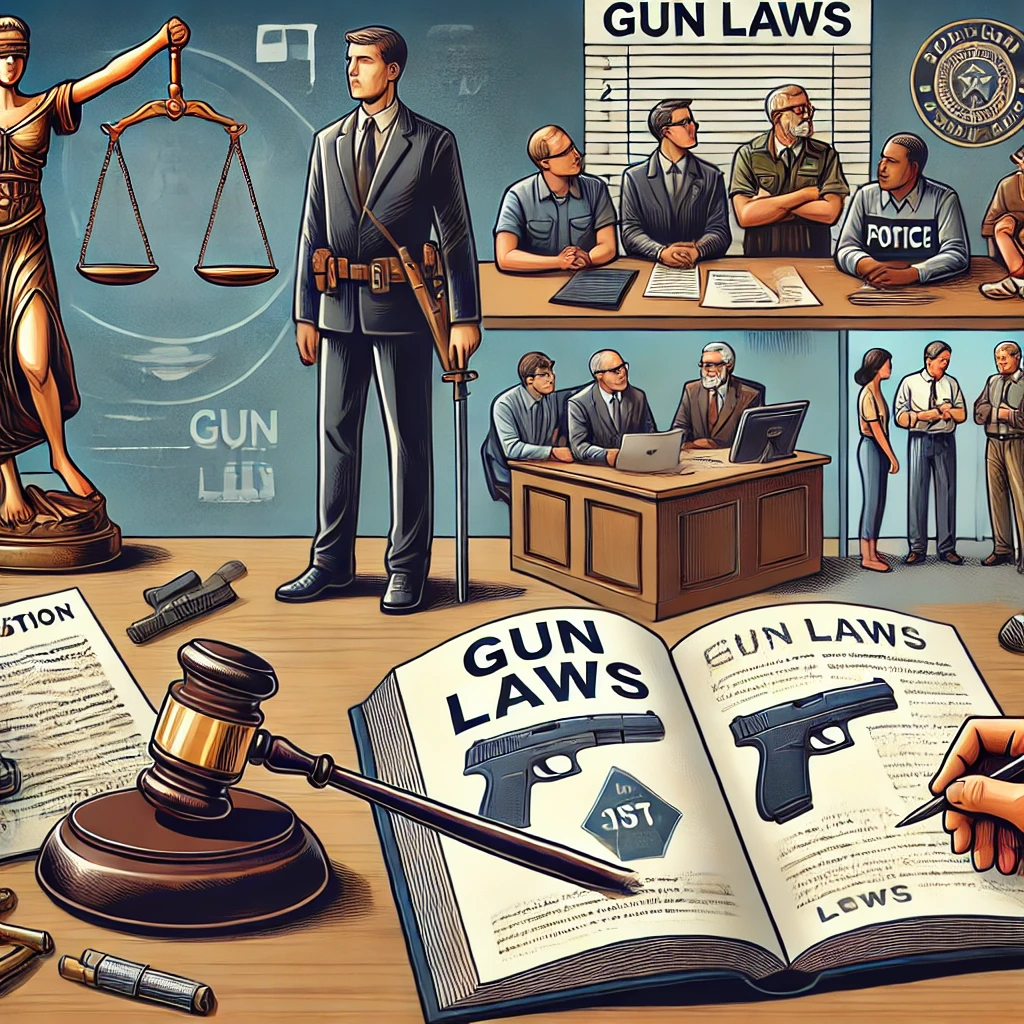
Navigating the complex landscape of firearm safety laws and regulations is crucial for any gun owner. Understanding these laws not only ensures compliance but also promotes safety for individuals and the community. This comprehensive guide will cover federal and state regulations, safe storage practices, and recent legislative updates.
Federal Firearm Laws
At the federal level, firearm laws are primarily governed by the Bureau of Alcohol, Tobacco, Firearms and Explosives (ATF). Key pieces of legislation include the National Firearms Act (NFA) of 1934, the Gun Control Act of 1968, and the Firearm Owners Protection Act of 1986.
- National Firearms Act (NFA): This act regulates certain types of firearms, including machine guns, short-barreled rifles, and silencers. These items require registration and are subject to stringent controls and taxes.
- Gun Control Act (GCA): The GCA regulates the interstate commerce of firearms, requiring federal licensing for dealers and establishing criteria for gun ownership and transfer, such as background checks for all purchases from licensed dealers.
- Firearm Owners Protection Act (FOPA): This act provides protections for gun owners traveling across state lines with firearms, as long as the firearm is legally possessed in both the starting and ending locations of the journey.
Recent Federal Updates
Recent years have seen significant changes to federal gun laws. For example, there have been updates to the definitions and regulations surrounding “ghost guns”—firearms that are self-assembled and lack serial numbers. The Biden-Harris administration has pushed for expanded background checks and closing loopholes related to private and online sales.
State-Specific Regulations
Firearm regulations vary significantly from state to state, and it’s essential for gun owners to be aware of the laws in their specific location. Here are some examples:
- California: Known for having some of the strictest gun laws in the nation, California requires background checks for all gun sales, including private transactions, and has an extensive list of prohibited weapons. Safe storage laws mandate that firearms must be locked away if children are present in the home.
- Texas: Texas has relatively lenient gun laws, allowing for open carry and requiring no permit for long gun purchases. However, there are still regulations regarding where firearms can be carried and the necessity of background checks for dealer sales.
- Illinois: Recently, Illinois passed a ban on certain semi-automatic firearms classified as “assault weapons,” requiring owners to register these firearms with the state police by January 1, 2024.
- Washington: Washington has also enacted an assault weapons ban, which includes a prohibition on the sale and distribution of specific semi-automatic rifles and features such as pistol grips and folding stocks.
Safe Storage Laws
Safe storage laws are designed to prevent unauthorized access to firearms, particularly by children. These laws vary by state but generally require firearms to be stored in a locked container or secured with a gun lock.
- California: Requires that all firearms sold must come with a DOJ-approved safety device or proof of ownership of a gun safe that meets regulatory standards. Additionally, leaving a loaded firearm accessible to a child can result in criminal charges.
- Massachusetts: Mandates that all firearms be stored in a locked container or equipped with a tamper-resistant mechanical lock or other safety devices.
Recent Legislative Changes
Several states have introduced new firearm regulations in recent years. For example:
- Arkansas: Effective August 1, 2023, Arkansas redefined what constitutes a loaded firearm and enacted permitless carry laws, allowing individuals to carry concealed firearms without a permit.
- Michigan: Implemented new secure storage laws requiring firearms to be locked away when not in use to prevent access by children, effective February 13, 2023.
Responsibilities of Gun Owners
Owning a firearm comes with significant responsibilities. Beyond understanding and complying with laws, gun owners should:
- Ensure Safe Handling: Always assume a firearm is loaded and never point it at anything you do not intend to shoot. Keep your finger off the trigger until ready to fire.
- Secure Storage: Use gun safes, lock boxes, or trigger locks to prevent unauthorized access. Store ammunition separately from firearms.
- Regular Maintenance: Keep firearms clean and in good working order to ensure they function safely.
- Education and Training: Participate in firearm safety courses and stay informed about changes in laws and best practices for gun safety.
Understanding the laws and regulations around firearm safety is essential for responsible gun ownership. Federal laws provide a baseline of regulations, but state-specific laws can vary widely. Staying informed about these regulations and adhering to safe storage practices not only helps in compliance but also ensures the safety of individuals and the community.

Additional Considerations for Firearm Safety
Safe Handling Practices
Safe handling practices are fundamental for preventing accidents and ensuring the safety of both the gun owner and those around them. Here are key guidelines:
- Always Treat the Gun as Loaded: This is a cardinal rule in gun safety. Never assume a firearm is unloaded. Always check it yourself.
- Keep the Muzzle Pointed in a Safe Direction: This means ensuring that even if the firearm were to discharge, it would not cause injury or damage. A safe direction can vary depending on your environment.
- Be Sure of Your Target and What Lies Beyond It: Understanding your target and what is beyond it helps prevent accidental injury or damage. Bullets can travel through walls and other materials, so knowing what is behind your target is crucial.
- Keep Your Finger Off the Trigger Until Ready to Shoot: Only place your finger on the trigger when you have your target in sight and are ready to fire. This practice helps prevent accidental discharges.
Legal Responsibilities and Liabilities
Gun owners must be aware of their legal responsibilities to avoid severe consequences, including criminal charges and civil liabilities.
- Background Checks and Sales: Federal law requires background checks for all firearm purchases from licensed dealers. Some states extend this requirement to private sales as well. Background checks help ensure that firearms are not sold to prohibited individuals.
- Reporting Lost or Stolen Firearms: Many states require gun owners to report lost or stolen firearms within a specific timeframe. This helps prevent stolen guns from being used in crimes.
- Firearm Transfer Regulations: Transferring firearms across state lines is regulated by federal law. In most cases, the transfer must go through a licensed dealer in the recipient’s state. There are exceptions, such as transfers between immediate family members.
Understanding “Red Flag” Laws
“Red flag” laws, also known as Extreme Risk Protection Orders (ERPOs), allow family members or law enforcement to petition a court to temporarily remove firearms from individuals deemed a threat to themselves or others. These laws vary by state but generally include the following provisions:
- Petition Process: A family member or law enforcement officer files a petition with the court, presenting evidence that the individual poses a significant danger.
- Temporary Removal: If the court finds sufficient evidence, it can order the temporary removal of firearms from the individual.
- Hearing and Final Order: The individual has the right to a hearing where they can contest the order. If the court upholds the order, it typically lasts for a set period, such as one year.
The Importance of Education and Training
Education and training are critical components of responsible gun ownership. Many organizations offer courses designed to teach safe handling, storage, and usage of firearms.
- NRA Training Courses: The National Rifle Association (NRA) offers a variety of training programs for different skill levels, covering topics from basic firearm safety to advanced shooting techniques.
- Local Law Enforcement and Community Programs: Many police departments and community organizations offer firearm safety courses and resources to help gun owners stay informed and competent in handling their firearms.
- Online Resources and Guides: Numerous online platforms provide educational materials, including videos, articles, and interactive courses on firearm safety and regulations.
Gun Safety Technology
Advancements in technology have introduced new tools to enhance firearm safety.
- Smart Guns: These are firearms equipped with technology that allows only authorized users to fire them. Biometric sensors, such as fingerprint recognition, are common features in smart guns.
- Gun Safes and Locks: Modern gun safes come with various security features, including biometric locks, digital keypads, and tamper alerts, making unauthorized access more difficult.
- Firearm Tracking Systems: Some new systems enable tracking of lost or stolen firearms using GPS or other technology, helping to recover firearms and prevent their use in crimes.
Conclusion
Understanding and adhering to the laws and regulations surrounding firearm safety is a fundamental aspect of responsible gun ownership. This involves staying informed about federal and state laws, practicing safe handling and storage, and participating in continuous education and training. By doing so, gun owners can help ensure their safety and the safety of those around them, while also complying with legal requirements.
In today’s evolving legal landscape, staying updated on recent legislative changes and advancements in safety technology is crucial. Whether through formal training courses, community programs, or online resources, there are many avenues available to help gun owners maintain a high standard of safety and responsibility.