
Winchester gun safes are widely marketed as rugged, fire-resistant storage for hunters, collectors, and homeowners, but the real question is whether they deliver meaningful protection or mainly trade on a famous name. In the gun safes and safety market, “hype” usually refers to heavy branding, attractive sale pricing, and feature lists that look impressive online yet require closer scrutiny in person. A useful comparison starts with a few core terms. Fire rating describes how long a safe is claimed to protect contents at a stated external temperature. Steel gauge affects body strength, pry resistance, and weight. Locking bolts secure the door, though bolt count matters less than bolt design and door construction. Residential Security Container, commonly shortened to RSC, is the common entry-level burglary classification recognized by UL for many consumer gun safes.
I have evaluated gun safes in dealer showrooms, moved them during installations, and reviewed customer claims after attempted break-ins and house fires. That experience leads to a simple conclusion: brand reputation helps, but specifications and build consistency matter more. Winchester occupies an important middle ground in this category. The brand is familiar, the product range is broad, and pricing often lands where first-time buyers feel comfortable. That makes these safes relevant not only to shoppers specifically considering Winchester, but also to anyone comparing brands across the broader gun safe comparisons and brand spotlights landscape. This hub article explains where Winchester fits, how to assess claims, what tradeoffs appear across models, and which related comparison topics deserve deeper research before you buy.
What Winchester Gun Safes Usually Offer
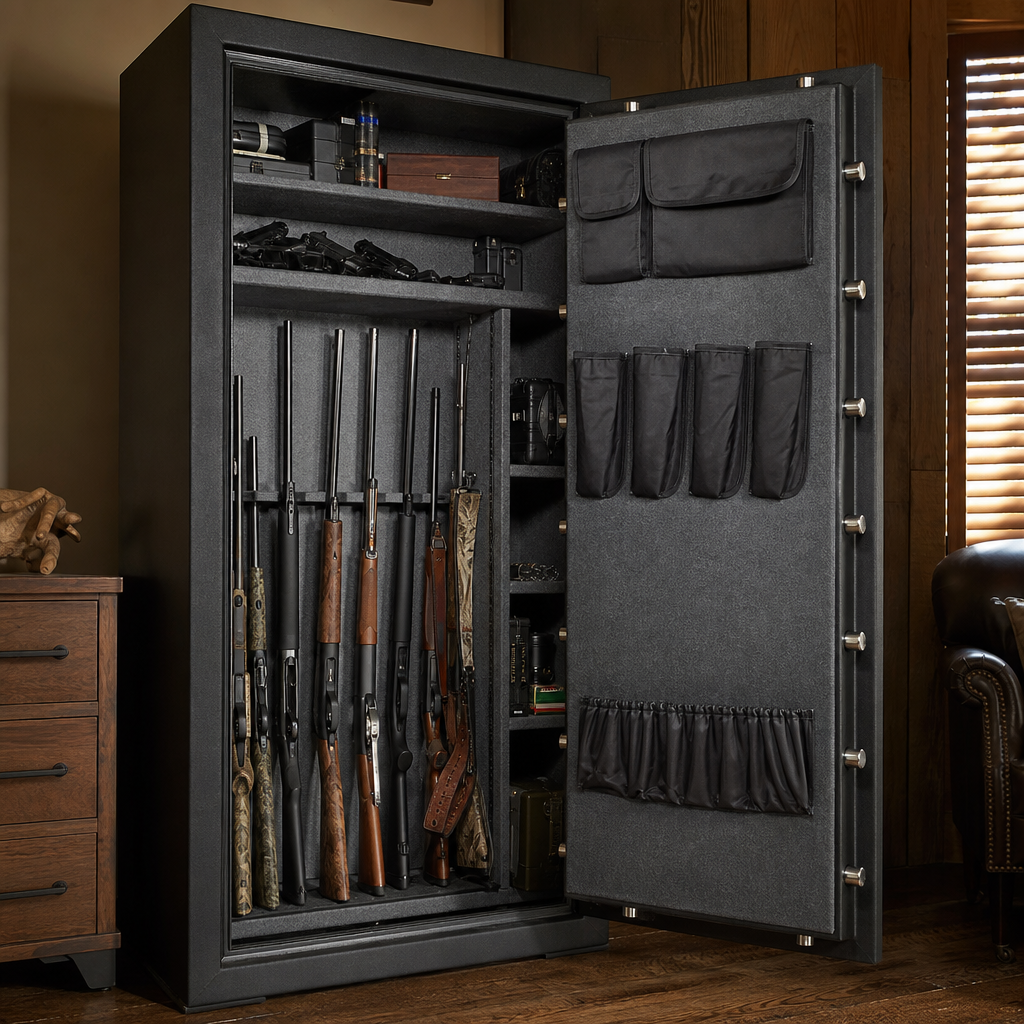
Most Winchester gun safes target the mainstream residential market rather than commercial vault applications. In practical terms, that means they are designed to deter smash-and-grab theft, delay pry attacks, organize firearms, and provide a degree of fire protection during typical house fires. Common features include electronic locks, multiple live-action locking bolts, carpeted interiors, adjustable shelving, door organizers, and external hinge designs that allow wide door swing. Retail lines vary by seller, and that point matters because tractor stores, sporting goods chains, warehouse clubs, and specialty safe dealers often carry different Winchester-branded models built to different price targets.
Across the lineup, Winchester usually competes on perceived value. You often see larger stated gun capacities at lower prices than premium American-made brands. The catch is that stated capacity figures are almost always optimistic, especially for scoped rifles, modern sporting rifles, and shotguns with accessories. A safe promoted as holding 24 or 36 guns may store far fewer once optics, bipods, slings, and power cords for dehumidifiers are involved. In side-by-side comparisons, interior layout and shelf flexibility matter just as much as exterior dimensions.
Another common selling point is fire protection. Winchester advertises ratings on many models, but shoppers should read exactly how those ratings are described. Some are based on manufacturer testing protocols rather than independent third-party certification. That does not automatically make them false, but it does mean the rating should be treated as one factor among many. Door seal quality, insulation type, seam construction, and where the safe is installed all affect real outcomes. In a garage fire versus a second-floor bedroom fire, conditions differ dramatically.
How Winchester Compares on Security and Build Quality
Security performance begins with steel thickness, door design, weld quality, lock reliability, and anchoring. On many Winchester models, the strongest real-world security upgrade is not a larger bolt count but proper bolting to concrete with quality anchors. An unanchored 600-pound safe can still be tipped, pried, or removed with appliance dollies and enough time. I have seen burglaries where thieves ignored guns entirely because the safe was anchored in a tight closet, and others where a larger, flashier safe was rolled out because installation was careless.
Winchester build quality is generally competitive for the mid-market category, but it is not uniform across every line. Entry-level models can use thinner steel and lighter internal components than premium dealer-exclusive lines. This is why shoppers should compare actual body gauge and door thickness rather than relying on branding alone. Many buyers assume every safe with a respected logo shares the same construction philosophy. It does not. In this segment, a dealer-grade model from one brand can substantially outperform a mass-retail exclusive from the same brand family.
Lock type also deserves a realistic look. Electronic locks are fast and convenient, and many Winchester safes use them successfully. However, electronic convenience comes with battery dependence and potential keypad failures over long ownership periods. Mechanical dial locks are slower but remain trusted for durability when serviced properly. Neither type is universally better; the better choice depends on user habits, household access needs, and tolerance for maintenance. For a defensive firearm accessed regularly, a responsive electronic lock may be more practical. For long-term archival storage, some owners still prefer a dial.
| Factor | Winchester Strength | Common Limitation | What Buyers Should Check |
|---|---|---|---|
| Price positioning | Often competitive for size and features | Retail exclusives may be built to lower specs | Compare exact model numbers, not just brand |
| Fire protection | Many models advertise solid ratings | Ratings may not be independently certified | Ask how the test was conducted and for how long |
| Interior storage | Flexible shelves and door panels are useful | Claimed gun capacity is usually optimistic | Measure scoped rifles and accessory needs |
| Security hardware | Multiple locking bolts and relockers on some models | Bolt count can distract from steel thickness | Prioritize body steel, door fit, and anchoring |
| Availability | Easy to find through major retailers | Showroom support varies by seller | Inspect the safe in person if possible |
Fire Ratings, Theft Protection, and the Marketing Gap
If buyers misunderstand anything about Winchester gun safes, it is usually the difference between fire resistance and burglary resistance. These are separate performance categories. A safe with thicker insulation and an impressive fire label may still have modest resistance to aggressive pry attacks if body steel is thin. Conversely, a more burglary-focused safe may have less interior room and a shorter advertised fire duration. Good marketing combines both benefits in a way that sounds definitive, but real design requires compromise because thicker plate steel, composite construction, and higher-end barriers increase cost and weight quickly.
That gap between marketing and function is not unique to Winchester. It affects the entire consumer safe category. For example, many homeowners imagine a gun safe can withstand professional safe-cracking tools indefinitely. An RSC is not built for that. It is meant to resist limited attacks with common tools for a defined test window, buying time and discouraging opportunistic theft. That is valuable, but it is different from a TL-rated commercial safe. Winchester generally plays in the residential category, so the right benchmark is how well a given model performs against peer brands such as Cannon, Liberty, Sports Afield, Browning, and Stack-On at similar price points.
When evaluating fire claims, ask specific questions. Is the test internal or external temperature based? Was the safe brought to full temperature rapidly, as in a flashover event, or gradually? Were humidity and steam intrusion measured? Were paper documents, electronics, and ammunition considered separately? Heat damage is not the only concern. Smoke infiltration, water exposure from fire suppression, and post-fire corrosion often destroy contents even when the shell remains standing. A safe in a basement on a raised platform may fare very differently from one sitting directly on a garage slab.
Where Winchester Fits in Brand-to-Brand Comparisons
As a sub-pillar hub for gun safe comparisons and brand spotlights, this topic needs a practical framework. Winchester is best understood as a brand that often appeals to value-oriented buyers who want recognizable branding, respectable capacity, and broad retail availability without moving into premium custom-safe pricing. Against Liberty, Winchester often competes more on upfront affordability than on top-tier fit, finish, or dealer support. Against big-box value brands, Winchester may offer better feature packaging and stronger name recognition. Against premium plate-steel or specialty vault makers, it is usually not the same class of product.
This is where comparison content becomes essential. A shopper considering Winchester should also review several adjacent questions. How do Winchester fire ratings compare with Liberty and Browning claims? Are Winchester electronic locks sourced from established lock makers such as Sargent and Greenleaf or SecuRam on the specific model being considered? Do dealer-sold Winchester lines use better steel or interiors than warehouse models? How does warranty support work after a lock failure, attempted burglary, or fire event? Those questions deserve dedicated supporting articles, and together they form a useful hub around brand spotlights rather than a single isolated review.
Another major comparison point is country of manufacture and parts sourcing. Some buyers prioritize American manufacturing, while others focus more on final specification and dealer service. Winchester-branded safes have been produced through licensing and changing manufacturing arrangements over time, so origin should be confirmed model by model. The same applies to lock brand, liner material, and interior configuration. Assuming consistency across a long product history can lead to poor comparisons. The disciplined approach is to compare current model sheets, inspect welds and door gaps in person, and verify warranty terms in writing.
Who Should Buy a Winchester Safe and Who Should Look Elsewhere
Winchester gun safes make sense for a broad group of owners: first-time safe buyers, hunters storing several long guns, families wanting child-access prevention, and homeowners needing a practical upgrade from unsecured closets or lightweight cabinets. For these users, a properly anchored mid-range Winchester can be a substantial safety improvement. It reduces unauthorized access, adds organized storage, and creates enough delay to defeat many fast residential theft attempts. If the alternative is no secure storage at all, the improvement is meaningful and immediate.
Some buyers should set their sights higher. Owners with high-value collections, irreplaceable heirlooms, NFA items, or concentrated theft risk should examine heavier steel bodies, higher burglary ratings, dedicated safe rooms, monitored alarms, and layered physical security. The same is true for people in wildfire-prone areas or remote properties where fire response times are long. In those cases, stronger fire barriers, better document protection, and off-site inventory records matter more than the average showroom feature list. Insurance also matters. A safe reduces risk, but it does not replace proper scheduling, photos, serial number records, and policy review.
The smartest buying process is boring and methodical. Measure your space, confirm floor load and delivery path, decide what you will store five years from now rather than today, and set a budget that includes installation, anchoring, humidity control, and possibly an outlet kit or lighting. Then compare Winchester against at least three true peers. Read the lock warranty. Ask whether the safe includes an intumescent seal. Check steel specifications instead of focusing on graphics and handle style. That process cuts through hype better than any advertisement ever will.
So, do Winchester gun safes live up to the hype? Often, yes, when the hype is interpreted correctly. They are not magical vaults, and they are not all built to the same standard, but many models deliver solid residential protection for the money. The strongest reasons to consider Winchester are accessible pricing, useful interiors, broad availability, and generally competitive feature sets within the mid-market safe category. The strongest reasons to hesitate are inconsistent specifications across retail lines, optimistic capacity claims, and the tendency of marketing language to blur the line between good household protection and true high-security construction.
The main benefit of this brand spotlight is perspective. A Winchester safe should be judged as one option inside a larger gun safe comparison strategy, not as a guaranteed shortcut to quality simply because the name is familiar. Buyers who verify steel thickness, understand fire-rating language, choose the right lock, and invest in professional installation are usually satisfied. Buyers who purchase on logo, sale price, or stated gun count alone are more likely to feel disappointed later. In other words, the safe itself matters, but the buying method matters just as much.
If you are building out your research under the gun safes and safety umbrella, use Winchester as a starting point for deeper comparisons. Review adjacent brand spotlights, compare lock types, study fire-rating methods, and learn how installation affects theft resistance. Then shortlist the exact models that match your risks, space, and collection. That is how you separate real value from marketing noise and choose a gun safe you can trust for years.
Frequently Asked Questions
Do Winchester gun safes really offer strong protection, or are they mostly benefiting from brand recognition?
Winchester gun safes can offer solid protection, but the answer depends heavily on which model you are evaluating and what kind of protection you actually need. The Winchester name carries a lot of weight with hunters, sport shooters, and collectors, and that branding absolutely helps drive interest. However, a recognizable logo does not automatically mean every safe in the lineup delivers the same level of security, steel thickness, fire resistance, or lock quality. That is where the “hype” question becomes important.
In practical terms, many Winchester safes are designed to satisfy the needs of average residential gun owners who want organized firearm storage, some degree of theft deterrence, and a marketed fire rating. For that purpose, they can be a reasonable fit. They often include features that appeal to buyers at first glance, such as multiple locking bolts, upholstered interiors, door organizers, and promotional fire ratings. Those features are useful, but they should not distract from the details that matter most: body steel thickness, door construction, locking mechanism, relocker design, hinge protection, and whether the safe is properly anchored.
So do they live up to the hype? Sometimes, but not automatically. A Winchester safe may be perfectly adequate for keeping children out, discouraging a smash-and-grab thief, and adding basic household fire protection. On the other hand, if you assume the brand name alone guarantees premium burglary resistance or elite fire performance, you may be disappointed. The smarter approach is to judge each safe by measurable construction standards rather than by reputation, sale signage, or marketing language alone.
How reliable are Winchester safe fire ratings, and what should buyers look for beyond the advertised number?
Fire ratings are one of the most heavily advertised features in the gun safe market, and Winchester is no exception. A safe may be marketed with a claim such as 45, 60, or 90 minutes of fire protection, but that number needs context before it becomes meaningful. A fire rating generally refers to how long the safe is claimed to maintain an internal temperature low enough to protect contents under certain test conditions. The problem is that not all testing methods are equal, and not all advertised ratings are independently verified.
When evaluating a Winchester gun safe, or any gun safe, it is important to ask how the rating was established. Was it tested by an independent lab, or was it based on internal manufacturer standards? What was the external temperature during the test? What internal temperature threshold was used? Was the safe heated gradually or exposed to more realistic severe conditions? Did the test include a cooldown period, which can be critical because some safes continue absorbing heat even after flames are gone?
Buyers should also remember that house fires vary widely. A safe that performs acceptably in a controlled test may not perform the same way in a prolonged or especially intense real-world fire. In addition, most gun safes are not true high-end document or media safes, so even if firearms survive, paper records, optics, electronics, or heirlooms may still be vulnerable. Winchester fire ratings can still be useful as a comparison point within the consumer gun safe category, but they should not be treated as a guarantee. A better buying decision comes from looking at the full construction package: fireboard layers, door seal design, steel body, total weight, and whether the manufacturer provides clear testing details instead of just a bold number on a sales tag.
Are Winchester gun safes actually secure against theft, or are they mainly designed for basic deterrence?
For most homeowners, Winchester gun safes function more as a theft deterrent than as an impenetrable security vault. That distinction matters. In the residential gun safe category, many products are built to delay unauthorized entry, discourage opportunistic burglars, and protect firearms from casual tampering. They are not necessarily engineered to withstand prolonged attack by experienced thieves using heavy tools. Winchester safes generally fit into that broader consumer market reality.
Security comes down to the materials and design, not just the appearance. A safe may look massive and include a long list of locking bolts, but the number of bolts is only one part of the story. More important factors include steel gauge, how the door fits into the frame, whether the lock is electronic or mechanical and of what quality, hard plate protection for the lock area, relockers, and resistance to pry attacks. Some Winchester safes provide decent homeowner-level security, especially when compared with thin metal cabinets. That alone makes them a worthwhile upgrade for many people. But buyers should be realistic: a safe in a garage or corner of a room, unanchored and lightly built, can still be vulnerable to removal or forced entry.
The single biggest step many owners overlook is proper installation. Even a good safe becomes much more effective when it is bolted down to concrete or another solid base. Placement also matters. A safe located in a concealed, low-access area is generally safer than one sitting in plain view with room for thieves to work around it. In short, Winchester safes can provide meaningful security for ordinary home use, but their real-world performance depends on the specific model and how well it is installed. They should be seen as part of a layered security plan, not the entire plan by themselves.
Why do Winchester gun safes often seem like a good deal, and are the sale prices too good to be true?
Winchester gun safes are frequently marketed through big promotional events, seasonal discounts, and retailer-specific packages, which can make them look like exceptional bargains. In many cases, they do represent fair value for buyers who want more than a locking cabinet without stepping into the cost of a premium burglary-rated safe. The concern is not that every sale price is misleading, but that discounts can draw attention away from the underlying build quality and from how the safe is actually meant to perform.
In this market, pricing psychology is powerful. A safe advertised as “regularly” much higher but currently on sale can create the impression that you are getting elite protection at a midrange price. Sometimes what you are really getting is a feature-rich residential safe with attractive branding and decent convenience features, not a commercial-grade security product. That does not make it a bad purchase. It simply means the buyer should compare specifications carefully instead of assuming the discount translates into unusually high protection value.
Look closely at steel thickness, overall weight, lock brand, warranty terms, interior flexibility, and whether delivery and installation are included. Also consider hidden ownership costs. A lower upfront price can become less attractive if the safe needs professional moving, anchoring, humidity control accessories, or future replacement because capacity claims were overly optimistic. Many safes advertised for a certain gun count hold fewer firearms in real-life use once optics, slings, and accessories are factored in. Winchester sale pricing can absolutely make sense, but the best deals are the ones where the construction, size, and intended use all match your needs rather than just your impulse at the point of purchase.
Who should buy a Winchester gun safe, and when should someone consider a different brand or a higher-security option?
Winchester gun safes are often a good fit for homeowners who want a recognizable brand, organized firearm storage, a step up from entry-level cabinets, and a reasonable balance of cost and features. They can work well for hunters with a moderate collection, families prioritizing child access prevention, and gun owners who need basic fire protection plus everyday convenience. For these users, a Winchester safe may deliver exactly what matters most: secure storage, better peace of mind, and practical household use without entering the price range of heavy commercial or custom safes.
That said, there are clear situations where a buyer should look beyond the Winchester label. If you own a high-value collection, rare firearms, expensive optics, suppressors, important documents, or irreplaceable heirlooms, a more security-focused safe may be worth the investment. The same is true if you live in an area with higher burglary risk, want thicker steel and more serious pry resistance, or need a fire rating with stronger independent validation. Buyers who are highly detail-oriented may also prefer brands that publish more transparent technical specifications or offer safes with recognized burglary classifications.
The best way to decide is to match the safe to the actual threat level. If your goal is basic residential protection and responsible firearm storage, many Winchester models can be a sensible choice. If your goal is advanced burglary resistance, long-duration fire performance, or preservation of especially valuable contents, you may want to compare heavier safes, higher-end manufacturers, or even separate solutions for firearms and documents. In other words, Winchester safes live up to the hype for some buyers because the hype aligns with their needs. For others, the brand appeal may be stronger than the performance advantage, and that is when a deeper comparison becomes essential.