
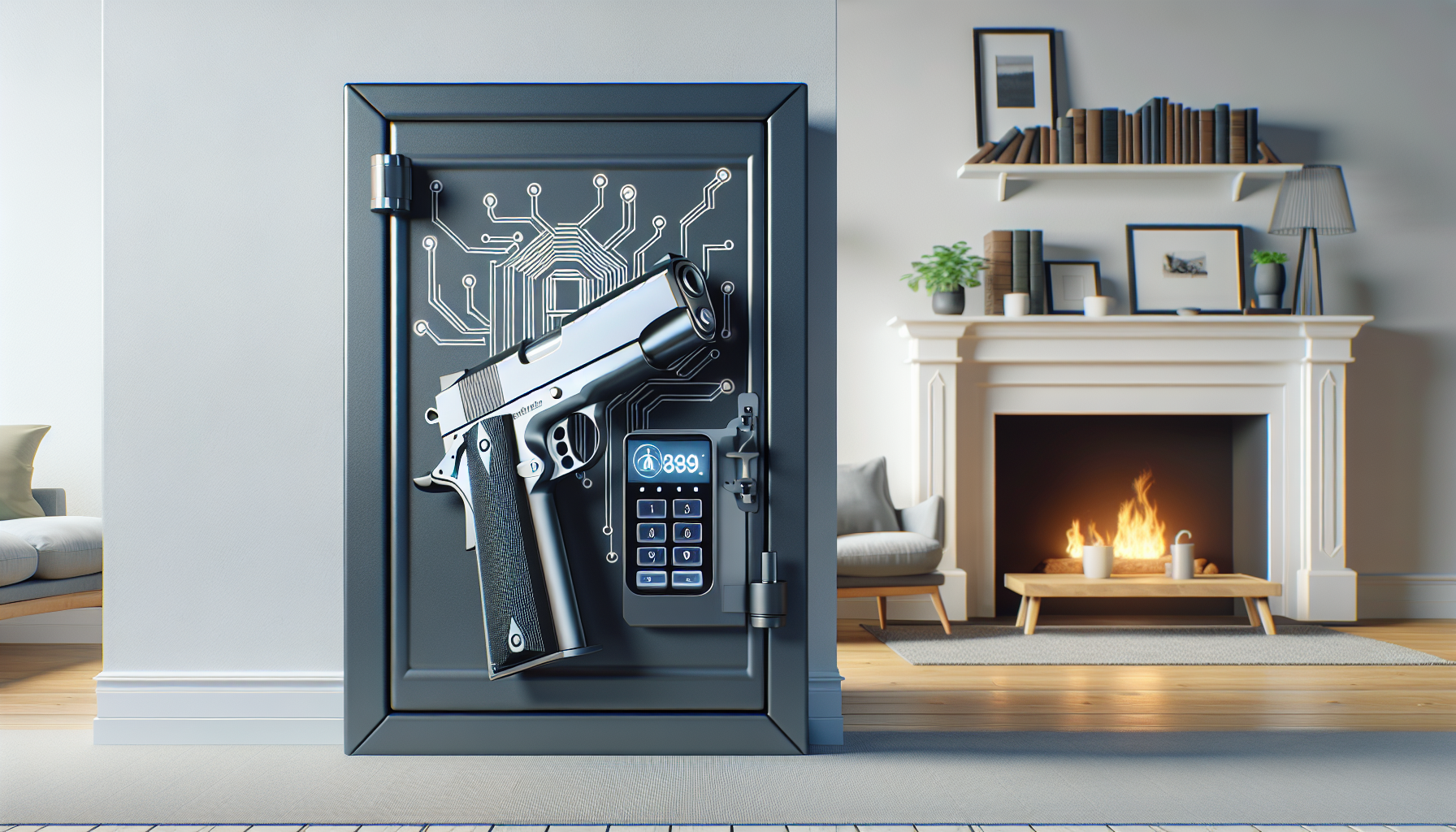
Choosing a gun safe that works with home automation starts with a simple truth: security hardware is no longer isolated. A modern gun safe can be part of a broader residential security system, tied into smart locks, cameras, alarms, lighting scenes, occupancy sensors, and remote notifications. In practice, that means buyers now evaluate more than steel thickness and lock type. They also need to assess connectivity, power backup, event logging, access control, failure modes, and privacy. I have helped homeowners compare traditional safes with connected models, and the best purchase decisions always begin with defining compatibility clearly. In this context, compatibility means the safe can either integrate directly with smart home platforms or operate alongside them through reliable alerts, sensors, and security workflows. That distinction matters because not every “smart” gun safe is truly automation-ready.
A gun safe, for this article, includes full-size rifle safes, handgun vaults, bedside biometric safes, closet cabinets with reinforced locking systems, and modular secure storage designed for firearms. Home automation refers to systems such as Alarm.com, Control4, Apple Home with Matter-compatible devices, Google Home, Amazon Alexa routines, Home Assistant, Hubitat, and professionally monitored alarm panels that coordinate sensors and notifications. The goal is not convenience alone. The goal is layered protection: preventing unauthorized access, reducing response time to tampering, maintaining safe storage practices, and giving the owner clearer awareness of what is happening at home. That matters for families with children, households with multiple authorized users, collectors with high-value firearms, and owners who travel often.
This buying guide serves as a hub for gun safe buying decisions because the category is crowded with marketing claims. Terms like biometric, smart, Wi-Fi enabled, app-controlled, and tamper-proof are often used loosely. A fingerprint reader may speed up access but still store only a handful of prints unreliably. A Wi-Fi feature may send alerts, yet have no local automation support, no audit trail, and weak account security. Conversely, a conventional mechanical safe can still be highly compatible with home automation when paired with door sensors, environmental monitoring, power-loss alerts, and camera-based verification. The right choice depends on your firearms, your home network, your risk profile, and your need to balance speed, discretion, and long-term reliability.
For most buyers, the process becomes easier when you break it into practical questions. What kind of access do you need in an emergency? Which smart platforms already run in your house? Do you want direct app control, or just alerts when the safe is opened, moved, or attacked? Can the safe function fully during internet outages or power failures? Is the manufacturer using tested lock hardware, durable steel construction, and accountable software practices? Answering those questions up front narrows the field quickly and prevents the most common mistake I see: buying a gadget-first safe that impresses in a showroom but creates security gaps at home.
Start with the safe type, use case, and access speed you actually need
The first decision is the class of gun safe. A bedside pistol vault for defensive access has different automation needs than a 40-gun fire-rated safe in a basement. Fast-access handgun safes usually prioritize one-handed opening, biometric scanning, keypad entry, or RFID access. Full-size safes prioritize burglary resistance, fire protection, anchored installation, storage capacity, and controlled access by a small number of adults. If you choose the wrong class first, automation features will not fix the mismatch.
In real homes, I recommend matching the safe to a clear scenario. A parent securing a home-defense handgun may want a quiet biometric vault with internal lighting, a mechanical backup key, and an open alert tied to a bedroom motion sensor or alarm panel. A collector storing rifles, suppressors where lawful, optics, and documents may need a heavier safe with a UL-listed lock, dehumidification, and contact sensors connected to a central monitoring system. A garage installation may require tilt sensors and temperature monitoring because environmental swings and forced-entry risk are higher there than in a climate-controlled closet.
Access speed should be measured under realistic conditions: low light, stress, cold fingers, and partial hand placement. Biometric systems vary widely. Capacitive fingerprint readers generally outperform older optical readers in speed and spoof resistance, but implementation matters more than the sensor label. Good units allow enrollment of multiple prints per finger, reducing failures caused by angle or skin condition. If a manufacturer does not specify unlock time, backup entry method, false reject behavior, or local operation without cloud access, treat that as a warning sign.
Capacity planning matters too. Buyers often underestimate future storage needs. If the safe will hold firearms plus ammunition, passports, cash, and irreplaceable documents, leave room for shelving flexibility and cable management if you plan to add internal sensors or powered accessories. Oversizing slightly is usually cheaper than replacing a safe later, especially once anchoring and delivery are included.
Evaluate integration options: direct platform support versus sensor-based compatibility
A home-automation-compatible gun safe does not always need native app integration. There are two practical paths. The first is direct integration, where the safe or its companion app connects with a smart home ecosystem through APIs, cloud-to-cloud links, or local protocols. The second is indirect integration, where the safe remains a conventional secure box but gains automation value through external sensors such as door contacts, vibration sensors, smart plugs, temperature and humidity probes, leak detectors, and cameras.
Direct integration sounds ideal, but it is often limited. Many manufacturers offer mobile apps for alerts and user management yet support no serious automation platform beyond push notifications. Some allow app-based unlock commands, which may be convenient but raise obvious risk if account protection is weak. For firearm storage, I generally favor designs where remote unlocking is impossible or heavily restricted, while alerting and audit logs remain available. The safest smart workflow is usually “notify, verify, and respond,” not “unlock from anywhere.”
Indirect integration is frequently more robust because it relies on proven home security components. For example, a standard gun safe can use a recessed contact sensor on the door, an accelerometer-based tilt sensor on the body, and a smart environmental monitor inside. Those devices can report to Home Assistant, Alarm.com, or a professional alarm panel even if the safe itself has no electronics. This approach also avoids vendor lock-in. If the safe maker discontinues its app, your broader monitoring setup still works.
| Approach | Best For | Main Benefit | Main Limitation |
|---|---|---|---|
| Native smart safe integration | Users wanting built-in alerts and user management | Cleaner setup with fewer add-on devices | Often dependent on vendor app and cloud service |
| Sensor-based automation on a traditional safe | Owners prioritizing long-term reliability | Works with established alarm and automation systems | Requires custom installation and planning |
| Hybrid setup | Collectors and high-security households | Combines internal safe features with external monitoring | Higher cost and more components to maintain |
When comparing options, ask direct questions. Does the safe support local alerts if the internet fails? Can events be exported or reviewed later? Is there a documented integration path for your ecosystem? Does it expose open/close status, tamper events, battery state, and lock status, or just generic phone notifications? Those details determine whether the safe can become part of a dependable automation routine instead of remaining an isolated gadget.
Prioritize physical security before smart features
Smart features should never distract from the fundamentals of gun safe construction. A safe with polished app controls but weak steel, poor boltwork, exposed hinges without protective design, or a low-grade lock is the wrong purchase. Start with physical resistance. For residential gun safes, buyers should review body steel gauge, door plate thickness, locking bolt engagement, relocker design, hard plate protection around the lock, pry resistance, and anchor points. Heavier is not automatically better, but weight often correlates with more substantial construction.
Lock quality matters as much as connectivity. Trusted lock manufacturers and recognized certifications provide a stronger signal than marketing adjectives. Look for references to UL-listed electronic locks where applicable, tested mechanical dial systems, or commercial-grade keypad assemblies. A biometric reader should supplement solid locking hardware, not replace it. If the emergency override is a tubular key hidden behind thin trim, understand that this may become the actual attack point.
Fire protection claims also deserve scrutiny. Many safes advertise a temperature rating and duration, but test methods are not always transparent. A “fireproof” label may reflect internal company testing rather than an independent standard. If document or media protection matters, compare insulation type, door seals, and the specific temperature threshold claimed. Fireboard-lined gun safes can help in moderate residential fires, but serious archival protection for paper, digital media, or valuables may require separate containers inside the safe.
Installation is part of physical security. Even a good safe becomes vulnerable if left unanchored in a garage corner. I have seen smaller safes removed entirely during burglaries because they were easy to carry out and attack elsewhere. Bolt the safe to concrete or substantial framing as the manufacturer specifies, place it where pry attacks are harder, and think about concealment. Automation can tell you a safe moved; anchoring helps prevent it from moving at all.
Check power, network resilience, and failure modes
A home-automation-compatible gun safe must remain secure and usable when conditions are bad, not just when everything is online. That means evaluating power architecture, battery replacement access, low-battery warnings, offline operation, and behavior during outages. The safe should fail secure against unauthorized access while still allowing legitimate entry through a local method. For defensive handgun safes, speed of fallback access is especially important.
Battery-powered locks are common and can be reliable, but only if maintenance is straightforward and warnings are timely. Prefer models that provide long lead time before battery depletion and support quality cells from established brands. Avoid any design where depleted batteries disable all practical entry methods. External battery jump contacts can be useful if implemented well. For larger safes with powered accessories such as lighting, dehumidifiers, or network modules, consider surge protection and an uninterruptible power supply for related smart hubs.
Network resilience is just as important. Wi-Fi-only products are convenient but often less dependable than systems that support local control or are monitored through a dedicated alarm panel. If your router reboots, your internet provider drops service, or the manufacturer cloud is unavailable, what exactly still works? In a strong design, unlocking remains local, core alerts can still reach a panel or local controller, and event history is preserved for later review.
Ask vendors about firmware updates as well. Secure connected devices need patches, but the update process should be deliberate, authenticated, and not disruptive to core safe functions. If a company cannot explain how it handles software support, account recovery, and discontinued products, it may not be a sound long-term choice for firearm storage.
Match access control, audit trails, and privacy to your household
Home automation adds value when it improves accountability. In shared households, that means different authorized users can have distinct credentials, and the owner can review when the safe was opened. This is especially useful for collections, training households, or situations where one adult wants confirmation that a firearm was returned to secure storage. Some smart safes support multiple fingerprints, PIN codes, or user profiles. Better systems separate administrator permissions from normal access, reducing accidental changes.
Audit trails should capture practical events: successful openings, failed attempts, tamper alerts, battery warnings, and connectivity loss. Time stamps matter. So does retention. A simple push alert saying “safe opened” is not a real access log. If the manufacturer stores logs only in the cloud, check how long they are retained and whether you can export them. In a monitored household, local logging through the automation platform is often more useful.
Privacy deserves equal attention. A gun safe app may collect account details, device identifiers, location metadata, and usage history. Review whether the company supports strong passwords, multifactor authentication, encrypted communication, and transparent privacy documentation. For firearm owners, data sensitivity is higher than for many household devices. You want the minimum data exposure necessary for the functions you use. In many homes, the best balance is local automation with alerting, not extensive remote control features.
Finally, think about who truly needs access. It is easy to over-configure a smart system and create confusion. Keep permissions narrow, test every credential periodically, and document backup entry procedures in a secure place. Simplicity is a security feature.
Compare total cost, support, and the long-term buying decision
The purchase price of a gun safe is only part of the buying guide. You also need to budget for delivery, placement, anchoring, humidity control, smart sensors, professional alarm integration, and possible subscription fees. A lower-cost connected safe can become more expensive than a better-built traditional model once you account for replacement risk and poor software support. I advise buyers to compare three-year ownership cost, not just shelf price.
Brand support is a major differentiator. Established safe manufacturers may offer stronger construction and service networks, while newer smart-safe brands may move faster on app features. The best choice depends on whether the company can support both hardware and software over time. Read warranty terms carefully. Look for clear policies on lock failures, biometric component replacement, firmware support windows, and parts availability. Reviews are useful, but give more weight to patterns involving lock reliability, customer service response, and real-world false openings or lockouts than to unboxing impressions.
This hub page should also guide your next research steps. If you are narrowing options, compare biometric versus keypad safes, review fire ratings separately, study ideal placement inside the home, and examine how to add humidity control and monitoring. If you already own a conventional safe, explore retrofit sensors before replacing it. In many cases, a high-quality traditional safe plus discreet automation hardware creates a more secure system than a cheaper all-in-one smart model.
The right gun safe for home automation is the one that strengthens security without creating new weaknesses. Start with construction and locking integrity, then verify resilient power and offline behavior, then choose the level of smart integration that fits your platform and privacy expectations. A good setup gives you faster awareness, cleaner accountability, and safer storage for the long term. Make a shortlist, ask hard technical questions, and test each candidate against your actual household routines before you buy.
Frequently Asked Questions
What makes a gun safe truly compatible with a home automation system?
A gun safe is not genuinely home automation compatible just because it has a keypad, an app, or a Bluetooth connection. True compatibility means the safe can participate in a broader security ecosystem in a reliable, intentional way. That usually starts with integration options. Some safes can connect directly through Wi-Fi, Bluetooth, Z-Wave, Zigbee, or a proprietary hub, while others require a bridge device or indirect integration through sensors and relays. The most useful setups allow the safe to trigger or respond to automations such as sending an alert when the door opens, recording an event in a log, activating nearby cameras, turning on task lighting, or changing alarm states based on authorized access.
When evaluating compatibility, look beyond marketing terms like “smart” or “connected.” Ask what specific events the safe can report, what systems it can communicate with, and whether those communications are local, cloud-based, or both. A safe that can provide open/close status, tamper alerts, battery warnings, and user-specific access logs is often much more valuable than one that simply unlocks from a phone. It is also important to verify whether the safe works with the automation platform already in the home, such as Control4, Home Assistant, Alarm.com, Apple Home, Google Home, Alexa ecosystems, or a professionally monitored alarm panel. In many cases, the best home automation result comes from a safe with strong core security features plus dependable sensor-based integration, rather than a flashy app with limited real-world utility.
Which connectivity options are best for a smart gun safe: Wi-Fi, Bluetooth, Z-Wave, Zigbee, or something else?
The best connectivity option depends on how the safe will be used, how critical the automation is, and how much the homeowner values reliability, local control, and privacy. Wi-Fi is common because it is easy to deploy and supports direct app communication and cloud notifications, but it can also be more dependent on internet access, router stability, and manufacturer servers. That means a Wi-Fi-enabled safe may offer convenient remote alerts and app management, but it may also create more exposure to outages or cloud-service limitations. Bluetooth is often useful for short-range setup, local access, or backup mobile control, but it is not ideal as the primary method for whole-home automation because it lacks the reach and persistent network behavior of a dedicated smart home protocol.
Z-Wave and Zigbee are often better choices when the safe is being integrated into a broader residential automation and security system. These protocols are designed for device-to-device communication in smart homes and can support dependable local automations with less cloud dependence. They are especially useful when the goal is to trigger scenes, update alarm status, or coordinate sensors, lights, and cameras based on safe activity. For advanced users, local API support, dry-contact outputs, wired alarm outputs, or compatibility with a hardwired security panel can be even more attractive than consumer-friendly wireless features. In high-security environments, the strongest approach is often layered: local automation for core functions, encrypted remote notifications for awareness, and a manual override path that still works if the network fails. In other words, the “best” connectivity is not just the most modern option; it is the one that remains predictable under normal use and under failure conditions.
How important are power backup and failure modes when choosing an automated gun safe?
They are extremely important, and they are often overlooked until a real-world problem occurs. Any safe that includes electronic locks, wireless modules, mobile app controls, or automated notifications introduces a dependency on power and system health. That does not make electronic or connected safes a bad choice, but it does mean buyers need to think carefully about what happens during a power outage, dead battery event, router failure, software crash, or manufacturer cloud outage. A well-designed safe should fail in a secure but practical way. It should protect contents against unauthorized access while still allowing authorized users a dependable means of entry during emergencies.
Look for multiple layers of resilience. At the safe level, that includes long battery life, clear low-battery warnings, easy battery replacement, and ideally a non-destructive backup access method approved by the manufacturer. At the home level, it helps to have backup power for routers, hubs, alarm panels, and internet equipment if remote monitoring is important. Also consider what automations stop working when connectivity is lost. For example, the safe may still unlock locally, but event notifications, camera triggers, and access logs may pause until network service returns. Buyers should ask whether access codes are stored locally, whether the safe can function offline, whether logs sync later, and whether remote unlock features can be disabled entirely if they introduce unnecessary risk. In a home automation context, the safest purchase is usually not the one with the most features, but the one with the clearest and most controlled behavior when something goes wrong.
What access control and event logging features should I look for in a home-automation-ready gun safe?
Access control and event logging are two of the most valuable reasons to connect a gun safe to a home automation system. Strong access control means the safe supports more than a single shared code. Ideally, it should allow multiple users, unique credentials, scheduled permissions, and different levels of authority for family members, trusted adults, or temporary users. In some cases, buyers may want time-based restrictions, dual-authentication options, auto-lock timers, or instant credential revocation. These features become especially important in homes where the safe is part of a larger security plan and where accountability matters as much as convenience.
Event logging adds visibility. A good logging system should record when the safe was opened, closed, tampered with, left ajar, accessed unsuccessfully, or affected by low battery or communication loss. If possible, those events should include timestamps and user-specific information. In a connected setup, the most useful systems can push those records to an app, security panel, or home automation dashboard while also preserving local history. That matters because logs are useful only if they remain available during internet interruptions or account changes. Practical examples of valuable automation include having the home security cameras bookmark footage when the safe opens, sending a notification if the safe is opened outside normal hours, or turning on lighting in a controlled area only during authorized access windows. Buyers should also examine how notifications are managed so that important alerts are immediate and actionable rather than buried in a noisy stream of routine app messages.
Are there privacy and cybersecurity risks with smart gun safes, and how can buyers reduce them?
Yes, there are real privacy and cybersecurity considerations, and they deserve serious attention. A connected gun safe can generate sensitive information, including when the safe is accessed, how often it is used, whether anyone attempted unauthorized entry, and in some systems even who opened it. If this data is stored in the cloud, shared with third-party platforms, or transmitted insecurely, it can create unnecessary risk. In addition, any device with wireless connectivity, app access, remote administration, or firmware updates expands the digital attack surface in the home. That does not mean buyers should avoid connected safes altogether, but it does mean they should treat them like security infrastructure, not casual consumer gadgets.
To reduce risk, start with manufacturers that are transparent about encryption, update policies, data retention, and account security. Look for support for strong passwords, multi-factor authentication, regular firmware updates, and documented security practices. Prefer products that can operate locally for essential functions instead of depending entirely on cloud services. It is also wise to place the safe and its supporting devices on a segmented network or secure VLAN if the homeowner uses a more advanced home network. Disable features that are not necessary, especially remote unlock capabilities if local access is sufficient. Review whether integrations with voice assistants or third-party automation platforms expose more information than needed. Finally, remember that privacy is not only digital. Event logs, camera automations, and occupancy-linked routines should be configured carefully so they improve awareness without creating broad household visibility into sensitive firearm storage behavior. The best setup balances convenience with restraint, giving the homeowner control without over-sharing access or data.