
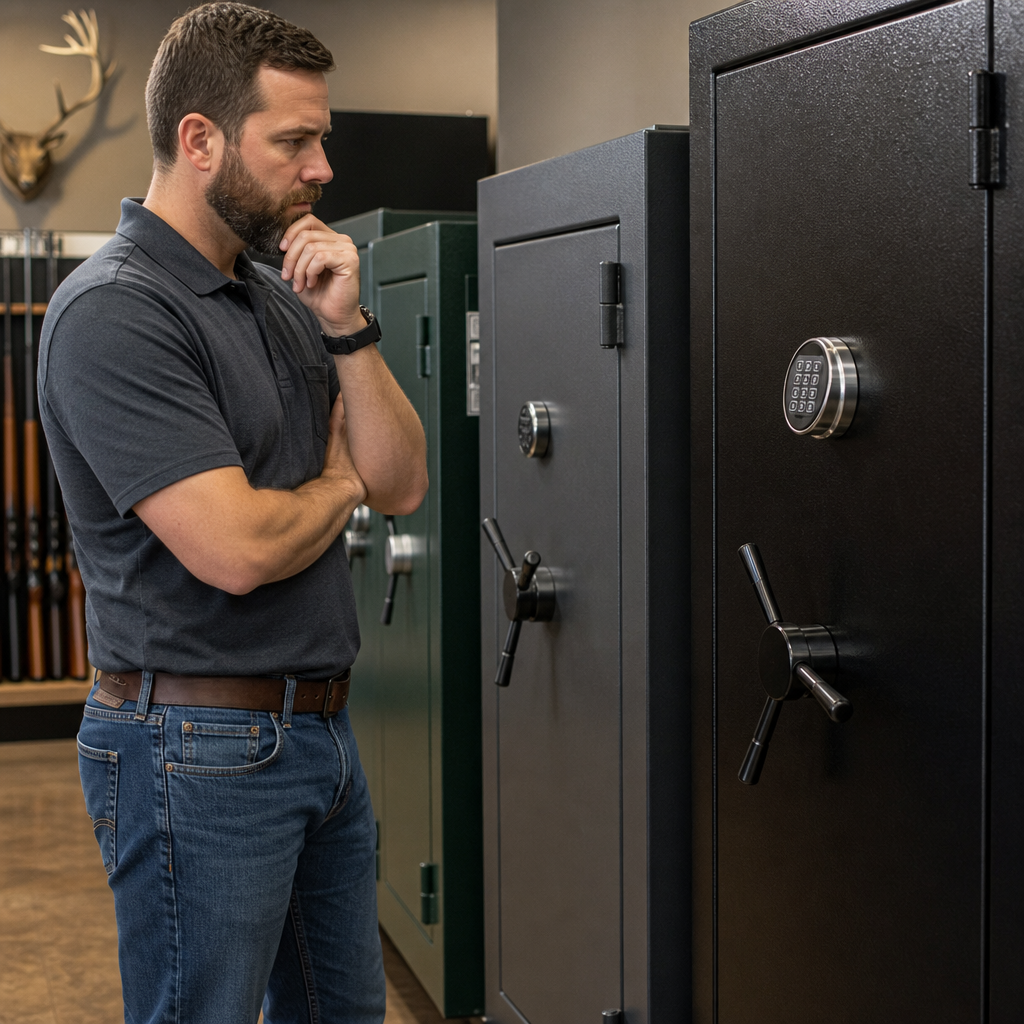
Choosing among gun safe brands is easier when you compare what can be verified instead of what is advertised. Security certifications, fire test disclosures, lock standards, and construction details reveal far more than glossy brochures or oversized “gun count” claims. If you are building a shortlist for a first safe, replacing a cabinet that no longer fits your collection, or trying to understand why one premium model costs twice as much as another, certifications are the clearest starting point. They establish a common language for burglary resistance, lock reliability, and in some cases fire protection, which lets you compare brands on evidence rather than marketing.
In practical terms, a security certification is an independent test or recognized standard applied to a safe, a lock, or a specific component. Common examples include UL residential security ratings, UL lock listings, California Department of Justice firearm safety device standards, and steel classifications that indicate thickness and strength. These labels do not tell you everything. A safe can have a listed lock yet weak door construction, or strong steel with poor boltwork design. Still, certifications matter because they narrow the field quickly. After years of evaluating safes for homeowners, collectors, and small FFL operations, I have found that the best comparisons begin with three questions: What exactly was tested, who performed the test, and does the rating apply to the whole safe or just one part?
This matters because the gun safe market mixes true safes, residential security containers, and thin metal cabinets under similar language. Many buyers assume all “gun safes” offer the same burglary resistance when they do not. A mass-market safe sold at a sporting goods chain may rely on lighter steel and limited pry resistance, while a heavier specialty model from a regional safe dealer may use thicker plate, hardplate over the lock, relockers, and more substantial door jambs. Without understanding certifications, it is difficult to see those differences. With them, you can compare brands with far more confidence and choose a model that aligns with your threat level, budget, and storage needs.
Start by separating cabinet, residential security container, and true safe
The first step in any gun safe comparison is classification. A steel gun cabinet is primarily designed to deter casual access and organize firearms. It may protect against children, smash-and-grab theft, and unsecured handling, but it usually lacks the body thickness, reinforced door, and tested lockwork associated with higher-security products. Many entry-level products from stackable storage brands fit this category. They can be useful when anchored correctly in a low-risk environment, yet they should not be compared directly with products carrying independent burglary ratings.
A residential security container, often abbreviated RSC, sits in the middle. This category is common among mainstream gun safe brands sold through farm stores, big-box retailers, and independent safe dealers. An RSC rating generally indicates that the container has passed a standardized attack test intended to resist opportunistic burglary using common hand tools for a defined period. That does not make it vault-grade, but it is a meaningful baseline. In my experience, moving from an unrated cabinet to an RSC-class container is one of the biggest practical security upgrades a homeowner can make, especially when the unit is properly anchored to concrete.
A true safe goes further, often with heavier plate, composite barriers, more advanced relocking systems, and burglary ratings beyond the entry residential level. Some premium brands offer TL-rated models, though these are less common in consumer gun safe showrooms because of cost, weight, and logistics. If you collect high-value firearms, NFA items, or rare optics, the distinction is important. Compare brands only within the same class first. A budget cabinet and a premium RSC are solving different problems, and a TL-rated safe belongs in a different conversation entirely.
Which security certifications matter most when comparing gun safe brands
The most useful certifications are the ones tied to independent testing and clearly defined standards. For whole-container security, UL 1037 Residential Security Container is one of the most recognized benchmarks in the consumer market. When a brand states that a model is UL-listed as an RSC, that means the complete container, not merely the lock, has undergone a defined attack test. UL has also introduced enhanced classifications in recent years, including stronger residential security levels, which can help distinguish more robust products from basic entries. If a brand claims “UL components” but does not identify a whole-container rating, ask for precision.
Lock certifications also matter. UL Type 1 electronic lock listings and UL-listed mechanical group locks indicate that the locking device has met recognized performance requirements. This matters because the lock is the interface most likely to fail from misuse, poor quality control, or battery neglect. Brands using SecuRam, Sargent and Greenleaf, or La Gard locks often specify the listing level; that is a good sign because it shows the manufacturer is willing to identify exact hardware rather than hide behind generic terms like “military style locking system.” A listed lock is not proof of a great safe, but a safe with an unverified lock deserves closer scrutiny.
For California buyers, DOJ-approved firearm safety device standards can affect legal compliance. A DOJ listing may indicate that a product meets state requirements for firearm storage devices, but it is not a substitute for stronger burglary certifications. Think of it as a legal threshold, not a premium security endorsement. Fire ratings should also be treated carefully. Many brands advertise fire protection using proprietary tests at internal facilities. Unless the fire rating comes from a clearly named laboratory with disclosed test conditions, compare it cautiously. Real comparisons require specifics such as peak temperature, duration, humidity exposure, cool-down method, and whether the safe remained closed throughout the test.
How construction details confirm or contradict the certification story
Once you understand the ratings, inspect construction details to see whether the safe’s design supports the brand’s claims. Steel thickness is the obvious place to begin, but it is often presented in ways that confuse buyers. Lower gauge numbers indicate thicker steel, so 10-gauge body steel is stronger than 14-gauge. Door construction may use plate steel, formed shells, or composite assemblies. A 3/16-inch or 1/4-inch steel body generally provides noticeably better resistance than thin sheet-metal bodies common in lower-tier products. Heavier does not always mean better, but extremely light “safes” almost always involve compromises.
Door design matters as much as body steel. Pry resistance depends on the door edge, frame reinforcement, the number and placement of active bolts, and whether there are dead bars or interlocking anti-pry tabs on the hinge side. Some brands emphasize a high bolt count, but bolt count alone is often marketing theater. A safe with fewer, thicker bolts and a rigid door structure can outperform one with many small bolts attached to a weaker frame. Internal hardplate, spring-loaded relockers, and protected lock placement are the features I look for when comparing premium brands because they directly affect resistance to punch, drill, and lock attack.
Fit and anchoring also change real security. A well-built safe that rocks on an uneven floor or sits unanchored in a garage is easier to tip, pry, and remove. I always compare anchor hole placement, base reinforcement, and whether the brand provides hardware guidance for slab and framed-floor installations. Interior features matter less than brochures suggest. Door organizers, LED lighting, and modular racks are useful, but they should never distract from shell thickness, lock quality, and boltwork integrity. In direct brand comparisons, construction specifics usually explain price differences more accurately than cosmetic upgrades ever will.
How major gun safe brands usually differ on certifications and positioning
Brand comparison becomes easier when you group manufacturers by market position. Mainstream retail brands often compete on size, appearance, and promotional fire ratings. They may offer useful entry-level protection, especially in RSC-class models, but specifications can vary significantly even within the same lineup. Dealer-focused brands tend to publish more exact steel thicknesses, lock brands, and upgrade paths because their products are sold through specialists who answer technical questions. Premium safe makers often highlight thicker bodies, better weld quality, and stronger door systems rather than oversized capacity claims. In practice, that usually signals a more serious approach to security.
American-made branding is common, but it should not be treated as a certification. Some domestic brands assemble safes in the United States using imported steel or components; others produce more of the unit in-house. That distinction may matter to some buyers, but it does not replace test data. I have seen imported safes with solid lock listings and honest specifications outperform domestic models that relied too heavily on marketing language. Compare the actual rating, steel thickness, lock listing, and warranty support instead of assuming origin alone predicts security.
| Comparison factor | What to look for | Why it matters |
|---|---|---|
| Whole-safe rating | UL RSC or higher, clearly named | Confirms tested burglary resistance for the container, not just parts |
| Lock certification | UL-listed electronic or mechanical lock | Reduces risk of lock failure and vague hardware claims |
| Body steel | Published gauge or plate thickness | Shows resistance to pry, cut, and deformation attacks |
| Door design | Hardplate, relockers, reinforced frame | Protects the most commonly attacked area |
| Fire testing | Named lab or fully disclosed protocol | Allows apples-to-apples comparison across brands |
| Installation support | Anchor guidance and base construction | Improves real-world security after delivery |
Warranty and service networks also separate brands meaningfully. Some companies offer strong replacement policies after burglary or fire, but the details matter. Does the warranty cover labor, freight, lock replacement, and interior repair, or only selected parts? Is there a national technician network for lockouts and warranty claims? A respected brand with documented certifications and dependable post-sale service is usually a safer long-term choice than a cheaper competitor with sparse support. That is especially true for electronic locks, where local service availability can affect downtime and ownership costs.
Questions to ask before choosing a brand for your home, collection, or business
Before you compare prices, define your threat model. Are you mainly preventing unauthorized access by children and visitors, deterring smash-and-grab burglary, or protecting a high-value collection from targeted theft? A suburban homeowner storing several hunting rifles has a different risk profile from a collector with pre-64 Winchesters, high-end night optics, suppressors, and handguns. The right brand for each buyer may be different, but the evaluation process stays consistent: confirm the rating, confirm the lock, inspect the steel, and plan the installation. That sequence keeps emotion from driving the decision.
Ask every seller direct questions. Is the safe independently rated, and if so, what exact standard applies? Is the listed rating for the whole safe or only the lock? What gauge is the body, and is the door plate or formed steel? Does the safe include hardplate and relockers? Which lock brand and model is installed? How was the fire rating established? Can the seller provide documentation instead of a brochure summary? Reputable dealers can answer these questions quickly. Evasive answers usually indicate that the marketing story is stronger than the engineering.
Also think about dimensions that are often overlooked. External size determines where the safe can be placed discreetly; internal usable space determines whether optics, long barrels, and shelving layouts actually fit. “Gun count” ratings are notoriously optimistic. I regularly tell buyers to divide claimed capacity by at least a third, and by half if they own scoped rifles. Finally, compare delivery and installation standards between brands and dealers. A secure safe placed badly, unanchored, or visible from a garage door opening is not a complete security plan. Choose a brand that offers verified protection, then support it with smart placement, anchoring, and disciplined access control.
Comparing gun safe brands based on security certifications gives you a method instead of a guess. The best approach is simple: first separate cabinets, residential security containers, and higher-rated safes; then verify whole-safe certifications, lock listings, and any legal compliance standards that apply in your state. After that, inspect the construction details that determine how the safe performs outside a brochure: steel thickness, reinforced door design, hardplate, relockers, boltwork, and anchoring provisions. When those details align with the claimed rating, you are looking at a brand that deserves serious consideration.
The biggest benefit of this approach is that it protects you from misleading comparisons. A high advertised gun count, plush interior, or long fire claim can distract from thin steel or vague testing. Certifications cut through that noise. They help you compare mainstream retail models, dealer-focused lines, and premium safes on a common basis. They also make it easier to see where paying more buys tangible security and where it mostly buys cosmetics. For a sub-pillar topic like gun safe comparisons and brand spotlights, that framework is the foundation for every deeper review you will read next.
If you are ready to narrow your options, build a short list of brands and evaluate each one against the same checklist: independent rating, listed lock, published steel thickness, documented fire test, warranty support, and installation plan. That process will lead you to a safer, more durable purchase than shopping by price alone. Use this hub as your starting point, then move into brand-specific comparisons and model spotlights with the standards fresh in mind.
Frequently Asked Questions
1. Which security certifications matter most when comparing gun safe brands?
The most useful certifications are the ones tied to independently tested burglary resistance, lock reliability, and in some cases fire performance. For burglary protection, buyers often start by looking for a UL Residential Security Container (RSC) rating, because it shows the safe met a recognized minimum standard against forced entry using common hand tools over a defined test period. If you are comparing premium models, you may also see higher burglary classifications such as TL-rated safes, which are tested to more demanding commercial standards than typical consumer gun safes. For lock security, certifications from UL for electronic and mechanical locks matter because they indicate the lock has been tested for resistance to manipulation, attack, and failure. Fire claims should also be examined carefully, but the key is whether the fire rating comes from a known independent testing process or only from the manufacturer’s internal test. In practical terms, the strongest brands are usually the ones that clearly publish their security certifications, identify the testing body, and explain exactly what standard the product met rather than relying on vague phrases like “military style” or “maximum protection.”
2. How can I tell whether a gun safe brand is using real third-party testing instead of marketing language?
Start by looking for precise, verifiable language. Reputable brands usually list the testing organization, the exact certification or standard, and sometimes even the lock model or construction details associated with that test. For example, saying a safe is “UL RSC certified” is far more meaningful than saying it is “UL listed components” or “built to exceed industry standards.” The same applies to fire protection: a brand that discloses furnace testing conditions, duration, temperature, and whether the test was independently witnessed is giving you something concrete to evaluate. By contrast, broad advertising claims such as “up to 2 hours fire protection” or “ultimate pry resistance” without a named standard should be treated cautiously. You can also verify many claims by checking manufacturer specification sheets, certification labels inside the safe door, lock documentation, and in some cases the testing agency’s public records. A trustworthy brand does not make you guess what was tested. If the details are missing, inconsistent, or buried behind promotional language, that is often a sign that the certification story is weaker than the branding suggests.
3. Are higher security certifications always worth paying more for?
Not always, but they usually give you a clearer reason for the higher price. The important question is whether the added protection matches your risk level, your collection value, and your environment. A first-time buyer storing a few firearms in a low-traffic home may find that a well-built UL RSC-rated safe with a certified lock, solid boltwork, and proper anchoring provides an excellent balance of security and cost. On the other hand, someone storing a larger collection, expensive optics, heirlooms, or NFA items may have a much stronger case for stepping up to heavier construction, thicker steel, better hardplate protection, and more advanced burglary ratings. Premium brands often cost more because they use thicker bodies, stronger doors, better relocker systems, more robust hinges, tighter tolerances, and more transparent testing. The key is to avoid paying extra for cosmetic upgrades that do not improve real protection. Certifications help separate meaningful upgrades from expensive branding. If two safes look similar in photos but one has verified burglary and lock standards while the other relies mostly on claims, the certified model usually represents the better long-term value even if the initial price is higher.
4. How should fire ratings be compared alongside security certifications?
Fire ratings should be treated as an important secondary layer of analysis, but not all fire claims are equal. Many shoppers assume that a longer advertised fire duration automatically means a better safe, yet the credibility of the test matters just as much as the number on the brochure. When comparing brands, ask who conducted the fire test, what temperatures were used, how long the safe was exposed, what the internal temperature threshold was, and whether the test included a cool-down period. Those details can significantly change the meaning of a “60-minute” or “90-minute” rating. A brand that publishes its testing method and explains how the safe performed under a recognized protocol is easier to trust than one that simply prints a headline figure. It is also wise to remember that fire protection and burglary protection do not always increase together. Some safes emphasize thicker insulation and decorative interiors while still using relatively modest steel construction. Others are much stronger against attack but lighter on fire features. The best comparisons look at both categories together: verified burglary certification, certified lock quality, disclosed fire test methodology, and practical installation factors such as placement, anchoring, and whether the safe sits in a garage, basement, or climate-controlled interior room.
5. Besides certifications, what construction details should I compare between gun safe brands?
Certifications are the best starting point, but they should be supported by construction details that explain why one safe performs differently from another. Steel thickness is one of the most important factors, especially in the body and door, because it affects resistance to prying, cutting, and overall rigidity. Door design matters too; a safe with a stronger door edge, reinforced frame, and better fit can resist attack more effectively than a larger safe with flashy features but weaker construction. Pay attention to boltwork design, relockers, hardplate protecting the lock area, internal hinges versus external hinges, and the quality of anchor points for securing the safe to the floor. Lock type also deserves a closer look, not just whether it is electronic or mechanical, but whether it comes from a recognized manufacturer and carries relevant UL certification. Interior capacity claims should be viewed skeptically, since advertised gun counts are often optimistic and based on tightly packed long guns without optics, slings, or accessories. In other words, use certifications to narrow the field, then use build details to judge how each brand turns those standards into real-world protection. The strongest brands usually make both easy to evaluate because they are transparent about what the safe is made of, how it is tested, and where the buyer’s money is actually going.