
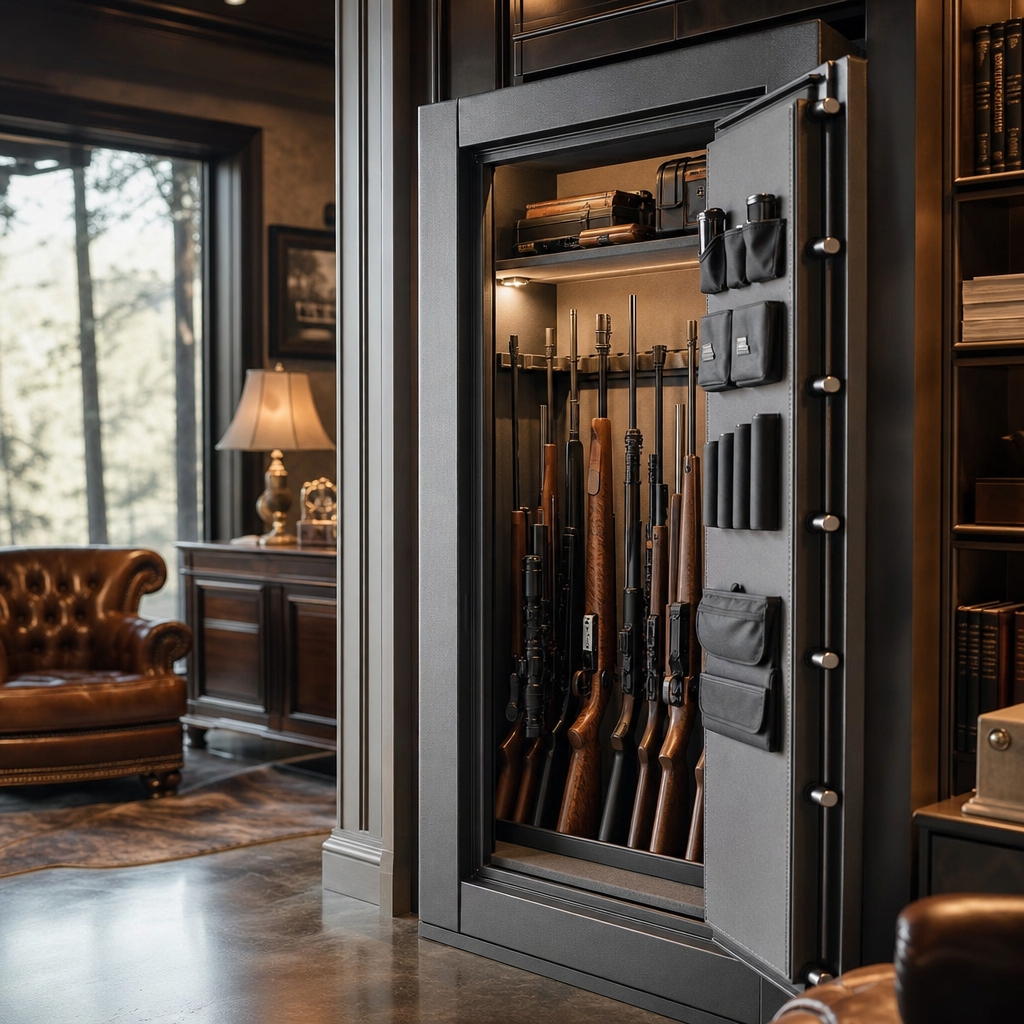
Luxury gun safes occupy the top tier of secure firearm storage, combining burglary resistance, fire protection, refined finishes, and long service life in a single product. For buyers comparing premium models, the core question is simple: are high-end gun safes worth the cost, or does a midrange safe deliver enough protection for less money? The answer depends on what you are protecting, the threat level in your area, the value of your collection, and how much you care about construction quality, interior organization, and long-term reliability.
In practical terms, a luxury gun safe usually means thicker steel, more robust boltwork, tighter door tolerances, upgraded lock options, stronger fire insulation, and better fit and finish than entry-level residential security containers. Brands in this space often include Graffunder, Brown Safe, Fort Knox, Rhino Metals, Liberty’s higher-end lines, and American Security, commonly called AMSEC. Some manufacturers emphasize custom craftsmanship and true safe construction, while others focus on premium residential gun safes with attractive interiors and broad dealer networks. I have worked through these comparisons with collectors, hunters, and families upgrading from big-box safes, and the same pattern appears repeatedly: price alone does not determine value, but construction details absolutely do.
This matters because firearm storage is not only about theft prevention. A well-chosen safe supports responsible access control, helps preserve optics, wood stocks, and documents, and can reduce the chaos that follows a burglary or house fire. It also affects daily use. A safe that is hard to organize, frustrating to open, or too small for future purchases often becomes an expensive compromise. As the hub for gun safe comparisons and brand spotlights, this guide explains what separates premium safes from standard models, which high-end brands are known for specific strengths, and when spending more is justified. If you want a direct answer, luxury gun safes are worth the cost for owners with high-value collections, elevated theft risk, or a long-term buy-once mindset; they are not automatically worth it for every household.
What Actually Makes a Gun Safe “Luxury”?
A luxury gun safe is defined less by glossy paint and more by engineering. The first checkpoint is steel thickness. Many mass-market gun safes use 12-gauge or 14-gauge bodies, which can be defeated faster with pry bars, carbide blades, or abrasive wheels than buyers expect. Premium models move into 10-gauge, 7-gauge, and even heavier plate steel, especially on the door. The difference is not academic. Thicker steel resists flexing, slows cutting tools, and supports more secure bolt engagement. When I evaluate safes in person, I pay close attention to body steel, door edge design, continuous welds, and whether the manufacturer publishes these specifications clearly.
The second factor is certification. Many gun safes sold in the United States are classified as Residential Security Containers under UL 1037 rather than true burglary safes. An RSC rating has value, but it is not equivalent to UL TL-15 or TL-30 burglary ratings used for commercial safes. Some high-end gun safe brands build products that approach commercial safe construction even if they are marketed to firearm owners. That distinction matters when comparing a decorative premium safe to a genuinely hardened one. Fire ratings also deserve scrutiny. Manufacturers may advertise 90-minute or 120-minute ratings, but testing methods vary widely unless an independent lab standard is cited.
Luxury also shows up in lock quality and boltwork. Better safes use proven mechanical dial locks from Sargent and Greenleaf or La Gard, or commercial-grade electronic locks with hardplate protection, relockers, and robust linkage. Interior design is another real differentiator, not just an aesthetic one. Adjustable shelving, door organizers, dehumidifier routing, LED lighting, and properly spaced long-gun storage can significantly improve actual capacity. Finally, fit and finish matter because they reflect manufacturing discipline. Consistent welds, smooth lock operation, accurate hinge alignment, and high-quality door seals usually indicate a company that takes structural performance seriously, not just showroom appearance.
How High-End Brands Compare on Construction, Security, and Features
Among premium manufacturers, Graffunder is often treated as the benchmark for overbuilt gun safes. Its B-rate construction and plate steel emphasis make it attractive to collectors who prioritize burglary resistance above all else. These safes are heavy, expensive, and less common on retail floors, but they deliver substance where it counts. Brown Safe occupies a similar premium conversation, known for custom options, thick steel, and serious attention to secure construction. Buyers seeking a bespoke installation, exotic finishes, or integrated jewelry and document protection often look at Brown because it bridges luxury cabinetry with commercial-safe thinking.
Fort Knox has long been strong in the custom premium residential segment. The brand offers broad configuration choices, upgraded steel packages, reinforced doors, and a reputation for attractive interiors and exterior finishes. In side-by-side comparisons, Fort Knox often appeals to buyers who want a visually refined safe without giving up meaningful security upgrades. AMSEC covers a wider range. Its BF series is widely recommended because it combines a solid security-to-price ratio with a poured barrier material that improves both fire and burglary resistance. Higher AMSEC lines and its true burglary safes raise the ceiling further for buyers willing to pay more.
Liberty remains one of the most recognized names in the category, especially for mainstream and upper-midmarket buyers. Its premium lines add thicker steel, stronger locking systems, and better interiors, though the brand spans enough tiers that model-by-model comparison is essential. Rhino Metals, including lines like Ironworks and Kodiak, often wins buyers who care about styling and interior flexibility, with some models offering good value in the premium space. The key lesson is that no brand is “best” in every way. Some dominate in brute construction, others in customization, dealer support, warranty structure, or polished user experience.
| Brand | Best Known For | Typical Buyer Fit | Main Tradeoff |
|---|---|---|---|
| Graffunder | Heavy plate steel construction and strong burglary resistance | Collectors with high-value firearms and elevated theft concerns | Very high cost and substantial installation demands |
| Brown Safe | Custom luxury builds with serious security engineering | Buyers wanting bespoke finishes and top-tier build quality | Long lead times and premium pricing |
| Fort Knox | Customization, upgraded steel options, refined interiors | Homeowners wanting premium features with broad configuration choices | Options can raise price quickly |
| AMSEC | Strong value in upper tiers, especially BF series and commercial crossover models | Buyers balancing security, fire protection, and budget discipline | Brand range can make comparisons confusing |
| Liberty | Wide availability, recognizable name, good premium residential options | Buyers who want dealer access and familiar support channels | Performance varies significantly by line |
| Rhino Metals | Distinctive styling and flexible interior layouts | Owners who want design appeal alongside solid security | Need to verify model-specific steel and fire specs carefully |
When the Extra Cost Pays Off
Luxury gun safes usually become worth the cost in four situations. First, the collection value is high enough that a burglary loss would dwarf the price difference between a premium and standard safe. That includes transferable machine guns, high-end over-under shotguns, custom 1911 pistols, thermal optics, suppressors, and heirloom rifles. A collection can reach five or six figures faster than many owners realize, especially once glass, accessories, and ammunition are counted separately. In those cases, spending several thousand dollars more for thicker steel and better lock protection is rational risk management.
Second, the safe is in a location with meaningful attack exposure. A detached garage, basement with exterior access, vacation property, or rural home with long emergency response times changes the calculus. Burglars work with time, privacy, and tools. If they can attack a safe without interruption, body steel and door design matter far more than brochure branding. I have seen buyers focus on an interior lighting package while overlooking that the unit would sit in an unmonitored outbuilding. In that scenario, security engineering should dominate every aesthetic concern.
Third, the buyer intends to keep the safe for decades. Better safes age differently. Doors stay aligned, lock mechanisms feel more precise, interiors resist wear, and finish quality tends to hold up better. A premium safe also reduces the chance of buyer’s remorse caused by underestimating capacity. Most gun owners outgrow published safe capacity numbers because manufacturers count tightly packed long guns without optics, slings, bipods, or modern chassis systems. Buying once and buying larger is especially sensible in this category because moving or replacing a 1,500-pound safe is expensive and disruptive.
Fourth, the safe must serve multiple roles. Many premium buyers want one storage solution for firearms, passports, cash, watches, legal documents, hard drives, and sentimental items. That broader mission can justify higher spending on fire insulation, interior compartment design, and lock reliability. If your safe is the last protected storage point in the house, not just a firearm cabinet, the economics shift in favor of stronger construction and better environmental control.
When a High-End Safe Is Not Worth It
Luxury pricing is harder to justify when the collection is modest, the safe will sit in a low-risk interior closet, and other security basics remain unaddressed. A monitored alarm system, reinforced doors, exterior lighting, cameras, and discreet delivery often deter or interrupt burglars more effectively than jumping from a good midrange safe to an elite one. If the home itself is vulnerable, a premium safe should not be treated as a substitute for broader household security. In many households, the smartest first move is a quality midrange safe professionally anchored to concrete, paired with an alarm and humidity control.
Another poor fit is the buyer paying for luxury cosmetics without gaining meaningful protection. Some safes command high prices because of automotive paint, polished hardware, or elaborate interiors while offering body steel that is still relatively thin. There is nothing wrong with wanting a safe that looks excellent in a study or trophy room, but appearance should come after construction. A simple rule works well: if a salesperson talks longer about color options than steel gauge, lock type, and fire testing, keep comparing.
There is also a practical issue of floor load and installation complexity. The heaviest premium safes may require structural review, specialized movers, stair planning, and higher delivery costs. For urban homes, upstairs rooms, or tight basement turns, these factors can eliminate certain brands regardless of budget. In those cases, a well-selected midrange or upper-midrange safe installed correctly may deliver better real-world value than an extreme model that forces compromises on location or anchoring.
How to Evaluate Brands Like an Informed Buyer
Start with published specifications, then verify what they mean. Compare body steel, door steel, total weight, lock brand, relocker presence, hinge design, bolt diameter, bolt count, and fire insulation method. Weight is not a perfect proxy for security, but it is a useful clue because steel and composite barriers are heavy. Ask whether fire ratings come from independent testing or internal protocols. Review warranty terms for lock replacement, fire coverage, and attempted break-in damage. Reputable dealers should answer these questions directly and consistently.
Next, inspect interior usability. Bring realistic measurements for scoped rifles, shotguns with side saddles, and AR-pattern rifles with optics. Test shelf movement, door organizer depth, and access to handguns or documents when the safe is partially full. Capacity claims are almost always optimistic. A “40-gun” safe may function more honestly as a 20- to 28-long-gun setup once accessories are included. This is why gun safe comparisons and brand spotlights should never stop at steel and fire ratings alone; the day-to-day ownership experience affects value as much as raw specifications.
Finally, think in systems, not products. The best premium safe underperforms if it is visible from the street, unanchored, or installed in a humid room without dehumidification. The best brand for one buyer may be the wrong choice for another because delivery path, climate, insurance requirements, and collection mix all matter. Use this hub as the starting point for deeper model-specific research, then narrow your shortlist to the brands that fit your threat profile, space, and budget. Luxury gun safes are worth the cost when superior construction, better fire performance, and long-term usability solve real risks you actually face. If those risks are modest, invest wisely in a solid safe, proper installation, and total home security—then compare premium brands only when your needs truly justify the upgrade.
Frequently Asked Questions
Are luxury gun safes actually worth the higher price compared with midrange models?
Luxury gun safes can absolutely be worth the cost, but only for the right buyer. The biggest difference is that high-end safes are typically built to perform better across several categories at once: burglary resistance, fire protection, fit and finish, interior customization, locking system quality, and long-term durability. A premium safe often uses thicker steel, stronger door construction, more robust locking bolts, upgraded relockers, tighter manufacturing tolerances, and better weld quality than many midrange models. Those upgrades matter when the safe is protecting a valuable firearm collection, family heirlooms, rare optics, important documents, jewelry, cash, or other irreplaceable items.
That said, not every gun owner needs a top-tier safe. If you own a few common firearms and your main concern is basic secure storage, unauthorized access prevention, and moderate fire protection, a well-made midrange safe may be enough. The real value question comes down to risk. If the contents of the safe are worth far more than the safe itself, and if you live in an area where burglary response times are slow or property crime is a real concern, paying more for stronger construction often makes practical sense. In contrast, if your collection is modest and the safe will be located in a lower-risk environment, the jump to a luxury model may deliver diminishing returns.
In simple terms, luxury gun safes are not automatically better buys for everyone, but they are often better tools. Buyers are paying not just for branding or appearance, but for higher-grade materials, more rigorous engineering, and a product designed to hold up over decades. For collectors, long-term homeowners, and people protecting significant asset value, that added cost is often justified.
What features make a high-end gun safe different from a standard or midrange safe?
The most important differences are usually found in construction and certification details, not just cosmetics. High-end gun safes often feature thicker body steel, reinforced doors, more sophisticated boltwork, stronger hard plates to resist drill attacks, and multiple relocking mechanisms that activate if the lock is tampered with. Many premium brands also invest more in anti-pry design, tighter door gaps, stronger hinges, and internal structures that are harder to defeat with common burglary tools. These are meaningful upgrades because most residential safe attacks are quick, tool-based efforts where every layer of resistance counts.
Fire protection is another area where premium models can separate themselves. Luxury safes may use more advanced insulation materials, better door seals, and more honest or independently supported fire ratings. Buyers should still read the fine print, since fire ratings vary widely between brands and are not always tested to the same standards. A premium price does not automatically guarantee the best fire performance, but higher-end manufacturers are generally more transparent about how their safes are built and what conditions they are designed to withstand.
Interior quality is also noticeably different. High-end safes commonly offer upgraded shelving, premium upholstery, better lighting, jewelry drawers, watch winders, document storage, and highly configurable layouts for rifles, handguns, suppressors, optics, and valuables. On the outside, luxury safes often include custom paint, polished hardware, decorative panels, and furniture-grade finishes. Those visual upgrades are not the main reason to buy one, but they do matter for owners who want a safe that fits a high-end home rather than looking purely industrial.
Finally, long-term ownership tends to be better with premium brands. Better locks, smoother mechanisms, stronger internal components, and higher overall build quality often translate into fewer issues over time. A well-made luxury safe is more likely to remain reliable after years of daily use, multiple moves, and changing storage needs. That combination of protection, usability, and longevity is what really sets the category apart.
When does it make sense to choose a luxury gun safe over a midrange model?
A luxury gun safe makes the most sense when the value of what you are protecting is high enough that stronger security and better construction become financially rational. This often applies to collectors with rare firearms, custom rifles, engraved shotguns, NFA items, expensive optics, historical pieces, or mixed-value storage needs that include jewelry, documents, precious metals, and cash. In those situations, the safe is not just a storage box. It is a core layer of asset protection.
It also makes sense when the threat environment is more serious. If you live in an area with elevated burglary rates, have a rural property with longer law enforcement response times, or own a home where criminals may have time and privacy to work, a stronger safe can provide a real advantage. Burglars often attack the easiest target available. A heavier, better-anchored, more pry-resistant safe can increase the difficulty, time, and noise required to gain access, which can be enough to stop an attack entirely.
Another common reason to step up is long-term planning. Many buyers purchase one safe and expect it to last for decades. Spending more upfront on a premium model can be smarter than replacing a lesser safe later because of capacity issues, build concerns, or dissatisfaction with the lock, interior, or fire rating. This is especially true if your collection is still growing. Buying for future needs often saves money and frustration over time.
On the other hand, if your goal is straightforward legal compliance, child access prevention, and basic theft deterrence for a small number of firearms, a midrange safe may be the more efficient choice. The luxury category becomes easiest to justify when the stakes are high, the collection is valuable, the owner expects long service life, and compromise on protection is not appealing.
Are premium gun safe brands better because of marketing, or do they provide real security advantages?
Some of the premium pricing does reflect branding, finish options, and customization, but reputable high-end brands usually do offer real security advantages. The key is knowing what to look for. Marketing language can be impressive across every price point, so buyers should focus on objective details such as steel thickness, total weight, door design, lock type, boltwork, relockers, anchor options, fire seal design, and whether the safe or components have any meaningful certifications or third-party testing behind them.
In many cases, top-tier brands invest more in engineering and manufacturing consistency. That can show up in stronger composite construction, better anti-drill protection, more secure lock mounting, superior fit between door and frame, and heavier overall structures that are harder to move or attack. Those differences are not always obvious in showroom photos, but they matter when a safe is under stress. A premium safe should not be judged only by paint, interior fabric, or the number of locking bolts. Real security comes from how the entire unit is designed and assembled.
That said, buyers should be cautious about assuming every expensive safe is automatically elite. Some models lean heavily into luxury styling while offering only modest gains in burglary resistance over good midrange competitors. Others justify their cost with serious build quality and proven performance. The smartest approach is to compare brands line by line, focusing on construction specifications and reputation for service rather than prestige alone.
So yes, premium brands can provide real-world advantages, but the value varies by manufacturer and model. The best luxury gun safes earn their price through stronger materials, better attack resistance, improved reliability, and superior ownership experience. The weaker ones mainly charge more for appearance. Careful comparison is what separates the two.
What should buyers compare when evaluating high-end gun safe brands?
Start with burglary resistance, because that is the foundation of the product. Compare body steel thickness, door construction, total safe weight, locking bolt design, hard plate protection, relocker count, pry resistance features, and whether the safe can be securely anchored in your intended location. A heavy safe with strong door engineering and quality internal locking components is usually more important than flashy specifications that sound impressive but reveal little about actual protection.
Next, examine fire protection with a critical eye. Look at the claimed duration and temperature, but also ask how that rating was developed. Premium brands differ widely here. Some provide more credible testing information than others. Consider where the safe will be placed in the home, whether it will store paper documents or media, and how fire resistance fits into your overall disaster planning. The best fire rating on paper still works best when paired with smart placement and proper installation.
Then move to lock quality and day-to-day usability. Compare electronic locks, mechanical dial options, redundant lock setups, and the availability of trusted lock manufacturers. Pay attention to interior flexibility, shelving design, handgun storage, lighting, power access, and how well the safe accommodates scoped rifles or specialty firearms. A safe that is secure but frustrating to use every day often leads to poor organization and buyer regret.
Finally, look at finish quality, warranty support, delivery options, and the brand’s long-term reputation. High-end safes are major purchases, and ownership experience matters. White-glove delivery, professional installation, responsive customer service, and strong warranty coverage can be significant advantages when you are buying a large, heavy product expected to last for decades. In the end, the best luxury gun safe brand is the one that balances real protection, honest specifications, practical usability, and dependable support rather than simply the one with the highest price tag.